
稳增长

Search documents
宋清辉:“稳增长”政策效果逐步显现,企业与居民投资消费均回暖
Sou Hu Cai Jing· 2025-10-22 22:56
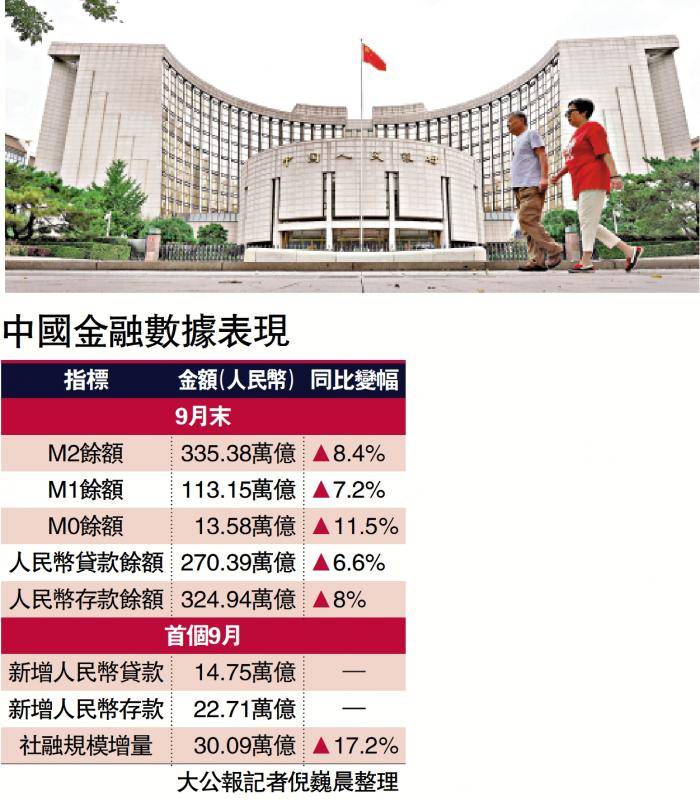
Core Insights - The article highlights the significant increase in credit issuance by commercial banks in September, traditionally a peak month for lending, driven by macroeconomic policies aimed at supporting the real economy [1][8] - There is a noted improvement in credit demand due to a recovery in investment and consumption willingness among enterprises and residents, supported by government projects and consumption-boosting policies [1][8] Summary by Categories Credit and Lending - In September, new RMB loans amounted to 1.29 trillion, a month-on-month increase of 119% compared to August's 590 billion [6][7] - The total RMB loans increased by 14.75 trillion in the first three quarters, with a cumulative social financing increment of 30.09 trillion, which is 4.42 trillion more than the same period last year, representing a 17.2% increase [6][7] Monetary Indicators - As of the end of September, M2 (broad money) reached 335.38 trillion, growing by 8.4% year-on-year, while M1 (narrow money) was 113.15 trillion, up by 7.2%, and M0 (currency in circulation) was 13.58 trillion, increasing by 11.5% [3][8] - The "scissors difference" between M2 and M1 narrowed to 1.2 percentage points, the lowest for the year, indicating a tightening monetary environment [8] Economic Policies and Outlook - The "stabilizing growth" policies are expected to further boost confidence among enterprises and residents, promoting investment and consumption, which will support M1 growth rates [9] - Analysts anticipate that structural tools and policy measures will be key in the future, with expectations of potential interest rate cuts and reserve requirement ratio reductions in the fourth quarter [10]

宏观经济宏观季报:减速提质,中国经济换挡前行
Guoxin Securities· 2025-10-22 05:59
Economic Growth - In Q3 2025, China's nominal GDP was approximately 35.5 trillion yuan, with a real GDP growth of 4.8%, down 0.4 percentage points from Q2[1] - The cumulative GDP growth for the first three quarters of 2025 reached 5.2%, exceeding the annual target, indicating a stable economic foundation[2] - The contribution of final consumption, capital formation, and net exports to GDP growth in Q3 was 2.7, 0.9, and 1.2 percentage points, respectively, with contribution rates of 56.6%, 18.9%, and 24.5%[1] Sector Performance - The first, second, and third industries' nominal GDP in Q3 were approximately 2.7 trillion, 12.5 trillion, and 20.3 trillion yuan, with real growth rates of 4.0%, 4.2%, and 5.4% respectively[1] - Industrial value added maintained moderate growth, while traditional sectors like construction are undergoing significant adjustments, reflecting a structural transformation in the economy[2] Investment and Consumption - Fixed asset investment showed a cumulative year-on-year decline of 0.5%, while retail sales increased by 3.0% year-on-year, and exports rose by 8.3% year-on-year[5] - The decline in capital formation's contribution to GDP growth indicates a slowdown in infrastructure and real estate investments, which fell significantly in Q3[17] Policy Outlook - The government is expected to focus more on "investing in people" and stimulating domestic demand, as the importance of real estate and infrastructure investment in economic statistics decreases[3] - There is potential for fiscal policy to provide significant support, with over 1 trillion yuan in excess deposits available for use in Q4[29] Risks - There are risks associated with reduced policy stimulus and uncertainties in overseas economic policies, which could impact future growth[4][36]
贵金属出现大幅回调:申万期货早间评论-20251022
申银万国期货研究· 2025-10-22 00:45
Group 1: Core Insights - The article highlights a significant decline in precious metals, with gold experiencing its largest single-day drop in over 12 years, falling by 6.3% to approximately $4080 per ounce, while silver dropped 8.7% to $47.89 per ounce, marking its worst performance since February 2021 [1][3][18] - The article discusses the impact of geopolitical stability in the Middle East on oil prices, noting a recent increase in oil prices by 0.64% due to signs of peace, while also mentioning a sharp decline in U.S. oil demand and refinery activity [2][12] - The article emphasizes the ongoing trade tensions between the U.S. and China, with market participants closely watching upcoming trade talks, and mentions the Federal Reserve's hints at pausing balance sheet reduction and potential interest rate cuts [3][18] Group 2: Market Performance - The article reports that the number of domestic tourist trips in China reached 4.998 billion in the first three quarters, an increase of 761 million year-on-year, reflecting a growth rate of 18% [1] - It notes that the financial situation of EU member states has worsened, with net financial assets declining by €172 billion compared to the first quarter of 2025 [5] - The article states that the trust industry in China has seen its asset management scale reach ¥32.43 trillion by June 2025, marking a year-on-year growth of 20.11% [7] Group 3: Commodity Insights - The article indicates that the sugar market is entering a phase of inventory accumulation due to increased sugar supply from Brazil, with current sugar production slightly exceeding last year's levels [3][28] - It mentions that the domestic market for sugar is facing pressure from the upcoming new sugar season and the release of processing sugar from imports, which is expected to weigh on sugar prices [3][28] - The article highlights that the copper market is experiencing tight supply due to ongoing mining issues, while demand remains strong in sectors like electric power and automotive [19]

华源晨会精粹20251021-20251021
Hua Yuan Zheng Quan· 2025-10-21 13:04
Group 1: Construction and Building Materials Industry - The construction and building materials industry is experiencing accelerated investment in major engineering projects, supported by policies aimed at stabilizing growth and expanding domestic demand. In the first three quarters of 2025, fixed asset investment in railway construction reached 593.7 billion yuan, a year-on-year increase of 5.8%, with 968 kilometers of new railway lines put into operation [6][7]. - The Shenyuan Construction Decoration Index fell by 1.67% this week, with sectors such as decoration, engineering consulting services, and steel structures showing positive growth of +3.40%, +2.68%, and +0.72% respectively [8]. - Investment selection in the construction sector is focused on two main lines: high-dividend, low-valuation stocks that may have allocation value, and companies that are accelerating their layout in new industries such as renewable energy and digital construction [9][10]. Group 2: New Consumption Sector - 361 Degrees - 361 Degrees reported a 10% growth in retail sales for its main brand and children's clothing in offline channels, while e-commerce platforms saw a 20% increase in overall sales in Q3 2025, maintaining a rapid growth trend despite industry pressures [12][13]. - The company is enhancing its competitiveness through technological innovation and event sponsorship, with the launch of new products and the revival of the ONEWAY brand, which has opened stores in multiple cities [13][14]. - The company is expected to achieve net profits of 1.315 billion yuan, 1.493 billion yuan, and 1.688 billion yuan from 2025 to 2027, with year-on-year growth rates of 14.50%, 13.49%, and 13.10% respectively [14]. Group 3: Electronics Sector - Sitoway - Sitoway anticipates a revenue of 6.1 to 6.5 billion yuan for the first three quarters of 2025, representing a year-on-year increase of 45% to 54%, with net profit expected to reach 656 to 736 million yuan, a growth of 140% to 169% [16][17]. - The company is leading in mobile business iteration efficiency and has significantly increased the output of automotive electronics, which is expected to become a long-term growth driver [17][18]. - Sitoway's traditional security market share remains strong, while it is also expanding into machine vision applications, maintaining close cooperation with leading clients in the field [18][19].

稳中提质 蓄势跃升——榆林前三季度经济运行稳健向好
Sou Hu Cai Jing· 2025-10-21 07:55
Core Viewpoint - Yulin's economy has shown a positive trend in the first three quarters of the year, supported by a series of policies aimed at stabilizing growth and enhancing market confidence [1][3]. Group 1: Policy Measures and Economic Environment - Yulin has implemented over 30 policy measures to stabilize growth, with more than 20 supporting details introduced by relevant departments, creating a synergistic effect between existing and new policies [1]. - The city's proactive measures have effectively boosted market confidence and stabilized development expectations, laying a solid foundation for healthy economic operation [1]. Group 2: Industrial Production and Energy Sector - Yulin has maintained stable growth in industrial production despite facing downward pressure, focusing on both optimizing existing resources and expanding new capacities [1]. - The city has successfully revived long-idle coal mines and facilitated the completion and trial operation of new coal mines, ensuring the orderly release of high-quality coal production capacity [1]. Group 3: Investment and Project Development - Yulin has accelerated project construction by reforming the approval system and implementing efficient mechanisms, resulting in high approval efficiency and project commencement rates [3]. - The city has introduced innovative measures to enhance the efficiency of preliminary project work, significantly improving the effectiveness of key construction projects [3]. Group 4: Consumer Market and Foreign Trade - Yulin has actively stimulated consumer potential through various initiatives, including consumption vouchers and major exhibitions, leading to a recovery in the consumer market [3]. - The successful hosting of significant events has promoted the integration of culture, commerce, and exhibitions, while efforts to expand international markets have improved the level of open economy [3]. Group 5: Cost Reduction and Business Support - Yulin has implemented tax and fee reduction policies to alleviate the financial burden on enterprises, enhancing their operational efficiency [5]. - The city has increased financial support for small and medium-sized enterprises through regular bank-enterprise matchmaking activities and innovative financial products [5].
央行单日净投放685亿,流动性平稳四季度宽松预期升温
Huan Qiu Wang· 2025-10-21 03:31
Group 1 - The People's Bank of China (PBOC) conducted a 7-day reverse repo operation of 159.5 billion yuan at a fixed rate of 1.40%, resulting in a net injection of 68.5 billion yuan for the day, aimed at maintaining reasonable liquidity in the banking system [1] - The interbank market showed a balanced funding situation, with overnight repo rates stable around 1.31%, indicating that borrowing difficulties are low and liquidity is expected to remain stable before the tax period [3] - The Loan Prime Rate (LPR) for October remained unchanged at 3.0% for 1-year and 3.5% for 5-year loans, marking the fifth consecutive month of stability, attributed to stable policy rates and pressure on banks' net interest margins [3] Group 2 - There is an increasing expectation for further monetary policy easing in the fourth quarter to boost domestic demand and stabilize the real estate market, with potential for rate cuts and lower LPR quotes [4] - The central bank's tools are deemed sufficient to support a positive economic trend, with a focus on maintaining liquidity and enhancing consumption and effective investment [5][6] - The PBOC plans to continue implementing moderately loose monetary policies and utilize various tools to ensure liquidity, supporting economic stability and maintaining the yuan's exchange rate at a reasonable level [6]

市委财经委员会召开会议研究部署四季度经济工作
Nan Jing Ri Bao· 2025-10-21 01:53
Core Viewpoint - The meeting emphasized the need for a comprehensive approach to stabilize economic operations, enhance industrial support, and promote high-quality development while addressing current challenges in the economic landscape [1][2]. Group 1: Economic Performance and Challenges - The city's economy has shown overall stability and positive trends, with several key indicators improving and new industries being cultivated [1] - Despite the positive performance, external conditions remain complex and challenging, with significant pressure on economic growth [1] Group 2: Strategic Initiatives - The meeting highlighted the importance of monitoring economic operations and focusing on breakthroughs in key industries to enhance organizational work levels [2] - There is a strong emphasis on integrating technology and industry innovation, particularly through the "Artificial Intelligence+" development strategy [2] - Efforts will be made to boost consumption and expand investment, including initiatives to stabilize the real estate market and promote effective investment [2] Group 3: Employment and Social Stability - The meeting underscored the need to focus on employment for key groups such as recent graduates and migrant workers, ensuring support for vulnerable populations [2] - It is crucial to maintain social stability, safety production, and risk mitigation while planning for long-term development [2]
近3000亿元“准财政”工具资金到位
Shang Hai Zheng Quan Bao· 2025-10-20 18:13
Core Insights - The new policy financial tools are expected to significantly boost investment and loan growth in the economy [1][2] - The implementation of these tools is crucial for stabilizing macroeconomic performance in the fourth quarter and achieving annual growth targets [2] Group 1: Financial Impact - The new policy financial tools could leverage approximately 4 trillion yuan in loans, increasing loan growth by 1.5 percentage points and social financing growth by 1.0 percentage points [1] - The tools are projected to stimulate around 5 trillion yuan in fixed asset investment, potentially raising fixed asset investment growth by about 6 percentage points [1] - Optimistic estimates suggest that the current round of 500 billion yuan in new policy financial tools could drive investment of about 6 trillion yuan, equivalent to 24.4% of the total infrastructure investment in 2024 [1] Group 2: Future Projections - It is anticipated that the tools could promote infrastructure investment growth by 3 to 4 percentage points annually over the next three years [1] - In the current year, these tools are expected to accelerate infrastructure investment growth by 1 to 1.5 percentage points, contributing to a rebound in fourth-quarter investment growth [1] - The effectiveness of these financial tools in driving investment will depend on various factors, including local financial capacity, willingness of social capital to invest, and the scale of bank loans [1]
LPR连续5个月“按兵不动” 降息窗口还需等待
Sou Hu Cai Jing· 2025-10-20 17:22
Core Viewpoint - The Loan Prime Rate (LPR) remains unchanged for the fifth consecutive month, with the 1-year and 5-year rates at 3.0% and 3.5% respectively, reflecting stable policy rates and bank margin pressures [1][2]. Monetary Policy and LPR Stability - The stability of the central bank's 7-day reverse repurchase rate at 1.40% has been a significant factor in maintaining the LPR [2]. - Bank net interest margins are under pressure, with the net interest margin for commercial banks dropping to 1.42% by the end of Q2 2025, a decrease of 10 basis points from the previous year [1][2]. Market Conditions and Future Expectations - There is an expectation for targeted LPR reductions by the end of the year to stimulate domestic demand and stabilize the real estate market [6]. - The central bank has indicated a commitment to maintaining adequate liquidity and supporting consumption and investment, especially in light of external economic pressures [4][6]. Economic Indicators - The average interest rate for new corporate loans in September was approximately 3.1%, down about 40 basis points year-on-year, while the average for new personal housing loans was also around 3.1%, down about 25 basis points [3]. External Influences - The potential for further easing of external constraints, particularly with the U.S. Federal Reserve's recent rate cuts, may provide a favorable environment for China's monetary policy adjustments [6][7].
9月经济数据解读:内外动能或进入转换期
Huachuang Securities· 2025-10-20 15:40
1. Report Industry Investment Rating No industry investment rating is provided in the report. 2. Core Views of the Report - The GDP growth target of "5%" for the whole year is expected to be achieved. In the fourth quarter, "broad credit" will actively contribute, and investment may offset the slowdown in exports. With the injection of 500 billion yuan in policy - based financial instruments in late September and the allocation of 500 billion yuan in remaining quotas by the central government to local areas, investment is expected to recover [4]. - For the bond market, in the fourth quarter, with the implementation of "broad credit" and upcoming Sino - US negotiations, the internal economic momentum may improve marginally compared to the third quarter. The bond market may fluctuate in a narrow range on a new platform due to the intertwining of bullish and bearish factors [4]. 3. Summary by Relevant Catalogs 3.1 Third - Quarter Economic Data Overview: Investment Declines, Consumption Slows, and Exports Shine - **Overall Situation**: The cumulative growth rate of constant - price GDP in the first three quarters is 5.2%. The economy only needs to grow by more than 4.5% in the fourth quarter to achieve the annual target. In terms of rhythm, the GDP in the third quarter increased by 1.1% quarter - on - quarter, higher than that in the second quarter but lower than the same period in 2023 - 2024. In terms of price, the GDP deflator in the third quarter decreased by 1.0% year - on - year, higher than that in the second quarter, and the drag on nominal growth is narrowing [4][8]. - **Structural Features**: Investment weakening is prominent, and consumption also slows down, while exports rise against the trend, becoming a strong support for economic growth. In the third quarter, fixed - asset investment decreased by about 6.5% year - on - year, social retail sales increased by 3.4%, and exports increased by 6.6% [4][9]. - **Fourth - Quarter Outlook**: Consumption base increase may suppress readings, and exports may face marginal weakening pressure. However, with the injection of policy - based financial instruments and the allocation of remaining quotas, investment is expected to repair and offset the decline in exports to some extent [4][11]. 3.2 September Data Interpretation: Production Returns to Strength 3.2.1 Infrastructure: Policy Effects Begin to Appear, and Traditional Infrastructure Improves Marginally - From January to September, the cumulative year - on - year growth rate of infrastructure investment (excluding electricity) is +1.1%, and the full - scale infrastructure investment is +3.3%. In September, the year - on - year growth rate of infrastructure investment excluding electricity is - 4.6%, and the full - scale infrastructure is - 8.0%. In late September, the first batch of new policy - based financial instrument funds was injected, and high - frequency indicators improved, indicating an upward trend in infrastructure investment in October [1][20]. 3.2.2 Real Estate: Investment Decline Widens, and Sales Remain Stable - From January to September, the cumulative year - on - year growth rate of real estate investment is - 13.9%, and the single - month year - on - year is - 21.3%, a further decline of 1.8 percentage points. The year - on - year decline in residential sales area in September is - 11.4%, an expansion of 1.7 percentage points from the previous month. The "Golden September" market is weaker than last year, and the high - base effect may be more significant in the fourth quarter [1][24]. 3.2.3 Manufacturing Investment: Decline Continues to Widen - In September, manufacturing investment decreased by 1.9% year - on - year, with the decline expanding by 0.6 percentage points. From January to September, the cumulative year - on - year growth rate is +4.0%. The domestic price environment has not recovered, and corporate profit expectations need to be strengthened [2][25]. 3.2.4 Consumption: Weak Month - on - Month Growth and High Base Drag Down Social Retail Sales - In September, social retail sales increased by 3.0% year - on - year, a further decline of 0.4 percentage points from the previous month. The month - on - month growth rate after seasonal adjustment turned negative to - 0.18%. Due to the high - base effect of state - subsidized categories last year, the retail growth rate of related categories decreased in September this year, while communication equipment and furniture retail had relatively high growth rates [2][29]. 3.2.5 Industry: Export Pull and Peak Production Season Drive Industrial Growth to Return to Strength - In September, the industrial growth rate increased by 6.5% year - on - year, 1.3 percentage points higher than in August. The month - on - month growth rate after seasonal adjustment is +0.64%. Exports exceeded expectations in September, and the year - on - year growth rate of export delivery value increased to +3.8%, which promoted manufacturing production [2][34].