
规模效应

Search documents
保时捷的中国困境
36氪· 2025-08-15 10:44
Core Viewpoint - The article discusses the challenges faced by Porsche in the Chinese market, highlighting the brand's struggle with sales decline and the impact of electric vehicle (EV) transformation on its traditional business model [6][8][25]. Group 1: Sales Performance and Market Position - In 2021, Porsche achieved a peak sales figure of 95,000 units in China, contributing one-third of its total sales [7][8]. - However, by 2024, overall sales are projected to decline to 56,000 units, marking a significant drop and the loss of its status as the largest single market [8][25]. - The brand's sales in China have seen a 28% year-on-year decline in 2024, with the company now ranking as the fourth largest market for Porsche [25][26]. Group 2: Electric Vehicle Strategy - Porsche has been aggressive in its electric vehicle strategy, launching the Taycan, which received 30,000 pre-orders and became the best-selling model in 2021, surpassing the iconic 911 [38][39]. - The company aims for electric and hybrid models to account for 50% of total sales by 2025 and over 80% by 2030 [38][39]. - Despite its ambitious plans, Porsche faces challenges in the transition to electric vehicles, particularly with the development of its second electric model, the Macan EV, which has been delayed due to issues with its parent company Volkswagen's software development [49][50]. Group 3: Brand Positioning and Market Dynamics - Porsche occupies a unique position in the luxury car market, straddling the line between luxury and premium segments, which exposes it to competitive pressures from both ends [58][63]. - The brand's average selling price in China has decreased from 1.06 million to 930,000 yuan over three years, reflecting the challenges of maintaining its brand value amid rising competition from domestic EV manufacturers [64][65]. - The article emphasizes that Porsche's middle-ground positioning makes it vulnerable to market shifts, as it cannot easily engage in price reductions without risking its brand identity [63][64].


保时捷的中国困境
Hu Xiu· 2025-08-14 14:02
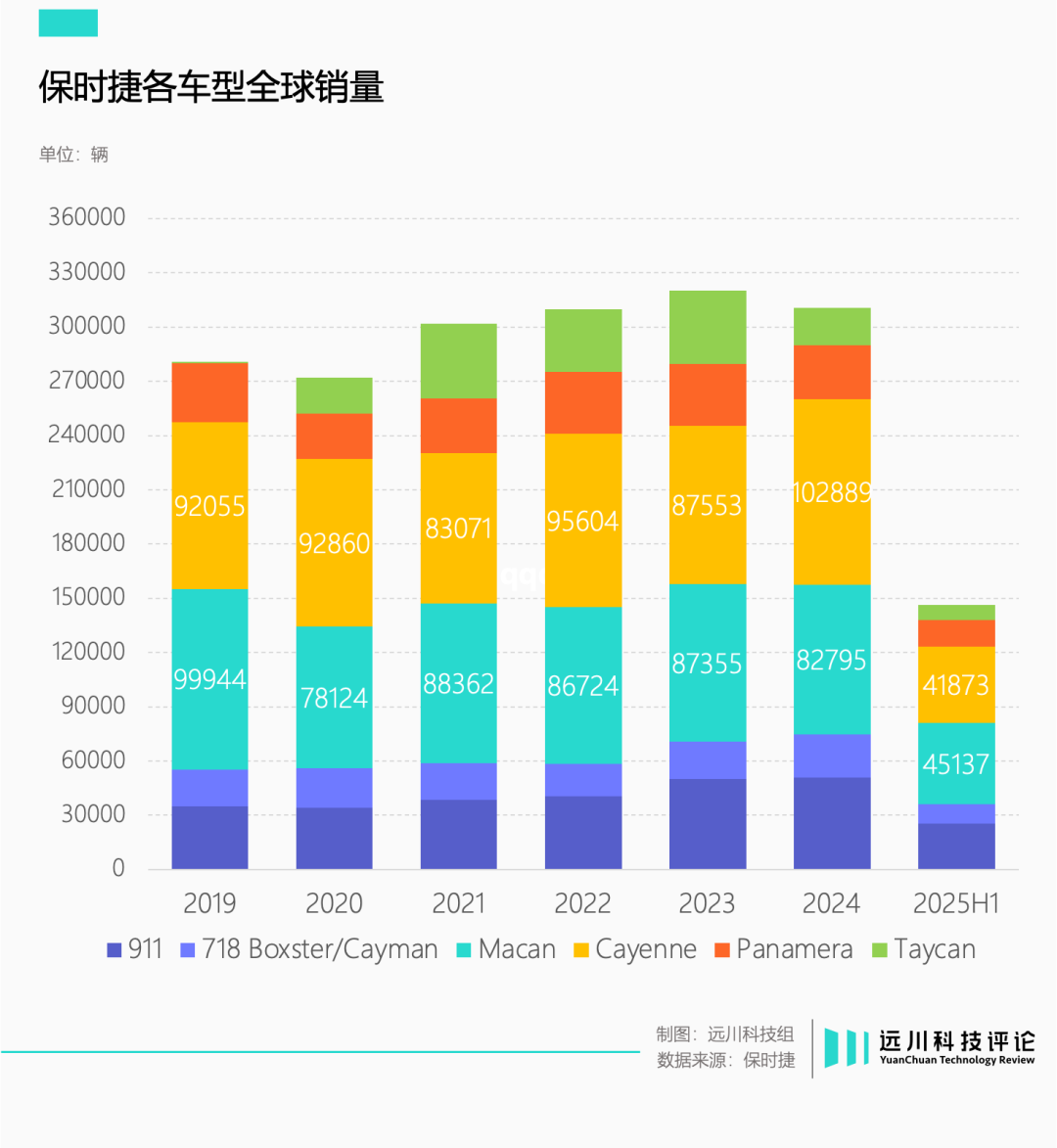
Core Insights - Porsche's sales in China have been a significant contributor, accounting for one-third of its total sales, with a peak of 95,000 units in 2021 [3][19] - The company has faced a decline in sales in China, projecting a drop to 56,000 units in 2024, marking a 28% year-on-year decrease [5][26] - Porsche's strategy of local production was contingent on achieving sales of 50,000 units for a single model, which has not been realized [2][4] Group 1: Sales Performance - In 2022, Porsche's sales in China saw a sharp decline, with the company falling to the fourth-largest market by 2024 [26] - The average selling price in China has decreased from 1.06 million to 930,000 yuan over the past three years, while overall sales dropped by 36,000 units [75] - Porsche's sales in China have been heavily reliant on its SUV models, which account for approximately 60% of its sales [19][41] Group 2: Market Positioning - Porsche occupies a unique position as a "cheap luxury" brand, leveraging its sports car image while generating profits through SUVs [10][67] - The brand's positioning in the luxury market is precarious, as it straddles the line between luxury and premium segments, making it vulnerable to market fluctuations [68][74] - The competitive landscape has intensified, with local brands capturing over 60% of the market share in the growing electric vehicle segment [75] Group 3: Electric Vehicle Strategy - Porsche has been aggressive in its electric vehicle (EV) strategy, with plans for EVs and hybrids to make up 50% of total sales by 2025 and over 80% by 2030 [41][42] - The company has invested significantly in electric vehicle technology, including partnerships for battery production and software development [39][40] - Despite its ambitious plans, Porsche faces challenges in the transition to electric vehicles, particularly with the reliance on Volkswagen's software systems, which have encountered delays [58][59] Group 4: Competitive Challenges - The automotive industry is highly dependent on scale, and Porsche's sales decline raises concerns about its profitability in the luxury segment [11][70] - The shift towards electric vehicles has disrupted traditional pricing structures, making it difficult for Porsche to maintain its brand premium [62][63] - The competitive pressure from both established luxury brands and emerging electric vehicle manufacturers poses a significant threat to Porsche's market share [77]
保时捷的中国困境
远川研究所· 2025-08-14 13:14
Core Viewpoint - Porsche's sales in China have significantly declined, with a projected drop to 56,000 units in 2024, marking a 28% year-on-year decrease, after previously being the largest single market for the brand [6][17][31]. Group 1: Sales Performance and Market Position - In 2021, Porsche achieved a peak sales figure of 95,000 units in China, contributing one-third of its total sales [6][17]. - The Cayenne and Macan models accounted for approximately 60% of Porsche's sales in China since 2015 [11][14]. - The brand's sales average in China has decreased from 1.06 million to 930,000 yuan over the past three years, indicating a loss of market positioning [37]. Group 2: Electric Vehicle Strategy - Porsche has been aggressive in its electric vehicle (EV) transition, with plans for electric and hybrid models to make up 50% of total sales by 2025 and over 80% by 2030 [24][22]. - The Taycan, Porsche's first all-electric model, surpassed 40,000 units in global sales in 2021, becoming the best-selling model after the SUVs [24][18]. - The company has invested heavily in battery technology and partnerships to support its electric vehicle strategy, including the establishment of a joint venture for battery production [23][22]. Group 3: Challenges in Transition - Porsche faces significant challenges in its transition to electric vehicles, particularly due to reliance on the Volkswagen Group for software and electronic architecture, which has encountered delays [30][27]. - The development of the E3 electronic architecture has faced setbacks, impacting the launch timelines of new models like the Macan EV [30][28]. - The competitive landscape in the electric vehicle market has intensified, with domestic brands capturing over 60% of the market share, further complicating Porsche's position [37][31]. Group 4: Brand Positioning and Market Dynamics - Porsche occupies a unique position between luxury and premium segments, which exposes it to greater competitive pressures, especially in a rapidly evolving market [34][37]. - The brand's pricing strategy has been challenged by the aggressive pricing of electric vehicles, leading to a structural disruption in its pricing model [32][31]. - As competitors lower prices, Porsche's middle-ground positioning risks losing brand value, which could have long-term implications for its market strategy [37][34].

被年轻人遗忘的国民零食,为何在拼多多突然翻红?
Xin Jing Bao· 2025-08-13 02:44
Group 1 - The article discusses the evolution of traditional snack brands in Fujian, highlighting their historical significance and initial success in the market [1][4] - It notes that these brands faced challenges due to their reliance on traditional distribution channels and missed early e-commerce opportunities, leading to stagnation [2][5] - The emergence of new e-commerce platforms like Pinduoduo provided these brands with a chance to revitalize their sales and connect directly with consumers [3][6] Group 2 - Since 2020, brands like Jin Guan and You Chen have successfully leveraged Pinduoduo's platform to adapt their products and marketing strategies, resulting in significant sales growth [8][9] - The article emphasizes the importance of cost-effective strategies and the ability to respond to consumer demands, which have been facilitated by Pinduoduo's supportive policies [10][12] - Brands have reported impressive returns on investment (ROI) on Pinduoduo, with some achieving ratios as high as 1:10, compared to traditional e-commerce channels [9]

中创新航(3931.HK):利润率预期具进一步提高的空间
Ge Long Hui· 2025-08-12 18:57
Group 1: Company Performance - Zhongchuang Innovation (03931.HK) announced a profit increase of 70% to 90% for the first half of 2025, with net profit expected to reach between 710 million RMB and 790 million RMB, potentially exceeding the 75.4% growth seen in Q1 [1] - In Q1 2025, the total revenue of Zhongchuang Innovation grew approximately 42% to 6.9 billion RMB, with stable sales prices for power batteries despite market price declines [1] - The company achieved a power battery installation volume of 19.5 GWh in China for the first half of 2025, marking a year-on-year increase of 40.7% and a significant market share rise to 7.5% by June [1] Group 2: Industry Trends - China's power battery sales volume reached approximately 485.5 GWh in the first half of 2025, a year-on-year increase of 51.6%, with lithium iron phosphate and ternary battery sales at 354.8 GWh and 129.8 GWh respectively [2] - The demand for power batteries is primarily driven by the growth in new energy vehicle sales, which increased by 33.3% year-on-year to 5.468 million units in 2025 [2] - The penetration rate of new energy vehicles rose to 53.3% in June, with new force brands maintaining a retail share of around 20% [2] Group 3: Energy Storage Business - Zhongchuang Innovation's energy storage business is experiencing stable growth, with significant monthly shipment increases and a target of 45 GWh for annual shipments [3] - The growth of energy storage battery shipments is currently limited by production capacity, but improvements in capacity release and direct supply ratios are expected to sustain high growth rates [3] - The company anticipates further profit margin improvements due to increased shipment volumes and stable pricing, with larger new projects expected to enhance profit levels in 2026-2027 [3]
三巨头为什么要打外卖大战
Sou Hu Cai Jing· 2025-08-11 06:05
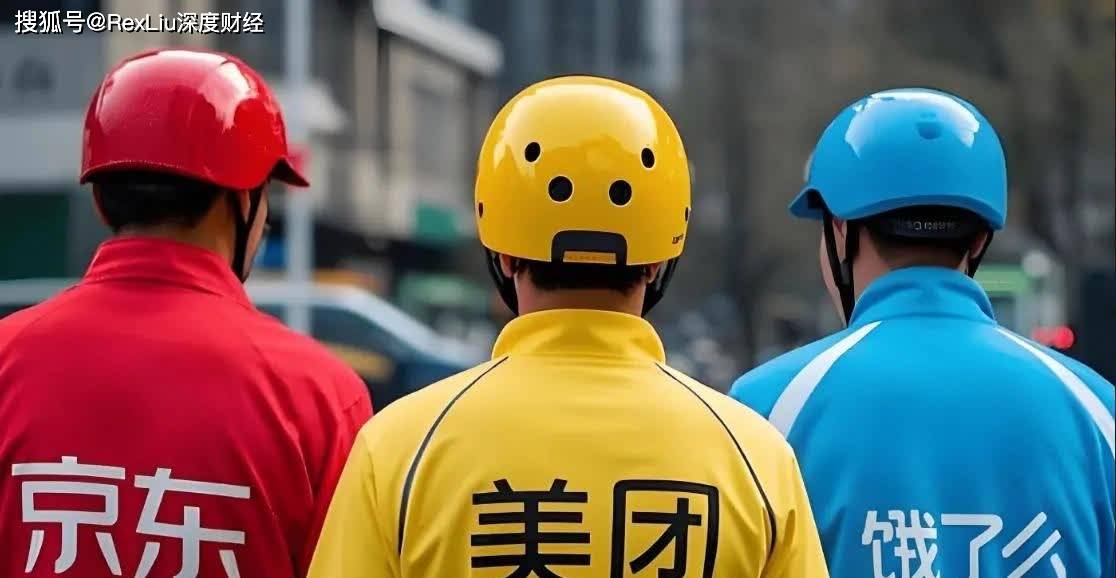
Core Insights - The major players in the food delivery market are investing heavily in subsidies to attract consumers, with over 100 billion yuan spent to enhance user engagement and address long-standing traffic issues in e-commerce [2][3] - The ultimate goal of these subsidies is to cultivate user habits that lead to increased consumption and advertising revenue, particularly targeting the burgeoning instant retail market, which is projected to be worth trillions [3][4] Group 1: Market Dynamics - The competition among major companies is not merely about gaining market share in food delivery but is part of a broader strategy to secure user attention and spending power [2][3] - E-commerce platforms like Taobao and JD.com struggle with user engagement compared to social media platforms, which have significantly higher daily user interaction times [2] - Instant retail is emerging as a transformative force in consumer behavior, with a growing demand for immediate delivery of products, reshaping the retail landscape [3] Group 2: Financial Implications - The strategy of burning cash to attract users is aimed at achieving scale effects, where increased user numbers lead to better merchant participation and enhanced consumer experience [4] - This cycle can create a positive feedback loop, resulting in a significant "Matthew Effect" where a few dominant players emerge in the market, while others are pushed out [4] - The financial implications for consumers remain minimal, as they continue to benefit from low prices and promotions regardless of which companies survive the competition [4]
百亚股份(003006):点评报告:盈利拐点有望兑现,成长迎来求质新篇
ZHESHANG SECURITIES· 2025-08-09 08:32
Investment Rating - The investment rating for the company is "Buy" (maintained) [5] Core Views - The company is positioned as a leading regional sanitary napkin brand accelerating nationwide expansion, with an online channel turning point and offline channel scale effects driving performance growth beyond expectations [1] Summary by Sections Online Strategy and Performance - The company's optimization of online strategies is expected to enhance operational quality, with online revenue and profitability potentially exceeding expectations. Concerns about intensified online competition and increased traffic investment are noted [2][3] - The 618 shopping festival is identified as a peak period for online competition, but the competitive landscape is expected to improve subsequently. The company's focus on return on investment (ROI) is anticipated to lead to a recovery in online profitability [3] - Recent data indicates a recovery trend in online performance, with Douyin's GMV showing a year-on-year increase of 5% in July and 50% in August [3] Offline Channel Growth - The release of scale effects in peripheral provinces is expected to drive the company's future performance growth beyond expectations. Concerns about online penetration affecting offline market share are addressed, emphasizing that offline remains a crucial battleground [4][5] - The offline channel's profitability is expected to improve non-linearly as it surpasses the breakeven point, with peripheral provinces showing a year-on-year growth of 125% in Q1 2025 [5][9] Financial Projections - The company is projected to achieve revenues of 41.11 billion, 51.84 billion, and 64.86 billion yuan for the years 2025, 2026, and 2027, respectively, with year-on-year growth rates of 26.33%, 26.10%, and 25.11% [11] - The net profit attributable to the parent company is expected to reach 3.69 billion, 5.21 billion, and 7.16 billion yuan for the same years, with growth rates of 28.20%, 41.27%, and 37.43% [11]
南极光(300940) - 300940南极光投资者关系管理信息20250808
2025-08-08 09:52
Financial Performance - In the first half of 2025, the company achieved a revenue of 397.51 million yuan, representing a year-on-year increase of 244.67% [2] - The cost of goods sold was 284.75 million yuan, up 151.60% year-on-year [2] - The net profit attributable to shareholders was 72.89 million yuan [2] Product and Market Strategy - The company is shifting its product focus from low-margin mobile products to high-margin products such as handheld devices, tablets, laptops, and automotive displays [3] - The current capacity utilization rate is around 50%, with a total monthly production capacity exceeding 7 million units across two factories [4] - The company aims to expand its international presence and attract more global top-tier clients [4] Contribution of Nintendo Switch 2 - The overseas revenue reached 275 million yuan in the first half of 2025, a staggering year-on-year growth of 1669.71%, largely driven by the Nintendo Switch 2 [3] - The gross margin for the main products in the first half of 2025 was 28.31%, with potential for future improvement [5][6] - The Nintendo Switch 2 has sold over 5.82 million units by the end of June 2025, setting a record for the fastest sales in Nintendo's history [7] Competitive Position - The company maintains a strong position as the sole supplier of backlight modules for the Nintendo Switch 2, supported by technological advantages and cost competitiveness [8] - The proprietary compression molding technology has reduced production costs by 30%, enhancing competitive strength [8] Future Outlook - Future gross margin growth will depend on order scale effects and optimization of revenue structure [6] - The company will continue to monitor the impact of the Nintendo Switch 2 on its overall financial performance, with detailed results to be disclosed in future reports [7]

外卖大战的补贴,都被瑞幸赚走了
远川研究所· 2025-08-07 13:15
Core Viewpoint - Luckin Coffee's second-quarter earnings report exceeded Wall Street expectations, with revenue reaching 12.36 billion, surpassing Bloomberg's consensus by nearly 1.3 billion, and operating profit hitting a record high of 1.7 billion, indicating it is the biggest beneficiary of the ongoing food delivery war [5][6]. Group 1: Impact of Delivery War - The delivery cost for Luckin Coffee surged to 1.67 billion in the second quarter, a year-on-year increase of 175%, reflecting the intensity of the delivery war [7]. - Despite a revenue growth of only 47%, the increase in delivery costs indicates that the company is benefiting from external subsidies provided by delivery platforms [7][10]. - The average revenue per store increased by 12% to 538,000, but the operating profit margin decreased by 2.4%, likely due to a slight drop in average transaction value [10]. Group 2: User Acquisition and Engagement - The second quarter saw a significant influx of new users, with over 28.7 million new customers, accounting for nearly 32% of the monthly active users, indicating effective customer acquisition through delivery subsidies [12]. - The average transaction value per user increased by 11.6% to 135, driven by higher transaction frequency, despite a decline in average transaction price [14]. - The sales expense ratio decreased to 4.8% from 5.1% year-on-year, suggesting that the company did not incur additional costs for acquiring new users [16]. Group 3: Competitive Landscape - The current food delivery war has positioned ready-to-drink beverages as the most effective category for driving order volume, with Luckin Coffee's extensive store network of over 26,000 locations significantly contributing to its market share [20][24]. - Compared to competitors, Luckin's direct store model allows it to retain a larger share of profits, as 65% of its stores are company-operated, unlike many competitors that rely on franchise models [26]. - The scale effect has allowed Luckin to achieve stable growth, with quarterly revenue increasing from around 2.4 billion to over 10 billion in recent years, while maintaining a stable sales expense ratio [28].


锅圈(02517.HK):规模效应下利润超预期 单店改善有延续性
Ge Long Hui· 2025-08-07 06:01
Core Insights - The company achieved a revenue of 3.24 billion yuan in H1 2025, representing a year-on-year increase of 21.6% [1] - The net profit attributable to shareholders reached 183 million yuan, up 113.2% year-on-year [1] - Core operating profit was 190 million yuan, reflecting a year-on-year growth of 52.3% [1] Revenue Breakdown - Revenue from franchisees, other sales channels, and service income was 2.60 billion, 560 million, and 80 million yuan respectively, with year-on-year growth of 11.0%, 96.2%, and 8.3% [2] - The number of franchise and direct-operated stores stood at 10,386 and 14, respectively, with a net increase of 251 franchise stores and a net decrease of 1 direct-operated store compared to the end of 2024 [2] - The franchise stores in rural areas increased by 270, while urban stores decreased by 19 [2] Profitability and Efficiency - The company's gross margin was 22.1%, down 1.7 percentage points year-on-year but up 1.7 percentage points from H2 2024 [2] - The sales and management expense ratios were 9.5% and 6.4%, both down 1.7 percentage points year-on-year, indicating improved efficiency with scale [2] - The core operating profit margin reached 5.9%, up 1.2 percentage points year-on-year, and the net profit margin was also 5.9%, up 2.7 percentage points year-on-year [2] Future Outlook - The company is expected to continue improving profitability, with revenue forecasts for 2025-2027 set at 7.29 billion, 8.39 billion, and 9.55 billion yuan, reflecting year-on-year growth of 13%, 15%, and 14% respectively [3] - Net profit forecasts for the same period are 420 million, 500 million, and 580 million yuan, with year-on-year growth of 81%, 19%, and 17% respectively [3] - The company maintains a "buy" rating, supported by a stable operational foundation and improved profit levels [3]