人民币国际化

Search documents
锡:震荡偏强
Guo Tai Jun An Qi Huo· 2026-01-26 02:22
Group 1: Report's Investment Rating for the Industry - The investment rating for the tin industry is "shockingly strong" [1] Group 2: Core View of the Report - The trend strength of tin is 1, with the range of trend strength being integers in the [-2, 2] interval. -2 represents the most bearish view, and 2 represents the most bullish view [3] Group 3: Summary Based on the Directory Fundamental Tracking - **Futures Data**: The closing price of the main contract of Shanghai Tin yesterday was 429,570, with a daily increase of 5.03%, and the closing price of the night session was 447,140, with a night - session increase of 4.09%. The price of the LME Tin 3M electronic disk was 56,605, with a daily increase of 7.49%. The trading volume of the main contract of Shanghai Tin increased by 102,997 to 378,618, and the position increased by 33,940 to 56,254. The trading volume of the LME Tin 3M electronic disk increased by 361 to 890, and the position increased by 202 to 23,931 [2] - **Inventory and Warehouse - Receipt Data**: The inventory of Shanghai Tin was 8,582, a decrease of 34. The inventory of LME Tin was 7,195, and the cancellation warehouse - receipt ratio was 6.57%, a decrease of 0.38% [2] - **Spot and Price - Difference Data**: The SMM 1 tin ingot price was 420,300, an increase of 17,050. The average price of Yangtze River Non - ferrous 1 tin was 423,300, an increase of 20,000. The LME tin (spot/three - month) premium was - 245, a decrease of 56. The spread between the near - month contract and the consecutive - first contract was 233,310, an increase of 19,730. The spread between the spot and the main futures contract was 14,290, an increase of 29,410 [2] - **Industrial Chain Price Data**: The price of 40% tin concentrate (Yunnan) was 406,300, an increase of 17,050. The price of 60% tin concentrate (Guangxi) was 410,300, an increase of 17,050. The price of 63A solder bar was 277,750, an increase of 11,000. The price of 60A solder bar was 265,250, an increase of 10,000 [2] Macro and Industry News - Negotiations among delegations from Ukraine, the US, and Russia in Abu Dhabi, UAE have ended - Huang Renxun, the founder of NVIDIA, visited China again, with his first stop being NVIDIA's new office in Shanghai - OpenAI's API business increased its annual recurring revenue by $1 billion last month - The central bank governor stated to promote the internationalization of the RMB in an orderly manner [4]
权威访谈·开局“十五五”丨潘功胜:将引导金融机构加力支持扩大内需、科技创新、中小微企业等重点领域
Yang Guang Wang· 2026-01-26 01:56
Core Viewpoint - The People's Bank of China (PBOC) is committed to implementing a moderately accommodative monetary policy to support economic growth and maintain financial stability, with specific measures outlined for 2026 [1][2]. Group 1: Monetary Policy and Financial Stability - The PBOC aims for social financing scale and broad money supply to significantly exceed nominal GDP growth by 2025, ensuring reasonable growth in financial totals [1] - As of December, the average weighted interest rates for new corporate loans and personal housing loans are approximately 3.1%, indicating low financing costs [1] - The PBOC plans to maintain ample liquidity and match the growth of social financing and money supply with economic growth and price level expectations [1] Group 2: Support for Key Sectors - Financial institutions will be guided to enhance support for expanding domestic demand, technological innovation, and small and micro enterprises [2] - A total of 500 billion yuan will be allocated for service consumption and elderly care re-loans, addressing diverse financial needs in the consumption sector [2] - The re-loan quota for technological innovation and technological transformation will be increased to 1.2 trillion yuan, promoting the development of the bond market's "technology board" [2] Group 3: Financial System Opening and Internationalization - The PBOC will deepen institutional opening in the financial sector and advance the internationalization of the renminbi [3] - Efforts will be made to build a multi-channel, comprehensive, secure, and efficient cross-border payment system for the renminbi [3] - The PBOC will enhance international cooperation in cross-border payments and strengthen regulatory capabilities to ensure national financial security [3]
央行行长潘功胜:今年降准降息还有一定的空间
2 1 Shi Ji Jing Ji Bao Dao· 2026-01-25 14:16
Core Viewpoint - The People's Bank of China (PBOC) is set to implement a moderately accommodative monetary policy in 2026, focusing on maintaining liquidity and aligning social financing and money supply growth with economic growth and price level expectations [4][10]. Monetary Policy Implementation - The PBOC will utilize various monetary policy tools such as reserve requirement ratio (RRR) cuts and interest rate reductions to ensure ample liquidity [4][10]. - There is still room for further RRR cuts and interest rate reductions this year [4][10]. Financial Sector Focus - Financial institutions will be guided to support key areas such as domestic demand expansion, technological innovation, and small and micro enterprises [5][12]. - A total of 500 billion yuan will be allocated for consumption and pension-related re-loans, while the quota for technological innovation and transformation re-loans will be increased to 1.2 trillion yuan [5][15]. Support for Small and Micro Enterprises - The PBOC aims to enhance the accessibility and convenience of financing for small and micro enterprises by increasing the re-loan and rediscount quotas by 500 billion yuan, bringing the total to 4.35 trillion yuan [6][14]. - A dedicated 1 trillion yuan re-loan will be established to specifically support private small and micro enterprises [6][14]. Cross-Border Payment System - The PBOC is committed to developing a multi-channel, comprehensive, secure, and efficient cross-border payment system for the renminbi [8][17]. - There will be an emphasis on international cooperation in cross-border payments and active participation in international financial governance [8][17].

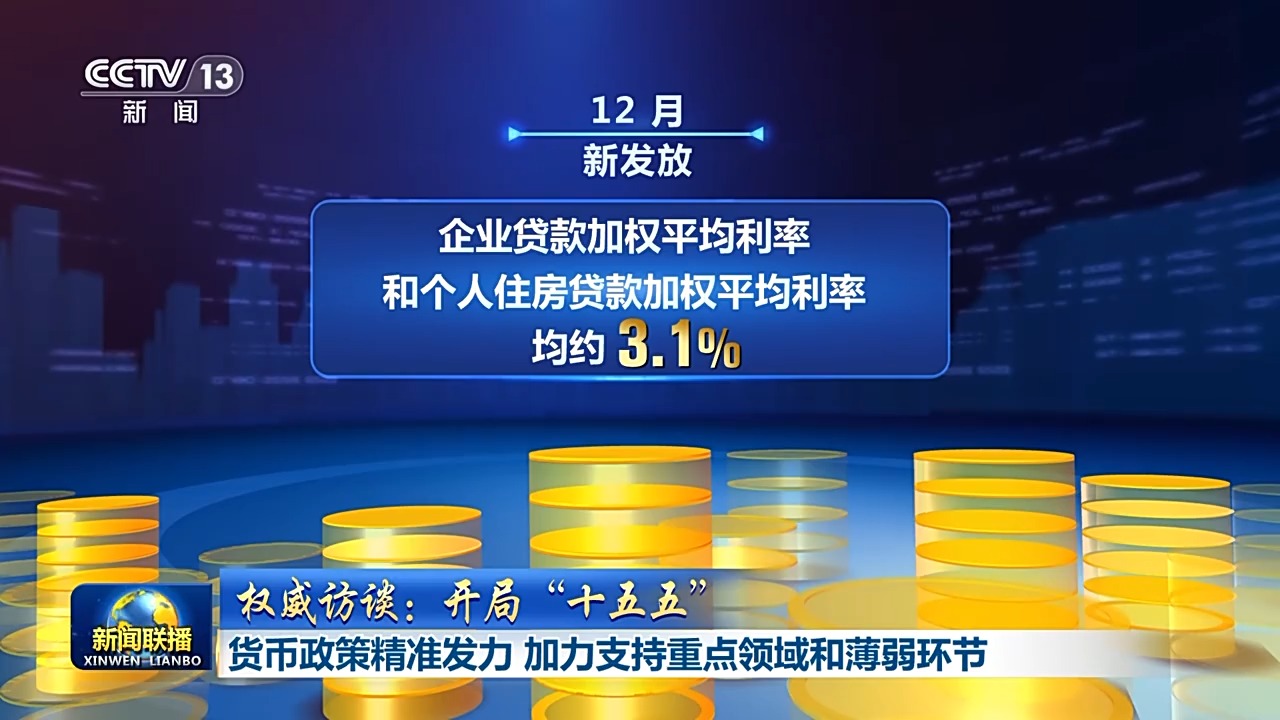
货币政策精准发力 加力支持重点领域和薄弱环节
Xin Lang Cai Jing· 2026-01-25 13:05
Core Viewpoint - The People's Bank of China (PBOC) is committed to implementing a moderately accommodative monetary policy to support economic growth and maintain financial stability, with a focus on key areas such as domestic demand, technological innovation, and small and micro enterprises. Group 1: Monetary Policy Implementation - In 2026, the PBOC will continue to implement a moderately accommodative monetary policy, ensuring that the growth of social financing and money supply aligns with economic growth and price level expectations [5] - The average interest rates for new corporate loans and personal housing loans are approximately 3.1%, with social financing costs remaining low [3] - There is still room for further reductions in reserve requirements and interest rates this year [5] Group 2: Financial Support Focus Areas - Financial institutions will be guided to enhance support for expanding domestic demand, technological innovation, and small and micro enterprises [7] - A total of 500 billion yuan will be allocated for consumer services and pension re-loans to meet diverse financial needs in the consumption sector [7] - The quota for re-loans for technological innovation and technological transformation will be increased to 1.2 trillion yuan, promoting the development of the bond market's "technology board" [7] Group 3: Support for Small and Micro Enterprises - The PBOC aims to improve the accessibility and convenience of financing for small and micro enterprises, increasing the re-loan and rediscount quota for agricultural and small enterprises by 500 billion yuan, totaling 4.35 trillion yuan [9] - A dedicated 1 trillion yuan re-loan for private enterprises will be established to specifically support small private enterprises [9] - Financial institutions will be encouraged to issue financial bonds for small and micro enterprises and improve the credit enhancement system for private small and medium-sized enterprises [9] Group 4: Internationalization and Payment Systems - The PBOC will continue to build a multi-channel, comprehensive, safe, and efficient cross-border payment system for the renminbi [11] - There will be an emphasis on enhancing international cooperation in cross-border payments and actively participating in international financial governance [11] - The PBOC will strengthen regulatory capabilities to match high-level openness and firmly safeguard national financial security [11]
【权威访谈:开局“十五五”】货币政策精准发力 加力支持重点领域和薄弱环节
Yang Shi Wang· 2026-01-25 11:50
Core Viewpoint - The article emphasizes the importance of enhancing the central bank system and establishing a robust monetary policy framework as outlined in the "14th Five-Year Plan" [1] Monetary Policy and Financial Stability - The People's Bank of China (PBOC) aims for a moderate easing of monetary policy in 2025, with social financing scale and broad money supply expected to significantly exceed nominal GDP growth [1] - In December, the weighted average interest rates for new corporate loans and personal housing loans were both approximately 3.1%, indicating low overall financing costs [1] - The bond market has seen the issuance of 1.8 trillion yuan in technology innovation bonds, contributing to stable financial market operations [1] Focus Areas for Financial Support - Financial institutions will be guided to enhance support for key areas such as expanding domestic demand, technological innovation, and small and medium-sized enterprises [1] - A total of 500 billion yuan will be utilized for consumer services and pension re-loans to meet diverse financial needs in the consumption sector [1] - The quota for re-loans aimed at technological innovation and technological transformation has been increased to 1.2 trillion yuan, promoting the development of the bond market's technology sector [1] Future Directions - The PBOC plans to deepen institutional opening in the financial sector and advance the internationalization of the renminbi in an orderly manner [1]
莫迪下令拒收俄石油,中国伸出的援手,普京终于看清谁是真朋友
Sou Hu Cai Jing· 2026-01-25 07:40
Group 1 - The core point of the article highlights a significant shift in India's oil import dynamics, with a drastic reduction in oil imports from Russia to the lowest level in three years as of January 2026, contrasting sharply with the previous close ties between India and Russia [1] - Following U.S. intervention, particularly under the Trump administration, India faced increased tariffs on its goods, which were partly a response to its continued oil purchases from Russia, leading to a projected 30% decline in exports to the U.S. by March 2026 [3][5] - The share of OPEC oil in India's imports surged to a record high of 53.2% in December 2025, while Russian oil's share dropped to 27.4%, indicating a fundamental shift in India's energy procurement strategy [6] Group 2 - The article discusses how India's largest buyer of Russian oil, Reliance Industries, ceased purchases in late December 2025, signaling the pressure India faced from U.S. sanctions [5] - As India reduced its demand for Russian Ural crude, China's imports surged to approximately 400,000 barrels per day, reaching a historical high, showcasing a stark contrast in market dynamics [1][8] - The article notes that Russia's preference for transactions in yuan over rupees is driven by the established currency exchange systems between China and Russia, making the yuan a more viable option for trade [10][12] Group 3 - The article emphasizes that despite the warm diplomatic gestures between India and Russia, economic pressures led India to compromise on its oil imports, while China capitalized on the situation, strengthening its energy ties with Russia [14][16] - The overall narrative illustrates a geopolitical landscape where U.S. pressure led to India's concession, while China emerged as a key alternative buyer for Russian oil, highlighting the complexities of international trade relationships [17]

埃中合作是中国赋能全球发展的缩影(国际论坛·读懂中国·读懂中国式现代化)
Ren Min Ri Bao· 2026-01-24 22:04
中国正朝着建成科技强国的宏伟目标迈进,积极扩大新能源、数字经济和人工智能等领域的国际合作。 埃及在人工智能与数字化转型领域也在加快发展步伐。两国在人工智能应用、工业领域数字化转型、商 业流程优化以及港口和贸易路线现代化建设等领域的合作蕴藏巨大机遇。未来,双方可进一步深化产能 协同,推动中国技术与埃及区位优势对接,共同服务非洲乃至全球市场。 中国坚定不移推进高水平对外开放,通过举办进博会、消博会等国际经贸展会,为全球企业进入中国市 场创造了有利条件,为深化合作搭建了重要桥梁。通过进博会等平台,埃及的新鲜果蔬、化工产品、皮 革、大理石和纺织品等特色产品得以进入中国市场,埃及相关企业获得了重要发展机遇。此外,中国展 会专业精准的运作模式、井然有序的组织管理、高质量的展品水准、充沛的客流量和高效的商务对接均 堪称典范。这些都是中国高水平对外开放的生动写照。 作为全球南方的重要成员,中国通过持续扩大对外开放进一步深化与全球南方国家的团结协作,为解决 当前国际贸易和金融体系中的不平等问题提供了新思路。 我关注中国经济和中国现代化发展已超过25年。当前,中国坚持高水平对外开放,构建起卓越的创新体 系,多个行业实现了可持续高 ...
人民币占比8.9%!超越日元英镑,成全球第二大储备货币
Sou Hu Cai Jing· 2026-01-24 20:45
Core Insights - The position of the Chinese yuan in global foreign exchange reserves has been gradually increasing, currently estimated to be between 1.9% and 2.88% by 2025, ranking fifth overall [2][4] - The US dollar remains dominant at approximately 58%, followed by the euro at over 20%, the Japanese yen at 5.8%, and the British pound at 4.7% [2] Group 1: Yuan's Growth and Internationalization - The yuan's share in Special Drawing Rights (SDR) started at 1.08% in 2016 and has more than doubled, driven by trade relations and policy support [4] - Emerging market countries are increasingly including the yuan in their reserve baskets to diversify risk and facilitate trade with China [4] - The yuan's payment share in the SWIFT international payment system is projected to fluctuate between 2.9% and 4.6% by 2025, occasionally ranking fourth or fifth globally [7] Group 2: Trade and Economic Factors - Chinese enterprises are conducting business with countries along the Belt and Road Initiative using yuan contracts, which helps avoid dollar-related costs [6] - China's economic scale and trade volume, being the world's largest in goods trade, provide a solid foundation for the yuan's internationalization [10] - The stability of China's foreign trade and its complete supply chain enhance the competitiveness of Chinese manufacturing, encouraging the use of local currency for settlements [10] Group 3: Policy and Global Trends - Policy measures such as joining the SDR, promoting financial market openness, and establishing bilateral currency swap agreements have facilitated the yuan's internationalization [11] - The trend of de-dollarization is gaining traction globally, with the dollar's reserve share declining from a peak of 70% to around 58%, with a notable portion shifting to other currencies, including the yuan [14] - Countries are increasingly seeking to diversify their reserves, especially in light of frequent use of sanctions, leading to a rise in gold reserves as a hedge against single-country control [13] Group 4: Future Outlook - The internationalization of the yuan is progressing steadily, emphasizing market-driven approaches and mutual benefits, with potential for further growth if trade and investment facilitation continues to improve [15] - The choice of central banks to hold yuan reserves reflects confidence in China's stable economic fundamentals and consistent policies [17]

人民币大消息!中加两国央行续签,互换规模为2000亿元人民币
Sou Hu Cai Jing· 2026-01-24 14:12
Core Viewpoint - The article discusses the renewal of the currency swap agreement between China and Canada, which is seen as a strategic move to challenge the dominance of the US dollar and enhance bilateral trade relations, particularly in light of recent tariff reductions on electric vehicles and the return of canola seeds to the Chinese market [1][2]. Group 1: Currency Swap Agreement Details - The People's Bank of China announced the renewal of the bilateral currency swap agreement with the Bank of Canada, with a scale of 200 billion RMB, valid for five years, and extendable upon mutual agreement [3][8]. - This agreement aims to facilitate trade and investment between the two countries by allowing businesses to settle transactions in their local currencies, thus reducing costs and risks associated with currency exchange [10][14]. Group 2: Historical Context and Benefits - The initial agreement was established in 2017 but was not renewed immediately due to various factors; however, the willingness to cooperate remained, leading to the reactivation of the agreement in 2021 amid complex global economic conditions [8][12]. - The currency swap has proven beneficial for businesses engaged in cross-border trade, as it eliminates the need to convert currencies through a third party, thereby reducing transaction costs and exposure to exchange rate fluctuations [6][12]. Group 3: Broader Implications and Global Context - The currency swap agreement between China and Canada is part of a larger strategy by China to expand its global financial cooperation network, having established similar agreements with 32 countries and regions as of May 2025 [16][18]. - The increasing international acceptance of the RMB and the practical benefits of currency swaps have led to a growing number of countries seeking to engage in such agreements, enhancing the RMB's role in global trade [18][22]. - The cooperation between China and Canada serves as a model for other nations, demonstrating that equitable and mutually beneficial financial partnerships can lead to shared economic growth [24].

银行赋能下数字人民币与CIPS协同:助力央企全球司库自主可控路径研究|金融与科技
清华金融评论· 2026-01-24 10:12
文/ 招商银行股份有限公司消费行业战略客户部副总经理(主持工作) 王健男 ,招商银行股份有限公司消费行业战略客户部客户总监 党军 优化协同机制结构:双轮驱动效应可进一步增强。 CIPS与CBDC的常态化协同机制仍在完善中,二者功能互补性有待进一步释放。一方面,CIPS在大额 资金跨境调拨中的效率优势,与CBDC在小额高频支付场景中的便捷特性未能有机融合,从央企海外供应链结算实践看,对核心合作方的大额资金划转多 通过CIPS完成,而对中小合作方的小额支付仍依赖传统银行渠道,银行在渠道整合与技术适配方面的作用仍有提升空间,CBDC缩短清算周期、降低操作 成本的技术优势尚未完全转化为实际效能;另一方面,CBDC交易轨迹全程可追溯的技术特性,与CIPS的清算状态监控功能缺乏司库层面的联动衔接。从 央企跨境支付风险管控实践观察,部分企业司库系统在跨境资金流向全链条追踪方面仍需强化,异常交易识别时效有待提升,风险预警与处置的前瞻性仍 可进一步增强,未能形成实时监控、及时拦截、事后追溯的闭环防控机制。 为应对全球金融基础设施 "断链"风险与跨境支付效率瓶颈,"十五五"规 划建议将建设自主可控的人民币跨境支付体系列为核心任务 ...