贸易战

Search documents
新奇轰动:美国贸易战被中国大回旋反包!
Sou Hu Cai Jing· 2025-12-09 05:09
Group 1 - China's trade surplus has surpassed $1 trillion, setting a historical record and significantly exceeding Western expectations, achieved despite a 16.9% year-on-year decline in exports to the U.S. [1] - In November, China's total exports increased by 5.9% year-on-year, contributing to a trade surplus of $1.076 trillion for the first 11 months of the year [1]. - Analysts believe that despite the uncertainties brought by the U.S.-China trade war, China's efforts to diversify its export markets and supply chains have led to this record trade surplus [1]. Group 2 - Morgan Stanley economists predict that China's share of global goods exports will rise from approximately 15% to about 16.5% by 2030, driven by its leading position in high-growth sectors like electric vehicles and robotics [2]. - The record trade surplus data highlights the essential demand for Chinese manufacturing, which cannot be easily replaced, even as some Western political elites advocate for "decoupling" from China [2]. - The U.S. has attempted to reduce imports from China through high tariffs, but the measures have not significantly impacted the overall trade dynamics, as demand remains stable [5]. Group 3 - The global economy is characterized by an oversupply, and countries with large trade deficits often lack competitive products, leading to protectionist measures that complicate the situation for surplus countries like China [7]. - Expanding domestic demand is crucial for China to enhance its international influence and reduce the ability of external parties to exert economic pressure [7]. - China's efforts to boost domestic consumption align with its long-term economic development goals and are essential for achieving high-quality growth [7][8].

美国农场主称特朗普政府的120亿美元援助不过是权宜之计
Xin Lang Cai Jing· 2025-12-09 02:13
Core Viewpoint - The $12 billion aid plan announced by the Trump administration is seen as a temporary relief for U.S. farmers but is unlikely to lead to a lasting recovery in the agricultural economy [1][2]. Group 1: Aid Plan Details - The plan includes a one-time payment of up to $11 billion to farmers affected by tariff policies and low crop prices [1][2]. - Farmers express that this aid is a short-term solution and emphasize the need for market expansion rather than just financial assistance [1][2]. Group 2: Farmers' Sentiments - Farmers across the agricultural belt are struggling with weak exports, falling crop prices, and rising costs, leading to a pervasive sense of uncertainty in the sector [1][2]. - Concerns are raised about the increasing number of farm bankruptcies and declining sales revenues for corn, soybeans, and wheat since 2022 [1][2]. Group 3: Challenges Faced - Farmers highlight the dual challenges of falling commodity prices and rising input costs, compounded by the loss of trade partners due to ongoing trade wars [1][2]. - The sentiment among farmers is that reliance on federal subsidies is not a source of encouragement, as they face multiple adversities [1][2].
结束访华才2天,马克龙变脸:若中国不进口欧洲东西,或对华加税
Sou Hu Cai Jing· 2025-12-08 14:37
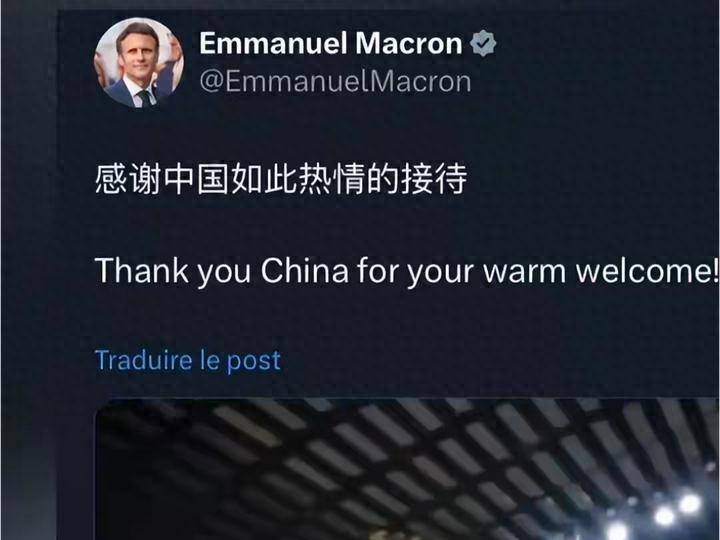
Group 1 - French President Macron's visit to China was initially characterized by a friendly atmosphere, with Macron expressing gratitude for China's warm reception on social media [1] - However, upon returning to France, Macron's tone shifted dramatically, warning that if China does not address the growing trade deficit with the EU, Europe may have to adopt tougher measures similar to those of the US, including tariffs and halting cooperation [3][5] - Macron's comments reflect the pressure from domestic interest groups in France, particularly traditional manufacturing sectors that are increasingly anxious about competition from Chinese goods [6] Group 2 - Macron's approach appears to be a strategic move to position France as a leader within the EU, showcasing a willingness to confront China while attempting to unify EU member states under a common stance [8] - The potential implementation of tariffs could backfire on France, as trade wars often result in reciprocal measures that may harm domestic industries more than intended [10][11] - The EU's reliance on China for trade is significant, and any attempt to decouple from China could lead to severe economic repercussions for Europe, which lacks the cohesive market and supply chain resilience that the US possesses [18][20] Group 3 - Macron's warning to China comes in the context of a broader strategy to protect French industries, particularly in the electric vehicle sector, where French companies are lagging behind [13] - The response from China could target French products such as brandy, which are highly profitable in the Chinese market, indicating that retaliatory measures could have devastating effects on French agriculture and luxury goods sectors [15] - The dynamics of the trade relationship between France and China highlight the complexities of global trade, where aggressive posturing may lead to unintended consequences for domestic economies [24]
特朗普将推出期待已久的120亿美元农业援助计划
Xin Lang Cai Jing· 2025-12-08 09:10
Core Viewpoint - The Trump administration plans to launch a long-awaited agricultural assistance program, providing $12 billion in funding to support farmers affected by low crop prices and the impacts of presidential policies [1][5]. Group 1: Assistance Program Details - The assistance program will allocate up to $11 billion through the newly established Farmer Bridge Assistance Program (FBA) to provide one-time payments to crop growers, with the remaining funds supporting other crop categories not covered by the program [1][6]. - The announcement is scheduled for 2 PM Washington time, with attendance from various crop growers and key officials, including Treasury Secretary Scott Bessent and Agriculture Secretary Brooke Rollins [1][6]. Group 2: Context and Background - This initiative reflects the agricultural support provided during Trump's first term amid a trade war with China, as dissatisfaction among Republican lawmakers regarding farmers' economic struggles has increased ahead of the midterm elections [1][6]. - The agricultural community, which overwhelmingly supported Trump in the 2024 election, is facing shrinking export markets for several crops, particularly soybeans, which saw a halt in Chinese purchases earlier this year [2][6]. Group 3: Market Dynamics - Since late October, soybean purchases by China have gradually increased, with the USDA reporting a record daily purchase volume in two years, totaling 2.25 million tons since October 30 [2][7]. - However, current purchase volumes fall short of U.S. farmers' export expectations and are significantly below the target of 12 million tons by the end of February, as stated by Bessent [7]. Group 4: Historical Context and Economic Impact - Previous assistance included $28 billion in subsidies during 2018 and 2019 to offset losses from the trade dispute with China, although the long-term effects of the trade war have led to increased reliance on Brazil for soybean supply [4][8]. - Despite recent optimism boosting soybean futures prices, crop prices remain near their lowest levels since 2020, compounded by rising production costs and shrinking farmer incomes [8].
反制加码!数千吨美国牛肉,被中国拒之门外,美国厂商遭到重击
Sou Hu Cai Jing· 2025-12-06 07:21
Group 1 - The US-China trade friction has escalated in 2025, with the US imposing a 10% tariff on all Chinese imports starting in February, followed by additional tariffs on March 3 [1] - China's Ministry of Commerce announced extra tariffs on certain US agricultural products, including a 10% tariff on beef, significantly reducing the competitiveness of US beef in the Chinese market [1][3] - The US beef export volume to China plummeted from over a thousand tons per week to nearly zero, with the USDA reporting only 54 tons exported after March, primarily remnants of old contracts [5][7] Group 2 - Major US meat processing companies like Tyson Foods and Cargill lost their export qualifications to China, leading to significant inventory issues and financial losses [3][5] - The Texas and Nebraska beef-producing states were hit hardest, with a 10% drop in cattle output and increased unemployment among workers [5][11] - The American Meat Export Federation estimated annual losses could reach $500 million due to the trade disruptions [5] Group 3 - The value of US beef exports to China dropped from $1.58 billion to just $8.1 million by July, a staggering 90% decline [7] - The share of US meat exports to China fell from 5% to below 1%, forcing companies to diversify their markets to Southeast Asia and Europe, which are significantly smaller [11][18] - By April, tariffs on US beef reached 56%, completely erasing price advantages, and compliance with new Chinese regulations became a major hurdle for US exporters [13][15] Group 4 - By June, US beef exports faced a crisis, with many shipments redirected to Japan to mitigate losses, and over 900 companies lost their export status [15][16] - The US meat export association reported annual losses exceeding $1 billion, with companies suing the government over policy failures [16][20] - Following a new trade agreement in November, some restrictions were lifted, allowing for a gradual recovery of US beef exports, but significant losses had already occurred [18][24] Group 5 - The trade conflict highlighted the dual-edged nature of trade wars, where US attempts to pressure China ultimately harmed American farmers [20][24] - China successfully diversified its import sources, stabilizing its market while US suppliers faced inventory buildup and financial strain [20][22] - The situation prompted a reevaluation among US companies regarding reliance on single markets, emphasizing the need for supply chain adjustments and market diversification [22][24]

Tariffs catch up to resurgent Build-A-Bear, overshadowing financial performance
Yahoo Finance· 2025-12-04 17:37
Core Insights - Build-A-Bear Workshop experienced a strong quarter but faced challenges due to tariffs from the ongoing trade war, which are expected to impact performance into 2026 [1][2] - The company reported earnings of $8.1 million, or 62 cents per share, which was lower than the previous year's $9.9 million, or 73 cents per share, but exceeded analyst expectations of 59 cents per share [3] - Revenue increased by nearly 3% to $122.7 million, although it fell short of Wall Street's expectation of $124 million [3] Financial Performance - Build-A-Bear anticipates fiscal 2025 revenue growth in the mid-to-high single-digit percentage range [4] - The first nine months of the fiscal year have been the most profitable in the company's history, with shares closing at $57.40, a significant increase from under $3 five years ago [5] Market Dynamics - The company has benefited from a growing social media presence and a trend among "kidults," who are returning to purchase products they enjoyed in childhood [4] - CFO Voin Todorovic indicated that while the company has managed to mitigate some tariff impacts, the elevated level of impact is expected to continue into the next fiscal year [2]
烯石电车新材料拟出售于美国的石墨烯生产项目
Zhi Tong Cai Jing· 2025-12-02 04:14
Core Viewpoint - The company has entered into an agreement to grant a purchase option to M2i Global, Inc. for the sale of its subsidiary Graphex Technologies LLC, which focuses on graphene products in North America [1][2] Group 1: Agreement Details - The seller, Happy Growth Group Limited, will grant a purchase option for a cash consideration of $500,000 (approximately HKD 3.9 million) [1] - The buyer can request the seller to sell 100% of the issued and outstanding limited liability units of the subsidiary for a total price of $100 million (approximately HKD 780 million) [1] Group 2: Strategic Rationale - The board anticipates significant challenges for future investments in the U.S. due to geopolitical tensions, including the Inflation Reduction Act and export restrictions from China [2] - The potential sale is viewed as the most favorable option for enhancing shareholder value, leveraging the seller's expertise to mitigate risks for the buyer entering the U.S. market [2] Group 3: Operational Insights - The construction and operation of the facility are expected to significantly enhance the buyer's value and stock price [2] - The existing team is deemed capable of providing essential design and technical support without incurring significant additional costs, allowing the company to focus on its expansion plans in China [2]
烯石电车新材料(06128)拟出售于美国的石墨烯生产项目
智通财经网· 2025-12-02 04:10
Group 1 - The company, Graphene Electric Vehicle Materials (06128), announced an agreement for the sale of its subsidiary, Graphex Technologies LLC, to M2i Global, Inc., involving a cash option price of $500,000 (approximately HKD 3.9 million) [1] - The sale includes the potential transfer of 100% of the issued and outstanding limited liability units of the subsidiary for a total consideration of $100 million (approximately HKD 780 million), to be paid in cash and shares [1] - The subsidiary specializes in the development, manufacturing, and sales of graphene products in North America [1] Group 2 - The board anticipates significant challenges for future investments in the U.S. due to geopolitical tensions, including the Inflation Reduction Act and export restrictions from China on graphite products [2] - The potential sale is viewed as the most favorable option for enhancing shareholder value, with the unique products of the facility expected to significantly increase the buyer's stock value [2] - The structured framework of the sale aims to leverage the seller's expertise to mitigate risks for the buyer entering the U.S. market, ensuring a seamless transfer of critical non-patented know-how [2] - The existing team is deemed capable of providing the necessary design and technical support without incurring significant additional costs, allowing the company to focus on its expansion plans in China [2]
美国就业警报拉响!降息大局已定?
第一财经· 2025-12-01 23:41
Core Viewpoint - The overall manufacturing sentiment in the U.S. continues to decline, marking the ninth consecutive month below the threshold, primarily due to the impacts of the trade war initiated by the Trump administration, which has led to decreased orders, job demand pressure, and increased production costs [3][4]. Manufacturing Sector Pressure - The ISM reported that the manufacturing Purchasing Managers' Index (PMI) fell from 48.7 in October to 48.2 in November, with the new orders sub-index dropping to 47.4, indicating weakened demand due to tariffs raising prices [5][6]. - Manufacturing employment indicators have contracted for ten consecutive months, with 67% of survey participants indicating that managing personnel numbers is the norm rather than hiring new employees [5][6]. - The manufacturing sector accounts for 10.1% of the U.S. economy, with only four industries, including computers and electronics, showing growth, while sectors like wood products and transportation equipment are experiencing contraction [6][7]. Impact of Tariffs and Economic Uncertainty - Manufacturers in the transportation equipment sector are linking layoffs to the extensive tariff policies of President Trump, indicating a shift towards permanent adjustments, including layoffs and new overseas production initiatives [6][7]. - Chemical product manufacturers report that tariffs and economic uncertainty are suppressing demand for adhesives and sealants, which are primarily used in construction [6][7]. - The chaotic trade environment has led to complaints from electrical equipment and appliance manufacturers regarding increasing difficulties in exporting to the U.S. [6][7]. Federal Reserve's Policy Considerations - As the Federal Reserve approaches its year-end meeting, market attention is focused on economic data, including the ISM services index and the ADP private employment report, which are critical for assessing future policy directions [8][9]. - Recent data shows that the number of Americans filing for unemployment benefits rose to 1.96 million, the highest level since the pandemic, indicating significant challenges in the job market [9][10]. - The Federal Reserve has already cut rates twice since September and may consider another cut in the coming weeks, with expectations for a 25 basis point reduction at the December meeting [9][10].

加税500%!特朗普下定决心,中俄一个不留?中方高层抵达俄罗斯
Sou Hu Cai Jing· 2025-12-01 04:37
特朗普与中国的贸易战并未如他所愿取得胜利,反而使他对中国产生了深深的怨恨,甚至宣布将关税税 率提高至500%,誓言要打压俄罗斯及其一众盟友。就在这个关键时刻,中国的一架专机直飞俄罗斯, 普京当面做出承诺,中俄两国的联合回应是:放马过来! 特朗普果然没有按兵不动,面对与中国的正 面较量,他选择了借刀杀人——通过俄罗斯对中国采取行动!近日,美国再次准备对俄罗斯加大制裁, 关税税率直接飙升至500%,这样的行动前所未见,极为罕见。美俄之间的关系一直以来就不是冤家不 聚头,虽说这次关税涨幅不小,大家已习惯这种过山车式的变化,但美国这次的做法却显得特别极端 ——似乎要一举打死所有对手,完全不给任何回旋的余地。 今年年初,来自美国的两名众议员共同提 出了一项新的法案,要求对俄罗斯采取更为严厉的制裁。其中一位便是大家熟知的反华议员格雷厄姆。 不过,美国并非完全无情无义。法案中特别指出,其他国家将被赋予180天的时间来决定是否继续与俄 罗斯保持联系,或者选择断绝关系。听起来像是美国在施舍选择权,实际上,这无疑是将其他国家置于 非常尴尬的境地,对它们来说,这更像是一道送命题,没有任何商量余地。 虽然俄罗斯如今看似处于被压制的状 ...