中国经济转型

Search documents
张瑜:“科技-转型-中美”的阶段切换——十五五大势研判——张瑜旬度会议纪要No.125
一瑜中的· 2025-11-05 12:24
Group 1: Core Views - The article discusses the interlinked dynamics of technology breakthroughs, China's economic transformation, and Sino-US relations, suggesting that these elements are entering a new phase [2][3] - The analysis framework indicates that effective technological breakthroughs are crucial for the success of economic transformation, which in turn influences the strategic positioning of Sino-US relations [3][4] Group 2: Economic Transformation Paths - Three potential paths for global economic transformation are identified: 1. Concerned Path: Old economy transformation is inevitable, but new economy breakthroughs are lacking, leading to a potential middle-income trap [3] 2. Suboptimal Path: Old economy is still transforming, while new economy shows significant breakthroughs, albeit with some turbulence [3] 3. Optimal Path: Old economy stabilizes, and new economy accelerates, enhancing overall social welfare through redistribution [3][6] Group 3: Current Economic Status - As of recent years, China's new economy has shown effective development, particularly in sectors like semiconductors and AI, reducing discussions around the "Concerned Path" and establishing a "Suboptimal Path" for economic transformation [4][6] - The article posits that China is gaining strategic initiative in Sino-US relations, especially following recent trade dynamics [4][6] Group 4: Modern Industrial System Understanding - The article categorizes industries into three types based on the "15th Five-Year Plan" and related policies: 1. Traditional Industries: Focus on quality improvement and efficiency optimization [7] 2. Emerging Industries: Classified into those with established advantages (e.g., solar energy, electric vehicles) and those still developing, with policy support transitioning from subsidies to market-driven approaches [8] 3. Future Industries: Characterized by unclear product forms and technology paths, with government aiming to create optimal conditions for innovation [9][10] Group 5: Policy Directions - The article emphasizes the dynamic nature of industry classification, noting that industries evolve through different life cycle stages, which necessitates tailored policy directions [10] - The government aims to provide a conducive environment for innovation through institutional support, resource allocation, and talent development [9][10]


广东“经济老大”宝座不稳,江苏能否两年内逆袭登顶?
Sou Hu Cai Jing· 2025-11-04 10:14
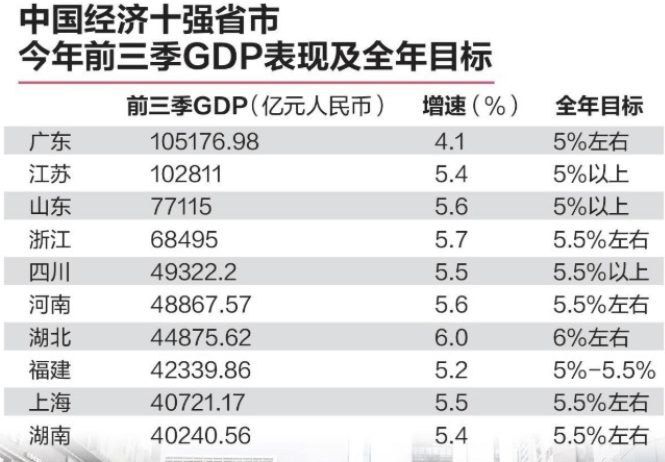
Core Insights - Guangdong's GDP reached 14 trillion in 2024, maintaining the top position nationally, but its growth rate slowed to 3.2%, missing targets for two consecutive years [1] - In contrast, Jiangsu's GDP is 13.7 trillion with a growth rate of 5.8%, leading to a significant narrowing of the economic gap, which has decreased by 43% over the past five years [1][2] - The economic slowdown in Guangdong is attributed to "transformation pains," particularly in cities like Foshan and Guangzhou, where the real estate market and traditional automotive industry face challenges [1][2] Economic Disparities - There is a stark economic imbalance within Guangdong, with developed regions like the Pearl River Delta and underdeveloped areas in western and northern Guangdong, leading to difficulties in sustaining growth when core cities like Guangzhou and Shenzhen falter [2] - Jiangsu's stable economic growth is driven by significant investments in industrial upgrades and technological innovation, contrasting with Guangdong's struggles in traditional sectors [2] Future Projections - Experts predict that if current trends continue, Jiangsu's GDP could surpass Guangdong's within two years, marking a potential seismic shift in China's economic landscape [2] - Despite challenges, Guangdong retains a strong economic foundation, with Shenzhen achieving a growth rate of 5.8% through rapid industrial transformation and significant contributions in the new energy vehicle sector [2][3] Broader Economic Context - The competition between Guangdong and Jiangsu symbolizes a broader transition in China's economy from speed to quality, emphasizing technological innovation over traditional manufacturing [3] - Regardless of the outcome, this rivalry is beneficial for national economic development, stimulating innovation and growth across regions [3]
《寻路集》出版,经济学家周其仁为企业“寻路”
Da Zhong Ri Bao· 2025-10-31 08:14
Core Insights - The book "Seeking a Path" by Professor Zhou Qiren discusses the past, present, and future of China's economy, emphasizing the reasons behind its rapid growth and the impact of systemic costs, as well as the "sandwich" global competition structure [1][3] Economic Development - Zhou highlights the importance of "cost advantages" in China's rapid growth, which is not limited to low factor prices but includes the overall operational system costs [3] - The reform and opening-up policies significantly reduced systemic costs, allowing low factor cost advantages to be unleashed in the global market, driving decades of economic miracles [3] - Around 2008, systemic costs began to rise again, combined with increasing factor prices, leading to a slowdown in economic growth [3] Global Competition - The "sandwich" competition structure describes China's current situation, where it is caught between developed countries with unique innovations at the high end and developing countries with lower cost advantages at the low end, creating pressure for "breakthrough" [3] New Challenges - The changing dynamics of Sino-U.S. relations are identified as the biggest shift, rooted in long-term "global imbalances," which have manifested through trade wars and technology conflicts [3][4] Corporate Strategies - Zhou presents three effective strategies for companies to navigate the complex environment: 1. **Pursue Lean Management**: Companies should focus on internal improvements through continuous lean management to uncover potential, as seen in firms that have successfully implemented cost-saving measures [4] 2. **Global Network Expansion**: Companies should actively seek international opportunities to mitigate geopolitical risks and trade barriers, exemplified by firms like Midea that find suitable production points globally [4] 3. **Innovate Uniquely**: There is a need for more original companies like DJI that can break through in principles, technology, and products, requiring a shift of resources from excess capacity to research and innovation [4] Conclusion - The path forward involves action and enhanced understanding, with companies encouraged to engage in lean management, global expansion, and unique innovation to navigate the unprecedented changes and achieve sustainable development [5]

中国的顶级阳谋,下一个五年计划,国家怎么让普通人的财富增加?
Xin Lang Cai Jing· 2025-10-28 08:26
Core Insights - The upcoming 15th Five-Year Plan is crucial for determining China's economic direction and will significantly impact the lives of ordinary citizens [2][4][7] - The plan aims to add 35 trillion yuan to the economy over the next five years, with a target GDP growth rate of around 5% annually [4][6] - The focus of the 15th Five-Year Plan will be on the second transformation of the economy, shifting from general manufacturing to technology industries [4][6] Economic Development - Previous Five-Year Plans have led to significant changes in everyday life, such as the rise of mobile payments and the sharing economy [4] - The 15th Five-Year Plan is expected to create a wealth redistribution, similar to past plans, where those aligned with national strategies could see substantial financial gains [4][9] - The goal is to increase China's R&D investment to over 3% of GDP by 2030, aligning with developed nations [6] Impact on Ordinary Citizens - The 15th Five-Year Plan will influence the economic prospects of every Chinese citizen, making it essential for individuals to pay attention to its developments [7][9] - The shift towards high-tech industries and advanced production capabilities will create new opportunities for ordinary people, even those without advanced degrees [11][12] - Emerging sectors such as low-altitude economy and renewable energy will provide accessible job opportunities for individuals willing to engage in these fields [12]
【申万宏源策略 | 一周回顾展望】“十五五”规划:优化中国经济转型的实现路径
申万宏源证券上海北京西路营业部· 2025-10-27 03:05
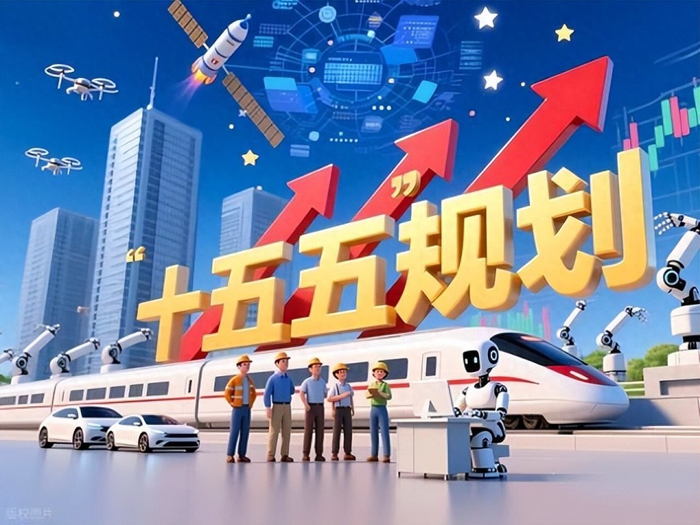
Core Viewpoint - The article discusses the optimization of China's economic transformation pathways as outlined in the "14th Five-Year Plan" [2] Group 1: Economic Transformation - The "14th Five-Year Plan" emphasizes the need for structural reforms to enhance economic resilience and sustainability [2] - Key sectors identified for growth include technology, green energy, and healthcare, which are expected to drive future economic development [2] Group 2: Policy Implications - The government is likely to implement policies that support innovation and digital transformation across industries [2] - Increased investment in infrastructure and public services is anticipated to stimulate economic activity and improve living standards [2] Group 3: Market Opportunities - The focus on green energy presents significant investment opportunities in renewable energy projects and technologies [2] - The healthcare sector is projected to grow, driven by an aging population and increasing demand for medical services [2]

申万宏源策略一周回顾展望(25/10/20-25/10/25):“十五五”规划:优化中国经济转型的实现路径
Shenwan Hongyuan Securities· 2025-10-25 13:43
Group 1 - The "14th Five-Year Plan" optimizes the path for China's economic transformation, enhancing long-term market expectations and making them easier to develop [3][5][8] - Clear recognition of China's advantages includes the "socialist system advantage," "super-large market advantage," "complete industrial system advantage," and "rich talent resource advantage" [3][5][6] - The importance of external circulation for China's economic transformation has been further confirmed, emphasizing a "high-level opening up" strategy [6][7] Group 2 - Internal circulation governance optimization is focused on increasing the resident consumption rate and optimizing resource allocation [7][8] - Future regional industrial layouts may show significant differentiation, allowing for targeted talent strategies and urbanization efforts [8] - The internal governance approach aims to enhance total factor productivity through technological advancements [8] Group 3 - Short-term market judgment remains that technology growth adjustments are nearing completion, with expectations for technology to lead the market in Q4 2025 [9][10] - The structural characteristics of the A-share market in the five-year planning year highlight AI, robotics, and semiconductors as key directions [11][12] - The "14th Five-Year Plan" presents opportunities in emerging industries and future industries, including new energy, quantum technology, and integrated circuits [12]
对话朱民,房价走势透新向,为何会再次引发热议?
Sou Hu Cai Jing· 2025-10-13 18:42
Core Viewpoint - The discussion on real estate in China highlights a significant shift in market dynamics, emphasizing the need for a realistic understanding of the current situation rather than an optimistic outlook on property prices [1][3][7]. Group 1: Real Estate Market Dynamics - The demand for real estate is shrinking, and a return to value is inevitable, as acknowledged by industry experts [3][5]. - China's population has experienced negative growth for three consecutive years, with a decrease of 1.39 million by the end of 2024, and over 21% of the population is now over 60 years old [3][5]. - The peak demand for housing is expected to decline as the last cohort of the baby boom generation born in 1997 approaches 30 years of age [5]. - The imbalance between housing supply and demand is evident, with an average housing area of 43 square meters per person, while the per capita GDP is less than half of that in Europe [5][6]. - The urbanization rate is nearing 70%, limiting future growth potential, and the previous model of demand driven by rural migration is no longer sustainable [5][6]. - The high leverage ratio of over 70% among residents indicates a significant depletion of purchasing power [5]. Group 2: Policy Changes and Market Outlook - There is a fundamental shift in policy direction, with the government focusing on developing the rental market, allocating 2 trillion yuan to encourage local governments to convert existing housing into rental properties [6][13]. - The sentiment around housing prices stabilizing is challenged, with experts suggesting that if individuals cling to unrealistic expectations of skyrocketing prices, they will struggle to maintain confidence [7][11]. - Despite some short-term increases in transaction volumes in cities like Shanghai, the overall price pressure remains unresolved, with a 7.38% year-on-year decline in second-hand residential prices across 100 cities as of September 2025 [11][13]. - The policy focus since 2025 has been on "stopping the decline and stabilizing" the market, aiming to prevent systemic risks rather than inflating property prices [13]. - The ultimate goal is to allow individuals to choose renting over being forced to buy, thereby reducing the burden of housing costs on household expenditures and freeing up other consumption capabilities [13].
私募最新调研路径曝光,科技与医药仍是“心头好”
Shang Hai Zheng Quan Bao· 2025-10-13 00:02
Group 1 - In September, over 900 private equity firms participated in A-share listed company research activities, totaling nearly 2800 research instances [1] - The favored sectors for private equity research include electronics, machinery, pharmaceuticals, and power equipment, indicating a structural market trend supported by policies and capital [1][2] - The focus on technology and pharmaceuticals is expected to continue, with private equity showing particular interest in high-quality growth companies amidst market fluctuations [2][3] Group 2 - The biotechnology company Maiwei Bio received significant attention, with 88 private equity firms conducting research, highlighting interest in its dual-target small nucleic acid drugs and α-syn targeting tracer projects [2] - The electronics sector had the highest research frequency in September, with 78 companies being researched 554 times, followed closely by machinery equipment with 444 instances [3] - Investment firms are optimistic about the electronic sector's leading companies and strong pharmaceutical firms with robust fundamentals and R&D advantages [3]


私募最新调研路径曝光科技与医药仍是“心头好”
Shang Hai Zheng Quan Bao· 2025-10-12 15:11
Group 1 - Private equity firms are actively engaging in A-share company research, with over 900 firms participating in nearly 2800 research activities in September [1][2] - The technology and pharmaceutical sectors remain favored by private equity, with significant interest in companies like Maiwei Biotech, which received attention from 88 private equity firms [2][4] - The electronics sector had the highest research frequency, with 78 companies being researched 554 times, followed by mechanical equipment with 444 times [4] Group 2 - The current market environment, characterized by a weaker dollar and ongoing economic recovery in China, is expected to attract global funds to A-shares due to reasonable valuations and strong industry drivers [3] - Private equity firms are focusing on high-quality growth companies, particularly in the technology and pharmaceutical sectors, as they seek to capitalize on market fluctuations [2][4] - The coal industry and companies benefiting from "anti-involution" policies, as well as those in the technology innovation space, are highlighted as areas of potential investment opportunity [4]
大资金新流向:中证A50正在成为核心资产“压舱石”
Sou Hu Cai Jing· 2025-10-09 03:08
Core Insights - The article highlights the rapid growth of the ETF market in China, with total ETF assets surpassing 5 trillion yuan, marking a significant milestone in the industry [4][10] - The surge in ETF popularity is attributed to a recovery in A-share trading volumes, with institutional investors leading the charge, indicating a shift towards long-term investment strategies [4][10] - The China Securities A50 Index is presented as a key investment tool, reflecting the core assets of the Chinese economy and aligning with the ongoing economic transformation [4][10] ETF Market Growth - The total scale of ETFs in China reached over 5 trillion yuan as of August 15, 2023, a remarkable increase from 4 trillion yuan just four months prior [4] - The ETF market has seen consecutive breakthroughs of 1 trillion yuan milestones, indicating robust investor interest and participation [4] - Institutional investors, including pension funds and foreign capital, are becoming dominant players in the market, contributing to a more stable investment environment [4][10] China Securities A50 Index - The China Securities A50 Index is constructed from the top 50 leading companies based on market capitalization from the top 300 A-share companies, ensuring a balanced representation of growth and stability [5][10] - The index has a significant focus on new economy sectors, reducing reliance on traditional industries while maintaining a diverse industry representation [6][10] - Over 70% of the index's components are leading companies in their respective sectors, reinforcing a "stronger gets stronger" dynamic that appeals to long-term investors [6][10] Investment Opportunities - The China Securities A50 Index incorporates ESG principles, excluding companies with low ESG ratings, which enhances the index's stability and aligns with sustainable investment trends [10] - The index has demonstrated superior performance metrics, with a net asset return of 11.62%, outperforming other major indices [10][12] - The A50 ETF and its linked funds provide a low-threshold, efficient way for ordinary investors to access core Chinese assets, making it suitable for long-term investment strategies [15][17]