
美债市场

Search documents
【公募基金】债市情绪恢复,市场波动收窄 公募基金泛固收指数跟踪周报(2025.08.04-2025.08.08)
华宝财富魔方· 2025-08-11 12:40
Market Review - The bond yields experienced fluctuations and declined last week (2025.08.04-2025.08.08), with the China Bond Composite Wealth Index (CBA00201) rising by 0.08% and the China Bond Composite Full Price Index (CBA00203) increasing by 0.05%. The yields of government bonds across various maturities decreased, with 1-year, 3-year, 5-year, and 10-year government bond yields changing by -1.71bp, -1.91bp, -2.32bp, and -1.76bp respectively compared to the previous week [15][16]. - The credit bond yields across various maturities and ratings mostly declined, leading to a significant compression of credit spreads. The funding environment remained loose, and the new VAT policy boosted market sentiment towards bonds [15][16]. Market Observation - The US Treasury market stabilized with slight increases in yields. The overall volatility decreased, and the yields of various maturities saw minor upward movements. The market is currently in a wait-and-see mode regarding potential interest rate cuts in September [17]. - The REITs secondary market experienced fluctuations, with a decrease in trading activity. The CSI REITs Total Return Index fell by 0.33% last week, with property rights performing better than operational rights. The market sentiment for REITs has cooled compared to earlier in the year, and trading activity has declined [17]. Public Fund Market Dynamics - On August 7, 2025, Morgan Stanley's Yingyuan Stable Three-Month Holding Period Mixed FOF was officially announced, raising 2.752 billion yuan on its first day, making it the first public FOF of 2025 to achieve "one-day fundraising." This fund adopts a diversified "fixed income +" strategy, limiting equity assets to no more than 30% [18]. - As of August 6, 2025, a total of 37 new public FOFs were established in the market this year, with a total fundraising scale exceeding 33.7 billion yuan, averaging about 910 million yuan per fund, marking a new high since 2023 [18]. Fund Index Performance Tracking - The Money Enhanced Index rose by 0.03% last week, with a cumulative return of 3.91% since inception [19]. - The Short-term Bond Fund Preferred Index increased by 0.06%, with a cumulative return of 4.13% since inception [20]. - The Medium to Long-term Bond Fund Preferred Index rose by 0.02%, with a cumulative return of 6.48% since inception [5]. - The Low Volatility Fixed Income + Fund Preferred Index increased by 0.31%, with a cumulative return of 3.28% since inception [6]. - The Medium Volatility Fixed Income + Fund Preferred Index rose by 0.42%, with a cumulative return of 3.09% since inception [7]. - The High Volatility Fixed Income + Fund Preferred Index increased by 0.61%, with a cumulative return of 4.71% since inception [8]. - The Convertible Bond Fund Preferred Index rose by 1.60%, with a cumulative return of 15.86% since inception [9]. - The QDII Bond Fund Preferred Index increased by 0.38%, with a cumulative return of 8.91% since inception [10]. - The REITs Fund Preferred Index fell by 0.48%, with a cumulative return of 37.50% since inception [11].


7.29黄金直线跳水45美金 再探3300
Sou Hu Cai Jing· 2025-07-29 07:18
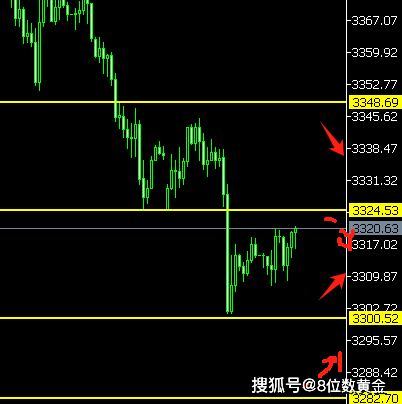
Group 1 - Gold prices experienced a sharp decline, dropping $45 and hitting a low of $3301, marking four consecutive days of decline [1][3] - The market is currently facing resistance at the $3324 level, with potential for further downward movement towards the $3300 support [4][6] - A significant rebound is anticipated if the price can hold above the $3300 mark, with potential upward targets at $3324 and $3348 [7][8] Group 2 - Recent geopolitical developments, including agreements between the US and Japan, as well as the US and Europe, have contributed to a cooling of global trade tensions, impacting gold prices negatively [10] - Pressure from former President Trump on the Federal Reserve to lower interest rates has also influenced market dynamics, with a court ruling reinforcing the Fed's independence and leading to a stronger dollar [10][11] - Upcoming economic indicators, such as the US housing price index and job vacancy index, are expected to affect market expectations regarding Federal Reserve policies, which are crucial for gold investment strategies [11]
美国经济与美债分析手册——宏观利率篇
2025-07-29 02:10
Summary of Key Points from the Conference Call Industry or Company Involved - The discussion primarily revolves around the **U.S. economy** and **U.S. Treasury market** analysis, with a focus on macroeconomic indicators and fiscal policies. Core Insights and Arguments 1. **Macroeconomic Shifts**: The global macro trading narrative in 2025 has shifted multiple times, influenced by factors such as Trump's policies and trade disputes, with a need to monitor the potential reversal risks associated with "Taco trading" [1][5][6]. 2. **Impact of Trump's Policies**: The passage of the "Big Beautiful Plan" has enhanced Trump's negotiation flexibility, particularly as the August 1 tariff deadline approaches, which could influence market dynamics [1][8]. 3. **Consumer Spending as Economic Indicator**: Personal consumption accounts for over 60% of U.S. GDP, making it a critical focus for assessing economic trends through retail sales and consumer confidence indices [1][12][16]. 4. **Real Estate Market Challenges**: The U.S. real estate market is currently facing high interest rates and reduced housing demand, with new and existing home sales being key indicators to monitor [1][24][25]. 5. **Federal Reserve's Role**: The Federal Reserve's monetary policy is primarily driven by inflation and employment factors, with potential interest rate cuts expected in response to labor market weaknesses [3][9][44]. 6. **Treasury Market Dynamics**: The U.S. Treasury market serves as a global asset pricing anchor, with significant portions held by international investors, impacting global interest rates and capital flows [10][11][38]. 7. **Trade Policy Implications**: Trump's trade policies are a significant variable in macro trading for 2025, with the U.S. experiencing trade deficits while maintaining a surplus in services [26]. 8. **Labor Market Resilience**: The labor market shows signs of resilience, with non-farm employment data and unemployment rates being crucial metrics for understanding economic health [27][28]. Other Important but Potentially Overlooked Content 1. **Consumer Confidence and Retail Data**: Retail sales and consumer confidence indices are vital for gauging economic performance, with soft data sometimes conflicting with hard data [20][21]. 2. **Inflation Indicators**: Recent increases in core consumer prices suggest that tariff policies may be influencing inflation, which could affect future Federal Reserve decisions [33][34]. 3. **Market Reactions to Economic Data**: The relationship between stock and bond markets indicates that rising yields can negatively impact equity valuations, highlighting the interconnectedness of asset classes [14]. 4. **Federal Budget Concerns**: The U.S. fiscal budget process is complex, with recent spending levels raising concerns about fiscal sustainability, particularly with the "Big Beautiful Plan" increasing the deficit ceiling [36]. 5. **Investment Strategies in Treasury Market**: Current strategies suggest a focus on short-term Treasury securities due to anticipated interest rate cuts, while long-term securities face greater uncertainty due to inflation risks [47].
美联储降息救市!今日爆出的1五大消息已全面袭来
Sou Hu Cai Jing· 2025-07-26 06:10
Group 1 - The Federal Reserve is facing significant pressure as the selection process for the next chair begins, indicating a potential end to Jerome Powell's tenure [1] - Dallas Fed President Logan's hawkish speech emphasizes the need to maintain the interest rate range of 4.25% for at least 6 to 12 months to control inflation, raising concerns about the economy facing risks reminiscent of the 1970s stagflation [3] - The June inflation data shows a year-on-year increase in the Consumer Price Index (CPI) of 2.7%, the highest in four months, with core CPI rising 2.9%, significantly above the Fed's 2% target [3] Group 2 - President Trump expressed frustration over inflation data, suggesting a drastic rate cut of 300 basis points and contemplating Powell's dismissal, which led to a spike in market volatility [4][6] - The market reacted sharply to Trump's tweet, with the probability of Powell's dismissal rising from 16% to 26%, and gold prices increasing by $20 [4] - The approval of AI chip exports to China by the U.S. government positively impacted Nvidia's stock, pushing its market cap above $4.1 trillion and contributing to a record high for the Nasdaq index [8] Group 3 - The Fed's internal divisions were revealed in the June meeting minutes, with differing opinions on interest rate cuts among decision-makers [9] - Retail sales data showed a surprising increase of 0.6% month-on-month, but concerns were raised about the impact of tariffs on sensitive categories like clothing and building materials [9] - The dollar index rose sharply following the release of inflation data, while the 10-year Treasury yield climbed to 4.491% [11] Group 4 - The selection process for the next Fed chair is underway, with potential candidates including Hassett and Waller, raising concerns about the Fed's independence [11] - The U.S. Treasury issued a record $1.2 trillion in net debt during the second quarter, indicating a significant increase in borrowing [11] - Global central banks have been selling U.S. Treasuries, with a reduction of $36 billion in April alone, signaling a potential loss of confidence in the dollar [12]

美债策略周报-20250716
Zhe Shang Guo Ji Jin Rong Kong Gu· 2025-07-15 23:45
Group 1 - The report highlights that the US Treasury market experienced upward pressure on yields due to renewed inflation concerns following tariff announcements by Trump, with the 10Y Treasury yield rising by 6.4 basis points during the week [4][13][56] - The report indicates that the US labor market remains resilient, as evidenced by unemployment claims data, while the tariffs imposed on major trading partners range from 20% to 50% [7][55] - The report suggests that the Federal Reserve may misjudge inflation trends, and long-term US Treasuries still hold investment value, particularly in the 4.4%-4.5% range for the 10Y Treasury [6][56] Group 2 - The supply side of the US Treasury market shows that the Treasury Department's issuance structure remains unchanged for Q2-Q3, with a net financing scale of $514 billion for Q2 and $554 billion for Q3 [20][26] - The report notes that the demand side reflects a historically high level of short positions in US Treasuries, indicating ongoing basis trading and swap trading activities [27][31] - The report mentions that the actual returns on 10Y US Treasuries, after accounting for currency hedging costs, are lower than those of Japanese and European bonds, which may reduce the attractiveness of US Treasuries to foreign investors [35][56] Group 3 - The liquidity in the US Treasury market is observed to be adequate, with the liquidity pressure index remaining stable and the implied volatility index (MOVE Index) decreasing [49][40] - The report indicates that the Federal Reserve's recent statements suggest a potential for interest rate cuts, with several officials expressing support for a rate reduction in July [53][54] - The report concludes that the 10Y Treasury at a yield of 4.5% presents a high investment value, with recommended investment vehicles including TLT, TMF, and specific Treasury futures [56][57]
国泰海通:市场对稳定币存在6大认识误区
Sou Hu Cai Jing· 2025-06-20 07:56
Group 1 - The core viewpoint of the report is that there are six major misconceptions regarding stablecoins in the current market [1][2] Group 2 - Misconception 1: The value of stablecoins is absolutely stable. In reality, stablecoins are credit extensions anchored to assets, and their value is subject to technical de-pegging risks and fluctuations in the underlying assets [1] - Misconception 2: All fiat currencies can issue stablecoins in large quantities. The development of different fiat stablecoins depends on the acceptance of the underlying currency, leading to a "winner-takes-all" scenario for the most trusted fiat stablecoins [1] - Misconception 3: Dollar stablecoins will weaken the credit of the US dollar. The rapid development of dollar stablecoins will not undermine the dollar system but will further strengthen the dollar's position by expanding its functionality and usage [1] - Misconception 4: Dollar stablecoins are a "lifeline" for US Treasury bonds. The dollar stablecoin market can only slightly alleviate the pressure on short-term US debt, while the overall impact on the US bond market is minimal [2] - Misconception 5: Dollar stablecoins will significantly increase the supply of US dollars. While the issuance authority of dollars is partially delegated to issuing companies, the Federal Reserve remains the main participant in controlling the total dollar liquidity [2] - Misconception 6: Stablecoins will rapidly promote the development of the RWA market. The support of stablecoins for RWA is more evident at the transaction level, and the development of the RWA market ultimately depends on the quality of the underlying assets [2]

美债策略周报-20250617
Zhe Shang Guo Ji Jin Rong Kong Gu· 2025-06-17 02:41
Group 1 - The report indicates that the U.S. Treasury market experienced a "V" shaped reversal in yields due to rising oil prices amid escalating geopolitical tensions in the Middle East, with the 10-year Treasury yield declining by a total of 10.7 basis points during the week [3][10][74] - The May CPI data showed a year-on-year increase of 2.4%, while core CPI and PPI data were below expectations, indicating limited inflationary pressure from tariffs [4][54][75] - The report forecasts that the 10-year Treasury yield will fluctuate between 4.2% and 4.6% in the coming months, with a high allocation value at the 4.5% yield level, corresponding to a price of 110 [4][74][76] Group 2 - The supply side of the Treasury market remains stable, with the Treasury Department maintaining a net financing scale of $514 billion for Q2 and $554 billion for Q3, while short-term T-Bill issuance continues to be high [19][23][20] - Demand for U.S. Treasuries remains strong despite high short positions, with the total short position in 2-year Treasuries rising to $420.2 billion, reflecting ongoing basis trading [28][24][32] - The liquidity in the Treasury market is observed to be adequate, with the SOFR rate averaging 4.28% and the ON RRP usage increasing to $183.35 billion per day [37][43][46] Group 3 - The macroeconomic environment shows that inflation is not expected to rebound significantly, with the report suggesting that the economic downturn pressure outweighs inflationary pressures [66][75][76] - The report highlights that the Federal Reserve may misjudge inflation trends, potentially leading to a resumption of quantitative easing if financial stability risks increase [73][74][76] - The overall economic outlook indicates that the U.S. economy may face two scenarios: increased pressure from trade wars or financial stability risks due to declining stock and bond markets [75][76]
Juno markets 官网:美国CPI+十年期美债拍卖,今晚的美债备受关注
Sou Hu Cai Jing· 2025-06-11 03:40
Core Viewpoint - The simultaneous occurrence of the $39 billion 10-year U.S. Treasury auction and the critical Consumer Price Index (CPI) report is expected to create significant market volatility, breaking the recent calm in the U.S. Treasury market [1][4][6] Group 1: CPI Data Impact - The upcoming CPI report for May is a key indicator of U.S. inflation, directly influencing consumer living costs, business production costs, and the Federal Reserve's monetary policy direction [3][5] - If the CPI data exceeds market expectations, it may lead to increased inflation pressure, raising expectations for Federal Reserve interest rate hikes, which could result in falling bond prices and rising yields [5] - Conversely, if the CPI data is below expectations, it may ease inflation pressure, enhancing the appeal of U.S. Treasuries as a safe-haven asset, leading to rising bond prices and falling yields [5] Group 2: Treasury Auction Dynamics - The outcome of the 10-year Treasury auction will reflect market demand for U.S. Treasuries, influencing yields and the overall bond market [3][4] - A strong auction demand, indicated by a high bid-to-cover ratio, would suggest high market confidence in U.S. Treasuries, potentially stabilizing yields [5] - Conversely, weak auction results, such as a low bid-to-cover ratio or even a failed auction, could lead to a significant rise in yields and spread panic in the market [5] Group 3: Market Outlook - The combination of the CPI report and the Treasury auction is likely to signal the end of the recent period of calm in the U.S. Treasury market, prompting investors and financial institutions to reassess their strategies [4][6] - Global investors, financial institutions, and policymakers need to closely monitor these events, as they will influence future market dynamics and economic policies [6]
中方抛189亿美债,第一债主地位让人,特朗普坐不住了:我想去中国
Sou Hu Cai Jing· 2025-05-23 17:17
Group 1 - The core point of the article highlights the shift in U.S. Treasury bond ownership, with Japan and the UK increasing their holdings while China reduces its stake, moving from the second to the third largest holder of U.S. debt [1][3] - Japan increased its U.S. Treasury holdings by $4.9 billion in March, totaling $1,130.8 billion, maintaining its position as the largest foreign holder [1] - China reduced its U.S. Treasury holdings by $18.9 billion to $765.4 billion, marking its first reduction of the year, which reflects a strategic shift amid rising U.S. debt yields [1][3] Group 2 - The article suggests that Japan and the UK are increasing their U.S. Treasury holdings to curry favor with the U.S., while China is diversifying its assets by increasing gold reserves, indicating a lack of trust in U.S.-China relations [1][5] - China's strategy of reducing long-term U.S. debt while increasing short-term holdings is seen as a move to mitigate risks associated with U.S. debt, especially given the volatile nature of the U.S. bond market [3][5] - The reduction in U.S. Treasury holdings by China is viewed as a response to U.S. tariff policies, potentially impacting U.S. Treasury yields and financing costs, and may prompt other countries to reassess their own U.S. debt strategies [5][7] Group 3 - The article discusses the implications of China's actions on the U.S. Treasury market, suggesting that a significant sell-off could undermine confidence in U.S. assets and affect the U.S. financial system [5][7] - Trump's recent overtures towards China, including a willingness to meet with Chinese leaders, are interpreted as attempts to stabilize U.S. Treasury demand ahead of a significant $6.5 trillion in maturing debt [7] - The ongoing trade tensions and tariff disputes are influencing China's decisions regarding U.S. debt, highlighting the interconnectedness of trade policy and financial markets [5][7]

“美丽大法案”恐引发“市场呕吐”!
Jin Shi Shu Ju· 2025-05-23 09:54
Group 1 - The U.S. Treasury's recent auction of $16 billion in 20-year bonds faced weak demand, leading to a rise in 30-year Treasury yields to an 18-month high, hovering above 5% [1] - RSM's chief economist Joseph Brusuelas noted a shift in investor perception regarding the safe-haven value of long-term U.S. Treasuries, driven by increasing risks related to government spending, taxation, trade, inflation, and growth [1] - Moody's downgrade of the U.S. credit rating has raised concerns, with projections indicating that U.S. debt could reach 134% of GDP by 2035, highlighting the unsustainable nature of the current deficit levels compared to other developed nations [1] Group 2 - The Responsible Federal Budget Committee estimates that the recent tax cut plan could increase the deficit by $3.1 trillion over the next decade, equivalent to 10% of this year's GDP [2] - Analysts have expressed concerns about the implications of high deficits during a period of low unemployment, likening current borrowing levels to wartime financing [2] - There are warnings that unless the stock market experiences another significant downturn, the administration may not reconsider its tax cut strategy, potentially leading to a severe sell-off in long-term bonds that could impact risk assets [2]