风险平价策略

Search documents
多风格多策略固收+|鹏华方昶:为投资人提供长期高夏普比固收+产品
Sou Hu Cai Jing· 2025-09-02 17:17
Core Viewpoint - The low interest rate environment poses challenges for traditional investment products, prompting investors to seek alternatives that balance safety, liquidity, and returns [5][6][7]. Group 1: Low Interest Rate Environment - Major banks have collectively lowered deposit rates, with one-year fixed deposit rates dropping below 1%, leading to a search for "deposit alternatives" among investors [5][6]. - The low interest rate trend is expected to persist, affecting the returns of traditional stable products like bank deposits and money market funds [6][7]. - Investors are advised to diversify their asset allocation to balance risk and return, utilizing strategies like "fixed income plus" to enhance yields [6][9]. Group 2: Investment Strategies - A diversified strategy is essential, focusing on high-quality credit bonds and interest rate bonds as core assets, complemented by equities and convertible bonds for yield enhancement [6][9]. - Investors should consider low-volatility fixed income products, which typically have a maximum drawdown of less than 2%, making them suitable for short-term idle funds [7][8]. - The use of AI and quantitative tools is recommended to improve risk management and enhance investment flexibility in a low interest rate environment [6][9]. Group 3: Asset Allocation - In an "asset scarcity" environment, investors should prioritize safety, yield, and liquidity through diversified and dynamic asset allocation [9][10]. - A balanced portfolio should include stocks, bonds, and commodities, utilizing strategies like risk parity and dynamic balancing to optimize risk-return profiles [9][10]. - High-quality, stable dividend-paying stocks are attractive in a low interest rate environment, while growth stocks should be selectively included for potential higher returns [10][11]. Group 4: Bond Market Outlook - The bond market is currently experiencing increased volatility, with a need for investors to balance safety margins and yield flexibility [11][17]. - The outlook for the bond market is neutral, with short-term assets showing higher certainty and long-term assets gradually revealing comparative advantages [17]. - Credit risk in the bond market is expected to decrease, providing opportunities for investment in high-rated credit bonds [11][17].



穿越市场波动:华安盈瑞稳健优选 FOF的多资产投资智慧
Sou Hu Cai Jing· 2025-08-18 01:29
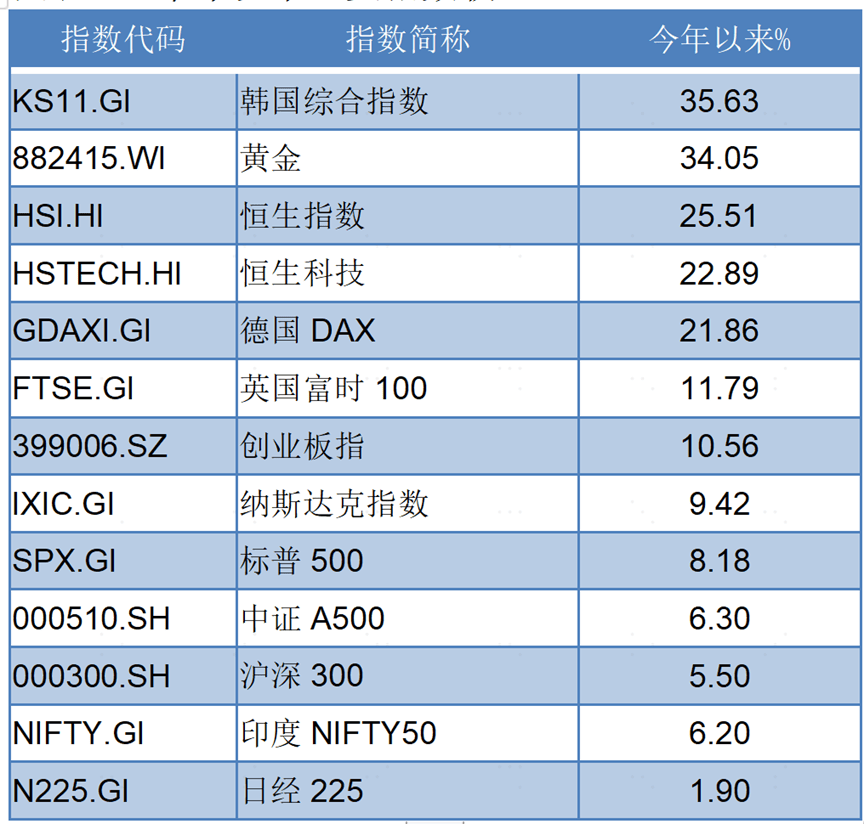
Market Overview - The A-share market experienced dramatic fluctuations this year, initially benefiting from breakthroughs in artificial intelligence and strong government support for emerging industries, leading to a quick recovery [1] - Following a cooling period, the market shifted towards defensive investment styles, with many investors taking profits, but later saw renewed activity in sectors like new consumption and innovative pharmaceuticals [1] - Globally, indices such as the Korean Composite Index, German DAX, and UK FTSE 100 performed well in the first seven months of the year, while gold remained a popular asset class [1][2] Investment Environment - Investors are facing a complex market environment, leading to indecision and cautious behavior due to fears of missing out on potential gains while also being wary of market volatility [2] - The current market conditions highlight the need for investment products that can provide a sense of security and capitalize on various asset classes without excessive risk exposure [3][15] FOF Products - In the U.S., $3.4 trillion has been allocated to Fund of Funds (FOF) products, indicating a significant trend towards diversified investment strategies [4][5] - FOFs offer a diversified investment approach by investing in multiple funds with different strategies, which helps mitigate non-systematic risks [6] - The convenience of FOFs allows investors to save time and effort in selecting individual funds, as professional teams conduct thorough research and analysis to create optimized portfolios [7] Domestic FOF Market - The domestic FOF market has seen rapid growth since its inception, with increasing public awareness and a variety of underlying assets available for investment [9][12] - The success of products like Huaan Yingrui demonstrates the effectiveness of multi-asset strategies, achieving significant growth in assets under management [12][14] Management and Strategy - The management team behind FOF products, such as Huaan Yingrui, employs a systematic asset management approach, focusing on strategic asset allocation and risk parity to enhance risk-return profiles [16][18] - The investment strategy aims to capture upward potential while preparing for short-term volatility, aligning with current market needs for stability and growth [18]
桥水创始人达里奥退休,揭秘全天候策略,该怎么用? | 螺丝钉带你读书
银行螺丝钉· 2025-08-09 14:03
Core Viewpoint - The article discusses Ray Dalio's investment strategies, particularly the All Weather strategy, and how his life experiences shaped his investment philosophy [3][5][8]. Group 1: Ray Dalio's Background and Investment Journey - Ray Dalio graduated high school in 1966 and invested heavily in the stock market, but faced significant losses during the market downturn in the late 1960s [13][14]. - After suffering losses in the stock market, Dalio shifted his focus to commodities, particularly gold, during the 1970s bull market [16][20]. - The price of gold surged from $37 per ounce in 1971 to a peak of $850 per ounce in 1980, leading to substantial profits for Dalio initially [18][20]. - However, by the early 1980s, gold prices collapsed, and Dalio's heavy investment in commodities resulted in significant losses [21][24]. Group 2: Development of the All Weather Strategy - Dalio's investment losses prompted him to diversify his portfolio, leading to the creation of the All Weather strategy, which aims to balance risk across various asset classes [27][28]. - The All Weather strategy involves allocating different assets, including stocks, bonds, gold, and real estate, based on their risk profiles [29][30]. - This strategy is also known as the "risk parity" strategy, where each asset class contributes equally to the overall portfolio risk [32][31]. Group 3: Performance and Implementation of the All Weather Strategy - The effectiveness of the All Weather strategy improves with a broader range of asset classes, particularly those with low correlation [41][44]. - Bridgewater Associates, Dalio's firm, offers both private and public versions of the All Weather strategy, with the private fund generally performing better [45][46]. - In 2025, Bridgewater launched a public ETF for the All Weather strategy in the U.S. market [47]. - The All Weather strategy has also been applied in the Chinese market, with a similar ETF strategy yielding approximately 60% returns over nine years [50][51]. Group 4: Advantages and Usage of the All Weather Strategy - The All Weather strategy is recognized for its stability and strong risk management, especially during periods of high asset valuation [61][62]. - It serves as a robust investment approach during the late stages of bull markets when single assets may experience significant volatility [64].

每日报告精选-20250808
GUOTAI HAITONG SECURITIES· 2025-08-08 08:37
Group 1: Macroeconomic Insights - In July 2025, China's export growth rate was 7.2% year-on-year, while import growth was 4.1% [5] - Exports to ASEAN and Latin America saw significant increases of 16.6% and 7.7% respectively, while exports to the US decreased by 21.7% [7] - The overall export performance in July was slightly stronger than expected, with potential risks from new tariffs and regulatory changes [8] Group 2: Semiconductor Industry - The semiconductor industry is experiencing a recovery, with increased demand from industrial and automotive sectors leading to higher capacity utilization rates [28] - In Q2 2025, SMIC reported revenue of $2.209 billion, a year-on-year increase of 16.2%, and a gross margin of 20.4%, exceeding previous guidance [29] - Huahong Semiconductor also reported strong performance in Q2 2025, with revenue of $566 million, up 18.3% year-on-year, and a gross margin of 10.9% [30] Group 3: Construction Industry - The construction industry is under pressure, with indicators such as cement production and prices at low levels, indicating weak demand [18] - The price of rebar and the number of operating hours for excavators are also at near historical lows, reflecting ongoing challenges in the construction sector [20] - Leading construction companies are expected to see valuation improvements due to state-owned enterprise reforms and market management policies [19] Group 4: Consumer Goods Industry - LEGO's revenue for 2024 is projected to be 74.3 billion Danish Krone, approximately 83.8 billion RMB, with a year-on-year growth of 13% [24] - The Chinese toy brand Blokus is experiencing rapid growth, with 2024 revenue expected to reach 2.241 billion RMB, a year-on-year increase of 156% [26] - The IP derivative market in China reached a scale of 174.2 billion RMB in 2024, with a compound annual growth rate of 15% from 2020 to 2024 [26] Group 5: Banking Sector - Shanghai Pudong Development Bank reported a significant increase in net profit for H1 2025, with a year-on-year growth of 10.2% [47] - The bank's non-performing loan ratio decreased to 1.31%, marking a continuous decline over seven quarters [48] - The bank's strategic focus on digital transformation and risk management is expected to enhance its long-term investment value [49] Group 6: Food and Beverage Industry - Unified Enterprises China reported a revenue of 17.087 billion RMB for H1 2025, a year-on-year increase of 10.6% [51] - The beverage segment achieved a revenue of 10.788 billion RMB, with a gross margin improvement of 1.4 percentage points [54] - The company's strategy of expanding its product offerings and partnerships is expected to drive further growth [54] Group 7: Pet Food Industry - Zhongchong Co. achieved a revenue of 2.43 billion RMB in H1 2025, reflecting a year-on-year growth of 24.3% [56] - The company's domestic revenue increased by 38.9%, driven by strong performance in its core brand [57] - The overseas revenue also showed resilience, with a 17.6% increase, supported by new production lines in Canada and Mexico [57]
连涨3年!这只特色ETF凭什么?
Ge Long Hui· 2025-07-31 08:11
Core Insights - The article highlights the increasing focus of global investors on the Asia-Pacific market, driven by its robust economic growth and diversification opportunities [2][4][16] - The Asia-Pacific Select ETF (159687) has shown significant performance, achieving positive returns for three consecutive years, reflecting the underlying strength of the region's semiconductor and technology sectors [11][13] Group 1: Investment Strategies - Legendary investors like Warren Buffett and institutions such as BlackRock and Goldman Sachs are shifting their attention towards the Asia-Pacific market, indicating a broader trend among large investment firms [4][16] - Buffett's investment in Japan's five major trading companies, totaling $6.25 billion, has yielded impressive returns, with stock price increases ranging from 283% to 656% over five years [4][10] Group 2: Asia-Pacific Market Dynamics - The Asia-Pacific region is projected to be the main engine of global economic growth over the next five years, according to IMF forecasts [2] - The region accounts for 57.6% of global semiconductor revenue, positioning it as a critical hub for the semiconductor industry [8][9] Group 3: ETF Performance and Structure - The Asia-Pacific Select ETF (159687) has outperformed similar indices, with a cumulative increase of 44.82% year-to-date in 2023 [13] - The ETF's index includes a balanced sector allocation, with significant weights in financials (26.38%) and technology (26.35%), providing stability and growth potential [5][10] Group 4: Semiconductor Sector Growth - The demand for semiconductors, particularly driven by AI applications, has surged, with TSMC reporting a 60.7% year-on-year increase in net profit, reaching NT$398.3 billion ($13.53 billion) [10] - The Asia-Pacific Select ETF captures this trend by including leading semiconductor companies, with TSMC being the largest component at 7.82% [10][12]

新华中诚信多资产指数系列上线 满足多样化资产配置需求
Xin Hua Cai Jing· 2025-07-11 08:55
Core Viewpoint - The launch of the Xinhua Zhongxin Credit Bond Constant Proportion and Risk Parity Index Series aims to provide diversified investment targets and performance benchmarks in a low-interest-rate environment, highlighting the opportunity for asset allocation rebalancing [1][4]. Group 1: Index Composition and Strategy - The index series consists of two asset classes: stocks and bonds, with stock assets including the Xinhua Zhongxin Dividend Value Index and the Xinhua Zhongxin Quality Advantage Index, while bond assets include the Zhongxin 1-3 Year Credit Bond Investment Grade Preferred Index and the Zhongxin Sci-Tech Innovation Theme Credit Bond Investment Grade Index [4]. - The index series employs constant proportion and risk parity strategies for asset allocation, providing investors with tools for disciplined asset allocation and dynamic risk balancing [4][5]. Group 2: Performance Metrics - As of July 10, the Xinhua Zhongxin Dividend Value Stock-Bond Risk Parity Index has a stock asset weight of 3.64% and a bond asset weight of 96.36%, achieving an annualized return of 4.62% since its inception, with a maximum drawdown of only 1.26% [4]. - The combination of the two strategies results in a favorable risk-return profile, with higher returns compared to pure bond indices and significantly lower volatility than pure stock indices, making it suitable for institutional investors seeking absolute returns [5]. Group 3: Target Investor Segments - The index series is particularly appealing to bank wealth management subsidiaries and insurance asset management firms as a "line-drawing" asset allocation tool, especially in a low-interest-rate environment [5]. - For conservative investors, the Dividend Value Stock-Bond Combination Index offers the potential for high dividend and coupon income, while policy-sensitive funds can benefit from the Sci-Tech bond combination series, enhancing yield elasticity while considering innovation themes [5].

大类资产配置月报(7月)-20250701
Mai Gao Zheng Quan· 2025-07-01 12:28
Group 1 - The report indicates that in the last month, equities, commodities, and bonds all experienced increases, with equities and commodities rising by 2.50% and 4.03% respectively, while gold decreased by 0.57% [2][10] - The performance of ETFs used in the allocation strategy showed that the CSI 300 ETF, non-ferrous ETF, and energy chemical ETF increased by 2.85%, 3.08%, and 4.37% respectively, while the gold ETF saw a significant decline of 0.75% [2][13] Group 2 - The backtested strategy from January 1, 2014, to the end of last month achieved an annualized return of 7.71%, with an annualized volatility of 3.53% and a maximum drawdown of 3.17%. The Sharpe ratio and Calmar ratio were 2.19 and 2.44 respectively, outperforming risk parity and equal-weighted strategies [3][25] - The strategy without currency assets yielded a return of 0.48% last month, which was lower than both the risk parity strategy and the equal-weighted strategy [3][28] Group 3 - The latest allocation recommendations suggest increasing exposure to equities and commodities, while maintaining a neutral position on bonds and gold. The final weights for equities, government bonds, commodities, and gold are set at 7.01%, 75.01%, 10.90%, and 7.08% respectively [4][32]
华鑫量化全天候刷新历史新高
Huaxin Securities· 2025-05-27 07:34
- The "XinXuan ETF Absolute Return Strategy" aims to achieve both absolute returns and long-term relative returns compared to A-share equities through ETF trading within the XinXuan ETF pool[10][11] - The "All-Weather Multi-Asset Multi-Strategy ETF Risk Parity Strategy" combines industry rotation, style rotation, and risk parity strategies to enhance ETF usage precision and increase returns while reducing overall portfolio volatility[15][17] - The "China-US Core Asset Portfolio" incorporates strong trend assets like liquor, dividends, gold, and the Nasdaq index, using RSRS timing and technical reversal strategies to form a combined portfolio[21] - The "High Prosperity/Dividend Rotation Strategy" switches between high-growth and dividend strategies based on signals, adjusting ETF holdings accordingly[24] - The "Dual Bond LOF Enhanced Strategy" adjusts product weights to ensure a higher proportion of bond holdings, enhancing the strategy based on bond volatility[27] - The "Structured Risk Parity (QDII)" strategy replaces the XinXuan ETF pool with a strategy pool that includes QDII equity products, gold, and domestic dividend ETFs, focusing on long-term domestic bond ETFs[28][30] Model Backtest Results - XinXuan ETF Absolute Return Strategy: Total return 33.49%, annualized return 24.14%, maximum drawdown -6.30%, volatility 17.58%, Sharpe ratio 1.20[31] - High Prosperity/Dividend Rotation Strategy: Total return 48.99%, annualized return 34.78%, maximum drawdown -22.04%, volatility 34.79%, Sharpe ratio 0.96[31] - China-US Core Asset Portfolio: Total return 59.80%, annualized return 42.03%, maximum drawdown -10.86%, volatility 17.16%, Sharpe ratio 2.02[31] - Dual Bond LOF Enhanced Strategy: Total return 9.08%, annualized return 6.73%, maximum drawdown -2.26%, volatility 3.41%, Sharpe ratio 1.34[31] - Structured Risk Parity Strategy (QDII): Total return 23.59%, annualized return 17.18%, maximum drawdown -2.38%, volatility 4.92%, Sharpe ratio 2.84[31] - All-Weather Multi-Asset Risk Parity Strategy: Total return 19.69%, annualized return 14.40%, maximum drawdown -3.62%, volatility 4.48%, Sharpe ratio 2.58[15][31]
指数基金投资+:港股高股息优势延续,推荐关注30年国债ETF
Huaxin Securities· 2025-05-19 10:35
- The "XinXuan ETF Absolute Return Strategy" utilizes a "drawer method" to test equity ETFs in the market, aiming for both absolute returns and long-term relative returns compared to A-share equities. The strategy achieved an annualized return of 14.23% over the past three years, with a maximum drawdown of 8.6% and a Sharpe ratio of 1.44 during in-sample testing. From 2024 to date, the strategy's total return is 32.01%, outperforming equal-weighted ETFs by 17.98%, with a Sharpe ratio of 1.16, maximum drawdown of 6.3%, and volatility of 17.9%[11][30] - The "All-Weather Multi-Asset Multi-Strategy ETF Risk Parity Strategy" combines industry rotation, style rotation, and size rotation strategies to enhance ETF precision and returns. It employs risk parity to reduce portfolio volatility by diversifying assets across commodities (e.g., gold ETFs), U.S. equities (e.g., S&P 500 ETFs), domestic equities, and domestic bonds (e.g., 10-year and 30-year government bond ETFs). The strategy achieved a return of 18.81% from 2024 to date, with a maximum drawdown of 3.62%, volatility of 4.49%, and a Sharpe ratio of 2.49[14][16][30] - The "China-US Core Asset Portfolio" integrates four strong-trend assets (white liquor, dividends, gold, and Nasdaq) using RSRS timing and technical reversal strategies. From 2015 to date, the portfolio achieved an annualized return of 33.85%, outperforming equal-weighted indices by 14.45%, with a Sharpe ratio of 1.63, maximum drawdown of 18.23%, and volatility of 17.89%[20][30] - The "High Prosperity/Dividend Rotation Strategy" alternates between high-growth and dividend-focused ETFs based on signals. For high-growth signals, it allocates 50% to the ChiNext ETF and 50% to the STAR 50 ETF. For dividend signals, it allocates to low-volatility dividend ETFs and central SOE dividend ETFs. From 2021 to date, the strategy achieved an annualized return of 19.13%, outperforming equal-weighted indices by 21.9%, with a Sharpe ratio of 0.86, maximum drawdown of 22.91%, and volatility of 24.27%[23][30] - The "Dual Bond LOF Enhanced Strategy" adjusts weights between dual bond LOFs and other assets (e.g., Nasdaq, white liquor, and CSI Dividend ETFs) based on weekly volatility normalization. This approach increases bond weight due to their lower volatility. From 2019 to date, the strategy achieved an annualized return of 6.81%, with a Sharpe ratio of 2.56, maximum drawdown of 2.42%, and volatility of 2.57%[26][30] - The "Structured Risk Parity Strategy (QDII)" replaces the XinXuan ETF pool with a mix of domestic long-term bond ETFs, QDII equity products, gold, and domestic dividend ETFs. From 2024 to date, the strategy achieved a return of 22.52%, with a maximum drawdown of 2.38%, volatility of 4.94, and a Sharpe ratio of 2.75[27][29][30]
渤银理财王栋:理性看待短期波动,不轻易为市场情绪买单
2 1 Shi Ji Jing Ji Bao Dao· 2025-05-12 03:37
Core Viewpoint - The recent strategy meeting highlighted the investment opportunities in the banking wealth management market amidst high volatility, emphasizing the importance of rational investment strategies and asset allocation [1][6]. Group 1: Investment Strategies - Wang Dong from Huayin Wealth Management suggests that investors should rationally view short-term market fluctuations and focus on assets with stable cash flows [1][7]. - The necessity of equity investment in wealth management products is emphasized, as pure fixed-income products fail to capture the benefits of corporate asset appreciation [2][4]. - A diversified investment portfolio should include both linear and non-linear tools to balance risk and return, adapting to the high volatility of financial assets [7]. Group 2: Asset Allocation - Wang Dong identifies three key considerations for equity investment: ensuring options are not overly expensive, avoiding valuation traps by selecting high-quality companies, and frequently rebalancing equity positions due to the short duration of wealth management products [4][6]. - Multi-asset and multi-strategy approaches are recommended to enhance portfolio robustness and achieve long-term compounding advantages [5][6]. - The importance of matching client profiles with product positioning is highlighted, ensuring that investment strategies align with individual risk preferences and market conditions [7]. Group 3: Market Analysis - The global market has experienced significant turbulence, with a notable decline in U.S. stocks and bonds, while Chinese assets have remained stable, indicating a shift in macroeconomic narratives [6][7]. - The current environment is characterized by rising geopolitical risks and a potential historical turning point, necessitating a cautious approach to investment [6][7]. - Investors are encouraged to embrace stable cash flow assets and consider long-term strategies that capitalize on structural opportunities amidst uncertainty [7].