新消费

Search documents
兆新股份:暂无机器人及芯片清洁剂产品
Ge Long Hui· 2025-12-15 07:06
格隆汇12月15日丨兆新股份(002256.SZ)在投资者互动平台表示,公司目前暂无机器人及芯片清洁剂产 品。后续,公司将紧扣市场需求,拟计划将精细化工产品布局向新消费、机器人及智能硬件养护等新兴 领域延伸。公司将结合实际发展情况,适时通过技术迭代与场景拓展,努力释放增量潜力。 ...

兆新股份(002256.SZ):暂无机器人及芯片清洁剂产品
Ge Long Hui· 2025-12-15 07:05
格隆汇12月15日丨兆新股份(002256.SZ)在投资者互动平台表示,公司目前暂无机器人及芯片清洁剂产 品。后续,公司将紧扣市场需求,拟计划将精细化工产品布局向新消费、机器人及智能硬件养护等新兴 领域延伸。公司将结合实际发展情况,适时通过技术迭代与场景拓展,努力释放增量潜力。 ...
机构称新消费仍具持续性,传统消费有望迎来底部改善,冰雪经济或将成为新经济增长点
Sou Hu Cai Jing· 2025-12-15 02:38
Group 1 - The Hang Seng Index opened down 1% and the Hang Seng Tech Index fell by 1.34%, while the Hong Kong consumer sector showed slight recovery with the consumer ETF (513230) experiencing a minor increase [1] - The Ministry of Commerce, the People's Bank of China, and the National Financial Regulatory Administration jointly issued a notification on December 14, proposing 11 policy measures to boost consumption across various sectors including goods, services, and new consumption [1] - Galaxy Securities noted a slight pullback in the food and beverage index in early December, attributing it to a minor slowdown in monthly sales data, influenced by the timing of the Mid-Autumn Festival [1] Group 2 - Ping An Securities highlighted the growing significance of the ice and snow economy, which encompasses ice sports, tourism, equipment, and culture, as a new economic growth driver [2] - The ice and snow economy is characterized by a long industrial chain, significant diversion effects, and high social benefits, contributing to regional economic development and urban-rural integration [2] - The increasing popularity of ice sports and tourism in China is transforming "cold resources" into a "hot economy," leading to rapid growth in the ice industry [2] Group 3 - Related popular ETFs include: Tourism ETF (562510) benefiting from holiday catalysts and the ice and snow economy, Food and Beverage ETF (515170) aimed at boosting domestic demand in undervalued sectors, and Hong Kong Consumer ETF (513230) focusing on e-commerce leaders and new consumption [3]
固收-2026,乘风而起,转债新篇
2025-12-15 01:55
Summary of Conference Call Notes Industry Overview - The notes primarily focus on the convertible bond market in China, particularly for the year 2025 and outlook for 2026. The performance of various sectors, including new energy, chemicals, and metals, is highlighted. Key Points and Arguments 2025 Market Performance - The A-share market experienced phased fluctuations in 2025, with small-cap stocks outperforming the CSI 300 index. The China Convertible Bond Index rose nearly 20%, comparable to the CSI 300's performance [1][3]. - The convertible bond market saw a significant valuation increase, with median prices maintaining historical highs. Approximately 400-500 convertible bonds appreciated throughout the year [1][5]. - The supply of convertible bonds was weak, with new issuance slightly above the previous year but still at historical lows. The total net reduction exceeded 150 billion, with AAA-rated bonds accounting for over 100 billion [1][6][7]. Demand Dynamics - Demand for convertible bonds increased, with rapid growth in convertible bond ETFs and significant accumulation by public funds. However, insurance institutions reduced their holdings [1][7]. - The market is expected to face a tight balance between supply and demand in 2026, with a high maturity scale but new issuance plans accelerating [1][8]. Economic Outlook for 2026 - The global economy is anticipated to show resilience in external demand, with macro policies expected to stimulate consumption. Fixed asset investment and manufacturing growth may improve, enhancing macroeconomic visibility [1][10][11][12]. - The domestic demand is expected to lead economic growth, with policies promoting consumption anticipated to take effect in 2026 [1][11]. Sector-Specific Insights - The convertible bond market is expected to remain optimistic, with a focus on sectors such as new energy, chemicals, aquaculture, steel, and metals. Small-cap, low-rated, high-priced, and equity-sensitive convertible bonds are recommended [2][14]. - The performance of the convertible bond market in 2026 is likely to mirror the 2015-2016 bull market, driven by limited new supply and upward price trends [1][14]. Investment Strategies - Suggested strategies include focusing on convertible bonds benefiting from anti-involution policies and those showing performance inflection points, such as in the steel and chemical sectors [1][15]. - Attention should also be given to sectors aligned with the 14th Five-Year Plan, including aerospace, deep-sea technology, and AI-related fields [1][15][16]. Risks and Considerations - The potential for strong redemption risks should be monitored, and strategies that do not rely on strong redemptions are advised [1][14]. Additional Important Content - The notes detail the four phases of market performance in 2025, highlighting the resilience of the convertible bond market during downturns and the significant appreciation during bullish phases [3][4]. - The notes also emphasize the importance of macroeconomic fundamentals in analyzing the equity market, noting the impact of tariff shocks on export growth [1][9].
雅迪2026全球「新」新零售峰会启幕,共议新国标下产业新未来
Jin Rong Jie· 2025-12-15 01:37
Core Insights - Yadea hosted the 2026 Global "New" New Retail and "New" Consumption Integration Summit, focusing on transforming new retail and market growth strategies in the context of the new era [1][2][15] Group 1: Strategic Initiatives - Yadea emphasizes the importance of embracing new standards and innovative models to achieve sustainable growth, with a focus on user needs and market opportunities [2][5] - The company introduced key initiatives centered around standardized "test rides" and market segmentation to convert new retail capabilities into actionable growth strategies for operators [5][9] Group 2: Product Development - Yadea has achieved a cumulative sales figure of over 20 million units for its Crown series, with the White Shark model leading in the 4000 yuan smart electric vehicle segment [7] - The launch of the new "Titan Cool" series and the first model, the Ruiying Ultra, aims to penetrate niche markets such as delivery riders, enhancing the product matrix from general to professional use [7][11] Group 3: Compliance and Innovation - Yadea is a frontrunner in implementing new national standards, having completed production line adjustments and launched a flagship store for these standards [9] - The company has developed a product system compliant with the new standards, featuring 71 models, and has introduced several new products focusing on safety, intelligence, and practicality [9][10] Group 4: Brand Positioning - Yadea is advancing its youth-oriented strategy through collaborations with popular celebrities and brands, aiming to become the preferred choice for younger consumers [10][12] - The company is committed to continuous upgrades in safety, intelligence, and practicality for its new standard products, enhancing user travel experiences [11][12] Group 5: Future Outlook - Yadea plans to collaborate with operators to build a new cooperative ecosystem, ensuring production capacity and product supply while setting clear goals for market engagement [13][15] - The summit served as a strategic declaration post the milestone of 100 million units sold, reinforcing Yadea's commitment to leading the industry with new retail as a growth engine [15]



止于至善总经理何理:仰望星空关注全球价值投资机会
Shang Hai Zheng Quan Bao· 2025-12-14 15:30
Group 1 - The core viewpoint is that despite increased volatility in tech stocks, the disruptive impact of AI across industries and the positive policy environment for the tech sector remain unchanged, suggesting that technology will continue to be a market focus [1] Group 2 - The investment opportunities in the tech sector are particularly emphasized, with global capital expenditure increasingly focused on AI, which is expected to drive a new phase of rapid GDP growth [2] - Chinese companies are noted for their global competitiveness in terms of application scenarios and user penetration, making them worthy of attention, especially those leveraging AI for cost reduction and business model transformation [2] - The company has established a strict risk control system to optimize fund holding experiences while seizing AI investment opportunities, including limiting AI-related holdings to no more than 50% of the portfolio and avoiding leverage tools [2] Group 3 - Beyond AI, there is significant interest in new consumption and resource sectors, driven by the preferences of younger consumer groups who prioritize products that express individuality and provide enjoyable experiences [3] - The concept of "value for money" is becoming a new competitive core for consumer enterprises, shifting the focus from price competition to delivering appropriate products and services at reasonable prices [3] - The construction of AI data centers and the expansion of power grids are expected to increase demand for key resources such as copper, aluminum, and uranium, presenting structural investment opportunities [3] Group 4 - The company expresses optimism about equity assets in markets like South Korea and Vietnam, noting that AI-related stocks constitute a significant portion of the South Korean market, with valuations generally in a reasonable range [4] - Vietnam's upgrade from "frontier market" to "secondary emerging market" by FTSE Russell is anticipated to enhance institutional ownership and correct mispricing, making it a market worth exploring [4]
食品饮料行业周报:震荡中坚守主线-20251214
Orient Securities· 2025-12-14 14:11
Investment Rating - The report maintains a "Positive" outlook for the food and beverage industry, indicating a potential for returns exceeding the market benchmark by over 5% [5]. Core Insights - The food and beverage sector is currently in a favorable position for investment, with a focus on valuation before performance. The report suggests that despite recent adjustments in the sector, there is fundamental support for new consumption trends, and stock prices have absolute upside potential [7][4]. - Short-term trading strategies should focus on "individual stock improvement" and "turnaround opportunities," recommending specific stocks such as Miaokelan Duo (600882), Jinshiyuan (603369), Gujing Gongjiu (000596), and Shede Liquor (600702) for buying [3]. - Structural dividends are expected to continue, with recommendations for Dongpeng Beverage (605499) and Yanjinpuzi (002847) [3]. - The report highlights a stabilization in demand or market share, recommending stocks like Kweichow Moutai (600519), Shanxi Fenjiu (600809), Luzhou Laojiao (000568), Qingdao Beer (600600), and Yili Group (600887) for buying [3]. Summary by Sections - **Market Conditions**: The food and beverage industry is experiencing pressure on both volume and price, primarily influenced by macroeconomic factors and consumer sentiment. High-end consumption is performing better than low-end, with emerging channels outpacing traditional ones. Categories like snacks and beverages are expected to maintain relative prosperity, while dairy and beer are projected to see structural growth [7][4]. - **Mid-term Trends**: New consumption remains a key theme, with expanding demand in categories such as health foods and pet foods. Instant retail channels are showing high growth, although discount formats and high-end retail are slowing down compared to traditional supermarkets [7][4]. - **Future Outlook**: The report anticipates that the food and beverage sector will transition from valuation-driven growth to performance-driven growth in 2026, with expectations of a performance bottom in the first quarter of 2026 for the liquor segment [7][4].






一周新消费NO.339|盐津铺子旗下大魔王官宣王一博为全球代言人;Prada官宣杨幂成为品牌代言人
新消费智库· 2025-12-14 13:03
New Product Launches - Rabit and Thermos have launched a limited edition thermos cup, claiming high aesthetic value and long-lasting insulation [4][7] - Nestlé and 7-ELEVEN have introduced a new collaboration featuring wafer chocolate crisps and chocolate-flavored sauce, suitable for baking and desserts [4][7] - Peet's Coffee has partnered with SALOMON to release new products including black chocolate mocha and hot cocoa, using single-origin 56% dark chocolate [4][7] - Mondelēz has launched Oreo Zero Sugar in the US, utilizing a new sweetener blend to maintain the classic flavor [4][10] - Starbucks China has unveiled a Harry Potter-themed winter celebration series, offering three new drinks with exclusive merchandise [4][10] - Jollybaby has introduced a sound effect boxing puppet designed for hand-eye coordination training [4][10] - Balabala has launched a black label goose down product, emphasizing high cleanliness and safety standards [4][12] - Guozi Shule has released two new fruit tea beverages, both with zero sugar, fat, and calories [4][14] Industry Events - PepsiCo announced a series of business adjustments, including cost-cutting measures and a reduction of product varieties in the US market by nearly 20% [15][16] - BabyTree has upgraded its brand strategy to become an AI-driven platform for maternal and child care [15][16] - Douyin has become the official content platform for the CBA, set to live stream selected matches starting December 12 [15][16] - Huijie Co. has decided to cease operations of its North American sub-brand under stance due to tariff policy uncertainties [15][16] - The Pulse Rebirth Rest Station has been established in Shenzhen, constructed from approximately 6,000 Pulse bottles and over 90,000 caps to promote environmental sustainability [15][17] Investment Trends - Curative, a US healthcare company, completed a $150 million Series B funding round led by TED chairman Chris Anderson's fund [22][23] - Tetra Pak has acquired Bioreactors.net, a company specializing in bioreactor systems for new food sectors [22][23] - Ripple Foods, a US plant-based beverage brand, raised $17 million to support product line expansion [22][24] - Luming Robotics secured several hundred million RMB in Pre-A funding to enhance its embodied intelligence technology [22][24] - Changyao Innovation announced a successful A-round financing of several tens of millions RMB [22][24] Food Industry Developments - War Horse has launched a revamped energy drink series, including six new sugar-free fruit-flavored options [27] - Milbio introduced a bread premix powder made from high-quality fibers and sprouted grains [27] - Salted Fish has appointed Wang Yibo as the global ambassador for its brand "Big Demon King" to enhance market visibility [27] - JD's Seven Fresh Coffee has opened a new store in Beijing, marking a strategic partnership with a hotel group [27] Beauty Industry Updates - MUSINSA's self-owned brand Musinsa Standard will open its first store in China on December 14 [32] - GANNI and Barbour have launched their fourth collaborative collection, focusing on contemporary and feminine designs [32] - JD's AI plush toys sold out quickly upon launch, emphasizing the trend towards interactive, non-screen-based toys for children [32] - French luxury leather brand Polène has opened its first flagship store in China, located in Beijing [35][36]

行业动态更新:11月CPI继续正增长,关注顺周期β与新消费α
Yin He Zheng Quan· 2025-12-14 12:34
Investment Rating - The report maintains a "Recommended" rating for the food and beverage industry [1] Core Insights - The November CPI shows continued positive growth, with a year-on-year increase of 0.7% compared to 0.2% in October. Food prices also turned positive, with a year-on-year increase of 0.2% [5][6] - The central economic work conference emphasizes expanding domestic demand, which is expected to improve per capita income and drive recovery in the food and beverage sector [5][6] - The report highlights the potential for new consumption (higher quality goods and services) to contribute positively to the industry [5] Summary by Sections 1. November CPI and Economic Focus - November CPI increased by 0.7% year-on-year, marking two consecutive months of positive growth. Food prices rose by 0.2% year-on-year, with fresh vegetable prices increasing by 15% [5][6] - The central economic work conference prioritizes expanding domestic demand and improving income plans, which is expected to benefit the food and beverage industry [5][6] 2. Data Tracking: December Price Trends - As of December 12, 2025, the price of Feitian Moutai continued to decline, with prices at 1495/1485 RMB for whole and individual bottles, down 85 RMB from November 30 [7] - Core raw material prices show mixed trends, with packaging material prices declining year-on-year, while some raw materials like aluminum and paper boxes saw increases [16][27] 3. Market Review: December Index Performance - The food and beverage index fell by 3.5% as of December 12, 2025, underperforming the Wind All A index by 4.5%, ranking 27th among 31 sub-industries [47][49] - All ten sub-sectors experienced declines, with beer, seasoning, and soft drinks showing relatively smaller drops [47][49] 4. Investment Recommendations - The report suggests focusing on companies in the mass consumer sector, including Dongpeng Beverage, Nongfu Spring, and others, as well as key players in the liquor sector like Kweichow Moutai and Shanxi Fenjiu [50][51] - New consumption trends are expected to continue, with opportunities in snack and functional beverage markets, while traditional consumption is anticipated to improve [50][51]

李迅雷最新研判!明年将涌现更多结构性机会
券商中国· 2025-12-13 15:15
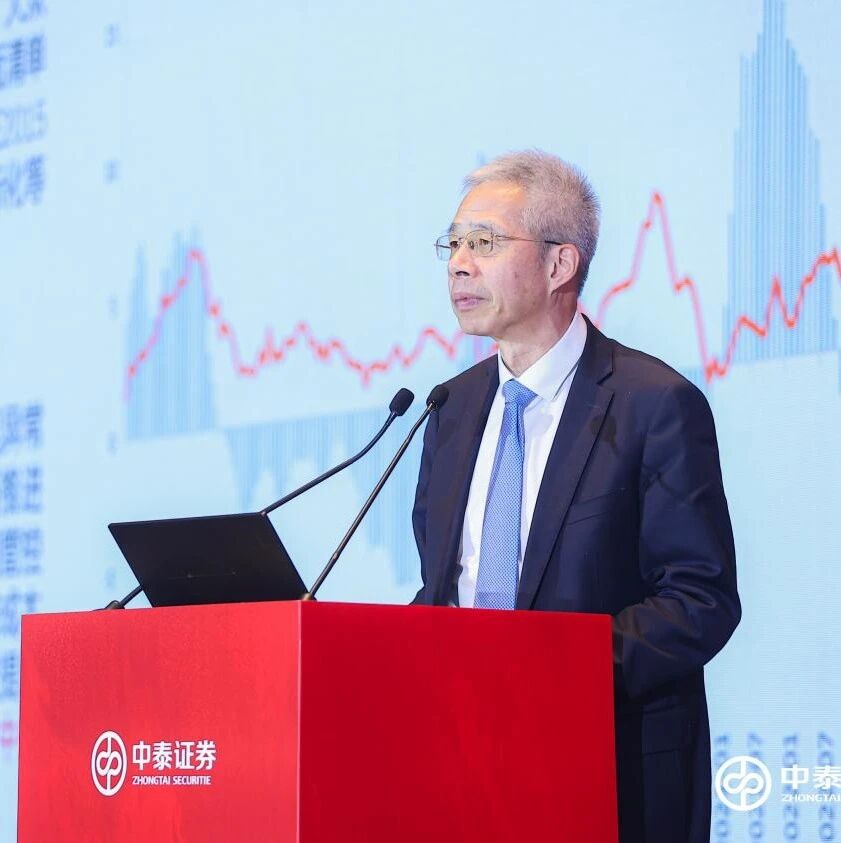
Core Viewpoint - The 2026 strategy conference held by Zhongtai Securities highlighted the importance of the capital market in serving national strategies and empowering the real economy, with a focus on structural opportunities driven by advanced manufacturing and emerging industries, particularly in the context of artificial intelligence [2][4][5]. Group 1: Economic Structure and Opportunities - The Chinese economic structure is characterized by a strong supply but weak demand, leading to downward pressure on prices, which is a structural issue involving industrial and income distribution [7]. - Despite challenges, structural opportunities exist, particularly in advanced manufacturing and emerging industries led by AI, which are transforming the economic landscape and creating new industry prosperity [8]. - The improvement in listed companies' profitability supports the performance of the A-share market, with a year-on-year growth of 5.47% in the first three quarters, surpassing the actual GDP growth rate [10]. Group 2: Market Outlook and Investment Directions - The capital market is expected to present more structural opportunities in 2026, particularly in technology and new consumption sectors, as traditional consumption growth is limited [9][11]. - Zhongtai Securities' strategy chief analyst, Xu Chi, anticipates a structural market rotation in 2026, focusing on key areas such as technology innovation and reducing reliance on Western supply chains [11][12]. - Four key investment directions for 2026 include: 1) Gold and related sectors due to geopolitical tensions; 2) AI technology stocks expected to perform well; 3) Emerging consumption related to younger demographics; 4) High dividend and fixed-income-like assets [13].