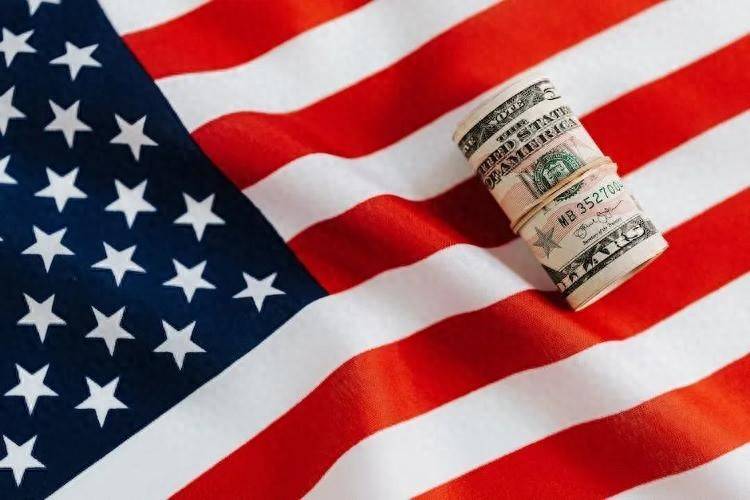
关税战

Search documents
贵金属日报-20250911
Guo Tou Qi Huo· 2025-09-11 11:04
| Millio | > 国技期货 | 责金属日报 | | --- | --- | --- | | | 操作评级 | 2025年09月11日 | | 黄金 | ★☆★ | 刘冬博 高级分析师 | | 白银 | ★☆☆ | F3062795 Z0015311 | | | | 吴江 高级分析师 | | | | F3085524 Z0016394 | | | | 010-58747784 | | | | gtaxinstitute@essence.com.cn | 隔夜美国公布8月PPI年率录得2.6%不及预期的3.3%为6月以来新低,核心PPI同样远不及预期和前值。特朗普 再度发文敦促鲍威尔必须立即大幅降息。市场聚焦今晚美国CPI数据,如果同样不及预期可能会加大对于未 来降息幅度的押注。美联储会议前贵金属或维持偏强运行,不过连续上涨后波动加剧谨慎追高。 本报告版权属于国投期货有限公司 不可作为投资依据,转载请注明出处 1 【星级说明】红色星级代表预判趋势性上涨,绿色星级代表预判趋势性下跌 ★☆☆ 一颗星代表偏多/空,判断趋势有上涨/下跌的驱动,但盘面可操作性不强 ★★☆ 两颗星代表持多/空,不仅判断较为明晰的上涨 ...
泰舜观察|9月上旬大事点评及债市思考
Xin Lang Cai Jing· 2025-09-11 10:34
Group 1: US Economic Data and Market Reactions - The ADP employment data for August showed an increase of 54,000 jobs, significantly below the market expectation of 68,000, indicating a cooling labor market [1] - Following the disappointing employment report, the FOMC is expected to lower interest rates by 50-75 basis points this year, with potential further cuts in March and June 2026 [1] - US stock markets declined, with the Dow Jones Industrial Average falling by 220.43 points (0.48%) and the Nasdaq Composite down by 7.3 points (0.03%) [1] Group 2: Trade Policies and Tariffs - A confidential memorandum revealed that Japan agreed to let Trump decide the investment direction of its $550 billion in capital in the US to avoid high tariffs [2] - Trump signed an executive order adjusting the scope of import tariffs, allowing for zero tariffs on certain goods that cannot be produced in the US or are in short supply [3] Group 3: Domestic Economic Policies - China's foreign exchange reserves increased to $332.22 billion as of the end of August, up by $29.9 billion (0.91%) from July [4] - The People's Bank of China conducted a 1 trillion yuan reverse repurchase operation to maintain liquidity in the banking system, indicating a supportive monetary policy stance [7] - Shenzhen announced new real estate policies to stimulate housing demand, allowing non-residents to purchase two homes in certain districts and removing restrictions on corporate purchases [5] Group 4: Market Trends and Bond Yields - The bond market saw rising yields, with 1Y, 10Y, and 30Y government bond yields at 1.3959%, 1.8260%, and 2.1123% respectively, indicating a widening yield spread [8] - The stock market's strong performance may continue to attract funds, potentially diverting investment away from the bond market [9]


BBVA亚洲首席经济学家夏乐:穿越风险,中企出海前景广阔
2 1 Shi Ji Jing Ji Bao Dao· 2025-09-11 07:10
Group 1 - The global economy is facing multiple challenges, including escalating geopolitical conflicts and tariff wars, with unilateral tariff policies from the US being a major risk to global economic growth [1][2] - China's foreign trade remains stable, with a total import and export value of 29.57 trillion yuan in the first eight months of 2025, a year-on-year increase of 3.5%, and trade with Belt and Road countries reaching 15.3 trillion yuan, up 5.4% [1] - The need for China to accelerate economic rebalancing by expanding domestic demand to counter external shocks while avoiding competitive devaluation of the yuan is emphasized [3][4] Group 2 - To mitigate the impact of the tariff war, China should focus on increasing domestic consumption and opening up certain sectors to absorb surplus labor from trade and investment sectors [3][5] - The trend of Chinese companies "going out" continues, with emerging markets presenting opportunities despite challenges, particularly in manufacturing and service sectors [6][7] - The Guangdong-Hong Kong-Macao Greater Bay Area offers unique advantages for companies looking to expand internationally, leveraging its diverse institutional framework and international connections [7] Group 3 - The internationalization of the yuan is seen as a natural market-driven process, with cross-border payment systems already covering over 100 countries, facilitating trade without relying solely on the US dollar [8] - Innovations in the financial sector, such as the use of mobile payment platforms like Alipay and WeChat Pay, are contributing to the internationalization of the yuan and enhancing its usability overseas [8]
上海美国商会报告:贸易战并未触发大量美企回流美国
Di Yi Cai Jing· 2025-09-11 00:40
Group 1 - The report indicates that 71% of surveyed companies expect to achieve profitability in 2024, an increase from 66% in 2023, with significant differences across industries: 80% in manufacturing, 69% in retail, and 55% in services [1][2] - 48% of surveyed companies perceive the regulatory environment in China as transparent, a notable increase of 13 percentage points from the previous year [2] - 39% of surveyed U.S. companies believe they have benefited from government measures to promote consumption in China, while 37% see positive effects from market opening initiatives [2] Group 2 - Nearly half (48%) of surveyed companies call for the U.S. government to eliminate all tariffs on Chinese goods, with 64% expecting revenue declines due to the tariff war [4][5] - 69% of surveyed companies anticipate negative impacts on their operations if the U.S. were to revoke China's permanent normal trade relations status, with manufacturing being the most affected sector at 78% [5] - The report highlights that only 18% of companies considered relocating investments to the U.S., indicating that the trade war has not significantly triggered a return of U.S. companies [5]
美被爆施压欧盟对中俄加税,外交部:中方坚决反对所谓“经济压力”
Huan Qiu Shi Bao· 2025-09-10 22:45
Group 1 - The core viewpoint of the articles indicates that President Trump is pushing for the EU to impose tariffs of up to 100% on India and China as a strategy to pressure Russia regarding the Ukraine conflict [1][2][3] - The U.S. is attempting to bind Europe to its strategic framework, but this may exacerbate tensions between the U.S. and Europe [1][3] - European officials are concerned about the implications of U.S. sanctions on Russia, especially given their ongoing energy purchases from Russia and the potential impact on trade relations with China and India [2][3] Group 2 - Trump's proposal has significant implications for European interests, potentially leading to increased internal conflicts within Europe and a reevaluation of its relationship with the U.S. [3] - The U.S. is frustrated by the lack of progress in achieving a ceasefire in Ukraine, which is reflected in Trump's contradictory statements regarding trade negotiations with India [3][4] - Despite friendly rhetoric towards India, Trump's imposition of tariffs and the legal challenges he faces suggest that his approach may be more about negotiation leverage than genuine partnership [4]
“美国没有通胀”,特朗普再次敦促美联储大幅降息
21世纪经济报道· 2025-09-10 15:37
记者丨 吴斌 编辑丨和佳 刘雪莹 据央视新闻报道,当地时间9月10日,美国总统特朗普在其社交平台"真实社交"上发文再次批 评美联储主席鲍威尔,并敦促立即大幅降息。 特朗普写道, 美国"没有通胀",美联储"必须立刻大幅降息" ,并称鲍威尔是"一场彻底的灾 难",还表示鲍威尔"毫无头绪"。 特朗普已多次要求鲍威尔降息。美国8月失业率上升至4.3%,创近4年来新高,就业数据恶化 强化了市场对美联储降息的预期,分析人士预计美联储或于9月开启新一轮降息。9月7日,白 宫经济顾问凯文·哈西特表示,美联储的货币政策必须完全独立,不应受到任何政治力量的影 响,包括来自总统特朗普的影响。 美国非农就业"蒸发"近百万 尽管市场对美国非农数据下修早有预期,但最终创纪录的下调幅度仍让人意外。 据央视新闻报道,在本次数据公布前,美国财长贝森特也预警年度非农就业数据可能下修多达 80万。然而,最终创纪录的下修幅度远比市场普遍预期的程度还要糟糕。 据新华社报道,美国劳工部9月9日发布的初步修订数据显示,2024年4月至2025年3月美国新 增非农就业岗位比最初统计的少91.1万个,表明美国就业市场的实际表现比此前数据显示的更 为疲软。非农 ...

2025年中国区办公楼租户调查报告
Sou Hu Cai Jing· 2025-09-10 15:17
Core Insights - The report highlights a cautious approach among tenants in the Chinese office market, with a focus on stability in real estate planning and a shift towards cost control and efficient space utilization [10][12][16] - There is a notable increase in intentions to renew leases and restructure agreements, with 66% of tenants planning to renew and 59% considering lease restructuring, indicating a preference for optimizing existing agreements rather than expanding [9][19] - Tenants are increasingly prioritizing flexibility in office space to enhance both space efficiency and employee experience, with 39% planning to optimize office layouts and 46% focusing on smart upgrades [9][29] Demand Dynamics - 29% of surveyed companies plan to increase office space over the next three years, the lowest in five years, while 36% intend to maintain current space, reflecting a stable mindset amid uncertainties [12][16] - The manufacturing sector shows the highest uncertainty regarding office space planning, with 67% of tenants opting for uncertain or unchanged space due to trade war impacts [16][24] - The technology and consumer sectors exhibit the strongest growth intentions, with retail and consumer services showing a significant increase in net growth willingness [16][24] Leasing Strategies - The preference for lease renewals has risen, with 63% of tenants considering renewal and 37% opting for lease restructuring, indicating a cautious approach to real estate decisions [19][24] - 86% of tenants prioritize lower rental costs, while 70% emphasize location and amenities in their site selection [20][24] - The trend of shared office space is on the rise, with 33% of respondents considering its inclusion in their real estate strategy over the next three years [30][31] Office Space Preferences - Tenants are focusing on flexible office layouts to meet diverse needs, with 39% planning to enhance collaborative and private workspaces [9][29] - There is a strong emphasis on smart building upgrades, with 46% of tenants prioritizing technology integration for better space management [9][29] - Sustainability remains a long-term trend, with 29% of companies having set zero-carbon goals, although some are reconsidering these targets [35][41] Future Outlook and Recommendations - The report suggests that the office market will increasingly focus on adaptability and functionality, with 30% of tenants recommending developers enhance supporting facilities [9][29] - Companies are advised to dynamically adjust office space planning in line with business development, prioritizing properties with flexible lease terms and diverse space configurations [9][29] - Enhanced communication and collaboration with property managers, along with the use of digital tools for real-time space monitoring, are recommended to optimize resource allocation [9][29]

不听中方的劝告,印度又被美国痛宰一刀,特朗普坐等莫迪上门求饶
Sou Hu Cai Jing· 2025-09-07 10:14
Group 1 - India aims to reach a bilateral trade agreement with the U.S. by November, indicating a significant concession from the Modi government [1][3] - Indian Commerce Minister Goyal expressed the desire to restore trade negotiations, reflecting a shift in India's stance after facing U.S. tariffs [3][18] - The U.S. imposed a 25% tariff on Indian goods, raising the total tariff rate to 50% on over 55% of Indian exports to the U.S., severely impacting labor-intensive sectors like textiles and jewelry [11][12] Group 2 - The trade dispute has led to a slowdown in India's GDP growth, potentially dropping below 6%, marking the lowest level since the pandemic [15][21] - India's military procurement has been affected, with delays in acquiring U.S. weapons systems due to the trade tensions, impacting military modernization efforts [21] - The loss of market share in the U.S. for Indian textiles and jewelry is significant, as the high tariffs effectively block these products from entering the market [23]
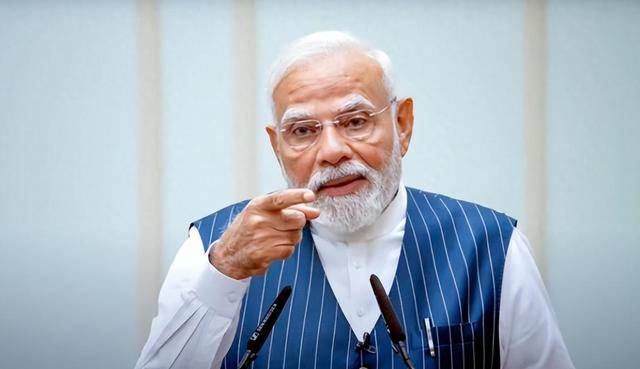
十年反华布局一夜崩盘,美国直接破防!中国已成为印度的一面镜子
Sou Hu Cai Jing· 2025-09-06 15:06
Group 1 - The current geopolitical landscape shows that many countries are distancing themselves from the US, which inadvertently benefits China [1] - India has recognized the situation and is beginning to improve its relationship with China in response to US pressure [1][14] - A recent article by an Indian scholar describes the changing dynamics between China and India, suggesting that China serves as a mirror for India [3][22] Group 2 - The US has been implementing strategies to suppress China since the Trump administration, initially through tariffs, which faced domestic criticism [5] - Both Trump and Biden viewed India as a key ally in countering China and Russia, investing significantly in India's industrial development [7][9] - Despite US investments, India's industrial growth has not met expectations, leading to frustration in Washington [9] Group 3 - During Biden's presidency, India remains a focal point for US diplomatic efforts, highlighted by India's prominent position at the G7 summit [11] - The relationship between India and the US has been strained due to India's continued ties with Russia, particularly in energy purchases [18][20] - An Indian scholar argues that India should adopt a strong stance against US pressure, similar to China's approach during trade conflicts [22][24] Group 4 - India's recent diplomatic gestures towards China, including high-level meetings, indicate a shift towards improving bilateral relations [16] - The ongoing conflict between US interests and India's energy purchases from Russia illustrates the complexities of India's foreign policy [18][26] - The article suggests that India's previous strategy of balancing relations with both the US and Russia may lead to future challenges [26]
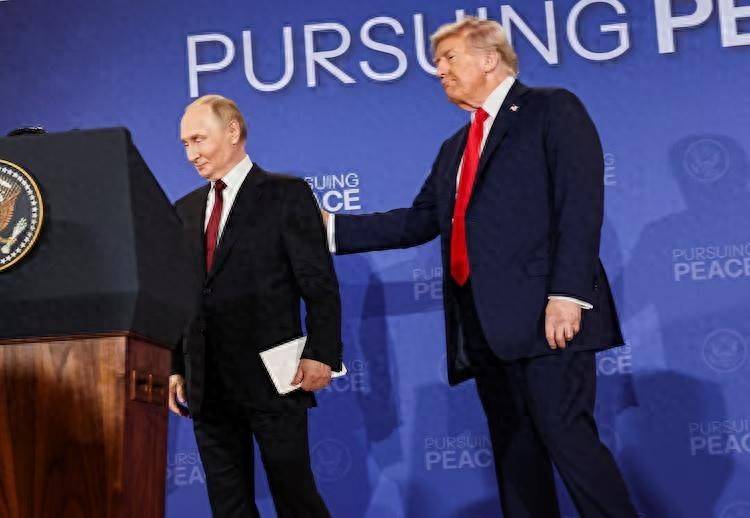
美国经济衰退,顶不住压力?美国总统:到时候将会降低对中国关税
Sou Hu Cai Jing· 2025-09-06 10:25
Economic Overview - The U.S. economy contracted by 0.3% in Q1 2025, leading to significant volatility in the stock market and a decline in the value of the dollar, reflecting investor concerns about the U.S. economy [1] - The U.S. has initiated a trade war with global partners starting April 2, which has resulted in material shortages within the country, with no effective response from the White House [1] Tariff Policies - The Republican government has adopted tariffs as a "cure-all," even proposing a 100% tariff on imported films, which could harm Hollywood's revenue as half of its earnings come from international markets [3] - The U.S. has imposed a 145% tariff on China, with the intention of curbing trade between the two nations, although there are indications of a potential reduction in tariffs in the future [5][6] Political Dynamics - The U.S. President has hinted at lowering tariffs on China at an unspecified future date, raising skepticism among observers due to the lack of a clear timeline [6] - The inconsistency in U.S. trade policies has led to a loss of patience among international observers, with the potential for sudden policy shifts creating a risk of economic crisis [6]