
逆全球化

Search documents
化工行业运行指标跟踪:2025年8-9月数据
Tianfeng Securities· 2025-10-21 10:45
Investment Rating - The report maintains a neutral rating for the chemical industry [2]. Core Insights - The current cycle may be nearing its end, with expectations for demand recovery. Infrastructure and export demand are expected to remain strong in 2024, while the real estate cycle continues to decline. The chemical industry is anticipated to experience a phase of price and profit level rebound in Q2 2024, although overall performance for the year will remain under pressure [4][5]. - The report emphasizes the importance of identifying industries with marginal supply-demand changes, focusing on both domestic and global market dynamics [6][7]. Summary by Sections Industry Valuation and Economic Indicators - The report tracks various indicators such as the comprehensive prosperity index of the chemical industry and industrial added value [3]. Price Indicators - It includes analysis of PPI, PPIRM, and CCPI, along with price differentials for chemical products [3]. Supply-side Indicators - Key metrics include capacity utilization rates, energy consumption, fixed asset investment, inventory levels, and ongoing construction projects [3]. Import and Export Indicators - The report breaks down the contribution of import and export values [3]. Downstream Industry Performance - It examines the performance of downstream sectors such as PMI, real estate, home appliances, automotive, and textiles [3]. Economic Efficiency Indicators - The report discusses three major economic efficiency indicators for the industry [3]. Global Macro and End Market Indicators - It analyzes global macroeconomic indicators including purchasing manager indices, GDP year-on-year growth, civil construction starts, consumer confidence indices, and automotive sales [3]. Global Chemical Product Prices and Differentials - The report provides insights into the prices and differentials of chemical raw materials, intermediate products, and sub-industries like resins and fibers [3]. Global Industry Economic Efficiency Indicators - It covers changes in sales revenue, profitability, growth capacity, solvency, operational capacity, and per-share indicators [3]. Chemical Product Prices and Production Indicators in Europe and the US - The report includes prosperity indicators, confidence indices, capacity utilization rates, production indices, PPI, and production indices for the chemical industry in Europe and the US [3].
大缸径发动机、巨型工程车、超级重卡……国产装备“巨无霸”的全球化实践
Di Yi Cai Jing· 2025-10-21 10:19
Core Viewpoint - The future of China's equipment manufacturing industry lies in continuous openness and global collaboration rather than in closed barriers [1]. Group 1: Industry Overview - The equipment manufacturing industry is crucial for national economic development and reflects comprehensive national strength, characterized by high technology content, significant capital investment, and high value-added compared to traditional manufacturing [3]. - China's equipment manufacturing, especially in the automotive sector, has seen remarkable advancements over the past 20 years, driven by substantial independent innovation and patents [4][5]. Group 2: Company Performance - Weichai Group achieved over 250 billion yuan in revenue in the first three quarters of this year, marking a 6% year-on-year increase, with growth in profit and sales across various products [4]. - Weichai's engine export revenue grew over 30% year-on-year, reaching a historical high [5]. - China National Heavy Duty Truck Group (CNHTC) reported a 24.5% increase in heavy truck exports, with September sales exceeding 15,000 units, setting a new industry record [5][6]. Group 3: Innovation and Development - Continuous innovation is essential for development, with a focus on integrating high-tech industries with traditional sectors to foster mutual growth [8]. - Zhongtong Bus has successfully secured large orders in overseas markets by emphasizing resource allocation towards internationalization and enhancing technological innovation [8][9]. Group 4: Market Strategy - Companies are adopting strategies to localize operations and product offerings to better meet regional market demands, which helps mitigate trade barriers [13][15]. - The optimization of supply chains and the establishment of a global service network are critical for enhancing competitiveness in international markets [12][15]. Group 5: Future Outlook - The equipment manufacturing industry is gradually breaking free from low-end constraints and repositioning itself in global divisions of labor through industry chain optimization and international expansion [15]. - Companies are expected to achieve significant export targets, with projections indicating a 6-7% increase in export revenue for Shandong Heavy Industry Group in the first three quarters [15].




西南期货早间评论-20251021
Xi Nan Qi Huo· 2025-10-21 08:48
Report Industry Investment Ratings No relevant content provided. Core Views - The macro - economic recovery momentum needs to be strengthened, and monetary policy is expected to remain loose. Different commodities have different market trends and investment strategies due to their own supply - demand relationships and external factors [6][22]. Summary by Commodity Bonds - Last trading day, bond futures closed down across the board. The macro - economic recovery momentum needs to be strengthened, and it is expected that there will be no trending bond futures market, so a certain degree of caution is required [5][6]. Stock Index Futures - Last trading day, stock index futures showed mixed performance. Although the domestic economy is stable, the recovery momentum is weak. However, domestic asset valuations are low, and the market sentiment has increased recently. It is expected that the market volatility will increase, and existing long positions can be gradually liquidated for profit [8]. Precious Metals - Last trading day, precious metal futures declined. The current global trade and financial environment is complex, which is beneficial to the allocation and hedging value of gold. But the recent increase in precious metals has been large, and previous long positions can be appropriately closed for profit [10]. Steel (Rebar and Hot - Rolled Coil) - Last trading day, rebar and hot - rolled coil futures oscillated weakly. In the medium - term, the steel price is dominated by the industrial supply - demand logic. The demand for rebar is still declining year - on - year, and the inventory pressure has increased significantly. It is expected that the rebar price will remain weak in the medium - term, and hot - rolled coil may follow the same trend. Investors can focus on shorting opportunities at high levels during rebounds [12][13]. Iron Ore - Last trading day, iron ore futures slightly corrected. In the short - term, the supply - demand pattern still supports the price, but it may weaken in the medium - term. Technically, it may oscillate weakly in the short - term. Investors can focus on buying opportunities during corrections [15]. Coking Coal and Coke - Last trading day, coking coal and coke futures rose significantly. The supply pressure of coking coal is not large, and the demand for coke remains high. Technically, they may continue to oscillate in the short - term. Investors can focus on buying opportunities during corrections [17][18]. Ferroalloys - Last trading day, ferroalloy futures rose slightly. The current supply of ferroalloys is still in excess in the short - term, but the cost has increased at a low level. After a decline, investors can consider long positions at low levels when the spot market falls into a loss again [20][21]. Crude Oil - Last trading day, INE crude oil oscillated downward due to concerns about supply surplus. Although the Baker Hughes rig count has increased, the increase in US crude oil production is still challenging. Geopolitical risks have eased, which is negative for crude oil prices, but there is some support near the integer level. Investors can focus on long - buying opportunities for the main crude oil contract [22][23]. Fuel Oil - Last trading day, fuel oil slightly oscillated and remained near recent lows. The Singapore fuel oil sales declined in September, indicating weak consumption. The main fuel oil contract strategy is to widen the spread between high - and low - sulfur fuel oils [24][26]. Synthetic Rubber - Last trading day, synthetic rubber futures declined. In the short - term, the butadiene rubber market will maintain a weak and wide - range oscillation. The market may stop falling and rebound due to supply factors. Investors should pay attention to the raw material market and supply changes [27]. Natural Rubber - Last trading day, natural rubber futures declined. Affected by the Sino - US trade friction, the overall sentiment of bulk commodities is bearish. The rubber price may follow the macro - led market. Investors can focus on long - buying opportunities [29][31]. PVC - Last trading day, PVC futures declined. The current oversupply situation of PVC continues, but the downward space may be limited. After the festival, investors should focus on exports and supply reduction. The main strategy is to pay attention to supply - side changes [32][34]. Urea - Last trading day, urea futures closed flat. Last week, the decline of urea stopped and the price rebounded slightly. It is expected to fluctuate narrowly this week. The supply has increased, and the demand has shown some improvement. The downward space is limited [35][37]. PX - Last trading day, PX futures declined. In the short - term, the supply - demand balance of PX has become looser. The PXN spread is relatively strong, but the cost is weak and the demand support is insufficient. PX may adjust weakly in an oscillatory manner. Investors should control their positions and pay attention to crude oil and macro - policy changes [38]. PTA - Last trading day, PTA futures declined. In the short - term, the PTA processing fee has dropped significantly, and the inventory is at a low level with some support at the bottom. However, the demand improvement is limited, and the external crude oil price is weakly adjusted. PTA may oscillate. Investors should be cautious, control risks, and pay attention to oil price changes [39][40]. Ethylene Glycol - Last trading day, ethylene glycol futures declined. Recently, the supply has increased, the inventory has continued to accumulate, the demand improvement is limited, and the cost of crude oil is weak. Ethylene glycol may oscillate weakly in the short - term. Investors should pay attention to port inventory and import changes [41]. Short - Fiber - Last trading day, short - fiber futures declined. In the short - term, the short - fiber supply remains at a relatively high level, the demand is average, the supply - demand contradiction is not significant, but the cost support is weak. It may oscillate following the cost. Investors should control risks and pay attention to cost changes and macro - policy adjustments [42][43]. Bottle Chips - Last trading day, bottle - chip futures declined. Recently, the raw material price has been weakly adjusted in an oscillatory manner, the bottle - chip load has slightly increased, and the export growth has slowed down. It is expected to oscillate following the cost. Investors should control risks [44]. Lithium Carbonate - Last trading day, lithium carbonate futures declined. The supply of lithium carbonate is at a high level, and the demand from the energy storage and power battery sectors has improved. The social inventory is gradually being depleted. Investors should pay attention to the sustainability of consumption [45]. Copper - Last trading day, Shanghai copper oscillated upward due to the easing of Sino - US tensions. The dollar index is at a phased low, and copper prices are strongly adjusted at a high level. The reopening of the Indonesian copper mine has been delayed, and the Sino - US negotiation has improved again, which supports copper prices. The main Shanghai copper contract can be temporarily observed [46][48]. Tin - Last trading day, tin futures rose. The supply of tin is generally tight, and the demand shows some resilience. The refined tin inventory is further depleted. It is expected that the tin price will oscillate strongly [49]. Nickel - Last trading day, nickel futures rose. The market is worried about the supply due to the change in the RKAB approval in Indonesia. The mine price has weakened, and the high - grade nickel ore is still in short supply. The stainless - steel consumption is still weak, and the primary nickel is in an oversupply situation. It is expected that the nickel price will oscillate [51][52]. Soybean Oil and Soybean Meal - Last trading day, soybean meal and soybean oil futures rose. The domestic soybean arrival volume is high, and the oil - mill crushing continues to be in loss. The Brazilian soybean arrival price has slightly declined, providing some cost support. New - season US soybeans are being harvested, which may bring some short - term pressure. After the adjustment of soybean meal, investors can consider long - call options in the support range. Soybean oil is slightly stronger than soybean meal, but the supply - demand is weak, so it is advisable to temporarily observe [54][55]. Palm Oil - The Malaysian palm oil market was closed. The Malaysian palm oil inventory in September was higher than expected. The export volume from October 1 - 20 increased compared with the previous month. The domestic palm oil inventory is at a medium level in the past 7 years. Investors can consider a long - biased strategy during corrections [56][57]. Rapeseed Meal and Rapeseed Oil - Canadian rapeseed futures closed down. The domestic rapeseed inventory has decreased, the rapeseed meal inventory has increased, and the rapeseed oil inventory has decreased. The main strategy for rapeseed oil is to consider a long - biased strategy during corrections [58][59]. Cotton - Last trading day, domestic Zhengzhou cotton oscillated upward due to the improvement of Sino - US relations. The new - season domestic cotton is expected to have a bumper harvest, and the cotton price is under pressure from hedging and harvesting. It is expected that the cotton price will remain under pressure [60][63]. Sugar - Last trading day, Zhengzhou sugar oscillated at a low level. The Brazilian sugar production slightly exceeded expectations. The global sugar supply is expected to be in surplus, which restricts the sugar price rebound. The domestic northern region has started sugar production, and the import volume in the fourth quarter is expected to decline. It is advisable to observe [64][66]. Apples - Last trading day, domestic apple futures rose significantly. The late - maturing apples are of poor quality this year, and the opening price is higher than last year. It is advisable to observe [67][68]. Pigs - Yesterday, the national average pig price rose. The supply is expected to increase in the second half of October. After short - term profit - taking of short positions, investors can temporarily observe and wait for short - selling opportunities on rebounds. The arbitrage strategy can consider reverse arbitrage [69][71]. Eggs - Last trading day, the average egg price in the main production and sales areas declined. The egg supply is expected to increase year - on - year in October, and the consumption may be lower than expected. Short positions can be held [72][73]. Corn and Corn Starch - Last trading day, corn and corn - starch futures rose. The new - season corn harvest is advancing, and the corn price may be under pressure. The corn - starch production and demand are weak, and the inventory is high. It may follow the corn market. It is advisable to observe [74][76].
美联储降息预期与避险需求推动金价再创新高,上海金ETF(518600)早盘冲高涨超2%,近一周连续“吸金”6.58亿元,同类第一!
Sou Hu Cai Jing· 2025-10-21 02:28
Group 1 - The U.S. government shutdown has entered its 20th day with no resolution in sight, as multiple attempts to pass a temporary funding bill have failed, marking the tenth unsuccessful attempt [1] - The Federal Reserve is expected to hold a meeting on October 28-29, with market expectations leaning towards a further 25 basis point rate cut to support a weakening job market while aiming to bring high inflation back to 2% [1] - Spot gold prices surged over 2% on Monday, reaching a new historical high of $4,381.49 per ounce during trading, closing at $4,355.69 per ounce, while COMEX gold futures rose by 3.82% to $4,374.30 per ounce [1] Group 2 - As of October 20, the Shanghai Gold ETF (518600) has seen a net asset value increase of 55.69% over the past year, with a maximum monthly return of 11.46% since inception [2] - The Shanghai Gold ETF has reached a record high of 377 million shares, with a recent net inflow of 658 million yuan, leading its category [2] - The ETF primarily invests in Shanghai Gold Exchange contracts, aiming to provide returns closely aligned with the performance of these contracts while minimizing tracking deviation [2] Group 3 - The Shanghai Gold ETF (518600) offers a cost-effective and convenient investment option in gold without physical delivery, supporting T+0 trading [3]
贵属策略日报:贵?属?位震荡,内盘时段表现偏弱-20251021
Zhong Xin Qi Huo· 2025-10-21 00:40
Group 1: Report Industry Investment Rating - No information about the report industry investment rating is provided in the content. Group 2: Core Viewpoints of the Report - In the short term, precious metal prices may enter a shock adjustment phase, and when gold and silver prices fall below the 5 - day moving average, it can be regarded as a reference for phased profit - taking. In the long run, the contraction of the US dollar credit will drive up the value of physical currency, and the price centers of gold and silver will continue to move upward. The long - term bull market of gold has not reversed, and the silver price center is expected to follow the long - term upward trend of gold [1][3]. - The expected trading range for London gold spot this week is [3900, 4400] US dollars per ounce, and for London silver spot, it is [48, 55] US dollars per ounce [3]. Group 3: Summary According to Related Catalogs 1. Key Information - The Bank of Japan may slightly raise its economic growth forecast for fiscal year 2025 at its October policy meeting and maintain the view that the economy is moving towards a mild recovery. Bank of Japan official Takada So said it is necessary to further adjust monetary easing policies, the inflation target has basically been achieved, concerns about the impact of tariffs have eased, attention must be paid to the risk of inflation exceeding expectations in Japan, the process of reducing bond purchases must be cautious and time - consuming, the US economy is unlikely to experience a significant recession, and now is the best time to raise interest rates [2]. - US President Trump signed an executive order on October 17 (local time), imposing a new 25% tariff on imported medium - and heavy - duty trucks and parts starting from November 1, and will also impose a 10% tariff on imported passenger cars [2]. - White House economic advisor Hassett said that if the government shutdown does not end, the White House will consider taking stronger measures [2]. 2. Price Logic - On Monday during the Asian trading session, precious metals fluctuated. Before the opening of the domestic night session, the prices of gold and silver in the overseas market rose slightly, but immediately fell back after the opening of the domestic night trading session, and the domestic market was weaker than the overseas market. After the price volatility in the overseas and domestic markets significantly increased, both COMEX and domestic exchanges increased margin requirements and issued risk warnings, indicating a further over - heating risk in the market [1][3]. - In the short term, the positive factors are gradually being digested. Positive signals from China - US trade negotiations have reduced risk - aversion sentiment. Non - farm and inflation data are to be released this week, which may end the trading logic of "no news is good news" after the National Day. The silver lease rate has declined from its peak, and the overseas spot situation has been alleviated temporarily [3]. - In the long term, debt over - issuance and anti - globalization are the core factors driving the decline of the US dollar credit. Gold, as a currency beyond sovereignty, is still the preferred asset to hedge against US dollar credit risks. The trend of global central banks' gold purchases remains unchanged, and the long - term bull market of gold has not reversed. The silver trend is still consistent with that of gold, and the value loosening of credit currency has a spill - over effect on physical currency, so the silver price center is expected to follow the long - term upward trend of gold [3]. 3. Commodity Index - The comprehensive index of CITIC Futures commodities on October 20, 2025 is presented, including the characteristic index and the sector index. The commodity index is 2231.41, down 0.06%; the commodity 20 index is 2533.64, down 0.15%; the industrial products index is 2183.97, up 0.37%. For the precious metals index on October 20, 2025, the current value is 3394.67, with a daily decline of 3.31%, a 5 - day increase of 2.88%, a 1 - month increase of 16.11%, and a year - to - date increase of 53.44% [43][44][46].
大结局将至?特朗普一旦被判非法,中国将全面打赢“关税战”,全世界都在等结果,印度站错队了
Sou Hu Cai Jing· 2025-10-20 12:02
Core Viewpoint - The upcoming Supreme Court hearing on November 5 regarding the legality of Trump's tariff policies is seen as a pivotal moment that could reshape the U.S.-China trade war and impact Trump's political future [1][3]. Group 1: Legal Context - The U.S. International Trade Court previously ruled that Trump's imposition of tariffs under the International Emergency Economic Powers Act was an overreach of authority, stating that trade deficits do not constitute a national emergency [3]. - The Federal Circuit Court upheld this ruling with a 7-4 vote, emphasizing that the Act was intended for financial crises and not for initiating trade wars [3]. - Trump's legal strategy now relies on the conservative majority in the Supreme Court, which includes three justices he appointed, but the court has historically required congressional authorization for significant economic decisions [3][5]. Group 2: Political Implications - Trump's potential attendance at the hearing is viewed as a form of pressure on the justices, raising concerns about the integrity of the judicial system and the principle of separation of powers [5]. - The outcome of the case could have significant financial implications, with estimates suggesting that if the tariffs are deemed illegal, the government may need to refund billions in tariffs collected, further straining the U.S. budget [5][6]. Group 3: International Reactions - The situation has prompted international responses, such as India's declaration to restrict the export of rare earth materials to the U.S., which some interpret as support for China, although India's actions are seen as self-serving rather than a strategic alliance [6]. - China's recent export controls on rare earths are part of its strategy to counter the tariff war, indicating a complex interplay of global trade dynamics [6]. Group 4: Future Outlook - The November 5 ruling is anticipated to be a critical juncture for both the U.S. and China, with potential ramifications for international trade order and the effectiveness of unilateral tariff measures [8]. - Regardless of the ruling, the ongoing trade conflict highlights the challenges of unilateralism and the risks of self-inflicted economic harm through protectionist policies [8].
金价跳水,是倒车接人吗?后市怎么看?中美贸易摩擦缓和+俄乌地缘局势进展,避险情绪减弱!
Xin Lang Ji Jin· 2025-10-20 06:53
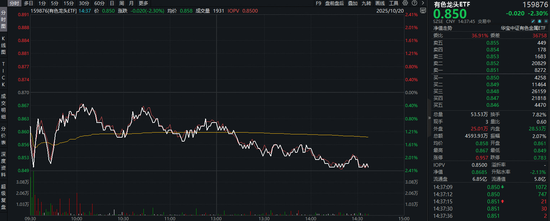
Core Viewpoint - The easing of US-China trade tensions and progress in the Russia-Ukraine situation have led to a decline in gold prices, which fell below $4,300 per ounce, impacting the A-share market and causing significant losses in gold stocks [1][3]. Group 1: Market Reactions - Gold stocks led the decline in the A-share market, with the ETF tracking leading non-ferrous metal companies dropping 2.3% [1]. - Major gold companies such as Western Gold and Chifeng Jilong Gold experienced declines exceeding 9% and 7%, respectively [1]. - Conversely, companies like Chuangjiang New Material and Yahua Group saw gains of over 6% and 1%, respectively [1]. Group 2: Economic Indicators - A video call between US and Chinese trade representatives on October 18 indicated a willingness to resume trade negotiations, contributing to the easing of market tensions [3]. - Ukrainian President Zelensky expressed readiness to participate in a meeting with US President Trump and Russian President Putin, signaling potential diplomatic progress [3]. Group 3: Gold Market Analysis - Despite the recent drop, Bank of America noted that gold assets still represent a low percentage of global investment portfolios, at 2.3% for institutions and 0.5% for private clients, indicating a lack of overcrowding in the market [3]. - The World Gold Council reported that retail gold investment accounts for less than 2% of global assets, and central bank gold reserves are below 30% of total foreign reserves, both far from historical highs [3]. Group 4: Non-Ferrous Metals Outlook - Analysts suggest focusing on the entire non-ferrous metals sector rather than solely on gold, as sectors like rare earths, lithium, and copper show promising growth potential [3][4]. - Rare earth companies are expected to report significant profit increases, with North Rare Earth projecting a net profit growth of 272.54%-287.34% for Q3 [3]. - In lithium, advancements in solid-state battery technology are anticipated to boost demand, with leading companies maintaining a self-sufficiency rate of over 50% in lithium salt production [4]. - Copper prices are expected to rise due to supply disruptions, particularly from the Grasberg mine in Indonesia, which is crucial for energy transition and new production capabilities [4]. Group 5: Investment Strategy - The non-ferrous metals sector is viewed as a key player in the current commodity bull market, driven by long-term capital expenditure cycles and increasing demand for strategic metal resources [4][6]. - The non-ferrous metal ETF (159876) offers a diversified investment approach, tracking an index with significant weightings in copper, gold, aluminum, rare earths, and lithium, thus reducing risk compared to investing in a single metal [6].
2025年SNAI-ASU合作办学硕士学位项目毕业开学典礼在上海国家会计学院举行
Zhong Guo Fa Zhan Wang· 2025-10-20 05:32
中国发展网讯 记者宋璟报道 10月18日,上海国家会计学院与美国亚利桑那州立大学合作办学硕士学位 项目毕业开学典礼在国际会议中心举行。典礼由上海国家会计学院合作项目部副主任傅秋莲主持。 上海国家会计学院院长、党委副书记卢文彬在致辞中向毕业生和新生分别致以祝贺与欢迎,并对美国亚 利桑那州立大学多年来的精诚合作表示感谢。他说,2025年,上国会-凯瑞金融财务EMBA项目在英国 《金融时报》全球EMBA百强榜单中位列中国第5、全球第9,连续三年跻身全球前10,这一卓越成绩离 不开双方的共同努力与相互支持。 典礼现场举行了隆重的颁奖仪式,由卢文彬、亚太项目副院长邵保民为优秀学员颁发"优异学习成绩 奖""宣传大使",表彰在过去两年中,展现杰出专业能力、领导力和社会责任感的优秀学员和校友。 EMBA13期校友、浙金资产运营股份有限公司常务副总裁兼浙江浙金融资租赁有限公司董事长郑晓泳作 为宣传大使代表发言。他认为广泛宣传项目是最好的感恩与传承,并表示将继续肩负责任,做好项目的 品牌宣传,让更多的人了解金融财务EMBA和会计(数据分析)MiM项目。 在"感恩母校 致谢捐赠"环节,金融财务EMBA 21期王强、周伊,会计(数据 ...
有色金属行业周报(20251013-20251017):关税不确定性仍存,金银价格创历史新高-20251019
Huachuang Securities· 2025-10-19 11:43
Investment Rating - The report maintains a recommendation for the non-ferrous metals industry, highlighting ongoing uncertainties regarding tariffs and record high prices for gold and silver [2][3]. Core Views - The report emphasizes that while short-term tariff uncertainties persist, precious metals are expected to trend upward in the long term due to factors such as geopolitical risks and central bank gold purchases [6][8]. - The performance of companies like Zijin Mining and Huayou Cobalt is noted, with both showing strong revenue growth and profitability in their recent quarterly reports [6][8]. Industry Overview - **Basic Industry Data**: The non-ferrous metals sector comprises 125 listed companies with a total market capitalization of approximately 45,379.37 billion yuan and a circulating market value of about 39,608.97 billion yuan [3]. - **Price Performance**: The absolute performance over the last 12 months is reported at 69.1%, with a relative performance of 50.0% [4]. Precious Metals - **Market Trends**: Gold futures closed at 999.8 yuan per gram, up 10.9% week-on-week, while silver futures rose 10.53% to 12,249 yuan per kilogram [6]. - **Company Performance**: Zijin Mining reported a total revenue of 2,542.0 billion yuan for the first three quarters of 2025, a year-on-year increase of 10.33%, with net profit rising by 55.45% to 378.64 billion yuan [6][8]. New Energy Metals - **Cobalt Market**: The report notes that cobalt prices are on the rise, with the average price for electrolytic cobalt reaching 381,000 yuan per ton, a 9.01% increase from the previous week [8]. - **Company Insights**: Huayou Cobalt's revenue for the first three quarters of 2025 was 589.41 billion yuan, up 29.57% year-on-year, with net profit increasing by 39.59% to 42.16 billion yuan [8]. Stock Recommendations - The report recommends focusing on the performance of precious metals stocks, particularly companies like Zhongjin Gold and Chifeng Jilong Gold Mining, as well as silver stocks such as Xingye Silver Tin [7][8].



21现场|意大利前总理答21:美国“退群”给联合国留下疤痕
2 1 Shi Ji Jing Ji Bao Dao· 2025-10-18 10:13
Group 1 - The authority and power of the United Nations are perceived to be weakening, particularly due to the withdrawal of the United States from a key UN institution, which is seen as a setback for global dialogue and cooperation [1] - The current global landscape is characterized by a coexistence of globalization and de-globalization, leading to fragmentation and a need for collective examination of the underlying causes of this situation [1][2] - International organizations are facing significant challenges, with trade being obstructed and cooperation diminishing, particularly as the UN approaches its 80th anniversary [1] Group 2 - China is emerging as a leader in new sectors such as solar energy and electric vehicles, supported by a large pool of skilled engineers and an active private sector that is innovating and expanding internationally [2] - The unique and rapid process of Chinese modernization, along with significant infrastructure development, has shifted China from a follower to a leader in multiple fields [2] - The forum discussed the necessity for countries to work together to overcome the negative impacts of political differences on technological development, emphasizing the importance of collaboration among nations [2]