期限溢价

Search documents
年度惊喜资产?30年期美债2025年韧性十足,明年或迎更严酷大考
智通财经网· 2025-12-23 14:00
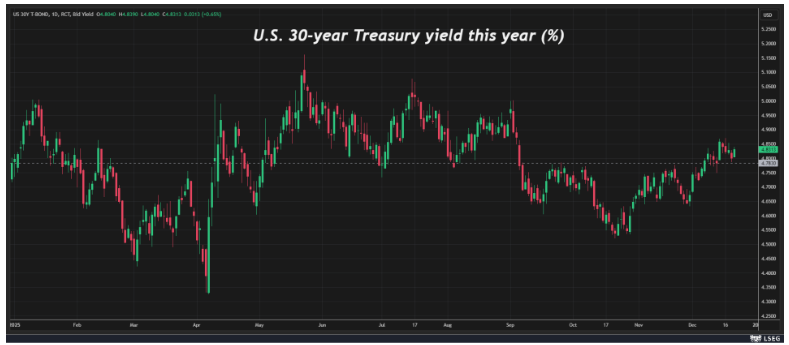
Core Viewpoint - The 30-year U.S. Treasury bond is expected to close the year at a level nearly unchanged from the beginning of the year, despite facing significant challenges over the past 12 months [1]. Group 1: Market Performance - The yield on the 30-year U.S. Treasury bond currently stands at approximately 4.8%, nearly returning to the level at the start of the year [3]. - The yield curve has steepened, with the 2-year/30-year curve reaching its steepest point in four years, primarily driven by short-term interest rate movements [4]. Group 2: Investor Demand - A yield of 5% is attractive to many investors, particularly pension funds, mutual funds, and insurance companies, which require long-term assets to match their long-term liabilities [4]. - Domestic institutional investors subscribed to about 70-75% of the bonds sold, with foreign investors increasing their purchases in the second half of the year [6]. Group 3: Auction Performance - The U.S. Treasury conducted 12 auctions of 30-year bonds this year, selling a total of $276 billion, with an average bid-to-cover ratio of 2.37, close to the average of 2.38 from the past 50 auctions [6]. - In these auctions, the Treasury only paid lower yields than the pre-auction market level three times, while six times it paid higher yields, indicating investor demand for a premium [6]. Group 4: Future Challenges - Despite the resilience shown by long-term U.S. bonds this year, they face significant challenges in the coming year, including rising risk premiums, inflation risks, and concerns over debt supply [6].

ETO Markets:沃什崛起如何重塑未来,德银研报拆解鹰派路线
Sou Hu Cai Jing· 2025-12-16 08:58
Core Viewpoint - The potential appointment of Kevin Walsh as the new Federal Reserve Chair has significant implications for monetary policy, with a focus on a non-traditional approach of simultaneous interest rate cuts and balance sheet reduction, contingent on regulatory reforms [2][3]. Group 1: Personnel Changes and Market Reactions - Kevin Hassett, previously seen as the frontrunner for the position of National Economic Council Director, has seen his odds drop from over 80% to 51% following Trump's endorsement of Kevin Walsh [2]. - Walsh's odds surged from 11% to 44% after Trump's comments, indicating a shift in market sentiment regarding the leadership of the Federal Reserve [2]. Group 2: Walsh's Monetary Philosophy - Walsh's monetary philosophy is characterized by three main oppositions: against quantitative easing (QE), against forward guidance, and against the expansion of the Fed's mission [3]. - He criticizes the Fed's past actions that led to an eightfold increase in its balance sheet over the last fifteen years, arguing that low interest rates have fueled excessive debt in the U.S. [3]. Group 3: Potential Policy Changes - If appointed, Walsh may reduce the focus on QE, reform the Fed's modeling teams, and push Congress to redefine the Fed's dual mandate [3]. - His recent statements suggest a "structurally non-dovish" stance on interest rates, advocating for rate cuts to counteract fiscal tightening and real estate downturns, while insisting that rate cuts must accompany balance sheet reductions [3][4]. Group 4: Regulatory and Legislative Challenges - Deutsche Bank estimates that if reserve requirements decrease by $200 billion to $300 billion, the Fed could reduce its balance sheet to $6.5 trillion without restarting repurchase agreements, allowing for a potential interest rate cut of 100 to 125 basis points [4]. - However, proposed regulatory relaxations by Vice Chair Bowman and Governor Milan require bipartisan legislative support, with a less than 30% chance of implementation before summer 2025 [4]. Group 5: Broader Implications for the Federal Reserve Framework - Walsh's rise could trigger a fundamental overhaul of the Federal Reserve's framework, shifting from a focus on QE and multiple objectives back to a singular focus on price stability [4]. - The ongoing "Kevin" battle highlights the potential for significant changes in monetary policy direction under Trump's renewed influence [4].
市场分析:美联储独立性受质疑将致美债收益率曲线趋陡
Sou Hu Cai Jing· 2025-12-08 12:05
Core Viewpoint - The report by Candriam's chief economist Florence Pisani and global bond head Philippe Dehoux indicates that if the independence of the Federal Reserve is questioned, the U.S. Treasury yield curve could steepen by 50 to 100 basis points [1] Group 1 - A loss of credibility for the Federal Reserve would lead to a decline in short-term yields, reflecting market expectations for a more significant reduction in key interest rates [1] - Conversely, long-term yields are expected to rise as investors demand higher term premiums to compensate for uncertainties regarding the consistency of monetary policy and the Fed's ability to control inflation [1]
债市“叛逆者”无视美联储降息,华尔街激辩谁对谁错
美股研究社· 2025-12-08 11:18
以下文章来源于金十财经 ,作者金十小金 金十财经 . 每日8点,为您呈上金融投资行业的国际动态、财经数据和市场观察。 来源 | 金十财经 债券市场对美联储降息的反应极不寻常。从某些指标来看,这种央行降息而美债收益率却攀升 的脱节现象,自上世纪90年代以来就未曾出现过。 这种背离意味着什么,已成为一场激烈的辩论。 各方观点不一:乐观者视之为经济将避免衰退 的信心标志;中性观点认为这是市场向2008年金融危机前的常态回归;而所谓的"债券义 警"们则倾向归咎于投资者正对美国能否控制住不断膨胀的国债失去信心。 但有一件事是清楚的: 债券市场并不买特朗普的账 。特朗普认为加快降息步伐将压低债券收 益率,进而降低抵押贷款、信用卡及其他各类贷款的利率。 随着特朗普很快将能够提名自己的人选取代现任美联储主席鲍威尔, 另一个风险浮出水面:美 联储可能因屈从于更激进放松政策的政治压力而损害其信誉——这可能会适得其反,助长本已 高企的通胀并推高收益率。 "特朗普2.0时代的一切都关乎压低长期收益率," 伦敦渣打银行G10策略主管史蒂文·巴罗 (Steven Barrow)表示。"在美联储安排政治人物并不会让债券收益率下降。" 美联 ...
欧洲央行放鹰与财政扩张共振 德债收益率触及九个月高位
智通财经网· 2025-12-08 11:17
Core Viewpoint - The European Central Bank (ECB) is signaling a potential end to its rate-cutting cycle, with a senior committee member expressing acceptance of market expectations for a rate hike, leading to an increase in German bond yields to their highest levels since March [1] Group 1: ECB and Interest Rates - A senior member of the ECB's executive committee, Isabel Schnabel, has indicated satisfaction with investors betting on the next rate hike, suggesting that the ECB's rate-cutting cycle has reached its bottom after a cumulative reduction of 2 percentage points [1] - Following Schnabel's hawkish comments, the yield on Germany's 10-year government bonds rose by 3 basis points to 2.83%, approaching the significant 3% level [1] Group 2: German Bond Market Dynamics - The long-term German bond yields are nearing critical levels, with the 20-year bonds at their highest since 2011, while U.S. and U.K. yields remain closer to their yearly lows [2] - Concerns about a significant increase in long-term bond issuance due to a recently approved budget plan, which includes €98 billion (approximately $114 billion) in net new federal borrowing, are causing worries about rising "term premiums" [2] - Analysts predict that Germany's cyclically adjusted budget deficit will continue to expand significantly, with expectations that German bond yields will rise to 3% or higher in the coming quarters [2]
债券交易员逆势而为美联储政策,华尔街激辩背后逻辑
Xin Lang Cai Jing· 2025-12-08 08:47
债券市场对美联储降息举措的反应极为反常。从多项指标来看,这种 "美联储降息、国债收益率却走 高" 的背离现象,自上世纪 90 年代以来从未出现过。 这一背离背后的深层原因引发了激烈争论。市场观点众说纷纭:乐观者认为,这是经济有望规避衰退的 信心信号;中立派则指出,市场正回归 2008 年金融危机前的常态;而所谓的 "债券义警" 们则将矛头指 向最受诟病的症结 —— 投资者正对美国能否遏制持续膨胀的国债规模丧失信心。 但有一点毋庸置疑:债券市场并不认同唐纳德・特朗普总统的观点。特朗普曾提出,更快的降息节奏将 推动债券收益率下行,进而拉低抵押贷款、信用卡及其他各类贷款的利率水平。 眼下,特朗普很快就能提名人选接替美联储主席杰罗姆・鲍威尔。雪上加霜的是,美联储还面临这样一 种风险 —— 若屈从于政治压力而采取更激进的宽松政策,其公信力或将大打折扣。这一做法反而可能 火上浇油,加剧本已高企的通胀,进一步推高收益率。 "特朗普政府的第二任期,核心目标之一就是压低长期收益率。" 伦敦标准银行 G10 货币策略主管史蒂 文・巴罗表示,"但让政治人物进驻美联储,根本无法实现债券收益率下行的目标。" 美联储于 2024 年 9 ...
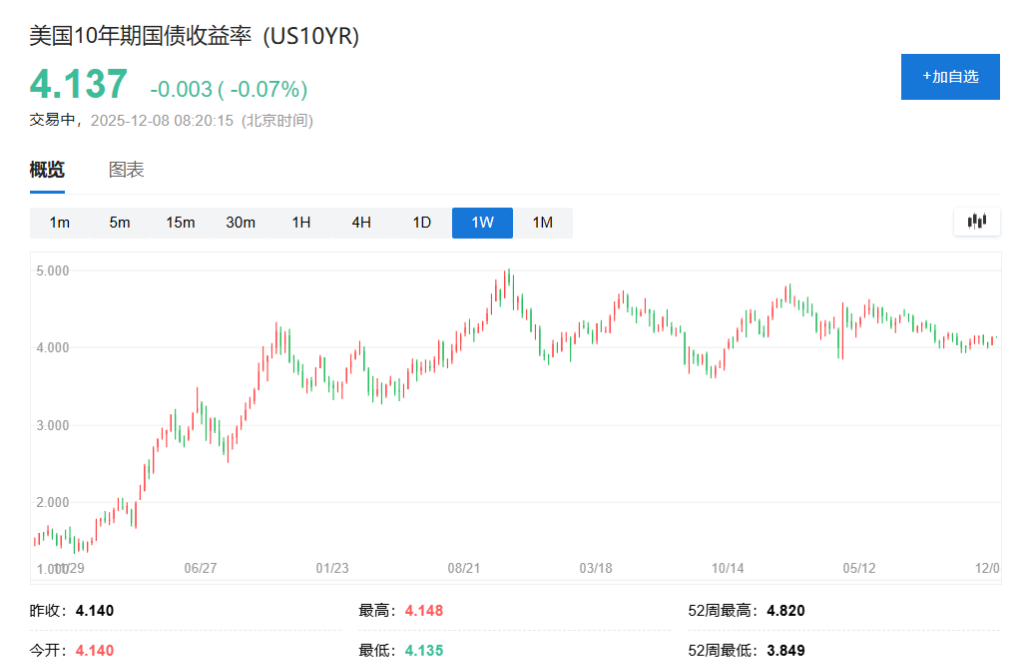
美国债市现“三十年罕见之分歧”:美联储降息前夜,美长债收益率却“不跌反涨”
华尔街见闻· 2025-12-08 03:40
自2024年9月美联储启动本轮降息以来,已累计将基准利率下调1.5个百分点至3.75%-4%的区间。然而,市场的反应却出人意料。同期,10年期美国国债收益 率攀升了近0.5个百分点至4.1%,而30年期国债收益率的涨幅更是超过了0.8个百分点。 当下,对于这种分歧的解读,市场观点众说纷纭。乐观者认为这是经济将避免衰退的信心体现;中性观点则视其为市场利率回归2008年金融危机前常态的标 志;而悲观者则担忧,这反映了"债券义警"的回归,他们对美国不断膨胀的国家债务和潜在的通胀风险投下了不信任票。 罕见背离:降息周期下的收益率上行 通常情况下,当美联储调整其短期政策利率时,长期债券收益率会随之变动。然而,本轮周期的表现却打破了常规。 数据显示,交易员们普遍预计美联储在本周的会议后将再次降息25个基点,并预期明年还会有两次同等幅度的降息,从而将政策利率引向3%左右。 但作为美国消费者和企业借贷成本基准的关键国债收益率,却并未随之走低。 这一走势直接挑战了传统的市场逻辑,即美联储降息通常会引导长期利率下行。它也与美国总统特朗普的预期相悖,后者认为更快的降息将有效拉低抵押贷 款、信用卡等各类贷款利率。市场的反常表现意味着 ...

债券“不听话” 现货黄金陷迷茫
Jin Tou Wang· 2025-12-08 02:12
摘要今日周一(12月8日)亚盘时段,现货黄金目前交投于4191美元附近,截至发稿,现货黄金最新报 4203.32美元/盎司,涨幅0.16%,最高上探至4211.27美元/盎司,最低触及4195.31美元/盎司。目前来 看,现货黄金短线偏向看涨走势。 【最新现货黄金行情解析】 今日周一(12月8日)亚盘时段,现货黄金目前交投于4191美元附近,截至发稿,现货黄金最新报4203.32 美元/盎司,涨幅0.16%,最高上探至4211.27美元/盎司,最低触及4195.31美元/盎司。目前来看,现货黄 金短线偏向看涨走势。 【要闻速递】 债券市场对美联储降息的反应颇为异常,出现了央行降息而美债收益率攀升的罕见背离现象,这自上世 纪90年代以来尚属首次。乐观者认为这表明经济将避免衰退,中性观点则视其为市场回归常态,而"债 券义警"们则担忧投资者对美国控制国债能力失去信心。值得注意的是,债券市场似乎并不买账特朗普 的政策主张,他期望通过加快降息来压低债券收益率。随着特朗普可能提名新人选取代鲍威尔,美联储 或面临屈从政治压力放松政策的风险,这可能适得其反,助长通胀并推高收益率。 尽管美联储已开始降息,但关键国债收益率不降反 ...
美国债市现“三十年罕见之分歧”:美联储降息前夜 美长债收益率却“不跌反涨”
Hua Er Jie Jian Wen· 2025-12-08 01:48
Core Viewpoint - The unexpected rise in long-term U.S. Treasury yields despite the Federal Reserve's interest rate cuts challenges traditional market logic and indicates a significant divergence in expectations between investors and the Fed [1][2]. Group 1: Interest Rate Cuts and Market Reactions - Since the Fed began its current rate-cutting cycle in September 2024, the benchmark interest rate has been reduced by 1.5 percentage points to a range of 3.75%-4% [1]. - Contrary to expectations, the 10-year U.S. Treasury yield has increased by nearly 0.5 percentage points to 4.1%, while the 30-year yield has risen by over 0.8 percentage points [1]. - Market participants anticipate another 25 basis point cut in the upcoming Fed meeting and expect two more similar cuts next year, targeting a policy rate around 3% [2]. Group 2: Historical Context and Comparisons - In the last 40 years, during non-recessionary rate-cutting cycles (1995 and 1998), the Fed only cut rates by 75 basis points, and the 10-year Treasury yields either fell or increased at a much lower rate than currently observed [5]. - The current situation is viewed as a potential return to pre-2008 financial crisis norms, moving away from the historically low rates established during the pandemic [8]. Group 3: Economic Outlook and Inflation Concerns - Analysts suggest that the rise in yields may reflect a market adjustment to the Fed's previous aggressive rate hikes aimed at curbing inflation, which has led to a ceiling on the decline of yields [8]. - Concerns about persistent inflation above the 2% target and the resilience of the economy have led to increased term premiums, indicating investor anxiety about the Fed's pace of rate cuts [9]. - Political pressures, particularly from President Trump, may further complicate the Fed's decision-making, with fears that aggressive rate cuts could lead to soaring mortgage rates [9]. Group 4: Structural Changes in the Bond Market - The current bond market dynamics are compared to the "Greenspan conundrum," where excessive government borrowing has shifted from a surplus of savings to an oversupply of bonds, exerting upward pressure on yields [10]. - The conclusion drawn is that the determination of long-term rates may be increasingly influenced by structural changes in the global economy rather than central bank policies [10].
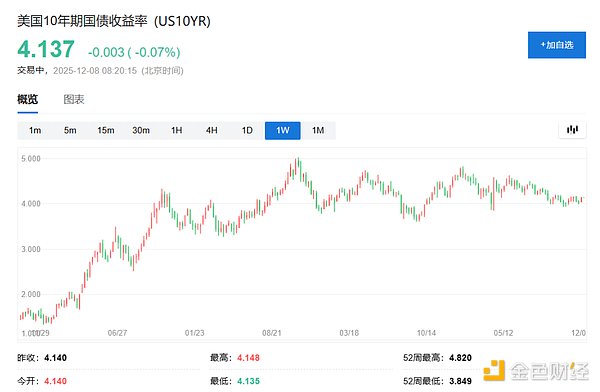
美国债市现“三十年罕见之分歧”:美联储降息前夜,美长债收益率却“不跌反涨”
Hua Er Jie Jian Wen· 2025-12-08 00:45
自2024年9月美联储启动本轮降息以来,已累计将基准利率下调1.5个百分点至3.75%-4%的区间。然而,市场的反应却出人意料。同期,10年期美 国国债收益率攀升了近0.5个百分点至4.1%,而30年期国债收益率的涨幅更是超过了0.8个百分点。 但作为美国消费者和企业借贷成本基准的关键国债收益率,却并未随之走低。 回顾过去四十年中仅有的两次非衰退时期的降息周期(1995年和1998年),当时美联储仅降息75个基点,10年期国债收益率要么直接下降,要么 涨幅远不及当前水平。 这一走势直接挑战了传统的市场逻辑,即美联储降息通常会引导长期利率下行。它也与美国总统特朗普的预期相悖,后者认为更快的降息将有效 拉低抵押贷款、信用卡等各类贷款利率。市场的反常表现意味着,投资者对利率前景的判断与美联储存在巨大分歧。 当下,对于这种分歧的解读,市场观点众说纷纭。乐观者认为这是经济将避免衰退的信心体现;中性观点则视其为市场利率回归2008年金融危机 前常态的标志;而悲观者则担忧,这反映了"债券义警"的回归,他们对美国不断膨胀的国家债务和潜在的通胀风险投下了不信任票。 罕见背离:降息周期下的收益率上行 通常情况下,当美联储调整其短 ...