第四次科技革命

Search documents
磁传感器迎「风口」,国内企业如何顺势起飞?
36氪· 2025-08-28 09:11
Core Viewpoint - The article discusses the emergence of a Chinese company, Ximic Technology, in the magnetic sensor market, leveraging new TMR technology to replace traditional solutions and capture market opportunities in the context of the fourth technological revolution [2][3][11]. Industry Overview - The article highlights the historical context of technological revolutions and the dominance of Western countries in global technology leadership, leading to a significant shift with the rise of new technologies in various sectors, including AI and electric vehicles [3]. - The demand for intelligent sensing is surging, presenting a critical opportunity for domestic companies to capitalize on this trend [4]. Magnetic Sensor Technology - Magnetic sensors are essential components in various applications, converting changes in magnetic fields into electrical signals, and are crucial for AI power, electric vehicles, and robotics [5]. - There are two main technological routes for magnetic sensors: Hall effect sensors and magnetoresistive sensors (xMR), with TMR technology being the most advanced and suitable for high-performance applications [6]. Market Growth Projections - The global magnetic sensor market is projected to grow from RMB 119.2 billion in 2024 to approximately RMB 293 billion by 2029, with a compound annual growth rate (CAGR) of 19.7% [6]. - The TMR sensor segment is expected to see even higher growth, with sales projected to reach around RMB 33 billion by 2029, reflecting a CAGR of 26.5% from 2024 to 2029 [7]. Challenges in the Market - The TMR sensor market is characterized by low domestic production rates in China, with a 90% reliance on imports for high-end products due to significant technical barriers in manufacturing [8]. - The production process involves complex steps, including chip design and wafer production, which require substantial investment and expertise [8]. Ximic Technology's Position - Ximic Technology, founded in 2013, has developed a comprehensive product line and achieved international standards in key performance metrics, positioning itself as the leading Chinese company in the magnetic sensor industry by 2024 [10][11]. - The company adopted an IDM (Integrated Device Manufacturer) model after acquiring Sensitec, allowing it to control the entire production chain from chip design to end solutions [12]. Strategic Partnerships and Customer Engagement - Ximic Technology emphasizes deep collaboration with clients, integrating into their product development processes to enhance service and value creation [14]. - The company has established a strong R&D team and global presence, with significant sales in the TMR magnetic sensor market, ranking second globally by 2024 [14][15]. Future Outlook - The magnetic sensor market is expected to thrive as industries transition towards electrification and intelligence, with Ximic Technology poised to play a significant role in this evolution [15].


杨德龙:本轮牛市行情愈演愈烈 赚钱效应明显提升 | 立方大家谈
Sou Hu Cai Jing· 2025-08-20 11:23
Core Viewpoint - The A-share market has experienced significant gains due to low domestic interest rates, ample liquidity, policy support, and a shift of household savings into the capital market, alongside increasing expectations for a rate cut by the Federal Reserve in September [1][2][3] Market Performance - The Shanghai Composite Index has risen over 1% and surpassed 3700 points, indicating a strong upward trend and increased profitability for investors, attracting more external capital, including foreign investments [1][3] - The total market capitalization of A-shares has exceeded 100 trillion yuan, marking a historical high, with trading volumes consistently above 2 trillion yuan [4] Economic Factors - The Federal Reserve is expected to cut interest rates by 25 basis points in September, with potential further cuts by the end of the year, which could lower the benchmark rate below 4% [2][3] - The U.S. government debt has surpassed 37 trillion dollars, increasing concerns about debt repayment pressures and prompting calls for monetary easing to stabilize the economy [2] Policy Support - The Chinese government has emphasized the importance of stabilizing the real estate and stock markets, with recent meetings highlighting the need for a more inclusive and attractive capital market [3][4] - Institutional investors, including insurance funds and pension funds, have increased their allocations to equity assets, contributing to market liquidity [4] Consumer Behavior - There is a noticeable trend of household savings being redirected to the capital market, driven by low interest rates on savings accounts, with one-year deposit rates falling below 1% [4] - The shift in consumer behavior is expected to support the ongoing bull market, which is anticipated to last for two to three years, characterized by a slow and steady growth rather than rapid fluctuations [4] Technological Advancements - The fourth industrial revolution, particularly the application of artificial intelligence, is gaining momentum, with significant developments in AI models for specialized fields such as aerospace [5][6] - The humanoid robot sector is emerging as a potential new industry, attracting global attention and investment opportunities [6] Monetary Policy - The People's Bank of China has indicated a commitment to a moderately loose monetary policy, aiming to promote reasonable price recovery and stimulate consumption [7][8] - The government has set a GDP growth target of around 5% and a CPI target of 2%, with measures in place to boost consumer spending and achieve these goals [8]
杨德龙:A股本轮牛市行情愈演愈烈赚钱效应明显提升,可能会延续两三年时间!真正实现广大投资者期待的慢牛、长牛行情,而非快牛、疯牛行情
Sou Hu Cai Jing· 2025-08-20 09:25
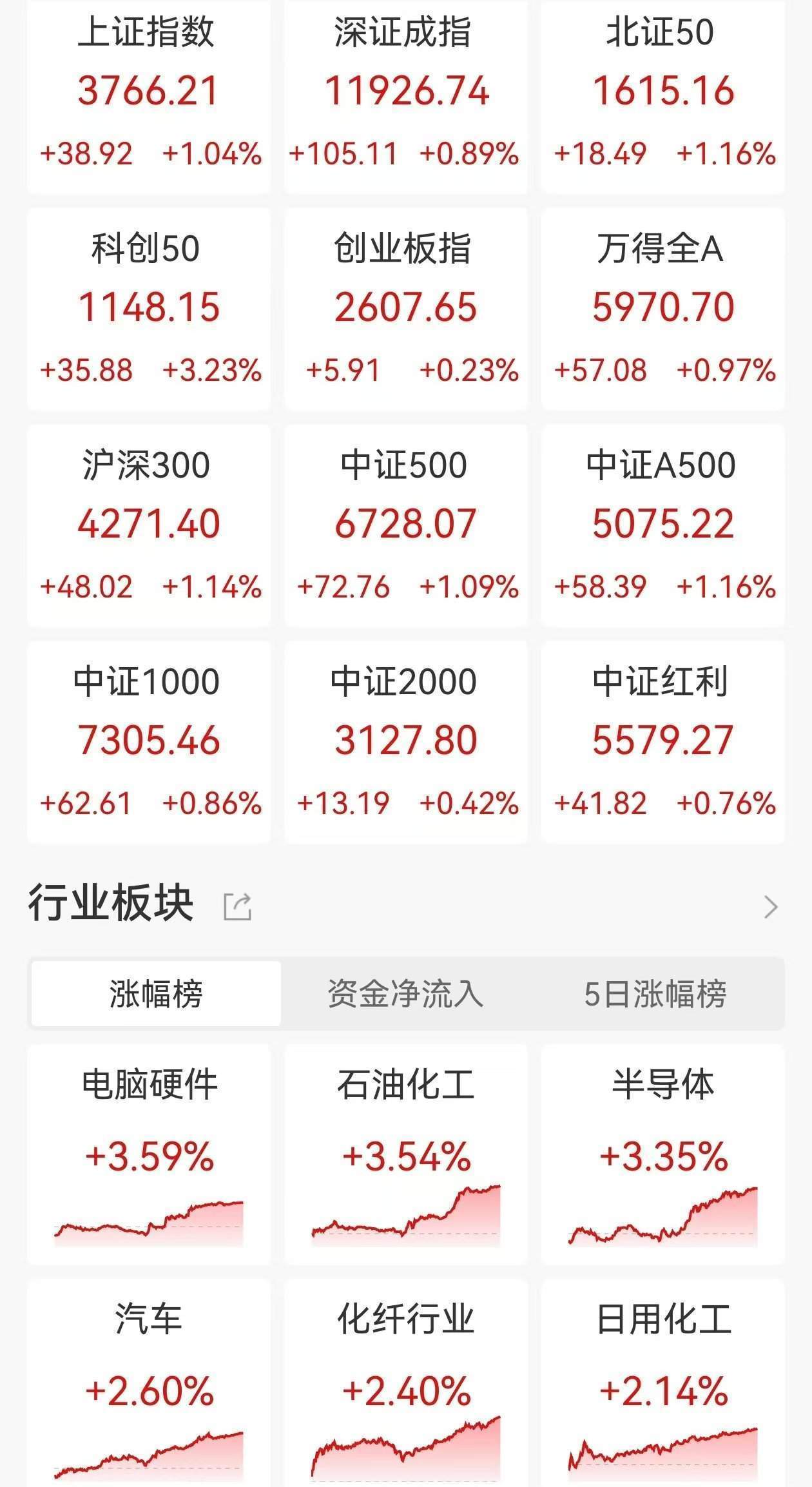
Market Overview - The A-share market has experienced continuous breakthroughs and significant increases, driven by low domestic interest rates, ample liquidity, policy support, and a shift of household savings to the capital market [1] - The market's strong performance is also influenced by heightened expectations for a Federal Reserve rate cut in September, leading to increased inflow of external capital [1][4] Index Performance - Major indices have shown positive movements, with the Shanghai Composite Index rising by over 1% to 3766.21, and other indices such as the Shenzhen Component and ChiNext also recording gains [2] Federal Reserve Rate Cut Expectations - The probability of a Federal Reserve rate cut in September is considered very high, influenced by pressure from President Trump and disappointing employment data [4] - The Federal Reserve may lower the benchmark interest rate from the current range of 4.25%-4.5% to below 4% by the end of the year, which could support the recovery of the U.S. economy [4] Bull Market Confirmation - The current bull market trend is gradually being established, with significant policy support since last September signaling the start of this bull market [5] - Institutional investors have increased their allocations to equity assets, contributing to the market's upward momentum [5][6] Capital Market Dynamics - There is a noticeable trend of household savings moving towards the capital market, with nearly 60 trillion yuan added to savings over the past five years, driven by low interest rates [6] - The total market capitalization of A-shares has surpassed 100 trillion yuan, indicating strong market confidence and increased trading volumes [6] Technological Advancements - The fourth technological revolution is underway, with significant advancements in AI applications, particularly in the aerospace sector [7] - The "Wukong AI" model has been developed for space missions, showcasing the potential of AI in specialized fields [7] Investment Opportunities - The humanoid robot sector is gaining attention, with potential to become a major industry following home appliances, smartphones, and new energy vehicles [8] - Investors are encouraged to explore opportunities in the "AI + traditional industries" space, as the market for humanoid robots expands [8]
杨德龙:本轮牛市行情愈演愈烈赚钱效应明显提升
Xin Lang Ji Jin· 2025-08-20 09:08
Group 1 - The A-share market has experienced continuous breakthroughs and significant increases due to low domestic interest rates, ample liquidity, and policy support, alongside a growing expectation of a rate cut by the Federal Reserve in September [1][2] - The Shanghai Composite Index has risen over 1%, surpassing 3700 points, which has attracted more external capital, including foreign investment, as the China-US interest rate differential narrows and the pressure of RMB depreciation eases [1][2] - The Federal Reserve is expected to cut rates by 25 basis points in September, with potential further cuts by the end of the year, which could lower the benchmark interest rate from the current 4.25%-4.5% to below 4%, providing support for the US economic recovery [2] Group 2 - The current bull market trend is gradually establishing itself, with significant policy support being a crucial factor, as the Central Political Bureau has emphasized stabilizing the real estate and stock markets [3][4] - Institutional investors, including insurance funds, public funds, and pension funds, have increased their allocations to equity assets, contributing to a substantial influx of capital into the market [3][4] - The total market capitalization of A-shares has surpassed 100 trillion yuan, indicating a strong market sentiment and increased trading volume, with multiple trading days exceeding 2 trillion yuan [4] Group 3 - There is a noticeable trend of residents shifting savings to the capital market, with nearly 60 trillion yuan added to savings accounts over the past five years, driven by low interest rates on deposits [4] - The current bull market is expected to last two to three years, characterized by a slow and steady growth rather than a rapid surge, encouraging value investing and the allocation of quality stocks and funds [4] Group 4 - The fourth technological revolution is underway, particularly with the widespread application of artificial intelligence, as demonstrated by the progress of "Wukong AI" in the aerospace sector [5][6] - The humanoid robot sector is gaining attention, with significant events and IPOs attracting investor interest, positioning humanoid robots as a potential fourth major industry in China [6] Group 5 - The People's Bank of China has emphasized a moderately loose monetary policy, focusing on promoting reasonable price recovery and improving consumer demand through supply-side reforms [7] - The government has set a GDP growth target of around 5% and a CPI target of 2%, with measures to stimulate consumption and achieve the inflation target being crucial [7]
“信心牛”再创新高,未来向何处去?
水皮More· 2025-08-19 10:00
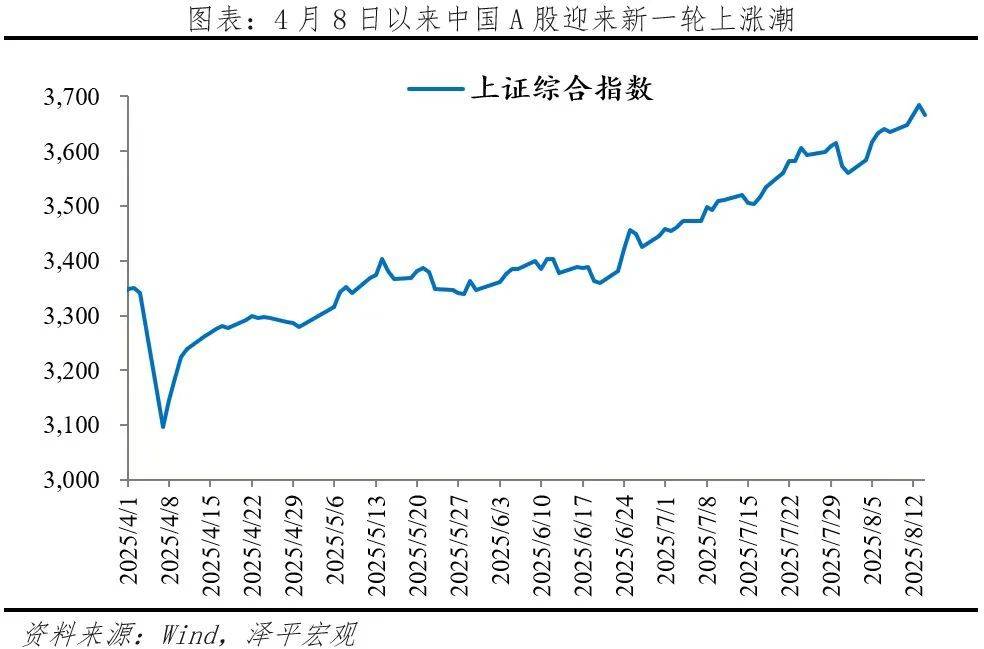
Core Viewpoint - The article presents a bullish outlook on Chinese assets, emphasizing a "confidence bull market" driven by significant policy easing and a shift in market sentiment towards optimism regarding China's economic prospects [5][7]. Group 1: Market Trends and Economic Outlook - Recent performance of A-shares and Hong Kong stocks indicates a new high for RMB assets, coinciding with a weakening US dollar and strengthening RMB exchange rate [6]. - The "confidence bull market" is characterized by a historical turning point in macroeconomic policy, marked by substantial fiscal measures and ongoing monetary easing [7]. - The concept of "East rises, West falls" suggests that while the US economy may face a downturn, China's economy is poised for recovery and renewed interest from global investors [7]. Group 2: Historical Analysis of A-share Bull Markets - A-share bull markets require three conditions for initiation: policy shift, capital inflow, and low valuations, often emerging from periods of despair [9]. - Bull markets typically progress through three phases: policy-driven, capital-driven, and fundamental-driven, with initial phases less correlated to economic fundamentals [9][10]. - The average duration of A-share bull markets is 17.35 months, significantly shorter than the average bear market duration of 27.12 months [10]. Group 3: Economic Trends for the Second Half of 2025 - The global economic landscape is marked by rising populism and de-globalization, with Chinese companies increasingly seeking opportunities abroad [12]. - The ongoing US-China tariff conflict is expected to persist, with potential escalations in trade tensions [12]. - Key factors for economic recovery include restoring confidence in the private sector, stabilizing the real estate market, and fostering new productive forces [12][13]. Group 4: Strategies for Economic Recovery - The concept of "debt migration" is proposed as a strategy to revitalize the economy, emphasizing the need for government and central bank intervention to alleviate debt burdens on households and businesses [14][15]. - Three main strategies for implementing "debt migration" include aggressive economic policies, establishing a housing reserve bank, and investing in new infrastructure [16][17]. - The focus on new infrastructure aims to support long-term economic growth and technological advancement, positioning China for future economic prosperity [16][17].
“信心牛”再创新高,未来向何处去?
Sou Hu Cai Jing· 2025-08-15 00:03
Group 1 - The core viewpoint is that the Chinese market is experiencing a "confidence bull market" due to significant policy easing, leading to a turnaround in confidence towards Chinese assets and economic prospects [2] - The historical turning point for macroeconomic policy was marked by the introduction of a 10 trillion yuan debt relief plan and continuous easing in monetary policy, including interest rate cuts [2] - The report suggests that a large-scale economic stimulus plan and protection for the private economy could lead to a scenario where the East rises and the West declines, indicating a potential recovery for the Chinese economy [2] Group 2 - The analysis of A-share bull markets reveals that three main conditions are necessary for a bull market to start: policy shift, capital inflow, and low valuations [5] - A-share bull markets typically go through three phases: policy-driven, capital-driven, and fundamental-driven, with the initial phase being less correlated with economic fundamentals [6] - The average duration of A-share bull markets is 17.35 months, significantly shorter than the average duration of bear markets at 27.12 months [6] Group 3 - The report identifies ten key trends for the Chinese economy in the second half of the year, including the need for a new round of large-scale economic stimulus due to downward pressure on the economy [8][9] - The recovery of the private economy, a soft landing for the real estate market, and the development of new productive forces are highlighted as critical points for economic recovery [10] - The fourth technological revolution is expected to create new opportunities in fields such as artificial intelligence, new energy, and commercial aerospace [11] Group 4 - The concept of "debt migration" is proposed as a strategy to restart economic recovery, emphasizing the need for government and central bank intervention to alleviate debt pressure on residents and businesses [15][16] - Three main strategies for implementing "debt migration" include aggressive economic policies, the establishment of a housing reserve bank, and the promotion of new infrastructure projects [17] - The report draws lessons from Japan's economic stagnation and the successful responses of the U.S. during the financial crisis and pandemic, advocating for a focus on repairing the balance sheets of residents and businesses to stimulate consumption and investment [18]
把握“十五五”关键机遇期,系统谋划生态环境重大工程
Zhong Guo Huan Jing Bao· 2025-07-28 00:19
Core Viewpoint - The focus is on the strategic planning and implementation of major ecological and environmental projects as part of the transition from the "14th Five-Year Plan" to the "15th Five-Year Plan," emphasizing the importance of high-quality ecological environment protection and the construction of a beautiful China [1][2]. Group 1: Policy and Financial Support - The "Central Ecological Environment Fund Project Reserve Library Entry Guide (2025)" has optimized support directions and competitive distribution mechanisms, with a special long-term government bond expansion to 1.3 trillion yuan, including 800 billion yuan directed towards key ecological environment projects [2][3]. - Local governments are encouraged to leverage the overlapping opportunities during the planning transition, government bond expansion, and digital-green transformation to focus on four key dimensions: pollution reduction, environmental quality improvement, ecological protection and restoration, and modern ecological infrastructure construction [2][3]. Group 2: Systematic Planning and Management - Emphasis on a systematic approach to planning major ecological projects, including establishing a collaborative mechanism where planning drives projects and projects enhance planning [3][4]. - Importance of project design and strategic value, ensuring that planning goals are supported by tangible projects and embedding lifecycle management concepts into project planning [3][4]. Group 3: Financial Mechanisms and Ecological Value - The EOD (Ecological Environment-Oriented Development) model has been effective in optimizing project design and establishing a stable cash flow loop, promoting a virtuous cycle of ecological improvement and regional value enhancement [4][5]. - The establishment of a complete system for ecological asset rights confirmation, accounting, evaluation, and trading is crucial for unlocking the potential of ecological resources and addressing financing challenges for ecological projects [4][5]. Group 4: Technological Empowerment - The development of an integrated monitoring network utilizing satellite remote sensing, drones, and ground sensors is essential for precise pollution source tracking and data support for enforcement and early warning [5]. - Emphasis on innovation in governance technology and the integration of AI, IoT, and big data into ecological projects to enhance operational efficiency and real-time monitoring capabilities [5].
撤县并省,猛砸铁饭碗:越南为何这么急?
虎嗅APP· 2025-07-16 00:05
Core Viewpoint - Vietnam has initiated a significant administrative reform, reducing its provinces from 63 to 34 and eliminating nearly 628 county-level administrative units, which is seen as a major restructuring effort to streamline governance and reduce fiscal burdens [3][4][10]. Group 1: Administrative Reform Impact - The reform, termed "restructuring the landscape," aims to cut down nearly 100,000 government positions in the short term and potentially 250,000 in the long term, affecting 4% to 10% of the total civil service workforce [4][11]. - The Vietnamese government anticipates saving over 190 trillion VND (approximately 50 billion RMB) from 2026 to 2030 due to these cuts [11]. - The administrative structure will shift from a three-tier system (province-county-village) to a two-tier system (province-village), significantly reducing bureaucratic layers [6][10]. Group 2: Comparison with China's Administrative System - Vietnam's administrative system shares similarities with China's, particularly at the provincial level, but differs in the absence of city-level governance [15][16]. - Post-reform, Vietnam will have 34 provinces, mirroring China's 34 provincial-level administrative regions, which raises questions about the intent behind this structure [17]. - Major cities like Hanoi and Ho Chi Minh City are comparable to China's major cities, with Ho Chi Minh City projected to have a GDP of approximately 69.7 billion USD (around 500 billion RMB) in 2024, accounting for about 15% of Vietnam's total GDP [18]. Group 3: Reasons for Urgency in Reform - Vietnam's GDP growth rate reached 7.52% in the first half of the year, the highest in 15 years, highlighting the need for swift reforms amid global economic uncertainties [23]. - The country aims to become a middle-income nation by 2030 and a high-income nation by 2045, reflecting an ambitious economic vision [24][25]. - The urgency is driven by the diminishing global and demographic dividends, as well as the challenges posed by the fourth industrial revolution, which threatens traditional low-cost labor advantages [26][29].
杨德龙:千方百计推动我国资本市场走强 是提振消费最有效手段
Xin Lang Ji Jin· 2025-07-02 06:01
Group 1 - Current consumption is the most important driver of economic growth in China, contributing over 50% to GDP growth in the past two years, surpassing the combined contributions of investment and exports [1] - The recent guidance from the central bank and six departments emphasizes enhancing financial services from both supply and demand sides to support consumption [2][3] - The focus is on increasing residents' property income to boost consumption capacity, as raising wage income faces significant challenges due to pressures on private enterprises [3] Group 2 - The capital market plays a crucial role in promoting consumption growth, acting as an accelerator and stabilizer by providing diverse investment channels for residents [3][4] - There has been a significant increase in household savings, with nearly 60 trillion yuan added in the past four years, indicating a need to attract these savings into the capital market [4] - The recent recovery in the capital market, with the Shanghai Composite Index rising over 20% from last year's low, is seen as a key factor in enhancing market confidence and promoting consumption [4][5] Group 3 - The issuance of the recent opinion reflects the central government's determination to expand high-quality consumption growth, which is expected to release consumption potential and boost market sentiment [5] - The ongoing fourth technological revolution, particularly in artificial intelligence, is anticipated to attract investment and enhance market profitability, further stimulating consumption [5]
深圳新一轮综改“置顶”,不止于吸引顶尖科学家
21世纪经济报道· 2025-06-12 15:00
Core Viewpoint - Shenzhen is positioning itself as a leading hub for innovation and talent attraction, particularly in the context of the new round of comprehensive reform pilot programs aimed at enhancing the integration of education, technology, and talent systems [2][9]. Group 1: Talent Attraction and Integration - The recent recruitment of top international scholars, such as Lu Wei and Dan Yang, to Shenzhen Medical Academy reflects the city's strong appeal to global talent [2][13]. - Shenzhen has seen a significant increase in its research and development (R&D) workforce, with 920 scholars recognized among the top 2% globally, and a full-time equivalent of 461,000 R&D personnel, the highest in China [2][8]. - The city is implementing a project manager system to enhance R&D autonomy, allowing for greater management authority in project selection, team formation, and funding allocation [3][12]. Group 2: Innovation Ecosystem - Shenzhen's innovation landscape is characterized by a dynamic network of universities, research institutions, and enterprises, facilitating cross-disciplinary collaboration and technology integration [3][4]. - The city has invested heavily in higher education, establishing 17 universities and numerous research institutions, including the establishment of the Pengcheng National Laboratory and 14 national key laboratories [7][8]. - The R&D expenditure intensity in Shenzhen reached 6.46% in 2023, with corporate R&D investment accounting for 93.3% of the total, the highest in the country [6][8]. Group 3: Educational Reforms - The recent policy document emphasizes the need for educational reforms that align with industry needs, promoting the integration of engineering education with emerging industries [15][19]. - Shenzhen is fostering a new generation of talent, with a focus on cultivating high-quality, interdisciplinary professionals who can thrive in strategic emerging industries [17][19]. - The establishment of vocational colleges and partnerships with leading companies like Huawei and Tencent aims to enhance the practical skills of graduates, ensuring they meet the demands of the evolving job market [19][20].