
股债跷跷板效应

Search documents
股债跷跷板效应走弱 机构谨慎看待一季度债市
Zheng Quan Shi Bao· 2026-01-18 18:08
2026年开年以来,债市持续疲软。 多位市场人士在接受证券时报记者采访时表示,近期股市连阳走势对债市形成了较大压力。与此同时, 债市还承受着超长债供给增加等多重压力,因此年初以来易跌难涨。 "目前,市场担忧的核心问题还是超长债的供需。投资者对于市场机构无法承接超长债发行的担忧,不 但使得30年期国债收益率明显上升,市场的整体情绪也受到了较大拖累。"李一爽表示,月初公布的1月 关键期限国债发行规模较大,部分区域地方债超长期占比仍然较高,这也给市场情绪带来了一定的扰 动。 尹睿哲也表示,一方面,市场在去年末已持续面临供需层面的潜在挑战,由此带来的担忧在开年阶段有 所显化,国债和地方债发行节奏偏快、单只规模偏大,无疑也对市场情绪形成扰动;另一方面,央行在 二级市场买卖债操作的规模保持相对克制,也使得债市参与者对宽货币的预期趋于谨慎。 同时,商品价格在开年时段大幅走强,与权益市场形成共振,这又对债市构成额外压力。另外,去年末 部分基金或存在冲量行为,后于年初退出而加剧了市场的短期抛压,使得债市在本就偏弱的环境中承受 了更为集中的调整压力。 机构普遍认为,一季度债市仍然存在较多不确定性。年初行情或延续此前较为占优的交易 ...
固定收益周度策略报告:总量政策若“缺席”,市场怎么走?-20260118
SINOLINK SECURITIES· 2026-01-18 13:41
Report Industry Investment Rating - Not provided in the given content Core Viewpoints of the Report - The short - term suppressing factors in the bond market have weakened, but the sentiment repair is limited. The bond market shows a pattern of "stable short - end and weak long - end". The "see - saw" effect of stocks, bonds, and commodities has eased, but the bond market sentiment is still constrained by policy and fundamental factors [2][7]. - The central bank is prioritizing structural monetary policy tools, and the window for aggregate easing is expected to be postponed. Recent economic data shows marginal improvement, weakening the urgency of aggregate easing [3][9]. - Historically, when aggregate policies are absent in the first quarter, there are usually increased fluctuations in capital prices, greater upward pressure on long - term interest rates, and a longer adjustment cycle. However, this year, due to the conservative market expectations for monetary easing and the central bank's rich liquidity management tools, the short - end may be more stable than in historical "absence years" [4][5][13]. - The market may continue to favor short - term bonds as the downward trend of fundamental high - frequency signals slows down, and the growth rate of medium - and long - term corporate loans has rebounded for the first time after 30 months of decline [5][29]. Summary by Relevant Catalogs Bond Market Performance and Influencing Factors - This week, the bond market continued the pattern of "stable short - end and weak long - end". The "see - saw" effect of stocks, bonds, and commodities has eased, but the bond market sentiment has not been significantly repaired due to the postponement of aggregate policy easing and concerns about the macro - fundamentals [2][7]. - The central bank highlighted the implementation and application of structural monetary policy tools at the press conference, and the aggregate easing window is expected to be postponed. Recent economic data, such as December's PMI, inflation, export, and credit data, have shown marginal improvement, weakening the urgency of aggregate easing [3][9]. Historical Analysis of Aggregate Policy Absence in Q1 - From 2019 to 2025, the first quarter is usually an active period for the implementation of aggregate monetary policies. Years without aggregate policy support in Q1 include 2021, 2025, and most of 2023. - In terms of capital price performance, in years with aggregate policy implementation in Q1, the average maximum upward amplitude of the 5 - day MA of DR001 was about 95BP. In contrast, in years without aggregate policy support, this amplitude reached an average of 147BP, with significantly increased fluctuations [4][13][16]. - Regarding long - term interest rates, in years with aggregate policy support in Q1, the average maximum upward amplitude of the 10 - year Treasury bond interest rate was about 15BP, and the upward cycle lasted about 21 days on average. In policy - absent years, the average maximum upward amplitude increased to 20BP, and the adjustment time extended to about 30 days [4][17][19]. Current Market Situation: Similarities and Differences - Similarity: When aggregate policies are absent in Q1, the upward pressure on long - term interest rates tends to increase, as bond supply usually increases at the beginning of the year, and pro - growth policies are successively introduced, which together with policy constraints put pressure on interest rates [20]. - Difference: This year, the market's expectation of broad - money policy is not strong, and with the support of the central bank's rich liquidity injection tools, the stability of capital prices in Q1 is expected to be enhanced compared with previous years, so the short - end may perform differently from historical "absence years" [20][23]. Market Strategy - The downward trend of fundamental high - frequency signals continues to slow down, and the growth rate of medium - and long - term corporate loans has rebounded for the first time after 30 months of decline. Although there are base - effect disturbances, the sustainability of this rebound should not be underestimated. The market shows signs of a phased rebound but may continue to favor short - term bonds as fundamental risks remain [5][29]. Weekly Market Review (January 11 - 17, 2026) - **Funds**: The net reverse - repurchase investment this week was 8128 billion yuan, and 6 - month repurchase operations had a net investment of 3000 billion yuan. The capital market tightened marginally, with the operating centers of DR001, DR007, and DR014 rising by 10bp, 6bp, and 8bp to 1.36%, 1.51%, and 1.54% respectively compared with last week [30][31]. - **Bonds**: Most Treasury bond yields declined this week, with the 1 - year Treasury bond yield falling 5bp to 1.24% and the 10 - year Treasury bond yield falling 4bp to 1.84%. The 10 - 1 - year term spread widened by 1bp to 60bp. The bond market sentiment improved [32]. - **Interest Rate Synchronous Indicators**: Among the ten interest rate synchronous indicators, 6 sent "positive" signals this week. Compared with last week, the growth rate of medium - and long - term corporate loan balances sent a "negative" signal, while the copper - gold ratio sent a "positive" signal [41].
股债跷跷板效应结束了吗?机构研判债市走势
券商中国· 2026-01-17 10:43
开年以来,债市持续疲软。 多位市场人士在接受券商中国记者采访时表示,股市的快速持续上涨对债市形成了较大的压力。与此同时,债 市还承受着超长债供给增加等多方压力,导致债市开年易跌难涨。 展望后市,机构普遍认为,一季度市场仍然存在较多不确定性。年初行情或仍延续此前较为占优的交易惯性: 短端在利差处于低位的情况下相对稳定,而长端在缺乏系统性利多的背景下,整体机会仍然有限。 除了股债跷跷板效应。债市本身也存在诸多利空,从而导致债市整体踟蹰不前。其中,长债的超额供给受到较 多关注。 "目前市场担忧的核心问题还是超长债的供需问题,对于市场机构无法承接超长债发行的担忧,不但使得30年 期国债收益率明显上升,市场的整体情绪都受到了较大的拖累。"李一爽表示,月初公布的1月关键期限国债发 行规模较大,部分区域地方债超长期占比仍然较高,也对市场情绪带来了一定的扰动。 尹睿哲也表示,一方面市场在去年末已持续关注供需层面的潜在挑战,而这一担忧在开年阶段有所显性化,国 债和地方债发行节奏偏快、单只规模偏大,对市场情绪形成扰动;另一方面,央行在二级市场买卖债操作的规 模上保持相对克制,也使得债市参与者对宽货币的预期趋于谨慎。 同时,商品价 ...


十年国债ETF(511260)收红,市场聚焦流动性及债市走向
Sou Hu Cai Jing· 2026-01-16 08:32
值得关注的是,十年国债ETF成立以来经历了2018年~2024年共计7个完整自然年度,均保持每年正收 益,有望成为穿越牛熊周期的资产配置利器。 1月16日,十年国债ETF(511260)收涨0.06%,市场聚焦流动性及债市走向。 金融街证券指出,股债"跷跷板"效应减弱,10年国债在1.90%附近出现明显阻力。交易盘可逢高介入, 但仍需适度降低空间预期。央行2026年工作会议重提"灵活高效运用降准降息",预计仍将温和呵护流动 性。 十年国债ETF(511260)跟踪上证10年期国债指数,选取剩余期限7到10年且在上交所挂牌的国债作为 样本,久期恒定。从过往表现来看,十年国债ETF(511260)成立以来净值屡创新高,历史业绩持续稳 健。根据基金定期报告,截至三季度末,近1年回报率达4.17%,近3年回报率达14.04%,近5年回报率 达23.39%,成立至今累计回报率达35.77%。 风险提示: 数据来源:基金定期报告、Wind,相关业绩经托管行核对,过往表现不代表未来。十年国债ETF成立于 2017年8月4日,2017年~2025年上半年净值增长率/业绩比较基准为:-1.55%/-1.01%;7.6%/8.4 ...
美联储褐皮书;中国拟限制美国网安产品
Sou Hu Cai Jing· 2026-01-15 04:25
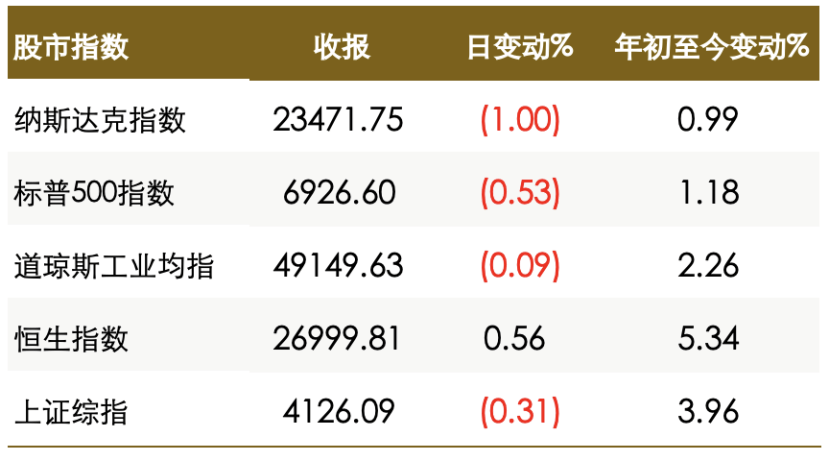
美联储褐皮书显示经济增速回升且就业持稳,美国11月零售增长超预期,PPI环比小幅加速。日本首相将很快宣布提前 大选,财相对日元发出干预警告。中国要求企业停止使用部分美国和以色列的网络安全产品。 隔夜要点 · 美国股市周三收低,纳指领跌,科技股走软,因投资者转向更具防御性的板块;银行股在部分银行公布喜忧参半的 季度业绩后延续近期跌势。美国公债收益率下跌,此前公布了显示消费者健康状况和通胀的数据,同时投资者在等待 最高法院就特朗普总统关税的合法性作出裁决,且中东地区的地缘政治紧张局势也在加剧。日圆兑美元从18个月低点 反弹,因日本官员警告称可能会采取干预措施来支撑日圆。油价收高,市场担忧伊朗供应中断。金价创下纪录新高, 白银也随之上涨,地缘政治和经济不确定性推动投资者转向避险资产,与此同时,美联储降息预期进一步增强了黄金 上涨的动能。 | 股市指数 | 收报 | 日变动% | 年初至今变动% | | --- | --- | --- | --- | | 纳斯达克指数 | 23471.75 | (1.00) | 0.99 | | 标普500指数 | 6926.60 | (0.53) | 1.18 | | 道琼斯工业均 ...
中信建投:中期“股债跷跷板”效应进一步支撑A股走势
Zheng Quan Shi Bao Wang· 2026-01-14 23:57
人民财讯1月15日电,中信建投(601066)指出,2026年全球降息周期进入下半场,宏观流动性呈"内外 宽松共振"与"从超常到常态"两大核心特征。汇率端美元承压,人民币升值支撑A股走强。股债再配置 层面,长期低利率重塑股债配置逻辑,中期"股债跷跷板"效应进一步支撑A股走势。除此之外,居 民"存款搬家"再配置的需求或将成为市场的最大边际增量。政策方面,后地产时代资本市场地位升级, 成为经济发展与资源配置的核心枢纽,市场资金生态持续优化,为资本市场高质量发展奠定基础。 ...

【财经分析】跨年债市表现分化 信用债市场缘何走强?
Xin Hua Cai Jing· 2026-01-13 15:47
Core Viewpoint - The domestic bond market has shown a clear differentiation after the New Year, with interest rate bonds experiencing upward pressure on yields while credit bonds have seen yields decline, creating a "weak interest rate, strong credit" scenario [1] Group 1: Credit Bonds Performance - Credit bonds have strengthened due to increased demand from institutional investors, with significant net purchases observed from various asset management institutions, including 49.3 billion yuan from wealth management, 36.8 billion yuan from insurance, and 206.6 billion yuan from money market funds between January 4 and 9 [3] - The demand for credit bonds is supported by favorable policy changes, such as the revised regulations on redemption fees for bond funds, which have alleviated redemption pressures that had been present since September 2025 [3] - The inherent advantages of credit bonds in a low-interest-rate environment have made them attractive as safe assets for investors [3] Group 2: Interest Rate Bonds Performance - Interest rate bonds have weakened due to supply pressures and a "stock-bond seesaw" effect, with a significant portion of government bonds scheduled for issuance in January being long-term, which has directly suppressed yields [4] - The strong performance of the equity market post-New Year has led to a diversion of funds away from the bond market, exacerbating the decline in interest rate bonds [4] - Marginal improvements in the economic fundamentals, such as a rebound in the manufacturing PMI to 50.1% in December 2025, have weakened the rationale for investing in bonds, as inflation expectations rise [5] Group 3: Market Outlook - The short-term differentiation in the bond market is expected to continue, with credit bonds likely to remain dominant in the near term [6] - Analysts predict that the market may mirror the early 2025 trends, with potential for a temporary recovery in interest rates, but long-term challenges remain due to rising inflation and debt management pressures [7] - Investment strategies should focus on high-yield, short to medium-term credit bonds, particularly those rated AA or above, while being cautious of low-rated long-duration bonds due to potential widening of credit spreads [8]
稳致胜 信远行 | 中信保诚基金2025年成绩单:固定收益篇
Xin Lang Cai Jing· 2026-01-13 07:49
(ID中信保诚基金了! 中信保诚稳悦债券A TOP5 (5/1002) - 告 mmun E 指导 中信保诚基金 2025Q4 成绩单 固定收益篇 探寻稳进更优解 2025年,固收市场在"股债晓晓板"效应、政策预期与宏 观经济叙事的多重博弈中,步入了高波动的震荡格局。 同类基金 长期纯债债券型基金(A类) 中信保诚稳泰债券A 前15% (79/555) 同类基金 长期纯债债券型基金(A类) 中信保诚稳健债券A 前20% (59/300) 长期纯债债券型基金(A类) 004102 ill 经信 004108 003226 投资者对"低利率"环境的感受尤为深刻,固收+基金优势 出显。 复杂的市场情况,是基金公司投研能力的"试金石"。 在此背景下,中信保诚基金持续为投资者筑牢资产配置 的底仓,多种策略债基均取得亮眼回报。 利率指数 中信保诚中债0-2年政策性金融债指数A 020165 前8% (12/164) 近一年 利率债指数债券型基金(A类) 同类基金 推会成本法 同类基金 长期纯债债券型基金(A类) 中信保诚景丰债券A 前17% (162/1002) 中信保诚嘉润66个月定期开放债券 010462 前20% ...

年初债市走出2025年初的镜像
Huafu Securities· 2026-01-12 13:40
1. Report Industry Investment Rating There is no specific industry investment rating provided in the report. 2. Core Viewpoints of the Report - The bond market at the beginning of 2026 seems to mirror the situation at the beginning of 2025. Despite short - term uncertainties, considering the rapid decline in duration and the central bank's supportive attitude, the future adjustment space of the bond market is limited. Once the impacts of factors such as supply, credit, and the A - share market are weaker than expected, the bond market may continue to follow the mirror image of early 2025 and experience a recovery [2][10]. - At present, the A - share and commodity price trends are not sufficient to trigger a reversal in the bond market direction. During the adjustment process, the impact of ultra - long bonds on the net value of public funds has weakened, which helps to mitigate market shocks [8][10]. - It is recommended to maintain a certain leverage, use 2 - 3 - year medium - to - high - grade credit bonds as the bottom - position, focus on 3 - 5 - year secondary perpetual bonds in the short term, and trade long - term bond bands opportunistically according to market conditions [10]. 3. Summary According to the Table of Contents 3.1. The Market Adjustment Since the Beginning of the Year is Due to Traders' Concerns about Supply Rather Than the Supply Shock Itself - The core concern in the market is the supply - demand of ultra - long bonds. The market adjustment is affected by the large issuance scale of key - term treasury bonds in January and the high proportion of ultra - long local bonds in some regions [3][16]. - Although the issuance scale of key - term treasury bonds in January has increased, the net financing scale of treasury bonds in Q1 2026 is only slightly higher than that of the same period last year. The estimated net financing scale of local bonds in Q1 2026 may be lower than that of the same period in 2025 [20][26]. - Local governments may prefer to issue long - term bonds because refinancing bonds cannot fully cover the maturing local debt. However, the national fiscal work conference emphasizes optimizing the government bond tool portfolio, so the issuance term of local bonds may not be further extended compared to 2025 [3][30]. - The recent market adjustment is mainly caused by the large - scale net selling of public funds and securities firms. It is more of an emotional weakening due to supply concerns rather than a substantial impact. As long as the 30 - year treasury bond is the most actively traded, its pricing is still determined by traders, and it has shown higher cost - effectiveness after the recent adjustment [4][31][37]. 3.2. If External Disturbances Are Weaker Than Expected, the Bond Market May Follow the Mirror Image of Early 2025 and Experience a Recovery - Despite the continuous net withdrawal of OMO and the non - excessive renewal of 3M repurchase, the loose capital state continues, which may be related to the year - end fiscal deposit release and the central bank's supportive attitude. The probability of a reserve requirement ratio cut in January has significantly increased, and the central bank's net purchase of treasury bonds is also expected to rise [41][43][45]. - Historically, supply shocks have a greater impact on the bond market in a tight liquidity environment. Currently, the central bank's attitude is supportive, and the bank's liabilities do not show obvious pressure, so the supply shock may be less than expected. The central bank has the motivation to solve the problem of the supply - demand imbalance of government bonds [47][49]. 3.3. Wait for the Impact of Risk Preference Changes to Gradually Fade - The bond market adjustment is also related to the continuous rise of the A - share and commodity prices. However, as the upward slope of the A - share market becomes steeper, its volatility increases, and the impact on the bond market has weakened. The rise in commodity prices may be short - term, and the recovery of CPI still faces challenges [50][51][56]. - During the adjustment process, the impact of ultra - long bonds on the net value of public funds has weakened, which helps to mitigate market shocks. Although short - term uncertainties remain, the future adjustment space of the bond market is limited, and there is no need to be overly pessimistic about the subsequent bond market [64][71].
债市持续调整 机构看好“类固收”策略产品机会
Zheng Quan Shi Bao· 2026-01-11 17:00
Group 1 - The A-share market is strengthening while the bond market is experiencing continuous adjustments, with the 10-year government bond yield rising to around 1.90% [1] - Private equity institutions believe that the bond market's acceptance of recession narratives has significantly decreased, indicating a shift away from the previous "lying win" investment strategy based on declining interest rates [1][6] - The recent increase in CPI and PPI suggests a warming domestic economy, leading to heightened inflation expectations and a reversal in the bond market's attitude towards recession narratives [2] Group 2 - The 30-year U.S. Treasury bond yield remains relatively high at around 4.8%, despite a cumulative rate cut of 75 basis points by the Federal Reserve [3] - The "see-saw effect" between stocks and bonds is becoming more pronounced, with the 10-year government bond yield reaching a high point not seen since September 2024 [4] - Analysts expect limited upward momentum for the 10-year government bond yield in the short term, suggesting that investors should seize opportunities for increased allocations at the beginning of the year [4] Group 3 - The net supply of interest rate bonds is projected to reach 17.4 trillion yuan in 2026, indicating a significant increase compared to 2025 [5] - Despite the anticipated increase in bond supply, the demand for bonds may not improve significantly due to challenges in real financing needs and a downward trend in loan rates [5] - The current low interest rate environment is leading to a shift in asset allocation strategies, with a growing opportunity for "class fixed income" strategy products [6][7]