
产能过剩

Search documents
一周碳要闻:新能源行业密集“反内卷”(碳报第159期)
Xin Jing Bao· 2025-08-15 08:08
Industry Dynamics - In the first half of the year, investment in key energy projects across the country exceeded 1.5 trillion yuan, a year-on-year increase of 21.6% [2] - Investment in renewable energy generation has seen rapid growth, with land-based wind power investments in Guangxi and Xinjiang doubling compared to the same period last year [2] - Private enterprises in the energy sector have also seen significant investment growth, with a year-on-year increase of 27.8% [2] Lithium Industry Updates - UBS raised its lithium price forecasts for the next three years following the suspension of mining operations at CATL's Yichun project, indicating that concerns over lithium supply surplus have diminished [3] - The new Mineral Resources Law is driving supply-side structural reforms in the lithium industry by increasing entry barriers and compliance costs [3] Anti-Competition Initiatives - Major lithium battery separator companies have agreed to pause capacity expansion and implement price discipline to stabilize profitability [4] - The China Nonferrous Metals Industry Association's lithium division has called for collaboration across the supply chain to combat "involution" and promote healthy industry development [5][6] Local News - Guangdong has introduced the first systematic judicial guarantee document for carbon emission quota pledge financing, aiming to reduce financing costs and activate carbon assets [7] - Guangzhou has released a high-quality development plan for virtual power plants, targeting a capacity of 500,000 kW by 2027 [8] Market Trends - The lithium battery sector is experiencing a significant "involution" crisis, with prices for materials like silicon dropping dramatically [14] - The overcapacity issue in the photovoltaic and energy storage sectors is leading to unsustainable pricing and profitability challenges [15][16] Policy Responses - The Chinese government is implementing a multi-layered governance system to address the "involution" crisis in the renewable energy sector, including industry self-regulation and legal revisions [18][19] - Recent data indicates that the Producer Price Index (PPI) has shown signs of stabilization, reflecting the effectiveness of the government's anti-involution measures [20] Price Recovery - The photovoltaic industry chain has seen a price rebound of 20%-30% as a result of various initiatives and industry responses [21]

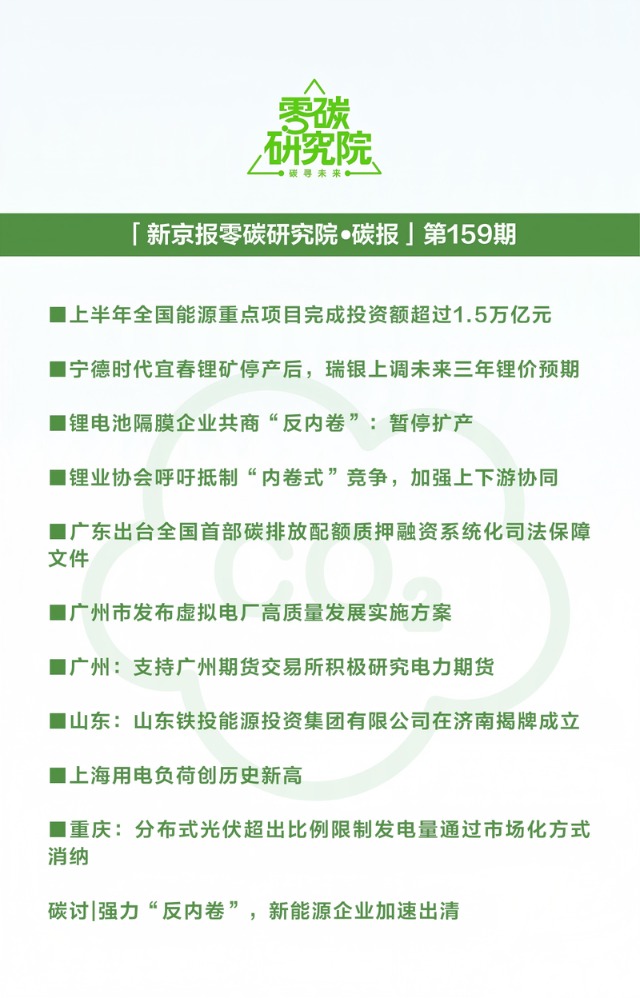
强力“反内卷”,新能源企业加速出清
Xin Jing Bao· 2025-08-15 08:07
Core Viewpoint - The Chinese renewable energy industry is facing an unprecedented "involution" crisis, characterized by significant price drops in key materials and components, prompting industry associations to advocate against unfair competition and promote healthy development [1][2]. Group 1: Industry Challenges - The price of silicon materials has plummeted by 90%, and the cost of energy storage systems has entered the "0.3 yuan era," while the average bidding price for wind power equipment has decreased by 65% from its peak in 2020 [1]. - Overcapacity is identified as the core issue of the involution crisis, with rapid capacity expansion in the photovoltaic industry leading to severe overcapacity risks by 2025, despite projected demand of 160 to 180 million tons of polysilicon [2]. - The energy storage sector is also experiencing significant overcapacity, with around 200 GWh of annual installed capacity, which could lead to insufficient orders for the numerous active system integrators [2]. Group 2: Industry Responses - Various industry associations, including the China Photovoltaic Industry Association and the China Chemical and Physical Power Industry Association, have issued initiatives to combat unfair competition and promote healthy industry development [1][5]. - The China Photovoltaic Industry Association is actively seeking feedback on the draft revision of the Price Law, which aims to address issues of low-price dumping and restore price order in the market [4][6]. - A total of 152 companies have participated in the initiative to maintain fair competition in the energy storage sector, indicating strong industry support for self-regulation [5]. Group 3: Policy Measures - The Chinese government is implementing a multi-layered governance system to address the involution crisis, including industry self-regulation, legal revisions, and price monitoring [4][6]. - Recent policy announcements from various government departments emphasize the need to regulate low-price competition and encourage the exit of outdated capacities [6]. - As a result of these measures, there has been a reported 20%-30% increase in prices across the photovoltaic supply chain, reflecting the initial effectiveness of the "anti-involution" actions [6].
财说| 股东回报被摊薄?江苏索普增发背后的困境
Xin Lang Cai Jing· 2025-08-15 04:52
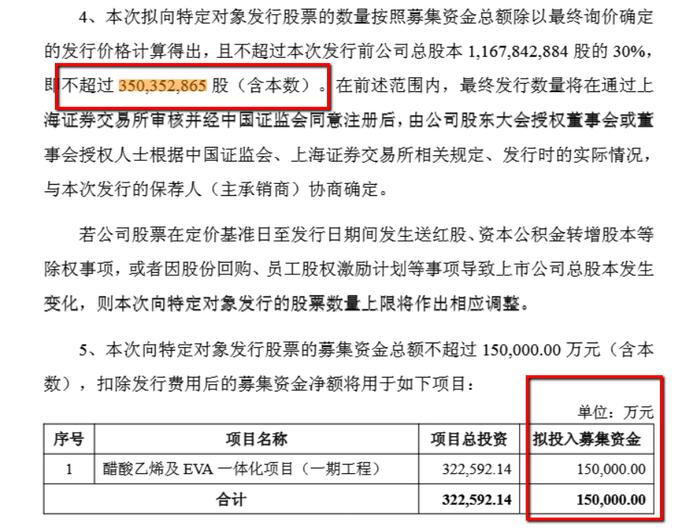
Core Viewpoint - Jiangsu Sopo (600746.SH) has faced a decline in stock price due to concerns over its planned private placement to raise up to 1.5 billion yuan for its vinyl acetate and EVA integration project, with investors worried about short-term equity dilution and project returns [1][2]. Financial Performance - The company's net profit for the first half of the year decreased by 13.31% year-on-year, with a continuous contraction in gross margin, exacerbated by oversupply in the acetic acid industry leading to falling product prices [1][6]. - In the past five years, Jiangsu Sopo's net profit fluctuated significantly, dropping from 508 million yuan in 2022 to 19 million yuan in 2023, with a projected recovery to 213 million yuan in 2024, still less than half of 2022's profit [6]. - The company's revenue for the first half of the year was 3.158 billion yuan, a slight decrease of 1.08% year-on-year, while net profit was 102 million yuan, down 13.01% [7]. Project Details - The total investment for the vinyl acetate and EVA integration project is 3.225 billion yuan, with 1.5 billion yuan planned to be raised through the private placement [3][8]. - The project aims to produce 330,000 tons/year of vinyl acetate and is expected to take three years to reach full production capacity [6][8]. Market Conditions - The acetic acid market has seen a significant price drop from 6,000 yuan/ton in 2022 to below 3,000 yuan/ton, impacting the company's revenue as acetic acid accounts for 80% of total revenue [6]. - The domestic acetic acid industry is experiencing a supply-demand imbalance, with new capacity exceeding demand growth, leading to increased competition and price declines [6]. Financing Concerns - The planned private placement would result in a dilution of shares, with the issuance of 350 million shares, representing 30% of the current total share capital [2][4]. - The company has a high rolling P/E ratio of over 45, which is above the industry average, raising concerns about the sustainability of its valuation given the current performance pressures [8].

全球苯酚和丙酮市场下半年看跌
Zhong Guo Hua Gong Bao· 2025-08-15 04:20
Group 1 - The global phenol and acetone market is facing dual pressures of weak demand and oversupply, with participants pessimistic about recovery prospects until the second half of 2025 [2] - In Europe, market participants have little hope for demand recovery for the remainder of the year due to oversupply, with Orlen's decision to halt production unlikely to alleviate the situation [2] - European phenol and acetone prices have remained weak, with July 29 assessments showing acetone at €600 per ton (down 33.3% since January) and phenol at €771 per ton (down 26% since January) [2] Group 2 - In the U.S., market participants expect stability in phenol and acetone markets by year-end, but low housing starts and renovation projects due to inflationary pressures will suppress demand [3] - U.S. acetone demand has stagnated since 2023, with expectations of continued weakness until 2025, and the market may face oversupply requiring increased exports [3] - As of July 22, U.S. Gulf acetone was priced at $992 per ton (down 4% since January) and phenol at $1,046 per ton (down 8% since January) [3] Group 3 - Asia is expected to continue increasing production capacity, with supply to India rising in the second half of the year, despite slow growth in solvent demand [4] - Indian phenol prices have dropped to near two-year lows, and acetone prices have reached 31-month lows due to increased supply from Asian suppliers [4] - The Asian phenol market may experience intensified oversupply due to seasonal weakening and ongoing capacity expansion, with producers facing further margin pressure [4]
2025年起或迎中国“四大降价潮”:除房价外,这三类也要开始了?
Sou Hu Cai Jing· 2025-08-15 02:53
Real Estate - Developers are facing significant inventory pressure, with unsold housing area expected to rise from 670 million square meters in 2023 to 750 million square meters by the end of 2024, and further to 798 million square meters by February 2025 [2] - The number of second-hand homes listed for sale is also increasing, with a projected 2.7 million listings across 100 cities by April 2025, marking an 18.6% year-on-year increase [2] - Developers are employing strategies of "visible stability and hidden price drops," with some properties listed at 85,000 yuan per square meter but selling for under 70,000 yuan after discounts [2] - Homeowners are also adjusting prices, with some in Hangzhou reducing their asking prices by 300,000 yuan over four months [2] - For first-time buyers, this period presents a "window of opportunity" as down payments and monthly payments are lower than rental costs, but caution is advised in cities with high inventory and population outflow [2] Automotive - The luxury car market has experienced a significant shift, with traditional brands like BMW, Audi, and Mercedes-Benz drastically reducing prices due to severe overcapacity, with industry utilization rates potentially dropping below 60% [5] - Promotions and discounts are rampant, with prices for models like BMW starting at 150,000 yuan and Audi at 160,000 yuan [5] - Consumers are advised to be cautious of "residual value traps" and to prefer new electric vehicles over older gasoline models [5] Home Appliances - The home appliance market has seen a price drop since the second half of 2024, with reductions ranging from 300 to 500 yuan for common products like TVs and refrigerators [7] - The average price of a 75-inch 4K TV has fallen below 4,000 yuan, a 42% decrease compared to three years ago, while energy-efficient air conditioners are now available for under 2,000 yuan [7] - The price reductions are attributed to rapid technological advancements and high inventory levels, creating a favorable buying opportunity for consumers [7] Pork Industry - The pork market is experiencing a price decline, with average prices dropping to 14 yuan per kilogram in many regions, and some areas seeing prices fall to 10 yuan [9] - Despite the lower prices, industry insiders warn of potential losses, with predictions of a 300 yuan loss per pig sold, leading to possible bankruptcies if conditions do not improve [11] - The government is implementing measures to control production capacity, including reducing the number of breeding sows and managing the weight of pigs being sold [11] General Market Trends - A broader trend of price reductions is observed across various sectors, including luxury goods, fruits, and coffee, indicating a potential economic slowdown [13] - Consumers are encouraged to be mindful of spending and to focus on self-improvement as a long-term investment strategy [16]

专访上海财经大学校长刘元春:“十五五”锚定三大主线,治理体系改革破局结构转型
证券时报· 2025-08-15 02:27
Core Viewpoint - The article discusses the strategic direction and core pathways for China's economic and social development over the next five years, emphasizing the importance of addressing structural challenges and seizing strategic opportunities in the context of global political and economic changes [1]. Group 1: Three Core Development Lines During the 14th Five-Year Plan - The first core line is the Fourth Industrial Revolution, represented by artificial intelligence (AI), which has become a reality since the launch of ChatGPT in November 2022. Major economies are prioritizing AI as a key development direction for the next 5-10 years, with China aiming to leverage AI for national rejuvenation and high-quality development [3]. - The second core line focuses on constructing a new development pattern around a new security framework, as the global landscape is undergoing significant changes due to major power competition and the restructuring of the economic globalization system led by the U.S. [4]. - The third core line addresses the internal structural transformation in China, which includes adjusting demand structures, managing the relationship between emerging and traditional industries, and optimizing urban-rural structures to reduce disparities [5]. Group 2: Internal Structural Transformation - The internal structural transformation requires enhancing governance systems and capabilities, with a focus on government reform to modernize governance frameworks and improve fiscal and tax systems [6][7]. - Expanding domestic demand is crucial, with an emphasis on increasing consumption through income distribution reforms, innovative consumption scenarios, and breaking supply bottlenecks. The government needs to shift from an investment-driven model to a service-oriented and welfare-focused approach [8][9]. - Addressing "involution" in industries like photovoltaics and new energy vehicles is essential, with strategies to manage overcapacity in emerging industries while allowing for innovation and scale economies [11][12][13].

专访上海财经大学校长刘元春: “十五五”锚定三大主线治理体系改革破局结构转型
Zheng Quan Shi Bao· 2025-08-14 18:37
Group 1 - The core strategic direction for China's economic and social development in the next five years includes three main lines: the AI-driven fourth technological and industrial revolution, the construction of a new development pattern around a new security framework, and the internal structural transformation [1][2][3] - The first main line focuses on AI as a pillar for innovation and high-end industrial upgrades, with policies expected to be introduced to support this [2] - The second main line emphasizes the need to adapt to a changing external environment due to major power competition and the restructuring of the global economic system [2] Group 2 - The third main line addresses internal structural transformation, which includes three tasks: adjusting demand structure, managing the relationship between emerging and traditional industries, and optimizing urban-rural structures [3][4] - The internal structural transformation requires a comprehensive enhancement of governance systems and capabilities, with government reform being central to this process [4][5] - Expanding domestic demand is crucial, with a focus on increasing consumption through income distribution reform and innovative consumption scenarios [4][5] Group 3 - The issue of "involution" in industries such as solar energy and electric vehicles is highlighted, with a need to address overcapacity and avoid excessive competition [6][7] - Differentiated strategies are necessary for managing overcapacity, with traditional industries requiring production cuts while allowing for some monopolistic practices in emerging industries to foster innovation [7][8] - The government's "anti-involution" actions have transitioned from a slogan to a structured implementation phase, with regulatory measures being introduced to adjust market order and promote fair competition [8]
再遇见|上海欧洲学会会长丁纯谈中欧行稳致远之道:经贸压舱,求同破浪
Xin Lang Cai Jing· 2025-08-14 11:30
Core Viewpoint - The article emphasizes the importance of economic and trade relations as a stabilizing anchor in the evolving China-Europe relationship, especially in the context of the 50th anniversary of diplomatic ties between China and Europe [3][4]. Group 1: Historical Context and Development Stages - The China-Europe relationship has evolved through three main stages: the "honeymoon period" (1995-2005), a period of reflection and repositioning (2006-2019), and the current phase emphasizing competition and strategic rivalry (2019-present) [11][12][13]. - The "honeymoon period" was marked by the establishment of a comprehensive strategic partnership in 2003, coinciding with China's economic reforms and European integration [11][12]. - The second stage saw the EU recognizing China as a competitor, with a focus on trade imbalances and market access issues, culminating in a dual role of cooperation and competition [12][13]. Group 2: Current Challenges and Dynamics - Current challenges in the China-Europe relationship include geopolitical tensions, trade frictions, and differing ideological perspectives, particularly regarding the Russia-Ukraine conflict [17][15]. - The EU's "de-risking" strategy reflects a shift towards reducing dependency on China while maintaining economic cooperation, highlighting a complex interplay between competition and collaboration [15][16]. - The rise of extreme right-wing politics in Europe complicates the political landscape, making it harder to form a unified stance on China [22][23]. Group 3: Future Prospects and Cooperation - Future cooperation opportunities exist in areas such as green technology, digital collaboration, and public health, driven by mutual economic interests and global governance needs [27][28]. - The article suggests that maintaining a pragmatic approach, focusing on mutual respect and shared interests, is crucial for advancing the bilateral relationship [25][26]. - The economic interdependence between China and Europe remains strong, with both parties needing to navigate their differences while seeking common ground for cooperation [26][28].
新能源及有色金属日报:情绪有所消退,工业硅多晶硅盘面回落-20250814
Hua Tai Qi Huo· 2025-08-14 07:10
Report Summary 1. Report Industry Investment Rating No investment rating information is provided in the report. 2. Core Viewpoints - The fundamentals of industrial silicon have changed little, with both supply and demand increasing and a slight reduction in inventory. However, there is significant over - capacity and high inventory pressure. The short - term industrial silicon futures market is expected to fluctuate widely following commodities such as coking coal and polysilicon. For polysilicon, short - term downstream product prices are under pressure, and there is a large inventory accumulation pressure. The short - term market may maintain wide fluctuations, but it is suitable for long - term low - level layout [3][6]. 3. Summary by Related Content Industrial Silicon - **Market Analysis** - On August 13, 2025, the industrial silicon futures price declined. The main contract 2511 opened at 8800 yuan/ton and closed at 8600 yuan/ton, a change of - 305 yuan/ton (- 3.43%) from the previous settlement. The position of the main contract 2511 was 284,500 lots, and the total number of warehouse receipts was 50,701 lots, a change of 43 lots from the previous day. The spot price of industrial silicon remained stable [1]. - In August, the number of open furnaces increased in both the southwest and northwest regions. The consumption side saw a significant increase in polysilicon production, while silicone, aluminum alloy, and exports were relatively stable. There was an overall slight reduction in inventory, but the total inventory in the industry was still high, about 940,000 tons, equivalent to about 3 months of consumption [2]. - **Strategy** - The short - term industrial silicon futures market is expected to fluctuate widely following commodities such as coking coal and polysilicon. It is recommended to operate within a range for single - side trading, and there are no suggestions for inter - period, cross - variety, spot - futures, and options trading [3]. Polysilicon - **Market Analysis** - On August 13, 2025, the main contract 2511 of polysilicon futures declined, closing at 51,290 yuan/ton, a change of - 2.11% from the previous day. The position of the main contract was 132,463 lots, and the trading volume was 395,645 lots. The spot price of polysilicon remained stable. The inventory of polysilicon manufacturers and silicon wafers increased, while the weekly production of polysilicon and silicon wafers also increased [4]. - **Strategy** - In the short term, the polysilicon market is under pressure, and the market may maintain wide fluctuations. It is recommended to operate within a range for single - side trading. In the long term, it is suitable to layout long positions at low levels. There are no suggestions for inter - period, cross - variety, spot - futures, and options trading [6][8].
大摩闭门会:中国的 “反内卷” 能否奏效?
2025-08-13 14:52
Summary of Conference Call Notes Industry or Company Involved - The discussion primarily revolves around the **Chinese economy** and its **"anti-involution" policy** targeting industries such as **electric vehicles** and **solar energy**. Core Points and Arguments - The **"anti-involution" policy** addresses excessive competition in advanced industries, which has emerged due to weak demand following the **2021 real estate market downturn** and previous supply-driven incentive mechanisms [1][2]. - Current measures differ from past capacity reduction efforts by focusing on **downstream price pressures** in advanced industries, addressing **private sector overcapacity**, and considering the macroeconomic context of **high debt** and **aging population** [1][3]. - Strategies to improve profit margins include **supply-side cleanup** and gradual demand stimulation, with specific measures such as: - **Trade credit plan** of **138 billion RMB** [3]. - **National fertility subsidies** totaling **100 billion RMB** [4]. - **Tuition fee reductions** amounting to **30 billion RMB** [5]. - Despite these stimulus measures, the **actual GDP growth rate** may fall below **4.5%** in the second half of **2025**, with a **nominal GDP growth rate** around **3.5%** and a **GDP deflator index** expected to remain low at **-0.8% to -0.9%** [1][5]. Important but Possibly Overlooked Content - Key indicators for assessing the success of reforms include: - Comprehensive inflation recovery as reflected in the **Producer Price Index (PPI)** and **Core Consumer Price Index (CPI)**. - Stability in **corporate profit margins** and **bank net interest margins**. - An increase in the share of consumption in GDP and a decrease in household savings rates [1][6]. - Potential risk signals include: - Top-down capacity cuts without demand stimulation, which could harm downstream industries. - External factors like **U.S. tariffs** negatively impacting Chinese exports [2][6]. - Structural reforms needed for sustainable development include: - Adjusting local government incentive mechanisms to focus on improving living standards. - Reforming the tax system to encourage direct taxes and promote a consumption-oriented economy [2][6]. - The period starting from **September 2024** is crucial for China's efforts to combat deflation, indicating a deeper understanding of the challenges at the microeconomic level [7].