
逆全球化

Search documents
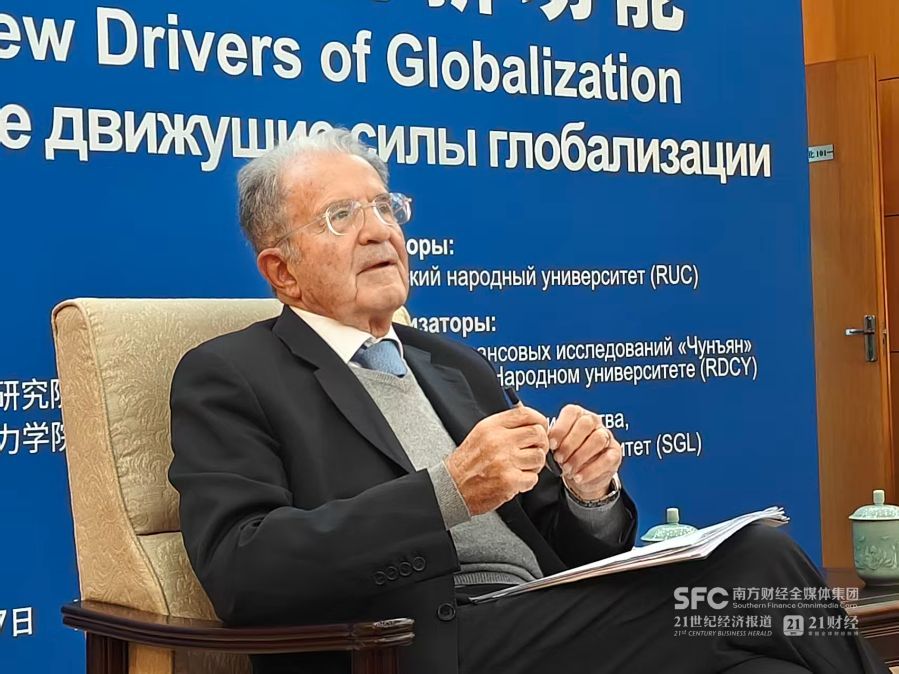
21现场|意大利前总理答21:美国“退群”给联合国留下疤痕
2 1 Shi Ji Jing Ji Bao Dao· 2025-10-18 10:13
Group 1 - The authority and power of the United Nations are perceived to be weakening, particularly due to the withdrawal of the United States from a key UN institution, which is seen as a setback for global dialogue and cooperation [1] - The current global landscape is characterized by a coexistence of globalization and de-globalization, leading to fragmentation and a need for collective examination of the underlying causes of this situation [1][2] - International organizations are facing significant challenges, with trade being obstructed and cooperation diminishing, particularly as the UN approaches its 80th anniversary [1] Group 2 - China is emerging as a leader in new sectors such as solar energy and electric vehicles, supported by a large pool of skilled engineers and an active private sector that is innovating and expanding internationally [2] - The unique and rapid process of Chinese modernization, along with significant infrastructure development, has shifted China from a follower to a leader in multiple fields [2] - The forum discussed the necessity for countries to work together to overcome the negative impacts of political differences on technological development, emphasizing the importance of collaboration among nations [2]
意大利前总理答21:美国“退群”给联合国留下疤痕
2 1 Shi Ji Jing Ji Bao Dao· 2025-10-18 10:07
Group 1 - The authority and power of the United Nations are perceived to be weakening, particularly due to the withdrawal of the United States from a key UN institution, which is seen as a setback for global dialogue and cooperation [2] - The current global landscape is characterized by a coexistence of globalization and de-globalization, leading to fragmentation and a need for collective examination of the underlying causes [2][3] - International organizations are facing significant challenges, with trade being obstructed and cooperation diminishing [2] Group 2 - China is recognized as a leader in emerging fields such as solar energy and electric vehicles, supported by a large pool of skilled engineers and an active private sector [3] - The unique and rapid process of Chinese modernization, particularly in infrastructure development, has shifted China from a follower to a leader in multiple sectors [3] - There is a call for countries to work together to overcome the negative impacts of political differences on technological development [3]

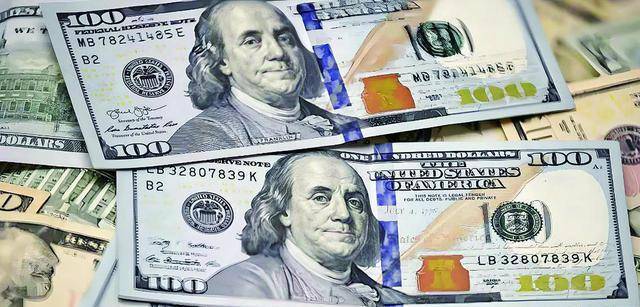
特朗普意外助力中国人,黄金三年涨120%,囤金国人轻松赚大钱
Sou Hu Cai Jing· 2025-10-17 18:21
Core Insights - The gold market is experiencing heightened interest and speculation, reminiscent of the 2008 stock market surge, with significant public discussion and investment in gold [1] - In March 2025, gold prices surged with a 40% annual increase and a 120% increase over three years, overshadowing traditional stock indices like the S&P and Nasdaq [3] - Central banks are increasing their gold reserves while the proportion of dollar reserves is declining, indicating a shift in global monetary dynamics [3][7] Market Dynamics - Trump's potential influence on the dollar and monetary policy is a focal point, with concerns about a "weak dollar" strategy resurfacing [5] - Economic challenges such as debt expansion and lack of growth are becoming more pronounced, leading to increased uncertainty in the market [5] - The trend of declining confidence in the US dollar is evident, with central banks favoring gold as a low-risk asset amid rising geopolitical tensions [7][9] Investment Trends - By mid-2025, gold has become a preferred asset for investors seeking safety, with household allocations to gold reaching a 50-year high of 3% [9] - Despite some skepticism about high gold prices, institutions like Morgan Stanley and Dalio are recommending increased gold allocations in portfolios [9][11] - The long-term outlook for gold remains positive, with historical performance showing parity with equities, although short-term volatility is expected [11][13] Structural Issues - Trump's presidency is viewed as a magnifying glass for underlying structural issues in the US economy, including debt pressure and declining dollar credibility [13] - The transformation of the global monetary system and evolving geopolitical risks are identified as fundamental drivers of gold's value [13][15] - The ongoing uncertainty in the market suggests that gold's value is likely to remain stable, making it a reliable asset in turbulent times [15]
金价冲击4400美元,为啥华尔街说黄金还能再涨?白银有色逆市涨停,有色龙头ETF(159876)一度涨超2%
Xin Lang Ji Jin· 2025-10-17 11:53
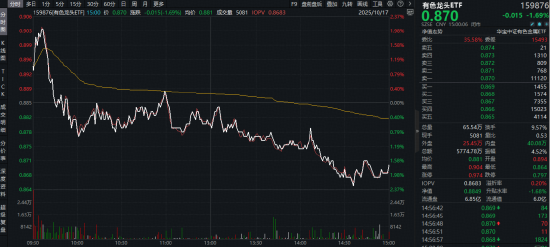
Core Viewpoint - The market is experiencing consolidation, with the Nonferrous Metal Leader ETF (159876) showing volatility, initially rising over 2% before closing down 1.69% on October 17, 2023, with a total trading volume of 57.74 million yuan [1]. Group 1: ETF Performance - As of October 16, 2023, the Nonferrous Metal Leader ETF (159876) has a latest scale of 606 million yuan, with an average daily trading volume of 122 million yuan in October [1]. - Among three ETFs tracking the same index in the market, this ETF ranks first in terms of scale and liquidity [1]. Group 2: Component Stocks - Notable performers include the copper leader Yinxing Nonferrous Metals hitting the daily limit, lithium leader Shengxin Lithium Energy rising over 2%, and other lithium stocks like Zhongfu Industrial also increasing by over 2% [3]. - The top ten gainers include five gold leaders, with Western Gold rising over 3% and Zhongjin Gold increasing over 2% [3]. - On the downside, companies like Bowei Alloy and Chuangjiang New Materials saw declines exceeding 6%, negatively impacting the index [3]. Group 3: Gold Price Drivers - International gold prices are approaching 4,400 USD/ounce, driven by three main factors: the Federal Reserve's interest rate cuts, increased risk aversion due to the U.S. government shutdown, and ongoing de-dollarization trends [5]. - Historical data shows that gold prices typically rise during Fed rate cut cycles, with an average increase of 6% within 60 days of such announcements [4]. - The global official gold reserves reached a record high of 36,274 tons by June 2023, with China increasing its gold reserves for 11 consecutive months, totaling 7.406 million ounces by the end of September [5]. Group 4: Future Outlook for Nonferrous Metals - Analysts suggest that nonferrous metals are entering a long-term upward price cycle due to capital expenditure trends and increasing demand for strategic metal resources amid globalization challenges [7]. - Specific sectors like rare earths, lithium, and copper are expected to benefit from favorable catalysts, with rare earth companies projecting significant profit increases in their upcoming quarterly reports [6][7]. - The copper market is facing supply disruptions, particularly from the Grasberg mine in Indonesia, which may tighten global copper supply and drive prices higher [7]. Group 5: Investment Strategy - The Nonferrous Metal Leader ETF (159876) and its associated funds provide a diversified investment approach across various nonferrous metals, reducing risk compared to investing in single metal sectors [10]. - The ETF tracks the CSI Nonferrous Metals Index, with weightings of 27.6% for copper, 14.5% for gold, 13.1% for aluminum, 10.4% for rare earths, and 8.4% for lithium, making it suitable for portfolio diversification [10].

贵金属逻辑框架再审视:金银在交易什么?
Yin He Qi Huo· 2025-10-17 07:01
Report Industry Investment Rating No relevant information provided. Core Viewpoints of the Report - Since the end of August, precious metals such as gold and silver have broken through the 4 - month shock range and continued to rise. The bull market pattern of precious metals is expected to continue. In the long - term, the return of gold's monetary attribute under the trend of anti - globalization will push up the price center. In the medium - term, the expectation of double easing of US monetary and fiscal policies is the main driver, and events related to geopolitical, financial market or other tail risks may amplify market fluctuations. In the short - term, attention should be paid to events such as the US government shutdown and Sino - US negotiations. If there are turning points, precious metal prices may adjust, but investors can still adopt a low - buying strategy [2][4][7]. Summary by Relevant Catalogs I. Precious Metal Market Trading Main Lines - In 2025, the precious metal market trading mainly revolved around Trump's trade and fiscal policies and the Fed's monetary policy, with occasional geopolitical fluctuations and continuous central bank gold purchases. Before August, it was mainly about Trump's trade policy, and the risk - aversion sentiment first rose and then declined. After August 7, when the reciprocal tariffs took effect, the market shifted to trading based on US monetary policy and the expectation of double easing [8]. - The recent rise in precious metals started in late August, driven by multiple factors: Trump's dismissal of Fed governor Lisa Cook, the expectation of Fed rate cuts after the cooling of non - farm data and Powell's dovish speech, the rise of long - term government bond yields in major overseas economies, the release of upward momentum after the long - term shock of London gold in the range of $3450 - 3500, the concentration of risk events such as the US government shutdown and Sino - US trade friction escalation in October, and the increase in silver ETF investment demand and Indian seasonal demand leading to a shortage of silver supply [8][11]. II. Re - examination of Precious Metal Trading Logic (1) Gold - **Analysis Framework Change**: Before 2022, the analysis framework of gold mainly focused on its financial attribute, with a strong negative correlation with the US real yield. Since 2022, this negative correlation has weakened, and the significant increase in central bank gold purchases is considered the most important factor supporting the rise of the gold price center [16]. - **New Influencing Factors**: Since September 2024, gold ETF investment has turned into net inflows, reflecting the market's expectation of future liquidity easing and the shift of asset allocation to gold. Geopolitical factors have a more long - term impact on gold prices. New gold trading centers are emerging, such as Dubai and China, and digital currencies are reshaping the gold narrative [17][18][19]. - **Overseas Economies' Debt Issues**: The US federal government debt has exceeded $37 trillion, accounting for about 127% of GDP in 2024. Other major overseas economies such as Japan, France, the UK, and Germany also face various fiscal problems, which may lead central banks to continue increasing their gold reserves [20][28]. - **US Monetary Policy Path**: The market is concerned about the Fed's independence and its judgment on the US economic fundamentals and financial market liquidity. Trump has been pressuring the Fed to cut interest rates. If the Fed's independence is interfered with, it may lead to long - term inflation in the US, which is beneficial to gold. The market expects the Fed to stop shrinking its balance sheet soon due to the cooling of the labor market and inflation [31][33][36]. (2) Silver - **Price Characteristics**: Silver has both financial and industrial attributes, and its price is driven by gold in a liquidity - abundant environment. However, it does not have a monetary attribute, and the gold - silver ratio has risen in the past two years [41]. - **Supply - Demand Situation**: Since 2021, silver has faced a supply shortage for five consecutive years. The recent "short squeeze" in the London silver market was caused by factors such as the increase in silver ETF investment demand and Indian seasonal demand. Although the current shortage has shown signs of relief, the medium - and long - term bullish factors remain unchanged [45][53]. III. Conclusion - The main logic framework of precious metals has not changed significantly in the medium - and long - term, and the bull market pattern will continue. In the short - term, attention should be paid to events such as the US government shutdown and Sino - US negotiations. Any adjustment in precious metal prices can be regarded as an opportunity to enter or increase positions [7][55].
金银在交易什么?——贵金属逻辑框架再审视
对冲研投· 2025-10-17 06:51
Group 1 - The article discusses the recent strong upward trend in gold and silver prices, with London gold breaking through $4,300 and reaching a historical high of $4,380.79 per ounce, while London silver hit a record high of $54.429 [3][4] - The main trading narrative for the precious metals market has shifted from trade policy uncertainties to expectations of monetary and fiscal easing by the Federal Reserve, especially following the U.S. government shutdown and ongoing geopolitical tensions [4][5] - The inflow of funds into gold ETFs reached a record high in September, indicating a growing interest among investors to hedge against risks, despite overall positive market sentiment [4][5] Group 2 - The article highlights that the recent rally in precious metals began in late August, driven by multiple favorable events, including concerns over the independence of the Federal Reserve and rising expectations for interest rate cuts [8][9] - The article notes that the silver market is experiencing structural tightness, with rental rates for silver surging above 30%, driven by increased investment demand and seasonal demand from India [4][10] - The analysis indicates that the current bull market for precious metals is likely to continue, supported by ongoing central bank gold purchases and the macroeconomic backdrop of persistent supply-demand imbalances [6][56] Group 3 - The article emphasizes the changing dynamics in the gold market, with new trading centers emerging in the Middle East and China, which are reshaping the traditional gold trading landscape [21][22] - It discusses the significant debt issues facing major economies, particularly the U.S., where federal debt has surpassed $37 trillion, raising concerns about fiscal sustainability and potential inflationary pressures [24][30] - The article also addresses the implications of the Federal Reserve's monetary policy, particularly the potential impact of political pressures on its independence and the resulting effects on inflation and gold prices [35][37]
西南期货早间评论-20251017
Xi Nan Qi Huo· 2025-10-17 06:39
Report Summary 1. Report Industry Investment Ratings No specific industry investment ratings are provided in the report. 2. Core Views - **Macroeconomic Outlook**: The current macro - data remains stable, but the macro - economic recovery momentum needs to be strengthened. Monetary policy is expected to remain loose. The market risk preference has significantly increased [6]. - **Overall Market**: Different sectors show diverse trends. Some sectors are expected to have no clear trend, some may experience increased volatility, and others may face supply - demand imbalances affecting their prices. 3. Summary by Commodity Bonds - **Performance**: On the previous trading day, most Treasury bond futures closed down. The 30 - year and 10 - year main contracts fell by 0.14% and 0.06% respectively [5]. - **Outlook**: It is expected that there will be no trend - based market for Treasury bond futures, and caution should be maintained [6][7]. Stock Index Futures - **Performance**: On the previous trading day, stock index futures showed mixed results. The CSI 300 and SSE 50 futures rose, while the CSI 500 and CSI 1000 futures fell [8]. - **Outlook**: The market is expected to have increased volatility. Existing long positions can be gradually closed to take profits [10][11]. Precious Metals - **Performance**: Gold and silver futures rose on the previous trading day, with gold up 0.63% and silver up 0.43% [12]. - **Outlook**: The rise has been significant, and previous long positions can be appropriately closed for profit - taking [13][14]. Steel Products (Rebar, Hot - Rolled Coil) - **Performance**: Rebar and hot - rolled coil futures fluctuated weakly on the previous trading day [15]. - **Outlook**: The mid - term weakness of rebar prices may be difficult to change. The trend of hot - rolled coils may be similar. Investors can consider short - selling at high levels during rebounds, with attention to position management [16]. Iron Ore - **Performance**: Iron ore futures slightly corrected on the previous trading day [18]. - **Outlook**: The short - term supply - demand pattern supports prices, but it may weaken in the medium term. Investors can consider buying on dips, with light positions [18][19]. Coking Coal and Coke - **Performance**: Coking coal and coke futures rebounded significantly on the previous trading day [20]. - **Outlook**: They may continue to fluctuate in the short term. Investors can consider buying on dips, with light positions [21][22]. Ferroalloys - **Performance**: Manganese silicon futures fell 0.21%, and silicon iron futures rose 1.60% on the previous trading day [23]. - **Outlook**: In the short term, supply may remain in excess. After a decline, investors can consider long positions when the spot market falls into a loss zone [24]. Crude Oil - **Performance**: INE crude oil slightly rebounded on the previous trading day [25]. - **Outlook**: The CFTC data shows that US fund managers are bearish on the future of crude oil. The main contract should be temporarily observed [26][27]. Fuel Oil - **Performance**: Fuel oil fluctuated upward on the previous trading day, moving away from recent lows [28]. - **Outlook**: Singapore's fuel oil sales decreased in September, but the war in Ukraine supports prices. Investors can look for long - trading opportunities [29][30]. Synthetic Rubber - **Performance**: Synthetic rubber futures rose 3.05% on the previous trading day [31]. - **Outlook**: It is expected to operate in a fluctuating manner [32]. Natural Rubber - **Performance**: Natural rubber futures rose on the previous trading day, with the main contract up 0.27% and 20 - grade rubber up 1.90% [33]. - **Outlook**: After the holiday, rubber prices are expected to stabilize and rebound. Investors can look for long - trading opportunities [34][35]. PVC - **Performance**: PVC futures rose 1% on the previous trading day [36]. - **Outlook**: The current supply - demand imbalance persists, but the downward space may be limited. Attention should be paid to changes on the supply side [36][39]. Urea - **Performance**: Urea futures closed flat on the previous trading day [40]. - **Outlook**: The downward space is limited. Attention should be paid to exports and cost changes [40][42]. PX - **Performance**: PX futures rose 1.27% on the previous trading day [43]. - **Outlook**: In the short term, the supply - demand balance may loosen, and it may adjust weakly in a fluctuating manner. Attention should be paid to the PXN spread and macro - policies [43]. PTA - **Performance**: PTA futures rose 1% on the previous trading day [44]. - **Outlook**: It may operate in a fluctuating manner in the short term. Caution should be exercised, and attention should be paid to oil prices [45]. Ethylene Glycol - **Performance**: Ethylene glycol futures rose 1.01% on the previous trading day [46]. - **Outlook**: It may operate weakly in a fluctuating manner in the short term. Attention should be paid to port inventory and imports [46]. Short - Fiber - **Performance**: Short - fiber futures rose 0.86% on the previous trading day [47]. - **Outlook**: It may operate following cost fluctuations in the short term. Attention should be paid to costs and macro - policies [48][49]. Bottle Chips - **Performance**: Bottle - chip futures rose 0.9% on the previous trading day [50]. - **Outlook**: It is expected to operate following cost fluctuations. Risk control is necessary [50]. Lithium Carbonate - **Performance**: Lithium carbonate futures rose 2.52% on the previous trading day [51]. - **Outlook**: In the short term, it may return to a supply - demand surplus situation, and prices may weaken. Attention should be paid to consumption sustainability [51]. Copper - **Performance**: Shanghai copper futures fluctuated downward on the previous trading day [53]. - **Outlook**: The price is still affected by the复产 of Indonesian copper mines. The main contract should be temporarily observed [54][55]. Tin - **Performance**: Tin futures rose 0.53% on the previous trading day [56]. - **Outlook**: It may operate strongly in a fluctuating manner due to tight supply and certain demand support [56]. Nickel - **Performance**: Nickel futures fell 0.11% on the previous trading day [58]. - **Outlook**: It may operate in a fluctuating manner. The market is in an oversupply situation, with high - grade nickel ore still in short supply [59]. Soybean Oil and Soybean Meal - **Performance**: Soybean meal futures fell 0.24%, and soybean oil futures rose 0.15% on the previous trading day [61]. - **Outlook**: After adjustment, investors can consider call options on soybean meal. Soybean oil should be temporarily observed due to supply pressure [62][63]. Palm Oil - **Performance**: Malaysian palm oil futures closed higher on the previous trading day [64]. - **Outlook**: A callback - buying strategy can be considered [64]. Rapeseed Meal and Rapeseed Oil - **Performance**: Canadian rapeseed futures fell. In the domestic market, rapeseed meal and oil prices showed certain changes [65]. - **Outlook**: A callback - buying strategy can be considered for rapeseed oil [67]. Cotton - **Performance**: Domestic Zhengzhou cotton futures oscillated, and overseas cotton futures rebounded after hitting a low on the previous trading day [68]. - **Outlook**: Cotton prices are expected to remain under pressure due to factors such as trade frictions and harvest pressure [70][71]. Sugar - **Performance**: Zhengzhou sugar futures oscillated at a low level, and overseas sugar futures rebounded slightly on the previous trading day [72]. - **Outlook**: The market should be observed. The global sugar supply may be in surplus, and the domestic market has new sugar supply [74][75]. Apples - **Performance**: Domestic apple futures slightly fell on the previous trading day [76]. - **Outlook**: The market should be observed. The opening price of late - maturing apples is likely to be higher than last year [76][77]. Live Pigs - **Performance**: The national average price of live pigs rose, and the main futures contract fell 3.21% on the previous trading day [78][79]. - **Outlook**: The supply is expected to increase in the second half of the month. Existing short positions can be held, and short - selling on rebounds can be considered [79]. Eggs - **Performance**: The average price of eggs in the main production and sales areas rose, and the main futures contract fell 1.05% on the previous trading day [80][81]. - **Outlook**: The supply may increase in October, and consumption may be lower than expected. Existing short positions can be held, and short - selling on rebounds can be considered [81]. Corn and Corn Starch - **Performance**: Corn futures rose 0.67%, and corn starch futures fell 0.59% on the previous trading day [82]. - **Outlook**: Corn prices may continue to be under pressure. Corn starch may follow the corn market. Observation is recommended [83][84][85]
金价突破4300美元背后:定价逻辑重构,黄金迈向“主权信用对冲”新纪元
2 1 Shi Ji Jing Ji Bao Dao· 2025-10-17 04:04
Core Insights - As of October 16, COMEX gold prices have surpassed $4,300 per ounce, marking a historic high, with a significant increase of over 60% this year following a 27% rise last year [1] - The total scale of gold-themed ETFs has approached 210 billion yuan, with over 80 billion yuan attracted this year alone, indicating strong investor interest even after gold prices crossed the $4,000 mark [1] - The role of gold is undergoing a profound transformation, evolving from a mere safe-haven asset to a sovereign credit hedging tool, driven by two irreversible global trends [3] Gold Price Trends - Historically, gold has been viewed as a safe-haven asset, closely following global macroeconomic patterns and monetary system changes [2] - The first bull market for gold occurred post-1971 with the collapse of the Bretton Woods system, leading to a tenfold price increase by 1980 [2] - The second bull market from 2001 to 2011 saw gold prices rise from $251 to $1,920, driven by crisis responses and liquidity easing, particularly after the 2008 financial crisis [2] Factors Driving Gold's Transformation - The first driving force is the trend of de-dollarization, with gold becoming a preferred option for central banks as confidence in the dollar erodes [4] - Currently, global gold holdings have surpassed 20% of official reserves, exceeding U.S. Treasury holdings for the first time in 30 years [4] - The second driving force is the trust crisis stemming from de-globalization, increasing demand for "hard currency" like gold amid geopolitical uncertainties [6] ETF Market Dynamics - Gold ETFs, which directly track gold prices, have seen significant inflows, with 14 gold ETFs collectively attracting 5.6 billion yuan in September alone [9] - The SSH Gold Stock Index ETF has shown a remarkable year-to-date increase of 93.38%, with some gold stock ETFs even doubling in value [9][10] - Gold stocks are known as "gold price amplifiers," with their performance being more elastic compared to gold prices, benefiting from both stock market and gold price movements [10] Future Outlook - Analysts from CITIC Securities express optimism about domestic gold stocks, citing strong upward momentum in gold prices and increased production from gold mining companies [11] - Tianfeng Securities suggests that if gold prices maintain high levels, the market may begin to recognize their non-cyclical characteristics, leading to a potential valuation uplift for gold stocks [11]
期现结合赋能铝产业链韧性与安全水平提升!“2025期现融合助力铝产业高质量发展论坛”在郑举行
Qi Huo Ri Bao· 2025-10-16 23:44
Core Viewpoint - The aluminum industry is exploring high-quality development through the integration of futures and spot markets, addressing challenges such as market price fluctuations and rising costs while seizing strategic opportunities for transformation and upgrading [1][2][3]. Industry Overview - The global aluminum industry is facing structural adjustments in the supply chain, with challenges including price volatility and increased costs due to geopolitical tensions and a shift towards "safety and controllability" in economic development [2]. - The integration of futures tools with spot production is seen as a key driver for the industry, helping companies manage costs and inventory effectively, thereby stabilizing profits [3][4]. Risk Management - The complexity of risks faced by upstream and downstream enterprises in the aluminum industry is increasing, necessitating a focus on external uncertainties and shocks [2][4]. - There is a need for enhanced collaboration between futures companies and the aluminum industry to improve risk management capabilities, including the establishment of training alliances and digital service platforms [4][9]. Market Dynamics - The domestic electrolytic aluminum industry is currently in a high prosperity cycle, with profits leading among non-ferrous metals, supported by structural reforms and resilient demand from new economies [5][6]. - The supply side is nearing capacity limits, while demand from traditional sectors and emerging industries is expected to maintain a growth rate of around 2% annually [6][8]. Futures Market Development - The establishment of a complete risk hedging system in the domestic futures market, covering alumina, electrolytic aluminum, and casting aluminum alloys, is crucial for the high-quality development of the aluminum industry [8]. - The participation of enterprises in futures trading in Henan province has seen a growth rate of 23% over the past three years, with significant risk mitigation achieved through futures tools [8][9]. Strategic Recommendations - Companies are encouraged to adopt a proactive risk management approach, utilizing futures for hedging and opportunity capture rather than relying solely on directional bets [7][9]. - The development of a tiered risk control system is recommended, focusing on traditional futures integration, expanding the use of options, and fostering collaboration with futures companies for data sharing and operational efficiency [9].
各方共话铝产业风险管理与转型路径
Qi Huo Ri Bao· 2025-10-16 16:04
Core Viewpoint - The aluminum industry is exploring high-quality development through the integration of futures and spot markets amidst global market fluctuations [1][2]. Group 1: Forum Overview - The "2025 Futures-Spot Integration to Support High-Quality Development of the Aluminum Industry Forum" was held on October 16 in Zhengzhou, as part of the "2025 Third Central Plains Zhengzhou International Aluminum Industry Exhibition" [1]. - The forum was organized by Futures Daily and the Industry Service Alliance, with support from various futures trading institutions [1]. - Awards for excellent risk management cases and service providers were presented, showcasing the achievements of futures institutions in serving the real economy [1]. Group 2: Industry Challenges and Trends - The global macroeconomic environment is experiencing structural slowdown and uncertainty, with a shift in economic development philosophy from "efficiency first" to "safety and controllability" [2]. - The aluminum industry is facing both strategic opportunities for transformation and challenges such as price volatility and rising costs [2]. - High-quality development is deemed essential for the industry to navigate current challenges, with futures-spot integration identified as a key driver [2]. Group 3: Futures Market Dynamics - The interaction between aluminum futures and spot markets has improved market effectiveness and enhanced price discovery and risk management [3]. - The futures market is seen as a risk management hub and a financial service engine for the green and low-carbon transition of the aluminum industry [3]. - Companies are encouraged to utilize futures tools for risk control and profit maximization, moving away from purely directional trading strategies [3]. Group 4: Challenges in Futures Market Utilization - Challenges in the futures market include a lack of understanding of futures and hedging among key enterprises and a shortage of composite talent [4]. - There is a call for collaboration between futures companies and the aluminum industry to enhance futures application levels and promote high-quality development [4]. - Companies are advised to explore options beyond traditional hedging and basis trading, including customized over-the-counter options for better risk management [4]. Group 5: Future Directions - Enhancing the pricing power of domestic bulk commodities is crucial for serving the industry, with a focus on rule-making capabilities as a core competitive advantage [4]. - The role of media and alliances in bridging the gap between capital markets and the real economy is emphasized, aiming to promote the integration of futures and spot markets in the aluminum sector [5].