以旧换新

Search documents
海口消费市场有三热
Hai Nan Ri Bao· 2025-11-20 01:54
Core Insights - The article highlights the vibrant consumer market in Haikou, driven by policies such as trade-in programs, the promotion of "first" economy, and enhancements in duty-free shopping [3][4][8] Trade-in Policy - Haikou has implemented a trade-in policy that has significantly boosted consumer engagement, with events attracting many participants and offering various subsidies across multiple categories including automobiles and electronics [4][5] - The trade-in activities have generated a total consumption of 29.762 billion yuan, with notable retail growth in categories such as automobiles (up 48.3%), home appliances (up 118.6%), and communication devices (up 47.1%) from January to September [5] "First" Economy - The "first" economy is being cultivated in Haikou, with the introduction of numerous first stores and brands, enhancing the city's commercial landscape and providing new consumer experiences [6][7] - In 2023, Haikou has welcomed 75 first stores across various sectors, including high-end retail and unique dining options, contributing to the city's economic dynamism [6] Duty-Free Shopping - The optimization of the duty-free shopping policy has made it more convenient for local residents, allowing for a broader range of products and increased purchasing opportunities [8][9] - Following the new policy implementation on November 1, the duty-free shopping revenue reached 50.6 million yuan in the first week, with a 34.86% increase in shopping numbers compared to the previous year [9] Future Initiatives - The Haikou Municipal Bureau of Commerce plans to continue enhancing consumer experiences by promoting trade-in programs and optimizing duty-free shopping, aiming to attract more international brands and improve the integration of duty-free shopping with cultural tourism [10]


10月以旧换新相关商品销售保持较快增长
Qi Huo Ri Bao· 2025-11-19 16:07
Core Viewpoint - The domestic consumption market in China has shown steady growth in October, driven by the National Day and Mid-Autumn Festival holidays, with continuous release of consumption potential [1] Summary by Categories Overall Consumption Performance - In October, the total retail sales of consumer goods reached 4.63 trillion yuan, representing a year-on-year growth of 2.9% [1] - From January to October, the total retail sales of consumer goods amounted to 41.2 trillion yuan, with a growth rate of 4.3%, which is 0.8 percentage points higher than the same period last year [1] Retail Sales Breakdown - In October, the retail sales of goods increased by 2.8%, with significant growth in sales of products related to trade-in programs [1] - Retail sales for communication equipment, cultural and office supplies, and furniture increased by 23.2%, 13.5%, and 9.6% respectively [1] Basic and Upgraded Goods Consumption - Basic living goods saw rapid growth, with retail sales of grain and oil foods increasing by 9.1% and clothing and footwear by 6.3% [1] - Demand for upgraded goods remained strong, with retail sales of gold and silver jewelry, sports and entertainment products, and cosmetics increasing by 37.6%, 10.1%, and 9.6% respectively [1]
商务部:10月份以旧换新相关商品销售保持较快增长
Zheng Quan Shi Bao Wang· 2025-11-19 07:02
Core Insights - The consumption market in China is showing steady growth, driven by the National Day and Mid-Autumn Festival holidays, with significant potential being released in October [1] Group 1: Product Consumption - In October, retail sales of goods increased by 2.8%, with notable growth in trade-in related products [1] - Retail sales of communication equipment, cultural and office supplies, and furniture grew by 23.2%, 13.5%, and 9.6% respectively [1] Group 2: Service Consumption - From January to October, service retail sales increased by 5.3%, accelerating by 0.1 percentage points compared to the first three quarters, and outpacing goods retail sales by 0.9 percentage points [1] Group 3: New Consumption Trends - In October, sales of smart health devices rose by over 20%, smart wearable devices increased by approximately 4%, sales of certain first-level energy-efficient appliances grew by over 10%, and organic food sales increased by over 8% [1] Group 4: Rural vs Urban Consumption - Rural consumption is growing faster than urban consumption, with county-level consumption expanding and the lower-tier market showing strong vitality [2]
宇通客车(600066):宇通客车10月销量点评:季初销量偏平淡,公司完成全年目标信心充足
Changjiang Securities· 2025-11-13 12:44
Investment Rating - The investment rating for the company is "Buy" and is maintained [6]. Core Views - The company reported a total of 3,040 bus sales in October 2025, representing a year-on-year decrease of 5.6% and a month-on-month decrease of 36.1%. For the period from January to October 2025, total bus sales reached 37,000 units, an increase of 5.9% year-on-year [2][4]. - The company is recognized as a global leader in the bus industry, with strong long-term growth potential and a consistent high dividend payout capability, highlighting its investment value [2][10]. - The domestic market is experiencing growth in seated buses, supported by the "old-for-new" policy, which is boosting the demand for new energy buses. In the overseas market, the company's globalization and high-end strategy are advancing, with exports enhancing profitability and supporting continuous performance improvement [10]. Summary by Sections Sales Performance - In October 2025, the company sold 3,040 buses, down 5.6% year-on-year and down 36.1% month-on-month. The sales of medium and large buses were 2,462 units, down 11.5% year-on-year and down 37.3% month-on-month. Cumulatively, from January to October 2025, the company sold 37,000 buses, up 5.9% year-on-year, with medium and large bus sales at 30,000 units, down 1.6% year-on-year [2][4][10]. Market Strategy - The company is enhancing its direct sales and service model to improve service quality and efficiency. The "old-for-new" policy is expected to continue driving the recovery of the bus market domestically. Internationally, the company is accelerating its overseas expansion, with the first overseas new energy commercial vehicle factory in Qatar expected to be completed by the end of 2025, with an initial annual production capacity of 300 units, expandable to 1,000 units [10]. Financial Outlook - The company is projected to have a full-year dividend of 1.5 yuan per share (before tax) in 2024, with a total payout of 3.32 billion yuan and a dividend rate of 80.7%. The expected mid-year dividend for 2025 is 0.5 yuan per share, with a payout ratio of approximately 57.2%. The forecasted net profit attributable to the parent company for 2025 and 2026 is 4.82 billion yuan and 5.62 billion yuan, respectively, corresponding to PE ratios of 14.8X and 12.7X [10].

今年双十一静悄悄?或许只是换了一种方式买买买
Sou Hu Cai Jing· 2025-11-13 02:39
Core Insights - The 2025 Double Eleven shopping festival has seen a significant shift from previous years, with a more subdued atmosphere and a focus on straightforward promotions rather than complex discount strategies [1][2][12] - The total sales for the 2025 Double Eleven reached 1,002.6 billion RMB, but the search volume for "discount strategies" has decreased significantly compared to the peak in 2018 [1][9] Historical Context - The Double Eleven event began in 2009 as a promotional strategy to clear inventory for Alibaba, initially generating 0.52 billion RMB in sales with only 27 brands participating [2][3] - By 2012, the event expanded significantly, with total sales reaching 19.1 billion RMB as multiple platforms joined the promotional efforts [2][5] - The years from 2014 to 2020 marked a period of exponential growth and increasingly complex promotional strategies, culminating in a peak sales figure of 498.2 billion RMB in 2020 [5][6] Changes in Consumer Behavior - The 2025 Double Eleven reflects a shift in consumer behavior from impulsive buying to more rational and needs-based purchasing decisions [6][12] - A report indicated that 77.7% of surveyed consumers prioritize genuine needs over low prices, with a significant focus on quality and long-term value [7][12] - The rise of "trade-in" programs has become a defining feature of the 2025 event, with a 150% increase in orders for trade-in products across all categories [9][10] Consumption Trends - High-end and smart products are becoming central to consumer preferences, with significant sales growth in AI smartphones and high-performance laptops [10][11] - Service-oriented consumption has surged, with categories like home services and online education seeing substantial growth during the event [11][12] Policy and Platform Evolution - The transition from impulsive to rational consumption is driven by a combination of consumer maturity, policy support, and platform evolution [12][15] - Government policies promoting trade-in programs have significantly boosted sales, with over 3.3 billion people applying for trade-in subsidies in 2025 [15][16] - E-commerce platforms are shifting focus from complex discount strategies to enhancing service quality and consumer experience, simplifying promotional rules to foster long-term customer relationships [16][17] Future Outlook - The ongoing evolution of Double Eleven is expected to deepen, with advancements in AI technology and continued emphasis on green consumption driving further changes in consumer behavior [18][19] - The event is transitioning from a focus on sheer sales volume to a model that emphasizes quality, rationality, and value, reflecting broader trends in the Chinese consumer market [19]


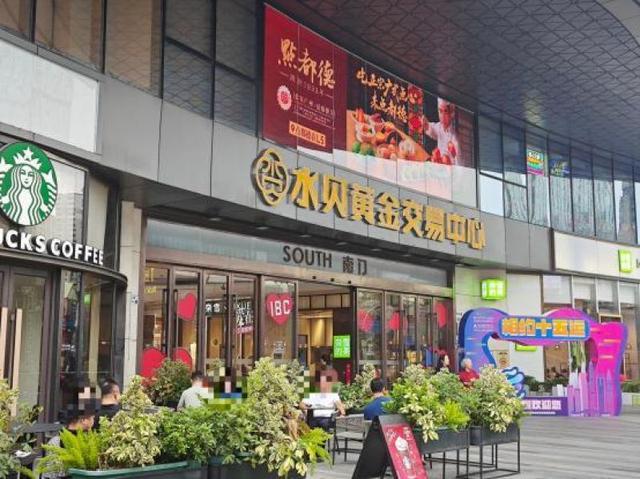
“想买的不敢买,想卖的不敢卖”!直击税改冲击下的水贝黄金市场:买卖价差拉大至151元
Hua Xia Shi Bao· 2025-11-12 10:32
Core Viewpoint - The new tax policy on gold transactions has significantly impacted the market, leading to decreased trading activity and increased price volatility as both buyers and sellers adopt a wait-and-see approach [1][4][6]. Summary by Sections Market Reaction - Following the implementation of the new tax policy on November 1, the trading volume in the Shenzhen Shui Bei gold market has noticeably decreased compared to September, with fewer customers visiting the stalls [1][4]. - The current gold price is reported at 1084 yuan per gram, which includes approximately 70 yuan per gram in taxes, resulting in a widened buy-sell price gap of 151 yuan per gram, compared to only 22 yuan three months prior [4][6]. Tax Policy Changes - The new tax policy differentiates between "investment" and "non-investment" gold, increasing the tax burden on non-investment transactions, which is expected to stabilize the market in the long run by addressing previous issues like false invoicing [1][6]. - The input tax for non-investment gold has decreased from 13% to 6%, leading to an effective tax burden increase of about 7 percentage points for small and medium-sized businesses in the Shui Bei market [6]. Industry Adaptation - In response to the new regulations, some merchants are promoting a "material exchange" settlement method, where customers provide old gold for processing, thus avoiding tax implications [7][9]. - The market is witnessing a shift towards "old-for-new" transactions, as consumers consider trading in old gold to offset the high prices of new jewelry, which may lead to a more vibrant secondary market [9]. Long-term Implications - The new tax structure is expected to enhance market transparency and encourage transactions through compliant channels like the Shanghai Gold Exchange, while reducing the scale of off-market transactions [6]. - The high gold prices combined with increased tax costs are altering consumer purchasing behavior, with many opting for investment-grade gold products or delaying purchases altogether [9].
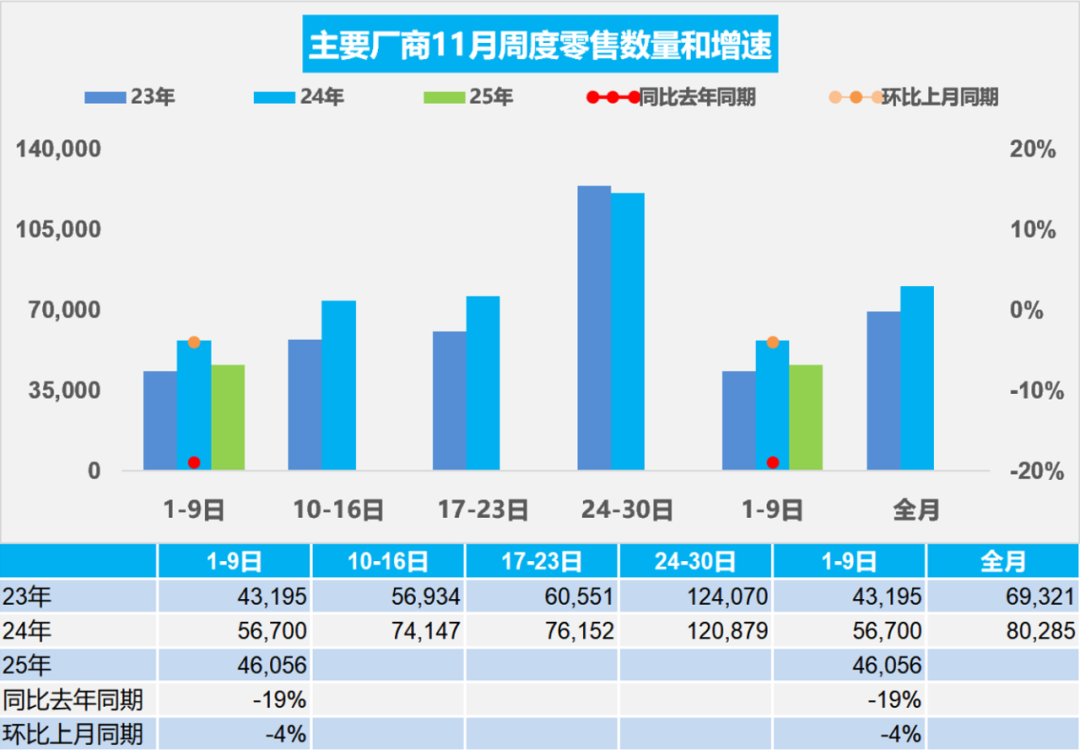
乘联分会:11月1-9日全国乘用车市场零售41.5万辆 较上月同期下降4%
Zhi Tong Cai Jing· 2025-11-12 09:04
Core Insights - The retail sales of passenger cars in China from November 1-9 reached 415,000 units, representing a year-on-year decline of 19% and a month-on-month decrease of 4%. Cumulatively, retail sales for the year have reached 19.671 million units, showing a year-on-year growth of 7% [1][4] - Wholesale sales of passenger cars during the same period totaled 468,000 units, down 22% year-on-year but up 48% month-on-month. Year-to-date wholesale sales stand at 24.242 million units, reflecting an 11% increase compared to the previous year [1][8] - The retail market for new energy vehicles (NEVs) saw 265,000 units sold from November 1-9, a 5% decline year-on-year but a 16% increase month-on-month. Year-to-date NEV retail sales have reached 10.415 million units, marking a 21% increase [1][4] Retail Market Performance - The average daily retail sales for the first week of November were 46,000 units, down 19% year-on-year and 4% month-on-month. The overall retail performance in early November is considered weak compared to the previous year, despite a slight year-on-year growth [4][7] - The decline in retail sales is attributed to tightened policies on trade-in and scrappage subsidies, leading to a negative growth in October. The retail of fuel vehicles has also seen a 10% decline [4][8] Wholesale Market Performance - The first week of November saw an average daily wholesale of 52,000 units, down 22% year-on-year but up 48% month-on-month. The wholesale market is experiencing a rebound in enthusiasm, with dealers becoming more proactive in inventory replenishment [7][8] - The overall wholesale performance for November 1-9 was 468,000 units, with a significant month-on-month increase driven by improved market conditions and proactive dealer behavior [8] New Energy Vehicle Market - The penetration rate of new energy vehicles in the retail market reached 64% during the first nine days of November, while the wholesale penetration rate was 65.4% [1] - The NEV market continues to show resilience, with cumulative retail sales for the year indicating strong growth despite recent declines in the short term [1][4] Used Car Market - The used car market is experiencing rapid growth, with a total transaction volume of 14.73 million units in the first nine months of 2025, reflecting a 3.6% year-on-year increase. The transaction value reached 946.2 billion yuan, a 0.7% increase [9] - The potential for growth in the used car market, particularly for NEVs, remains significant despite some regions exceeding their subsidy targets [9]
贵州前三季度社会消费品零售总额增长3.8%
Xin Hua Cai Jing· 2025-11-11 07:11
Group 1 - Guizhou Province's total retail sales of consumer goods increased by 3.8% in the first three quarters, with retail sales of limited enterprises growing by 5.1% [1] - The added value of wholesale and retail industries, as well as accommodation and catering industries, grew by 5.7% and 5.3% respectively [1] - The province has implemented a trade-in program to boost consumer spending, resulting in 28.86 million vehicle trade-ins and 377.5 million home appliance and digital product exchanges, generating a total consumption of 49.762 billion yuan [1] Group 2 - Guizhou's online retail sales reached 104.93 billion yuan, marking a growth of 12.6% [2] - The province has established 8 provincial-level e-commerce demonstration parks, 51 e-commerce live streaming demonstration bases, and 348 e-commerce demonstration enterprises [2] - The province's automotive trade-in application volume and fund exchange rate ranked 7th and 2nd nationally, respectively, with significant growth in automotive and communication equipment sales [1]
从流量争夺到全域融合 电商巨头争相转战线下开店
Sou Hu Cai Jing· 2025-11-10 22:11
Core Insights - The article discusses the aggressive offline expansion strategies of major e-commerce platforms, JD and Tmall, in reshaping China's home appliance retail market amidst changing consumer demands and government policies [1][2]. Offline Expansion - JD has opened four new stores in a month, while Tmall has established over 14,000 digital stores nationwide, indicating a significant push into offline retail [1][2]. - Tmall's offline strategy began with the rural Taobao project in 2014, transitioning to Tmall Supermarket in 2017, and has recently accelerated its presence in first- and second-tier cities [2]. - JD MALL, launched in September 2021, focuses on major urban centers and has opened 26 stores by September 2025, emphasizing a self-operated model with over 200,000 products [2][3]. Market Drivers - The shift to offline retail is driven by a saturation of online traffic and the need to reach more consumers, alongside the government's "trade-in" policy which has been enhanced to include more product categories [4]. - E-commerce penetration rates have declined from 27.6% in 2023 to 26.8% in 2024, with a stagnation at 25.0% from January to September 2025, highlighting the necessity for platforms to explore offline channels [4]. Consumer Behavior - The article notes a shift in consumer preferences from merely being able to purchase items to wanting immediate availability, emphasizing speed, certainty, and convenience as key factors in purchasing decisions [6]. Supply Chain and Digitalization - To avoid pitfalls faced by traditional appliance retailers, JD and Tmall are enhancing their supply chains and digital capabilities. JD employs a direct sourcing model to reduce costs and improve price competitiveness [8]. - Tmall focuses on refining operations and enhancing service experiences through various initiatives aimed at strengthening supply chain capabilities [8]. - Digitalization is identified as a core competitive advantage for offline stores, with plans to integrate online and offline data for targeted marketing and inventory management [8]. Future Retail Trends - The future of retail competition is expected to shift from online market share to enhancing service quality, reimagining offline experiences, and creating intangible value such as trust and loyalty [9].
贵州“以旧换新”见成效 带动消费近500亿元
Sou Hu Cai Jing· 2025-11-10 06:22
Group 1 - The core viewpoint of the articles highlights the steady growth of the consumer market in Guizhou Province, with a 3.8% year-on-year increase in total retail sales of consumer goods in the first three quarters of the year [1] - Retail sales of limited consumer goods increased by 5.1%, surpassing the national average by 0.2 percentage points, indicating a robust performance in the wholesale and retail sectors [1] - The province has implemented national subsidy policies to promote the replacement of old vehicles and appliances, resulting in significant consumer engagement and a total consumption boost of 497.62 billion yuan [1] Group 2 - New service consumption potentials are being released, with new business formats like boutique coffee and new tea drinks growing by 52.8% in the first three quarters [2] - The government has issued implementation opinions to enhance the quality of service consumption in areas such as dining, tourism, and elderly care [2] - E-commerce is thriving, with online retail sales reaching 1,049.3 billion yuan, marking a 12.6% increase, supported by initiatives like the "Ten Hundred Thousand" project [2] Group 3 - The province has accelerated innovation in consumption scenarios, creating 140 commercial circles and 116 pedestrian streets, enhancing the shopping experience for consumers [3] - Specific measures to boost consumption include extending the old-for-new policy, optimizing vehicle replacement subsidies, and implementing support policies for various industries [3] - The introduction of a tax refund policy for outbound travelers has improved shopping convenience for international visitors, further stimulating local consumption [3]