滞胀

Search documents
英国央行:降息
财联社· 2025-08-07 12:58
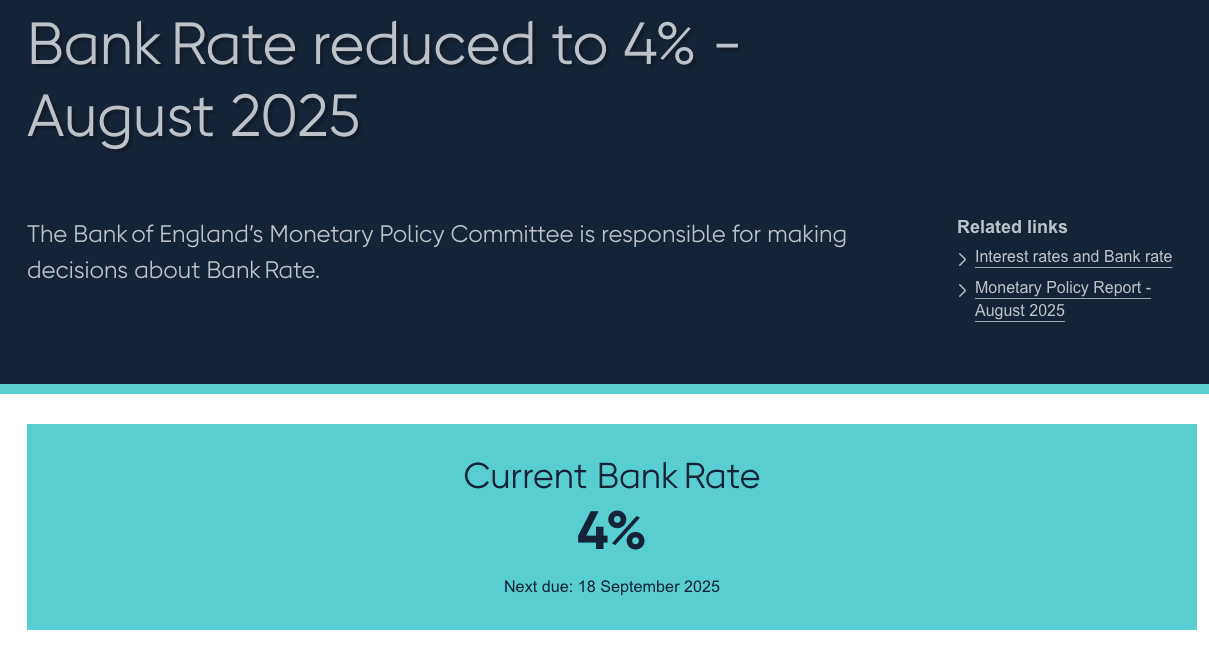
Core Viewpoint - The Bank of England has lowered interest rates by 25 basis points, marking the fifth rate cut in the current cycle, amidst a divided policy meeting [1][3]. Group 1: Monetary Policy Decision - The decision to cut rates was reached after a split vote of 5 to 4, the first time since the Bank gained monetary policy decision-making authority in 1998 [3]. - Four members, including Governor Bailey, supported the 25 basis point cut, while one member initially favored a 50 basis point cut but ultimately agreed to the smaller reduction due to the voting deadlock [3]. - Four members, including the Deputy Governor and Chief Economist, opposed the rate cut, indicating a significant division within the committee [3]. Group 2: Economic Context - The decision reflects a conflict between rising inflation and a weak labor market, raising concerns about potential "stagflation" in the UK [6]. - The Bank of England noted an increase in inflation risks since May, particularly due to rising food prices, with inflation expected to reach 4% in September, surpassing the previous peak forecast of 3.7% [6]. - Despite a baseline expectation for inflation to decline, the committee warned that temporary inflation increases could exert upward pressure on wages and pricing [6]. Group 3: Economic Outlook - The Bank indicated that the UK's potential GDP growth remains subdued, with ongoing domestic and geopolitical risks to economic activity [6]. - There is a consensus among committee members that consumer spending faces downward risks, while savings rates may increase as households adopt more precautionary saving behaviors [6]. - Future decisions on reducing policy tightening will depend on whether deflationary pressures continue to ease [6]. Group 4: Market Reactions - Following the rate decision, the British pound rose against the US dollar, and UK government bond yields experienced a slight increase [7]. - The Bank also warned of signs of pressure in the long-term bond market ahead of the annual decision on quantitative tightening in September, suggesting a potential slowdown in the pace of long-term bond sales [9].

史无前例的二轮投票,严重分裂的英国央行艰难降息25个基点
Feng Huang Wang· 2025-08-07 12:40
北京时间周四晚间,英国央行如期在一场意见严重分裂的政策会议后降息25个基点。这也是英国央行本轮降息周期的第5次降息,维持了每个季度降一次息 的谨慎节奏。 在这两派人背后,是通胀上升与就业市场疲软之间的矛盾。这种情况也引发了市场对英国可能进入"滞胀"的担忧。从周四开始,英国也要面对美国的所 谓"对等关税"生效,适用税率为10%。 英国央行在同步刊出的会议纪要中表示,自五月以来通胀上行风险"略有上升",特别是食品价格上涨。官员们目前预期,通胀将会在今年9月达到4%,超越 此前3.7%的预测峰值。虽然基线预测是通胀后续将回落,但委员会也警告称,暂时性通胀上升可能对工资和价格制定过程施加额外的上行压力。 值得一提的是,今天也是英国央行自1998年获得货币政策决策权以来,首次需要进行两轮投票才勉强达成5比4结果的利率决议。 英国央行介绍称,在9人构成的货币政策委员会中,包括行长贝利在内的4名委员投票支持降息25个基点,另一名委员艾伦·泰勒原本倾向于降息50个基点, 但因为投票僵局最终支持更小幅度的降息。包括英国央行副行长隆巴德利、首席经济学家休·皮尔在内的4人则坚持不应该降息。 与之相对的是英国经济的低迷。英国央行表示 ...
这次,鲍威尔真坐不住了
虎嗅APP· 2025-08-07 10:13
Core Viewpoint - The article discusses the recent shift in the Federal Reserve's stance towards interest rate cuts, highlighting the economic challenges and pressures that have led to this potential decision [4][5][6]. Group 1: Economic Indicators and Federal Reserve Actions - The Federal Reserve has been caught in a dilemma between persistent inflation and a weakening economy, with core PCE inflation at 2.8% as of June [4]. - Recent employment data shows a significant drop, with only 73,000 new jobs added in July, far below the expected 110,000, indicating a cooling labor market [9]. - The unemployment rate has risen to 4.2%, raising concerns about a potential recession, with a 40% risk of stagflation predicted by Morgan Stanley [4][10]. Group 2: Market Reactions and Predictions - Following signals from Federal Reserve officials supporting rate cuts, market expectations for a September rate cut have surged from 37% to over 75% [6]. - Major financial institutions predict that if unemployment rises, the Federal Reserve may cut rates by 50 basis points in September [6][11]. - The consensus among market participants is that a rate cut is imminent, with probabilities reaching as high as 94.4% for a September cut [11]. Group 3: Implications for Domestic Markets - A potential rate cut by the Federal Reserve could positively impact the A-share market, although the actual economic recovery and market sentiment will be crucial for the next upward wave [13]. - The widening interest rate differential between China and the U.S. poses risks of capital outflow, but a U.S. rate cut could provide more flexibility for China's monetary policy [14]. - If the U.S. enters a stagflation scenario, the attractiveness of U.S. Treasuries may diminish, leading to higher nominal yields required to attract investors [15].
通胀风险挥之不去,警惕美联储降息周期“虚假启动”
Hua Er Jie Jian Wen· 2025-08-07 06:34
高盛、花旗高喊50基点降息不无可能之际,美银却劝大家冷静。 据追风交易台消息,8月6日,美银在研报中警告,美国持续的通胀风险,特别是核心个人消费支出(PCE)价格指数可能很快突破3%的关口,使得美联 储任何过早的降息都可能是一次"虚假启动"。 该行因此维持其对美联储今年将维持利率不变的判断。报告指出,尽管近期就业数据有所放缓,但美联储面临的根本问题是通胀。核心PCE通胀年率在过 去一年里基本停滞在2.8%,较美联储2%的目标高出80个基点。 美银模拟测算显示,核心PCE通胀年率最早可能在7月就触及3%的水平。他们认为,随着关税成本越来越多地转嫁给消费者,通胀前景的风险"坚定地偏 向上行",这要求美联储在决定下一步政策时必须保持耐心。 这一预测甚至可能都"过于乐观"。该行分析师指出,由于实际生效的关税税率正稳定在高于其当前假设的水平,这意味着通胀见顶的高度可能更高,停留 在3%以上的时间可能更长,并可能引发非线性效应,给通胀预期带来上行压力。 这一判断基于一个核心事实:过去一年,尽管美联储维持高利率,但核心通胀始终未能有效回落,粘性十足。 价格压力凸显 近期美国的经济数据描绘了一幅复杂的图景,但价格上行的压力信 ...


原油日报:特朗普对印度加征额外关税-20250807
Hua Tai Qi Huo· 2025-08-07 05:22
Market News and Important Data - September delivery light - crude oil futures on the New York Mercantile Exchange fell 81 cents to $64.35 a barrel, a 1.24% decline; October delivery Brent crude futures fell 75 cents to $66.89 a barrel, a 1.11% decline. SC crude oil's main contract closed down 1.23% at 498 yuan per barrel [1] - Saudi Arabia raised the official selling price (OSP) of Arab light crude oil for September sales to Asia by $3.20 per barrel over the Oman/Dubai average, up from a $2.20 per - barrel premium in August. The OSP for September sales to the US is a $4.2 - per - barrel premium over the Oman/Dubai average, and for northwest Europe, it's a $3.35 - per - barrel premium [1] - As of the week ending August 4, the total refined - oil inventory at the Port of Fujairah in the UAE was 19.072 million barrels, up 2.024 million barrels from the previous week. Light distillate inventories increased by 145,000 barrels to 7.14 million barrels, medium distillate inventories rose by 159,000 barrels to 2.276 million barrels, and heavy residual fuel - oil inventories climbed by 1.72 million barrels to 9.656 million barrels [1] - US President Trump said there's a high possibility of holding a summit with Zelensky and Putin, with the location yet to be determined; he also mentioned that gasoline prices would be below $2 per gallon [1] - White House officials said secondary sanctions on Russia are expected to be implemented on Friday, and Russia has expressed its desire to meet with Trump [1] - Germany is preparing to launch a €100 - billion ($116 - billion) investment fund named "Deutschlandfonds" after the parliamentary summer recess in September or October. It aims to secure strategic sectors and boost the domestic capital market, and may expand its scope later [1] Investment Logic - The Russia - Ukraine situation has new developments. Trump announced a 25% additional tariff on India and plans to meet Putin and Zelensky next week. Before the meeting, the US is unlikely to intensify sanctions on Russia. Trump is concerned about inflation, as sanctioning Russia could lead to soaring oil prices and inflation, making it difficult for the Fed to cut interest rates. The "tariff card" is a means to levy more tariffs and force a cease - fire in the Russia - Ukraine conflict [2] Strategy - Oil prices will fluctuate in the short - term and a short - position allocation is recommended in the medium - term [3] Risks - Downside risks include the US relaxing sanctions on Iranian oil and macro black - swan events [3] - Upside risks are the US intensifying sanctions on Russian oil and large - scale supply disruptions due to Middle - East conflicts [3]
贵金属日评:美联储官员暗示近期或重启降息,关注英国央行8月利率决议-20250807
Hong Yuan Qi Huo· 2025-08-07 02:40
Report Industry Investment Rating - Not provided in the report Core View - The weakening US job market has heightened expectations of a Fed rate cut, and with global central banks continuing to buy gold, precious metal prices are likely to rise and difficult to fall. Investors are advised to buy on price dips. [1] Summary by Relevant Catalogs Precious Metal Market Data - **Shanghai Gold**: Closing price was 782.50 yuan/g, with a change of 1.18 yuan compared to the previous day; trading volume was 191,341.00, down 2,012.00 from the previous day; open interest was 215,212.00, down 3,440.00 from the previous day; inventory was 36,045.00 (in ten - gram units). [1] - **Shanghai Silver**: Closing price was 9,182.00 yuan/kg, with a change of 107.00 yuan compared to the previous day; trading volume was 372,060.00, down 728,580.00 from the previous day; open interest was 373,376.00, up 2,266.00 from the previous day; inventory was 1,208,033.00 (in ten - gram units). [1] - **COMEX Gold Futures**: Closing price was 3,431.80 dollars/ounce, with a change of - 3.20 dollars compared to the previous day; trading volume was 143,644.00, down 6,488.00 from the previous day; open interest was 340,930.00, up 4,008.00 from the previous day; inventory was 38,679,703.32 (in troy ounces). [1] - **COMEX Silver Futures**: Closing price was 37.94 dollars/ounce, with a change of 0.10 dollars compared to the previous day; trading volume was 38,956.00, down 2,669.00 from the previous day; open interest was 122,977.00, down 711.00 from the previous day; inventory was 506,311,741.34 (in troy ounces). [1] Market News and Macroeconomic Information - Trump ordered an additional 25% tariff on India, and the US plans to impose an additional 15% tariff on the existing tariff base in the US - Japan trade agreement [1] - Trump's advisors are pushing to temporarily fill the vacant positions on the Fed board, and Fed official Cook hinted at a possible rate cut in the near future [1] - The US Treasury may issue about $50 billion in bonds in Q3, which may cause a liquidity shock. US consumer - end inflation has risen, but due to the possible significant downward revision of new non - farm payrolls from May to July, the expectation of a Fed rate cut in September, October, and December has increased [1] - The ECB paused rate cuts in July, and the market expects the ECB to cut rates once by the end of 2025. The Bank of England may cut rates 2 - 3 times by the end of 2025, and the Bank of Japan still has the possibility of raising rates by the end of 2025 [1] Trading Strategy - Investors are advised to buy on price dips. For London gold, focus on the support level around $3,150 - $3,250 and the resistance level around $3,500 - $3,700; for Shanghai gold, focus on the support level around 730 - 760 yuan and the resistance level around 800 - 850 yuan; for London silver, focus on the support level around $34 - $36 and the resistance level around $37 - $40; for Shanghai silver, focus on the support level around 8,500 - 8,700 yuan and the resistance level around 9,100 - 9,500 yuan [1]
这次,鲍威尔真坐不住了
Hu Xiu· 2025-08-06 10:35
Core Viewpoint - The Federal Reserve is signaling a potential interest rate cut due to a weakening labor market and persistent inflation pressures, leading to a consensus in the market for a rate reduction [1][2][3]. Group 1: Economic Indicators - The core PCE inflation rate in June was 2.8%, indicating persistent inflation challenges [1]. - The July non-farm payroll report showed only 73,000 new jobs, significantly below the expected 110,000, with the unemployment rate rising to 4.2% [4]. - Revisions to previous months' job data revealed a total downward adjustment of 258,000 jobs, raising concerns about the labor market's health [4][5]. Group 2: Federal Reserve's Stance - Federal Reserve officials, including Bowman and Waller, have publicly supported a more proactive approach to rate cuts, citing the need to address a weakening job market [2][6]. - The probability of a rate cut in September has surged from 37% to over 75%, with some institutions predicting a cut of up to 50 basis points if unemployment rises [2][6]. Group 3: Market Reactions - The market has shifted from a wait-and-see approach to betting on rate cuts, with a consensus forming around the likelihood of a reduction [3][6]. - Major financial institutions like Goldman Sachs and Citigroup anticipate multiple rate cuts, potentially lowering the federal funds rate to a range of 3% to 3.25% [6]. Group 4: Implications for Domestic Markets - A potential rate cut by the Federal Reserve could provide some monetary policy flexibility for domestic markets, particularly in China, where the current interest rate differential with the U.S. is significant [8][10]. - The anticipated easing of U.S. monetary policy may enhance liquidity in global markets, potentially benefiting domestic capital markets [8][10].

市场聚焦美联储人事变动,美国服务业PMI下滑
Sou Hu Cai Jing· 2025-08-06 10:20
周二,美元整体维持窄幅震荡走势,市场在等待总统川普即将公布的美联储理事提名人选。美元指数徘 徊于98.50附近,近期因疲弱的就业数据和市场对9月降息预期升温而承压。 市场关注美联储新提名人选 总统特朗普已确认,将在本周内宣布填补美联储理事会空缺的提名人选。此前,美联储理事阿德里安娜 ·库格勒(Adriana Kugler)提前辞职,将于2025年8月8日正式离任,原任期本应于2026年1月届满。 库格勒的提前离职加快了川普政府寻找"理念一致"继任者的进程。此次任命不仅涉及当前的理事空缺, 也可能对未来的美联储主席人选产生重要影响。 特朗普已明确表示不会提名财政部长斯科特·贝森特(Scott Bessent)担任该职务,称其更希望继续担任 当前职务。目前,美联储主席职位的候选名单中还有四人,其中两位已被公开确认: ·凯文·沃什(Kevin Warsh),前美联储理事,目前立场更接近川普; ·凯文·哈塞特(Kevin Hassett),现任国家经济委员会主任,长期川普顾问。 其他潜在人选还包括现任理事克里斯托弗·沃勒(Christopher Waller),以支持降息立场著称。特朗普还 曾表示,此次提名人选未来有 ...
大“换血”,黄金一线生机!
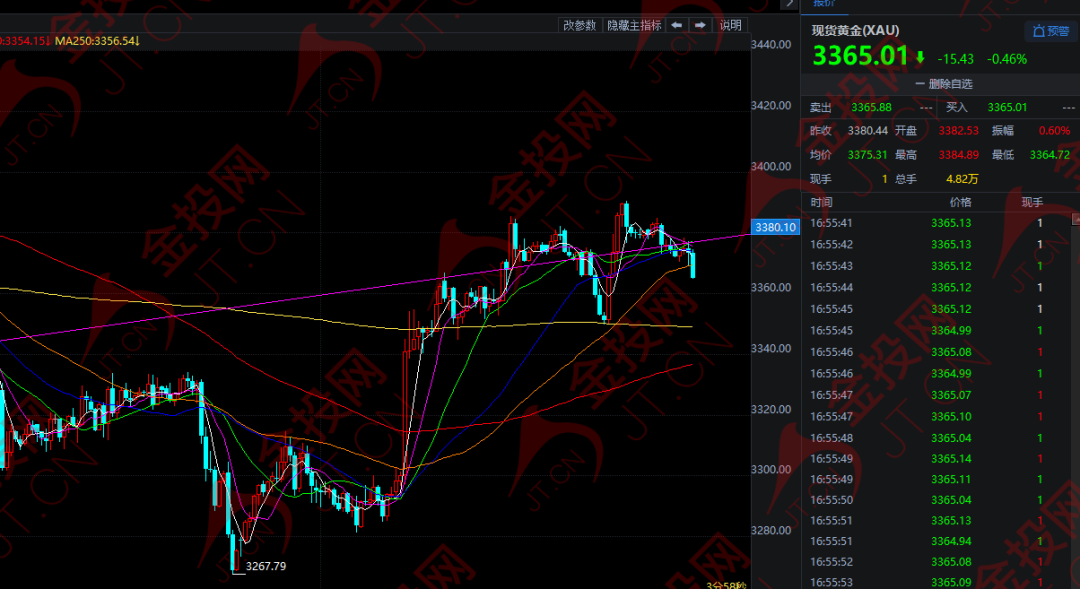
Jin Tou Wang· 2025-08-06 09:44
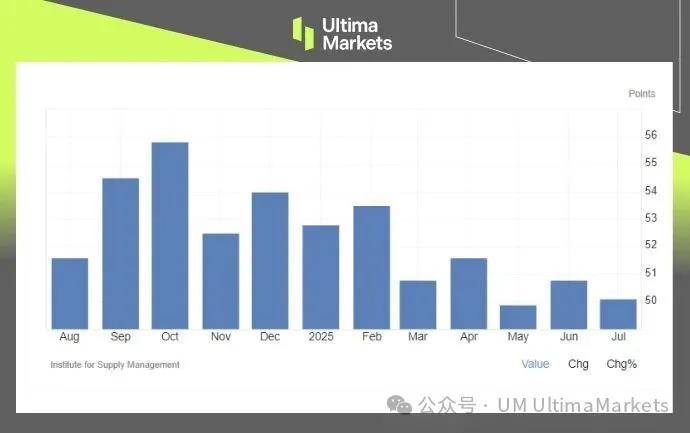
Group 1: Gold Market - Gold prices continued to rise, reaching a near two-week high of $3,390.32 before closing at $3,380.65, marking four consecutive days of gains, indicating strong upward momentum [1] - Currently, gold is fluctuating around 3,366 yuan in the European market [1] Group 2: U.S. Stock Market - U.S. stock indices closed lower, with the Dow Jones down 0.14% at 44,111.74 points, the S&P 500 down 0.49% at 6,299.19 points, and the Nasdaq down 0.65% at 20,916.55 points [2] - Disappointing U.S. service sector data raised concerns about corporate prospects, with the ISM non-manufacturing index showing zero growth at 50.1, below expectations of 51.5 and the previous month's 50.8 [3] - The employment index dropped from 47.2 to 46.4, contributing to inflationary concerns [3] - President Trump's announcement of tariffs on imported drugs and potential tariffs on semiconductors negatively impacted market sentiment [3] - Companies like Yum Brands reported earnings below expectations due to high tariffs, with shares dropping over 5%, while Caterpillar warned of significant challenges from tariffs, potentially leading to losses of up to $1.5 billion by 2025 [3] Group 3: Federal Reserve and Interest Rates - The list of candidates for the new Federal Reserve chair has narrowed, with speculation about an imminent announcement from President Trump [4][5] - Predictions suggest that once a new chair is announced, the market may increase bets on interest rate cuts, with Goldman Sachs and Citigroup forecasting a 25 to 50 basis point cut as early as September [6] - Current probabilities indicate a 94.4% chance of a 25 basis point cut in September, with a 67.6% chance of cumulative cuts of 50 basis points by October [6] Group 4: Market Predictions and Valuations - Wall Street analysts are warning investors to prepare for a market downturn due to high stock valuations being challenged by deteriorating economic data [7] - Major investment banks predict a potential short-term decline in the S&P 500 index in the coming weeks to months [7] - Concerns about stock market bubbles are rising, with predictions that the S&P 500 could reach 7,500 points next year, similar to the peak of the internet bubble [8] - The S&P 500's 14-day Relative Strength Index (RSI) recently hit 76, indicating overbought conditions [10] - The cost of options to hedge against significant declines is increasing, reflecting growing concerns about market downturns [10]
帮主郑重:美股惊现“滞胀阴影”,特朗普关税风暴+AI新模型如何搅动市场?
Sou Hu Cai Jing· 2025-08-06 06:24
Economic Data - The ISM non-manufacturing index was reported at 50.1, indicating stagnation in the service sector, which constitutes 70% of the U.S. economy [3] - Concerns about stagflation have emerged, characterized by high inflation coupled with economic stagnation, with JPMorgan warning of a "high" risk of recession in the U.S. [3] Trade Policies - Former President Trump announced intentions to significantly increase tariffs on India and potentially on pharmaceuticals and chips, with drug tariffs possibly reaching 250% [3] - India, as the largest exporter of generic drugs, may see U.S. drug prices rise sharply due to these tariffs, while India has responded strongly against these measures [3] - Trump's push for domestic chip production indicates a strategic shift, with an announcement expected next week that could impact major companies like TSMC and Samsung [3] Oil Market - International oil prices have declined for four consecutive days, despite supply disruptions from Russia, as OPEC+ increased production by 548,000 barrels per day in August [4] - A Russian official suggested that halting 9.5 million barrels of Russian oil daily could drive prices up to $140 per barrel, highlighting the ongoing tug-of-war in the oil market [4] Stock Market Performance - Chinese concept stocks showed mixed results, with Pinduoduo up 0.52% and TSMC down 2.75% due to tariff concerns, while companies like Tianjing Bio and Zhihu saw gains of over 15% and 6%, respectively [5] - The technology sector is witnessing significant developments, with OpenAI releasing two open-source models and Google introducing the Genie 3 model, which could revolutionize gaming and the metaverse [5] - JPMorgan cautioned that if OpenAI's GPT-5 fails, it could lead to a significant downturn in the AI industry [5] Investment Outlook - The current market environment is characterized by weak economic data, trade tensions, and technological advancements, creating a complex investment landscape [5] - For long-term investors, defensive opportunities may arise in the energy and healthcare sectors amid stagflation concerns, while the AI sector, despite short-term volatility, holds potential for significant growth in the coming decade [5]