
价格战

Search documents
空调价格战背刺了谁?
Tai Mei Ti A P P· 2025-07-07 02:01
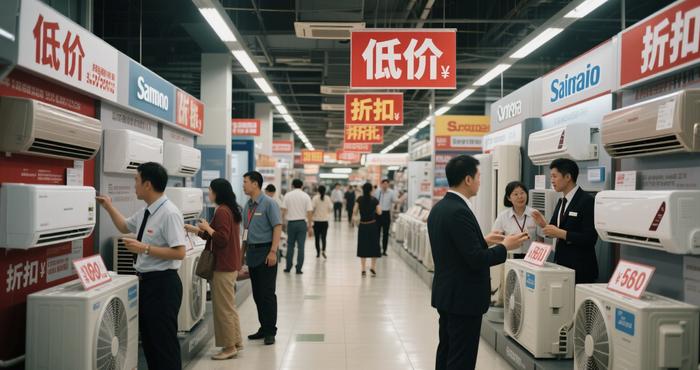
图 片由AI生成 体感超50℃、路面超68℃,最近多地都发布了高温红色预警。伴随着酷暑的到来,空调也到了销售的旺 季。"往年6、7月都是最忙的时候,今年提前点,国补的政策加上618前置,5月就开始忙起来了。"一名 海信空调的导购对作者说道。 根据奥维云网推总数据显示,2025年618期间,空调品类全渠道实现零售额规模达485亿元,同比增长 16.3%。在多种政策性因素的推动下,空调市场的热卖,也让市场的竞争加剧起来。 不同于手机等消费品,作为低频家电产品,空调市场的增长,难掩背后的血海比拼。通常情况下,争夺 市场最有效的方式往往就是最简单的价格直给,在产能过剩和库存高压的环境下,价格战又一次成为全 行业最不愿意看到但避免不了的现象。 有意思的是,作为行业的头部品牌,格力电器更是亲自下场怒怼价格战,其市场总监朱磊的吐槽,也是 引发了网上的热议,直言"如此竞争不仅难以卷死同行,反而会自己先被拖垮"。 在作者看来,这一轮空调的价格战,表面上看是品牌之间的角斗,消费者只是个受益的旁观者。但事实 是,价格战最终"背刺"的还是消费者。 价格战催生下的高增长 随着气温的上升,空调几乎成了每个家庭的必备电器,更有网友开玩笑地 ...

中信建投 大消费联合会议
2025-07-07 00:51
Summary of Conference Call Records Company and Industry Overview - **Company**: 老铺黄金 (Lao Pu Gold) - **Industry**: Jewelry and Express Delivery Key Points and Arguments Lao Pu Gold's Expansion Plans - Lao Pu Gold plans to open 7-8 new stores in 2025, expected to contribute 1/3 of the revenue for that year, with the remaining 2/3 reflected in 2026, significantly boosting revenue over the next two years [1][2] - The total number of stores is projected to reach 33 by the end of 2026, although the initial target was 50, indicating substantial growth potential [1][4] - Each new store is anticipated to generate approximately 1 billion yuan in revenue [1] Market Position and Competitive Advantage - The gold inlay category remains popular in the high-end market, with a market size of around 100 billion yuan for products priced over 10,000 yuan [1][5] - Lao Pu Gold and 周大福 (Chow Tai Fook) hold a strong competitive advantage in this niche, with new brands unlikely to pose a significant threat in the short term [1][5] Express Delivery Industry Performance - During the 618 shopping festival, express delivery volumes increased by 12% year-on-year, with parcel delivery volumes rising by 15.26%, and a rolling monthly average growth rate of about 20% [1][6] - The trend of regular promotional events is beneficial for resource utilization in the express delivery industry, although increased costs from competition may pressure earnings in the first three quarters of the year [1][7] Challenges in the Express Delivery Sector - The express delivery industry faces challenges of slowing growth and intensified price competition, with May's growth rate declining month-on-month and expected to stabilize around 15% in June and July [1][8] - Attention should be paid to the pricing strategies of leading companies and changes in market share to adjust strategies accordingly [1][8] National Subsidy (国补) Policy Insights - The national subsidy program has been paused, likely due to rapid consumption of quotas and payment system upgrades, but is expected to resume in the future [1][10] - Approximately 1,600 billion yuan has been utilized from the national subsidy, with an annual budget of about 3,000 billion yuan, indicating a potential recovery [1][10] - The impact of the subsidy on sales has been less than expected due to consumer behavior changes and seasonal effects [1][11] Investment Outlook for the White Goods Industry - The investment perspective in the white goods sector has shifted from fundamental-driven to other factors, with passive funds playing a significant role in stock price increases [1][14] - Current price wars in the air conditioning industry are not expected to significantly impact second and third-quarter earnings, with effective inventory management stabilizing profits [1][15] Performance of Fenjiu in the Liquor Industry - Fenjiu is a leading enterprise in the clear fragrance liquor segment, having rapidly grown since the 2017 state-owned enterprise reform, now ranking among the top three in the industry [1][18][19] - The company has a well-rounded product layout across all price ranges, which positions it favorably for future growth compared to competitors like Moutai and Wuliangye [1][20] Additional Important Insights - The express delivery sector's performance during promotional periods indicates a shift towards more sustainable growth patterns, despite the challenges posed by increased competition and cost pressures [1][7] - The potential for the national subsidy to be restructured into consumer voucher forms could influence future purchasing behaviors and market dynamics [1][10]

if赴港上市,中国人又喝出一个IPO
Sou Hu Cai Jing· 2025-07-06 22:26
Core Viewpoint - IFBH Limited, known for its coconut water brand "if," successfully listed on the Hong Kong Stock Exchange with a significant opening increase, reflecting strong market interest and demand for its products [1][2]. Company Overview - IFBH Limited was founded by Pongsakorn Pongsak, a member of a prominent Thai business family, and has rapidly grown in the beverage sector, particularly in the coconut water market [5][7]. - The company achieved a remarkable revenue of over 1 billion yuan with only 46 employees, resulting in an impressive revenue per employee of approximately 25 million yuan [2]. Market Performance - The coconut water market in China is projected to grow from 5 billion yuan in 2019 to over 260 billion yuan by 2025, indicating a 50-fold increase in just five years [9]. - IF has captured significant market shares, leading the coconut water market in Hong Kong with a 60% share and in mainland China with a 34% share as of 2024 [8]. Competitive Landscape - The success of IF has attracted numerous competitors, including international brands like Vita Coco and domestic giants such as Wahaha and Uni-President, intensifying market competition [10]. - The number of coconut water brands in the market is expected to rise from 32 to over 50 between 2023 and 2025, leading to increased price competition [10]. Pricing and Revenue Trends - The average price of coconut water has decreased by 23.5% from Q1 2023 to Q1 2025, impacting the overall market dynamics [12]. - Despite a stable average price for IF's products, the company faces pressure from the overall price decline in the market [13]. Supply Chain and Production Challenges - IF's production heavily relies on a Thai contract manufacturer, which poses risks related to quality control and supply chain management [15]. - Rising costs of raw materials, particularly coconuts, have led to price adjustments, with a suggested retail price increase of approximately 20% in August 2024 [14].

国金高频图鉴 | Q2经济增速5.3%左右&汽车消费超季节性
雪涛宏观笔记· 2025-07-06 13:50
Group 1 - The issuance of government bonds accelerated in June, with a total issuance of 2.8 trillion yuan, up from 2.3 trillion yuan in the previous period, resulting in a net financing of 1.41 trillion yuan [3] - As of June 2025, the net financing scale of government bonds is projected to reach 7.8 trillion yuan, with an issuance progress of 56.2% [3] - The cumulative issuance progress for various types of bonds includes general bonds at 52.0%, special bonds at 47.5%, and new special refinancing bonds at 85.2% [3] Group 2 - In June, the retail sales of passenger cars reached 1.269 million units, representing a year-on-year growth of 24% and a month-on-month increase of 8% [4] - The surge in car purchases is attributed to three main factors: a new round of price wars among car manufacturers like BYD, discounts from the "618" shopping festival and the "old-for-new" policy, and increased demand for self-driving cars during the summer after the college entrance examination [4] Group 3 - The BCI index fell to 49.3 in June, dropping below the neutral line of 50, indicating cautious business expectations [5][7] - The decline in the BCI index reflects weakened confidence in future order growth and profit improvement, particularly among small and medium-sized enterprises [7] - The manufacturing PMI rose by 0.2 points to 49.7%, with production and new orders indices improving, suggesting a slight recovery in market demand [9] Group 4 - The economic resilience is maintained, with the GDP growth rate for the second quarter expected to be between 5.3% and 5.4% [10] - The combination of high-frequency data and PMI data supports the GDP growth estimate of around 5.3% for June [10]

美团、阿里同步放大招!“补贴对决”暑期档开启,有人抢到2元一杯咖啡……
证券时报· 2025-07-06 03:13
Core Viewpoint - The article highlights the intense competition between Meituan and Alibaba in the instant retail and food delivery market, driven by significant promotional subsidies during the summer consumption peak, leading to record order volumes and potential market restructuring [4][6][8]. Group 1: Order Volume and Market Activity - As of July 5, Meituan's instant retail orders exceeded 120 million, with over 100 million being food delivery orders, accounting for over 80% of the total [1]. - The surge in orders was attributed to a "subsidy war" initiated by Alibaba and Meituan, with both platforms offering substantial discounts and coupons to stimulate consumer spending [4]. - On the same day, Meituan experienced a peak order volume that triggered server protection measures, causing temporary service disruptions for some users [5]. Group 2: Competitive Landscape - Alibaba's Taobao Shanguo announced a 500 billion yuan subsidy plan aimed at boosting consumer and merchant engagement, resulting in significant order growth for restaurant chains and small businesses [5]. - Goldman Sachs outlined three potential competitive scenarios for the food delivery and instant retail market, indicating that the current price war aims to capture user traffic for cross-selling more profitable services [6][7]. - The ongoing competition is expected to reshape the industry landscape, with total investments from the major players reaching 25 billion yuan in June alone [6]. Group 3: Future Market Projections - Goldman Sachs estimates that the food delivery market could reach 2.4 trillion yuan and the instant retail market could reach 1.5 trillion yuan by 2030, driven by improved supply chain efficiencies and new consumption models [8].


光伏,活在产能出清的恐惧中
投中网· 2025-07-05 06:33
Core Viewpoint - The photovoltaic industry is experiencing severe challenges, with many companies facing bankruptcy and an oversupply of production capacity, leading to continuous price declines and financial losses across the sector [4][5][6][8]. Group 1: Industry Status - As of 2024, at least 70 photovoltaic companies have filed for bankruptcy, primarily affecting small and medium-sized enterprises, with 40% of these bankruptcies occurring in the battery and module segments [8]. - The "installation rush" in the first half of the year led to a record high of 198 GW of new installations from January to May, yet prices across the photovoltaic supply chain continue to decline [6][9]. - The industry is in a prolonged "hell" phase, with companies bleeding cash while waiting for a balance between supply and demand [6][12]. Group 2: Financial Performance - In 2024, 40% of the 138 listed photovoltaic companies reported losses, with the top 10 loss-making companies collectively losing over 53 billion yuan [19][21]. - Major companies like Longi Green Energy and JinkoSolar reported significant losses in the first quarter of 2025, with combined losses nearing 8.4 billion yuan [20][21]. Group 3: Capacity and Market Dynamics - As of the end of 2024, the production capacity for key segments in the photovoltaic supply chain is significantly higher than the projected global installation capacity, indicating a severe oversupply [15]. - The expansion of production capacity has not ceased, with numerous projects initiated in 2024, leading to further potential oversupply issues [15][16]. - The presence of state-owned enterprises acquiring struggling companies has hindered the necessary market corrections, allowing many non-competitive firms to remain operational [16][17]. Group 4: Future Outlook and Recommendations - Industry experts suggest that without strong regulatory measures, the current cycle of overcapacity and price wars will continue, potentially leading to the exit of major players [21][22]. - Proposed solutions include market-driven mergers and acquisitions, technological elimination mechanisms, and policy enforcement to manage capacity effectively [22].




7月起,四大“降价潮”来了:有人偷着乐,有人更焦虑!
Sou Hu Cai Jing· 2025-07-04 23:41
Economic Overview - Starting from 2025, China's economy is entering a deflationary cycle, with the Consumer Price Index (CPI) expected to decline by 0.1% year-on-year in the first half of 2025 [1] - The deflationary environment is causing anxiety among businesses and job seekers due to a sluggish consumer market and rising unemployment [1] Price Decline Trends - **Housing Market**: Housing prices are projected to continue declining, with significant drops observed in both second and first-tier cities. For instance, in Shanghai, housing prices fell from over 96,000 yuan per square meter in 2021 to over 65,000 yuan per square meter by the first half of 2025, representing a decline of over 30% [5] - **Automobile Industry**: The automotive market is experiencing substantial price reductions, with mid-range vehicles seeing price cuts of 15,000 to 20,000 yuan, and luxury imports dropping nearly 100,000 yuan. This trend is expected to persist due to decreased middle-class income and increased competition from new energy vehicles [7] - **Small Appliances**: A price drop of 10-15% is anticipated in small appliances such as air fryers and washing machines, driven by rapid product turnover and stagnant consumer income growth [9] - **Pork Prices**: Pork prices have fallen below 20 yuan per kilogram, currently ranging from 16 to 17 yuan, nearly halving from previous years. This decline is attributed to oversupply in the market and changing consumer preferences towards leaner meats [11] Consumer Impact - The deflationary cycle presents both advantages and disadvantages. While consumers may benefit from increased purchasing power and lower prices, industries and workers face heightened anxiety due to reduced demand and potential job losses [11]
艾睿铂:五年后,中国有11%的新能源汽车品牌财务健康
Guan Cha Zhe Wang· 2025-07-04 07:09
Core Insights - The report by AlixPartners predicts that by 2030, only 15 out of 129 current electric vehicle brands in China will remain financially viable, representing 11.6% of the brands but accounting for approximately 75% of the market share [1][3] - The Chinese electric vehicle market is expected to undergo significant consolidation, with only the most competitive brands likely to succeed in the coming years [1][3] - The average annual sales per brand are projected to be 1.02 million units [1] Industry Dynamics - The Chinese electric vehicle market is characterized by intense competition, price wars, rapid innovation, and evolving industry standards, which have led to significant technological and cost efficiencies but have made sustainable profitability challenging for many companies [3][5] - As of last year, only BYD, Li Auto, and Seres among listed Chinese EV companies achieved full-year profitability [3] - Regulatory bodies in China have begun urging manufacturers to cease price wars, although price competition may continue through non-price incentives such as cost advantages and subsidies [3][5] Market Expansion - By 2030, Chinese automakers are expected to double their market share in Europe to 10%, with an annual production increase of 800,000 units, while European manufacturers may close the equivalent of 1.5 factories (approximately 400,000 units) [4] - European suppliers are planning to dispose of over $18 billion (approximately 129 billion RMB) in assets due to these market shifts [4] Cost and Supply Chain Considerations - A new round of U.S. tariffs is projected to result in costs of around $30 billion (approximately 215 billion RMB) by 2026, prompting many U.S. companies to consider relocating their supply chains out of China [5] - Chinese electric vehicle companies are advised to focus on building strong brands, investing in advanced technologies like autonomous driving, and localizing operations in key international markets to navigate domestic and global challenges [5] Technological Advancements - The report emphasizes the importance of understanding opportunities from mobility upgrades, particularly in advanced driver-assistance systems (ADAS), where China currently leads in both cost and innovation [6] - The global ADAS market is expected to reach $50 billion by 2030, with China's market share projected to increase to 45% [6] - Utilizing AI-driven solutions can enhance operational efficiency for manufacturers and suppliers, potentially reducing traditional R&D cycles and validation costs by 20% [6] Export Trends - The export of Chinese manufacturers has slowed due to tariffs and geopolitical uncertainties, but the new operational model driven by partnerships and joint ventures is gaining attention [7] - This model allows manufacturers to double the speed of vehicle launches, reduce investments by 40-50%, and lower costs by 30% [7]
“反内卷”号角吹响 多个行业应声而动
Zheng Quan Shi Bao· 2025-07-03 18:47
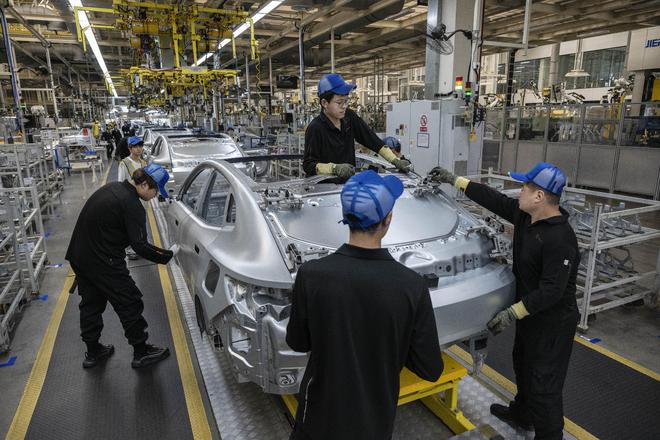
锂电企业如今的境遇,正是行业"内卷式"竞争带来的恶果。记者采访了解到,目前,多个行业已经掀 起"反内卷"之战,部分行业的"反内卷"已初显成效。 政府部门也在加快落实党中央、国务院决策部署。7月3日,工信部主持召开第十五次制造业企业座谈会 强调,聚焦重点难点,依法依规、综合治理光伏行业低价无序竞争,引导企业提升产品品质,推动落后 产能有序退出,实现健康、可持续发展。 汽车光伏等行业积极行动 7月1日召开的中央财经委员会第六次会议强调:"纵深推进全国统一大市场建设,要聚焦重点难点,依 法依规治理企业低价无序竞争,引导企业提升产品品质,推动落后产能有序退出。"一场涵盖多领域 的"反内卷"行动已经吹响号角。即日起,证券时报推出"落实'反内卷'·行业在行动"系列报道,聚焦各地 各行业扭转恶性竞争局面、开辟高质量发展新路径的有益做法和待解难题,敬请关注。 "太卷了,价格没有最低,只有更低。"华中地区一家锂电材料企业的相关负责人向证券时报记者诉苦, 目前公司开工率不到30%,"据我所知,行业不少企业都在盈亏线上挣扎"。 今年以来,中国汽车行业掀起激烈的"价格战"。多家头部车企推出限时促销活动,部分车型降价幅度超 5万元,引 ...
中加基金权益周报︱股债跷跷板扰动,债市先弱后强
Xin Lang Ji Jin· 2025-07-03 02:50
Market Review and Analysis - The primary market saw the issuance of government bonds, local government bonds, and policy financial bonds amounting to 1110 billion, 6416 billion, and 1150 billion respectively, with net financing of 1110 billion, 5604 billion, and 1093 billion [1] - Financial bonds (excluding policy financial bonds) totaled an issuance of 839 billion with a net financing of 612 billion, while non-financial credit bonds had an issuance of 2889 billion and a net financing of 11 billion [1] - The secondary market exhibited a fluctuating performance influenced by factors such as cross-quarter liquidity, the ceasefire in the Israel-Palestine conflict, military parade news, and market sentiment [1] Liquidity Tracking - The central bank's open market operations (OMO) showed a net injection, and the medium-term lending facility (MLF) was rolled over, supporting the cross-quarter liquidity [1] - The R001 and R007 rates increased by 1.2 basis points and 32.9 basis points respectively compared to the previous week [1] Policy and Fundamentals - In May, the profit growth rate of industrial enterprises turned negative, impacted by base effect, price wars, and tariff shocks [1] - High-frequency data indicates stable production, sluggish consumption, and continued pressure on prices, with a significant drop in oil prices following the ceasefire [1] Overseas Market - Several Federal Reserve officials expressed dovish views, and weakening economic data in the U.S. has raised market expectations for interest rate cuts within the year [1] - The 10-year U.S. Treasury bond closed at 4.29%, down 9 basis points from the previous week [1] Equity Market - The easing of the Israel-Palestine conflict significantly boosted market sentiment, leading to a rise in most broad-based A-share indices, with the total A-share index increasing by 3.56% and the ChiNext index rising by 5.69% [2] - The average daily trading volume in A-shares surged to 1.49 trillion, with a weekly increase of 2716.46 billion [2] - As of June 26, 2025, the total financing balance for A-shares reached 18265.35 billion, an increase of 173.68 billion from June 19 [2] Bond Market Strategy Outlook - Factors favoring the bond market are increasing in July, although the central bank's monetary policy tone may lead to a temporary market sentiment adjustment [2] - Historical trends suggest that bond market bullish forces may strengthen in July due to seasonal liquidity easing and reduced bank liability pressure [2] - A recommended strategy includes a combination of short to medium-term credit bonds and long-duration government bonds [2] - The convertible bond market faces supply-demand imbalances, with some banks redeeming convertible bonds, leading to a scarcity of underlying assets [2]