
结构性货币政策工具

Search documents
政策专题:“一揽子金融政策支持稳市场稳预期”发布有哪些增量信息?
CMS· 2025-05-07 14:04
Core Insights - The report highlights the release of over 20 incremental policies aimed at stabilizing the market and expectations, including comprehensive reductions in reserve requirements and interest rates, as well as new structural monetary policy tools [1][3] Monetary Policy - The central bank has implemented ten policies across quantity, price, and structural categories, including a 0.5 percentage point reduction in the reserve requirement ratio, expected to provide approximately 1 trillion yuan in long-term liquidity [1][4] - The policy interest rate has been lowered by 0.1 percentage points, which is anticipated to lead to a similar decrease in the Loan Prime Rate (LPR) [1][4] - The introduction of a 0.25 percentage point reduction in the rates of structural monetary policy tools, including various special structural tools and re-lending rates, is expected to save banks approximately 15-20 billion yuan annually [1][4] Financial Supervision - Eight policies have been deployed concerning real estate, capital markets, corporate financing, and technological innovation, including the acceleration of financing systems compatible with new real estate development models [1][4] - The report emphasizes the need for a comprehensive policy package to support small and private enterprises in financing, as well as targeted measures for businesses affected by tariffs [1][4] Capital Market - The China Securities Regulatory Commission (CSRC) has announced three policies focusing on technological innovation, mergers and acquisitions, and the entry of medium to long-term funds into the market, including the upcoming release of a high-quality development action plan for public funds [1][4]
一揽子金融政策发布,设立5000亿元“服务消费与养老再贷款”背后有何考量?
Sou Hu Cai Jing· 2025-05-07 13:59
Core Viewpoint - The Chinese government is implementing a comprehensive set of monetary policies aimed at stabilizing the market and expectations, with a focus on promoting high-quality economic development through measures such as reserve requirement ratio cuts and interest rate reductions [1][4]. Group 1: Monetary Policy Measures - The People's Bank of China (PBOC) will lower the reserve requirement ratio by 0.5 percentage points, which is expected to provide approximately 1 trillion yuan in long-term liquidity to the market [1][4]. - The PBOC will also reduce policy interest rates and the rates of structural monetary policy tools, including lowering the housing fund loan rates [1][4]. - Specific measures include a phased reduction of reserve requirements for auto finance and financial leasing companies from 5% to 0%, enhancing their credit supply capabilities [4][6]. Group 2: Structural Policy Tools - The new policies include an increase in the re-lending quota for technological innovation and technical transformation from 500 billion yuan to 800 billion yuan, and the establishment of a 500 billion yuan re-lending facility for service consumption and elderly care [6][7]. - An additional 300 billion yuan will be allocated to support agriculture and small enterprises, which will work in conjunction with the lowered re-lending rates to boost lending in these sectors [6][7]. - The total amount for capital market support tools will be combined to 800 billion yuan, including 500 billion yuan for securities fund insurance company swaps and 300 billion yuan for stock repurchase loans [6][7]. Group 3: Economic Context and Expectations - The policies are designed to address the changing international trade environment and its potential impacts on investment and consumption, reflecting a forward-looking approach to stabilize market expectations [4][5]. - The measures are seen as timely and targeted, with a strong emphasis on supporting specific sectors such as technology innovation, consumption, and agriculture, which are crucial for economic recovery and growth [5][6].

一揽子金融政策简评:三大金融部门联手稳预期、提信心
BOCOM International· 2025-05-07 13:42
Group 1: Core Insights - The report highlights a comprehensive financial policy package aimed at stabilizing market expectations and boosting confidence across various sectors, including monetary policy, capital markets, real estate, and the real economy [1][7][10] - The People's Bank of China (PBOC) has implemented a combination of reserve requirement ratio (RRR) cuts and interest rate reductions, releasing approximately 1 trillion RMB in long-term liquidity, which is expected to lower financing costs for financial institutions and enhance credit supply [1][2][10] - The report anticipates that the combination of these policies will positively impact market sentiment and support the development of the real economy, especially in light of improved China-U.S. trade relations [1][7] Group 2: Monetary Policy Measures - The PBOC has reduced the rates of structural monetary policy tools by 0.25 percentage points, including the rates for various special structural tools and the personal housing provident fund, which directly lowers financing costs for agriculture, small enterprises, and homebuyers [2][10] - A new 500 billion RMB "service consumption and pension re-loan" initiative and a risk-sharing tool for technology innovation bonds have been established to provide targeted support for consumption and technological innovation [2][10] Group 3: Financial Regulation Initiatives - The financial regulatory authority has announced measures to stabilize the real estate and stock markets, focusing on supporting reasonable financing needs of quality real estate companies and projects [3][5] - The report indicates that insurance funds will play a crucial role in stabilizing the capital market, with plans to expand the scope of long-term investment trials and adjust risk factors for insurance company stock investments [5][10] Group 4: Market Outlook and Sector Focus - The report identifies three main investment themes: technology innovation, high dividend stocks, and policy benefits, suggesting that sectors such as technology hardware, internet technology, and quality consumer leaders are likely to benefit from supportive policies and demand growth [10][12] - The macro environment is expected to provide strong support for the Hong Kong stock market, with liquidity easing signals and internal demand policies being implemented to counter external uncertainties [7][10]
释放积极政策信号!公募火速解读
券商中国· 2025-05-07 13:26
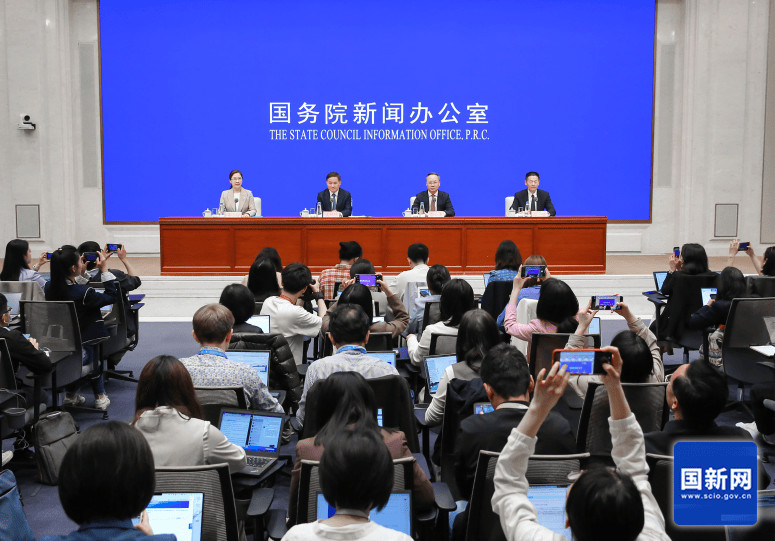
一揽子金融政策有效提振市场情绪。 5月7日,央行、金融监管总局、证监会负责人介绍"一揽子金融政策支持稳市场稳预期"有关情况。 本次发布会出台了降准降息、结构性货币政策工具降价扩容、险资入市加码、公募费率改革等众多增量政策。 公募基金普遍认为,会议释放积极政策信号,有效提振市场情绪。 发布会超预期 此次发布会上,央行发布三类共10项货币政策,延续货币政策适度宽松基调,强化逆周期调节和支持实体经济 发展。 金融监管总局发布8项增量政策,覆盖房地产、资本市场、小微民营企业、外贸及科技创新等多个领域。 博时基金首席权益策略分析师陈显顺分析,此次会议凸显多部门协同发力稳定市场的政策决心,释放以下三大 信号。一是政策协调性强化。央行、金融监管总局、证监会联合部署,传递系统性维稳意图,提振市场信心。 二是重点风险化解加码。明确支持房企合理融资、推进地方债务重组,并严控IPO节奏缓解资金分流压力,结 构性纾困政策有望降低系统性风险。三是 引入 长线资金。推动险资、养老金等入市,优化分红回购机制,引 导市场从短期博弈转向长期价值投资,夯实估值底部。 景顺长城基金指出,本次央行、金融监管总局、证监会三部委出台多项举措,释放积极政 ...

不光有降准降息,一揽子金融政策助力稳经济
Di Yi Cai Jing· 2025-05-07 13:19
Monetary Policy Measures - The People's Bank of China (PBOC) announced a series of monetary policy measures including a 0.5 percentage point reduction in the reserve requirement ratio (RRR) and a 0.1 percentage point cut in policy interest rates to support economic recovery and stabilize market expectations [2][3] - The RRR cut is expected to provide approximately 1 trillion yuan in long-term liquidity to the market, effective from May 15 [3][4] - The policy interest rate for the 7-day reverse repurchase operation will decrease from 1.5% to 1.4%, which is anticipated to lead to a similar decline in the Loan Prime Rate (LPR) [4][5] Structural Policy Tools - The PBOC also lowered the interest rates on structural monetary policy tools by 0.25 percentage points, enhancing the effectiveness of these tools in supporting key sectors such as technology innovation and consumer services [6][7] - A new 500 billion yuan service consumption and pension re-loan program was established to guide banks in increasing credit support for these areas [6][7] Housing Market Support - The interest rate for personal housing provident fund loans was reduced by 0.25 percentage points, with the five-year and above first home loan rate decreasing from 2.85% to 2.6%, potentially saving residents over 20 billion yuan in interest annually [5][6] - For a 1 million yuan, 30-year loan, monthly payments will decrease by approximately 133 yuan, resulting in a total interest savings of about 47,600 yuan [5] Long-term Investment Policies - The National Financial Regulatory Administration announced eight new policies aimed at increasing long-term investments, including adjustments to insurance company stock investment risk factors, which could lead to an estimated increase of over 130 billion yuan in incremental capital [8][9] - The China Securities Regulatory Commission (CSRC) is working on reforms to enhance the capital market's resilience and support for technology innovation bonds, aiming to improve the overall investment environment [9][10] Market Stability Measures - The CSRC is focused on stabilizing the market by enhancing monitoring and risk assessment, while also promoting reforms in the STAR Market and GEM to improve adaptability and inclusiveness [9][10] - The introduction of a public fund reform plan aims to shift the focus from scale to returns, optimizing the fee structure for active equity funds [10]
降准降息领衔“多箭齐发” 一揽子政策“组合拳”为何择机此时?
Sou Hu Cai Jing· 2025-05-07 12:17
Core Viewpoint - The People's Bank of China (PBOC) has announced a series of monetary policy measures aimed at stabilizing the market and expectations, including a 0.5 percentage point reduction in the reserve requirement ratio and a 0.1 percentage point cut in policy interest rates, which is expected to provide approximately 1 trillion yuan in long-term liquidity to the market [1][2][3]. Group 1: Monetary Policy Measures - The PBOC's package includes ten key measures, such as lowering the reserve requirement ratio, adjusting interest rates for various financial products, and increasing loan quotas for specific sectors like technology and agriculture [2][4]. - The reduction in the reserve requirement ratio is expected to lower financial institutions' funding costs, thereby enhancing their ability to serve the real economy [2][5]. - The policy aims to guide the Loan Prime Rate (LPR) downwards, which will subsequently reduce the overall financing costs for society [2][5]. Group 2: Structural Policy Tools - The PBOC has introduced structural monetary policy tools, including a 0.25 percentage point reduction in the interest rates of these tools, aimed at supporting key sectors such as technology innovation, consumer services, and small enterprises [5][6]. - The increase in the quota for technology innovation and technical transformation loans to 800 billion yuan is designed to bolster support for emerging industries [5][6]. - The establishment of a 500 billion yuan service consumption and pension re-loan is intended to enhance financial support for sectors like hospitality and education [5][6]. Group 3: Impact on Real Estate Market - The reduction of the personal housing provident fund loan interest rate by 0.25 percentage points is expected to save residents over 20 billion yuan annually in interest payments, thereby supporting housing demand and stabilizing the real estate market [6][7]. - The adjustment in the housing provident fund loan rates aims to resolve the previous discrepancies between these rates and commercial loan rates, ensuring better effectiveness of the provident fund policy [6][8]. - The overall reduction in housing loan costs is projected to enhance consumer willingness and ability to spend, potentially increasing market activity in the real estate sector [7][8].
为何此时降准降息?年内还会降准吗?专家解读央行十大货币政策
Xin Jing Bao· 2025-05-07 11:25
Core Viewpoint - The People's Bank of China (PBOC) has announced a comprehensive set of monetary policies aimed at stabilizing the market and expectations, including interest rate cuts and reserve requirement ratio (RRR) reductions [1][2]. Group 1: Monetary Policy Adjustments - The PBOC is implementing timely adjustments to the RRR and interest rates in response to domestic and international economic conditions, particularly due to external shocks such as increased tariffs from the U.S. [2][3]. - The reduction in the RRR is expected to release more liquidity, which will help stabilize market expectations and support key sectors such as infrastructure, small and medium-sized enterprises, and the real estate market [3][4]. Group 2: Future Expectations - There is potential for further RRR cuts within the year, with estimates suggesting a total reduction of 0.75-1.0 percentage points by 2025, indicating that an additional 0.25-0.5 percentage points may be possible in the third quarter [5][6]. - The current average RRR for commercial banks will decrease from 6.6% to 6.2% following the recent cut, suggesting that there is still room for further reductions in the future [6]. Group 3: Policy Tools and Structure - The announced monetary policies include a mix of quantity-based, price-based, and structural tools, with a focus on addressing both short-term and long-term economic needs [8][9]. - Specific measures include a 0.1 percentage point reduction in policy interest rates and a 0.25 percentage point cut in personal housing provident fund loan rates, alongside the establishment of new structural monetary policy tools [7][8]. - The structural policies are designed to address various challenges in the economy and finance, with six out of ten policies focusing on structural adjustments, which are expected to have a significant cumulative effect [9].
为推动经济持续回升向好营造良好金融环境
Zhong Yang Ji Wei Guo Jia Jian Wei Wang Zhan· 2025-05-07 09:52
当前,全球经济充满不确定性,经济碎片化和贸易紧张局势加剧,扰乱全球产业链和供应链,引发国际 金融市场动荡,削弱全球经济增长动能。潘功胜表示,人民银行将加大宏观调控强度,推出一揽子货币 政策措施,主要有三大类共十项措施。一是数量型政策,通过降准等措施,加大中长期流动性供给,保 持市场流动性充裕;二是价格型政策,下调政策利率,降低结构性货币政策工具利率,也就是中央银行 向商业银行提供再贷款的利率,同时调降公积金贷款利率;三是结构型政策,完善现有结构性货币政策 工具,并创设新的政策工具,支持科技创新、扩大消费、普惠金融等领域。 近期,一系列增量金融政策陆续出台,对促进经济金融平稳运行发挥了积极作用。日前召开的中央政治 局会议强调,要加紧实施更加积极有为的宏观政策,并对设立新型政策性金融工具,支持科技创新、扩 大消费、稳定外贸等作出部署。 "当前,银行保险机构各项业务有序开展,主要监管指标均处于健康区间。大型金融机构基本盘稳 固,'压舱石'作用明显。"金融监管总局局长李云泽介绍,将加力加劲推动既定政策落地见效,加快加 强增量政策储备,近期将推出进一步扩大保险资金长期投资试点范围,支持小微企业、民营企业融资一 揽子政策 ...
2025年5月7日国新办新闻发布会解读:货币先行,多箭齐发
Yin He Zheng Quan· 2025-05-07 09:20
Monetary Policy - The central bank implemented a comprehensive monetary policy with a total reduction of 50 basis points in reserve requirement ratios, expected to provide approximately 1 trillion yuan in long-term liquidity and save banks about 22 billion yuan in funding costs[1] - The policy interest rate was lowered by 10 basis points, with the 1-year and 5-year Loan Prime Rates (LPR) expected to decrease by the same margin on the next pricing date[1] Structural Policies - Targeted reserve requirement reductions were made for auto finance and financial leasing companies, bringing their reserve ratios down to 0%, aimed at boosting auto consumption credit[1] - The interest rate on structural monetary policy tools, including the PSL, was reduced by 25 basis points, potentially saving banks around 15-20 billion yuan annually[1] Support for Innovation - The meeting announced an increase in the re-lending quota for technological innovation and technological transformation to 800 billion yuan, alongside the establishment of risk-sharing tools for technology innovation bonds[1] - The central bank's support for technology innovation now extends from indirect financing to direct financing, marking a significant policy shift[3] Economic Outlook - The report indicates a need for continued monetary easing due to an unbalanced economic recovery, with both CPI and PPI remaining in negative territory, and a focus on stabilizing social financing conditions[6] - The external environment, particularly the impact of U.S. tariffs, is expected to enhance the likelihood of a more accommodative global policy stance, providing a favorable window for further monetary easing in China[6] Market Stability Measures - The policies aim to stabilize the stock and real estate markets, with specific measures to support capital market activity and ensure liquidity for real estate financing[7] - The government is expected to accelerate the issuance and utilization of fiscal tools, coinciding with a peak in government bond supply in the second quarter[8]
华福固收:怎么看一揽子货币政策及对债市的影响
Huafu Securities· 2025-05-07 08:45
1. Report Industry Investment Rating - No information about the industry investment rating for this specific topic is provided in the report [1] 2. Core Viewpoints - On May 7, 2025, the central bank introduced a package of 10 policies covering quantitative, price - based, and structural aspects, indicating a supportive monetary policy stance [2][6] - Since the Trump tariff policy shock in April 2025, China's financial market has remained stable, and the package of monetary policies, though largely within market expectations, is more forceful than expected [2][11] - For the bond market, the current situation shows pressure on banks' liability - side and a flattened yield curve. The current policy is expected to ease banks' medium - and long - term liquidity pressure, lower the funds rate to make the yield curve steeper, and the 10Y Treasury bond yield may fall to the 1.5% - 1.6% range [2][12][13] - Future attention should be paid to the impact of bond supply and changes in the economic fundamentals and policies, especially the Sino - US trade negotiations from May 9 - 12 [2][13] 3. Summary by Relevant Catalog 3.1 One - Package Monetary Policy Details Quantitative Policies - Lower the deposit reserve ratio by 0.5 percentage points, providing about 1 trillion yuan of long - term liquidity to the market - Temporarily reduce the deposit reserve ratio of auto finance companies and financial leasing companies from 5% to 0% [6] Price - Based Policies - Cut the policy rate by 0.1 percentage points, with the 7 - day reverse repurchase rate dropping from 1.5% to 1.4%, and the LPR expected to decline by about 0.1 percentage points accordingly - Lower the structural monetary policy tool rate by 0.25 percentage points (PSL from 2.25% to 2%, others from 1.75% to 1.5%) - Reduce the personal housing provident fund loan rate by 0.25 percentage points [6] Structural Policies - Increase the re - loan quota for technological innovation and transformation by 300 billion yuan, from 500 billion to 800 billion yuan - Establish a 500 - billion - yuan re - loan for service consumption and elderly care - Add 300 billion yuan to the re - loan quota for supporting agriculture and small businesses - Optimize two monetary policy tools for the capital market, combining the 50 - billion - yuan swap facility for securities, funds, and insurance companies and the 30 - billion - yuan re - loan for stock repurchase and increase, with a total quota of 80 billion yuan - Create a risk - sharing tool for technological innovation bonds [7] 3.2 Comparison with the 2024 Policy - Similarity: Both times the central bank announced reserve requirement ratio cuts and interest rate cuts, responding to the call for a moderately loose monetary policy - Differences: In 2025, the policy rate cut was 10BP with the same LPR cut, and the structural monetary policy tool rate was cut by 25BP. The incremental scale of structural monetary policy tools was 1.1 trillion yuan, larger than the 800 billion yuan in 2024 [2][8][12] 3.3 Impact on the Bond Market - Current Situation: After the central bank loosened its focus on funds prices, the funds rate has been approaching the policy rate but not yet stabilizing at 1.6%. The bank's net lending scale has been fluctuating around 3 trillion yuan, and the first - level issuance rate of certificates of deposit has faced a downward bottleneck. The yield curve has flattened further, with the 10Y - 2Y Treasury bond spread narrowing from 23BP at the beginning of April to 17BP at the end of April [2][12] - Policy Impact: The reserve requirement ratio cut can relieve banks' medium - and long - term liquidity pressure. A significant decline in the funds rate will steepen the yield curve, and the short - end rate has greater certainty. The long - end rate may break through the 1.6% level and fall to the 1.5% - 1.6% range [2][13] 3.4 Future Focus - Bond Supply: Pay attention to the impact of the accelerated issuance of Treasury bonds and the large supply of ultra - long - term bonds - Economic Fundamentals and Policies: The PMI in April decreased by 1.5 percentage points to 49, and the impact of trade frictions on exports is expected to be more obvious in May. Focus on the Sino - US trade negotiations from May 9 - 12 [2][13]