
滞胀

Search documents
ETO Markets 市场洞察:美联储会议惊现"鸽派暗语"!黄金3350美元阻力或成摆设?
Sou Hu Cai Jing· 2025-07-30 05:26
Group 1 - International gold prices showed a rebound, reaching a peak of $3333.93 per ounce before closing at $3326.35, marking a daily increase of approximately 0.36% after a drop to $3302, the lowest since July 9 [1] - The gold market is influenced by multiple key factors, including the upcoming Federal Reserve interest rate decision, critical stages in US-China trade negotiations, and fluctuating global risk aversion sentiments [1] - The market is currently in a state of cautious anticipation, with gold trading around $3327.35 as investors await the outcomes of significant risk events [1] Group 2 - The Federal Reserve is expected to maintain interest rates in the range of 4.25%-4.50%, with the wording of the policy statement being a focal point of attention [3] - Recent economic data presents a mixed picture, with a decrease in job vacancies and hiring, indicating labor market weakness, while consumer confidence rose to 97.2, exceeding expectations [3] - The US Treasury market has seen unusual volatility, with the 10-year Treasury yield dropping to 4.330%, the lowest since July 3, and a record demand for a $44 billion seven-year Treasury auction, reflecting strong demand for safe-haven assets [3] Group 3 - The US dollar index rose by 0.30% to 98.91, reaching a high of 99.14, which may limit the upward potential for gold prices [4] - Following the US-China Stockholm talks, both parties agreed to extend the tariff truce, with China confirming efforts to push for the suspension of certain tariffs [4] - Recent trade agreements between the US and the EU, as well as Japan, may influence Federal Reserve decisions, potentially creating space for a dovish shift in policy [4] Group 4 - The gold market is at a critical turning point, with strong support at the $3300 level and short-term resistance around $3350 [5] - The interplay of global trade tensions easing and expectations of a dovish Federal Reserve creates a complex environment for gold prices [5] - The IMF reported a decrease in the effective US tariff rate from 24.4% to 17.3%, but the pass-through effect of tariffs may keep US inflation elevated, presenting unique support for gold [5]


对话野村苏博文:美联储或到12月才降息
2 1 Shi Ji Jing Ji Bao Dao· 2025-07-29 12:13
Group 1: Federal Reserve and Interest Rates - The Federal Reserve is unlikely to lower interest rates soon despite pressure from President Trump, with expectations for a rate cut pushed to December [1][4] - The job market remains strong, and most Fed officials believe the economy can withstand higher rates, indicating a cautious approach to rate cuts [1][4] - The Chicago Fed's financial conditions index has dropped to a three-year low, suggesting a relatively loose financial environment [1] Group 2: Inflation Pressures - Current inflation rates in the U.S. are relatively low, with June's consumer price index rising by 2.7% year-on-year, and core CPI increasing by 2.9% [2] - Future inflation is expected to rise due to factors such as increased imports, labor shortages in key industries, and potential fiscal stimulus related to the upcoming midterm elections [2][3] - The impact of artificial intelligence on inflation is seen as a long-term factor, potentially lowering inflation pressure over time, but initial investments may raise costs [3] Group 3: Political Influence on Monetary Policy - Trump's ongoing pressure on Fed Chair Powell may not significantly alter Fed policy, as the independence of the Fed is protected by institutional frameworks [5][6] - The potential appointment of a shadow Fed chair by Trump could complicate Powell's position, especially if inflation rises in the coming months [5] - The risk of losing Fed independence is noted, which could lead to adverse effects on the economy and market if interest rates are kept too low [6] Group 4: Global Investment Trends - There is a shift in investor sentiment away from U.S. assets, with a more diversified asset allocation emerging as investors hedge against dollar risks [7] - The dollar index is expected to decline to around 95 by year-end due to slowing U.S. economic growth and rising inflation [7] - U.S. economic growth is projected to be below 2% potential growth, with estimates of 1.3% for this year and 1.2% for next year [7] Group 5: Fiscal Policy and Debt Concerns - The "Big and Beautiful" plan is projected to increase the U.S. fiscal deficit by over $3 trillion, raising concerns about sustainability given the current low unemployment rate [8] - The U.S. public debt is expected to remain high, with budget deficits projected to exceed 6% of GDP [8] - The demand for U.S. debt from foreign central banks is decreasing, leading to a more vulnerable bond market reliant on private sector investors [9]
社科院金融所:二季度经济稳中向新 供需协同提振名义增长
2 1 Shi Ji Jing Ji Bao Dao· 2025-07-29 08:52
中国经济则呈现 "稳中向新" 特征,二季度实际 GDP 增速连续三季度稳定在5%以上,出口韧性、消费 升级与新动能壮大形成核心支撑,但物价持续低迷与名义增长偏慢成为突出制约,国际货币体系变革为 人民币国际化带来新机遇。 报告核心结论显示,中国经济亮点与挑战并存:外贸多元化对冲对美出口下滑,耐用品消费短期发力但 服务消费潜力待释放,高端制造等新动能加速成长;物价低迷源于核心服务疲软与中游化工品拖累。基 于此,建议以供需协同为核心,通过财政货币协同、稳楼市、释消费、推进城镇化、整治内卷五大举 措,促进物价合理回升,最终提振名义增长(按当前市场价格计算的国内生产总值(GDP)增长,未剔 除价格变动因素),实现高质量复苏。 为了从根本上缓解"供强需弱"矛盾,北京大学国家发展研究院卢锋教授建议从以下三个方面系统发力: 一是适度调整公共资源配置,将部分公共部门投入从供给领域转向支持居民收入与消费,形成更为平衡 的供求格局;二是加快推进户籍、土地及现代财政体制的综合改革,以提升公共服务均等化水平,营造 有利于居民消费的优质环境;三是短期刺激和长期改革并举,在保持生产力赶超力度的同时,大幅提升 居民消费率和最终消费率5至10 ...
黄金周报|金价横盘,关注本周FOMC
Sou Hu Cai Jing· 2025-07-29 02:30
每经编辑:叶峰 截至上周五(7月25日),伦敦现货黄金报收3336.22美元/盎司,上周累计下跌13.44美元/盎司,跌幅 0.40%。上周金价继续横盘震荡, 金价最高上行至3,431.20美元/盎司,最低下探至3,336.22美元/盎司。 美国6月耐用品订单环比大幅下降,但7月标普全球服务业PMI持续扩张,至25年底降息预期有所降温; 特朗普与多国商谈贸易协议,部分政策仍具不确定性。降息预期小幅降温叠加市场不确定性仍高的情形 下,金价继续横盘震荡。短期市场对于金价走向的分歧进一步加大,需继续关注美国关税情况、后续伊 以冲突进展以及美联储货币政策走向。中长期 "美联储开启降息周期+海外宏观政策不确定性加剧+ 全 球去美元化趋势" 对于金价构成一定支撑,回调时或可考虑逢低分批布局。 特朗普的政策主张来看,关税对通胀影响尽管避免了极端情形,但由于"基础关税"已经普遍加征,目前 的关税税率仍然高于之前,激进的关税政策依然放大了美国经济陷入"通货膨胀与经济停滞并存"的"滞 胀"风险。同时政策的反复加剧了市场不确定性,对于金价也有一定支撑。特朗普"逆全球化"关税政策 主张也可能会一定程度上促进央行购金趋势。 回顾上周以 ...
贸易骤降、库存积压、消费疲软,美国经济面临系统性风险
Di Yi Cai Jing· 2025-07-28 12:21
Core Viewpoint - The U.S. economy in 2025 is facing significant challenges, including a sharp decline in trade volume, weak consumer spending, inventory surplus, and monetary policy uncertainty, which may lead to deflationary downturns or even recession [1][13]. Trade Volume Decline - In May 2025, U.S. container imports fell to 2,177,453 TEU, a 9.7% decrease from April and a 7.2% decline year-over-year [2]. - Industry analyst John Macao predicts a potential 25% reduction in U.S. container shipping volume, equating to a $510 billion decrease in annual business activity [2]. - The decline in trade volume is attributed to global supply chain adjustments and policy uncertainties, with tariff instability prompting businesses to import early, leading to a "whipsaw effect" in trade data [2]. Port Activity and Inventory Management - The Port of Los Angeles experienced its busiest month in June 2025, with an 8% year-over-year increase in cargo volume, following significant declines in May [3]. - The fluctuations in port activity are driven by geopolitical and tariff policy changes rather than economic recovery, highlighting supply chain vulnerabilities [3]. - Companies are utilizing Vendor Managed Inventory (VMI) to manage inventory levels, but this strategy may transfer risks to banks and financial institutions, increasing systemic risk if demand remains weak [4]. Consumer Spending and Economic Indicators - Consumer confidence in the U.S. has significantly weakened, with the Conference Board's index dropping to a near five-year low in April 2025 [5]. - Retail sales growth was only 0.68% annualized in the first half of 2025, with actual retail sales declining by 1.75% in the second quarter, indicating a recessionary trend [6]. - Personal Consumption Expenditures (PCE) data also reflect a similar downward trend, with negative growth observed in early 2025 [6]. Economic Outlook and Monetary Policy - The Leading Economic Index (LEI) fell by 0.3% in June 2025, with a cumulative decline of 2.8% over six months, indicating a significant loss of economic momentum [7]. - The Federal Open Market Committee (FOMC) maintained the federal funds rate at 4.25%-4.50%, reflecting concerns over inflation and growth [8]. - Market signals indicate a growing expectation for interest rate cuts, with the 10-year Treasury yield stable at 4.35% and the 2-year yield dropping to 3.84% [8][9]. Global Trade Context - The decline in U.S. trade volume is part of a broader global economic slowdown, with the WTO revising its global goods trade growth forecast from 3% to -0.2% for 2025 [10]. - The tightening of global financial conditions and high external debt levels in developing countries create a "perfect storm," increasing the risk of debt crises [11]. Systemic Risks and Policy Uncertainty - The combination of inventory surplus and weak consumer demand poses significant risks to the U.S. economy, with estimates indicating the current inventory surplus is the largest since 2008 and 2020 [12]. - Frequent adjustments to U.S. tariff policies disrupt supply chains and erode business confidence, potentially leading to further declines in trade volume and consumer spending [13].
全世界被打脸!关税之下,为什么滞胀没来,美元还跌了?
Hua Er Jie Jian Wen· 2025-07-28 06:10
Core Insights - The actual economic impact of Trump's tariff policy has diverged significantly from initial predictions, leading to unexpected consequences for the dollar and inflation [1][5][9] - The anticipated "stagflation" effect has not materialized, as the U.S. economy remains resilient despite rising tariff revenues [4][6][9] Group 1: Tariff Policy and Economic Impact - Trump's tariff policy was expected to strengthen the dollar and induce stagflation, with economists estimating a 0.1% reduction in economic growth and a 0.1% increase in inflation for every 1% rise in tariff rates [5][9] - The effective tariff rate in the U.S. has increased from 2.5% to 15%, yet the dollar has weakened, experiencing its most severe decline in half a century [5][6] - Tariff revenues are growing at an annualized rate of $300 billion, approximately four times higher than the previous year, but the economy continues to show resilience [4][6] Group 2: Factors Mitigating Negative Effects - The surge in artificial intelligence investments and ongoing government fiscal stimulus have countered the negative impacts of the tariff policy [4][6][9] - Projected annual spending on AI infrastructure by tech giants has increased by $60 billion since January, reaching $350 billion, which has bolstered economic growth [6][9] - Trump's tax cuts have allowed U.S. companies to absorb much of the tariff costs, with an estimated savings of $100 billion in 2023, primarily through tax reductions [7][9] Group 3: Complexity of Economic Systems - The current economic situation illustrates the limitations of simplistic economic models that attribute outcomes to single factors, as the economy is influenced by multiple variables [8][9] - Despite the potential for stagflation to emerge if average effective tax rates continue to rise, the current tariff rates have not overwhelmed the larger forces supporting growth and controlling inflation [9][10]
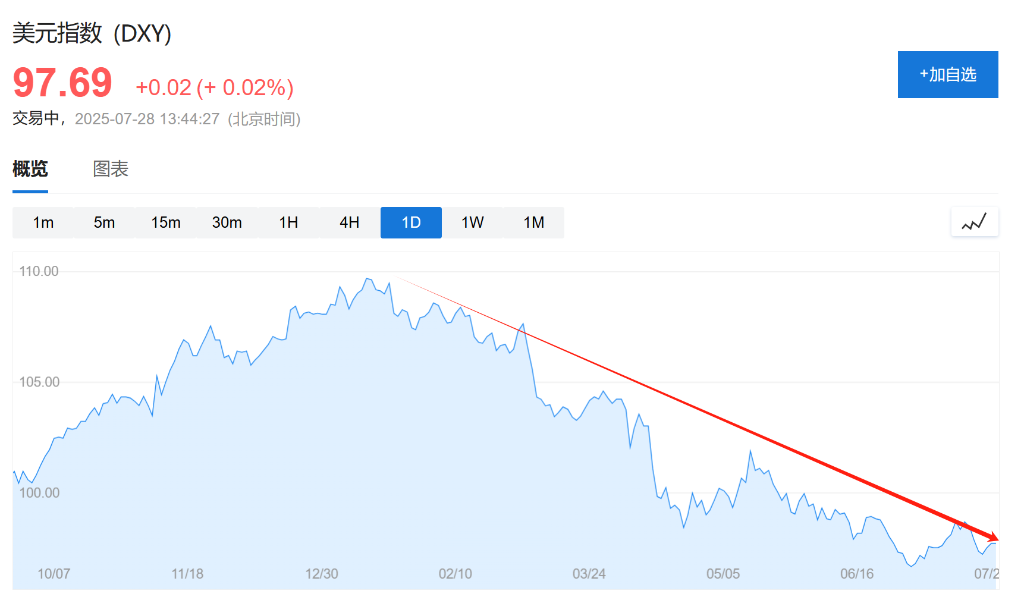
特朗普政府关税政策对美国经济影响分析
Jin Rong Shi Bao· 2025-07-28 02:31
Group 1 - The US-China trade talks in Geneva resulted in a joint statement with several positive agreements, including a reduction in US tariffs on Chinese goods from an average of 27% to 16%, still historically high [2][3] - The economic impact of tariffs is being monitored, with projections indicating a potential 0.65% decline in US GDP and a 1.7% increase in inflation due to tariff adjustments [3][4] - The current economic environment is characterized by "stagflation," with concerns about the potential for the US to revert to previous tariff policies, which could further impact economic stability [3][5] Group 2 - The trade dynamics show a trend of "import grabbing" in the US, with significant increases in imports observed in the first quarter, leading to higher inventory levels [6][7] - Certain US export sectors, particularly those reliant on foreign intermediate goods, are expected to face significant challenges due to retaliatory tariffs, notably in the petroleum, metals, and transportation equipment industries [7][8] - The inflationary effects of tariffs are becoming evident, with consumer price indices reflecting the impact of increased import costs, although the response to tariffs has been slower than anticipated [9][10] Group 3 - The uncertainty surrounding trade policies is likely to elevate financial pressures and affect consumer and business investment sentiment, potentially leading to a slowdown in economic growth [11][12] - The labor market indicators suggest upward pressure on unemployment rates, which could signal a weakening in the consumer-employment cycle critical for economic health [13][14] - The overall economic trajectory is expected to shift from "stagflation" to a potential slowdown, with ongoing monitoring of key economic indicators necessary to assess future risks [15][16]
施罗德投资:市场不确定性弥漫 债券仍为有利收益来源
Zhi Tong Cai Jing· 2025-07-28 01:48
Group 1 - Schroders Investment remains optimistic about the stock market outlook, but is cautious about the risk of "stagflation" in the U.S. due to the lagging effects of tariffs on the real economy [1] - The primary constraint on the stock market is the rising debt levels resulting from increased government spending, which affects the bond market's capacity [1] - Despite rising debt levels, Schroders still views bonds as a favorable source of returns rather than merely a diversification tool, with gold being the preferred option for portfolio diversification [1][3] Group 2 - Recent expansionary fiscal policies have supported nominal economic growth and corporate earnings, while populist policies may have a positive impact on the stock market [2] - The greatest threat to the economic outlook is the uncertainty surrounding tariffs, with the effective tariff rate expected to rise to 12%, the highest level since World War II [2] - The market's reaction to new tariff threats has been muted, indicating that investors may be underestimating the potential for significant tariff increases by the Trump administration [2] Group 3 - The Trump administration continues to monitor the bond market, recognizing the importance of maintaining financial market stability, with inflation expectations remaining under control [3] - A notable steepening of the yield curve has been observed, with long-term bond yields rising faster than short-term yields, reflecting market concerns about fiscal spending [3] - The credibility of the Federal Reserve is crucial for the bond market, and the succession plan for Fed Chairman Jerome Powell will be a focal point for investors [3] Group 4 - The dollar maintains unmatched liquidity in the global financial system, prompting many institutions to reassess their dollar allocation strategies [4] - Despite the high exposure to U.S. assets, there is a growing recognition of the need for diversification in investment portfolios [4] - Investors should focus on medium-term trends rather than overreacting to daily news, as the political and economic consensus has shifted, affecting the correlation between different asset classes [4]
金老虎:黄金冲高骤衰!周线倒锤子现狰狞,反弹 3351 弱势空
Sou Hu Cai Jing· 2025-07-27 05:46
Core Viewpoint - The gold market experienced significant volatility this week, with a rebound from 3247 to 3438 followed by a decline, primarily driven by changes in economic indicators and geopolitical tensions [3][4][5][6]. Group 1: Factors Driving Gold Price Movements - The initial rebound in gold prices was supported by a decline in the US dollar and a drop in 10-year Treasury yields, which reduced the cost for non-dollar investors to purchase gold [3]. - Increased risk aversion due to approaching tariff negotiation deadlines and ongoing geopolitical conflicts led to a surge in safe-haven investments in gold [4]. - Market expectations of a potential interest rate cut by the Federal Reserve in September enhanced gold's attractiveness, contributing to the price rebound [5]. Group 2: Key Reasons for the Subsequent Decline - A correction in the market's overly optimistic expectations for rate cuts occurred after strong economic data, including the PMI and CPI, indicated economic resilience, reducing gold's appeal [6]. - The announcement of a trade agreement between the US and Japan alleviated trade tension concerns, prompting a withdrawal of safe-haven investments from gold [8]. - A strong performance in the stock market, particularly the Nasdaq reaching new highs, shifted investor focus from safe-haven assets to riskier investments, further pressuring gold prices [8]. Group 3: Future Market Focus Points - The upcoming Federal Reserve meeting on July 29-30 will be crucial; a hawkish signal could lead to a drop in gold prices to around 3300, while a hint at a September rate cut might trigger a technical rebound [9]. - Ongoing geopolitical tensions, such as the situation in Ukraine and trade dynamics between the US and Europe, will influence gold's safe-haven premium [10]. - The continuity of strong US economic data, including non-farm payrolls and PCE price index, will shape expectations for sustained high interest rates, impacting gold's market dynamics [11]. Group 4: Trading Strategy for Next Week - The market is currently in a triangular range, with a potential rebound expected if prices remain above the 3300 support level; the 20-day moving average at 3260 serves as a critical defense point [12]. - A trading strategy suggests buying in the 3310-3312 range with a stop-loss at 3300, targeting 3322-3324, while considering short positions in the 3351-3353 range with a stop-loss at 3363, targeting 3339-3341 [12][14].
机构:有美联储在 美国经济不会重返1970年代的“大滞胀”时期
news flash· 2025-07-25 07:37
Core Viewpoint - The fear of returning to the "stagflation" era of the 1970s due to tariff-induced price increases is deemed incorrect by Clearwater Analytics' research head Matthew Jeffrey Vegari, as the current economic conditions do not exhibit high unemployment, a key characteristic of stagflation [1] Economic Growth and Unemployment - Although economic growth in the U.S. may face challenges in the next couple of years, the consensus indicates that high unemployment, a hallmark of stagflation, is currently absent [1] - The Federal Reserve's ability to cool down an overheating economy without triggering a recession is praised, suggesting effective monetary policy [1] Future Inflation and Employment Trends - There may be a future period where inflation and unemployment rise simultaneously, but it is asserted that the current Federal Reserve will prevent a situation as severe as that of the 1970s, and high inflation is not expected to persist [1]