
地缘风险

Search documents
本周黄金开门红后高位震荡,年末金价走向如何?
Sou Hu Cai Jing· 2025-12-03 12:12
Group 1 - The international precious metals market experienced a strong start in December, with gold prices reaching a six-week high of $4,232.12 per ounce and silver prices hitting a record high of $58.854, reflecting an annual increase of over 100% [2] - The optimism in the market is primarily driven by expectations of a shift in monetary policy, with an 87% probability of the Federal Reserve cutting interest rates in December, supported by dovish comments from Fed officials [2][3] - The volatility in gold prices is influenced by multiple factors, including interest rates, the strength of the dollar, central bank gold purchases, geopolitical risks, and economic data releases [3] Group 2 - Central banks globally have shown a strong demand for gold, with a net purchase of 53 tons in October, marking a 36% month-on-month increase, which provides a solid long-term support for gold prices [3] - The market is currently characterized by a "gold weak, silver strong" dynamic, with gold prices experiencing some profit-taking pressure due to a stable dollar index [2][3] - The company, 巨象金业, leverages AI technology and financial analysis to provide investors with unique data-driven insights and market analysis, enhancing decision-making capabilities [4][9] Group 3 - 巨象金业 emphasizes the importance of secure trading environments, with all transactions regulated by the Hong Kong Gold Exchange, ensuring client funds are independently stored [6] - The company offers various incentives for new clients, including free account opening bonuses and trading rebates, to facilitate entry into the gold trading market [6] - The analysis team at 巨象金业 provides daily customized insights and strategies to help investors understand market dynamics beyond short-term fluctuations [9][10]


美指震荡降息预期主导
Jin Tou Wang· 2025-12-03 03:24
Group 1 - The core factor pressuring the US Dollar Index is the expectation of a shift in the Federal Reserve's monetary policy, with multiple officials supporting a rate cut in December due to a weakening labor market [1][2] - The contrasting cautious stance of the European Central Bank (ECB) exacerbates the pressure on the Dollar Index, as recent data shows Eurozone inflation slightly above expectations, reinforcing the ECB's decision to maintain interest rates [1][2] - The collective strengthening of non-US currencies, including the Euro and Renminbi, creates upward pressure on these currencies, further contributing to the decline of the Dollar Index [2] Group 2 - The technical analysis indicates that the Dollar Index has formed a downward channel since its peak in November, with current movements below short-term moving averages and a clear bearish trend [3] - The core contradiction for the Dollar Index lies between the pace of Federal Reserve rate cuts and uncertainties surrounding US policy changes, with key support and resistance levels identified for future movements [3] - Market expectations for the Dollar Index show significant divergence among institutions, with some predicting a rise due to economic resilience, while others foresee a continued decline following the onset of a Fed easing cycle [2]
英国央行下调银行资本要求 警示AI泡沫与地缘风险加剧全球金融脆弱性
Xin Hua Cai Jing· 2025-12-03 00:23
Core Viewpoint - The Bank of England's Financial Policy Committee (FPC) has made key decisions regarding capital requirements and has raised concerns about global financial stability risks, particularly related to geopolitical tensions and high valuations in AI-related technology companies [1][2]. Group 1: Capital Requirements - The FPC has lowered the system-wide Tier 1 capital requirement from 14% to 13%, corresponding to a Common Equity Tier 1 (CET1) ratio of approximately 11% [1]. - The overall CET1 capital adequacy ratio of the UK banking sector is currently about 2 percentage points above regulatory requirements, indicating a strong capital position [2]. - The adjustment in capital requirements reflects structural changes in the UK financial system since 2015, including a decrease in average risk weights and optimization of risk measurement methods [2]. Group 2: Countercyclical Capital Buffer (CCyB) - The FPC has decided to maintain the CCyB rate at 2%, citing low household and corporate debt levels and overall easing credit conditions [3]. - This "neutral setting" aims to ensure banks retain sufficient risk absorption capacity to prevent disorderly credit supply contraction during future shocks [3]. Group 3: Financial Stability Risks - The FPC has highlighted significant global financial stability risks, including rising geopolitical tensions, fragmentation in trade and financial markets, and increasing sovereign debt pressures [1][2]. - Concerns have been raised regarding the high valuations of AI-related technology companies, which could amplify financial system risks if asset prices decline [1]. - The FPC noted structural vulnerabilities in financial institutions, such as high leverage and weak underwriting standards, which were exposed by recent corporate defaults in the U.S. [1]. Group 4: Support for Sustainable Economic Growth - The FPC has introduced measures to support sustainable economic growth, including reforms to the Solvency II framework and initiatives to enhance financing for high-growth firms [4]. - The committee supports the launch of exploratory scenario testing for private markets to assess systemic risks under stress conditions [4]. - The FPC has expressed support for the Bank of England's regulatory framework for systemic stablecoins, aiming to balance payment innovation with financial stability [4]. Group 5: Market Reaction and Future Outlook - The market reaction to the FPC's decisions has been generally stable, with analysts suggesting that the capital requirement reduction could enhance banks' lending potential [5]. - The FPC plans to focus on optimizing regulatory buffer designs and reviewing the implementation of leverage ratio standards, with further detailed analysis expected in the Financial Stability Report scheduled for December 2025 [5][6].
张尧浠:美降息预期持续发酵 金价多头前景乐观
Xin Lang Cai Jing· 2025-12-02 08:57
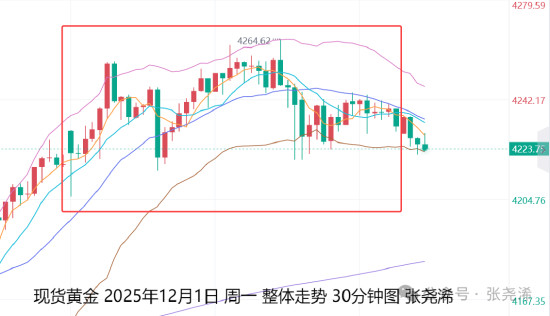
Core Viewpoint - The international gold market is currently experiencing a bullish trend, with potential for further gains despite short-term fluctuations. The market is supported by expectations of interest rate cuts by the Federal Reserve, a weakening dollar, and ongoing economic uncertainties [1][6][16]. Market Performance - On December 1, gold opened at $4221.37 per ounce, reached a low of $4205.40, and fluctuated between $4220 and $4260, ultimately closing at $4232.27, marking a daily increase of $10.9 or 0.26% [1][11]. - The daily trading range was $59.17, with a peak at $4264.57 during the early U.S. trading session [1][13]. Economic Indicators - The U.S. ISM Manufacturing PMI for November was reported at 48.2, below the expected 49, indicating continued contraction for the ninth consecutive month, which contributed to the upward movement in gold prices [3][13]. - Upcoming economic data, including the November ADP employment figures and the September core PCE price index, are anticipated to reinforce expectations for interest rate cuts, further supporting gold prices [5][15]. Technical Analysis - The gold market is currently facing resistance at the trendline and has shown signs of a potential pullback. Key support levels to watch are the 10-day and 60-day moving averages, which could present buying opportunities [1][8][18]. - A breakthrough above $4260 could lead to targets of $4380 or higher, while a failure to maintain above this level may result in further corrections [1][8][18]. Future Outlook - The overall sentiment remains bullish for gold, with expectations of a new bull market driven by low interest rates and economic uncertainties. Historical trends suggest that any pullbacks during a rate-cutting cycle could be seen as buying opportunities [6][16]. - The long-term target for gold is projected at $5000 per ounce, contingent on breaking through key resistance levels [6][16].
《能源化工》日报-20251202
Guang Fa Qi Huo· 2025-12-02 01:44
1. Report Industry Investment Ratings No investment ratings were provided in the reports. 2. Core Views Polyolefins - The fundamentals of LLDPE and PP show a pattern of increasing supply and weak demand, with both cost support and inventory pressure coexisting [2]. Methanol - The supply of inland methanol increases with the restart of devices, but the profits of coal - and gas - based production are weak. The traditional downstream demand has a slight increase, and the winter fuel demand provides support. In ports, the reduction of imports due to Iranian gas restrictions strengthens the de - stocking expectation and supports prices [6]. Natural Rubber - The supply is expected to increase seasonally, and the inventory continues to accumulate. The terminal demand improvement is weak. The market is expected to fluctuate within the range of 15000 - 15500 [9]. Crude Oil - Geopolitical risks support oil prices in the short term, but the continuous increase in OPEC+ production and the record - high US crude oil production put pressure on the supply - demand pattern. Oil prices are expected to fluctuate within a range, with Brent crude oil likely to trade between 60 - 65 dollars per barrel [11]. Polyester Industry Chain - PX: The medium - term supply - demand expectation is good, but the short - term valuation drive is limited. - PTA: The supply - demand is expected to tighten in December but be relatively loose in Q1. The absolute price is relatively firm in the short term, but the rebound space is limited. - Ethylene glycol: It is expected to fluctuate within a range in December. - Short - fiber: The short - term price support is strong, but the absolute price drive is limited, and the processing fee is likely to be compressed. - Bottle - chip: The supply - demand is in a loose pattern, and the processing fee is expected to be squeezed [14]. Pure Benzene and Styrene - Pure benzene: The supply - demand is expected to be weak, and the price is under upward pressure. - Styrene: The supply - demand is in a tight - balance state, but the upward drive is insufficient [15]. Glass and Soda Ash - Soda ash: The supply - demand pattern is still bearish, and it is expected to fluctuate at the bottom. - Glass: The short - term spot market is strong, but the 01 contract may face pressure later [16]. PVC and Caustic Soda - Caustic soda: The demand is weak, and the price is expected to run weakly. - PVC: The supply - demand is in an oversupply pattern, and the price is expected to continue the bottom - range fluctuation [17]. LPG No overall view was provided in the LPG report, but price, inventory, and开工率 data were presented [18]. 3. Summaries by Related Catalogs Polyolefins - **Prices**: L2601, L2605, PP2601, and PP2605 had different price changes on December 1st compared to November 28th. Spot prices of some products also changed, with the price of华东PP拉丝现货 increasing by 0.32% and华北LLDPE现货 increasing by 0.30% [2]. - **Inventory**: PE and PP inventories decreased, with PE企业库存 decreasing by 9.80% and PP企业库存 decreasing by 8.00% [2]. - **开工率**: PE装置开工率 increased by 2.17%, while PP装置开工率 decreased by 0.18% [2]. Methanol - **Prices**: MA2601 and MA2605 prices changed slightly on December 1st compared to November 28th. Spot prices of some regions also had minor changes [5]. - **Inventory**: Methanol企业库存 increased by 4.19%, while甲醇港口库存 decreased by 7.83% [5]. - **开工率**: Some upstream and downstream开工率 of methanol changed, with the上游 - domestic企业开工率 decreasing by 0.67% and the下游 -外采MTO装置开工率 decreasing by 0.78% [6]. Natural Rubber - **Prices**: The price of云南国营全乳胶(SCRWF) in Shanghai decreased by 1.33%, and the price of泰标混合胶 increased by 0.34% [9]. - **Production and Consumption**: The production of some countries in September changed, with Thailand's production decreasing by 5.45%. The domestic tire production and export in October decreased [9]. - **Inventory**: The保税区库存 increased by 2.74% [9]. Crude Oil - **Prices**: Brent, WTI, and SC prices all increased on December 1st compared to November 28th [11]. - **Spreads**: Some price spreads such as Brent M1 - M3 and WTI M1 - M3 changed [11]. - **Refined Oil**: The prices and spreads of refined oil products also had different changes [11]. Polyester Industry Chain - **Prices**: Upstream prices such as Brent crude oil and CFR日本石脑油 changed. Downstream polyester product prices also had various changes, with POY150/48价格 decreasing by 0.1% [14]. - **Spreads**: PX - related spreads and PTA - related spreads changed, such as PX -原油 increasing by 1.9% [14]. - **开工率**: The开工率 of various links in the polyester industry chain changed, with the亚洲PX开工率 decreasing by 1.3% [14]. Pure Benzene and Styrene - **Prices**: Pure benzene and styrene prices changed, with纯苯华东现货 decreasing by 0.6% and苯乙烯华东现货 decreasing by 0.2% [15]. - **Spreads**: Related spreads such as EB - BZ现货价差 increased by 1.6% [15]. - **Inventory and开工率**: Pure benzene and styrene inventories and开工率 changed, with纯苯江苏港口库存 increasing by 36.6% and苯乙烯开工率 decreasing by 2.4% [15]. Glass and Soda Ash - **Prices**: Glass and soda ash prices in different regions and futures prices changed, with the华东报价 of glass increasing by 0.84% and the纯碱2605 increasing by 0.68% [16]. - **Supply and Demand**: The开工率 and production of soda ash decreased, and the浮法日熔量 and光伏日熔量 also decreased [16]. - **Inventory**: Glass and soda ash inventories decreased, with the玻璃厂库 decreasing by 1.49% and the纯碱厂库 decreasing by 3.47% [16]. PVC and Caustic Soda - **Prices**: The prices of PVC and caustic soda changed, with山东32%液碱折自价 decreasing by 2.7% [17]. - **Supply and Demand**: The开工率 of the chlor - alkali industry and downstream industries changed, with the烧碱行业开工率 decreasing by 0.7% [17]. - **Inventory**: The inventories of PVC and caustic soda changed, with the液碱华东厂库库存 increasing by 6.0% [17]. LPG - **Prices**: LPG futures and spot prices changed, with the主力 PG2601 decreasing by 1.59% and the华南现货(民用气) increasing by 1.81% [18]. - **Inventory**: LPG inventories decreased, with theLPG炼厂库容比 decreasing by 7.70% [18]. - **开工率**: The开工率 of upstream and downstream industries changed, with the上游 -主营炼厂开工率 decreasing by 1.26% [18].
天富期货有色早报-20251201
Tian Fu Qi Huo· 2025-12-01 12:52
Report Industry Investment Rating No relevant information provided. Core Viewpoints of the Report - The short - term core of crude oil is geopolitics. For crude oil, the geopolitical logic is pessimistic about the ceasefire between Russia and Ukraine, and there is an upward - revision risk if the negotiation fails again. The risk in the Caribbean region is expected to escalate, with a potential pulse - like upward movement. In the chemical industry, aromatics and methanol are the core varieties for long positions. Aromatics are mainly in an expected - based market, and methanol has upward - correction space due to unexpected Iranian over - maintenance [1]. Summary by Relevant Catalogs Crude Oil - **Logic**: Supply - demand and macro drivers are still weak, but short - term US high - frequency data is strong, and the inventory is low, so the oversupply trading is difficult to restart before significant inventory accumulation. There is a 80 - basis - point spread between the US real interest rate and the natural interest rate, and three 25 - basis - point interest rate cuts are highly likely. Geopolitical disturbances are increasing and may be the main driver in December. Short - term view is bullish, and mid - term, there are high - selling opportunities after a pulse - like upward movement [2][3]. - **Technical Analysis**: The daily - level shows a mid - term downward structure, and the hourly - level shows a short - term upward structure, but it should be seen as a wide - range oscillation. Today, it increased in price with increased positions, and the short - term support is at the 450 level. The short - term technical view is bullish, but it is recommended to wait and see in the hourly cycle [3]. Styrene - **Logic**: There is an unexpected inventory increase during the seasonal de - stocking period, and the inventory - swelling expectation still exists. Domestic refineries have strong maintenance expectations in the far - month, and South Korean device profits are low. The import in January is expected to be large. There are short - term fundamental contradictions but not significantly manifested, and there are large mid - term differences. It is necessary to pay attention to whether the oil - blending logic can continue and the import situation in the next two months. Be cautious about the potential pulse - like upward disturbance of crude oil due to geopolitical escalation [6]. - **Technical Analysis**: The hourly - level is in a short - term oscillation. Today, it increased in price with decreased positions, and the hourly - level structure is unclear, but there is an upward structure at the 15 - minute level. It is recommended to wait and see at the hourly - level and hold long positions at the 15 - minute level, with a take - profit reference at the 6510 level [6]. Rubber - **Logic**: There are no short - term contradictions. Tire demand is difficult to increase significantly, and it is hard to see a large - scale trend in the demand side. The supply side is in the peak tapping season in Southeast Asia, and the inventory in Qingdao is seasonally increasing, but the inventory - increasing rate is normal. The fundamental situation shows no upward or downward drivers, and it should be treated with an oscillation view [9]. - **Technical Analysis**: The daily - level shows a mid - term downward structure, and the hourly - level shows a short - term oscillation structure. Today, it decreased in price with decreased positions, and the hourly - level structure is unclear. It is recommended to wait and see in the hourly cycle [9]. Synthetic Rubber - **Logic**: Synthetic rubber is mainly driven by butadiene. The butadiene inventory has reached a 5 - year high in the past two weeks, and the price pressure of butadiene is large under the inventory - swelling expectation, so synthetic rubber has a downward - driving force around the cost side. Be cautious about the potential pulse - like upward disturbance of crude oil due to geopolitical escalation. Although the fundamental driver is downward, the valuation is low, so it is recommended to wait and see with an oscillation view [13]. - **Technical Analysis**: The daily - level shows a mid - term downward structure, and the hourly - level short - term oscillation structure is being tested. Today, it decreased in price with decreased positions, and the short - term downward structure has evolved into an oscillation. It is recommended to wait and see in the hourly cycle [13]. PX - **Logic**: The supply - demand of PX is neutral - bullish, but the current fundamental situation cannot support the upward drive. The main trading logic is the expected - based market. The US aromatics oil - blending logic has led to valuation repair since November. After the weakening of the oil - blending expectation last week, the cost - side crude oil and the relatively strong chemical fundamentals are likely to attract more chemical long - position funds. The market should maintain a bullish view [17]. - **Technical Analysis**: The hourly - level shows a short - term upward structure. Today, it increased in price with decreased positions, and the upward structure remains unchanged. The hourly - level standard support is at the 6700 level. It is recommended to hold long positions at the hourly - level, with a stop - loss reference at the 6700 level [17]. PTA - **Logic**: The polyester itself has little pressure, but the current fundamental situation cannot support the upward drive. The main trading logic is the expected - based market. The US aromatics oil - blending logic has led to valuation repair since November. After the weakening of the oil - blending expectation last week, the cost - side crude oil and the relatively strong chemical fundamentals are likely to attract more chemical long - position funds. The market should maintain a bullish view [20]. - **Technical Analysis**: The hourly - level shows a short - term upward structure. Today, it increased in price with increased positions, and the upward structure remains unchanged. The hourly - level support is at the 4620 level. It is recommended to hold long positions at the hourly - level, with a stop - loss reference at the 4620 level [20]. PP - **Logic**: PP still faces the pressure of olefin production capacity to be put into operation, with high - supply pressure continuing and weak downstream demand. The supply - demand drive is bearish, and attention should be paid to the cost - side crude oil drive [24]. - **Technical Analysis**: The hourly - level short - term downward structure may end. Today, it increased in price with decreased positions and broke through the short - term pressure at the 6400 level. The short - term downward trend may end. It is recommended to wait and see in the hourly cycle [24]. Methanol - **Logic**: Iranian maintenance is more than expected, and many methanol plants have shut down since last week. With the official start of winter gas restrictions and the accelerating cold in December, a full shutdown is highly likely. After the market over - traded the expectation of insufficient gas restrictions, the market has upward - correction space. High shipments and high inventories have been priced in, the port de - stocking rate is accelerating, the market may anticipate the low - shipment point after the full shutdown, and the withdrawal of crowded short positions on the previous market brings a large upward space [26]. - **Technical Analysis**: The daily - level shows a mid - term downward and short - term upward structure. Today, it increased in price with decreased positions, and the upward structure continues. The short - term support is at the 2100 level. It is recommended to hold long positions in the hourly cycle, with a take - profit reference at the 2100 level [27][29]. PVC - **Logic**: High supply and high inventory continue. With the collapse of domestic real - estate demand, there is no hope for demand improvement. The social inventory at a high level continues to increase, and there is no upward drive [31]. - **Technical Analysis**: The daily - level shows a mid - term downward structure, and the hourly - level short - term downward structure is being tested. Today, it oscillated within the day, and the short - term structure is facing a trend reversal. It is recommended to wait and see in the hourly cycle [31]. Ethylene Glycol - **Logic**: Many overseas Iranian MEG plants are under maintenance, but the domestic supply remains high with the resumption of maintenance and the addition of new production capacity. Inventory accumulation continues, and attention should be paid to the short - term geopolitical risk disturbance of crude oil [35]. - **Technical Analysis**: The daily - level shows a mid - term downward structure, and the hourly - level shows a downward structure. Today, it oscillated within the day, and the short - term pressure is at the 3920 level. It is recommended to wait and see in the single - side hourly cycle [35]. Plastic - **Logic**: The downstream demand recovers slowly, and the supply pressure from the upstream olefin production capacity put - into operation remains. The supply - demand situation is still weak and has not improved. Attention should be paid to the short - term geopolitical risk disturbance of crude oil [36]. - **Technical Analysis**: The daily - level shows a mid - term downward structure, and the hourly - level shows a downward structure. Today, it oscillated within the day, and the short - term pressure is at the 6825 level. It is recommended to wait and see in the hourly cycle [36]. Soda Ash - **Logic**: The high - supply and high - inventory pattern of soda ash continues, and the downstream glass production lines are reducing production, which suppresses the demand for soda ash. Although the fundamental downward drive remains, the cost - performance of holding short positions unilaterally is reduced [38]. - **Technical Analysis**: The hourly - level shows a downward structure. Today, it oscillated within the day, and the downward structure remains unchanged. The short - term pressure is at the 1195 level. It is recommended to hold the remaining short positions in the hourly cycle cautiously with a take - profit at the 1195 level [38]. Caustic Soda - **Logic**: With the new production capacity put into operation and the end of most plant maintenance, the high - supply pressure continues. The alumina industry's losses are expanding, and its production is decreasing, so the demand for caustic soda remains weak. There is no upward drive in the supply - demand situation [42]. - **Technical Analysis**: The hourly - level shows a downward structure. Today, it oscillated within the day, and the downward structure remains unchanged. The short - term pressure is at the 2260 level. It is recommended to wait and see in the hourly cycle [42].
12.1黄金飞涨50美金 冲高降落下探4200
Sou Hu Cai Jing· 2025-12-01 10:22
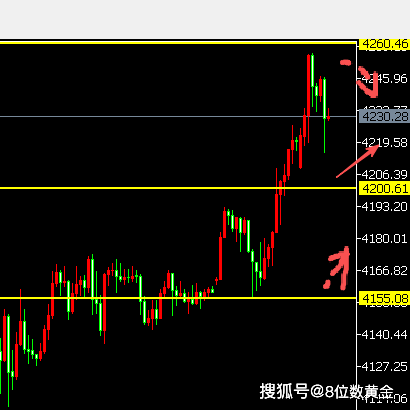
Core Viewpoint - The gold market has experienced a significant bullish surge, breaking through the 4200 mark and entering an accelerated upward trend, with fluctuations expected around this level [1][3][10]. Price Movements - Gold prices reached around 4260 before experiencing a pullback, with potential support at the 4200 level and further down at 4155 [4][5][9]. - The market is currently facing resistance at 4260 and 4300, with traders advised to watch for shorting opportunities at these levels [6][9]. Market Influences - Geopolitical risks, particularly related to the ongoing Russia-Ukraine conflict and statements from former President Trump regarding military actions, have contributed to the bullish sentiment in gold [10][11]. - Economic indicators, including unemployment claims and upcoming PCE, PMI, and ISM manufacturing data, are expected to create volatility in the market [12]. Investment Strategy - Investors are encouraged to focus on entry and exit points to maximize profits, with a noted emphasis on risk management and following experienced traders for better accuracy [12]. - The gold trading team claims a high accuracy rate of 85% or more, with significant profit potential per trade [12].
综合晨报-20251201
Guo Mao Qi Huo· 2025-12-01 05:57
Report Industry Investment Ratings No relevant content provided. Core Views of the Report - Short - term news boosts oil prices, but long - term inventory pressure limits the rebound space and sustainability of oil prices [2] - Precious metals are supported by the expectation of Fed rate cuts and tight spot supply, showing high volatility [3] - Copper prices are expected to rise in the long - term, supported by demand and inventory factors [4] - Aluminum prices are mainly volatile, with limited industrial contradictions and macro - sentiment dominance [5] - The prices of various industrial products and agricultural products are affected by factors such as supply - demand relationships, policies, and geopolitical situations, showing different trends of rise, fall, or volatility [6][7][8] Summary by Related Catalogs Energy and Chemicals - **Crude Oil**: OPEC + maintains the production plan, short - term news boosts prices, but long - term inventory pressure exists [2] - **Fuel Oil & Low - Sulfur Fuel Oil**: High - sulfur fuel oil is supported by geopolitical risks in the short - term, and supply will be loose in the medium - term; low - sulfur fuel oil supply is abundant [20] - **Asphalt**: Demand in some areas drives inventory reduction, but overall, year - end supply - demand is expected to be loose [21] - **Urea**: Short - term market is strong due to downstream procurement, but long - term supply - demand is expected to be loose [22] - **Methanol**: There is a game between strong expectations and weak reality, and port inventory may suppress the market [23] - **Pure Benzene**: Price is in a volatile pattern due to supply - demand factors [24] - **Benzene Ethylene**: Cost support is strengthened, and supply - demand is in a tight balance [25] - **Polypropylene, Plastic & Propylene**: International oil prices drive futures price rebounds, but spot demand is hard to release [26] - **PVC &烧碱**: PVC is in a low - level range, and烧碱 is in a weak operation [27] - **PX & PTA**: PX price rebounds, PTA is cost - driven, and supply - demand situations vary in the short and medium - term [28] - **Ethylene Glycol**: Supply is marginally improved, but mid - term weakness remains [29] - **Short - Fiber & Bottle - Chip**: Short - fiber price follows raw materials, and bottle - chip is cost - driven with over - capacity pressure [30] Metals - **Precious Metals**: Silver drives the strength of precious metals, and platinum is favored [3] - **Base Metals** - **Copper**: Prices are expected to rise, supported by demand and inventory factors [4] - **Aluminum**: Prices are mainly volatile, with limited industrial contradictions [5] - **Zinc**: Prices are in a range - bound state, with strong bottom support [8] - **Tin**: Prices may have short - term space, but mid - term fundamentals are general [10] - **Manganese Silicon**: Bottom support is expected to move down [17] - **Silicon Iron**: Bottom support will be tested [18] - **Ferrous Metals** - **Steel (Thread & Hot - Rolled Coil)**: Steel prices rebound, but demand is weak, and supply pressure is gradually relieved [13] - **Iron Ore**: Prices are expected to be volatile, with a relatively loose supply - demand situation [14] - **Coke**: Prices may be in a weak - volatile pattern [15] - **Coking Coal**: Prices may be in a weak - volatile pattern [16] Agriculture - **Grains and Oilseeds** - **Soybeans & Soybean Meal**: Brazilian soybean production is expected to reach a record high, and domestic supply is sufficient. Observe the callback and look for long - position opportunities [34] - **Soybean Oil & Palm Oil**: Palm oil supply - demand is weak but marginally improving; soybean oil is affected by US soybean exports and South American weather [35] - **Rapeseed Meal & Rapeseed Oil**: Short - term drivers are not significant, and maintain a wait - and - see attitude [36] - **Corn**: Corn futures are in a high - level shock, and pay attention to new - grain sales and trade agreements [38] - **Other Agricultural Products** - **Cotton**: US cotton exports are improving, and domestic new - cotton sales are fast. Look for hedging opportunities [41] - **Sugar**: International supply is sufficient, and domestic production in Guangxi is expected to be good [42] - **Apples**: Short - term prices are strong, but long - term inventory pressure may exist [43] - **Timber**: Low inventory supports prices, and maintain a wait - and - see attitude [44] - **Paper Pulp**: Prices are in a downward trend due to weak fundamentals, and maintain a wait - and - see attitude [45] Others - **Shipping**: The SCFI European route shows weak price increase, and different contracts of the container shipping index have different trends [19] - **Financial Futures** - **Stock Index**: Short - term macro and geopolitical uncertainties exist, and maintain a wait - and - see and defensive strategy [46] - **Treasury Bonds**: Treasury futures show a differentiated performance, and there is a weak - volatile pattern [47]
张尧浠:美降息预期前景持稳、金价多头维持看涨上行
Sou Hu Cai Jing· 2025-12-01 00:22
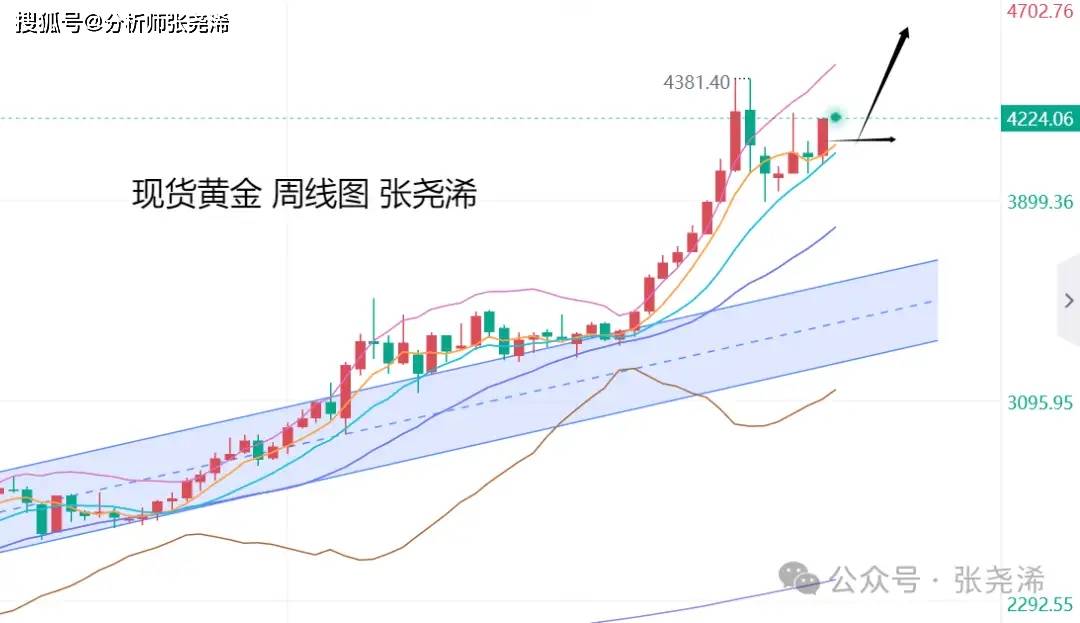
Core Viewpoint - The international gold market experienced a strong rebound last week, recovering most of the losses from its historical high and maintaining a bullish outlook due to a favorable interest rate environment and diminishing bearish fundamentals [1][3]. Price Movement - Gold prices opened at $4067.47 per ounce, reached a weekly low of $4040.02, and then rebounded strongly, hitting a weekly high of $4226.59 before closing at $4217.40, resulting in a weekly fluctuation of $186.57 and a gain of $149.93, or 3.69% [1][3]. Influencing Factors - The Federal Reserve's internal discussions indicated a strong support for a rate cut in December, with the probability rising from 40% to over 80%, alongside geopolitical tensions and disappointing retail sales data, which further fueled expectations for a rate cut and supported gold prices [3][5]. - The potential announcement of a new Federal Reserve chair, who is expected to favor loose monetary policy, could also enhance market expectations for future rate cuts, benefiting gold prices [5]. Economic Indicators - Key economic indicators to watch this week include the U.S. November ADP employment figures and the September core PCE price index, with expectations that weaker data will bolster rate cut predictions and support gold prices [3][5]. Technical Analysis - On a weekly chart, gold prices have shown a strong rebound, supported by the 10-week moving average, with bullish momentum indicated by the upward extension of the Bollinger Bands [7]. - The daily chart shows that after consolidating at the middle Bollinger Band, gold prices have rebounded strongly, with multiple moving averages now acting as support, indicating a continued bullish outlook [9]. Long-term Outlook - The long-term trend for gold remains bullish, with expectations of a new bull market driven by low interest rates, economic uncertainty, and geopolitical risks, with a target of $5000 per ounce being considered feasible [5].
金价上演“高台跳水”!巨象金业解析波动下的投资机遇
Sou Hu Cai Jing· 2025-11-28 02:10
Core Viewpoint - The gold market is experiencing volatility due to mixed signals from the Federal Reserve regarding interest rate cuts, with a high probability of a December rate cut at 84.9% but hawkish comments from officials creating uncertainty [1] Group 1: Market Analysis - Gold prices recently peaked at $4162 before a sharp decline below $4150, reflecting market fluctuations between easing expectations and cautious sentiment [1] - Goldman Sachs maintains a bullish outlook for gold, projecting prices to reach $4900 per ounce, driven by central bank purchases and diversified investor demand [1] - Deutsche Bank has raised its 2026 gold price forecast to $4450, citing a positive structural outlook and favorable supply-demand dynamics [1] - Analysts from Giant believe that the global sentiment is leaning towards bullishness for gold, with targets set at $4535 and $4885 in the upcoming year [1] Group 2: Investment Strategies - Giant Gold Industry emphasizes three key capabilities for investors: 1. Regulatory platform empowerment, ensuring safety and additional services through its AA-class membership in the Hong Kong Gold Exchange [1] 2. Strategy empowerment, providing real-time, precise market strategies through a team of experienced analysts and the GoldGPT AI assistant for comprehensive trading support [2] 3. Comprehensive risk control system, including independent fund management, 24/7 customer support during extreme market conditions, and promotional activities to support trading [4] Group 3: Long-term Support Factors - The trend of de-dollarization is evident, with global central banks purchasing over 200 tons of gold for several consecutive quarters, providing structural support for gold prices [6] - Despite fluctuations in the Federal Reserve's easing process, the overall direction remains clear, enhancing gold's appeal as a non-yielding asset [6] - Ongoing geopolitical risks, such as the Russia-Ukraine conflict and Middle Eastern tensions, continue to create demand for gold as a safe-haven asset [6]