
CPI

Search documents
10月中国物价指数释放积极信号
Di Yi Cai Jing Zi Xun· 2025-11-09 15:13
Core Insights - The inflation data for October indicates a steady recovery in China's economic vitality and domestic demand, with the Consumer Price Index (CPI) showing a year-on-year increase of 0.2% and a core CPI increase of 1.2%, marking the highest level since March 2024 [2][5][14] CPI Analysis - The CPI turned from a decline of 0.3% in September to an increase of 0.2% in October, with food prices decreasing by 2.9%, but the decline has narrowed [3][6] - The core CPI's continuous rise suggests a robust recovery in domestic consumption, particularly in service consumption, indicating a solid foundation for overall prices [5][6] PPI Analysis - The Producer Price Index (PPI) saw a month-on-month increase of 0.1% in October, marking the first rise of the year, while the year-on-year decline narrowed to 2.1% [2][7] - Factors contributing to the narrowing decline in PPI include improved supply-demand relationships and ongoing capacity governance in key industries [9][10] Future Outlook - The outlook for inflation suggests a "strong food, weak energy, stable core" scenario, with potential for slight rebounds in food prices due to seasonal factors [6][10] - The government's focus on expanding domestic demand and enhancing consumer spending is expected to support economic growth and stabilize inflation levels [12][14]

宏观经济点评:有色与中下游制造带动PPI同比回升
KAIYUAN SECURITIES· 2025-11-09 14:42
Group 1: CPI Analysis - In October, the CPI year-on-year increased to 0.2%, up 0.5 percentage points from the previous value of -0.3%[15] - The core CPI month-on-month rose to 0.2%, recovering from a seasonal low in September[6] - The food CPI month-on-month growth narrowed to +0.3%, down 0.4 percentage points from the previous value[5] Group 2: PPI Analysis - The PPI year-on-year improved to -2.1%, up 0.2 percentage points from the previous value of -2.3%[27] - The PPI month-on-month returned to positive territory at 0.1%, marking the first increase in 2025[27] - Input factors and domestic high-end manufacturing reduced their drag on PPI year-on-year by 0.4 percentage points each[30] Group 3: Future Predictions - November CPI is expected to rise to approximately 1.2% year-on-year, with a month-on-month increase of around 0.4%[34] - November PPI is anticipated to decline year-on-year, with an average forecast of -2.6% for 2025[35] - The CPI-PPI year-on-year differential is projected to widen in November, indicating diverging inflation trends[36]
CPI转正的背后
GOLDEN SUN SECURITIES· 2025-11-09 13:56
CPI Analysis - In October, the CPI turned positive at 0.2% year-on-year, up 0.5 percentage points from the previous month, marking a 9-month high[2] - The core CPI rose 1.2% year-on-year, continuing its upward trend for the sixth consecutive month, with a month-on-month increase of 0.2%[2] - Food prices fell by 2.9% year-on-year, but the decline narrowed by 1.5 percentage points from the previous month, while energy prices saw a year-on-year decline of 2.4%[5] PPI Analysis - The PPI decreased by 2.1% year-on-year in October, but the decline narrowed by 0.2 percentage points for the third consecutive month, with a month-on-month increase of 0.1%[3] - Key drivers for the PPI's month-on-month increase include the "anti-involution" trend, rising prices in the non-ferrous sector, and increased demand for general consumer goods[3] - The PPI for production materials rose by 0.1% month-on-month, while the PPI for living materials remained flat[6] Future Outlook - CPI is expected to see a mild recovery in November and December, with an annual average around 0%[4] - The PPI is projected to fluctuate at low levels, with an annual average around -2.7%[4] - The performance of six major commodities (crude oil, coal, rebar, copper, lithium carbonate, and pork) will significantly influence future PPI readings[4]
国家统计局发布数据!年内首次回正
Jin Rong Shi Bao· 2025-11-09 13:08
Group 1: CPI Analysis - In October, the Consumer Price Index (CPI) increased by 0.2% month-on-month and year-on-year, driven by policies to expand domestic demand and the impact of the National Day and Mid-Autumn Festival holidays [1][2] - The core CPI, excluding food and energy prices, rose by 1.2% year-on-year, marking the sixth consecutive month of growth [1][2] - Significant increases in vegetable prices, which rose by 4.3% month-on-month, contributed to the CPI's year-on-year improvement, with the decline in pork and fruit prices also easing [2][3] Group 2: PPI Analysis - The Producer Price Index (PPI) saw a month-on-month increase of 0.1% in October, marking the first rise of the year, despite a year-on-year decline of 2.1% [1][4] - The improvement in supply-demand relationships in certain industries, driven by anti-involution policies, has supported price increases in sectors such as coal, cement, and photovoltaic equipment [4][5] - Specific price increases included a 1.6% rise in coal mining and washing, a 0.8% increase in coal processing, and a 0.6% rise in photovoltaic equipment manufacturing [4][5] Group 3: Future Outlook - Analysts expect the PPI to steadily recover year-on-year by 2026, while the CPI is anticipated to remain at low levels, indicating a moderate inflationary trend [6]
年内首次上涨!10月PPI环比上涨0.1%
Zhong Guo Jing Ying Bao· 2025-11-09 12:45
Group 1: CPI Analysis - In October, the Consumer Price Index (CPI) increased by 0.2% month-on-month and year-on-year, driven by policies to expand domestic demand and the impact of the National Day and Mid-Autumn Festival holidays [1][2] - The core CPI, excluding food and energy, rose by 1.2% year-on-year, marking the sixth consecutive month of growth [1] - Food prices decreased by 2.9% year-on-year, but the decline narrowed by 1.5 percentage points compared to the previous month, contributing to a reduction in the overall CPI decline [2] Group 2: PPI Analysis - The Producer Price Index (PPI) shifted from flat to an increase of 0.1% month-on-month, marking the first rise of the year, while the year-on-year decline was 2.1%, a narrowing of 0.2 percentage points from the previous month [1][2] - The rise in PPI was attributed to improved supply-demand relationships in certain industries and the upward trend in international commodity prices [2][3] - Specific industries such as coal mining and photovoltaic equipment manufacturing saw price increases of 1.6% and 0.6% respectively, indicating a recovery in pricing due to improved demand [3][5] Group 3: Future Outlook - The CPI is expected to rise to around 0.6% year-on-year in November, with low price levels providing room for growth-stabilizing policies and potential interest rate cuts by the central bank [2] - The PPI is projected to remain stable at around -2.1% year-on-year in November, with the possibility of a slight increase in the decline due to external economic pressures [6]
2025年10月CPI和PPI数据解读:10月通胀:供需关系小幅改善,关注准财政工具见效
ZHESHANG SECURITIES· 2025-11-09 12:37
Inflation Data - October CPI increased by 0.2% year-on-year, up from -0.3% in the previous month, exceeding market expectations of -0.1% and prior forecasts of 0.1%[1] - October PPI recorded a year-on-year decline of -2.1%, an improvement from -2.3% in the previous month, also above market expectations of -2.3%[7] Price Movements - Food prices decreased by 2.9%, with the decline narrowing by 1.5 percentage points compared to the previous month, impacting CPI by approximately -0.54 percentage points[3] - Core CPI rose by 1.2%, marking the highest increase since March 2024, with service prices increasing by 0.8%[3] Sector Analysis - Significant price increases were observed in gold jewelry, with prices rising by 50.3% for gold and 46.1% for platinum, driven by sustained demand and new tax policies[4] - The manufacturing sector showed signs of slowing, with the production index at 49.7%, down 2.2 percentage points from the previous month[8] Market Outlook - The fourth quarter is expected to see a shift in asset performance, with a transition from technology growth stocks to low-volatility dividend stocks as risk appetite declines[1] - Bond yields are anticipated to decrease in Q4 due to weakening fundamentals and potential monetary easing as risk preferences shift[1]
10月通胀数据点评:CPI、PPI均回升
Changjiang Securities· 2025-11-09 11:43
Group 1: CPI Analysis - In October, the Consumer Price Index (CPI) increased by 0.2% year-on-year and 0.2% month-on-month, surpassing market expectations of -0.1%[8] - The core CPI rose by 1.2% year-on-year, marking the highest increase since March 2024, with a month-on-month increase of 0.2%[11] - Food prices decreased by 2.9% year-on-year, contributing approximately -0.5 percentage points to the CPI, while energy prices fell by 2.4%, impacting the CPI by about -0.2 percentage points[11] Group 2: PPI Analysis - The Producer Price Index (PPI) fell by 2.1% year-on-year but increased by 0.1% month-on-month, marking the first rise in 2025[8] - The year-on-year decline in PPI narrowed by 0.2 percentage points, influenced by low base effects and "anti-involution" measures[11] - In October, 30 sub-industries saw PPI month-on-month declines, with 17 remaining unchanged from the previous month[11] Group 3: Economic Outlook - CPI is expected to reach 2% year-on-year by year-end, while PPI is anticipated to turn positive, contingent on demand-side policy support[11] - The implementation of 500 billion yuan in policy financial tools and an equivalent amount in government bond limits is expected to support short-term CPI and PPI recovery[11] - Domestic demand remains weak, as indicated by CPI being below 1% for 32 consecutive months and PPI being negative for 37 months[11]
重要数据发布!年内首次上涨
Hua Xia Shi Bao· 2025-11-09 10:59
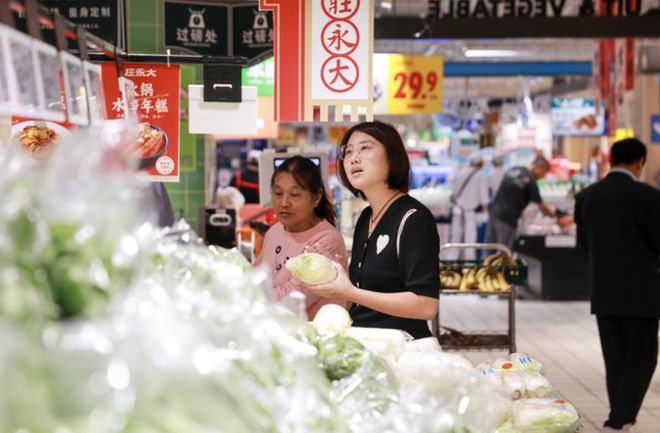
Group 1: CPI Overview - In October, the Consumer Price Index (CPI) increased by 0.2% year-on-year, with urban areas rising by 0.3% and rural areas declining by 0.2% [2][3] - Food prices decreased by 2.9%, while non-food prices rose by 0.9% [2] - The average CPI from January to October showed a decline of 0.1% compared to the same period last year [2] Group 2: Food Price Impact - The decline in food prices, particularly in categories like eggs (down 11.6%) and pork (down 16.0%), significantly impacted the CPI, contributing to a decrease of approximately 0.46 percentage points [2][3] - Fresh vegetables saw a price drop of 7.3%, affecting the CPI by about 0.18 percentage points [2] Group 3: PPI Overview - The Producer Price Index (PPI) showed a year-on-year decline of 2.1% in October, but the decline narrowed by 0.2 percentage points compared to the previous month [3][4] - Month-on-month, the PPI shifted from flat to an increase of 0.1%, marking the first increase of the year [1][3] Group 4: Industrial Price Trends - The prices of industrial producers' purchases decreased by 2.7% year-on-year, with a narrowing decline of 0.4 percentage points from the previous month [4] - In October, the prices of production materials fell by 2.4%, contributing to a total decline in the industrial producers' output prices [4][5] Group 5: Monthly Price Changes - In October, the month-on-month changes in industrial producers' output prices included a 0.1% increase in production materials, while living materials remained flat [5] - The prices of various categories, such as food and clothing, saw slight declines, while general daily necessities increased by 0.7% [5]

PPI环比转正,谁是拉手?:——2025年10月价格数据点评
EBSCN· 2025-11-09 10:53
Group 1: CPI Insights - In October, the CPI year-on-year increased by 0.2%, up from -0.3% in the previous month, exceeding market expectations of -0.1%[2][4] - The core CPI year-on-year growth rose to 1.2%, compared to 1.0% in the previous month[2][4] - Food prices saw a narrowing year-on-year decline from -4.4% to -2.9%, with a month-on-month increase of 0.3%, surpassing the seasonal average decline of -0.4%[4][5] Group 2: PPI Insights - The PPI year-on-year decline narrowed to -2.1% from -2.3%, while the month-on-month PPI increased by 0.1%, marking the first increase of the year[2][6] - The improvement in PPI is attributed to enhanced industrial supply-demand relationships and rising international metal prices, with copper mining prices increasing by 5.3% month-on-month[6][7] - The prices in the coal mining sector rose by 1.6% month-on-month, indicating a recovery in upstream industries[6][7] Group 3: Future Outlook - CPI is expected to continue its upward trend in Q4, potentially reaching an annual average of 0.7% in 2026, driven by recovering food prices and ongoing consumption policies[8][9] - The PPI's year-on-year decline is anticipated to continue narrowing, although the timeline for a return to positive growth remains uncertain due to slow supply-side adjustments[9][10]
“反内卷”见效?核心CPI涨幅持续半年扩大,但猪肉价格跌跌不休
Jing Ji Guan Cha Bao· 2025-11-09 10:32
Group 1: CPI and Core CPI Trends - In October, the national CPI shifted from a year-on-year decrease of 0.3% in September to an increase of 0.2% [1] - The core CPI, excluding food and energy prices, rose by 1.2% year-on-year, marking the highest increase since March 2024 and the sixth consecutive month of growth [1] - Food prices decreased by 2.9%, with the decline narrowing by 1.5 percentage points compared to the previous month, impacting the CPI by approximately 0.54 percentage points [1] Group 2: Pork Price Dynamics - The price of pork has seen significant year-on-year declines, with decreases of 8.5%, 9.5%, 16.1%, 17.0%, and 16% from June to October [1] - The National Development and Reform Commission reported that pig farming is currently facing a loss of 192.70 yuan per head due to low pork prices [2] - Despite efforts to control production capacity, the actual reduction in breeding sows has been limited, with a total of 40.35 million breeding sows reported as of the end of September, which is 103.5% of the normal holding level [2] Group 3: PPI Trends - The PPI decreased by 2.1% year-on-year in October, continuing a trend of negative growth for 37 consecutive months, although the decline has narrowed by 0.2 percentage points compared to the previous month [2] - The PPI experienced a month-on-month increase of 0.1% in October, marking the first increase of the year, attributed to improved supply-demand relationships in certain industries and the transmission of international commodity prices [2][3] - Key industries are seeing a reduction in price declines due to ongoing capacity governance and safety regulation efforts, with notable improvements in coal mining and manufacturing sectors [3]