
消费复苏

Search documents
重庆啤酒(600132):税率扰动利润表现,积极寻求新突破
Xin Lang Cai Jing· 2025-08-19 01:03
Core Viewpoint - The company reported a slight decline in revenue and net profit for the first half of 2025, while maintaining stable sales volume, particularly in the northwest region of China [1] Financial Performance - In H1 2025, the company achieved revenue of 8.839 billion yuan, a year-on-year decrease of 0.24%, and a net profit attributable to shareholders of 865 million yuan, down 4.03% year-on-year [1] - In Q2 2025, revenue was 4.484 billion yuan, reflecting a year-on-year decline of 1.84% [1] - The company’s sales volume in H1 2025 was 1.8008 million tons, an increase of 0.95% year-on-year, with an average price of 4,908 yuan per ton, down 1.4% year-on-year [1] Regional Performance - In H1 2025, revenue from the northwest, central, and southern regions was 3.53 billion, 2.60 billion, and 2.48 billion yuan, respectively, with year-on-year changes of -0.7%, +1.8%, and -1.5% [1] - In Q2 2025, revenue from these regions was 1.42 billion, 1.70 billion, and 1.25 billion yuan, with year-on-year changes of -0.7%, +1.8%, and -1.5% [1] Cost and Profitability - The gross profit margins for H1 2025 and Q2 2025 were 49.8% and 51.2%, respectively, showing an increase of 0.6 and 0.8 percentage points year-on-year [1] - The improvement in gross margin is attributed to favorable cost conditions [1] Product and Channel Development - In response to the sluggish traditional beer consumption, the company is actively seeking new breakthroughs by developing canned products suitable for new channels and expanding into non-beer products, such as Tianshan Fresh Fruit Orchard orange-flavored soda and electric energy drinks [1] Investment Recommendations - The company has revised its revenue forecasts for 2025-2027 down to 14.617 billion, 14.779 billion, and 14.940 billion yuan, respectively, and adjusted its EPS forecasts to 2.58, 2.72, and 2.79 yuan [1]

消费组8月观点分享-20250818
CMS· 2025-08-18 08:03
Investment Rating - The report provides a positive outlook for the consumer sector, indicating a "recommended" investment rating for the industry based on favorable fundamentals and expected outperformance against market benchmarks [32]. Core Insights - The consumer sector is showing signs of recovery, with a notable increase in market performance over the past year, with absolute performance at 43.6% over 12 months [5]. - The report highlights the importance of various consumer segments, including beverages, health products, and traditional consumer leaders, suggesting a focus on companies with strong growth potential and market positioning [10][11][13][14]. Industry Size - The industry comprises 1,212 listed companies, with a total market capitalization of 17,950.8 billion and a circulating market capitalization of 16,373.6 billion [3]. Consumer Trends - Retail sales growth in July was below expectations, with a year-on-year increase of only 3.7%, indicating challenges in consumer spending [8]. - The report notes that the introduction of new consumer subsidies may take time to impact sales positively, particularly in sectors like home appliances and furniture [8]. Beverage Sector - The beverage segment is highlighted as a growth area, with companies like Nongfu Spring and Uni-President showing strong performance, particularly in bottled water and health drinks [10]. - The report emphasizes the potential for market share growth for brands like Dongpeng and the positive impact of cost management on profitability for companies like Uni-President [10]. Health Products - The health product sector is also noted for its resilience, with companies like H&H International showing stable growth and an upward revision of annual guidance [10]. Traditional Consumer Leaders - Companies such as Haitian Flavoring and Zhenjiu Li Du are recommended for their strong market positions and potential for recovery in profitability as market conditions improve [11]. Jewelry and Cosmetics - The jewelry sector, particularly Chow Tai Fook, is positioned for growth due to strategic reforms and product upgrades, while the cosmetics sector shows promise with companies like Shiseido and Maogeping reporting strong mid-year performance [13][14]. Textile and Apparel - The report identifies leading sportswear brands like Anta and Li Ning as key players in the textile sector, with a focus on innovation and market expansion [15]. E-commerce and Food Delivery - The report discusses the competitive landscape in the food delivery sector, with expectations for continued growth in tea and fast-food brands due to ongoing subsidies and market dynamics [21][22]. Pharmaceutical Sector - The report highlights the innovation in the pharmaceutical industry, particularly for companies like Heptares Therapeutics, which are positioned to benefit from global demand for innovative drug solutions [26][27].
大消费行业周报(8月第3周):7月社零金银珠宝和化妆品环比改善-20250818
Century Securities· 2025-08-18 00:59
Investment Rating - The report does not explicitly state an investment rating for the industry, but it suggests focusing on sectors with reasonable valuations such as liquor, dairy, hotels, and catering [3]. Core Insights - The consumer sector showed mixed performance in the week of August 11-15, with textile and apparel, retail, food and beverage, social services, and beauty care sectors experiencing varying degrees of growth and decline [3]. - In July, essential consumption remained stable while optional consumption showed signs of recovery, with durable goods maintaining high growth rates. The total retail sales in July increased by 3.7% year-on-year, with essential goods like grain and oil maintaining high growth rates [3]. - The launch of the Antigravity A1 drone by Yingling represents a significant technological innovation in the consumer drone market, with features that enhance usability and safety, indicating a growing market potential [3]. Summary by Sections Market Weekly Review - The consumer sector's performance varied, with notable gains in textile and apparel (+2.43%), retail (+0.98%), and food and beverage (+0.48%), while declines were seen in beauty care (-1.37%) [3]. - Key stocks that led gains included Guifaxiang (+28.74%) and Zhejiang Dongri (+55.09%), while stocks that saw the largest declines included Huangshanghuang (-10.67%) and Jihua Group (-25.76%) [3]. Industry News and Key Company Announcements - The report highlights the opening of a new high-end restaurant by Pizza Hut in Shenzhen, marking its second strategic move in the domestic market [14]. - The report also notes significant growth in the electric two-wheeler market, with production increasing by 30.6% year-on-year in July [17]. - The introduction of a personal consumption loan subsidy policy aims to stimulate consumer spending, with a maximum subsidy of 3,000 yuan for eligible loans [17]. - Companies like Chongqing Beer and Guizhou Moutai reported mixed financial results, with Moutai showing a revenue increase of 9.16% year-on-year [18][19].
7月社会零售品消费数据点评:7月社零同比+3.7%,线上消费渗透率持续提升
Shenwan Hongyuan Securities· 2025-08-17 14:22
Investment Rating - The industry investment rating is "Overweight" indicating a positive outlook for the sector compared to the overall market performance [11]. Core Insights - In July 2025, the total retail sales of consumer goods increased by 3.7% year-on-year, which was below market expectations. The total retail sales reached 3.9 trillion yuan, with a month-on-month decline of 1.1 percentage points [5]. - Online retail sales and penetration rates have significantly increased due to enhanced subsidies from instant retail platforms. The online retail sales for the first seven months of 2025 grew by 9.2% year-on-year, surpassing the overall retail growth rate [5]. - The report highlights a divergence in domestic consumption performance, with sectors like instant retail benefiting significantly, while the restaurant sector continues to face pressure [5]. Summary by Sections Retail Sales Performance - July 2025 saw a 3.7% year-on-year increase in retail sales, lower than the expected 4.9%. Excluding automobiles, retail sales grew by 4.3% [5]. - The retail sales of goods in July reached 3.4 trillion yuan, with a year-on-year growth of 4.0% [5]. Online and Offline Retail Trends - Online retail sales in July amounted to 959.9 billion yuan, with a year-on-year growth of 8.3% and a month-on-month increase of 3.6% [5]. - The online penetration rate reached 24.8%, up from 23.7% in the previous year [5]. Consumer Goods and Services - The report notes a significant increase in the sales of daily consumer goods, with categories like communication and food seeing growth rates of 14.9% and 8.6% respectively [5]. - The restaurant sector's growth remains low, with July's revenue at 450.4 billion yuan, reflecting a year-on-year increase of only 1.1% [5]. Investment Recommendations - The report recommends focusing on e-commerce and instant retail sectors, highlighting companies like Alibaba, JD.com, and Meituan as key players [5]. - It also suggests investing in quality gold and jewelry brands, as well as companies in the travel industry that are expected to benefit from the summer tourism season [5].
2025年7月社零数据点评:社零同比增长3.7%,主要可选消费品增长稳健
Guoxin Securities· 2025-08-17 04:56
Investment Rating - The investment rating for the retail industry is "Outperform the Market" (maintained) [3][17]. Core Viewpoints - In July 2025, the total retail sales of consumer goods reached 38,780 billion, with a year-on-year growth of 3.7%. Excluding automobiles, the growth was 4.3% [4][5]. - The growth trend in retail sales continues, with goods retail growing by 4% and catering income increasing by 1.1% in July [4][5]. - For the first seven months of 2025, the total retail sales amounted to 284,238 billion, reflecting a growth of 4.8% [5]. Summary by Relevant Sections Retail Sales Performance - In July 2025, essential goods maintained steady growth, with categories such as grain and oil, tobacco and alcohol, and daily necessities growing by 8.6%, 2.7%, and 8.2% respectively. In the optional category, cosmetics, gold and jewelry, and clothing grew by 4.5%, 8.2%, and 1.8% respectively [4][8]. - The online retail sales for the first seven months of 2025 increased by 9.2%, with physical goods online retail sales growing by 6.3%, accounting for 24.9% of total retail sales [8]. Future Outlook and Investment Suggestions - The report anticipates that domestic policies focusing on stimulating consumption and countering supply-side issues will create a favorable environment for future consumption recovery [4][11]. - Recommendations for long-term investment opportunities include: 1. Cross-border expansion: With improving external trade conditions, companies like Xiaogoods City, Focus Technology, and Anker Innovation are highlighted [4][11]. 2. Gold and jewelry: Companies such as Chao Hong Ji, Chow Tai Fook, and Cai Bai Co. are expected to benefit from high gold prices and consumer demand [4][11]. 3. Beauty and personal care: Brands like Shiseido, Dengkang Oral Care, and Shanghai Jahwa are positioned to gain market share due to domestic product replacement [4][11]. 4. Traditional retail: Companies like Chongqing Department Store and Miniso are noted for their potential in improving performance and being undervalued [4][13].
报喜鸟(002154):收入下降叠加费用刚性 短期盈利承压
Xin Lang Cai Jing· 2025-08-17 00:33
Core Viewpoint - The company's mid-year earnings fell short of market expectations due to declining revenue, rigid expenses, and increased asset impairment, with a significant year-on-year profit drop of 71% in the second quarter [1] Revenue Performance - The revenue decline in the second quarter was similar to the first quarter, but the profit drop was more pronounced, indicating increasing short-term performance pressure from weak retail demand and rising costs [1] - The Haggis brand showed resilient growth with an 8.37% increase despite only two new store openings, largely driven by online sales [1] - The Baoniao brand faced significant pressure, with a 9.6% year-on-year revenue decline and four store closures in the first half of the year [1] - The Baoniao group buying business experienced a 22.53% revenue decline, exceeding previous market estimates [1] - The smaller outdoor brand Lefeiye performed well, maintaining around 20% revenue growth, indicating that outdoor apparel remains a strong segment [1] Expense Trends - Despite a challenging retail environment, the company continued to increase its expenditure for long-term development, leading to expected short-term performance challenges [2] - The acquisition of the American outdoor brand Woolrich resulted in increased expenses and intangible asset amortization, contributing to a rise in sales and management expense ratios by 3.66 and 2.27 percentage points, respectively [2] - While expenses may be slightly controlled in the second half of the year, they are still expected to pose challenges to short-term performance [2] Future Outlook - The company is one of the more mature multi-brand apparel firms in China and is expected to recover growth as consumer demand gradually improves [2] - There is optimism regarding the sustainable growth of the Haggis and Lefeiye brands, as well as positive expectations for the mid-term development of the newly acquired Woolrich brand [2] - The Baoniao brand is undergoing a transformation towards a younger and more fashionable image, which may benefit from a potential consumer recovery [2] Earnings Forecast and Investment Recommendation - Based on the mid-year report, the company's earnings forecast has been revised downwards, with expected earnings per share of 0.28, 0.34, and 0.41 yuan for 2025-2027 [3] - A target price of 4.20 yuan has been set, based on a 15 times PE valuation for 2025, while maintaining a "buy" rating for the company [3]

高盛喊你 “做多中国”:市场强势反弹背后,这些板块和逻辑值得关注
Zhi Tong Cai Jing· 2025-08-15 14:29
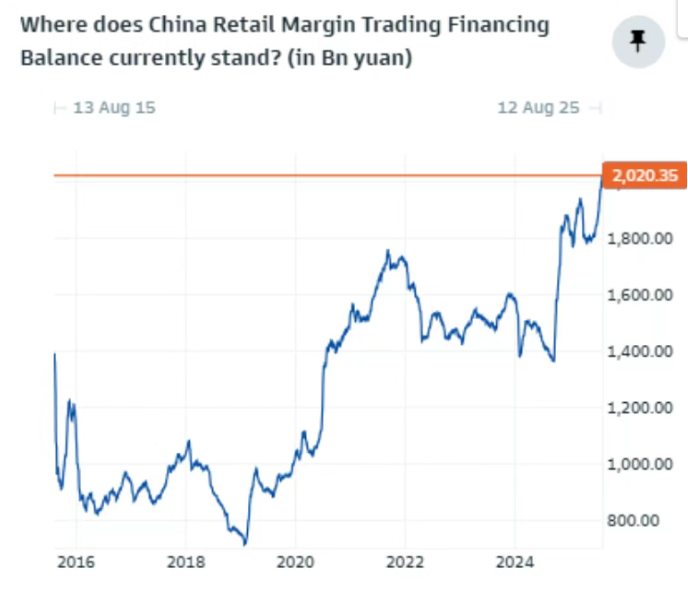
Core Viewpoint - Goldman Sachs has expressed a strong bullish stance on the Chinese market, indicating a renewed interest in long positions due to robust market performance driven by multiple factors including policy support, earnings growth, and capital inflows [1] Group 1: Market Performance - Both Hong Kong and mainland markets are experiencing significant upward momentum, with multiple indices reaching new highs; southbound capital inflows into Hong Kong stocks have accelerated, with a record net purchase of approximately 35.88 billion HKD on August 15, 2023, bringing total inflows for the year to 938.92 billion HKD, surpassing last year's total of 807.87 billion HKD [1] - The A-share market has also seen a substantial increase, with the Shanghai Composite Index returning to around 3,700 points and a trading volume exceeding 2.2 trillion CNY, marking the 29th trading day in A-share history to surpass this threshold [1] - The CSI 300 Index has risen for four consecutive months since April, potentially setting a record for the longest streak since 2020, with the CSI 1000 Index (excluding OFAC components) up over 12% [1] Group 2: Key Drivers of Market Confidence - **Policy Initiatives**: The government has introduced personal consumption loan interest subsidies to boost consumer confidence, while eight lithium battery companies have agreed to pause capacity expansion, leading to a recovery in industry valuations [2] - **Technology Sector Performance**: The earnings season for tech companies has shown strong results, with Tencent reporting Q2 2025 revenue of 752.91 billion CNY and adjusted EPS of 27.52 CNY, exceeding market expectations by 3%; AI-driven improvements have significantly boosted marketing service revenues [3] - **Funding Dynamics**: Retail investors have become the main force in the current market rally, with margin trading balances reaching a ten-year high of 202.04 billion CNY, while sentiment indicators suggest that investor enthusiasm remains moderate, indicating potential for further gains [4][7] - **Foreign Capital Expectations**: There is an increasing expectation for foreign capital to return, as Goldman Sachs notes a divergence between nominal and net market values, suggesting that global funds may amplify upward momentum [8] - **Liquidity Support**: China's liquidity supply grew by 4.6% year-on-year in June, marking the largest increase in over two years, providing a supportive environment for the stock market [9] Group 3: Investment Focus Areas - Goldman Sachs favors mid-cap indices in both Hong Kong and A-shares, specifically the CSI 500 and CSI 1000 [10] - **Technology and AI Sector**: Companies like Tencent and JD.com are showing effective AI applications, with significant growth in related sectors such as semiconductors and data centers [12] - **Consumer Recovery Chain**: Policy subsidies are directly benefiting sectors related to consumer loans, alongside improvements in retail fundamentals, making quality consumer leaders attractive [12] - **"Anti-Competition" Industries**: Sectors like lithium batteries and photovoltaics that have reached consensus on capacity are expected to see improved profitability for leading companies [13] - **High-Growth Mid-Caps**: The CSI 1000 Index includes many hidden champions in niche markets, which are likely to benefit from liquidity easing and industrial upgrades [13]



宝胜国际(03813.HK):上半年收入下滑8% 折扣同比扩大致毛利率下滑
Ge Long Hui· 2025-08-15 03:49
Group 1 - Company experienced an 8.3% year-on-year decline in revenue, totaling 9.16 billion RMB, due to fluctuating store traffic and increased discounts [1] - Gross margin decreased by 0.7 percentage points to 33.5%, while net profit fell by 44% year-on-year to 190 million RMB, resulting in a net profit margin of 2.1% [1] - Inventory levels remained healthy, with inventory days at 146, below the target of 150 days, and old inventory accounting for less than 9% [1] Group 2 - Online sales showed robust growth of 16%, with live streaming sales exceeding 100% growth, contributing to 33% of total revenue [2] - The company maintained its offline store count at 3,408, with a net closure of 40 stores, while same-store sales declined by 10% to 20% [2] - The company plans to optimize its product mix and develop proprietary brands, with short-term revenue contribution from these brands at only 2-3% [2]
“消费板块或迎来一场重大机遇”
Zhong Guo Ji Jin Bao· 2025-08-14 14:33
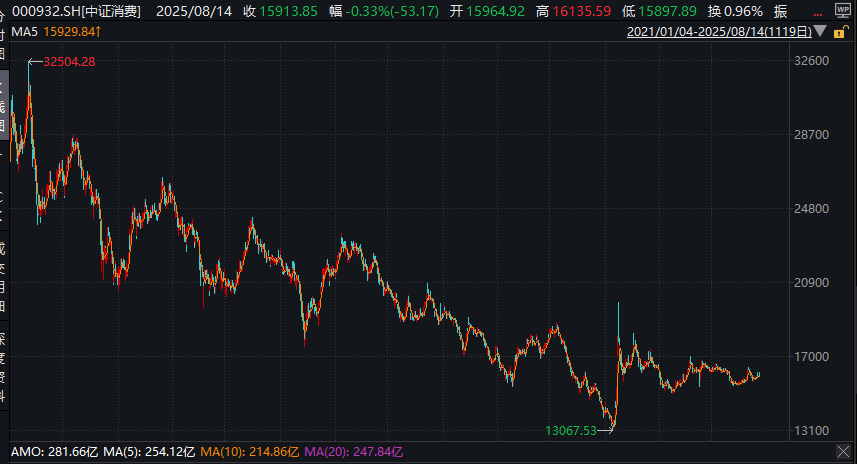
Core Viewpoint - The introduction of the personal consumption loan interest subsidy policy is expected to create significant opportunities in the consumer sector, particularly benefiting "service-oriented consumption" [1][2]. Policy Impact on Consumer Sector - The new "national subsidy" for personal consumption loans aims to stimulate the consumption market, which has been underperforming, with the consumer index dropping nearly 60% from its peak in 2021 to its lowest point in 2024 [2]. - Fund companies believe that the subsidy policy will enhance consumer demand and support economic growth by reducing credit costs and stimulating both supply and demand [4][6]. Short-term and Long-term Prospects - The subsidy policy is expected to have a short-term impact on demand, particularly in sectors like automotive and home appliances, while also fostering long-term growth in emerging consumption areas such as education and tourism [9][8]. - The consumer sector is currently viewed as undervalued, with a significant opportunity for recovery as the market sentiment has reached a low point [11]. Structural Opportunities - Despite the overall market rebound, the consumer sector has lagged, with a year-to-date decline of 2.11% in the consumer index as of August 14 [11]. - The current valuation of the consumer sector has dropped to below 20 times earnings, indicating potential for recovery as market perceptions may be overly pessimistic [11]. Broader Economic Implications - The subsidy policy is not only focused on consumption but also aims to rebalance the entire domestic demand chain, potentially benefiting banks and technology service providers as well [14]. - Banks are expected to benefit from increased retail lending demand and reduced credit risk due to the subsidy policy, which may lead to a positive cycle of growth in loan volumes and asset quality [14][15].
消费板块或迎来一场重大机遇
Zhong Guo Ji Jin Bao· 2025-08-14 14:30
Group 1 - The introduction of the personal consumption loan subsidy policy is seen as a significant opportunity for the consumer sector, potentially leading to a major recovery [1][2] - The consumer sector has underperformed, with the CSI Consumer Index dropping nearly 60% from its peak in 2021 to its lowest point in 2024 [2] - The subsidy policy is expected to stimulate both supply and demand, enhancing economic growth and activating the consumption recovery engine [4][5] Group 2 - The subsidy policy aims to reduce credit costs for consumers, thereby increasing their spending capacity and willingness, which is crucial for boosting domestic demand [5][6] - The policy is designed to be precise and inclusive, targeting various sectors to stimulate consumption, particularly in automotive, home appliances, and service industries [6][7] - The consumer sector is currently viewed as undervalued, with a significant opportunity for investment as market sentiment has reached a low point [8] Group 3 - The policy is expected to benefit not only the consumer sector but also banks and technology service providers, as it aims to rebalance the entire domestic demand chain [10][11] - Banks are likely to see increased retail lending demand and reduced credit risk due to the subsidy policy, which could lead to a positive cycle of growth [10] - The revival of consumer activity is anticipated to boost transaction-related services, benefiting local life platforms and technology service providers [11]
