关税博弈

Search documents
降息节点将至,镍价重心或有上移
Tong Guan Jin Yuan Qi Huo· 2025-09-05 07:02
Report Industry Investment Rating No relevant content provided. Core Viewpoints of the Report - In the macro - level, during the reporting period, the expectation of interest rate cuts fluctuated. At the beginning of August, the labor market data pushed up the expectation of a 50bp rate cut in September. However, Fed officials later down - regulated this expectation. In terms of cost, nickel ore supply is becoming looser, with price changes in Indonesia and the Philippines. Fundamentally, nickel - iron imports shrank, prices rose, and steel mill production increases were poor. The sulfuric acid market maintained its heat, but the growth of supply was limited by raw materials. The pure - nickel market had average trading. Later, as the interest - rate cut approaches, the nickel price may rise, with steel mills expected to increase production and replenish raw materials in September [3]. Summary by Directory 1. Market Review - In August, the main contract of Shanghai nickel fluctuated around the interest - rate cut expectation. At the beginning of the month, the poor non - farm payrolls data and potential rate cuts pushed up nickel prices. In the middle, hawkish remarks from Fed officials led to a decline in nickel prices. At the end, dovish remarks from Powell restored nickel prices. Overall, the price fluctuations were limited. The spot premium and discount remained stable, with Jinchuan nickel in the 2100 - 2600 range and imported nickel in the 300 - 600 range [8][9]. 2. Macro Analysis Overseas - Trump's tariff diplomacy was widespread in August, with trade frictions between the US and many countries. The US Supreme Court's ruling on Trump's tariff policies may affect future tariff disturbances. The US economic data was not optimistic, with inflation rising, the labor market weakening, and consumer spending conservative. There was a risk of stagflation. However, the upcoming rate cut in September may boost market sentiment [13][14][15]. Domestic - China's economic data was relatively stable in August. The manufacturing PMI improved slightly, and demand showed signs of recovery. Inventory circulation was smooth. However, inflation data was mixed, and consumer spending was not strong. The domestic economy relied heavily on fiscal support, with government bond financing playing a major role in social financing. There were still structural risks [16][17]. 3. Fundamental Analysis Nickel Ore Supply and Cost - Overseas nickel ore supply is expected to be looser, with a decline in the Indonesian benchmark price in late August. In July, China's nickel ore imports increased significantly, and domestic port inventories rose. However, high - grade nickel ore remained in short supply [18][20]. Smelting Profit and Supply - In August, China's refined nickel production increased year - on - year. In July, the smelting profit of integrated electrowinning nickel improved, but it may decline in August due to rising costs and falling nickel prices. In July, imports increased significantly, mainly from Russia, while exports also increased. Currently, export profits are in a loss state, which may affect future exports [21][23]. Nickel - Iron Cost and Demand - In July, the price of high - nickel pig iron first fell and then rose. In August, the production of nickel - iron in China and Indonesia increased. The profit of nickel - iron plants improved, but cost pressure remained. In September, the production of stainless steel is expected to increase, which may improve the profit of nickel - iron smelting. In July, the import of nickel - iron increased slightly, and the import and export of stainless steel showed different trends [25][26][27]. Sulfuric Nickel Market - In August, the price of sulfuric nickel showed a differentiated trend. The production of sulfuric nickel decreased year - on - year but increased month - on - month. The production of ternary materials increased. The inventory of the industry chain decreased, indicating smooth resource circulation. The profit of high - ice - nickel to sulfuric nickel was positive, while other processes were in the red. In July, imports increased, and exports decreased slightly [30][31]. New Energy Vehicle Market - From January to July, the production and sales of new energy vehicles increased significantly, but the growth rate slowed down in July. In July, the export of new energy vehicles increased significantly. In the future, the growth rate of consumption will slow down, but there is still room for growth, and subsidy policies will play a supporting role [34][35]. Inventory Situation - As of August 29, domestic refined nickel social inventory increased, while SHFE inventory decreased, and LME inventory increased. In the future, with the import window open and limited domestic supply growth, and considering the production increase of steel mills and the seasonal peak of the power end, inventory may decrease during the "Golden September and Silver October" period [37][38]. 4. Market Outlook - Supply: There is no maintenance plan at home and abroad, but the smelting profit is expected to decline, and domestic production is expected to be stable but weak. The import window is open, and overseas resources may flow in [40]. - Demand: Steel mills' production is expected to increase, and the largest demand terminal may replenish inventory. The growth rate of the power terminal has slowed down but still has growth potential [40]. - Cost: Nickel ore supply is becoming looser, and the cost center is expected to move down [40]. - Macro: As the interest - rate cut approaches, the macro - expectation is positive, but tariff disturbances should be watched out for. Overall, the nickel price may rise as the interest - rate cut nears, with the replenishment expectation of steel mills and positive macro - sentiment [40].
国泰海通|有色:关税反复,流动性行情或持续
国泰海通证券研究· 2025-08-31 13:59
Core Viewpoint - The recent ruling by the U.S. Court of Appeals declaring Trump's tariffs illegal has reignited the tariff debate, while Powell's dovish stance at Jackson Hole has increased the certainty of rate cuts in the medium term, suggesting that liquidity conditions will continue to resonate both domestically and internationally, with industrial and precious metals expected to perform well as the peak demand season approaches [1][2]. Group 1: Tariff and Monetary Policy Impact - The U.S. Court of Appeals ruled that Trump's global tariffs are "illegal," leading to renewed uncertainty in tariff negotiations, although the tariffs will remain in effect until mid-October [1]. - Powell's unexpected dovish comments at the Jackson Hole meeting, along with political pressures, enhance the likelihood of Fed rate cuts in the medium term [1][2]. - The combination of a loose domestic monetary environment and ongoing international liquidity conditions is expected to support precious metals, despite potential short-term volatility due to tariff uncertainties [1][2]. Group 2: Precious Metals Outlook - The tariff debate may cause fluctuations in gold prices, but the dovish Fed stance and adjusted inflation targets provide upward support for precious metals [2]. - The U.S. manufacturing and services PMI for August were reported at 53.3 and 55.4, respectively, indicating economic resilience and supporting inflation expectations, which in turn bolster precious metal prices [2]. - Long-term risks related to U.S. government debt and challenges to the dollar's status may lead to continued strong performance of gold in a restructured global monetary system [2]. Group 3: Industrial Metals Performance - With Powell signaling rate cuts and the Chinese government emphasizing fiscal and financial support to boost domestic demand, industrial metals are expected to benefit from improving demand expectations [2]. - The transition from off-peak to peak demand seasons, coupled with low inventory levels for major industrial metals, suggests a favorable supply-demand balance that could support prices [2]. - Seasonal disruptions in supply due to maintenance and other factors, alongside rising demand, may lead to a marginally improved supply-demand dynamic for industrial metals [2].


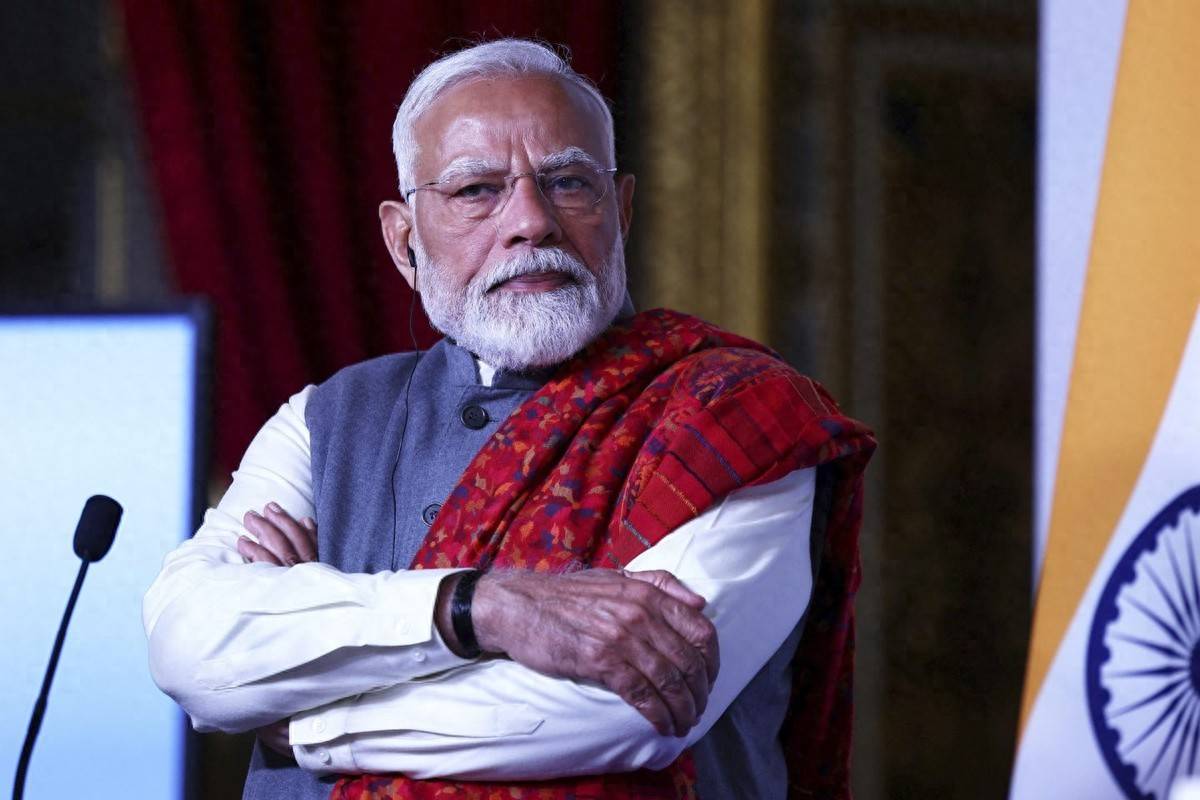
美国强加的50%关税,印度硬扛到底会是什么结果?莫迪想试试
Sou Hu Cai Jing· 2025-08-30 08:39
Core Viewpoint - The imposition of a 50% tariff on Indian exports to the U.S. starting August 27 is a significant escalation in trade tensions, reflecting the complexities of U.S.-India relations and India's strategic responses to U.S. pressure [1][2][4]. Group 1: U.S.-India Trade Relations - The U.S. has accused India of purchasing Russian oil, which has led to heightened tensions and the imposition of tariffs [2][7]. - India's response includes suspending a $3.6 billion Boeing P-8I procurement and imposing a 70% retaliatory tariff on U.S. agricultural products, targeting key U.S. agricultural states [2][4]. - The tariff could potentially reduce India's GDP growth by 40 to 60 basis points, with Citibank predicting a decrease of 0.6 to 0.8 percentage points in annual economic growth [4][8]. Group 2: India's Strategic Responses - India is adopting a dual strategy of "hard confrontation" and "soft compromise," including lowering domestic GST to boost internal demand and seeking new markets in the Middle East and Africa [4][10]. - Modi's diplomatic efforts include attending the Shanghai Cooperation Organization summit and reviving trade relations with China, indicating a shift towards reducing dependence on the U.S. [4][10]. - The long-term goal for India may involve reducing reliance on the U.S. and finding new trade partners, which could ultimately benefit its economy [10]. Group 3: Economic Implications - The U.S. tariff strategy may not yield significant financial benefits for the U.S. as Indian exporters are less likely to absorb the increased costs, leading them to seek alternative markets [7][8]. - The potential for a trade agreement could involve a reduction of tariffs, contingent on India continuing to purchase U.S. military equipment and aircraft [9][10]. - India's market dynamics suggest that while domestic consumption can partially offset lost exports to the U.S., the overall economic impact remains a pressing concern [9][10].
天山铝业(002532) - 002532天山铝业投资者关系管理信息20250829
2025-08-29 13:17
Cost Structure and Production - The integrated cost of electrolytic aluminum for the first half of 2025 is stable at 13,900 RMB/ton [3] - The procurement price of bauxite has decreased to around 75 USD/ton after effective inventory digestion [3] - The production volume for aluminum ingots in the first half of 2025 is approximately 580,000 tons, and for alumina, it is about 1.2 million tons [5] Project Development and Capacity Expansion - The 200,000 tons electrolytic aluminum project is expected to start production by the end of November 2025, with full capacity release in 2026 [4] - The Indonesian alumina project is progressing smoothly, currently in the detailed exploration phase [4] Financial Performance and Dividends - The company distributed a cash dividend of 2 RMB per 10 shares in May 2025, totaling 922,244,323 RMB [4] - Future cash dividends are planned to be no less than 30% of the distributable profits each year [4] Market Outlook and Demand - The domestic aluminum demand is expected to maintain steady growth, driven by emerging industries such as new energy and photovoltaics [6] - The global tariff disputes on aluminum products are anticipated to have limited impact on domestic business [5] Cost Improvement Strategies - Cost improvements for electrolytic aluminum are expected through the elimination of raw material cost lag effects and optimization of electricity costs [6] - The mining cost of Guangxi bauxite is significantly lower than current market prices, providing a cost advantage [6] High-Purity Aluminum Market - The high-purity aluminum market has shown recovery in 2025, with plans to focus on core markets and explore high-end applications [6]

弱美元VS关税博弈,基本金属震荡整理
Zhong Xin Qi Huo· 2025-08-29 03:05
1. Report Industry Investment Rating - Copper: Oscillating [5] - Alumina: Oscillating weakly [7] - Aluminum: Oscillating [7] - Aluminum Alloy: Oscillating [9] - Zinc: Oscillating weakly [12] - Lead: Oscillating [13] - Nickel: Oscillating [16] - Stainless Steel: Oscillating [21] - Tin: Oscillating [22] 2. Core Views of the Report - The market is influenced by the weak US dollar and tariff games, with base metals oscillating. In the short - to - medium term, the weak US dollar supports prices, but the weak demand expectation makes it uncertain whether the inventory will decrease in the peak season in September. In the long term, potential incremental stimulus policies in China and supply disturbances support base metal prices [1]. - For different metals, their prices are affected by various factors such as macro - policies, supply - demand relationships, and inventory changes. 3. Summary by Related Catalogs 3.1行情观点 3.1.1 Copper - Information: Powell's dovish speech increases the probability of a Fed rate cut in September. The consumer confidence index in the US declined in August. China's electrolytic copper production increased in July. The spot copper price had a certain premium, and the inventory increased slightly [5]. - Logic: The dovish Fed speech boosts copper prices. The supply of raw materials is tight, and the downstream demand is in the off - season, but the inventory accumulation is not obvious. Low inventory supports copper prices in the short term [5]. - Outlook: Copper may oscillate due to supply constraints, low inventory, weakening demand, and the impact of US tariffs [6]. 3.1.2 Alumina - Information: The spot price of alumina declined on August 28, and the warehouse receipt increased [6]. - Logic: The smelter's profit is good, the operating capacity is at a high level, the supply - demand balance shows an obvious surplus, and the inventory accumulation trend expands. The price is expected to oscillate under pressure [7]. - Outlook: Oscillate weakly, and consider short - selling opportunities on rallies [7]. 3.1.3 Aluminum - Information: The price of aluminum declined on August 28, the inventory of aluminum rods and electrolytic aluminum ingots increased, and the warehouse receipt decreased slightly. Some aluminum - related companies' performance in the first half of 2025 showed growth [8]. - Logic: The expectation of a US rate cut weakens the US dollar. The supply capacity is high, the demand is expected to improve as the peak season approaches, but the terminal consumption is not strong. The inventory accumulates, and the spot is at a discount. The price is expected to oscillate [9]. - Outlook: Oscillate in the short term, and the consumption and inventory accumulation need to be observed [9]. 3.1.4 Aluminum Alloy - Information: The price of ADC12 remained unchanged on August 28, the price of AOO aluminum declined, and the difference between them increased. The exchange adjusted the margin and price limit of cast aluminum alloy futures [9]. - Logic: The short - term supply - demand is weak. The cost is supported by the price of scrap aluminum. The supply side's production decreased, and the demand side's procurement is cautious. The factory inventory decreased, and the social inventory increased. Consider cross - variety arbitrage opportunities [10]. - Outlook: ADC12 and ADC12 - A00 will oscillate at a low level in the short term and may rise in the future [10]. 3.1.5 Zinc - Information: The spot zinc price had a discount on August 28, and the inventory increased [12]. - Logic: The macro - situation is neutral. The supply of zinc ore is loose, the smelter's profit is good, and the production willingness is strong. The demand is in the off - season, and the overall demand expectation is average. The price may oscillate at a high level in the short term and decline in the long term [12]. - Outlook: The zinc price will oscillate weakly in the long term, and the inventory may continue to accumulate in August [12]. 3.1.6 Lead - Information: The price of waste batteries and lead ingots declined on August 28, and the social inventory decreased slightly. The transportation was restricted, and some regenerative lead enterprises were under maintenance [13]. - Logic: The spot discount is stable, the supply of waste batteries decreases, the production of lead ingots decreases slightly, and the demand for lead - acid batteries increases slightly. The price is expected to oscillate [14]. - Outlook: The lead price will oscillate due to the increase in demand and the possible decrease in supply, but the incomplete recovery of the battery enterprise's operating rate also puts pressure on the price [14]. 3.1.7 Nickel - Information: The LME nickel inventory increased, and the domestic warehouse receipt decreased slightly. There were many events in the nickel industry, such as business sales and policy adjustments [16]. - Logic: The market sentiment dominates the market, the industrial fundamentals are weakening marginally, the supply of raw materials may be loose, the production of intermediate products recovers, the price of nickel salt weakens slightly, and the inventory accumulates. The price should be traded short - term [19]. - Outlook: The nickel price will oscillate in the short term and be observed in the long term [19]. 3.1.8 Stainless Steel - Information: The stainless steel warehouse receipt decreased, the spot price had a premium, and the price of nickel pig iron increased. The price of Indonesian domestic trade ore is expected to decline slightly [21]. - Logic: The price of nickel iron rises, the price of chrome iron is stable, the production of stainless steel decreases, the social inventory accumulates slightly, and the warehouse receipt decreases. The price is expected to oscillate [21]. - Outlook: The stainless steel price may oscillate in the short term, and pay attention to the changes in inventory and cost [21]. 3.1.9 Tin - Information: The warehouse receipt of LME and Shanghai tin decreased, and the spot price declined slightly [22]. - Logic: The supply of tin ore is tight, the production and export of tin in some regions are unstable, the smelting start - up rate is low, and the terminal demand weakens marginally. The price has a support at the bottom but lacks upward momentum [22]. - Outlook: The tin price will oscillate, and the volatility may increase in August [22]. 3.2行情监测 The report only lists the names of different metals for monitoring, but no specific monitoring content is provided [25][39][51]. 3.3 Commodity Index - The comprehensive index, specialty index (including commodity 20 index and industrial product index), and sector index (non - ferrous metal index) of CITIC Futures are presented. The specialty index increased slightly, and the non - ferrous metal index decreased by 0.22% on August 28 but increased by 0.28% in the past 5 days, 0.45% in the past month, and 2.89% since the beginning of the year [137][139].
特朗普“掀桌子”失败了?登上访华专机前,莫迪通告全球:印度“不跪”!11国扛起“反美”大旗
Sou Hu Cai Jing· 2025-08-22 04:08
Group 1: Diplomatic Developments - Chinese Foreign Minister Wang Yi's visit to India from August 18 to 20 aims to discuss military withdrawal and trade cooperation amidst ongoing border tensions [1][7] - The 24th meeting on border issues signifies a potential shift in communication mechanisms, focusing on establishing regular dialogue and reducing friction through verifiable agreements [2][11] Group 2: Economic Implications - China is taking concrete actions to restore trade confidence, such as approving 183 Brazilian coffee companies for export to China and enhancing trade facilitation measures with India [3][10] - India's response to U.S. tariffs includes a political mobilization against the 50% tariffs imposed on various sectors, indicating a strategic shift in its economic stance [5][7] Group 3: Trade Dynamics - The U.S. tariffs on India, particularly the 50% increase affecting textiles, jewelry, and automotive parts, are expected to severely impact profit margins and lead to a decline in investment plans among Indian enterprises [5][10] - The focus on cooperation in low-sensitivity sectors like renewable energy components and IT services is seen as a way to mitigate the impact of U.S. tariffs and enhance bilateral trade efficiency [3][8] Group 4: Strategic Considerations - India's cooperation with China is viewed as a means to create strategic redundancy and shift some risks away from reliance on the U.S., while China seeks to stabilize relations to alleviate uncertainties [7][8] - The ongoing diplomatic negotiations are crucial for both countries, as they navigate the complexities of trade and security in a changing global economic landscape [11]
特朗普再放狠话,中国一句“不”顶回去!这场关税博弈,美国已开始落后了
Sou Hu Cai Jing· 2025-08-20 18:27
Core Viewpoint - The ongoing trade conflict between the U.S. and China is characterized by a shift in dynamics, with China appearing to gain the upper hand as it remains steadfast in its position against U.S. pressure [1][19]. Group 1: U.S.-China Trade Negotiations - The atmosphere during the recent U.S.-China trade talks was tense, with China agreeing to a 90-day tariff pause while the U.S. hesitated, indicating that any agreement required Trump's approval [4][11]. - The U.S. introduced new demands, including halting Chinese purchases of Russian and Iranian oil, framing it as a moral obligation to not support adversaries [5][6]. - China's response emphasized its commitment to national interests, stating that oil purchases are based on economic factors rather than political alignment [7][9]. Group 2: Economic Implications - China is the largest buyer of Russian oil, with daily purchases of 2 million barrels, and has acquired nearly 90% of Iran's oil exports, highlighting the economic rationale behind these transactions [7][8]. - The price advantage of Iranian oil, which is cheaper by $6-7 per barrel, illustrates the cost benefits that China prioritizes over political pressures [8][9]. - The U.S. strategy of using tariffs as leverage is undermined by China's robust supply chain and economic resilience, suggesting that tariffs alone cannot destabilize China's economy [11][12]. Group 3: Global Reactions and Alliances - Other countries, such as India and Brazil, have continued to engage in energy trade with Russia and Iran, respectively, indicating a broader resistance to U.S. sanctions [14][15]. - China's ability to withstand U.S. pressure has provided a model for other nations, encouraging them to follow suit in maintaining their economic interests [15][20]. - The U.S. finds itself in a precarious position, lacking strong allies and facing challenges in its diplomatic approach, which has led to a perception of weakness [16][17]. Group 4: Future Outlook - The trade conflict has revealed a clear distinction in strategies, with China demonstrating strategic planning and stability while the U.S. relies on threats and emotional appeals [17][18]. - Regardless of the outcome of the current negotiations, China is prepared for future actions, indicating a long-term strategy to navigate the trade landscape [21][22].
王毅刚见莫迪,美财长一语惊人:都是买俄油,印度跟中国能一样吗
Sou Hu Cai Jing· 2025-08-20 05:22
Core Viewpoint - The U.S. Treasury Secretary highlighted that India's import of Russian oil surged from less than 1% pre-war to 42%, while China's increase was modest, from 13% to 16%. This situation is described as "Indian-style arbitrage," where India profits by purchasing low-cost Russian oil, refining it, and reselling it, which the U.S. finds unacceptable [1][3]. Group 1: U.S. Actions and Reactions - The U.S. imposed a 25% punitive tariff on India for its continued purchase of Russian oil, raising the total tax rate to 50% [1][3]. - The tariff will take effect on August 28, with Trump expressing a lack of interest in further negotiations with India [3]. - In contrast, Trump has delayed imposing secondary tariffs on China for buying Russian oil, citing recent U.S.-Russia talks [3][5]. Group 2: Strategic Implications - U.S. Secretary of State Rubio noted that if tariffs were imposed on China, it could lead to higher global energy prices and supply shortages, as much of the Russian oil purchased by China is refined and sold globally [5][7]. - The U.S. is strategically differentiating its approach to India and China, leveraging factors such as rare earth dependency and U.S. Treasury holdings to maintain influence [7][9]. Group 3: India's Position - India's daily imports of Russian oil reached 1.75 million barrels in the first half of 2025, accounting for 38% of its total oil imports, which directly undermines U.S. efforts to cut off Russian energy revenue [11]. - The attractiveness of the Indian market for U.S. companies is limited, with the U.S.-India trade volume in 2024 projected at $128 billion, significantly less than U.S.-China trade [11][13]. - The Indian public's response to U.S. tariffs has been strong, with a notable increase in support for local products and a surge in domestic beverage sales following price hikes on American products [13][14].
翻脸就翻脸!特朗普根本没想到,印度对美很强硬,莫迪无好牌可打
Sou Hu Cai Jing· 2025-08-18 12:37
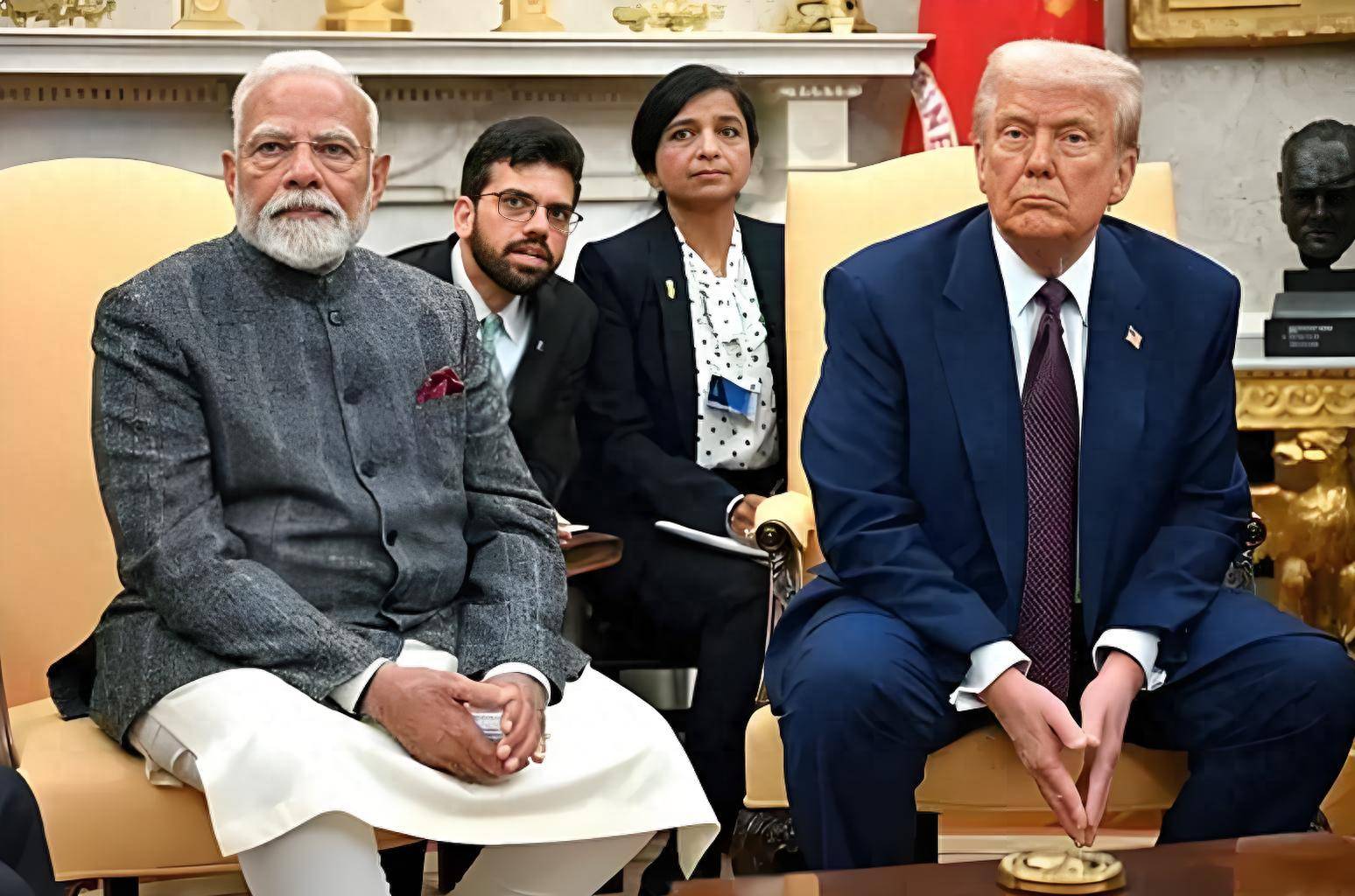
Group 1 - The core argument highlights the power dynamics between the U.S. and India, emphasizing that Trump's confidence stems from U.S. dominance in chip design, military presence, and financial influence [1] - India's manufacturing sector has seen a decline in its GDP contribution from 16% to 14% over the past decade, falling short of the 25% target, indicating structural weaknesses in its economy [1] - The U.S. has imposed a 50% tariff on Indian exports, significantly impacting labor-intensive industries, with Indian exporters facing a potential profit loss due to the high tariffs [3] Group 2 - Modi's government faces a dilemma as agriculture, which supports 42% of India's population, is at risk from U.S. demands to open markets, creating a political challenge for Modi [5] - The U.S. has delayed a trade delegation visit to India, coinciding with the impending implementation of punitive tariffs, putting India in a precarious position [5] - The relationship between the U.S. and India is strained due to conflicting interests in manufacturing development, leading to a zero-sum game scenario [7]
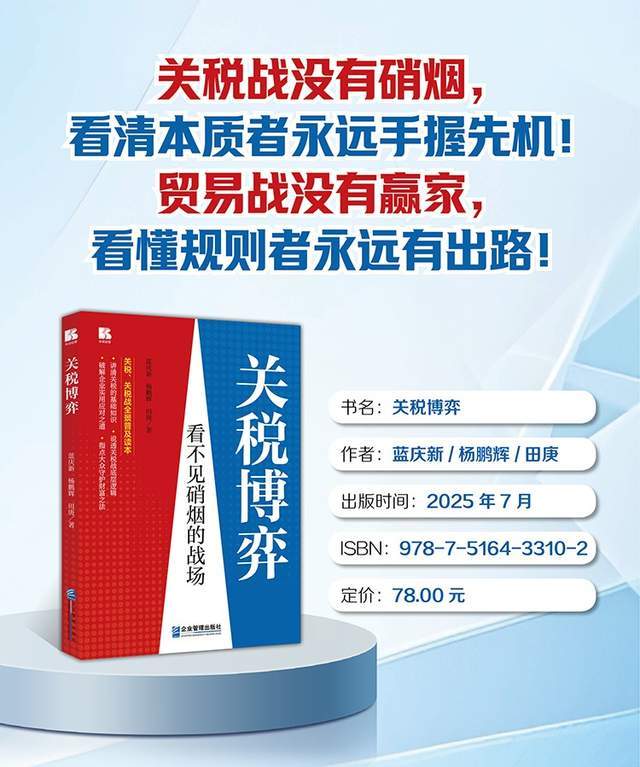
关税博弈:21世纪全球经济的隐形战场
Sou Hu Cai Jing· 2025-08-18 11:44
Core Insights - The book "Tariff Games" reveals the ongoing transformation of the global economic order through the lens of contemporary tariff battles, highlighting the critical economic conflicts of the 21st century [1] Group 1: Historical Context of Tariffs - Tariffs have been a symbol of national sovereignty since the establishment of Spain's "Million Tax" in the 15th century, serving as a tool for major powers in economic competition [2] - The book discusses historical cases such as the Spanish Empire, the British East India Company, and the Smoot-Hawley Tariff Act in the U.S. to illustrate how tariff policies have shaped economic hegemony [2] - The analysis extends to modern events like the breakdown of WTO Doha Round negotiations, the escalation of chip tariffs in the U.S.-China trade war, and the implementation of the EU's carbon border adjustment mechanism [2] Group 2: Three-Dimensional Tariff Game Model - The book introduces a "Three-Dimensional Tariff Game Model" to analyze tariff commitments and actual actions from a macro perspective, including G20 summit outcomes and regional agreements like RCEP and CPTPP [3][4] - It examines how multinational companies, exemplified by Tesla's Shanghai Gigafactory and the rise of manufacturing in Vietnam, leverage tariff differences to reshape global supply chains [4] - The micro perspective reveals the impact of tariff changes on small trade entities, using data from Yiwu's small commodity market and German SMEs [4] Group 3: Tariff Revolution in the Digital Age - The book highlights the unprecedented challenges to traditional tariff systems posed by the rise of cross-border e-commerce, which surpassed $4 trillion in annual transactions, and advancements in 3D printing technology [5] - It introduces the concept of "digital tariffs," analyzing emerging tax types like data flow taxes and algorithm patent taxes, which could lead to a restructuring of existing rules [5] - The conflicts between the EU's Digital Services Tax (DST) and the U.S. Section 301 investigations illustrate the new dimensions of tariff battles in the digital era [5] Group 4: Solutions to Tariff Conflicts - The book proposes practical solutions to break the cycle of "tariff wars-inflation-recession," including the establishment of a "tariff elasticity mechanism" inspired by Singapore's variable tariff system to address supply chain shocks [6] - It suggests creating a "digital tariff sandbox" to explore new tax paradigms for cross-border data flow in free trade zones [6] - The promotion of "tariff capacity building" aims to enhance the participation of developing countries in rule-making processes [6] Group 5: Broader Implications - "Tariff Games" serves as a key to understanding 21st-century international relations, especially as global supply chains undergo "de-risking" and geopolitical and economic interests intertwine [10] - The ongoing evolution of tariff battles will reshape perceptions of the global economic order for policymakers, business leaders, and readers interested in world dynamics [11]