
关税豁免

Search documents
芯片巨头,历史新高!
中国基金报· 2025-10-01 00:50
Market Overview - The US stock market experienced fluctuations but ultimately closed higher, with the Dow Jones index reaching a new all-time high at 46,397.89 points, up 0.18% [5] - In September, the Dow Jones index rose by 1.87%, the S&P 500 by 3.53%, and the Nasdaq by 5.61% [5] Semiconductor Sector - The semiconductor sector continued its upward trend, with the Philadelphia Semiconductor Index increasing by 0.87%, reaching a new high [10][11] - Nvidia's stock rose by 2.6%, closing at $186.58 per share, with a market capitalization of $4.542 trillion [9][12] - Other notable tech stocks included Microsoft, Tesla, and Apple, which saw slight increases, while Google, Amazon, and Facebook experienced declines [9] Pharmaceutical Sector - The pharmaceutical sector saw significant gains, with Pfizer's stock rising by 6.81%, Merck by 6.80%, and Eli Lilly by 4.97% [14][15] - Pfizer's CEO announced a deal with the US government for a three-year tariff exemption, allowing the company to lower prices on certain drugs sold domestically [16] Gold Market - International gold prices rebounded, trading above $3,880 per ounce [20]


2025年全球笔电出货量预计将突破1.8亿台
WitsView睿智显示· 2025-09-18 14:47
Core Insights - The global laptop market is showing signs of recovery despite geopolitical factors and tariff uncertainties, with a projected annual shipment increase of approximately 2.2% in 2023, surpassing 180 million units [2][6]. - Southeast Asia is emerging as a key manufacturing base for laptops, driven by investments from major brands like Dell and Apple, with Vietnam's production capacity expected to reach 13.5% of the global share by 2025 [5][6]. Group 1: Market Trends - The laptop market is benefiting from zero tariffs on Southeast Asian imports to the U.S., leading brands to increase shipments in anticipation of demand [2]. - The second quarter of 2023 saw a significant shipment increase of 9.5% due to factors such as U.S. tariff exemptions and a surge in demand from the Chinese market driven by subsidy policies [2]. - The third quarter is expected to maintain positive growth, with a projected quarter-on-quarter increase of 7.5% as brands and suppliers continue to support the market through subsidies [2]. Group 2: Regional Manufacturing Developments - Southeast Asia has become a primary production base outside of China, with Vietnam and Thailand leading the way in laptop manufacturing due to favorable policies and investments [5]. - Vietnam's laptop production capacity is anticipated to grow rapidly, reaching 13.5% of the global market share by 2025, supported by major manufacturers like Compal and Wistron [5]. - Thailand is also expanding its production capabilities, with a projected capacity share of 6.7% by 2025, driven by HP's initiatives and local government incentives [5]. - Other regions such as India, Indonesia, and Brazil are also seeing increased local manufacturing efforts, with an expected global capacity share of 3.7% by 2025 due to local production requirements [5].

11月29日到期!美国对华301调查关税豁免评估启动!
Xin Lang Cai Jing· 2025-09-17 13:30
Core Viewpoint - The U.S. Trade Representative (USTR) is seeking public comments on whether to extend tariff exemptions for 178 items, including 14 specific solar manufacturing equipment exemptions, beyond November 29, 2025 [1][2]. Group 1: Exemption Details - The 14 solar-related exemptions are part of the USTR's four-year review of the Section 301 investigation against China, initially set to be effective from January 1, 2024, to May 31, 2025 [2]. - These exemptions include equipment such as silicon growth furnaces, multicrystalline silicon casting furnaces, silicon wafer cutting machines, and diamond wire saws [2]. - The exemptions were previously extended to August 31, 2025, and then further to November 29, 2025, forming a total of 178 exemptions (164 regular exemptions + 14 solar equipment exemptions) [2]. Group 2: Public Comment Process - The public comment period is open from September 16, 2025, to October 16, 2025, where companies and industry associations can submit written opinions [3]. - USTR will evaluate the exemptions based on four core dimensions, including the availability of solar manufacturing equipment from non-Chinese sources and the efforts made by companies to source equipment from the U.S. or third countries [3]. - The evaluation will also consider the potential impact of extending the exemptions on U.S. interests and the broader goal of addressing the issues identified in the Section 301 investigation against China [3]. Group 3: Industry Implications - The extension of the 14 solar manufacturing equipment exemptions is crucial for the U.S. solar industry, as the expiration without extension would impose additional tariffs on imports from China, increasing production costs [4]. - Industry representatives express concerns about the stability and pricing of equipment sourced from non-Chinese regions, indicating that an extension would provide more time to adjust supply chains [4]. - The outcome of the public comment process will serve as an important indicator of the U.S. trade policy direction regarding solar equipment from China, with potential implications for the pace of domestic solar capacity expansion [4].
特朗普“关税战”影响远小于“理论水平”,关键原因是“豁免”
Hua Er Jie Jian Wen· 2025-09-13 14:10
Group 1 - The actual effective tariff rate in the U.S. is estimated to be around 9%-10%, significantly lower than the theoretical rate of approximately 18%, indicating that the negative impact of tariffs on inflation and corporate profits is overstated [1][2] - The report highlights that the discrepancy between theoretical and actual tariff rates is primarily due to policy exemptions rather than transshipment practices, suggesting a deliberate choice by policymakers to maintain lower tariffs [3] - The report notes that the current trade war situation is more favorable for risk assets and provides the Federal Reserve with room to lower interest rates amid a weak labor market [1] Group 2 - The report identifies a significant gap between the announced tariff levels and the actual effective rates, with the theoretical effective tariff rate estimated at 17%-18%, the highest since the Smoot-Hawley Tariff Act, while the actual rate is around 10% [2] - Policy exemptions are cited as the main reason for the lower effective tariff rates, with a high approval rate of 61% for tariff exemption applications submitted by companies between 2018 and 2021 [3] - The analysis of tariff impacts shows that the anticipated "tariff-flation" has not materialized, with the annualized growth rate of the tariff basket's prices remaining moderate at 2% [4] Group 3 - The report indicates that U.S. companies engaged in significant import stockpiling before the tariffs took effect, which may lead to a potential spike in goods inflation as these inventories are depleted [4] - Evidence supporting the notion that companies are absorbing tariff costs by compressing their profits is limited, as profit margins for the S&P 500 index remain stable [4]
花旗:“雷声大雨点小”!特朗普“关税战”影响远小于“理论水平”,关键原因是“豁免”
美股IPO· 2025-09-13 13:10
Core Viewpoint - The actual effective tariff rate in the U.S. is only around 9%-10%, significantly lower than the theoretical rate of approximately 18%, indicating that the negative impact of tariffs on inflation and corporate profits is overstated [1][3][5] Group 1: Tariff Impact Analysis - The report highlights a significant discrepancy between the theoretical effective tariff rate (17%-18%) and the actual effective rate (around 10%), suggesting that the real impact of the trade war is less severe than perceived [5][6] - The primary reason for this discrepancy is attributed to policy exemptions and carveouts rather than transshipment practices, which are believed to have a limited effect [6][7] - The "tariff-flation" effect has not materialized as expected, with the annualized growth rate of the tariff basket's prices remaining moderate at 2% [8] Group 2: Inventory and Profitability Concerns - U.S. companies have engaged in significant import stockpiling prior to the tariffs, with excess imports equivalent to 5-6 months of normal import levels, indicating that inventory buffers are nearing depletion [9] - There is limited evidence to support the notion that companies are absorbing tariff costs by compressing their profits, as profit margins for the S&P 500 remain stable [9]
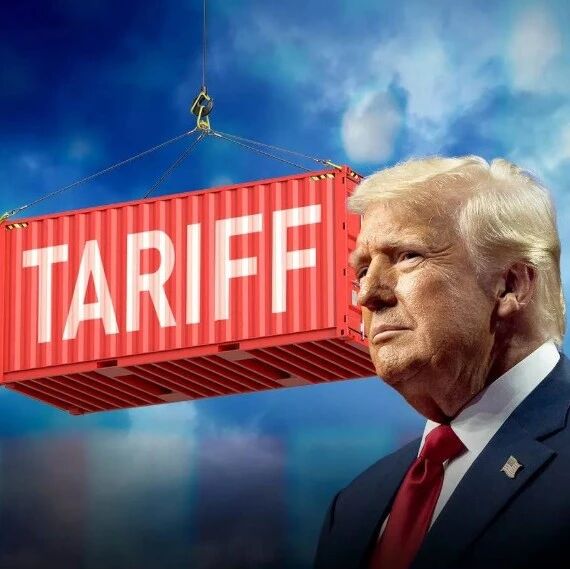
“雷声大雨点小”!特朗普“关税战”影响远小于“理论水平”,关键原因是“豁免”
Hua Er Jie Jian Wen· 2025-09-13 10:31
Core Insights - The actual impact of the trade war on the US economy is significantly less severe than commonly perceived, with the effective tariff rate estimated at only 9%-10%, compared to a theoretical rate of about 18% [1][2] - The lower-than-expected tariff impact is primarily due to policy exemptions rather than transshipment practices, indicating a deliberate choice by policymakers [1][3] Group 1: Tariff Rates and Their Implications - The theoretical effective tariff rate based on announced tariffs is estimated to be 17%-18%, the highest since the Smoot-Hawley Tariff Act, while the actual effective rate is around 10% [2] - The discrepancy between theoretical and actual tariff rates suggests that the trade war's real effects are not as alarming as they appear [2] Group 2: Factors Mitigating Tariff Impact - Policy exemptions (Carveouts) are identified as a key reason for the lower effective tariff rate, with a significant number of exemption applications approved historically [4] - Transshipment activities, while present, have a limited effect on reducing overall tariff rates, contributing only about 1 percentage point to the effective rate reduction [4] Group 3: Future Risks and Market Reactions - US companies have built up significant inventory buffers prior to the implementation of tariffs, which are now nearing depletion, potentially leading to increased inflation in the coming months [5] - Evidence supporting the notion that companies are absorbing tariff costs by compressing profits is limited, as profit margins for the S&P 500 remain stable [6]

8月外贸数据点评:出口动能边际下降
LIANCHU SECURITIES· 2025-09-10 07:47
Export Data - In August, exports grew by 4.4% year-on-year, down 2.8 percentage points from the previous month, and below the Wind consensus expectation of 5.9%[3] - Month-on-month, exports were flat with a 0.1% increase, indicating a stagnation in export value compared to the previous month[3] - The decline in export momentum is attributed to a high base effect from the previous year and signs of demand exhaustion from earlier periods[3] Trade with the US and Other Regions - Exports to the US fell by 33.1% year-on-year, a further decline of 11.4 percentage points from the previous month, with a month-on-month decrease of 11.8%[4] - The share of exports to the US has decreased from 12% to 10% in the second half of the year[4] - Exports to non-US regions showed significant growth, with the EU growing by 10.4% and ASEAN by 22.5% in August[4] Product Categories - Labor-intensive product exports saw a significant decline, with categories like bags, clothing, and footwear experiencing drops of -14.9%, -10.1%, and -17.1% respectively, collectively dragging down overall export growth by 1.2 percentage points[5] - In contrast, electromechanical products grew by 7.6%, contributing 4.5 percentage points to export growth, while high-tech products increased by 8.9%, adding 2.1 percentage points[5] Import Data - Imports grew by only 1.3% year-on-year in August, a decrease of 2.8 percentage points from the previous month, primarily due to low prices of bulk commodities[6] - Energy imports continued to decline, with coal, crude oil, and natural gas imports down by -35.9%, -15.1%, and -8.4% respectively[6] - Agricultural imports turned negative again, with a decline driven by reduced volumes and prices of grains and soybeans[6] Future Outlook - Export momentum may weaken further due to high base effects in Q4, but there are supportive factors such as improved global economic recovery, particularly in the EU and ASEAN regions, which together account for 33% of China's total exports[8] - Exports to Africa have been strong, with a cumulative growth rate reaching 24.6% in August, increasing its share of total exports to 6%[8]
8月PMI数据点评:建筑业景气度下滑明显
Xiangcai Securities· 2025-09-01 07:12
Group 1: Manufacturing Sector Insights - The official manufacturing PMI for August recorded at 49.4, a slight increase of 0.1 percentage points from the previous value of 49.3, but remains below the 50% threshold for the fifth consecutive month, indicating continued contraction in the manufacturing sector[3] - The production index for August rose to 50.8, up by 0.3 percentage points, while the new orders index increased to 49.5, up by 0.1 percentage points, suggesting marginal improvement in production relative to demand[7] - The new export orders index stood at 47.2, reflecting a 0.1 percentage point increase, with July exports showing a strong year-on-year growth of 7.2%, indicating a gradual reduction in tariff impacts[11] Group 2: Construction Sector Insights - The construction PMI fell to 49.1, down by 1.5 percentage points from the previous value of 50.6, highlighting a significant decline in construction activity[4] - The new orders index for construction dropped to 40.6, indicating weak real estate sales and a slowdown in the issuance of special bonds, leading to insufficient new projects[12] - Despite a rebound in the employment index, the supply-demand imbalance continues to hinder overall non-manufacturing expansion momentum[12] Group 3: Investment Recommendations and Risks - Manufacturing sector shows slight month-on-month improvement but remains below the threshold, indicating no significant recovery; external demand remains resilient but may face challenges post-tariff exemption period ending in November[5] - In light of weak domestic demand, expectations for monetary policy easing, including potential rate cuts, may arise following the Federal Reserve's decisions[18] - Risks include unexpected impacts from tariffs on manufacturing, slower-than-expected recovery in consumer confidence, and potential shortcomings in industrial policy[19]
棕榈油:基本面暂无新驱动,等待回调,豆油:四季度缺豆交易暂缓,震荡整理
Guo Tai Jun An Qi Huo· 2025-08-27 03:02
Report Summary Investment Ratings - No industry investment ratings are provided in the report. Core Views - Palm oil: The fundamental situation has no new driving forces, and it is waiting for a pullback [1]. - Soybean oil: The trading of soybean shortages in the fourth quarter has暂缓, and it is in a range - bound consolidation [1]. Summary by Sections 1. Fundamental Data Tracking - **Futures Prices**: Palm oil's day - trading closing price was 9,424 yuan/ton with a - 0.67% change, and night - trading was 9,488 yuan/ton with a 0.68% change; soybean oil's day - trading was 8,536 yuan/ton (0.00% change) and night - trading was 8,402 yuan/ton (- 1.57% change); rapeseed oil's day - trading was 9,941 yuan/ton (- 0.57% change) and night - trading was 9,810 yuan/ton (- 1.32% change); Malaysian palm oil's day - trading was 4,470 ringgit/ton (- 0.51% change) and night - trading was 4,451 ringgit/ton (- 0.43% change); CBOT soybean oil was 53.46 cents/pound (- 2.57% change) [2]. - **Trading Volume and Open Interest**: Palm oil's trading volume was 29,423 lots (- 7,102 change) and open interest was 31,104 lots (- 11,004 change); soybean oil's trading volume was 25,058 lots (- 10,177 change) and open interest was 37,839 lots (- 14,776 change); rapeseed oil's trading volume was 12,749 lots (- 1,539 change) and open interest was 18,022 lots (- 6,367 change) [2]. - **Spot Prices**: 24 - degree palm oil in Guangdong was 9,470 yuan/ton (- 150 change); first - grade soybean oil in Guangdong was 8,850 yuan/ton (+ 130 change); fourth - grade imported rapeseed oil in Guangxi was 9,950 yuan/ton (+ 40 change); Malaysian palm oil FOB was 1,110 dollars/ton (- 5 change) [2]. - **Basis**: Palm oil in Guangdong was 46 yuan/ton; soybean oil in Guangdong was 314 yuan/ton; rapeseed oil in Guangxi was 9 yuan/ton [2]. - **Spreads**: Rapeseed - palm oil futures spread was 321 yuan/ton; soybean - palm oil futures spread was - 1,044 yuan/ton; palm oil 9 - 1 spread was - 76 yuan/ton; soybean oil 9 - 1 spread was 80 yuan/ton; rapeseed oil 9 - 1 spread was 120 yuan/ton [2]. 2. Macro and Industry News - **Malaysian Palm Oil Production**: From August 1 - 25, 2025, Malaysian palm oil yield decreased by 3.26% month - on - month, oil extraction rate increased by 0.4% month - on - month, and production decreased by 1.21% month - on - month [3]. - **Tax Exemption in Malaysia**: Malaysia's Ministry of Plantation Industries and Commodities is seeking to exempt crude and refined palm kernel oil from the sales and service tax (SST). Currently, these two products face a 5% special tax [5]. - **Indonesian Palm Oil Tariff**: The US has agreed in principle to exclude Indonesian palm oil, cocoa, and rubber from the 19% tariff, but the final agreement has no set schedule [5]. - **Indian Vegetable Oil Tax**: The Indian Vegetable Oil Producers' Association (IVPA) urges the government to cancel the tax credit refund restrictions implemented since July 2022 [6]. - **Pakistani Soybean Purchase**: Pakistan is expected to sign a purchase agreement to import about 1.1 million tons of soybeans from US exporters, with a total value of about 500 million dollars [6]. - **Brazilian Soybean Regulations**: A Brazilian federal judge has temporarily suspended a decision by the country's antitrust regulator regarding the "Amazon soybean ban" [7]. - **Brazilian Soybean Exports**: Brazil's soybean exports in August are expected to be 8.9 million tons, and soybean meal exports are expected to be 2.13 million tons [7]. - **Soybean Crushing Profit in Brazil**: In Mato Grosso from August 18 - 22, the soybean crushing profit was 387.05 reais/ton [7]. - **EU Oil Imports**: As of August 24, the EU's 2025/26 palm oil imports were 350,000 tons, soybeans were 1.96 million tons, and rapeseed was 390,000 tons, all lower than last year [8]. - **Russian Sunflower Oil Tax**: Russia will resume export tariffs on sunflower oil and its by - products from September [8]. 3. Trend Intensity - Palm oil trend intensity is 0, and soybean oil trend intensity is 0, indicating a neutral stance [9].
中国将深入实施“人工智能+”行动
Dong Zheng Qi Huo· 2025-08-27 00:42
Report Industry Investment Rating No relevant content provided. Core Views of the Report The report provides a comprehensive analysis of various financial and commodity markets, including macro - strategies, agricultural products, black metals, non - ferrous metals, and energy chemicals. It evaluates market trends, influencing factors, and offers corresponding investment suggestions based on different market segments. Summary by Catalog 1. Financial News and Reviews 1.1 Macro Strategy (Foreign Exchange Futures - US Dollar Index) - **News**: Trump's potential removal of Fed governors may affect the Fed's independence, and the US housing price growth in June 2023 was the slowest since 2023 [11][12]. - **Review**: Trump's actions pose a challenge to the Fed's independence, putting downward pressure on the US dollar index [13]. - **Investment Suggestion**: The US dollar index faces downward pressure [14]. 1.2 Macro Strategy (US Stock Index Futures) - **News**: The US consumer confidence index in August fell slightly to 97.4, and the Fed responded to Trump's attempt to fire a governor [15][16]. - **Review**: If Trump successfully fires the governor and nominates a dovish official, market expectations of interest - rate cuts will rise, and US stocks may perform well [18]. - **Investment Suggestion**: Interest - rate cut trading continues to support market risk appetite, and US stocks are expected to fluctuate strongly [19]. 1.3 Macro Strategy (Stock Index Futures) - **News**: The State Council promotes high - quality development of service trade, and China will implement the "Artificial Intelligence +" action [20][21]. - **Review**: The A - share market sentiment has cooled slightly, but there is still upward momentum from the perspective of sentiment and capital [21]. - **Investment Suggestion**: Hold long positions in stock index futures [22]. 1.4 Macro Strategy (Treasury Bond Futures) - **News**: The 17th meeting of the 14th National People's Congress Standing Committee will be held from September 8th to 12th, and the central bank conducted a 405.8 - billion - yuan 7 - day reverse repurchase operation [23][24]. - **Review**: The bond market is mainly in a volatile state, and it is difficult to have a sustainable upward trend without special circumstances [26]. - **Investment Suggestion**: Be cautious with unilateral long positions; consider using long bond positions to hedge potential stock price corrections [26]. 2. Commodity News and Reviews 2.1 Agricultural Products (Soybean Oil/Rapeseed Oil/Palm Oil) - **News**: Malaysia's palm oil production decreased in August, the US may exempt tariffs on Indonesian palm oil, and Malaysia seeks tax exemption for palm oil raw materials [27][28]. - **Review**: The oil market is in a weak and volatile state, and the impact of production changes is not significant [29]. - **Investment Suggestion**: The oil market is in a volatile state, and it is recommended to buy on dips [30]. 2.2 Black Metals (Coking Coal/Coke) - **News**: The price of metallurgical coke in Lvliang is strong, and some coking enterprises have proposed an 8th - round price increase [31]. - **Review**: The coking coal futures may adjust in the short term, but there is strong support below [32]. - **Investment Suggestion**: The futures price has short - term adjustment pressure, but strong support after adjustment [33]. 2.3 Agricultural Products (Sugar) - **News**: Pakistan initially bought 30,000 tons of sugar, India urged the sugar industry to reach a consensus on export quotas, and Brazil's sugar exports in August increased slightly [34][35][36]. - **Review**: Zhengzhou sugar futures fell due to factors such as approaching delivery and weak market sentiment [36]. - **Investment Suggestion**: Pay attention to the opportunity of going long on the 1 - month contract after a correction, with a target price of around 5,500 yuan/ton [37]. 2.4 Black Metals (Rebar/Hot - Rolled Coil) - **News**: The daily output of key steel enterprises in mid - August increased, and the national construction machinery start - up rate in July was 44.43% [38][39]. - **Review**: Steel prices continued to fluctuate downward, and the market sentiment was slightly weak [39]. - **Investment Suggestion**: Adopt a volatile trading strategy for steel prices [40]. 2.5 Agricultural Products (Pigs) - **News**: Aonong Bio's net profit in the first half of 2025 was 361 million yuan [41]. - **Review**: Near - month pig futures have limited rebound space, and there is a safety margin for the reverse spread structure [41]. - **Investment Suggestion**: Hold a short - term volatile view on the single - side, and pay attention to reverse spread opportunities [41]. 2.6 Agricultural Products (Red Dates) - **News**: The growth of red dates in Xinjiang is normal, and the futures price of the main contract is slightly up [42]. - **Review**: The supply and demand of red dates are weak, and there is uncertainty in production [43]. - **Investment Suggestion**: Adopt a wait - and - see strategy and focus on weather and research results [43]. 2.7 Agricultural Products (Corn Starch) - **News**: Corn starch continues to be weak in both production and sales areas [44]. - **Review**: The spot price of starch is weak, and the CS11 - C11 spread is under pressure [44]. - **Investment Suggestion**: Pay attention to the opportunity of widening the spread [44]. 2.8 Agricultural Products (Corn) - **News**: The growth of new - season corn in Henan is basically normal, with some local drought [45]. - **Review**: Corn futures fluctuate around 2,150 yuan/ton, and attention should be paid to new - crop production [46]. - **Investment Suggestion**: Hold short positions and 11 - 3 reverse spreads, and pay attention to 11 - 1 reverse spreads if the spread strengthens [46]. 2.9 Black Metals (Steam Coal) - **News**: The price of steam coal in Beigang was stable on August 26 [47]. - **Review**: The seasonal pressure on coal prices is increasing, and prices are expected to be weak [48]. - **Investment Suggestion**: Coal prices are expected to remain seasonally weak [48]. 2.10 Black Metals (Iron Ore) - **News**: The scale of the air - conditioning market from January to July reached 172 billion yuan [49]. - **Review**: Iron ore prices are in a weak and volatile state, and the impact of short - term factors on iron ore is limited [49]. - **Investment Suggestion**: Iron ore prices are expected to continue weak and volatile with limited decline [49]. 2.11 Non - Ferrous Metals (Lead) - **News**: Tibet Summit's metal production increased significantly in the first half of the year, and the US may add lead to the key minerals list [50][51]. - **Review**: Lead prices fluctuated upward, but there are concerns about supply and demand [51]. - **Investment Suggestion**: Adopt a wait - and - see strategy in the short term [53]. 2.12 Non - Ferrous Metals (Zinc) - **News**: Tibet Summit's metal production increased significantly in the first half of the year [54]. - **Review**: Zinc prices may fluctuate due to the influence of macro and fundamental factors [55]. - **Investment Suggestion**: Adopt a wait - and - see strategy for single - side trading, and pay attention to mid - line positive spread opportunities [55]. 2.13 Non - Ferrous Metals (Polysilicon) - **News**: Tongwei sold 161,300 tons of polysilicon in the first half of the year, and there were new developments in photovoltaic project component procurement [56][57]. - **Review**: The price of polysilicon is expected to rise, but there are concerns about over - supply [58]. - **Investment Suggestion**: Adopt a bullish view on dips for single - side trading, and pay attention to the 11 - 12 reverse spread opportunity at around - 2,000 yuan/ton [59]. 2.14 Non - Ferrous Metals (Industrial Silicon) - **News**: The US may add industrial silicon to the key minerals list [60]. - **Review**: The fundamentals of industrial silicon are weakening, but the price may be affected by other factors [61]. - **Investment Suggestion**: Pay attention to the production resumption of large factories and trade within the range of 8,200 - 9,500 yuan/ton [61][62]. 2.15 Non - Ferrous Metals (Lithium Carbonate) - **News**: Galan plans to start production of a lithium project in Argentina in the first half of 2026 [63]. - **Review**: The short - term inventory reduction may support the price, but there is supply uncertainty [64]. - **Investment Suggestion**: Pay attention to the opportunity of going long on dips and positive spreads [64]. 2.16 Non - Ferrous Metals (Nickel) - **News**: Indonesia's sovereign wealth fund signed a framework agreement with GEM to develop a green nickel processing center [65]. - **Review**: Nickel prices may be affected by factors such as inventory and supply - demand [66]. - **Investment Suggestion**: Pay attention to short - term trading opportunities and mid - line short - selling opportunities [67]. 2.17 Non - Ferrous Metals (Copper) - **News**: The US may add copper to the key minerals list, and there are developments in copper mining projects [68][69][70]. - **Review**: Copper prices are in a high - level volatile state, and the short - term upward trend is not obvious [71]. - **Investment Suggestion**: Adopt a short - term long - on - dips strategy for single - side trading and a wait - and - see strategy for spreads [71]. 2.18 Energy Chemicals (Crude Oil) - **News**: API crude oil and refined product inventories decreased [72]. - **Review**: Oil prices are in a range - bound state, waiting for new drivers [72]. - **Investment Suggestion**: Maintain range - bound trading and wait for new drivers [73]. 2.19 Energy Chemicals (Carbon Emissions) - **News**: The closing price of CEA on August 26 was 69.69 yuan/ton [73]. - **Review**: The carbon market price is in a narrow - range volatile state [73]. - **Investment Suggestion**: CEA prices are expected to fluctuate in the short term [74]. 2.20 Energy Chemicals (Caustic Soda) - **News**: The price of caustic soda in Shandong was stable on August 26 [75]. - **Review**: The price of caustic soda is expected to remain high, but the upward space is limited [77]. - **Investment Suggestion**: Be cautious when chasing high prices [77]. 2.21 Energy Chemicals (Pulp) - **News**: The price of imported wood pulp showed mixed trends [78]. - **Review**: The fundamentals of pulp are weak, and the price is expected to fluctuate [78]. - **Investment Suggestion**: The pulp market is expected to fluctuate [79]. 2.22 Energy Chemicals (PVC) - **News**: The price of PVC powder decreased slightly [80]. - **Review**: The fundamentals of PVC are weak, but the price is expected to fluctuate [80]. - **Investment Suggestion**: The PVC market is expected to fluctuate in the short term [80]. 2.23 Energy Chemicals (Bottle Chips) - **News**: The export price of bottle chips was partially raised [81]. - **Review**: The inventory of bottle chips is decreasing, but attention should be paid to new capacity [83]. - **Investment Suggestion**: Pay attention to the impact of new capacity on processing fees [83]. 2.24 Energy Chemicals (PTA) - **News**: A 2.5 - million - ton PTA plant in East China will be under maintenance [84]. - **Review**: The short - term supply - demand pattern of PTA has improved, and the price is expected to be strong [84]. - **Investment Suggestion**: Adopt a short - term long - on - dips strategy [85]. 2.25 Energy Chemicals (Styrene) - **News**: A 500,000 - ton/year styrene plant in Shandong is under maintenance [86]. - **Review**: The situation of styrene in September has improved marginally, but there may be pressure in the fourth quarter [87]. - **Investment Suggestion**: Pay attention to policy variables at home and abroad [87]. 2.26 Energy Chemicals (Soda Ash) - **News**: The production of a 5 - million - ton/year soda ash plant in Inner Mongolia is reduced [88]. - **Review**: The price of soda ash is weak, and the market sentiment is not strong [88]. - **Investment Suggestion**: Adopt a short - selling strategy on rallies and pay attention to supply - side disturbances [88]. 2.27 Energy Chemicals (Float Glass) - **News**: The price of float glass in Shahe was stable on August 26 [89]. - **Review**: The glass market is in a volatile state, and the demand improvement is limited [89]. - **Investment Suggestion**: Be cautious with single - side trading and focus on spread trading [90]. 2.28 Shipping Index (Container Freight Rate) - **News**: Premier Alliance adjusted its shipping routes [91]. - **Review**: The spot freight rate is weak, and the supply - demand situation is not optimistic [92]. - **Investment Suggestion**: The 10 - month contract will test the support level of 1,300 yuan/FEU [92].