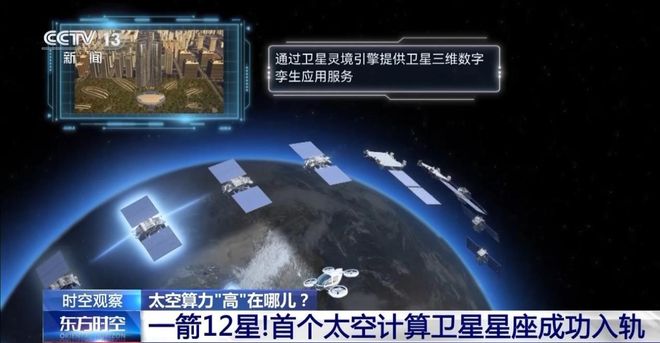
太空算力

Search documents
商业航天产业链观察系列一:太空算力:以星辰为节点,筑算力新接口
Changjiang Securities· 2026-02-23 08:52
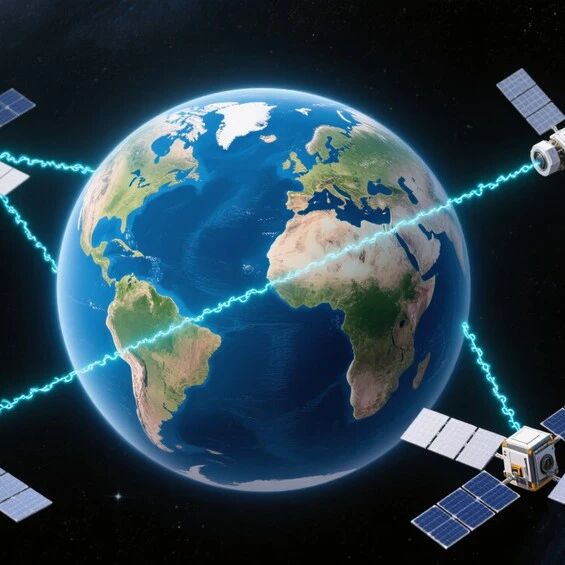
Investment Rating - The report suggests a focus on the space computing industry chain, particularly on upstream and downstream core segments, indicating a positive investment outlook for the sector [8]. Core Insights - Space computing represents a new paradigm of deploying computational facilities in Earth's orbit, transforming the traditional "ground-based computing" into "space-based computing" by utilizing distributed orbital computing clusters [5][6]. - The advantages of space computing include the use of continuous solar energy and near-absolute zero cooling environments, which effectively address the energy and heat dissipation bottlenecks faced by ground data centers [6][7]. - The U.S. is leading the charge with technology companies driving advancements, while China is following a government-led approach with collaborative development across academia and industry [7][8]. Summary by Sections Space Computing Overview - Space computing is characterized by the deployment of computational infrastructure in orbit, leveraging radiation-resistant chips and inter-satellite laser communication to create distributed computing clusters [5][13]. - This model allows satellites to evolve from mere data relays to intelligent nodes, enabling real-time data processing and decision-making in orbit, significantly reducing transmission delays [6][16]. Market Dynamics - The rise of space computing is driven by the exponential growth in global computing demand, particularly under the influence of AI, while traditional data centers face significant energy and cooling challenges [6][24]. - The market for space computing is projected to reach $100 billion by 2030, with a recommendation to focus on key segments such as rocket and satellite manufacturing, laser communication, and space computing chip suppliers [8][24]. Competitive Landscape - Major players in the U.S. include SpaceX, which is developing large-scale space data centers, and other tech giants like Google and Amazon exploring space computing ecosystems [7][8]. - In China, significant projects are underway, including the Beijing GW-level space data center and the "Three-Body Computing Constellation" initiative, indicating a robust governmental push towards space computing [7][8]. Investment Recommendations - The report emphasizes the importance of monitoring the entire space computing industry chain, particularly focusing on core suppliers in rocket and satellite manufacturing, laser communication, and space photovoltaic suppliers [8][24]. - Specific companies recommended for investment include leading firms in laser communication and space photovoltaic technologies, as well as suppliers for SpaceX and space computing chips [8].
马斯克申请100万颗低轨卫星,布局太空算力新赛道
Sou Hu Cai Jing· 2026-02-19 12:12
最近,马斯克连着干了两件大事!一是宣布SpaceX收购人工智能公司xAI,二是向美国联邦通信委员会提交申请,计划在近地轨道部署 一个空前规模的卫星网络,数量高达100万颗。 这两件事情看似各不相干,其实是在为更大的太空竞赛布局——把通信和算力这两大未来数字世界的基石同时搬上太空,开启星链之后 的又一个新赛道,并构建一个具备强大计算能力的"轨道数据中心"。 【马斯克已经打响新一轮太空竞赛的发令枪】 早在不久前,马斯克就已经开始打响新竞赛发令枪,其做足舆论铺垫,抛出"太空可能成为未来生成式AI算力成本最低的地方"。 其实,往更深层分析,马斯克布局太空算力,有着"不得不"的理由。 随着航天技术不断发展,太空卫星星座规模愈发庞大,就拿文章一开头提到的低轨卫星部署计划来说,动辄都百万颗起步。随之而来的 则是编队调整、避碰决策、链路等方面难题,可以说,如今已有很多系统开始触碰到"地算"能力边界。 再者,不论遥感、监视还是对地观测,原始数据规模得到爆炸式增长,这样一来,通信压力激增,直接影响到系统的进一步扩展。 值得一提的是,在当下这个时间点,马斯克发展太空算力,不仅是势在必行,还是一场精心策划的、针对全球的"阳谋"。 【 ...

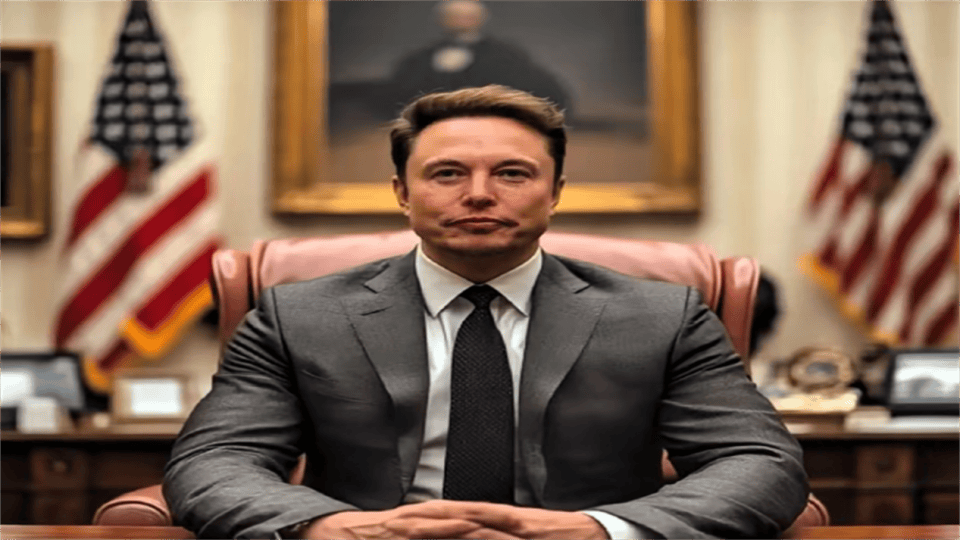
每日看点!深桑达A:公司现未布局太空算力
Mei Ri Jing Ji Xin Wen· 2026-02-12 14:13
Core Viewpoint - The company, 深桑达A, has not yet made any plans to enter the space computing market despite the trend among several cloud computing companies to do so [2] Group 1 - The company responded to an investor inquiry on its interactive platform regarding its plans for space computing [2] - Currently, the company has no layout or strategy in place for space computing [2]

高新企业家说|电科蓝天郑宏宇:抢占商业航天新蓝海
Sou Hu Cai Jing· 2026-02-12 04:15
Core Viewpoint - The successful listing of Dianke Lantian on the Shanghai Stock Exchange's Sci-Tech Innovation Board marks a significant milestone in the company's development and signals a new mission to explore the commercial aerospace market [1][4]. Company History and Development - Dianke Lantian, established in 1958, is recognized as the cradle of China's power supply technology and has supported major aerospace projects including "Dongfanghong-1," Shenzhou, Tiangong, Beidou, Chang'e, and Tianwen [4]. - The company has become a core supplier of aerospace power systems in China, with over 60% of its revenue from aerospace power systems projected for 2024, serving more than 700 satellites, spacecraft, and probes, and holding over 50% market share [4][6]. Technological Advancements - The company emphasizes the importance of technological trust and entry barriers as its competitive advantage, particularly through the development of gallium arsenide solar cell arrays, which have achieved a conversion efficiency of 32% and have been validated in orbit [4][6]. - Dianke Lantian is transitioning its product system towards large-scale production to meet the low-cost and lightweight demands of commercial aerospace, utilizing flexible solar cell technologies [6][10]. Business Strategy and Market Expansion - The company aims to balance its three major business segments: aerospace power, special power, and new energy applications, while integrating aerospace-grade reliability into civilian applications [8][10]. - Dianke Lantian has established a microgrid system that utilizes multiple energy sources, successfully implemented at the Antarctic Taishan Station, providing 100% clean energy for scientific research [10]. Innovation and R&D - The company has invested significantly in technological innovation, holding 11 core technologies and 367 authorized patents, with many achieving international leading or advanced levels [11][14]. - The IPO will raise 1.5 billion yuan to enhance production capacity and accelerate the establishment of an industrialization platform for aerospace power systems [14]. Future Outlook - Dianke Lantian plans to focus on maintaining its technological leadership and enhancing its core competencies to become a globally competitive innovative technology enterprise [14].

上证早知道|超20亿元新春礼包即将发放;DeepSeek又出圈;紫光股份启动A股定增
Shang Hai Zheng Quan Bao· 2026-02-12 00:03
Group 1 - The Ministry of Commerce and nine other departments have planned the "Lego New Year" special event for the Spring Festival, allocating 2.05 billion yuan to stimulate consumer spending through vouchers, subsidies, and red envelopes [6] - The automotive industry in China showed stable performance in January 2026, with production and sales reaching 2.45 million and 2.346 million vehicles respectively, while new energy vehicles maintained steady growth [4][6] - The State Council has issued implementation opinions on improving the national unified electricity market system, aiming to establish a market where 70% of electricity consumption is traded by 2030 [4] Group 2 - The successful test of the Long March 10 rocket and the Dream Boat spacecraft marks a significant breakthrough in China's manned lunar exploration program, indicating potential growth in the commercial aerospace sector [8] - The national standard for solid-state batteries for electric vehicles is expected to be released in July 2026, with the global market for solid-state batteries projected to grow significantly from 34 GWh in 2026 to 614 GWh by 2030 [10] - The recent acquisition of Fengrui Fluorine Industry by Hainan Mining is part of a strategic focus on key resources, expected to enhance short-term earnings and long-term strategic value [22]

商业航天2025年总结与2026年展望:星辰赛道万象新
材料汇· 2026-02-11 15:23
点击 最 下方 关注《材料汇》 , 点击"在看"和" "并分享 添加 小编微信 ,遇见 志同道合 的你 特别福利 (欢迎加入 材料汇商业航天交流群 并记住加小编微信 ) 商业航天在2025年底迈入2026年的步伐中,走出了新姿态、新趋势,市场关注度与资本热度空前高涨。我们认为,这种蓬勃发展的态势背后,是行业在多 个维度上焕发出的"新"生命力。 一是战略价值进一步凸显,商业航天成为大国产业竞速的"新"领域。 2026年初,国际电信联盟(ITU)官网显示,2025年12月25日到31日期间,我国正式向 ITU提交新增20.3万颗卫星的频率与轨道资源申请。与此同时,AI快速发展驱动算力需求增长,地面数据中心长远发展受到制约,业界纷纷将视角转向太 空,计划建设太空算力中心。1月30日,SpaceX已申请发射并运营一个由多达100万颗卫星组成的星座,旨在构建"轨道数据中心"。 卫星互联网、太空算 力等领域已成为大国博弈的新高地 ,美国星链的大规模组网部署、Spacex的上市计划等国际动态,进一步倒逼我国商业航天产业加速技术迭代与模式创 新。 二是"新"政策支撑体系持续完善,监管体系全面升级。 2025年11月,国家航天 ...
中国已错过“星链”,不可再错过太空算力
虎嗅APP· 2026-02-11 13:59
以下文章来源于底线思维 ,作者白玉京 底线思维 . 观察者网时评专栏 本文来自微信公众号: 底线思维 ,作者:白玉京 当马斯克推动SpaceX收购xAI,并提出"太空可能成为生成式AI算力成本最低的地方"时,很多人还 没意识到新一轮太空竞赛的发令枪已经打响。 几乎在同一时间,SpaceX向美国联邦通信委员会申请部署数量高达100万颗的低轨卫星网络,这一动 作更像是在为某种超出现有通信需求的体系提前占位。两件事放在一起看,很难再把它们理解为彼此 孤立的商业决策。 过去几年,人工智能竞争常被简化为芯片性能和模型规模的比拼,但随着训练和推理规模持续放大, 电力消耗、散热能力以及数据中心扩容,正逐渐成为算力增长的现实瓶颈。 在这样的背景下,把算力与通信系统一并推向太空,不再只是科幻式设想,而是一种围绕能源条件、 系统结构和长期成本的现实选择。太空算力真正要回答的,远不只是芯片性能问题,而是能源从哪里 来、系统能否闭环,以及是否具备工程可行性。 如果说在低轨巨型互联网星座上,中国更多是在追赶别人已经跑通的路径,那么在"天算"这个尚未定 型的新赛道上,至少仍然存在提前进入、参与定义的空间。"天算"未必会变成第二个星链,但 ...
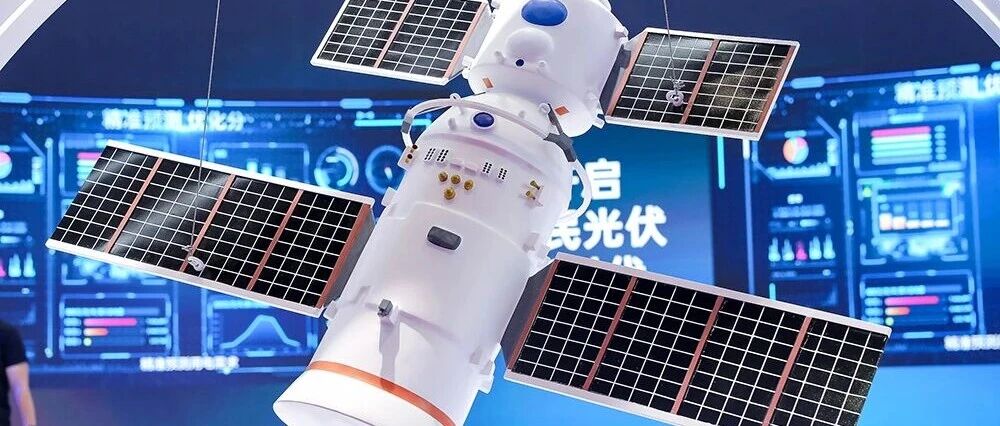
“宇宙订单”,能拯救这个行业吗?
财富FORTUNE· 2026-02-11 13:05
图片来源:视觉中国 "果链"之后,中国制造迎来了一个新名词:"马链"。 马斯克团队近日低调造访数家中国光伏企业,让一个还在价格战泥沼中苦苦挣扎的行业,忽然间站上 了"太空+AI"这个全新故事的舞台中心。 马斯克畅想的是,把高能耗的AI训练和为其提供能源的光伏电站一起搬到太空中,那里"永远是晴天", 阳光无限量供应,光伏发电能力可达地面数倍。在最近参与的一档将近3小时的播客里,他给出了具体 预测:只需36个月,太空就将成为部署AI的最便宜去处,那里不受地面电网、土地和冷却水的制约, 太阳能辐射稳定得像"永动机"。 于是, 一个全新的用电场景——太空算力,让一个已在低谷中徘徊数年、普通人眼中枯燥乏味的制造 业行业一夜之间披上了前沿技术的外衣,变得"性感"起来。 热度之下,一众光伏公司的估值迅速抬升。在马斯克团队来访消息传出后,晶科、天合光能、隆基等几 家光伏组件龙头的股价及相关指数大涨,一举扭转板块此前多月的疲软走势。 冷静看,这些涨幅多数建立在"可能合作"的预期与新奇叙事引发的躁动情绪之上,而没有真实的订单作 为依托。已有分析师援引在太空建电站的工程难度、马斯克一向的"过度承诺而交付不足",以及他很可 能只是在 ...

全球科技(计算机)行业周报:“火箭+AI+社交平台”初步整合,关注太空算力
Huaan Securities· 2026-02-11 07:25
Investment Rating - Industry Rating: Overweight [1] Core Insights - On February 2, SpaceX announced the acquisition of Elon Musk's AI company xAI for $250 billion, based on a recent funding round of $20 billion. This acquisition aims to create "the most ambitious vertically integrated innovation engine on and off Earth" [3][13] - The acquisition reflects Musk's grand plan for building AI data centers in space, which could become a scalable development pathway for AI in the long term. SpaceX's CFO indicated that this transaction would not delay the planned IPO, which could raise up to $50 billion, valuing SpaceX at approximately $1.5 trillion [3][13] - SpaceX plans to launch a constellation of 1 million satellites to form an orbital data center, utilizing near-constant solar energy from space, which will significantly reduce operational costs. Musk estimates that launching 1 million tons of satellites, each generating 100 kW of computing power, will add 100 GW of AI computing capacity annually [4][14] - The integration of Musk's business empire, including rockets, AI, and social media platforms, is accelerating. This integration aims to create a closed-loop ecosystem, with a focus on space computing, commercial aerospace, and data centers. Relevant companies to watch include Cambricon, Zhongke Shuguang, and Yike Technology [5][15] Market Performance Review - The computer industry index fell by 3.27%, underperforming the Shanghai Composite Index by 2 percentage points and outperforming the ChiNext Index by 0.01 percentage points. Year-to-date, the computer industry index has risen by 3.44% [17][20] - Among the 31 industry indices, the computer industry ranked 27th this week, and it was second among the four TMT sectors (electronics, communications, computers, media) [17][20] Technology Software Industry News - The National Star Aerospace's Taizhou computing satellite innovation base has officially commenced operations, significantly enhancing the integration and deployment of computing satellite systems [26] - The low-altitude economy in China is entering an accelerated industrialization phase, with a goal to establish a standard system by 2027 [27] - Waymo completed a $16 billion financing round, becoming one of the largest single financings in the autonomous driving sector, with plans to expand its services globally [29][30] - A new network security framework has been developed to protect future 6G vehicle networks from quantum computing attacks, marking significant progress in quantum-safe mobile infrastructure [31][32] - The International Olympic Committee announced a partnership with Alibaba to create the first official AI model for the Olympics, showcasing the integration of AI technology in major international events [35][36]
中国已错过“星链”,不可再错过太空算力
Guan Cha Zhe Wang· 2026-02-11 00:25
【文/观察者网专栏作者 白玉京】 当马斯克推动SpaceX收购xAI,并提出"太空可能成为生成式AI算力成本最低的地方"时,很多人还没意 识到新一轮太空竞赛的发令枪已经打响。 几乎在同一时间,SpaceX向美国联邦通信委员会申请部署数量高达100万颗的低轨卫星网络,这一动作 更像是在为某种超出现有通信需求的体系提前占位。两件事放在一起看,很难再把它们理解为彼此孤立 的商业决策。 过去几年,人工智能竞争常被简化为芯片性能和模型规模的比拼,但随着训练和推理规模持续放大,电 力消耗、散热能力以及数据中心扩容,正逐渐成为算力增长的现实瓶颈。 在这样的背景下,把算力与通信系统一并推向太空,不再只是科幻式设想,而是一种围绕能源条件、系 统结构和长期成本的现实选择。太空算力真正要回答的,远不只是芯片性能问题,而是能源从哪里来、 系统能否闭环,以及是否具备工程可行性。 如果说在低轨巨型互联网星座上,中国更多是在追赶别人已经跑通的路径,那么在"天算"这个尚未定型 的新赛道上,至少仍然存在提前进入、参与定义的空间。"天算"未必会变成第二个星链,但一旦系统形 态和运行规则被率先确立,后来者再想进场,成本就会明显提高。这也正是当前重 ...