
消费复苏

Search documents
2026年核心投资主线是什么?多家公募发声
证券时报· 2026-02-20 15:19
Core Viewpoint - The public fund industry remains optimistic about the economic fundamentals and market trends, highlighting structural opportunities in A-shares driven by multiple favorable factors, particularly in technology growth, energy transition, and consumer recovery [1]. Economic Fundamentals - Economic fundamentals are expected to continue improving, with a solid foundation and resilience in China's economy. The central economic work conference emphasizes "seeking progress while maintaining stability" and aims for stable growth and reasonable price recovery, leading to a good start for the 14th Five-Year Plan [3][4]. - Corporate profit growth is anticipated to stabilize, with ongoing breakthroughs in technological self-reliance and ample liquidity supporting a rational upward revaluation of Chinese assets. A-share valuations are still within a reasonable range, and an increase in dividends is expected to enhance shareholder returns [3]. Capital Market Dynamics - The influx of long-term capital is a core factor for the steady rise of the capital market. The market is expected to exhibit reduced volatility and structural differentiation, with funds concentrating on high-quality assets [7]. - The investor structure is shifting towards long-term and institutional investors, enhancing overall market stability. The "national team" is increasingly engaging in systematic long-term allocations, acting as a stabilizing force for the market [7][8]. Sector-Specific Opportunities - Investment opportunities are emerging in specific sectors, with a focus on technology growth, energy transition, and consumer recovery. The market style is expected to become more balanced, with notable sector rotation and structural rebalancing [10]. - Key areas of interest include: - Chemical and non-ferrous sectors showing positive changes in fundamentals, indicating a long-term upward trend [11]. - The banking sector is viewed as systematically undervalued, with certain quality enterprises offering stable growth attributes [11]. - Non-bank financial sectors with improving ROE trends are also expected to gain market attention [12]. - The Hong Kong stock market is seen as an opportunity for valuation recovery, liquidity improvement, and profit growth, becoming an essential part of risk diversification and income generation for residents [12]. Investment Themes - The investment focus for 2026 includes emerging technology growth and traditional industries, with an emphasis on high-growth sectors, relatively undervalued assets, and areas benefiting from policy dividends [13]. - Specific directions include: - Continued emphasis on technology growth, particularly in AI applications and semiconductors [13]. - Opportunities in cyclical recovery against the backdrop of "anti-involution" and service consumption driving economic growth [13]. - The importance of companies with real competitiveness and growth potential in technology self-reliance, energy transition, and consumer recovery [13].


山证资管总经理李宏宇:龙马奔腾启新程 山证资管伴君行
Sou Hu Cai Jing· 2026-02-19 10:55
岁律更新,春祺已至。值此马年新春佳节来临之际,我谨代表山证(上海)资产管理有限公司,向长期以来信任、支持我们的广大投资者,致以最诚挚的 新春祝福和最衷心的感谢!祝愿大家龙马精神、马到功成,阖家幸福、万事顺遂! 从投资前景来看,马年资本市场机遇与挑战交织,结构性机会凸显,值得重点布局。在政策引导与产业升级的双重驱动下,科技创新领域的人工智能、高 端制造、生物医药等领域,将持续受益于技术突破与政策支持,成为长期投资的核心主线;绿色低碳领域随着"双碳"目标推进,新能源、节能环保等产业 迎来发展黄金期,相关投资机会持续涌现;消费复苏与内需扩大背景下,品质消费、服务消费等领域有望焕发新活力。 面对新的市场环境,山证资管将坚守"以终为始,追求卓越"的工作方法论,立足160万亿元中国资管生态,深挖自身资源禀赋,聚焦特色化和差异化,推 动核心竞争力从直接投资能力向资产配置能力提升;加快产品创新步伐,围绕投资者多元化需求,推出更多适配不同风险偏好的产品,构建覆盖全生命周 期的财富管理服务体系;坚守合规风控底线,完善风险防控机制,强化投资者权益保护,以更规范的运作、更专业的服务回报投资者信任;积极融入"十 五五"发展大局,紧扣资 ...

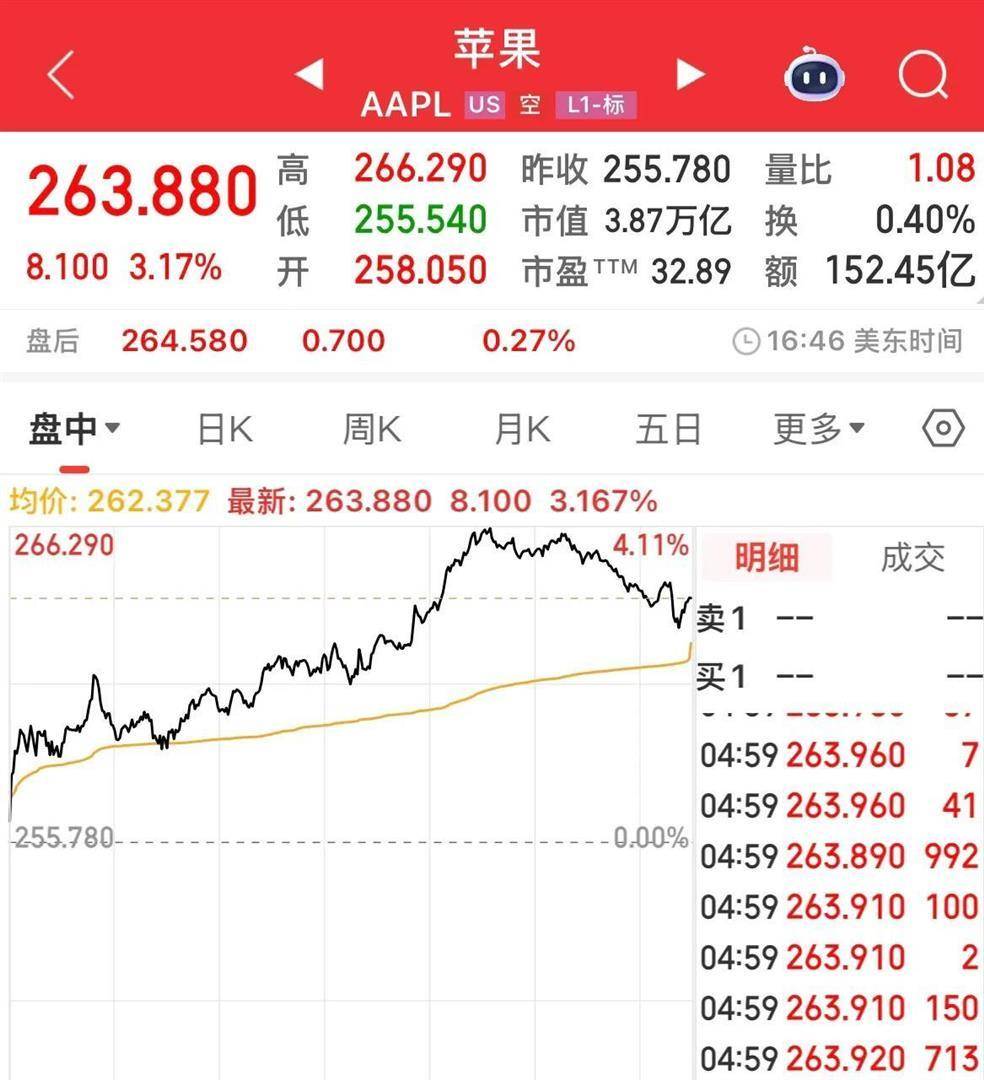
欧美股市全线反弹,英伟达苹果大涨,有色金属大跌,中概股小跌!上演了一出惊心动魄的深V大戏!
Sou Hu Cai Jing· 2026-02-19 06:06
昨晚全球股市上演了一出惊心动魄的"深V"大戏! 正当大家以为美股要跟着白天的期指一起"跳水"时,它却在开盘后硬生生拉了起来。 最 终,欧美股市全线飘红,但剧情可没那么简单,盘中像是坐过山车,跌了拉,拉了又跌,看得人心惊肉跳。 更刺激的是板块间的冰火两重天。 之前连跌几天的科技巨头英伟达和苹果,突然成了"救市主",盘中从大跌猛冲到暴涨。 而另一边,有色 金属却集体"扑街",铜、铝、稀有金属跌得一片惨绿。 中概股则显得有点蔫,整体小幅收跌。 这市场到底唱的哪一出? 是反弹真的来了,还是只是昙花一现? 咱们先看看美股的具体表演。 纳斯达克指数低开了0.68%,这开局可不 妙。 但故事才刚开始,开盘后没多久,它就被砸到了下跌1.25%的位置。 你以为这就一跌到底了? 并没有。 市场资金仿佛突然苏醒,又把它给拉红了。 可好景不长,红盘没保持多久,空头再次发力,指数又掉头 向下。 到了尾盘,又是一波跳水,眼看就要收跌,神秘力量再次出现,临收盘前一顿拉升,最终勉强收涨0.14%。 标普500的剧本也差不多。 同样是低开,开盘二十分钟内跌得最狠,幅度达到1.02%。 之后同样经历了拉红、下砸、再拉起的循环。 最终收 盘上涨0 ...


周末重磅利好齐落地!5家公司官宣增持,马年A股暖意浓(2.17)
Sou Hu Cai Jing· 2026-02-17 09:50
Core Viewpoint - The article highlights the positive sentiment in the stock market due to multiple companies announcing share buybacks by their major stakeholders, indicating strong confidence in their future performance and providing reassurance to investors [3][5]. Group 1: Company Buybacks - Five companies have officially announced share buybacks, with significant investments from their controlling shareholders and executives, demonstrating real financial commitment to their companies [3][4]. - The first company reported that its actual controller, Wang Zhifang, bought 3.8975 million shares, accounting for 0.513% of the total share capital, with a total investment of 21.8879 million yuan, exceeding the planned minimum of 20 million yuan [4]. - Hainan Huatie's general manager, Hu Danfeng, purchased 4.2 million shares, representing 0.21% of the total share capital, for 30.6925 million yuan, meeting the lower limit of its buyback plan [4]. - Zhejiang Nonggongshang's actual controller's concerted action group increased its stake by 2.6521 million shares, or 0.52% of the total share capital, with an investment of 24.3408 million yuan, completing its buyback plan [6]. - Tianli International Holdings' chairman personally bought 500,000 shares at an average price of 2.55 HKD per share, signaling strong confidence despite the small percentage of 0.02% [8]. Group 2: Market Conditions - The January social financing data exceeded expectations, with an increase of 7.22 trillion yuan, marking a historical high for the same period, indicating ample liquidity in the market [9]. - The Hong Kong stock market showed strength during the holiday, with gains in AI, internet, and financial sectors, which positively impacts the A-share market's opening [9]. - Continued supportive policies for consumption, technology, and infrastructure sectors are expected to create a favorable market environment, enhancing opportunities for both long-term and short-term investments [9].

怎么花钱最划算?看这份银行卡攻略就够了
Xin Jing Bao· 2026-02-14 06:57
Core Viewpoint - The upcoming 2026 Spring Festival is prompting banks to launch various promotional activities aimed at boosting consumer spending, with a focus on enhancing participation among middle and low-frequency users, particularly in lower-tier cities [3][10]. Group 1: Bank Promotions - China Construction Bank (CCB) is offering a "Payment Achievement Win Gifts" campaign from January 1 to March 31, where users can win up to 1998 yuan in WeChat discounts by meeting monthly spending thresholds [4][6]. - Industrial and Commercial Bank of China (ICBC) has multiple promotions, including discounts on movie tickets and food delivery, with specific offers like 5 yuan off for spending over 30 yuan on the Maoyan platform [6][8]. - Other banks, including Bank of China and Postal Savings Bank, are also rolling out New Year promotions, such as discount vouchers and cash rebates for various spending categories [8][10]. Group 2: Government and Financial Support - The Ministry of Commerce and other agencies have issued a plan to enhance financial support for consumer activities during the Spring Festival, encouraging banks to collaborate with key merchants [3][10]. - The "2026 'Happy Shopping Spring Festival' Special Activity Plan" emphasizes the importance of integrating local promotional activities with financial incentives like cash rebates and digital currency red envelopes [10]. Group 3: Economic Impact - The promotional activities are expected to stimulate short-term consumer spending and enhance market confidence, contributing to economic circulation [10]. - Data from January 2026 shows a 0.2% year-on-year increase in consumer prices, indicating a gradual recovery in consumer demand, particularly in the automotive and home appliance sectors [11].

飞天茅台批价逼近1800元!吃喝板块逆市显韧性,五粮液大涨1.38%,估值低位布局正当时?
Xin Lang Ji Jin· 2026-02-13 13:13
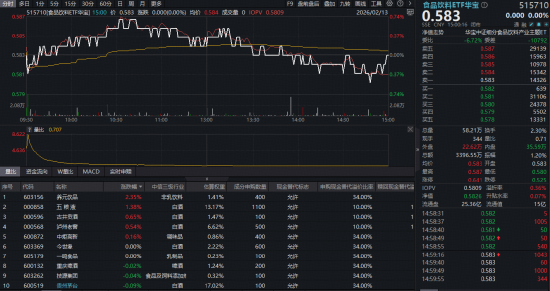
Core Viewpoint - The food and beverage sector shows resilience amid market corrections, with specific leading liquor brands performing well, while some consumer goods lag behind [1] Group 1: Market Performance - The food and beverage ETF Huabao (515710) demonstrated strong performance in the morning but closed flat after a slight afternoon decline [1] - Leading liquor brands such as Wuliangye rose by 1.38%, while some consumer goods like Angel Yeast and Lianhua Holdings saw significant declines [1] Group 2: Price Trends - The price of Feitian Moutai continues to rise, with a notable increase of 32 yuan per bottle, reaching 1790 yuan, approaching the 1800 yuan mark, marking a recent high [2] - The overall retail price of the top ten liquor products in the Chinese market shows structural differentiation [2] Group 3: Demand and Valuation - As the Spring Festival approaches, demand in the liquor sector is expected to accelerate, with potential spillover effects to other high-end liquor brands [3] - The food and beverage sector is currently at a historical low valuation, with the food index's price-to-earnings ratio at 20.32, indicating a favorable long-term investment opportunity [3] Group 4: Future Outlook - The industry is entering a phase of rapid performance recovery, with expectations of a weak rebound in demand as policy pressures ease [4] - The food and beverage ETF Huabao (515710) is recommended for investment, with a significant portion of its holdings in leading high-end liquor brands and other beverage sectors [4]

春节走访:成都市场跟踪
GF SECURITIES· 2026-02-13 11:41
Investment Rating - The industry investment rating is "Buy" indicating an expected performance that will exceed the market by more than 10% over the next 12 months [27]. Core Insights - The report highlights that the Chinese liquor market, particularly in Chengdu, is showing signs of recovery as the Spring Festival approaches, with increased sales velocity for major brands like Guojiao and Wuliangye [6][8]. - The seasoning market is also experiencing improved sales, with brands like Qianhe and Haitian gaining market share, and promotional activities increasing in supermarkets [11][12]. - The report suggests a positive outlook for the liquor sector in 2026, with recommendations for key stocks including Luzhou Laojiao, Shanxi Fenjiu, and Kweichow Moutai among others [2][4]. Summary by Sections Chengdu Liquor Market Tracking - Sales velocity for Wuliangye and Guojiao has accelerated as the Spring Festival approaches, with Wuliangye's current batch price at 790 CNY per bottle and Guojiao at 850 CNY per bottle [7][9]. - Feedback from distributors indicates that inventory levels are healthy, with a focus on maintaining good stock levels to avoid excess [8][9]. Chengdu Seasoning Market Tracking - Soy sauce sales have improved year-on-year, with Qianhe and Haitian leading in market share, and promotional activities in supermarkets have increased significantly [11][12]. - The overall health of inventory levels in the seasoning market is noted, with major brands maintaining shorter inventory ages, indicating strong sales performance [11][15]. Investment Recommendations - For the liquor sector, the report recommends stocks such as Luzhou Laojiao, Shanxi Fenjiu, and Kweichow Moutai, anticipating a new growth cycle starting in 2026 [2][4]. - In the consumer goods sector, companies like Anjuke Foods and Yanjing Beer are highlighted as having potential for outperforming the market due to new products and channels [2][4].



消费板块的春天到来了吗?
Sou Hu Cai Jing· 2026-02-13 07:57
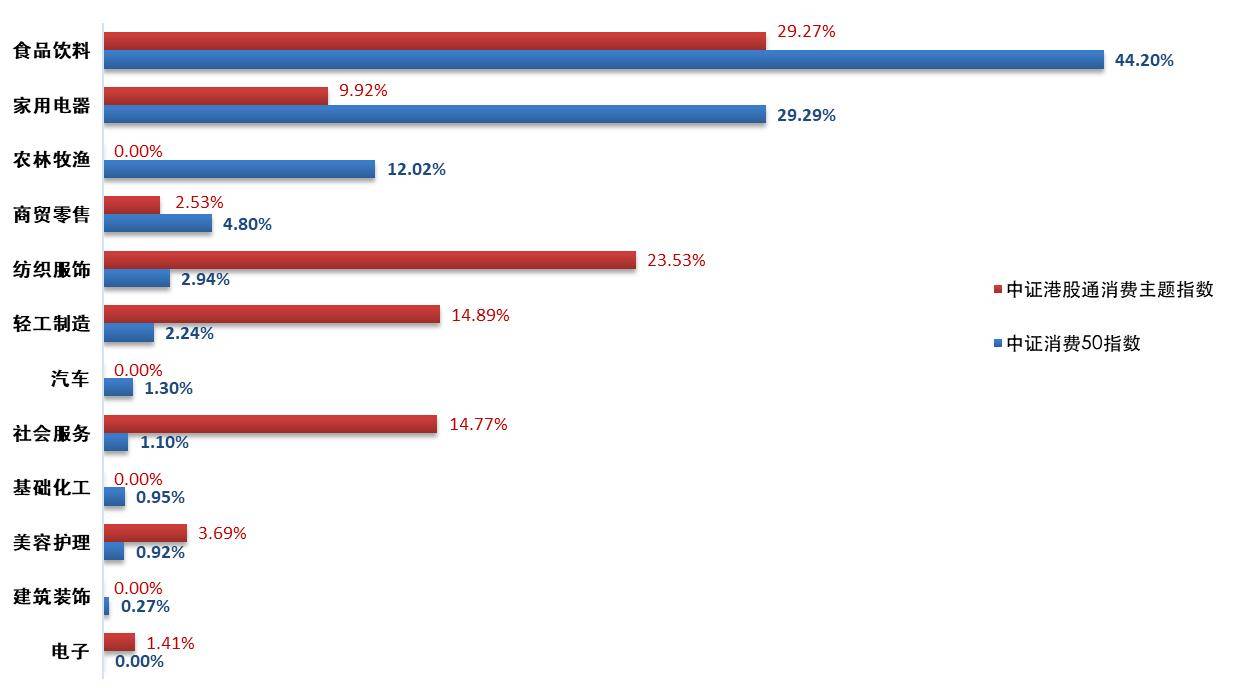
Core Insights - The consumer sector has seen a rise of over 3% in the Wind Consumer Major Index since the beginning of the year, indicating increasing market attention towards this sector. Consumer spending is fundamental to economic growth and serves as a lasting driver of the economy [1] Group 1: Characteristics of Consumer Indices - There are multiple consumer indices in the market, each focusing on different aspects such as traditional consumption (food and beverages) and emerging consumption. The CSI Consumer 50 Index and the CSI Hong Kong Stock Connect Consumer Theme Index are two representative indices, with a combined product scale exceeding 7 billion [2] - The CSI Consumer 50 Index selects large, high-quality listed companies from the A-share consumer sector, while the Hong Kong Stock Connect Consumer Index selects securities from the Hong Kong Stock Connect range. Both indices consist of 50 stocks, with individual stock weights not exceeding 15% [2] - The CSI Consumer 50 Index covers 11 consumer-related industries, with food and beverages and home appliances accounting for 75% of the index. In contrast, the Hong Kong Stock Connect Consumer Index covers 8 industries, with the same two sectors making up only 39.2% [2] Group 2: Composition of Indices - The top ten constituents of the CSI Consumer 50 Index include leading companies such as Kweichow Moutai, Wuliangye, and Midea Group. The top ten of the Hong Kong Stock Connect Consumer Index features companies like Pop Mart, Yum China, and Anta Sports, which complement A-share consumption leaders [4][5] - The CSI Consumer 50 Index has a cumulative weight of 74.81% for its top ten stocks, while the Hong Kong Stock Connect Consumer Index has a cumulative weight of 60.29% for its top ten stocks [5] Group 3: Valuation and Policy Support - As of February 11, the rolling P/E ratios for the CSI Consumer 50 Index and the Hong Kong Stock Connect Consumer Index are 17.0 and 18.6, respectively, both at historically low levels, with valuation percentiles of 7.91% and 3.87% over the past decade [6] - The low valuations are attributed to weak profit expectations for consumer sector companies amid insufficient domestic demand. The government has introduced various policies to stimulate consumption, including subsidies for replacing consumer goods and support for tourism and new energy vehicles [6] - The Central Economic Work Conference has included "deepening the implementation of special actions to boost consumption" as a key task for 2026, indicating ongoing policy support for consumption recovery [6] Group 4: Emerging Trends and Investment Opportunities - Positive structural changes in the consumer market include new consumption trends and overseas expansion, seen as a "second growth curve." Experience-based and emotional consumption led by younger generations is becoming popular, with companies like Pop Mart and Haier seeing over 40% of their revenue from overseas [7] - Index funds are highlighted as convenient and efficient investment tools for gaining exposure to the consumer sector. Given the current low valuations and policy support, investors are encouraged to consider opportunities in this sector, with products like the E Fund Hong Kong Stock Connect Consumer ETF and E Fund Consumer ETF available for tracking these indices [7]
ETF盘中资讯|i茅台春节不打烊!吃喝板块逆市走高,茅台五粮液大涨超1%!机构:白酒行业底部愈发清晰
Sou Hu Cai Jing· 2026-02-13 03:05
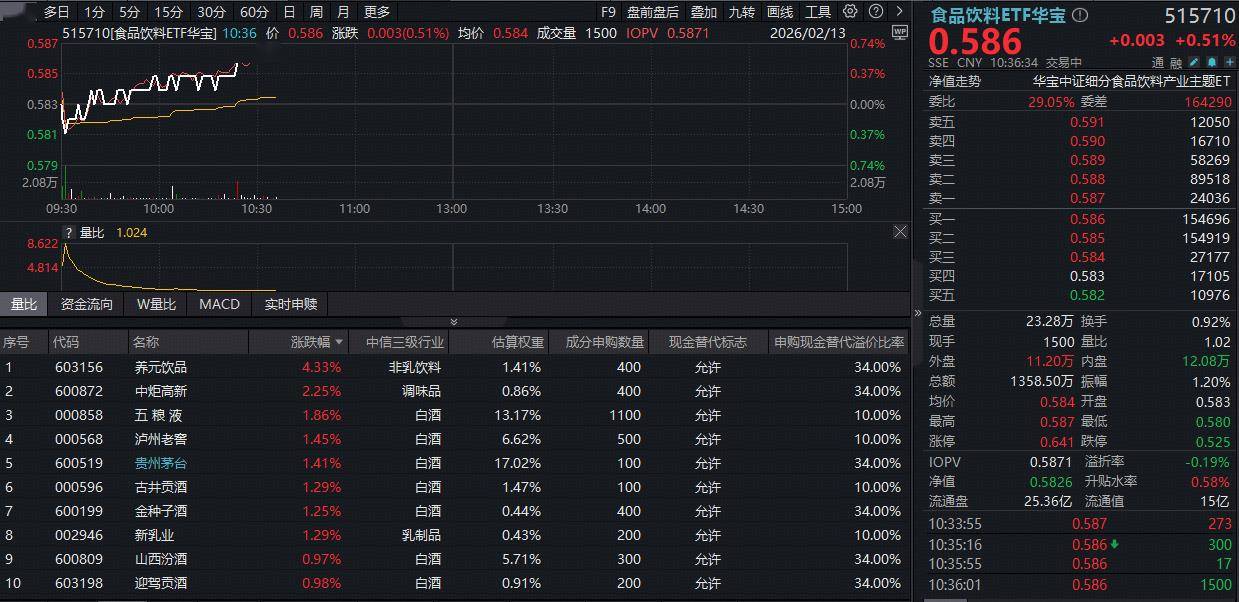
Core Viewpoint - The food and beverage sector is experiencing a counter-trend rise, with the Huabao Food and Beverage ETF (515710) showing a 0.51% increase, driven by strong performances from leading liquor stocks like Kweichow Moutai and Wuliangye [1][3]. Group 1: Market Performance - The Huabao Food and Beverage ETF opened higher and is currently up 0.51% [1]. - Major liquor stocks such as Kweichow Moutai, Wuliangye, and Luzhou Laojiao have seen increases of over 1% [1]. - The food and beverage sector's valuation is at a historical low, with the ETF's underlying index PE ratio at 20.32, placing it in the 8.02% percentile over the past decade [3]. Group 2: Consumer Behavior and Logistics - The iMoutai App will remain operational during the Spring Festival, with extended pickup periods and adjusted logistics to enhance consumer experience [3]. - The adjustments in logistics and service during the holiday period aim to smooth out sales fluctuations and maintain brand market heat [3]. Group 3: Future Outlook - Analysts suggest that the liquor industry is entering a phase of rapid performance clearing, with demand expected to show weak recovery as policy pressures ease [3]. - The industry is currently at a low valuation, with pessimistic expectations fully priced in, indicating a clearer bottoming out trend [3]. - The industry is expected to see a recovery in wholesale prices, with leading liquor companies increasing dividend payouts, enhancing their investment appeal [3]. Group 4: ETF Composition - The Huabao Food and Beverage ETF tracks the CSI segmented food and beverage industry index, with approximately 60% of its holdings in high-end and mid-range liquor stocks [4]. - The top ten weighted stocks in the ETF include leading brands such as Kweichow Moutai, Wuliangye, and Luzhou Laojiao, along with dairy and seasoning companies [4].


临近春节白酒动销逐步升温,消费ETF嘉实(512600)一键布局消费复苏行情
Xin Lang Cai Jing· 2026-02-13 02:45
Group 1 - The core viewpoint of the articles highlights a positive trend in the consumer sector, particularly in the food and beverage industry, driven by seasonal consumption patterns related to the upcoming Spring Festival [1][2] - The main consumption index has shown a slight recovery in January 2026, with significant increases in sub-sectors such as prepared foods, snacks, and alcoholic beverages, indicating a strong influence of holiday consumption on market dynamics [1] - The white wine sector is expected to perform better than market expectations during the Spring Festival, with increasing sales momentum as the holiday approaches, supported by resilient consumer spending [1] Group 2 - The consumption ETF managed by Harvest (512600) tracks the major consumer index, which includes leading A-share companies across various sectors, with white wine being the largest segment, accounting for over 38% of the index [2] - Investors can also access the consumption recovery trend through the consumption ETF linked fund (009180), providing an additional avenue for investment in the sector [3]