牛市

Search documents
不慌!不是出货!不出所料的话,周四,A股要这样走
Sou Hu Cai Jing· 2025-09-03 21:32
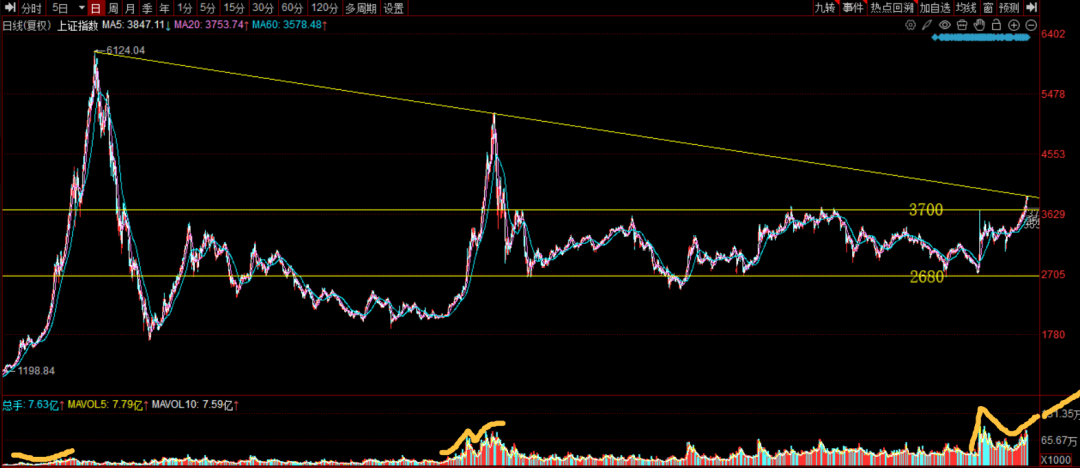
Group 1 - The market did not experience the expected surge today, with the ChiNext index showing resilience despite a general pullback in the market [1] - The current bull market is perceived to be nearing its end, with expectations of a shift towards traditional financial and consumer sectors as the main drivers of growth [3] - The market sentiment has shifted from optimism to pessimism within a short period, indicating a potential struggle for the indices to maintain upward momentum [5] Group 2 - The current trading strategy involves maintaining a reasonable position, with a focus on bottom-fishing and holding stocks, particularly in the ChiNext sector [7] - The market is expected to oscillate between 3800 and 4000 points, creating opportunities for institutional arbitrage [5] - The ongoing issuance of funds suggests that investors are reallocating from traditional sectors to chase growth, which may lead to increased volatility in the coming months [3][5]


牛气!涨幅第一
Ge Long Hui· 2025-09-03 10:45
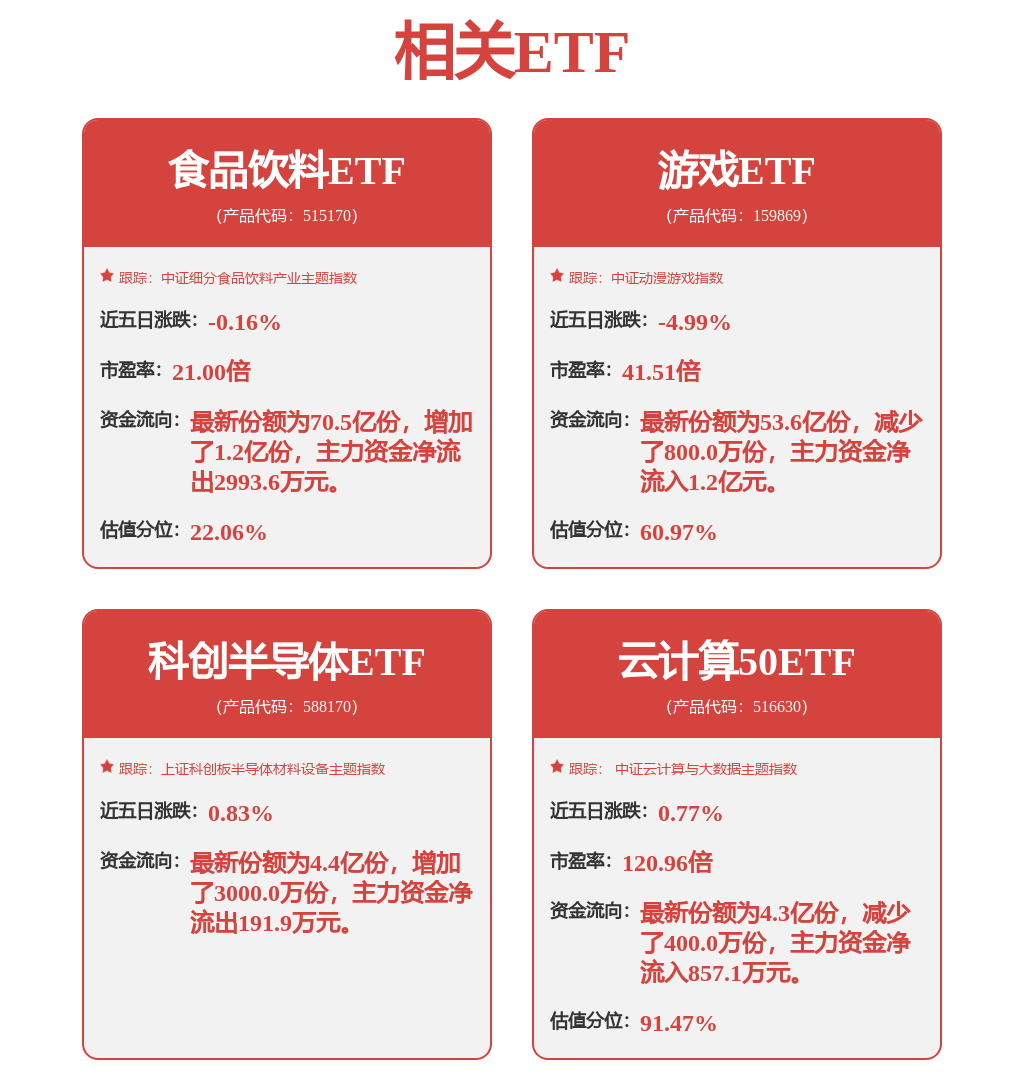
Group 1 - The A-share market is experiencing increased volatility and style rotation, with the Shanghai Composite Index around 3800 points and a notable rise in AI hardware and new energy sectors [1] - The ChiNext ETF (159915) has seen a net inflow of over 800 million yuan in the last two trading days, while the A500 ETF (159361) has attracted over 2 billion yuan in the past 20 trading days, indicating a shift in investment focus [2][3] - The ChiNext Index has increased by 60.43% since its low on April 8, making it the best-performing core index in the market [3] Group 2 - Discussions about whether a bull market has been established are prevalent, with some analysts citing technical indicators showing a 20% increase in indices, while others remain cautious due to macroeconomic concerns [5][6] - Historical data comparisons indicate that while some indicators are high, such as trading congestion and margin financing ratios, others remain low, suggesting potential for further growth [8][9] - The current market's market capitalization to GDP ratio is 85.6%, which is lower than previous peaks, indicating room for growth [9] Group 3 - The earnings performance of the ChiNext and A500 indices shows a median revenue growth rate of 8%-12% and 10%-15% respectively for the first half of 2025, indicating a recovery in demand [17] - The recovery is attributed to domestic economic momentum, policy benefits, and improvements in gross margins due to technological upgrades [18] - The ChiNext Index has risen by 35.38% this year, leading the market, while its latest P/E ratio stands at 40.75, indicating a growth-oriented investment style [21] Group 4 - The A500 ETF (159361) has a scale of 19.89 billion yuan and offers a dividend yield of 2.36%, which is higher than the 10-year government bond yield, making it an attractive investment option [22] - The market is characterized by a trend of performance improvement and valuation recovery, with both growth and value stocks showing potential for long-term investment [25]
【金融工程】市场或有颠簸,但牛市不变——市场环境因子跟踪周报(2025.09.03)
华宝财富魔方· 2025-09-03 09:06
Group 1 - The core viewpoint of the article suggests that while there may be short-term fluctuations in September due to profit-taking, the overall bull market remains intact, supported by high market activity and positive sentiment [1][4]. - The report recommends maintaining or increasing positions in large-cap indices and the ChiNext, with a focus on growth sectors such as technology and rare earths for medium to high-risk investors [1][4]. - The equity market showed a balanced style between large and small caps, with a significant advantage for growth styles, while the volatility of value and growth styles increased [6][7]. Group 2 - In the commodity market, all sectors experienced a decline in trend strength, while the energy and precious metals sectors saw a rapid increase in basis momentum [20]. - The options market indicated that implied volatility for the SSE 50 and CSI 1000 remained high, with an increase in the skew of put options for the CSI 1000, suggesting some divergence among market participants [28]. - The convertible bond market experienced adjustments with significant daily declines, but the overall trading volume did not show a marked decrease, indicating that it will continue to follow the equity market's trends [30].

虎见系列之二十七——A股“寒武纪时刻”:牛市行进到哪一步了?
Sou Hu Cai Jing· 2025-09-03 08:40
Group 1 - The article discusses the significance of the "Cambrian moment" in the A-share market, marked by the rise of domestic AI chip company Cambrian Technology, which briefly surpassed Kweichow Moutai to become the highest-valued stock in A-shares [1][3] - The rise of Cambrian Technology symbolizes a shift in the capital market from traditional consumption to technology-driven growth, indicating a broader industrial upgrade [3][4] - Historical patterns suggest that surpassing Kweichow Moutai often signals a market peak, raising questions about whether this transition represents a new era or merely a high point in the current market cycle [3][5] Group 2 - The current bull market is characterized by a transition from old to new economic drivers, with a focus on technology innovation as a key theme [4][5] - The market has seen rapid increases in index levels, with significant trading volumes, indicating strong investor interest and potential volatility [5][6] - The article emphasizes that the bull market is not at its peak yet, as historical data shows that the current market duration is shorter than previous bull markets, suggesting more room for growth [9][10] Group 3 - The article outlines three foundational elements supporting the ongoing bull market: policy support, strategic transformation, and capital flow adjustments [6][7] - Policy measures include macroeconomic strategies aimed at combating deflation and stimulating investment through capital market activation [6] - The shift in strategy from defensive to proactive measures in response to trade and technology challenges reflects a more confident approach to economic management [7] Group 4 - Technical indicators suggest that the current market is in a mid-bull phase, characterized by slower growth, structural differentiation, and increased volatility [8][9] - The article highlights that the market has not yet reached a peak, as evidenced by the lack of widespread investor enthusiasm and the ongoing structural adjustments within various sectors [13][14] Group 5 - Short-term risks include profit-taking pressures, valuation bubbles in certain sectors, and a lack of clear macroeconomic narratives to drive future growth [14][15] - The article advises investors to focus on themes of technological transformation and geopolitical dynamics while being cautious of overvalued sectors [15][16] Group 6 - Future variables impacting the market include the anticipated interest rate cuts by the Federal Reserve, which could influence capital flows and currency stability [17][18] - The potential for coordinated monetary easing globally may provide additional support for equity markets, particularly in the context of domestic policy measures aimed at stimulating growth [18]


投资中最困难的事:踏空后该怎么办?
雪球· 2025-09-03 08:23
Core Viewpoint - The article discusses the recent bullish sentiment in the A-share market, highlighting the acceleration of market gains in August and the contrasting performance of the Hong Kong stock market. It emphasizes the importance of understanding market cycles and the reasons behind investors missing out on opportunities during a bull market [4][5]. Market Performance - In August, the A-share market showed signs of accelerated growth, with the Wind All A index and the CSI 300 index rising by 10.93% and 10.33% respectively. In contrast, the Hang Seng Index and the Hang Seng Technology Index only increased by 1.23% and 4.06% [4]. - Year-to-date, the Hang Seng Index has risen by 25.01%, while the Wind All A index has increased by 22.98%, indicating a narrowing gap in performance [4]. Reasons for Missing Opportunities - For amateur investors, a lack of continuous attention to the stock market leads to missing out on opportunities, which is understandable given their focus on other careers [7]. - Professional investors experience significant frustration when they miss out on gains, especially when they see others profiting. This feeling can be more intense than losses during a bear market [7][8]. Key Reasons for Missing Out - The first reason is the "death of the bull's heart," where investors, conditioned by previous bear markets, perceive early market recoveries as mere rebounds and avoid participation [9][11]. - The second reason is the lack of thorough research and preparation regarding specific stocks or industries, leading to uncertainty about where to invest [12][14]. Strategies for Adjustments - Investors need to broaden their understanding of market adjustments, which can take various forms beyond significant declines in broad indices. Style rotation is also a crucial aspect of market adjustments [15][16]. - It is essential to differentiate between interest in broad indices and specific companies or industries, as their performances may not always align [17]. Investment Approach - The article suggests that during a bull market, it is unwise to remain in cash waiting for adjustments. Instead, investors should maintain a high level of engagement and look for opportunities in undervalued sectors [19][20]. - The current market is described as healthy, with a potential for adjustments, but no signs of a bear market reversal are evident [22][23].

宇树科技冲刺IPO,四季度申请能否搭上A股牛市快车?
Sou Hu Cai Jing· 2025-09-03 08:21
Group 1 - The humanoid robot company, Yushu Technology, is gaining significant market attention and is accelerating its IPO process, planning to submit its listing application to the stock exchange in Q4 of this year [1][3] - Yushu Technology is inclined to list on the A-share Sci-Tech Innovation Board, which may lead to different valuation considerations compared to other markets [1] - Among the "Hangzhou Six Little Dragons," both Yushu Technology and Qunhe Technology have expressed clear intentions for an IPO, while the status of the other four companies remains uncertain [1] Group 2 - Qunhe Technology initiated its IPO application process over six months earlier than Yushu Technology, opting for the Hong Kong stock market [3] - The valuation pricing mechanisms differ between markets, and both A-share and Hong Kong markets are currently in a bull market, which is favorable for companies like Qunhe Technology that have submitted IPO applications [3] - If Yushu Technology successfully submits its IPO application in Q4, its listing may be delayed until mid-next year, raising uncertainties about whether it can capitalize on the ongoing A-share bull market [3] Group 3 - Yushu Technology completed a C-round financing between June and July this year, raising its valuation to 12 billion RMB [3] - Compared to valuation data from Hurun Research Institute, Yushu Technology's valuation is slightly lower than Qunhe Technology but higher than Qiangnao Technology [3] - As Yushu Technology enhances its sales performance and R&D capabilities, its valuation is expected to see significant growth [3] Group 4 - The acceleration of IPO processes by Qunhe Technology and Yushu Technology may lead to more hard-tech enterprises and unicorn companies following suit [3] - Successful listings in the current bull market environment could positively impact the valuations of these companies [3]

9.3 A股反攻!
Sou Hu Cai Jing· 2025-09-03 02:52
Core Viewpoint - The recent sharp decline in the A-share market, particularly the 2.85% drop in the ChiNext Index, is not indicative of the end of a bull market but rather a typical shakeout behavior during an upward trend, suggesting a potential for short-term rebound [1][4]. Market Adjustment Factors - The market adjustment on September 2 was influenced by multiple factors, including technical pressure from accumulated profit-taking after a prolonged upward trend since April [3]. - There was a significant rotation of funds from high-valuation growth sectors, particularly in technology, to undervalued defensive sectors such as banking and utilities, amplifying market volatility [3]. - The negative sentiment from the substantial decline in U.S. tech stocks and the market's cautious stance ahead of the Federal Reserve's September meeting contributed to the adjustment [3]. Long-term Market Support - Despite the recent downturn, the core logic supporting a medium to long-term positive outlook for the market remains intact, driven by ongoing policies in sectors like "Artificial Intelligence+" and measures aimed at stabilizing growth and boosting consumption [5]. - The rapid decline is seen as a quick release of risks, effectively digesting profit-taking and eliminating localized bubbles, which can accumulate strength for future upward movement [5]. Short-term Market Outlook - In the short term, there is potential for a technical rebound following the recent sharp decline, supported by ample policy tools for growth stabilization and expectations of possible interest rate cuts [7]. - The anticipated easing of the Federal Reserve's monetary policy and a weaker dollar may enhance the attractiveness of RMB assets, potentially leading to a continued inflow of northbound capital [7]. - The significant trading volume of 2.87 trillion yuan during the decline indicates a release of short-term selling pressure, with stabilization in key sectors providing support for the market [7]. - The emotional release from the sharp drop may lead to a stabilization of market sentiment, allowing for a recovery of quality stocks that were oversold [7].
创历史新高!股市,一个强劲的信号
Xin Lang Ji Jin· 2025-09-03 01:27
Group 1 - The total margin financing balance in A-shares reached a historical high of 2.3 trillion yuan as of September 1, surpassing the previous peak of 2.27 trillion yuan on June 18, 2015 [1] - The financing balance alone is 2.28 trillion yuan, also a record high, indicating a significant increase in market activity and a strong profit effect [1] - Despite the high margin financing levels, the financing balance as a percentage of the circulating market value is still below the historical peak of 4.72%, suggesting potential for further growth [1] Group 2 - The current market activity is characterized by high trading volumes, with a recent trading volume of 2.75 trillion yuan, significantly above the average of 1.79 trillion yuan over the past 60 trading days [1] - The ongoing bull market, which began in September of last year, shows no signs of slowing down, with both margin financing and trading volumes remaining elevated [2] - The brokerage sector is expected to report strong performance in the third quarter due to high trading volumes, with significant inflows into brokerage ETFs indicating strong market interest [2] Group 3 - The current total market capitalization to GDP ratio for A-shares is approximately 86.83%, which is lower than historical peaks observed in 2007, 2015, and 2021, suggesting that the market is not yet in a bubble [3] - As the index approaches 4000 points, increased volatility is expected, with a faster rotation among sectors, particularly benefiting undervalued sectors with strong performance [3] - The current market environment, characterized by improved regulatory capabilities and investor maturity, is unlikely to replicate the sharp declines seen in previous bull markets of 2007 and 2015 [3]
21评论丨判断“长牛”的四大指标
2 1 Shi Ji Jing Ji Bao Dao· 2025-09-02 22:19
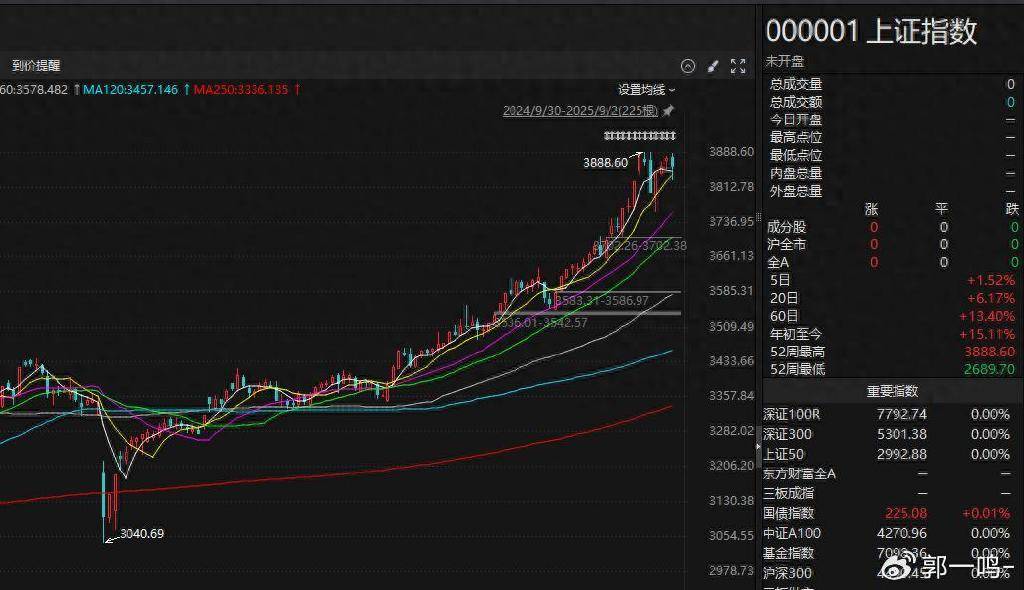
Group 1 - The A-share market has become active, with the Shanghai Composite Index reaching a nearly ten-year high, surpassing 3700 points for the first time since August 2015, and the CSI 300 Index breaking 4200 points [2] - The onshore bond market indicates a more positive long-term macroeconomic outlook, with the yields on 10-year and 30-year government bonds rising to 1.78% and 2.11%, respectively, since late June [2] - Factors driving the A-share market include improved liquidity, a shift of funds from the bond market and savings to the stock market, and expectations of policy easing [2] Group 2 - Domestic liquidity has improved, with Morgan Stanley's liquidity indicator turning positive in June, primarily due to large-scale government bond issuance [3] - "Anti-involution" measures are boosting market confidence, as expectations for price stabilization and improved supply-demand relationships grow [3] - The State Council's recent meeting emphasized the need to consolidate and expand economic recovery, indicating further macroeconomic policy support [3] Group 3 - Funds may shift from bonds and fixed deposits to the stock market, as rising bond yields make equities more attractive [4] - Key indicators for assessing the sustainability of the current bull market include onshore RMB bond yields, macro policy implementation in Q3 and Q4, and A-share market performance in the second half of the year [5] - The balance of margin financing and securities lending has exceeded 2 trillion RMB (approximately 290 billion USD), reaching a historical high for A-shares [6]

震荡加大,释放就会有。但趋势行情没变!
Sou Hu Cai Jing· 2025-09-02 16:21
Market Overview - The market experienced a significant decline on Tuesday, closing at 3858.13 points with a trading volume of 28.75 billion, while foreign capital accounted for 3.67 billion [1] - The technology sector, including communications and components, saw substantial losses, while banking, small metals, and seed industries performed relatively well [1] Market Sentiment - The current market trend is identified as a bull market, with expectations for increasing trading volumes in the future, indicating that current adjustments are not alarming [3] - September is anticipated to be a month of increased volatility, as previously discussed in recent analyses [3] Technical Analysis - The market is expected to follow an ABC pattern, with the C wave approaching the 20-day moving average around 2765, suggesting potential fluctuations around this level [5] - Key support is identified at 3820 points and resistance at 3885 points, indicating a continued volatile trading environment [5] Trend Analysis - The market is characterized by a strong upward trend despite the volatility, with the 20-day moving average serving as a critical support level [6] - The current adjustments are viewed as healthy corrections within the overall bull market trend, allowing for the release of pressure without triggering significant downturns [7] Investment Strategy - Investors are advised to maintain their positions in high-quality stocks while utilizing a phased selling strategy for high-position stocks, selling portions as specific criteria are met [7] - For lower-position stocks that have not accelerated, a focus on future growth is recommended, with an understanding of the current market fluctuations [8]