
量化宽松

Search documents
美债利率狂飙5%!美联储狂买348亿,这场庞氏游戏还能撑多久?
Sou Hu Cai Jing· 2025-05-27 00:03
Core Viewpoint - The U.S. debt crisis is escalating rapidly, with the national debt nearing $37 trillion, equating to 124% of GDP, and increasing by $1 trillion every three months, indicating a severe fiscal sustainability crisis [1][3]. Group 1: Debt and Credit Rating - Moody's downgraded the U.S. sovereign credit rating from AAA to AA1 with a negative outlook, citing ineffective debt management by Congress and projected fiscal deficits worsening over the next decade [3]. - By 2035, interest payments on U.S. debt are expected to consume 30% of the federal budget, highlighting the fragility of fiscal health [3]. Group 2: Market Reactions - The confidence in U.S. Treasuries is rapidly eroding, with 20-year and 30-year Treasury yields surpassing 5%, reflecting significant investor sell-off [3][4]. - The recent auction of $150 billion in Treasuries resulted in only $78 billion in sales, indicating a $72 billion shortfall, which has prompted the Federal Reserve to intervene by purchasing $34.8 billion in 30-year Treasuries [3][4]. Group 3: Economic Implications - Rising Treasury yields are causing a broader increase in interest rates, with 30-year mortgage rates exceeding 7%, leading to higher corporate financing costs and potential revaluation of asset prices [4]. - The simultaneous rise in stock and bond yields suggests a shift of funds from Treasuries to riskier assets, raising concerns about U.S. fiscal stability and accelerating the de-dollarization trend globally [6]. Group 4: Federal Reserve's Dilemma - The Federal Reserve faces a challenging situation of needing to maintain high interest rates to combat inflation while also purchasing bonds to ensure liquidity in the Treasury market, creating policy uncertainty [6]. Group 5: Long-term Economic Outlook - The U.S. debt issue is fundamentally rooted in its economic development model and institutional flaws, with potential long-term consequences for the credibility of the dollar and the global economic order [11].


日本国债遇冷放大全球债市风险
Jing Ji Ri Bao· 2025-05-26 22:10
Group 1 - The recent auction of Japanese long-term government bonds was poorly received, indicating deep-rooted issues in the Japanese economy and reflecting global economic challenges under high debt and inflation pressures [1][2] - The bid-to-cover ratio for the newly issued 20-year Japanese government bonds fell to 2.5, the lowest level since 2012, with a significant increase in the tail difference to 1.14, highlighting severe market demand weakness [1] - Japan's largest life insurance company, Nippon Life, reported a substantial paper loss of 3.6 trillion yen (approximately 25 billion USD) in its holdings of Japanese government bonds, doubling from the previous year [1] Group 2 - Japan's public debt has reached 234.9% of GDP, surpassing Greece's peak during the European debt crisis, with interest payments expected to account for about 25% of the annual budget [2] - The core Consumer Price Index (CPI) in Japan rose by 3.5% year-on-year in April, marking 44 consecutive months of increase, driven by rising food prices, which has led to expectations of further interest rate hikes [2] - The global bond market is experiencing heightened risks, with potential liquidity tightening due to large-scale unwinding of yen carry trades and selling pressure on U.S. Treasuries as Japan liquidates its holdings [2] Group 3 - The global bond market faces multiple pressures, including rising inflation, increased government financing needs, and shrinking demand from asset-liability management investors, which may reshape global capital flows [3] - Japan's government has limited options to address the crisis, with potential short-term measures including temporary increases in bond purchases or reinitiating yield curve control, while long-term easing of quantitative measures seems unlikely [3] - The need for Japan to confront complex issues such as debt restructuring, fiscal discipline, and economic growth model transformation is highlighted, indicating potential pain during this process [3] Group 4 - The volatility in the global bond market reflects vulnerabilities in the international financial system, necessitating careful policy balancing among inflation control, debt stability, and economic growth to avoid systemic risks [4]
美国债务危机:现状、影响与未来展望
Di Yi Cai Jing· 2025-05-25 12:40
Group 1 - The U.S. debt issue has become a global economic focus, affecting both the stability of the U.S. economy and the global financial market [1][14] - Moody's downgraded the U.S. debt rating from Aaa to Aa1, marking the first downgrade of U.S. sovereign debt by a major rating agency [1][2] - The downgrade has led to significant fluctuations in long-term bond yields, reaching the highest levels since 2008, with 10-year U.S. Treasury yields rising to 4.48%-4.54% and 30-year yields nearing 4.97% [1][2] Group 2 - Moody's report highlights systemic risks in U.S. federal finances, predicting a structural deterioration in the fiscal deficit, which could reach 9% of GDP by 2035 [2] - The Congressional Budget Office (CBO) projects that if current policies persist, federal debt could reach 180% of GDP by 2050, with interest payments rising from 1.6% of GDP in 2023 to 6.7% [2] - Political polarization is hindering necessary reforms, with ongoing conflicts between the Republican and Democratic parties over tax cuts and welfare expansion [2][3] Group 3 - The current administration's tax cut proposals could lead to a $4.2 trillion reduction in fiscal revenue over ten years, exacerbating the deficit and debt situation [3] - The projected budget indicates a 33% increase in the deficit, driven by rising interest payments and social security expenditures [3] - Comparisons are drawn to the UK's fiscal situation, noting that the U.S. deficit is significantly higher than the UK's at the time of its crisis [3] Group 4 - Rising U.S. bond yields are prompting a global asset repricing, with long-term bond yields increasing while stock markets decline [4] - As of May 2025, the U.S. national debt has surpassed $35 trillion, with $7 trillion maturing within the next 12 months [4] - Foreign investors are gradually reducing their exposure to U.S. securities, with notable sell-offs from countries like China and Japan [4] Group 5 - Central banks, including China's, are increasingly interested in gold, leading to a record high in global central bank gold purchases [5][6] - China's central bank increased its gold reserves by 280 tons, raising the proportion of gold in its foreign reserves from 3.3% to 7.8% [6] Group 6 - The rising cost of borrowing for the U.S. government is projected to consume 22% of tax revenue by the 2030s for debt interest payments [7] - The Federal Reserve's shift from quantitative easing to tightening has increased market supply pressure on bonds, contributing to rising yields [7][11] - The potential for a return to quantitative easing raises concerns about inflation, especially given the recent inflation rates [7][12] Group 7 - The U.S. faces a pressing need to refinance $7 trillion in maturing debt, with rising yields making borrowing more expensive than in the past decade [11] - The reversal of quantitative easing has led to increased bond supply, while demand remains weak, resulting in falling bond prices and rising yields [11] Group 8 - Political gridlock poses a significant challenge to addressing the debt crisis, with both parties showing little willingness to compromise on fiscal policies [13] - Public sentiment largely opposes cuts to social security and other welfare programs, complicating efforts to reduce the deficit [13] Group 9 - Long-term economic growth trajectories will be crucial in determining the sustainability of U.S. debt levels, with potential declines in innovation and productivity posing risks [14] - The U.S. must navigate the balance between fiscal responsibility and political feasibility to address its growing debt challenges [14]
美国贸易逆差的魔幻现实主义:当全世界都在为美元打工
Sou Hu Cai Jing· 2025-05-25 04:59
Group 1 - The article discusses the transformation of the U.S. dollar from a gold-backed currency to a fiat currency, emphasizing its dual role as both the national currency and a global reserve currency [1][3] - The U.S. trade deficit has dramatically increased from $6 billion in 1975 to nearly $1 trillion in 2022, challenging traditional economic theories that view trade deficits as a sign of economic decline [1][5] - The article highlights the irony of the U.S. imposing tariffs on Chinese goods, which ultimately burdened American consumers and businesses, leading to an increase in the trade deficit during Trump's administration [1][5] Group 2 - The U.S. has a low personal savings rate of 3.8% as of Q3 2023, compared to China's 45%, reflecting a different economic structure that encourages consumption over saving [5] - The U.S. net international investment position reached -$18.3 trillion, indicating that each American citizen owes approximately $55,000 to the rest of the world, yet creditors continue to lend due to the U.S.'s significant consumer market [5][7] - The article points out that U.S. multinational companies contribute significantly to the trade surplus with China, with 40% of the surplus attributed to American firms operating in China [7] Group 3 - The article discusses the "super privilege" of the U.S. dollar, allowing the U.S. to purchase global goods through money printing, which effectively imposes an "inflation tax" on other countries holding dollar reserves [7][9] - The rise of digital currencies is seen as a potential threat to the dollar's dominance, with China's cross-border RMB payments reaching 48% in 2023, indicating a shift in global trade dynamics [9] - The U.S. trade deficit is portrayed as a byproduct of the current international monetary system, reflecting both U.S. economic power and the inherent contradictions of globalization [9]

债券拍卖遇冷,日本国债大跌,石破茂:日本财政状况比希腊还差
Mei Ri Jing Ji Xin Wen· 2025-05-22 08:43
Core Viewpoint - The structural risks of Japan's ultra-long-term government bonds are rising as yields continue to increase, with the 40-year yield reaching its highest level since issuance in 2007, indicating potential challenges for Japan's fiscal sustainability and global market stability [1][2][4]. Group 1: Bond Market Dynamics - Japan's long-term bond yields are on the rise, with the 40-year yield increasing by 6 basis points to 3.675%, the highest since 2007 [1]. - The 10-year and 5-year government bond yields have also risen, reaching 1.56% and 1.02% respectively [1]. - The recent auction of 20-year bonds saw the lowest bid-to-cover ratio since 2012, dropping to 2.5 times, indicating weak market demand [2][4]. Group 2: Central Bank Challenges - The Bank of Japan holds 52% of the Japanese government bond market, acting as a stabilizer but facing a dilemma between continuing quantitative tightening (QT) and the risk of market volatility [5]. - If QT continues, long-term bond yields may rise further, leading to significant losses for bondholders and potentially forcing the Bank of Japan to reintroduce yield curve control (YCC) or negative interest rates [5]. - Conversely, if the Bank of Japan opts for quantitative easing (QE), it may alleviate market volatility but exacerbate inflationary pressures and lead to a depreciation of the yen [5]. Group 3: Economic Sentiment - A recent survey indicated that 65% of Japanese companies are calling for the Bank of Japan to pause its interest rate hike plans, reflecting concerns over economic contraction and uncertainty from external factors [6]. - The total national debt of Japan is projected to reach 1,323.7155 trillion yen by the end of the fiscal year 2024, marking a continuous increase and raising concerns about fiscal sustainability [7]. - The Japanese government is facing a fiscal dilemma, with rising expenditures due to inflation not being fully covered by tax revenues, leading to a precarious financial situation [8].
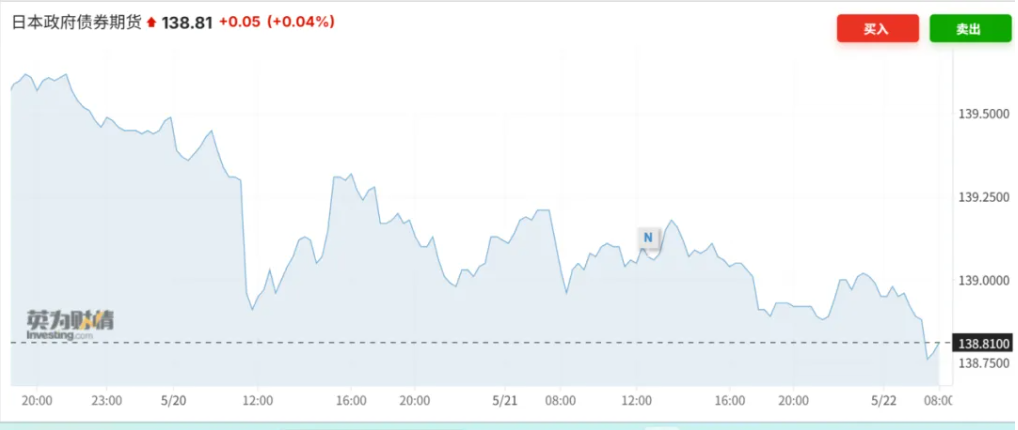
关税冲击叠加流动性收紧 日本股市下行风险加大
Qi Huo Ri Bao Wang· 2025-05-22 01:00
Economic Challenges - Japan's economy faced two major challenges: weak consumer market performance and export impacts due to tariffs [2][8] - In Q1 2025, Japan's GDP contracted by 0.2% quarter-on-quarter, marking the first decline since Q2 2024, with annualized GDP shrinking by 0.7% [2] - Private consumption remained flat in Q1, contributing only 0.1 percentage points to GDP growth, while net exports negatively impacted GDP growth by 3.3 percentage points due to a 0.6% decline in exports [2][3] Inflation and Consumer Spending - High inflation has led to stagnation in consumer spending, with the GDP deflator index rising by 3.3% year-on-year in Q1, surpassing the previous year's 3.1% [2] - Despite a 4.3% increase in employee compensation in Q1, real disposable income for households fell by 2.5% year-on-year, marking the third consecutive month of negative growth [3] Export and Tariff Impacts - The appreciation of the yen and U.S. tariffs have significantly impacted Japan's exports, with a reported 8.2% appreciation against the dollar as of May 20 [3][4] - In March, Japan's export growth slowed to 5.6% year-on-year, down from 9% the previous year, indicating a decline in export performance [3] Automotive Industry and Tariffs - The U.S. imposed a 25% tariff on key automotive parts, which could severely affect Japan's automotive industry, a critical sector contributing 50% of manufacturing output and 30% of total exports [4] - Estimates suggest that U.S. tariffs could reduce Japan's GDP by 0.59% and lead to a potential profit loss of nearly $30 billion in the automotive sector [4] Monetary Policy and Market Conditions - The Bank of Japan is in a difficult position, needing to balance interest rate normalization with the risk of further economic suppression and currency depreciation [5] - As of May 10, the Bank of Japan's total assets decreased by 3.6% year-on-year, indicating tightening liquidity conditions [5][7] Bond Market and Liquidity Issues - Japan's bond market is experiencing significant sell-offs due to tariff impacts and quantitative tightening, leading to liquidity pressures [7] - The auction for 20-year government bonds on May 20 was the worst since 2012, with a bid-to-cover ratio dropping to 2.5 times, reflecting market concerns [7] Overall Market Outlook - Japan's economy is under pressure from weak consumption and tariff impacts, with the potential for significant risks in the stock market [8] - Investors may consider using micro Nikkei 225 index futures to hedge against these risks in the current economic climate [8]
美元指数失守100点关口!美联储警告→
第一财经· 2025-05-21 23:34
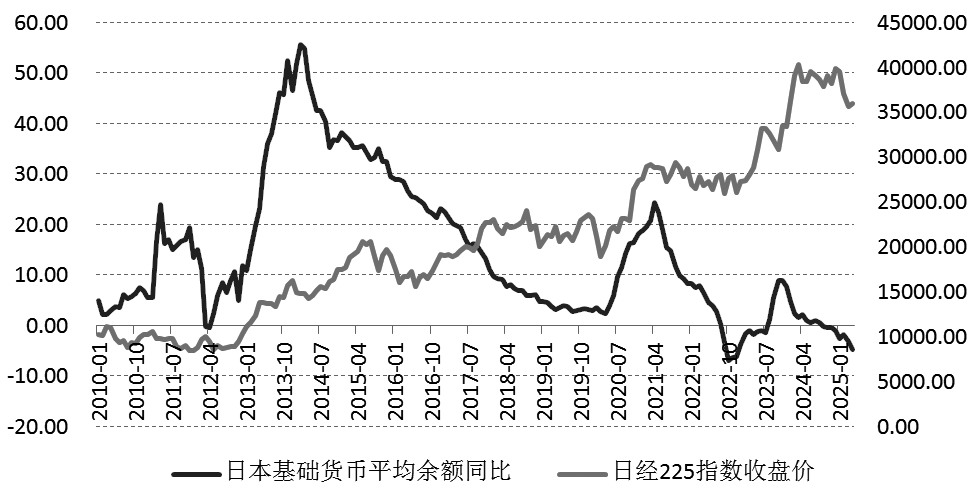
Core Viewpoint - The article discusses the recent decline of the US dollar following Moody's downgrade of the US credit rating, highlighting concerns over economic uncertainty and the impact of trade policies on market sentiment [1][5]. Group 1: G7 Meeting and Currency Policy - The G7 meeting focused on monetary policy, with a record high of 80% of investors believing the US is on an unsustainable debt path [3]. - Deutsche Bank's survey indicates that over half of the investors expect future crises to lead to deficit reduction, while 26% see quantitative easing as a potential solution [3]. - Analysts from Brown Brothers Harriman noted that the broad decline of the dollar reflects a loss of confidence in US policies, exacerbated by rising stagflation risks and implicit support for a weaker currency from the Trump administration [3]. Group 2: Market Outlook on the Dollar - Morgan Stanley has a bullish outlook on US assets, raising ratings for US stocks and bonds, but predicts a continued decline of the dollar due to diminishing economic growth premiums relative to other countries [4]. - The dollar index is forecasted to drop by 9% over the next 12 months, reaching 91 points, with significant weakness expected against the euro, yen, and Swiss franc [4]. Group 3: Economic Concerns from Federal Reserve Officials - Recent statements from Federal Reserve officials express growing concerns about economic uncertainty, with deteriorating business and consumer confidence attributed to US trade policies [6][7]. - Atlanta Fed President Bostic supports only one rate cut in 2025, warning that inconsistent tariff policies could disrupt US trade logistics [7]. - Despite a temporary easing of trade tensions, Wall Street perceives ongoing risks of economic recession, particularly following Moody's downgrade of the US credit rating [7].

MultiBank大通金融:美联储购债与全球央行购金 市场动态与展望
Sou Hu Cai Jing· 2025-05-21 10:15
美联储近日悄然买入436亿美元的美国国债,其中仅5月8日一天就购买了88亿美元的30年长期美债。尽管美联储并未正式称这是量化宽松(QE),但分析认 为这实则是一种"隐形宽松"。与此同时,全球央行购金需求强劲,3月全球央行购金64吨,中国购买量达30吨。今年迄今全球央行的黄金需求月均达94吨, 远超此前预计的80吨。此外,美联储的这一操作可能还利好新兴市场,尤其是资源丰富的拉美经济体,iSharesMSCI巴西ETF和iShares拉美40ETF今年已分别 涨约25.10%和24.53%。分析师认为,美联储的"隐秘动作"可能预示着市场将有大动作,黄金以及拉美市场的涨势可能进一步加速。 美联储购债的背景与影响 全球央行购金需求的强劲增长,特别是中国央行的大量购金行为,显示出市场对黄金的避险需求增加。黄金作为一种传统的避险资产,在全球经济不确定性 增加的背景下,其吸引力显著增强。 购金影响 全球央行的购金行为不仅对黄金市场产生了影响,还对相关金融市场产生了连锁反应。黄金价格的上涨不仅反映了市场对黄金的避险需求增加,也显示出市 场对全球经济前景的担忧。 新兴市场的受益与展望 购债背景 美联储近期的购债行为引发了市场的 ...

美联储哈玛克为何表态“按兵不动”
Jing Ji Guan Cha Wang· 2025-05-21 03:46
经济观察网讯5月21日,据报道称,美联储贝丝.哈玛克(Beth Hammack)表示,美联储已做好保持耐心的 准备;通胀预期一直保持在相当稳定的水平,如果这种情况发生变化,这可能是美联储需要采取行动的 一个信号。 贝丝.哈玛克表示,将需要更多时间了解贸易政策对企业决策的影响程度,目前美联储最好是按兵不 动。 贝丝.哈玛克是克利夫兰联储主席,克利夫兰联储(Federal Reserve Bank of Cleveland)是美国联邦储备系 统(美联储)的12家地区性储备银行之一,隶属于第四联邦储备区,覆盖俄亥俄州、宾夕法尼亚州西部、 西弗吉尼亚州北部及肯塔基州东部。 在今年4月25日召开的议息会议上,包括贝丝.哈玛克在内的美联储官员就表示,他们打算保持利率稳 定,直到他们对特朗普总统的移民、贸易和监管政策有更多了解。多位政策制定者指出,这些政策将如 何实施,以及其他国家和企业将如何应对,存在很大的不确定性。 5月8日召开的议息会议,宣布维持基准利率不变。这是美联储连续第三次维持利率不变,利率决议声明 较3月出现了调整,重点提及经济前景不确定上升——双重使命就业和通胀同时面临潜在威胁。美联储 主席鲍威尔认为当前美 ...
华尔街到陆家嘴精选丨美联储偷偷买债?全世界都盯着美债之时 日本正在爆雷?美股生物制药板块跌出“黄金坑”?
Di Yi Cai Jing· 2025-05-21 01:47
Group 1: Federal Reserve and Market Implications - The Federal Reserve has quietly purchased $43.6 billion in U.S. Treasury bonds, with a significant purchase of $8.8 billion in 30-year bonds on May 8, indicating a form of "invisible easing" despite not officially labeling it as QE [1][2] - Global central bank demand for gold has surged, with 64 tons purchased in March alone, and China accounting for 30 tons, leading to an average monthly demand of 94 tons this year, exceeding previous estimates [1] - Emerging markets, particularly resource-rich Latin American economies, are likely to benefit from the Fed's actions, as evidenced by the significant gains in iShares MSCI Brazil ETF and iShares Latin America 40 ETF, which have risen approximately 25.10% and 24.53% respectively this year [1] Group 2: Japanese Bond Market Challenges - Japan's 20-year bond auction faced its worst results since 2012, with a bid-to-cover ratio dropping to 2.5 and tail spreads reaching the highest level since 1987, causing yields to spike [3][4] - The Bank of Japan holds 52% of the Japanese bond market, raising concerns about who will absorb bonds as the central bank gradually exits its quantitative easing policy [3] - Japan's debt-to-GDP ratio has reached 250%, leading to fears of rising global borrowing costs as the market reacts to Japan's fiscal challenges [4] Group 3: U.S. Biopharmaceutical Sector Outlook - The U.S. large-cap biopharmaceutical sector has underperformed the S&P 500 by approximately 15 percentage points since the tariff announcement on April 2, attributed to tariff uncertainties, supply chain challenges, drug price negotiations, and patent cliffs [5] - Despite these challenges, there is potential for recovery as companies can manage short-term impacts through inventory management and long-term strategies like manufacturing reshoring [5] - The sector's valuation has dropped to historic lows, with a significant discount of 45-50% relative to the S&P 500, suggesting potential investment opportunities as policy clarity improves [5] Group 4: Gold Market Risks and Recommendations - The European Central Bank has warned that the gold market could pose systemic risks to the financial system due to geopolitical pressures and increased demand for gold as a safe haven [7][8] - The total nominal exposure to gold derivatives held by Eurozone investors has reached €1 trillion, with significant risks associated with non-central clearing and cross-border transactions [7] - UBS recommends maintaining gold positions despite the risks, setting a target price of $3,500 per ounce, reflecting the geopolitical risk premium [7] Group 5: Honda's Shift in Electric Vehicle Strategy - Honda plans to reduce its electric vehicle investment from ¥10 trillion to ¥7 trillion (approximately $48.4 billion) due to slowing demand, with expectations that electric vehicle sales will drop from 30% to around 20% by fiscal 2030 [9] - The company will focus on hybrid vehicles, aiming to sell 2.2 to 2.3 million units by 2030 and introducing 13 new hybrid models between 2027 and 2030 [9] - Honda's long-term goal remains to achieve full electrification by 2040, indicating a commitment to sustainable transportation despite current market uncertainties [9]

