去美元化

Search documents
2026年有色金属趋势展望:资源博弈与科技革命加速格局重塑,战略资源价值攀升
Minmetals Securities· 2026-02-09 10:42
Group 1: Overview of Non-Ferrous Metals Industry - The report maintains a positive investment rating for the non-ferrous metals industry, highlighting the acceleration of resource competition and technological revolution as key factors reshaping the landscape [2][3] - The overall price trends for non-ferrous metals in 2025 are influenced by tariffs, interest rate cuts, and the reassessment of strategic metal values, with most metals experiencing price increases except for lead and medium-heavy rare earths [8][9] Group 2: Price Trends and Expectations - Precious metals are expected to see significant price increases, with gold and silver projected to rise by 81% and 178% respectively, while industrial metals are expected to increase by approximately 30% [6][8] - The report indicates that the price performance of various metals in 2025 will largely reflect macroeconomic and geopolitical disturbances, with supply constraints and demand fluctuations playing critical roles [5][8] Group 3: Industry Performance and Profitability - The non-ferrous metals sector is projected to achieve a cumulative revenue of 4,247.4 billion yuan in 2025, reflecting a year-on-year growth of 12.7%, with profits expected to rise by 36.1% [13] - The profitability of the non-ferrous metals industry is closely tied to price trends, with significant profit increases observed across various sub-sectors, particularly in precious and industrial metals [12][13] Group 4: Gold Market Outlook - The report suggests that the gold price is expected to have an upward trend due to factors such as ongoing central bank purchases and the global fiscal expansion, which is likely to reinforce gold's role as a reserve asset [18][19] - The anticipated continuation of the interest rate cut cycle in 2026 is expected to support gold prices, alongside geopolitical uncertainties that may drive demand for safe-haven assets [27][28] Group 5: Copper Market Dynamics - The copper market is expected to experience ongoing supply disruptions, with the potential for price volatility driven by U.S. tariff policies and global resource nationalism [38][42] - Demand for copper is projected to increase significantly due to the growth of AI data centers and energy storage solutions, which will further support copper prices in the long term [49][53] Group 6: Lead Market Analysis - The lead market is characterized by weak supply and demand dynamics, with prices expected to remain stable but under pressure due to limited production increases and low operating rates in recycling facilities [59][63] - The report anticipates a modest recovery in lead production in 2026, driven by new projects and improved market conditions, although challenges remain in the recycling sector [63][72]
ATFX:暴跌后狂飙重上5000美元,黄金再次王者归来?
Sou Hu Cai Jing· 2026-02-09 10:21
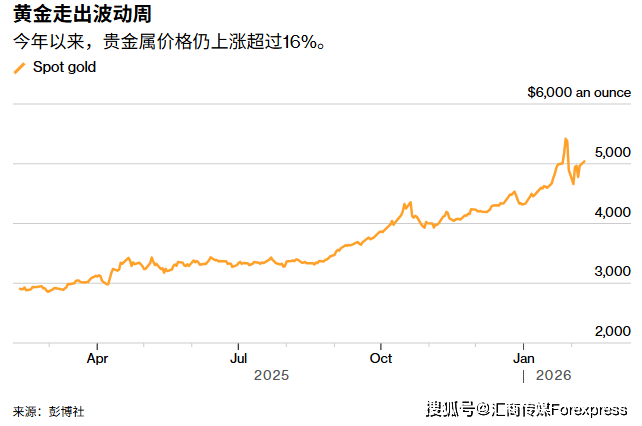
Core Viewpoint - The gold market has experienced a rebound after a week of unusual volatility, with prices rising above $5,000 per ounce, supported by a decline in the US dollar and buying interest at lower levels [1][4]. Group 1: Market Dynamics - Gold prices increased by approximately 4% last week and are up 1.9% on a weekly basis, despite a significant drop from historical highs [1][4]. - Silver has also rebounded from a one-and-a-half-month low, indicating a broader recovery in precious metals [1]. - The recent election victory of Japan's Prime Minister Fumio Kishida has strengthened expectations for continued fiscal easing and pressure on the yen, providing additional support for gold [4]. Group 2: Investor Sentiment - Following a historic drop, gold prices have recovered about half of their losses, driven by buying interest from investors who believe the market has adjusted sufficiently [4][5]. - The upcoming US non-farm payroll and CPI reports are expected to shape market expectations regarding the Federal Reserve's interest rate decisions, which will be crucial for gold's potential rebound [4][6]. Group 3: Long-term Outlook - Central banks, particularly the People's Bank of China, have been increasing gold reserves for 15 consecutive months, reflecting a long-term trend of "de-dollarization" and diversification of reserves, providing a solid demand base for gold [5]. - Major institutions like Deutsche Bank and Goldman Sachs maintain bullish views on gold, shifting focus from short-term volatility to long-term drivers such as global debt and currency credit hedging [5].

【UNFX财经事件】结构性买盘支撑犹在 金价受限于风险情绪回暖
Sou Hu Cai Jing· 2026-02-09 09:38
整体而言,中国央行持续购金叠加美元偏弱,为金价构建了相对稳固的底部支撑;但风险情绪回暖、部 分地缘紧张缓和以及贵金属自身波动性上升,限制了金价短线的上行空间。在美联储政策高度依赖数据 验证的阶段,市场正等待即将公布的非农就业与通胀数据,为利率路径提供更清晰指引。在关键数据落 地前,黄金价格大概率维持高位震荡,短期走势仍取决于美元方向与利率预期的再定价,而中长期逻辑 依旧围绕政策不确定性与全球资产配置结构展开。 周末披露的官方数据显示,中国人民银行1月份继续增持黄金储备,实现连续第15个月扩表,当月增持 规模约为4万盎司,总持有量升至7419万盎司,对应储备市值约3696亿美元。在全球主要经济体财政压 力加大、地缘与政策不确定性交织的环境下,央行层面的战略性配置仍被视为支撑黄金中长期需求的重 要力量。与此同时,近期美元回落亦对金价形成协同支撑。围绕美联储政策前景及其独立性讨论升温, 美元指数连续第二个交易日走弱,为无息资产提供了相对有利的定价环境。 美联储政策路径依然是影响黄金定价的核心变量。芝商所FedWatch数据显示,交易层面对2026年进一 步降息的预期仍未消退,近期偏弱的劳动力市场数据为宽松预期提供了 ...
【UNforex财经事件】美元走软叠加央行购金 金价维持高位区间震荡
Sou Hu Cai Jing· 2026-02-09 09:38
Core Viewpoint - The international gold price remains relatively strong due to the People's Bank of China's continued gold purchases and a temporary weakening of the US dollar, despite a rise in risk appetite and easing tensions in the Middle East limiting safe-haven inflows [1][2]. Group 1: Central Bank Actions - The People's Bank of China increased its gold reserves for the 15th consecutive month in January, adding approximately 40,000 ounces, bringing total reserves to 74.19 million ounces, valued at about $36.96 billion [1]. - Central bank demand is viewed as a significant support for gold's long-term trend amid increasing fiscal pressures and geopolitical uncertainties in major economies [1]. Group 2: Market Sentiment and Risk Appetite - Short-term, gold's appeal as a safe-haven asset has diminished due to signs of easing tensions in the Middle East and an overall optimistic tone in global stock markets, which has reduced the flow of funds into safe-haven assets [2]. - The market is experiencing a cautious trading atmosphere as important US macroeconomic data approaches, leading to a more restrained trading sentiment [1]. Group 3: Federal Reserve Policy Outlook - The assessment of the Federal Reserve's policy path remains a core variable influencing gold pricing, with traders expecting potential rate cuts as early as 2026 based on recent weak labor market data [3]. - Discussions around the next Federal Reserve chair, Kevin Walsh, have amplified policy uncertainty, particularly regarding his views on AI's impact on production efficiency and interest rates, which have faced skepticism from economists [3]. Group 4: Volatility and Investment Trends - HSBC Asset Management notes that significant price fluctuations in gold and silver over the past year have altered their traditional asset characteristics, with increased retail participation leading to speculative trading [4]. - While retail inflows may enhance short-term returns, they also weaken the stability of precious metals as risk diversification tools [4]. - The ongoing trend of central banks de-dollarizing and the demand for gold in crisis scenarios continue to provide structural support for precious metals in the long term [4].
【黄金期货收评】贵金属节前宽幅震荡 沪金日内上涨3.88%
Jin Tou Wang· 2026-02-09 09:34
【黄金期货最新行情】 | 2月9日 | 收盘价(元/克) | 当日涨跌幅 | 成交量(手) | 持仓量(手) | | --- | --- | --- | --- | --- | | 沪金主力 | 1125.94 | 3.88% | 331307 | 158759 | 打开APP,查看更多高清行情>> 【基本面消息】 数据显示,2月9日上海黄金现货价格报价1116.00元/克,相较于期货主力价格(1125.94元/克)贴水9.94 元/克。 伊朗外交部长阿拉格齐率领的代表团抵达阿曼首都马斯喀特,将出席与美国代表团举行的核问题谈判。 一名谈判代表团成员表示,本轮对话的重点将仅限于核问题,媒体关于其他潜在议题的各种猜测均不属 实,也无法得到确认。 欧洲央行维持基准利率不变,为去年6月以来连续第五次暂停降息。不过,欧洲央行并未释放下一步政 策走向的明确信号,强化了市场对货币政策在一段时间内保持稳定的预期。英国央行维持基准利率在 3.75%不变,但九名货币政策委员中有四人投票支持降息25个基点,释放了强烈的鸽派信号。 美国1月挑战者裁员数量飙升至10.84万人,新增招聘岗位仅5300多个,均创17年来同期最差。去年12 ...
提名美联储主席,沃什会否改写全球金融市场?
Sou Hu Cai Jing· 2026-02-09 09:32
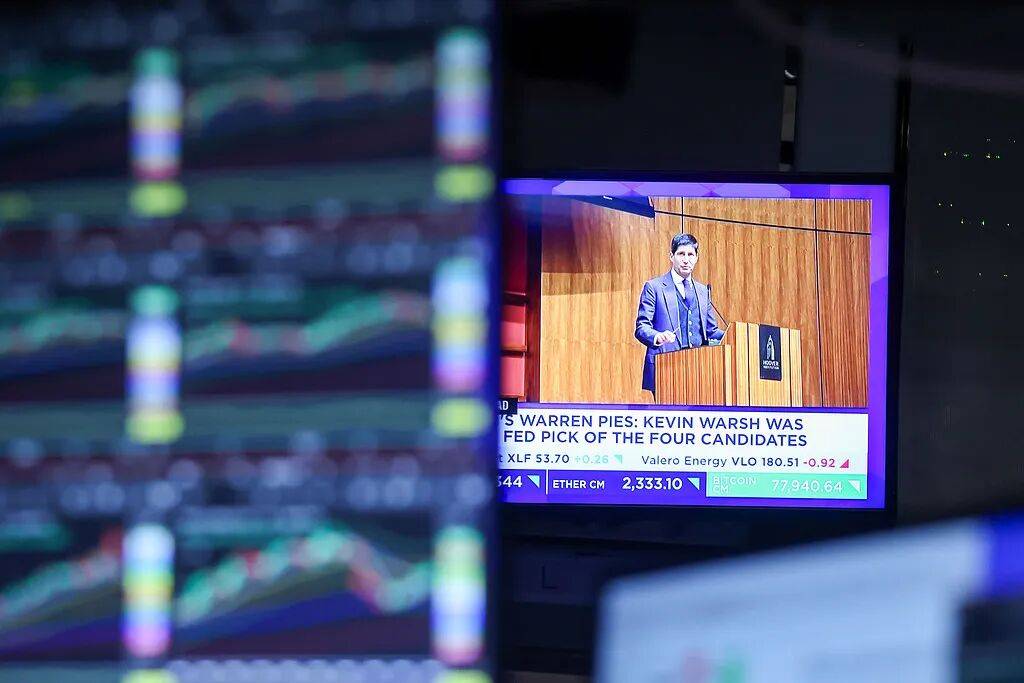
Core Viewpoint - The nomination of Kevin Warsh as the next Federal Reserve Chairman by President Trump has triggered significant market reactions, reversing the trends observed at the beginning of the year [2][8]. Market Reactions - Following the announcement, the US dollar index shifted from a downward trend to an increase of over 0.7% [2]. - Precious metals experienced sharp declines, with gold dropping over 7% in a single day and silver falling by as much as 16% [2][5]. - Major US stock indices closed lower, with the Dow Jones down 0.36%, Nasdaq down 0.94%, and S&P 500 down 0.43% [2]. Economic Perspectives - Analysts suggest that Warsh's hawkish stance on monetary policy raises concerns that the Fed may not pursue multiple rate cuts as previously expected, contributing to the dollar's strength [2][3]. - Warsh's previous criticism of the Fed's large balance sheet has led to fears of further balance sheet reduction alongside potential interest rate hikes, impacting bond yields and risk assets [2][5]. Asset Performance - The market showed a divergence post-February 2, with the dollar index continuing to rise for five consecutive trading days, while precious metals faced extreme volatility [12]. - Gold prices fluctuated significantly, reaching a low of $4,660 per ounce after previously exceeding $5,000 [12][9]. - Silver also saw dramatic price movements, with a peak of $92 per ounce followed by a drop to $64.38 [12]. Long-term Implications - Warsh's leadership may signify a shift in the Fed's role from a supportive entity to a more traditional, rule-based institution [4]. - The potential for a tightening of monetary policy under Warsh could lead to increased volatility in risk assets, particularly those reliant on liquidity [16]. - The long-term outlook for precious metals may remain intact despite short-term fluctuations, as the underlying demand dynamics could still support prices [19][20].
广开首席产研院展望2026年全球经济金融趋势:世界经济面临“四重变局”
Sou Hu Cai Jing· 2026-02-09 09:27
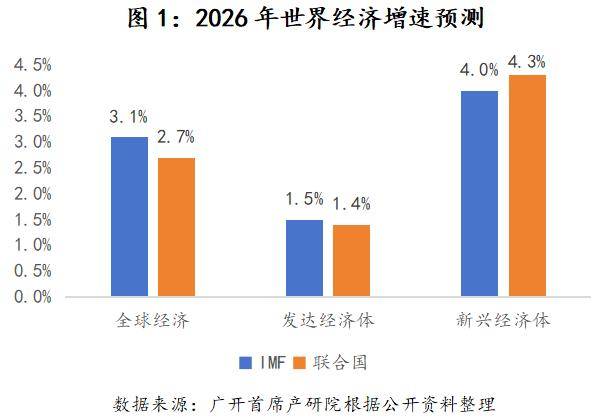
Group 1 - The global economy is expected to face challenges in 2026 due to geopolitical tensions, trade protectionism, and inflationary pressures, leading to a projected growth rate of 2.7%-3.1%, slightly down from 2025 [2][3] - Emerging economies, particularly in Asia, are anticipated to show stronger growth, with East Asia, South Asia, and Africa projected to grow at rates of 4.4%, 5.6%, and 4.0% respectively [3] - The U.S. economy is projected to grow at 1.8%-2.2%, while the Eurozone and Japan are expected to see much lower growth rates of 0.9%-1.2% and 0.7%-0.9% respectively, indicating a slowdown in developed economies [3][5] Group 2 - Inflation is expected to moderate globally, decreasing from 3.4% in 2025 to 3.1% in 2026, although some developed economies may still face inflationary pressures due to sticky service prices and delayed tariff impacts [5][6] - The Federal Reserve's monetary policy may experience significant volatility, with potential for both aggressive rate cuts and rapid shifts to rate hikes depending on inflation trends [7] Group 3 - U.S.-China trade relations are expected to enter a phase of relative easing in 2026, moving towards selective cooperation in non-sensitive areas, as indicated by recent U.S. policy adjustments [10][11] - China is actively promoting dialogue and cooperation in emerging industries, which may enhance bilateral trade interactions and stabilize economic expectations [11] Group 4 - The global trade environment is showing signs of structural recovery, with the U.S. likely to pragmatically adjust its trade protection measures and engage in multilateral cooperation [15][16] - "South-South trade" is expected to gain importance, with emerging economies seeking to reduce reliance on developed markets, projected to grow at 8% in 2025 and continue strengthening in 2026 [16][19] Group 5 - The international financial markets are anticipated to experience increased volatility, with U.S. stocks entering a phase of "structural bull market" characterized by high valuations and weak growth [20][21] - Emerging market stocks are expected to attract more investment due to favorable conditions such as a weaker dollar and improved trade environments, particularly in Asian economies [22] Group 6 - The U.S. dollar is projected to remain weak in 2026, influenced by rising government debt and a potential shift towards "de-dollarization" [23][25] - Non-dollar currencies are expected to show divergence, with the Chinese yuan likely to appreciate moderately against the dollar, while the euro and yen may experience fluctuations based on economic conditions [26] Group 7 - Gold prices are expected to remain strong amid geopolitical risks and a weakening dollar, with projections indicating a price range of $4,500 to $5,500 per ounce in 2026 [27]
委石油不能靠岸!特朗普的强卖计划,没开始就夭折?中方已明确表态
Sou Hu Cai Jing· 2026-02-09 09:13
Core Viewpoint - The geopolitical maneuvering surrounding Venezuela's oil exports has led to a significant shift in the dynamics of international energy trade, particularly between the U.S. and China, highlighting the limitations of U.S. power in dictating terms to other nations [1][4][10]. Group 1: U.S. Actions and Strategy - The Trump administration's abrupt takeover of Venezuela's oil exports and the imposition of stringent conditions on China reflect a strategy of exerting dominance over global oil markets [1][4]. - The U.S. proposed that oil prices be set at $45 per barrel, significantly higher than the previous $30, and mandated that all transactions be conducted through U.S.-designated accounts [1][4]. - The U.S. miscalculated China's reliance on Venezuelan oil, overestimating its importance while underestimating China's diversified energy sourcing strategy [4][5]. Group 2: China's Response - China responded decisively by halting all oil purchases from Venezuela, signaling a firm stance against U.S. pressure and maintaining its principles of equal cooperation [3][8]. - The Chinese government issued clear directives to stop all transactions related to Venezuelan oil, effectively closing the door on imports from that source [3][8]. - China's strategic approach emphasizes maintaining its sovereignty and the integrity of international trade agreements, rejecting unilateral changes imposed by the U.S. [8][10]. Group 3: Market Implications - The halt in Chinese imports has left Venezuelan oil in a precarious position, with limited buyers and a surplus of unsold oil, indicating a significant market disruption [7][10]. - The U.S. has had to reconsider its approach, with Trump suggesting that China could negotiate a favorable deal, reflecting a shift in the U.S. stance due to the failure of its initial strategy [7][10]. - The evolving energy landscape shows a trend towards diversification and a move away from reliance on any single source, as evidenced by China's reduced dependence on Venezuelan oil, which accounts for less than 3% of its total imports [4][5].

大宗商品非典型经济周期下的牛市
雪球· 2026-02-09 08:29
Core Viewpoint - The current commodity market is characterized as a non-typical bull market driven by geopolitical tensions, global debt issues, and de-dollarization, which fundamentally differs from past commodity cycles [2][17]. Group 1: Market Dynamics - The commodity market, particularly precious metals, has seen unexpected price increases, driven by investor concerns over long-term global developments and geopolitical uncertainties [2][3]. - Unlike previous commodity bull markets, the current cycle does not rely on traditional economic recovery indicators, such as global demand growth, but rather on speculative pricing influenced by non-economic factors [6][9]. - The current market structure shows a clear divergence, with precious metals and copper leading the price increases, while other commodities exhibit mixed performance [7]. Group 2: Historical Context - Past commodity bull markets were primarily supported by two key factors: excessive global liquidity and effective downstream demand release, leading to synchronized price increases across most commodities [4]. - The current market shares some similarities with the 2014 commodity cycle, particularly regarding China's capacity for export, but it also reflects unique domestic factors from 2015 [5]. Group 3: Economic Indicators - Current global economic recovery appears weak, with indicators such as global PMI and M2 growth suggesting significant uncertainty in demand support [6]. - The pricing logic of commodities is increasingly influenced by historical relationships between commodity prices and currency purchasing power, but applying this logic to the current market may be premature [6][11]. Group 4: Investment Considerations - The current bull market is marked by a high weighting of non-economic factors in pricing, making it challenging to apply traditional supply-demand frameworks for price predictions [9][14]. - The potential for a super cycle in commodities is debated, with the conclusion that effective demand support is necessary for such a cycle to materialize, which is currently lacking [12][13]. - The market's reliance on speculative narratives, such as de-dollarization and geopolitical tensions, complicates the ability to track and predict commodity price movements effectively [14][17].

华安基金:中国央行延续购金,本周将迎美国通胀与就业数据
Xin Lang Ji Jin· 2026-02-09 07:57
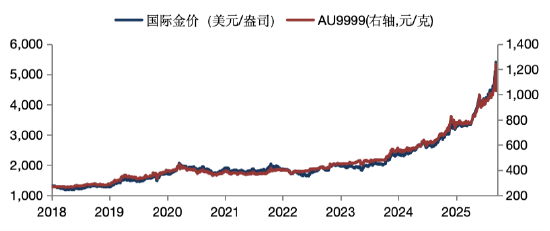
Group 1 - Gold prices continued to fluctuate, with London spot gold closing at $4,967 per ounce (up 1.8% week-on-week) and domestic AU9999 gold at 1,094 yuan per gram (down 6.9% week-on-week) [1] - Japan's fiscal expansion trend is expected to continue, potentially exacerbating its debt burden, as the ruling coalition led by Prime Minister Fumio Kishida secured a significant majority in the recent House of Representatives election, allowing for more aggressive fiscal policies [1] - The market is gradually digesting the expectations of a "hawkish" stance from the newly nominated Federal Reserve Chairman Kevin Warsh, while recognizing the potential for a "dovish" outcome in the long term due to political and fiscal pressures [1] Group 2 - Upcoming U.S. inflation and employment data are crucial for assessing the Federal Reserve's interest rate cut expectations, with the January non-farm payroll report delayed to February 11 and CPI data to February 13 [2] - The People's Bank of China has increased its gold reserves for the 15th consecutive month, maintaining a steady accumulation pace, with reserves expected to reach 74.19 million ounces by the end of January 2026, reflecting a trend of diversifying foreign exchange reserves amid the weakening dollar credit system [2] - The macro structural factors supporting gold remain intact, including ongoing central bank demand for gold amid de-dollarization, the erosion of the dollar's long-term credibility due to "fiscal dominance" policies, and systemic risks from a fragmented global geopolitical landscape [3] Group 3 - Key signals for gold investment in the coming week include the U.S. January employment data and CPI [4] - Related investment products include gold ETFs and various colored metal ETFs [5]