
价格战

Search documents
有些MCU,开始一个月降本一次了
芯世相· 2025-06-06 07:15
Core Viewpoint - The MCU market is experiencing intense competition and price wars, leading to a significant decline in prices and profit margins for domestic manufacturers, with a shift from "import MCU to domestic replacement" to "domestic replacement of domestic" becoming prevalent [3][4][5]. Group 1: Changes in MCU Market - The MCU market has seen a drastic price drop, with 8-bit MCUs now available for just a few cents, and 32-bit MCUs also entering aggressive price competition [3][4]. - Domestic manufacturers initially adopted a "price for volume" strategy, but now end customers are pushing prices down further due to their own cost-cutting pressures [4][5]. - The market is characterized by oversupply, with many companies competing fiercely, leading to a situation where even minimal profits are considered a relief [4][11]. Group 2: Market Demand and Recovery - Despite a slight decrease in inventory levels, the overall demand for MCUs has not shown significant signs of recovery, with many companies still facing declining revenues [14][15]. - The first quarter of 2025 saw many domestic MCU companies report negative growth, indicating that the market is still far from a full recovery [11][13]. - Analysts suggest that the recovery of the MCU market may be delayed until the second half of the year, depending on broader economic conditions [15][16]. Group 3: Competitive Landscape - The competition is not only based on price but also on service and payment terms, with companies extending payment periods to attract customers [8][11]. - New entrants in the MCU market are rapidly increasing competition, with some companies achieving significant technological advancements and cost reductions [5][10]. - Major domestic players like Zhaoyi Innovation are launching new products aimed at redefining the entry-level MCU market, emphasizing high cost-performance ratios [10][11]. Group 4: Financial Performance of Companies - A report indicated that 18 out of 19 domestic MCU companies experienced revenue growth, but many still faced net losses, highlighting a divide in performance within the industry [11][12]. - Companies like Guoxin Technology and Unisoc reported significant revenue declines, with some experiencing over 50% drops in revenue [11][12]. - The overall profitability of many MCU companies is under pressure, with several reporting return on equity (ROE) below the industry average [11][12].





外卖“百亿补贴”内卷,咖啡先受不住了
Hu Xiu· 2025-06-06 00:40
Core Viewpoint - The coffee industry is facing a significant price war driven by aggressive subsidies from delivery platforms, leading to unsustainable pricing and potential long-term damage to local coffee brands [3][6][32]. Group 1: Price War Dynamics - The coffee price war has resulted in prices dropping below 6 yuan per cup, with extreme cases as low as 2 yuan, making coffee cheaper than bottled water [2][15]. - The average cost of a cup of coffee for major brands like Luckin and Kudi is approximately 10.16 yuan and 9.55 yuan respectively, indicating that current prices are well below cost [17]. - The market share of national chain coffee brands has increased from nearly 80% to over 90% from early April to late May 2025, significantly impacting local brands [19]. Group 2: Impact on Local Brands - Local coffee brands are struggling under the pressure of the price war, with many unable to sustain operations, leading to calls for an end to irrational subsidies [3][5]. - The Chongqing Coffee Association has highlighted that the ongoing price competition is harming local brands' market share and innovation capabilities, with a reported 12% decline in online transaction amounts year-on-year [3][5]. - If the current situation persists, it is expected to adversely affect the livelihoods of more industry workers and the long-term health of the coffee sector [5][6]. Group 3: Consumer Behavior and Market Trends - The aggressive pricing strategies have altered consumer perceptions, with a heightened sensitivity to coffee prices, making it unlikely for consumers to support higher-priced local brands [20][28]. - The coffee market in China has seen a shift towards a more mature consumer base, with an average consumption of 300 cups per year in major cities, indicating potential for growth if pricing strategies stabilize [34]. - The focus on low prices has led to concerns about product quality and sustainability, with reports of diluted flavors and inconsistent product offerings [37][38]. Group 4: Future Outlook - The current price war is viewed as a short-term strategy that may not be sustainable, as it undermines the profitability and operational viability of coffee businesses [21][23]. - There is a growing recognition that the industry must shift from price competition to quality and service differentiation to foster a healthier market environment [36][42]. - Regulatory bodies are beginning to address the issues arising from the price war, indicating a potential shift towards more sustainable competitive practices in the future [38].
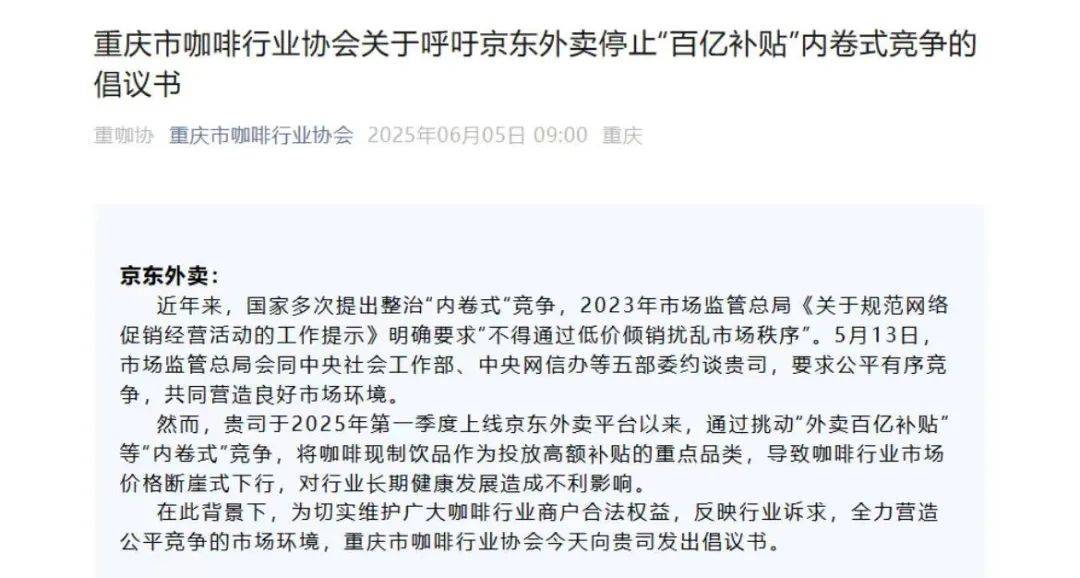
外卖咖啡低至1.68元!“百亿补贴”再次掀起咖啡价格战
Chang Sha Wan Bao· 2025-06-05 18:53
Core Viewpoint - The coffee market is experiencing a price war driven by significant subsidies from delivery platforms, leading to prices lower than bottled water, which has attracted a large number of consumers [1][2][6]. Group 1: Market Dynamics - Major platforms like JD.com and Taobao are offering substantial discounts, with prices for various coffee products dropping to as low as 1.68 yuan from original prices around 15.99 yuan [2][5]. - The "100 billion subsidy" initiative has resulted in a surge in orders, with Kudi Coffee reaching over 10 million orders in a single day, and some regions seeing a 200% increase in milk tea delivery compared to the previous year [2][4]. Group 2: Company Strategies - Kudi Coffee has reported a significant increase in sales, with daily orders reaching 400 cups, attributed to the ongoing subsidy campaigns [4]. - Luckin Coffee has also responded to the price war by offering limited-time coupons, reducing prices from 9.9 yuan to 6.9 yuan, which has led to increased sales both for delivery and in-store orders [5]. Group 3: Cost Management - Leading coffee brands are focusing on cost control from the supply side to maintain profitability despite lower prices. For instance, Luckin Coffee has built its own roasting factories, reducing roasting costs by 20%, while Kudi Coffee has partnered directly with coffee bean producers to lower costs by 25% [6]. - The current price reductions are primarily due to external subsidies rather than self-imposed price cuts by brands, indicating that quality is likely to remain stable [6].

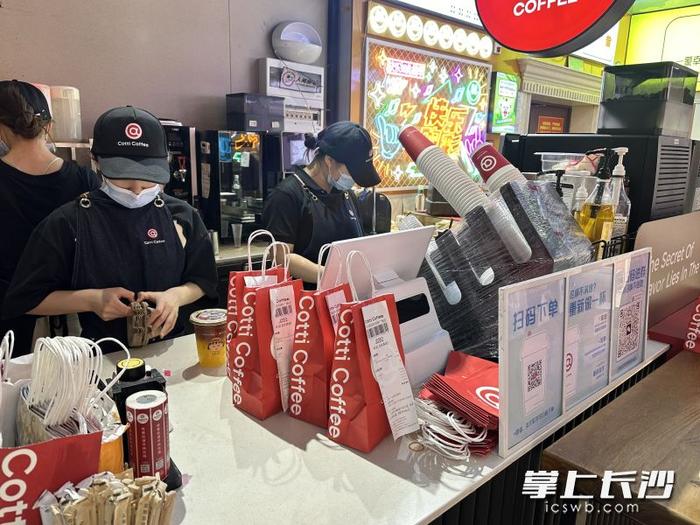
七折买保时捷!汽车“豪门”也陷降价泥沼
Di Yi Cai Jing· 2025-06-05 14:19
Core Viewpoint - Porsche is facing significant challenges in the Chinese market, leading to drastic price reductions in an attempt to boost sales after three consecutive years of declining sales figures [1][2]. Group 1: Sales Performance - Porsche's sales in China have been declining since reaching a peak of 95,700 units in 2021, with a 42% year-on-year drop in Q1 2025, delivering only 9,471 vehicles compared to 16,340 in the same period last year [1][2]. - In 2022, while global sales increased by 3%, sales in China fell by 2.5%, and in 2023, the decline worsened to 15%, making China the only region where Porsche's sales decreased [2]. - The 2024 financial report indicated a revenue of €400.8 billion, a decrease of approximately 1%, and a sales profit of €56.4 billion, down about 23% year-on-year [2]. Group 2: Market Strategy - Porsche is engaging in significant price cuts, with discounts exceeding 30% on models like the Cayenne and Panamera, as part of a strategy to clear inventory [1][3]. - Despite the CEO's emphasis on a "quality over quantity" strategy and reluctance to engage in price wars, the reality of the market has forced Porsche to adapt [2][3]. Group 3: Local Adaptation and Restructuring - To better meet local consumer demands, Porsche is enhancing its local R&D efforts, focusing on smart driving and connectivity features, with a new R&D center established in Shanghai [3]. - The company is also undergoing organizational restructuring, including a 10% reduction in full-time employees and a 30% cut in outsourced staff, aimed at optimizing efficiency and reducing costs [4]. - Porsche's sales network in China has been reduced to approximately 140 outlets, with plans to further decrease this number to around 100 by 2027 based on market dynamics [5].
卖爆了!一杯不到3元,网友:没有最低只有更低……
新华网财经· 2025-06-05 03:12
Core Viewpoint - The article discusses the impact of aggressive subsidies from major food delivery platforms on the pricing and sales of coffee and tea beverages, leading to significant price reductions and increased sales volumes for brands like Kudi Coffee and Luckin Coffee [1][4][6]. Group 1: Pricing Strategies - Major food delivery platforms have implemented substantial subsidies, resulting in prices for beverages dropping to as low as 1 yuan for coffee and 1.68 yuan for American coffee [1][4]. - Kudi Coffee's prices have been reduced to 3.9 yuan and 4.9 yuan per cup due to these subsidies, with some drinks previously priced at 10 yuan now selling for under 5 yuan [6][7]. - The competitive landscape has intensified, with Luckin Coffee also entering a lower price bracket, offering drinks for as low as 6.9 yuan [4][6]. Group 2: Sales Growth - Kudi Coffee has experienced a surge in sales, with daily orders increasing from around 500 to over 900 during peak times due to the subsidies [4][6]. - The average daily revenue for Kudi Coffee has increased from approximately 3,000 yuan to between 12,000 and 15,000 yuan, marking a growth of 4 to 5 times [6][7]. - Luckin Coffee reported a same-store sales growth rate of 8.1%, indicating a positive turnaround in performance [7]. Group 3: Market Dynamics - The article highlights that the coffee price war is not new, with previous instances where brands like Luckin Coffee used low pricing strategies to capture market share, prompting competitors like Starbucks to respond with discounts [7]. - The entry of JD.com into the food delivery market has reignited competition among platforms, leading to a resurgence in aggressive pricing strategies for coffee and tea [7]. - Economic experts suggest that while the price war may create short-term opportunities, it also poses challenges related to supply chain management, operational efficiency, and product quality, indicating a potential for market consolidation in the future [7].

对话李斌:蔚来正在走出最低谷,不拼价格、拼技术和服务 | 次世代车研所
Xin Lang Ke Ji· 2025-06-05 01:44
Core Viewpoint - NIO has faced multiple ups and downs since its establishment 11 years ago, but the company believes it has emerged from its lowest point and is set to return to a growth trajectory starting in the second quarter of this year [1][5]. Group 1: Company Development Stages - NIO's development is divided into three stages: the first from establishment to 2021, focusing on brand building and initial product lifecycle; the second from 2022 to 2024, where the company faced challenges in meeting operational goals; and the third stage starting in 2025, where past investments in technology and products are expected to yield results [3][4]. - The first stage saw NIO rescued from a critical situation through strategic investments, while the second stage highlighted issues with product positioning and market penetration [3][4]. Group 2: Sales and Profitability Plans - NIO aims to achieve a quarterly delivery target of 72,000 to 75,000 vehicles in Q2, which would set a new record for the company [5][6]. - The flagship model ET9 has already surpassed traditional luxury brands in sales, indicating strong market performance [6]. - NIO plans to launch three significant products in the coming months, with expectations of reaching a monthly sales target of 50,000 units by Q4, maintaining a gross margin of 17%-18% [8][10]. Group 3: Competitive Strategy - NIO emphasizes a strategy focused on technology, quality, and service rather than engaging in price wars, which are seen as detrimental to the industry [11][12]. - The company believes that a focus on long-term investments in R&D and user experience will differentiate it from competitors and support its profitability goals [12].

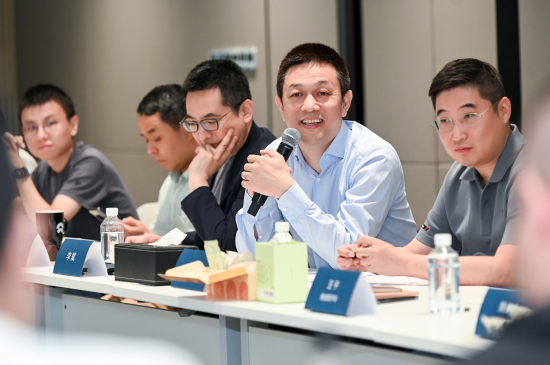
监管协会三连击 汽车业叫停“内卷式”价格战
Mei Ri Shang Bao· 2025-06-04 22:16
商报记者郭雨昕 6月3日,全国工商联汽车经销商商会发布了《关于反对"内卷式"竞争促进汽车经销行业高质量发展的倡 议》,抵制汽车行业无序的"价格战"。 5月31日,中国汽车工业协会发布《关于维护公平竞争秩序促进行业健康发展的倡议》,明确表示支持 企业通过正常的方式参与市场竞争,坚决反对无底线的"价格战"。工信部亦表态支持倡议,强调"价格 战没有赢家,更没有未来"。工信部指出,企业之间无序"价格战"是"内卷式"竞争的典型表现,将加大 整治力度,推动产业结构优化调整,加强产品一致性抽查,配合相关部门开展反不正当竞争执法,采取 必要的监管措施,坚决维护公平有序市场环境,切实保障消费者根本利益,推动汽车产业高质量发展。 6月3日,全国工商联汽车经销商商会也发布了《关于反对"内卷式"竞争促进汽车经销行业高质量发展的 倡议》,提出全行业应以中国汽车产业实现高质量发展大局为重,严格遵守公平竞争原则,坚决抵制 以"价格战"为主要形式的"内卷式"竞争行为。同时,还倡议关注品牌形象、改善汽车经销商的生存状 况、优化商务政策、完善退网机制等。 无序价格战之下没有赢家 在此之前,中国汽车工业协会、工业和信息化部已接连发声,旗帜鲜明地反 ...

大摩周期论剑:机器人、汽车、房地产、快递行业更新
2025-06-04 15:25
Summary of Conference Call Industry Overview - The conference call covered multiple industries including real estate, automotive, express delivery, and industrial automation and robotics. Real Estate Industry - **Sales Performance**: The top 50 developers experienced a year-on-year sales decline of 9% in May, worsening from an 8% decline in April. The top 100 developers saw a decline of 7% year-on-year, up from 6% in April. Although there was a slight month-on-month increase of 2% in May compared to April, this is significantly lower than the historical average increase of 7% [2][3]. - **State-Owned vs. Private Developers**: State-owned developers had a year-on-year sales decline of 9%, while private developers faced a more severe decline of 27% [2]. - **Future Outlook**: Sales are expected to continue declining, with projections indicating a potential year-on-year decline of 15% to 20% in June due to high base effects from the previous year [3]. - **Second-Hand Housing Market**: Second-hand housing prices fell by 1.1% month-on-month and 10.3% year-on-year, with 84% of tracked cities reporting price declines [4]. The overall sentiment remains cautious, with expectations of further price drops in the coming months [5]. Automotive Industry - **Price War**: A significant price war initiated by BYD on May 23, with price reductions of 10% to 30% on over 20 models, has led to increased competition among automakers [6]. - **Sales Data**: In the U.S., May auto sales were slightly below expectations at an annualized rate of 15.7 million units, down 2% year-on-year, with electric vehicle sales declining by 13% [9]. Tesla's sales are estimated to have dropped by over 20% year-on-year [9]. - **Sustainability of Orders**: The sustainability of increased orders due to price cuts and new model launches remains a concern for the industry [7]. Express Delivery Industry - **Price Competition**: The express delivery sector is experiencing intensified price competition, primarily initiated by leading players. The profit margins of major companies have been declining, with a notable increase in subsidies from companies like Zhongtong [11]. - **Market Concentration**: The market share concentration among the top players is increasing, with Zhongtong and Yuantong accounting for 85% of the profit share in the first quarter [12]. - **Capital Expenditure**: Companies like Yunda and Shentong have lagged in capital expenditure compared to their peers, which may affect their long-term growth potential [13]. - **Technological Advancements**: The industry is focusing on digitalization and automation to improve operational efficiency, with a notable shift towards AI applications [14]. Industrial Automation and Robotics - **Order Trends**: Companies in the industrial equipment sector are facing uncertainty regarding future orders due to tariff impacts. However, there is optimism about maintaining order levels during the tariff suspension period [18]. - **Market Expansion**: Companies are expanding their product lines and exploring overseas markets to capture more market share [19]. - **Price Competition**: There is significant price pressure in the small-load industrial robot and servo motor segments, with prices dropping over 10% in the first five months of the year [20]. - **Robotics Development**: The industry is seeing increased efforts in humanoid robot development, with several companies planning to deploy hundreds of units in the second half of the year [22]. Government initiatives are also supporting the deployment of intelligent robots [23]. Conclusion - The conference highlighted the challenges and opportunities across various sectors, emphasizing the need for strategic adjustments in response to market dynamics and competitive pressures. The overall sentiment remains cautious, particularly in the real estate and automotive sectors, while the express delivery and industrial automation industries are navigating through intense competition and technological advancements.

“一把20亿,我差点成为长安2022年的‘罪人’”
虎嗅APP· 2025-06-04 14:18
Core Viewpoint - Chinese automotive companies are increasingly focusing on overseas markets, with 2023 marking a significant year for competition in Southeast Asia, particularly against established players like Toyota [1][2]. Group 1: Market Expansion and Strategy - In 2023, China surpassed Japan to become the world's largest automotive exporter, shifting from merely exporting vehicles to establishing comprehensive operational systems abroad [1]. - Changan Automobile has initiated production in Thailand, marking its first overseas factory, and is preparing for intense competition in Southeast Asia [1][2]. - The company believes that entering established markets is becoming increasingly difficult for new Chinese brands due to existing partnerships and ecosystems formed by earlier entrants [15][16]. Group 2: Investment Decisions and Strategic Shifts - The decision to invest 20 billion in Thailand was driven by a strategic assessment of long-term benefits versus risks, with a focus on establishing a strong overseas presence [8][11]. - The establishment of the Thailand factory prompted a reevaluation of Changan's overseas strategy, leading to the creation of five major overseas regional divisions [12][14]. - The company aims for a localization rate of over 85% in Thailand to enhance competitiveness, with current localization at 60% [38][39]. Group 3: Competitive Landscape and Challenges - The competition in Southeast Asia is expected to intensify, with a prediction that 2025 will be a pivotal year for Chinese brands against Japanese competitors [36]. - Concerns have been raised about the sustainability of price cuts in overseas markets, as they may lead to perceptions of lower quality and could damage brand reputation [25][27]. - The company faces challenges in adapting to local market conditions, including establishing trust with local consumers and navigating different regulatory environments [40][41]. Group 4: Consumer Perception and Brand Positioning - Chinese electric vehicle brands are viewed positively by discerning consumers in overseas markets, who recognize the effectiveness of their technology [20]. - The company is positioning its products in Thailand as high-end offerings, aiming to compete with luxury brands rather than entering the mainstream market directly [33][34]. Group 5: Operational and Cultural Adaptation - Changan has established a local workforce in Thailand, with 70%-80% of its 1200 employees being Thai nationals, highlighting the importance of local integration [44][46]. - The company is also developing a research and development team in Thailand to cater to local market needs, although challenges remain in adapting to different technological ecosystems [48][50].

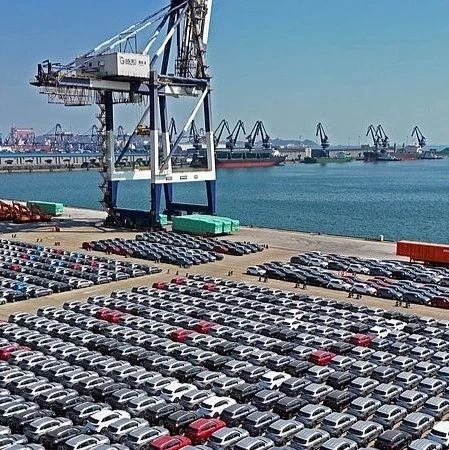
一财社论:造车新势力盈利是硬道理
Di Yi Cai Jing· 2025-06-04 14:13
盈利是硬道理、制止恶性价格竞争,降成本、提技术,做好内功赢得消费者,加快行业内淘汰重组、积 极培育龙头企业,这些都是亟需解决的重要课题。 企业财报和企业相关表态可以反映企业现状和发展预期。对此,有观点称,2025年,造车新势力或将迎 来"规模化盈利元年"。 全国乘联会秘书长崔东树日前表示:行业已经到了扭亏为盈的节点,以造车新势力为代表的车企近期给 出扭亏为盈"时间表"是可喜的现象;增收不增利,甚至赔本赚吆喝的情况是难以长期维持的。 虽然造车新势力表达了实现盈利的决心和信心,但现实情况依然不是很乐观。就行业总体来说,依然在 低利润甚至亏损中艰难跋涉。 根据国家统计局发布的数据,今年一季度,汽车产业利润率为3.9%,远低于下游工业企业5.6%的平均 水平。而以新能源、智能化为主打的新势力处境更加艰难。举例来说,虽然蔚来汽车笃定今年第四季度 会实现盈利,但一季度调整后净亏损62.79亿元,亏损同比2024年一季度还有扩大。 十年磨一剑,有两种可能,一是磨出类似干将莫邪的宝剑,二是磨出废铁。现在正处在这一关键时刻, 必须将企业盈利作为硬道理,才能促进行业的良性发展。 为实现盈利这一根本目标,首先是要建立良性的市场竞争 ...