
关税战

Search documents
金条价格还能突破800元吗?专家称长期看黄金仍有上升趋势
news flash· 2025-07-29 05:06
Core Viewpoint - The price of gold bars in China has stabilized around 700 CNY per gram since mid-March, with experts suggesting a long-term upward trend despite recent fluctuations [1] Group 1: Current Price Trends - Domestic investment gold bar prices have been hovering around the 700 CNY per gram mark for over four months, having previously exceeded 800 CNY per gram [1] - Last week, gold prices retreated from a high of 3400 USD per ounce, indicating volatility influenced by trade tensions [1] Group 2: Influencing Factors - Trade wars and tariff disputes have significantly impacted gold prices, with prices rising during intense trade conflicts and falling when agreements are reached [1] - Experts predict that ongoing geopolitical, economic, and military tensions between nations will continue to support a long-term increase in gold prices [1]
欧盟输美产品关税“定档”15%
Bei Jing Shang Bao· 2025-07-28 15:02
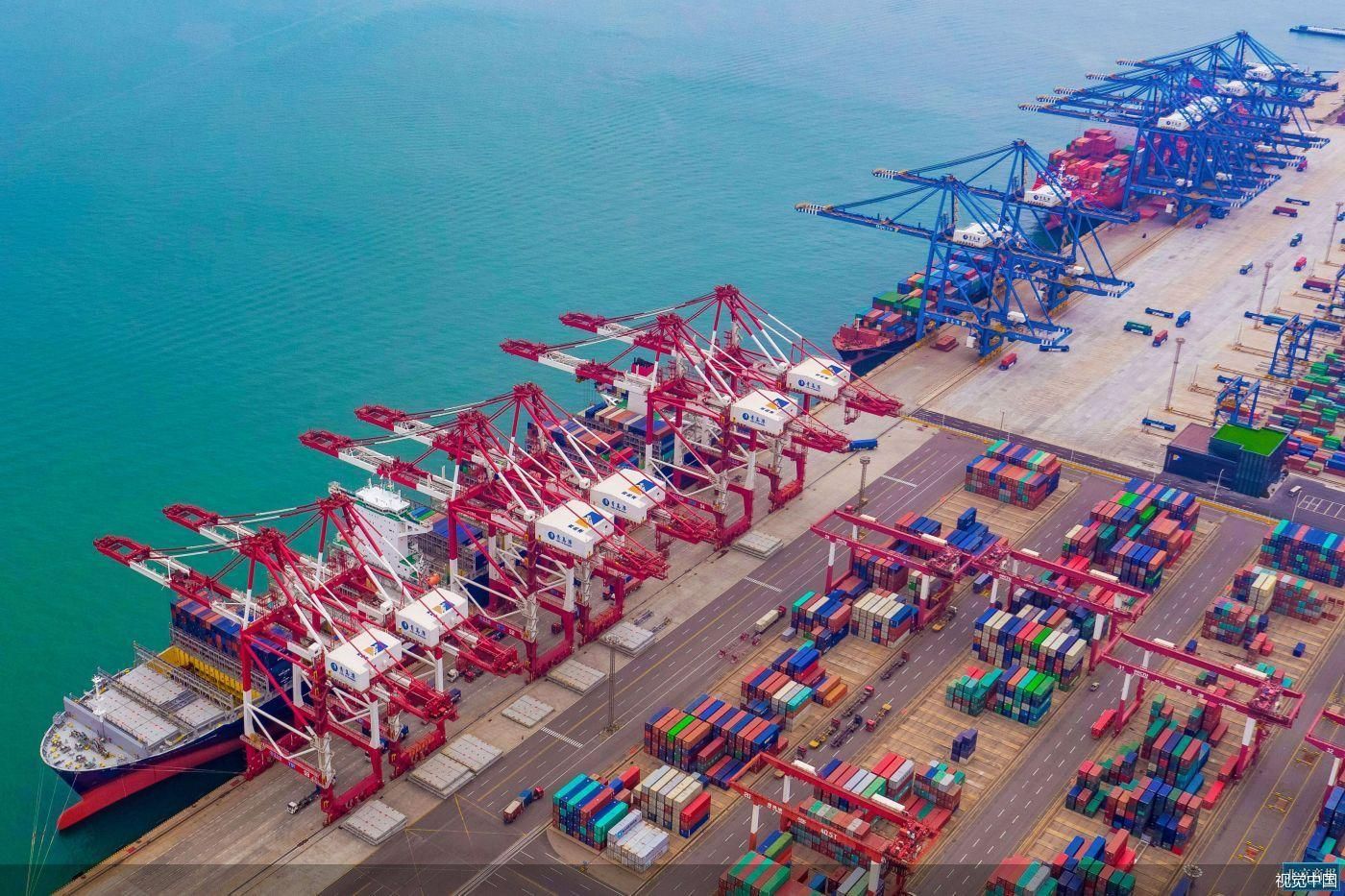
Group 1 - The core point of the news is the recent trade agreement between the US and the EU, which has been viewed internally within the EU as a "bad deal" despite temporarily stabilizing the global economy [1][5] - The agreement includes a 15% tariff on most EU products exported to the US, which is higher than the EU's initial target of 10% but lower than Trump's initial proposal of 20% [3][5] - The EU is expected to increase its investment in the US by $600 billion and purchase $750 billion worth of US energy products, although the specifics of these investments remain unclear [3][6] Group 2 - There are significant discrepancies in the statements made by US and EU leaders regarding the agreement, particularly concerning pharmaceutical products and steel and aluminum tariffs [3][4] - The financial markets reacted positively to the announcement, with the euro appreciating against the dollar and stock indices rising, indicating a temporary relief from trade conflict uncertainties [4][5] - Analysts express caution, noting that the details of the agreement, such as the specific products affected by tariffs and the implications of the $600 billion investment, could lead to further complications [4][6] Group 3 - The agreement has been criticized within the EU, with leaders expressing dissatisfaction over the concessions made, particularly the 15% tariff which is significantly higher than previous rates [5][6] - The potential economic impact of the tariffs on the EU's GDP is under scrutiny, with estimates suggesting a 0.4% impact from a 10% tariff, and the new agreement may lead to a reassessment of these figures [6][7] - The trade dynamics may shift as the US could use the 15% tariff as a template for negotiations with other countries, potentially leading to a broader trade strategy that favors the US [7][8]

欧盟对美亮剑后,特朗普还是怕了,这时候英国印度也签订了协议
Sou Hu Cai Jing· 2025-07-28 09:13
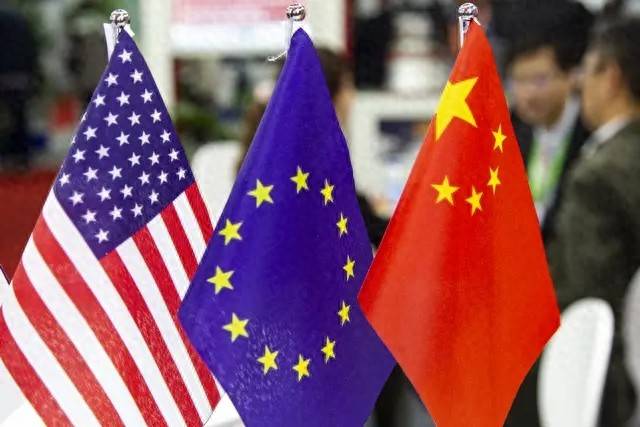
Group 1 - The EU has proposed a historic countermeasure against US tariffs, imposing a maximum 30% tariff on $930 billion worth of US goods, including over 2,000 items such as Boeing aircraft and Harley-Davidson motorcycles, effective August 7 [1] - The urgency of negotiations between the US and EU is highlighted by Trump's shift in tone, indicating a potential for a significant trade agreement, as the EU's countermeasures coincide with ongoing US-China trade talks [3] - The US is attempting to leverage negotiations by linking the reduction of EU auto tariffs to the lifting of US beef import restrictions, which has been perceived as an unfair tactic [3] Group 2 - The UK and India have signed a Free Trade Agreement (FTA), aiming to enhance their trade relations and strengthen their negotiating position with the US, particularly post-Brexit [5] - The UK will eliminate tariffs on 99% of Indian goods, while India will reduce tariffs on 90% of UK goods, with significant reductions on British whisky, which previously faced a 150% tax [5] - Concerns have been raised regarding the potential impact of India's rare earth alliance on US defense supply chains, particularly affecting the production of F-35 fighter jets [5]
美国拟对巴西加征关税 外交部:关税战没有赢家
news flash· 2025-07-28 07:51
Core Viewpoint - The Chinese Ministry of Foreign Affairs emphasizes that there are no winners in a tariff war and that unilateral actions do not benefit any party involved [1] Group 1: Tariff Implications - The U.S. plans to impose tariffs on Brazil, which has raised concerns regarding trade relations [1] - The Chinese government has previously stated its position on the U.S. tariffs against Brazil [1] Group 2: Multilateral Trade System - China expresses willingness to collaborate with Brazil and other Latin American and Caribbean countries, as well as BRICS nations, to uphold a multilateral trade system centered around the World Trade Organization [1] - The emphasis is placed on defending international fairness and justice in trade practices [1]
贵金属周报:冲高受阻回落,重新陷入整理-20250728
Cai Da Qi Huo· 2025-07-28 06:41
Report Summary 1. Market Performance - Last week, the gold price soared and then dropped significantly. The New York gold price fell back to $3,338 per ounce, and the Shanghai gold price dropped to 773 yuan per gram [3] 2. Interest Rate Expectations - On July 24, Trump met with Fed Chairman Powell to discuss interest rates. Powell and most Fed policymakers have been cautious about rate cuts due to concerns about the lagged impact of Trump's tariff hikes on inflation [4] - According to the CME "FedWatch" tool, the market expects a 95.9% probability that the Fed will keep interest rates unchanged in July and a 58.4% probability of a 25 - basis - point rate cut in September. Traders expect the Fed to cut rates more aggressively next year, with a projected 76 - basis - point cut [4] 3. Tariff Situation - Trump said he would impose simple tariffs of 15% to 50% on most other countries but would be willing to abandon the tariff clause if major countries open their markets to the US. He also mentioned sending nearly 200 tariff letters and reaching tariff agreements with Japan and the EU (15% tariff on the EU) [7] - Overall, Trump's tariff war has less impact than expected, and the market has adapted. The US stock market has continued to rise, and the risk - aversion sentiment has declined [7] 4. Economic Data - As of the week ending July 19, the number of initial jobless claims in the US decreased by 4,000 to 217,000, falling for the sixth consecutive week, the longest consecutive decline since 2022. This reduces the urgency for the Fed to cut rates in the short term, causing the US dollar index to rebound and putting pressure on the gold price [7] 5. Geopolitical Situation - Sino - US relations have eased, and the impact of the global tariff war has weakened. The new conflict between Thailand and Cambodia has limited impact on the financial market due to their small economic scale and the possibility of peace talks [7] 6. Market Outlook - Risk - assets such as the stock market are favored again, and the risk - aversion sentiment has declined, putting pressure on the gold price. The gold price on the weekly chart has soared and then dropped significantly, lacking upward momentum in the short term and returning to a box - consolidation pattern [7]
美欧达成贸易协议,美国降低关税,欧盟让步巨大,泽连斯基成赢家
Sou Hu Cai Jing· 2025-07-28 05:35
Core Viewpoint - The U.S. has successfully leveraged its tariff war to gain significant concessions from the EU, allowing for increased access to the $20 trillion European market and commitments for military purchases, which benefits both the U.S. economy and Ukraine amidst the ongoing conflict with Russia [1][9]. Group 1: Tariff Strategy - The U.S. has shifted its strategy from providing aid to selling military equipment to the EU, which is now required to purchase U.S. weapons to support Ukraine against Russia [3]. - The U.S. threatened to impose a 30% tariff, which pressured the EU to agree to a reduced tariff rate of 15%, demonstrating the effectiveness of U.S. tactics [3][6]. - The EU's acceptance of the 15% tariff is seen as a significant concession, as a 30% tariff would have been detrimental to the EU [6]. Group 2: EU's Position and Response - The concessions made by the EU highlight an unequal power dynamic between the EU and the U.S., with the EU historically supporting U.S. foreign strategies [8]. - The leadership of the EU Commission, particularly Ursula von der Leyen, has been criticized for prioritizing U.S. interests over those of the EU during negotiations [8]. - There is growing discontent among EU member states regarding the agreements made with the U.S., indicating internal divisions and dissatisfaction with the current trade dynamics [8][9].

连续2个月零进口!美终于发现不对劲,中方一举击中美“痛点”,特朗普火速称与中国关系好
Sou Hu Cai Jing· 2025-07-28 02:38
据报道,"我们与中国相处得很好。" 美国总统特朗普在华盛顿一场人工智能峰会上,突然抛出这句看 似轻描淡写的话。 前不久,他刚对菲律宾总统马科斯说过几乎一样的台词。要知道,就在几个月前,这位以"关税大棒"闻 名的总统还在威胁对中国商品加征关税。是什么让他的态度发生了180度大转弯? 答案藏在最新公布的贸易数据里——2025年6月,中国从美国进口的原油、液化天然气(LNG)和煤 炭,几乎全部归零。 特朗普(资料图) 一、归零的数据:美国能源出口遭遇"断头台" 中国海关总署的数据显示,6月份,中国自美国进口的原油彻底归零——这是近三年来的第一次。要知 道,去年同期的进口额还有8亿美元。液化天然气(LNG)更惨,已经连续四个月没有一丁点对华出 口。煤炭?去年6月中国还买了9000万美元的美国煤,今年6月只剩下几百美元的订单,几乎可以忽略不 计。 为什么会出现这种断崖式下跌?关税,还是关税。 4月份中美关税战升级,双方互加"对等关税",部分能源产品的税率一度飙。这么高的税率,进口商根 本无利可图,贸易自然就停了。 美国能源商这下傻眼了。中国是全球最大的能源买家之一,突然不买了,他们的库存和现金流立刻吃 紧。更糟的是,这 ...
经济再平衡视角下美国关税战的政策预判
Jin Rong Shi Bao· 2025-07-28 02:34
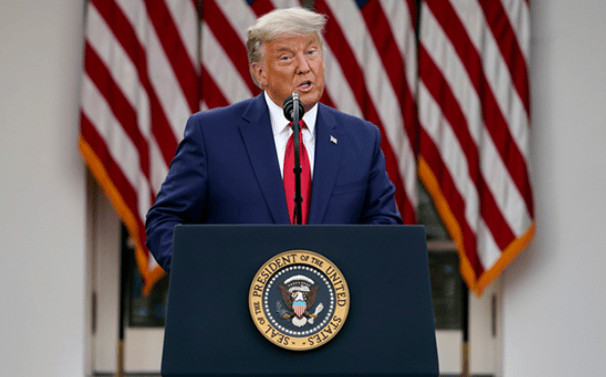
Core Points - The underlying reason and strategic intent of the Trump administration's tariff war is to achieve economic rebalancing, which has been difficult due to conflicting policy goals within the U.S. [1] - The U.S. has experienced a long history of economic imbalance and attempts at rebalancing, with significant events such as the 2008 financial crisis and the COVID-19 pandemic impacting these efforts [2] Industry Structure - Before 2008, the U.S. faced severe deindustrialization, with manufacturing jobs declining by 33% over ten years, reaching approximately 11.51 million by the end of 2009 [3] - From 2008 to 2019, the U.S. government focused on revitalizing manufacturing and high-tech industries, resulting in a rise in manufacturing employment to about 12.8 million by the end of 2019 [3] - The COVID-19 pandemic disrupted this recovery, leading to a drop in manufacturing jobs to 11.68 million in Q2 2020, with a slow recovery thereafter [3] Trade Sector - The U.S. has historically faced a trade deficit, with the current account deficit reaching approximately $816.6 billion in 2006, accounting for 5.91% of GDP [4] - The trade deficit improved somewhat from 2008 to 2019 due to various government policies aimed at curbing imports and promoting exports, but it has since widened again, with a projected current account deficit of $1.1336 trillion in 2024 [4] - The U.S. has a significant reliance on imports for labor-intensive and some capital-intensive products, which has hindered balanced economic growth [4] Savings and Investment Structure - Prior to 2008, the U.S. exhibited high consumption and low savings, with a savings-investment gap peaking during the financial crisis [5] - The U.S. savings rate rebounded to 20% by 2015 but has since declined to 17% by 2024, while the investment rate has increased, leading to a widening savings-investment gap of $1.29 trillion [5] - The U.S. external debt reached $27.6 trillion by the end of 2024, constituting 93% of GDP, indicating a reliance on international financing [5] Challenges in Achieving Economic Rebalancing - The U.S. faces inherent contradictions in its economic rebalancing policies, which have not fundamentally altered the comparative disadvantages of its manufacturing sector [6] - The strong dollar and the U.S.'s ability to purchase goods globally have perpetuated trade deficits, as the country can print dollars to meet domestic demand [7] - Excessive government spending has counteracted improvements in trade deficits that could have resulted from increased household savings [8] - The mismatch between demand expansion and supply chain recovery during the pandemic has exacerbated trade imbalances, leading to a significant increase in the goods trade deficit [9] Potential Policy Directions Post-Tariff War - The U.S. may continue to use tariffs as leverage in negotiations with China, potentially fluctuating tariff rates based on trade discussions [10] - There is a possibility that the U.S. will seek support from other countries for U.S. debt and may consider debt restructuring to alleviate fiscal pressures [11] - The U.S. might intervene in foreign exchange policies to seek a weaker dollar while also exploring the inclusion of cryptocurrencies in its reserves to bolster confidence in the dollar [11] - The U.S. is likely to implement differentiated tariffs and create trade blocs to counter China's influence, aligning with allied nations to reshape global supply chains [12]
陶冬:日本加息牵扯全球资金流向
Di Yi Cai Jing· 2025-07-28 02:27
Group 1 - Japan's potential return of $4 trillion in overseas funds due to interest rate changes could impact global asset prices positively, particularly benefiting the yen and Japanese stock market [1][5] - The U.S. Federal Reserve is expected to maintain interest rates, with a low likelihood of a rate cut in July, despite pressure from the White House [2][3] - The ongoing U.S.-Japan tariff negotiations are crucial, with preliminary agreements reached but details still under discussion, indicating a complex political landscape in Japan [3][4] Group 2 - Japan's ten-year bond yield has surpassed 1.6%, the highest since April 2008, indicating rising inflation pressures and the need for the Bank of Japan to normalize interest rates [4][5] - The Bank of Japan faces challenges with inflation at 3%, rising living costs, and the impact of tariffs, complicating its monetary policy decisions [4][5] - There is a significant amount of Japanese private sector funds, approximately $4.4 trillion, invested overseas, which may return to Japan as interest rates rise, affecting global capital flows [5][6]
股市板块火热,股指续暖债高落
Guo Xin Qi Huo· 2025-07-28 00:48
1. Report Industry Investment Rating No relevant content provided. 2. Core Viewpoints of the Report - Overall, in Q2 2025, China's GDP growth rate continued to hold steady, showing positive economic data. Sino-US tariff tensions significantly eased, and the effect of front-loading exports was remarkable. The central bank cut interest rates and reserve requirements, and rolled out a package of financial policies to stabilize the economy and expectations. Large - scale investment projects in China commenced, and sentiment in the capital market improved. With the money market interest rate remaining low, but risk appetite rising, government bonds are expected to decline [3][72]. - In the stock market, hotspots rotated. As funds spilled over from the banking sector to other heavy - weighted sectors, the strength of stock indices became differentiated. IH shifted to wide - range fluctuations, while IF, IC, and IM may continue to rise, but attention should be paid to the risk of a rapid correction in the hyped sectors [1][6]. 3. Summary According to Relevant Catalogs 3.1 Stock Index Futures Part 3.1.1 Stock Index Trend Analysis - From late September 2024 to the National Day, the A - share market rose continuously. After the National Day, it opened high and then fell. In November 2024, the market rebounded slightly, and in mid - December, it declined. Around the New Year's Day in 2025, the stock market had three consecutive negative days, and trading volume shrank to 1 trillion. After the Spring Festival, the market rebounded, and trading volume increased to 2 trillion. In March 2025, the market reached a new high of 5755.58 and then quickly fell. On April 7, there was a sharp single - day decline, with the Guozheng A - share Index dropping by 9.29%. After reaching the lowest point of 4820.80 on April 9, the market rebounded. In May, the market rebounded to 5500 and then fluctuated with shrinking volume. In June, stock market fluctuations weakened, and in late June, the stock index rose continuously driven by the banking stocks. In July, it broke through the high point after the sharp rise on September 24, 2024, and trading volume increased to around 2 trillion [4]. - The four major stock indices showed differentiation. In 2025, the Shanghai 50 Index fell in January, rebounded in February, dropped sharply in April, and then rebounded. In July, it reached a new high of 2824.86 but was lower than the high point on September 24, 2024. The CSI 300 Index also reached a new high in July. The CSI 500 Index filled the gap in July after failing to do so in May. The CSI 1000 Index rose rapidly in July and exceeded all high points since September 24, 2024 [5]. 3.1.2 Stock Index Fluctuations and Premium/Discount Situations - In January 2025, stock index fluctuations further decreased, and in February, there was a significant rebound. In March, there was a slight decline, and in April, there were large - scale fluctuations. During the rapid rebound of the Shanghai 50 and CSI 300, the stock index futures of the CSI 500 and CSI 1000 were at a large discount. Fluctuations decreased in May and June, and in July, there was a further rebound. The long - term contracts of IC and IM gradually returned to normal. The premium/discount of the Shanghai 50 Index dropped to within ±5 points, while the far - month contracts of IC had a discount of over 300 points [15]. 3.1.3 Industry Strength and Weakness Transformation - The CSI 300 Index declined in January 2025, rebounded significantly in February, slightly declined in March, had a single - day sharp decline in April, and then quickly rebounded. It fluctuated at a high level in May and June and rose rapidly in July. In terms of reversal intensity, most sectors showed positive trends, with materials having a reversal intensity of up to 13, and pharmaceuticals and industry exceeding 8. Only the public utilities sector declined, with a decline of only 2% [16][19]. 3.1.4 Industry ALPHA Risk - Return - The tracking of ALPHA risk - return statistics shows that the consistency of the CSI 300 sector's trend has increased. The telecommunications and materials sectors have full - cycle ALPHA. The full - cycle ALPHA values are (0.467%, 0.284%, 0.114%; 0.107%, 0.088%, 0.058%). Most sectors' full - cycle ALPHA values are inconsistent, and the ALPHA values of the industrial, optional, and consumer sectors are negative [23]. 3.2 Government Bond Futures Analysis 3.2.1 Economic Steady Recovery - From 2023 to 2025, GDP growth showed fluctuations but generally maintained a certain level. CPI and PPI data indicated that the economy was in a deflationary state, with industrial PPI remaining negative and the year - on - year decline expanding. Industrial added value increased year - on - year, and the cumulative year - on - year growth was relatively stable. The manufacturing PMI and non - manufacturing PMI fluctuated, and the non - manufacturing PMI was more affected by policy changes. Consumption growth was unstable [28][35]. 3.2.2 Slightly Rising Monetary投放 Growth Rate - In 2024 and 2025, the amount of new RMB loans fluctuated greatly. The growth rate of M1 first declined and then increased, indicating that the recovery speed of social hot money accelerated. The growth rate of M2 showed a downward trend. The central bank continuously implemented interest rate cuts and reserve requirement ratio cuts, and the LPR decreased. The yield to maturity of government bonds fluctuated, and the overall trend was downward [43][49]. 3.2.3 Monetary Policy - From 2024 to 2025, the central bank carried out a series of monetary policy operations, including borrowing government bonds, conducting temporary open - market operations, adjusting the LPR, and implementing a package of financial policies in May 2025, which included reducing the reserve requirement ratio, lowering policy interest rates, and increasing the quota of re - loans [50][57].