
中美贸易摩擦

Search documents
【招银研究|宏观点评】阳光洒在风雨前——进出口数据点评(2025年4月)
招商银行研究· 2025-05-09 13:33
图1:4月进出口表现好于市场预期 4月我国进出口金额同比增速表现好于市场预期,出口增速下滑但仍保持较快增长,进口降幅收窄,贸易顺差 大幅扩张。 按美元计价,进出口总金额5,352亿美元,同比增长4.6%。其中,出口3,156.9亿美元,同比 8.1%(3月12.4%,市场预期0.7%);进口2,195.1亿美元,同比-0.2%(3月-4.3%,市场预期-6.9%);贸易顺差 961.8亿美元,同比扩张241.9亿美元(+33.6%)。4月外需下行压力初步显现,重点港口货物和集装箱吞吐量 先下降后回升,出口集装箱运价指数环比下滑4.5%。 分地区看, 相较3月,我国对美国以及非美地区出口增速表现明显分化。4月对美出口增速大幅下降30.1pct 至-21.0%,对非美地区出口增速上行0.1pct至13.0%。非美地区中,对新兴市场如东盟出口增速大幅上行9.2pct 至20.8%,对拉美(17.3%)、非洲(25.3%)出口增速下行但保持较高增速。对欧盟增速下行2.0pct至8.3%, 对日本(7.8%)、 中国台湾地区(15.5%)出口增速提升。随着中美贸易摩擦冲击进一步显现,我国对美和对 非美地区出口表现或继续 ...

低库存给予铜铝支撑
Bao Cheng Qi Huo· 2025-05-09 11:53
投资咨询业务资格:证监许可【2011】1778 号 有色金属 姓名:何彬 宝城期货投资咨询部 从业资格证号:F03090813 投资咨询证号:Z0019840 电话:0571-87006873 邮箱:hebin@bcqhgs.com 作者声明 本人具有中国期货业协会授 予的期货从业资格证书,期货投 资咨询资格证书,本人承诺以勤 勉的职业态度,独立、客观地出 具本报告。本报告清晰准确地反 映了本人的研究观点。本人不会 因本报告中的具体推荐意见或观 点而直接或间接接收到任何形式 的报酬。 有色金属 | 日报 2025 年 5 月 9 日 有色日报 专业研究·创造价值 低库存给予铜铝支撑 核心观点 沪铜 沪铜主力期价昨日夜盘冲高,站上 7.8 万关口,今日早盘跳水, 日内震荡运行。美联储 5 月议息会议落地,整体偏鹰派,利空铜价。 短期铜价在 7.8 万一线仍有较强的技术压力。短期可持续关注 7.8 万 关口多空博弈,也可关注月间正套。消息面上,关注中美在瑞会 议,若中美贸易摩擦趋于缓和,将在宏观氛围和终端需求上利好铜 价。 (仅供参考,不构成任何投资建议) 专业研究·创造价值 1 / 6 请务必阅读文末免责条款 ...
集运指数(欧线)期货周报-20250509
Rui Da Qi Huo· 2025-05-09 08:51
Report Summary 1. Report Industry Investment Rating No relevant information provided. 2. Core Viewpoint - Trade wars and geopolitical situations keep fluctuating, and the market's expectation of the demand recovery for the Container Shipping Index (European Line) is in doubt again. If the tariff rate imposed by the US on Europe is better than expected, the performance of far - month futures prices may be better than that of near - month contracts. Investors are advised to be cautious, pay attention to operation rhythm and risk control, and continuously track tariff and geopolitical information [7][41]. 3. Summary by Directory 3.1. Market Review - This week, the futures prices of the Container Shipping Index (European Line) showed mixed trends. The main contract closed down 3.73%, and the other contracts had a decline ranging from - 2% to 3%. The latest SCFIS European Line settlement freight rate index was 1379.07, down 50.32 points from last week, a 3.5% week - on - week decrease. The main contract price of the Container Shipping Index (European Line) futures declined this week, and the trading volume and open interest of the EC2506 contract both decreased [6][9][12]. 3.2. News Review and Analysis | News | Impact | | --- | --- | | US President Trump announced to impose a 100% tariff on all foreign - made movies entering the US, which is bearish | [20] | | He said he was meeting with many countries on trade agreements and might reach some this week, with no clear impact | [20] | | China's Ministry of Commerce responded to China - US economic and trade talks, neutral | [20] | | The UK and the US reached a tariff trade agreement, which is bullish | [20] | | The EU announced a retaliatory list for 95 billion euros of US goods, bearish | [20] | | The central bank governors of ASEAN, China, Japan, and South Korea reached an agreement, neutral | [20] | 3.3. Weekly Market Data - The basis of the Container Shipping Index (European Line) futures contracts declined, and the price spread converged rapidly this week. The export container freight rate index continued to decline. Container shipping capacity is still rising. BDI and BPI rebounded slightly due to geopolitical factors. The charter price of Panamax ships mostly declined, and the spread between the offshore and on - shore RMB against the US dollar widened [24][29][31]. 3.4. Market Outlook and Strategy - The futures prices of the Container Shipping Index (European Line) showed mixed trends this week. Amidst Sino - US trade frictions and potential US trade strikes against Europe, the long - term weakness of the euro may continue. The geopolitical risk has increased again, and the expectation of the Red Sea's resumption of navigation has cooled. Overall, due to the instability of trade wars and geopolitical situations, the market's expectation of demand recovery for the Container Shipping Index (European Line) is in doubt again [40].

PVC市场跌势难改
Zhong Guo Hua Gong Bao· 2025-05-09 02:48
4月以来,聚氯乙烯(PVC)市场在供需弱平衡状态下一路震荡下行。据隆众资讯数据,截至5月8日,华 东地区电石法五型PVC现汇库提价在4730元(吨价,下同),较4月1日下跌140元,跌幅达2.87%。 "常规检修季PVC检修规模受限,叠加新产能投放等因素影响,供应预期增加。同时国内需求缺乏实质 性增长,出口受外贸关税纷争、印度进口政策影响,难以大幅回升,短期PVC价格重心看跌趋势不 变。"隆众资讯PVC产业链主管石磊说。 供应预期增加 今年PVC生产企业集中检修时间从4月开始预计延续到8月。"五一"假期归来,安徽华塑股份(600935) 有限公司和青海宜化化工有限公司等PVC装置开工率提升。据隆众资讯数据显示,本周期(5月3日至9 日)内,PVC产量预计在47.40万吨,环比提升2.4%。边际企业开工率维持在六七成,西北电石法企业凭 借其成本优势,开工基本稳定在八成以上。 "4月计划检修产能约570万吨,但相较于近两年春季检修规模有所缩小,同比减少20.94%, 难以对供应 端形成有效收缩。"隆众资讯分析师杨荣荣说。 "据卓创资讯(301299)统计,计划在5月至7月试车投产的装置包括浙江嘉化能源(60027 ...
新世纪期货交易提示(2025-5-9)-20250509
Xin Shi Ji Qi Huo· 2025-05-09 01:57
Report Industry Investment Ratings - Iron ore: Bearish [2] - Coking coal and coke: Weak [2] - Rebar and hot-rolled coils: Low-level oscillation [2] - Glass: Oscillating weakly [2] - Shanghai Stock Exchange 50 Index: Rebound [2] - CSI 300 Index: Oscillation [4] - CSI 500 Index: Upward [4] - CSI 1000 Index: Upward [4] - 2-year Treasury bond: Oscillation [4] - 5-year Treasury bond: Oscillation [4] - 10-year Treasury bond: Upward [4] - Gold: High-level oscillation [4] - Silver: High-level oscillation [4] - Pulp: Weakly oscillating [6] - Logs: Oscillation [6] - Soybean oil: Rebound [6] - Palm oil: Rebound [6] - Rapeseed oil: Rebound [6] - Soybean meal: Oscillating bearishly [6] - Rapeseed meal: Oscillating bearishly [6] - No. 2 soybeans: Oscillating bearishly [6] - No. 1 soybeans: Oscillation [6] - Rubber: Oscillation [9] - PX: Oscillation [9] - PTA: Oscillation [9] - MEG: On the sidelines [9] - PR: On the sidelines [9] - PF: On the sidelines [9] - Plastics: Oscillation [9] - PP: Oscillation [11] - PVC: Oscillating weakly [11] Core Views - The iron ore market is currently strong in the short term but bearish in the medium to long term due to potential steel mill production cuts and trade frictions [2] - The coal and coke market is weak, with high supply pressure and an unchanged pattern of oversupply in coke [2] - The rebar market is expected to oscillate at a low level due to high production, potential export impacts, and seasonal demand decline [2] - The glass market lacks upward momentum as the real estate industry remains in an adjustment period [2] - The stock index market is expected to rebound as the external market stabilizes and risk aversion eases [4] - The Treasury bond market is expected to rise as the central bank maintains reasonable liquidity [4] - The precious metal market is expected to oscillate at a high level, with gold prices influenced by interest rate and tariff policies [4] - The pulp market is expected to oscillate weakly due to weak demand and reduced cost support [6] - The log market is expected to stabilize at a low level and oscillate, with potential marginal improvement in demand [6] - The oil and fat market is expected to rebound in the short term and oscillate bearishly in the medium term due to ample supply and seasonal demand decline [6] - The meal market is expected to oscillate bearishly as soybean supply increases and demand weakens after the holiday [6] - The rubber market is expected to oscillate weakly due to increased supply and uncertain demand [9] - The chemical product market shows various trends, with prices mainly influenced by supply and demand, raw material prices, and macro factors [9][11] Summary by Industry Black Industry - **Iron ore**: After the press conference, the iron ore futures price rose and then fell. Global iron ore shipments may increase seasonally in the coming weeks. Steel mill profitability has improved, and hot metal production remains high, but steel production may peak in May. Steel exports face tariff risks, and domestic demand is entering a seasonal off - season, which may lead to steel mill production cuts and be bearish for iron ore in the medium to long term [2] - **Coal and coke**: Mongolian coal supply growth is limited, but the overall supply pressure remains high. Steel spot trading is poor due to tariff policies, and market confidence is low. Coke supply is in an oversupply situation, and coal and coke prices mainly follow the trend of finished steel products [2] - **Rebar**: After the press conference, the rebar futures price rose and then fell. Steel mill profits are good, and supply pressure is increasing. There are doubts about external demand and domestic demand in May. The market inventory is low, which supports the price, but overall, the price is expected to oscillate at a low level [2] - **Glass**: Some production lines have resumed operation, and daily melting volume has slightly fluctuated. Coal prices have fallen, improving profits. Factory inventories have slightly decreased, but there are regional differences. Overall, demand is weak, and the market lacks upward momentum [2] Financial and Precious Metal Industry - **Stock index**: The previous trading day saw gains in major stock indices. Aerospace and military industry, and communication equipment sectors had capital inflows. With the stabilization of the external market and the easing of risk aversion, stock index futures are recommended to be held long [4] - **Treasury bond**: Yields of Treasury bonds have declined, and the central bank has conducted reverse repurchase operations to inject liquidity. The market is expected to maintain reasonable liquidity, and Treasury bond futures are recommended to be held long [4] - **Precious metals**: Gold prices are influenced by multiple factors such as central bank gold purchases, interest rate policies, and trade policies. The current upward - driving logic has not completely reversed, and gold is expected to oscillate at a high level [4] Light Industry and Oil and Fat Industry - **Pulp**: The spot market price is strong, but the decline in external market prices weakens cost support. Paper mills' profitability is low, and demand is poor, so the pulp price is expected to oscillate weakly [6] - **Logs**: Log demand has declined after a peak, but supply pressure has decreased due to reduced arrivals. Spot prices are stable, and the price is expected to stabilize at a low level and oscillate [6] - **Oil and fat**: Palm oil production in Malaysia and Indonesia is in a seasonal growth period, and soybean production in South America is abundant. Supply is ample, while demand is in a seasonal off - season. The market is expected to rebound in the short term and oscillate bearishly in the medium term [6] - **Meal**: U.S. soybean planting conditions may improve, and South American soybeans are in a bumper harvest. Domestic soybean arrivals are increasing, and meal supply is expected to increase while demand weakens after the holiday, so the meal price is expected to oscillate bearishly [6] Soft Commodity and Chemical Industry - **Rubber**: Supply is expected to increase as the main producing areas start the tapping season. Demand is uncertain, and inventory is still relatively high. The price is expected to oscillate weakly [9] - **PX**: Affected by demand and geopolitical factors, oil prices are oscillating at a low level. PX prices are expected to follow oil price fluctuations [9] - **PTA**: Raw material prices are volatile, and PTA supply and demand are in a de - stocking state, mainly affected by raw material price fluctuations [9] - **MEG**: Domestic production capacity utilization has increased, and port inventories have slightly decreased. However, due to macro - sentiment fluctuations, the price fluctuates widely [9] - **Plastics and related products**: Different plastic products have different supply - demand situations and cost factors. Overall, prices are affected by supply, demand, raw material prices, and macro - sentiment [9][11]
长江期货市场交易指引-20250509
Chang Jiang Qi Huo· 2025-05-09 01:53
期货市场交易指引 2025 年 05 月 09 日 | | 宏观金融 | | --- | --- | | ◆股指: | 震荡运行 | | ◆国债: | 震荡上行 | | | 黑色建材 | | ◆螺纹钢: | 暂时观望 | | ◆铁矿石: | 震荡偏弱 | | ◆双焦: | 震荡运行 | | | 有色金属 | | ◆铜: | 区间谨慎交易 | | ◆铝: | 不建议追空 | | ◆镍: | 建议观望或逢高做空 | | ◆锡: | 区间交易 | | ◆黄金: | 待价格充分回调后,逢低建仓 | | ◆白银: | 区间交易 | | | 能源化工 | | ◆PVC: | 震荡偏弱 | | ◆纯碱: | 观望。 | | ◆烧碱: | 震荡偏弱 | | ◆橡胶: | 震荡偏弱 | | ◆尿素: | 震荡运行 | | ◆甲醇: | 震荡运行 | | ◆塑料: | 震荡运行 | | | 棉纺产业链 | | ◆棉花棉纱: | 震荡偏弱 | | ◆苹果: | 震荡运行 | | ◆PTA: | 震荡偏弱 | | | 农业畜牧 | | ◆生猪: | 震荡偏弱 | | ◆鸡蛋: | 走势偏弱 | | ◆玉米: | 震荡偏强 | | ◆ ...
上声电子20250508
2025-05-08 15:31
Summary of the Conference Call for 上声电子 Company Overview - **Company**: 上声电子 - **Industry**: Automotive Electronics Key Financial Performance - **Q1 2025 Revenue**: Exceeded 600 million, a year-on-year increase of approximately 6% [2][3] - **2024 Revenue**: 2.776 billion, a year-on-year increase of 19.32% [3] - **2024 Net Profit**: 235 million, a year-on-year increase of 47.9% [3] - **2025 Revenue Target**: Exceed 3 billion [4] Product Performance - **Product Lines**: Significant growth in amplifiers and AVAS automotive electronic products, both exceeding 40% growth [2][3] - **Speaker Sales**: Expected to reach approximately 90 million units in 2024, with domestic market growth being the fastest [2][11] - **Amplifier Sales**: Targeting 750,000 to 850,000 units in 2024, aiming for 1 million units in 2025 [2][12] Market Dynamics - **Domestic vs. Overseas Market**: Domestic market remains the main revenue source, with overseas market revenue accounting for about 30%, showing a declining trend [2][5] - **Impact of US-China Trade Tensions**: Trade tensions have affected operations, but customer orders remain intact. The company is negotiating solutions such as transshipment trade or production in Mexico [5][7] Operational Insights - **Czech and Mexico Operations**: Revenue growth in Czech and Mexico, but gross margins have declined. The Mexico plant is stabilizing, with ongoing efforts to improve profitability [2][6][8] - **Hefei Plant**: Total investment over 500 million, with significant depreciation impacts. The goal for 2025 is to achieve breakeven [4][15][16] Gross Margin and Cost Management - **Gross Margin Expectations**: 2024 speaker gross margin expected to decrease by 3%, while amplifier gross margin is projected to increase by 9% [2][10] - **Cost Control Measures**: The company plans to reduce losses through cost-cutting and efficiency improvements [13] Future Outlook - **2025 Growth Strategy**: Focus on innovation, including AI amplifiers and digital speakers to enhance market demand and gross margins [31] - **New Client Projects**: Anticipated production of consumer audio products in the second half of 2025, with potential new automotive projects [32] Challenges and Risks - **Competitive Pressure**: The automotive industry is highly competitive, leading to pricing pressures, especially in low-end products [29][33] - **Material Costs**: Rising raw material prices, particularly for rare earth materials, are expected to impact gross margins [45] Global Expansion Plans - **Production Shift to Mexico**: Plans to transfer some production to Mexico by 2026, including new assembly lines for low-frequency and high-frequency speakers [41] - **Market Development**: Focus on expanding client relationships in Europe and Mexico, targeting major automotive brands [44] Additional Insights - **Software Development**: The company has a robust software team focused on various algorithms to enhance audio experiences [40] - **Acoustic Configuration Trends**: Both new and traditional automotive companies are enhancing their acoustic configurations, indicating a shift towards higher quality sound systems [36] This summary encapsulates the key points from the conference call, highlighting the company's performance, market dynamics, operational insights, and future strategies.

弘则出口企业四月调研反馈,关税影响下的出口企业现状如何?
2025-05-08 15:31
Summary of Conference Call Records Industry Overview - The records focus on the impact of U.S. punitive tariffs on Chinese export enterprises, particularly in April 2025, highlighting significant declines in exports to the U.S. and the resulting strategies adopted by Chinese companies to cope with the new trade environment [1][2][4][5]. Key Points and Arguments 1. **Impact of Tariffs on Exports**: - Following the implementation of U.S. tariffs in April 2025, there was a substantial drop in Chinese exports to the U.S., with many companies halting shipments or returning goods [1][2][4]. - Specific industries such as zippers, power tools, and automotive parts were notably affected, with some companies reporting order reductions of up to 50% [2][4]. 2. **Response Strategies by Chinese Companies**: - Companies adopted various strategies, including stockpiling goods, adjusting export destinations, and relocating production overseas [1][3][19]. - High-value, low-cost products continued to be exported despite tariffs, as importers could still absorb the costs [8][19]. 3. **Inflationary Effects in the U.S.**: - The tariffs have significantly contributed to rising inflation in the U.S., with most imported products facing additional tariffs of 15%-20%, leading to increases in the Producer Price Index (PPI) and Consumer Price Index (CPI) [10][27]. 4. **Market Diversification**: - Companies are gradually reducing reliance on the U.S. market, shifting focus to Europe and emerging markets, and adjusting product pricing accordingly [3][14][19]. 5. **E-commerce Resilience**: - The Chinese cross-border e-commerce sector has shown resilience, with online sales less affected by tariffs compared to offline channels, as companies utilize overseas warehouses to manage inventory [28][29]. 6. **Challenges in Supply Chain Transition**: - Transitioning supply chains to Southeast Asia presents challenges, including increased costs and production inefficiencies, as well as stricter origin certification requirements [15][16][45]. 7. **Future Trade Dynamics**: - There are indications of potential easing of tariffs, with discussions around possibly lowering average tariffs on Chinese imports [11]. - The overall economic outlook remains pessimistic, with expectations of negative impacts on both the U.S. and global economies due to the tariffs [27]. Additional Important Insights - **Order Trends**: Despite the challenges, about 61%-62% of surveyed companies reported stable or increasing orders from non-U.S. markets, indicating some resilience in global demand [26]. - **Emerging Market Opportunities**: There are growth opportunities in emerging markets, particularly in infrastructure-related sectors, as demand for construction equipment rises [22]. - **Logistics and Shipping**: The logistics sector faces significant risks due to halted trade routes, necessitating new solutions and adjustments in supply chain strategies [33][34]. This summary encapsulates the critical insights from the conference call records, providing a comprehensive overview of the current state of the Chinese export industry in light of U.S. tariffs and the strategies being employed to navigate these challenges.
中美官宣会谈后,美方对欧洲的态度180度转弯,幸亏中国早有准备
Sou Hu Cai Jing· 2025-05-08 11:07
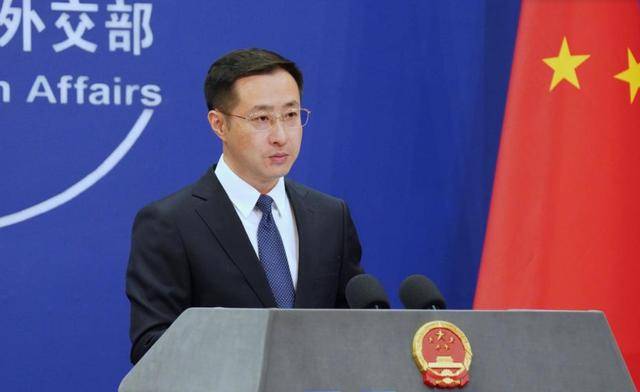
从"威胁"到"真朋友",美国总统对欧态度三个月内大翻转!就在5月7号,美国副总统万斯在慕尼黑会议上,一改此前指责欧盟内部威胁的强硬立场,突然高 呼欧盟重要,这个一百八十度大转弯,让国际观察家们意外。 同一天,中国宣布将派代表团前往瑞士,与美国财长贝森特进行会谈,这两场国际互动同日登场,中国外交部发言人林剑强调:这次会谈是应美方要求举 行,中方对于关税问题的立场没有任何变化,美方态度为什么180度转弯?中国对此又有怎样的准备? 总统"变脸"欧洲 之前美国副总统万斯声称欧洲内部的威胁比中国或俄罗斯大得多,还对欧盟的移民政策横加指责,话说得那叫一个难听,惹得欧洲多国政界公开表达不满, 斥他目中无人。 文/珠玑说 (本文所有内容皆有官方可靠信源,具体资料赘述文章结尾) 谁能想到,当初的"威胁"竟成了"真朋友"?这出人意料的变脸,无疑给观察家们添了不少琢磨的余地,也就在万斯向欧洲大送秋波的同一天,另一场大国间 的互动也拉开了帷幕。 面对这场会面,中方态度一贯清晰且审慎,外交部发言人林剑明明白白地说了,这次会谈是应美国邀请,而且在核心的关税问题上,中国的立场一点没松 动,看来,北京这边,对美国的套路门儿清。 果不其然,大 ...
新世纪期货交易提示(2025-5-8)-20250508
Xin Shi Ji Qi Huo· 2025-05-08 02:29
Report Industry Investment Ratings - Iron ore: Short-term neutral, medium to long-term bearish, suggesting shorting the 09 contract on rallies [2] - Coking coal and coke: Bearish [2] - Rebar and hot-rolled coils: Neutral [2] - Glass: Bearish with a neutral bias [2] - CSI 300 Index: Neutral [4] - SSE 50 Index: Bullish [4] - CSI 500 Index: Bullish [4] - CSI 1000 Index: Bullish [4] - 2-year Treasury bond: Neutral [4] - 5-year Treasury bond: Neutral [4] - 10-year Treasury bond: Bullish [4] - Gold: Bullish with a neutral bias [4] - Silver: Bullish with a neutral bias [4] - Pulp: Bearish with a neutral bias [5] - Logs: Neutral [5] - Soybean oil: Bearish with a neutral bias [5] - Palm oil: Bearish with a neutral bias [5] - Rapeseed oil: Bearish with a neutral bias [5] - Soybean meal: Bearish with a neutral bias [7] - Rapeseed meal: Bearish with a neutral bias [7] - No. 2 soybeans: Bearish with a neutral bias [7] - No. 1 soybeans: Neutral [7] - Rubber: Neutral [7] - PX: Neutral [7] - PTA: Suggest shorting processing spreads [7] - MEG: Hold and observe [7] - PR: Hold and observe [8] - PF: Hold and observe [8] - Plastics: Bearish with a neutral bias [8] - PP: Bearish with a neutral bias [8] - PVC: Bearish with a neutral bias [8] Core Viewpoints - The global iron ore shipment may increase seasonally in the coming weeks, while steel mills' production cuts will have a negative impact on the raw material end. The 09 iron ore contract is recommended to be shorted on rallies [2] - The supply pressure of coking coal remains high, and the oversupply pattern of coke remains unchanged. Coal and coke generally follow the trend of finished products [2] - The supply pressure of rebar continues to rise, and the market has doubts about external demand and domestic demand. The price is expected to fluctuate at a low level [2] - The glass demand is difficult to rebound significantly, and the fundamentals lack the impetus to push up prices [2] - The central bank will introduce a package of monetary policy measures, and the CSRC will promote long-term funds to enter the market, which is beneficial to the stock market [4] - The logic of the current round of gold price increase has not completely reversed, and the price is expected to fluctuate at a high level [4] - The supply of pulp is sufficient, and the demand side performs poorly, so the price is expected to fluctuate weakly [5] - The supply pressure of logs decreases, and the demand is expected to improve marginally, with the price expected to stabilize and fluctuate at a low level [5] - The supply of oils and fats is abundant, and the consumption is in the off-season, so the price is expected to fluctuate weakly [5] - The supply of soybean meal will gradually increase, and the market will shift from "tight reality" to "loose expectation", with the price expected to fluctuate weakly [7] - The supply of No. 2 soybeans will gradually become loose, and the price is expected to fluctuate weakly [7] - The supply of rubber is expected to increase, and the demand is uncertain. The price is expected to fluctuate weakly [7] - PX price is expected to fluctuate with oil prices [7] - PTA supply and demand will destock, mainly affected by raw material price fluctuations [7] - MEG supply and demand are not bad in the short term, but the macro sentiment fluctuates greatly, and the price fluctuates widely [7] - The polyester bottle chip market may adjust weakly and steadily [8] - The polyester staple fiber market will continue to be in a game state, and the price may fluctuate within a narrow range [8] - The supply and demand of plastics are bearish, and the 05 contract will run weakly [8] - The supply pressure of PP decreases, and the price is expected to run weakly [8] - The PVC supply and demand are bearish, and the price is expected to fluctuate weakly [8] Summary by Category Ferrous Metals - Iron ore: After the press conference, the iron ore futures price rose rapidly and then fell back. The global shipment may increase seasonally, and the steel mills' production cuts will have a negative impact on the raw material end. The short-term reality is strong, and the price may fluctuate and consolidate at the current position. In the medium and long term, the 09 contract is recommended to be shorted on rallies [2] - Coking coal and coke: The supply pressure of coking coal remains high, and the oversupply pattern of coke remains unchanged. The second round of coke price increase has not been implemented, and the overall inventory has increased. Coal and coke generally follow the trend of finished products [2] - Rebar: After the press conference, the rebar futures price rose rapidly and then fell back. The supply pressure continues to rise, and the market has doubts about external demand and domestic demand. The inventory is at a low level, which supports the price. The price is expected to fluctuate at a low level [2] - Glass: Some production lines have resumed production, and the daily melting volume has fluctuated slightly. The profit has improved, and the inventory has decreased slightly. The demand is difficult to rebound significantly, and the fundamentals lack the impetus to push up prices [2] Financial Products - Stock index futures/options: The central bank will introduce a package of monetary policy measures, and the CSRC will promote long-term funds to enter the market, which is beneficial to the stock market. The Fed maintains the interest rate unchanged, and the external market stabilizes. The stock index bulls can hold [4] - Treasury bonds: The central bank conducts reverse repurchase operations, and the market liquidity is at a reasonable level. The yield of the 10-year Treasury bond rises, and the bulls can hold [4] Precious Metals - Gold: The logic of the current round of gold price increase has not completely reversed, and the price is expected to fluctuate at a high level. The Fed's interest rate policy and tariff policy may be short-term disturbing factors, and the tariff policy evolution dominates the market risk aversion sentiment [4] - Silver: The inflation data slows down, and the Fed does not cut interest rates as expected. The short-term price is affected by the Fed's policy and trade negotiations, and it is expected to fluctuate at a high level [4] Pulp and Logs - Pulp: The spot market price is strong, but the cost price decline weakens the support for the pulp price. The papermaking industry's profitability is low, and the demand side performs poorly. The price is expected to fluctuate weakly [5] - Logs: The port shipment volume increases, and the supply pressure decreases. The spot market price is weak, and the demand is expected to improve marginally. The price is expected to stabilize and fluctuate at a low level [5] Oils and Fats and Meals - Oils and fats: The supply of oils and fats is abundant, and the consumption is in the off-season. The production of palm oil in Malaysia and Indonesia increases seasonally, and the demand for biodiesel weakens. The supply of domestic soybeans increases, and the inventory is expected to rise. The price is expected to fluctuate weakly [5] - Meals: The supply of soybean meal will gradually increase, and the market will shift from "tight reality" to "loose expectation". The supply of No. 2 soybeans will gradually become loose, and the price is expected to fluctuate weakly [7] Soft Commodities - Rubber: The supply is expected to increase, and the demand is uncertain. The inventory accumulation speed slows down, and the price is expected to fluctuate weakly. Attention should be paid to the impact of the macro and policy aspects [7] Chemicals - PX: The oil price fluctuates at a low level, and the PX price is expected to fluctuate with the oil price [7] - PTA: The raw material price fluctuates repeatedly, and the processing spread is at a certain level. The supply and demand will destock, mainly affected by raw material price fluctuations [7] - MEG: The supply and demand are not bad in the short term, but the macro sentiment fluctuates greatly, and the price fluctuates widely [7] - PR: The raw material support is weak, but there is certain support from the peak consumption season. The market may adjust weakly and steadily [8] - PF: The demand expectation is weak, and the oil price falls. The PTA supply shrinks, and the market will continue to be in a game state. The price may fluctuate within a narrow range [8] - Plastics: The supply and demand are bearish, and the 05 contract will run weakly. The cost end is affected by factors such as oil prices, and the supply side has new device production expectations [8] - PP: The supply pressure decreases, and the price is expected to run weakly. The cost end is affected by multiple factors, and the downstream demand is mainly for rigid procurement [8] - PVC: The supply and demand are bearish, and the price is expected to fluctuate weakly. The cost end is stable, the inventory is destocked, and the spot transaction is average [8]