
通胀预期

Search documents
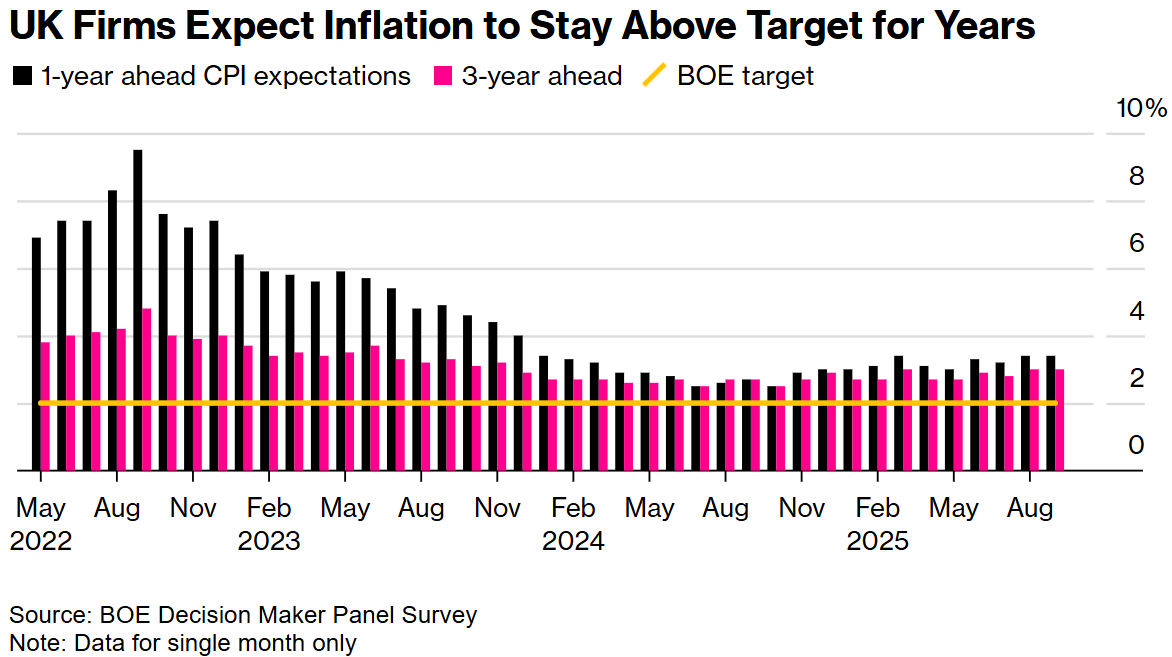
英国企业通胀预期维持3.4%高位 顽固物价压力远超央行目标
智通财经网· 2025-10-03 02:30
Group 1 - UK businesses expect consumer prices to rise at nearly double the Bank of England's target rate, raising concerns about persistent inflation [1][4] - CFOs surveyed by the Bank of England predict a 12-month inflation rate of 3.4%, unchanged from the previous month, with the last higher expectation recorded in December 2023 [1][4] - The survey indicates that businesses plan to increase prices by 3.7% over the next year, up from 3.5% in August [4] Group 2 - The Bank of England's policymakers are increasingly divided on when or whether to ease monetary policy, considering the deteriorating labor market and stubborn wage growth [4] - The wage growth rate remains at 4.6%, above the comfort level for the Bank of England, with expected wage growth accelerating from 3.5% to 3.8% [5] - Companies are facing rising labor costs due to increased wage taxes and minimum wage hikes, leading them to consider raising consumer prices as a more likely response than offering lower wage increases [4]

突然!降息100基点
Zhong Guo Ji Jin Bao· 2025-10-03 02:18
Core Viewpoint - The Central Bank of Egypt has cut interest rates by 100 basis points, marking the fourth rate cut this year, in response to a stronger local currency and declining inflation rates, which are at their lowest since 2022 [1][2][3] Monetary Policy Changes - The Central Bank's Monetary Policy Committee has reduced the overnight deposit rate to 21% and the overnight lending rate to 22% [1][6] - This decision is part of a broader strategy to ease the financial burden on the heavily indebted nation and stimulate local investment [2][3] Inflation Trends - Inflation has been decreasing for three consecutive months, with the consumer price index rising by only 12% in August, down from a peak of 38% in September 2023 [2][8] - The core inflation rate also fell to 10.7% in August, indicating a trend of easing price pressures [2][8] Economic Outlook - The Central Bank anticipates that inflation will continue to slow down, projecting an average inflation rate of around 14% for 2025, with a target of 7% (±2 percentage points) by the fourth quarter of 2026 [8] - The stronger Egyptian pound, bolstered by increased foreign investment and tourism, is expected to help alleviate price pressures in this import-dependent economy [3][5] Future Considerations - Economists predict that this may be the last rate cut in the short term, as the government plans to raise fuel prices later in October, which could introduce new inflationary pressures [2][5] - The Central Bank will continue to monitor economic conditions and adjust policies as necessary to maintain price stability [8]

RBI’s pause: When monetary flexibility meets growth uncertainty
MINT· 2025-10-01 12:14
Group 1: Monetary Policy and Inflation Outlook - The Reserve Bank of India (RBI) maintained its policy rates and neutral stance despite calls for easing, indicating a significant moderation in inflation [2][5] - RBI lowered its inflation estimate for FY26 to 2.6% from 3.1% and for the first quarter of FY27 to 4.5% from 4.9%, reflecting a more benign inflation outlook [3] - The current real policy rate stands at 1%, below the estimated neutral real rates of 1.4% to 1.9%, suggesting limited space for rate cuts [4] Group 2: Economic Growth Projections - RBI raised its FY26 GDP growth estimate to 6.8% from 6.5%, primarily due to a strong 7.8% GDP growth in the first quarter [6] - However, the GDP growth estimate for the second half of FY26 was lowered by 10 basis points to 6.3%, citing the negative impact of US tariffs on Indian exports [7] - The ongoing negotiations for a bilateral trade agreement between India and the US could potentially reduce tariffs from 50% to 25%, which is crucial for growth [11] Group 3: Internal Deliberations and Future Outlook - There was a divergence of views among RBI members regarding the monetary policy stance, with some advocating for a shift to an accommodative stance [8] - The RBI's decision to pause on rate cuts is influenced by the need to assess the impact of fiscal stimulus measures, such as GST rate cuts, on consumption [12] - Clarity on growth risks, including trade negotiations and domestic consumption trends, is expected by the December policy meeting [13]

两年来最高点:分析师预测匈牙利福林未来走势
Sou Hu Cai Jing· 2025-09-30 13:50
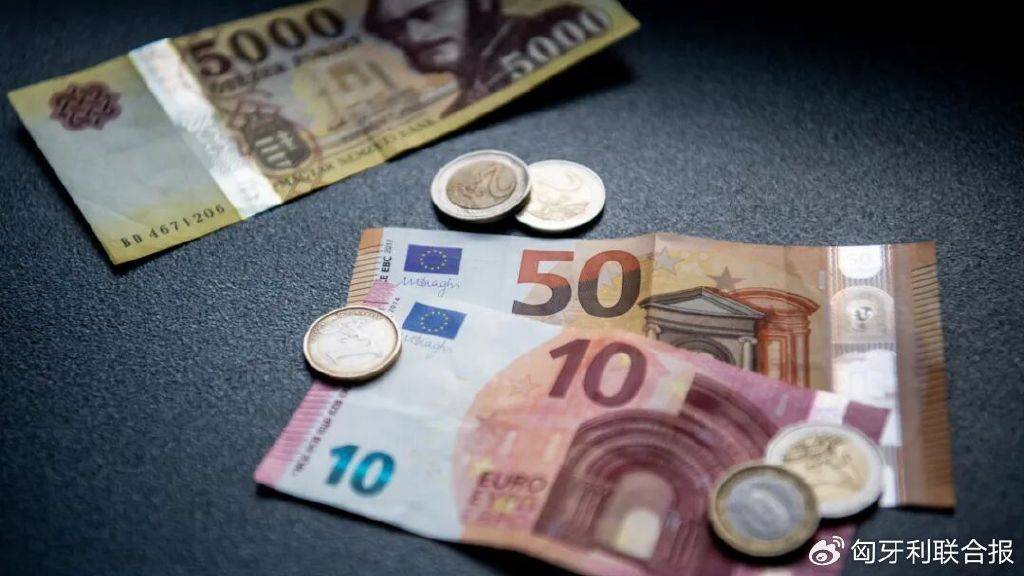
Core Insights - The Hungarian Forint has recently reached its highest point in two years, with expectations for its appreciation against the Euro to continue through the remainder of 2025, potentially alleviating inflation expectations [1][4] Currency Exchange Rate Forecast - MBH Bank predicts that the average exchange rate of the Hungarian Forint against the Euro will be 401 in 2025, with an end-of-year rate of 397.5. For 2026, the average exchange rate is expected to reach 400.3 [2] Economic Growth Projections - The Hungarian economy is currently supported by the service, retail, and hospitality sectors, while adverse weather has impacted agriculture and weak demand has affected industry. GDP growth is forecasted at 0.8% for 2025, with a recovery expected in 2026, driven by external demand and new investments, potentially reaching 3% [5] Inflation and Monetary Policy Outlook - The central bank anticipates an average inflation rate of 4.5% for 2025, decreasing to 3.9% in 2026. The core inflation rate fell to 3.9% in August, the lowest in four years. The benchmark interest rate has been maintained at 6.5% for over a year, with no changes expected before the end of 2025. However, anticipated rate cuts by the European Central Bank and the Federal Reserve may provide room for easing in Hungary, with projections of a decline to 6.0% by the end of 2026 and 5.0% by 2027 [6] Fiscal Deficit and Labor Market Trends - The government deficit is expected to be 4.6% of GDP in 2025, an improvement from 4.9% the previous year. Employment is projected to continue growing, with an average unemployment rate of 4.4% in 2025 and 4.2% in 2026. Despite the Forint's strength supporting disinflation, the government plans to gradually lift "price guarantee caps" in the second half of 2026, which may temporarily boost inflation [7]
山金期货资讯周报-20250930
Shan Jin Qi Huo· 2025-09-30 11:27
1. Report Industry Investment Rating No relevant content provided. 2. Core Viewpoints of the Report - Since 2025, precious metals have continued to rise, but gold and silver have shown divergence. Gold has repeatedly reached new historical highs, while silver has followed up slowly and faced pressure to fall back. The main driving factors include increased risk - aversion sentiment, expectations of interest rate cuts, and central banks' continued gold purchases. The current bull market in precious metals differs significantly from previous ones in terms of driving logic, amplitude, and the role of central banks. [4][5][7] - Looking ahead, before the Fed hints at the end of interest rate cuts around mid - 2026, precious metals may continue to rise. However, after the interest rate cuts enter the second half, attention should be paid to the risk of a rapid decline in precious metal prices due to profit - taking, and the overall volatility of precious metals may further increase. [64] 3. Summary by Relevant Catalogs 3.1. Market Review - Since 2025, gold has reached new highs, with London gold reaching a maximum of $3057.14 per ounce, Comex gold reaching $3065.2 per ounce, and domestic Shanghai gold reaching a maximum of 711.24 yuan per gram. Silver has followed up slowly, with London silver reaching a maximum of $34.224 per ounce and domestic Shanghai silver reaching a maximum of 8444 yuan per kilogram. [4] - The main logics for the rise of precious metals since the beginning of the year are: increased risk - aversion sentiment due to global economic and political restructuring, expectations of interest rate cuts, and central banks' continued gold purchases. [5][7] - This bull market in precious metals differs from previous ones in terms of driving logic (from "cyclical" to "structural"), amplitude and breadth (unprecedented global general increase), and the role of central banks (from "participants" to "leading forces"). [9][10] - The bull market in silver also differs from previous ones in terms of driving logic (from "investment - led" to "investment + industrial demand dual - driven"), breadth and synchronicity (global value re - evaluation), and the relationship with gold (from "following" to "potentially leading"). [12][13] 3.2. Evolution Logic of Safe - Haven Attribute - The world is in the process of transitioning to a new order, with the US no longer the dominant power. There are risks of trade wars, government shutdowns, and potential geopolitical conflicts, which may increase the demand for safe - haven assets. Trump's policy expectations affect precious metal prices through multiple channels, and in the short term, risk - aversion sentiment may support precious metal prices, while in the long term, trade frictions may increase inflation or lead to economic recession, making precious metals more attractive. [14][16] - The volatility of the US stock market may rise, which will increase the safe - haven value of precious metals. [19] 3.3. Evolution Logic of Monetary Attribute - In 2025, US inflation may experience "re - inflation", and the eurozone is close to achieving its anti - inflation target, but trade war risks pose pressure on future interest rate cuts. The Fed has adjusted its monetary policy framework, which may lead to potential changes in US dollar liquidity and have different impacts on various countries. [23] - The US employment situation may continue to weaken, and Trump's new policies may accelerate the decline in employment. Non - farm payroll data has a significant impact on the Fed's interest rate decisions and precious metal prices. [32][35] - The Fed is expected to continue to cut interest rates in 2025, with a total interest rate cut of about 50 basis points and the process expected to be completed around mid - 2026. The CME FedWatch Tool can help investors predict the Fed's interest rate trends. [41][42] - Global central bank monetary policies have shown significant divergence in recent years. The difference in interest rate cut expectations between the US and non - US countries is crucial. Later, the Fed's larger interest rate cut space may put pressure on the US dollar index. [45] 3.4. Evolution Logic of Commodity Attribute - In 2024, the global gold supply increased steadily, but demand declined. In 2025, demand is expected to continue to show structural divergence. Jewelry demand is suppressed by high gold prices, but official and private gold purchases offset some negative impacts. Gold ETFs, bars, and coins have strong demand, while gold jewelry demand shows a tonnage - consumption divergence. [51] - The World Silver Association predicts that in 2025, the global silver supply - demand gap will narrow by 21% to 117.6 million ounces (about 3658 tons) due to a 1% decline in demand and a 2% increase in total supply. [56] 3.5. Technical Analysis - London gold has been in an upward trend since 2000. After reaching a high in 2011 and then falling back, it has started a new upward trend since 2016. In 2025, it has accelerated its upward movement. It is expected to continue to rise before the Fed hints at the end of interest rate cuts around mid - 2026. Attention should be paid to the pressure levels of $3750 - 4000 (about 850 - 910 yuan for Shanghai gold) and the support level of $3400 (about 770 yuan for Shanghai gold). [58][59] - London silver has followed a similar trend to gold since 1994. Since 2016, it has oscillated upward along the 20 - year line. The recent rebound in global silver industrial demand may drive its price up. Attention should be paid to the pressure range of $49.8 - 55 (about 11780 - 13000 yuan for Shanghai silver) and the support level of $37.9 (about 8960 yuan for Shanghai silver). [62] 3.6. Future Market Development Direction from the Perspective of Long - Short Game - The reconstruction of the global economic and political system promotes the reconstruction of the monetary system. The safe - haven demand under global economic uncertainty and policy game are complexly intertwined. The continuous gold purchases by global central banks, the long - term Sino - US game, and repeated geopolitical conflicts still support the precious metal market. Before the Fed hints at the end of interest rate cuts around mid - 2026, precious metals may continue to rise, but attention should be paid to the risk of a rapid decline. [64] 3.7. Overview of the Domestic Precious Metal Industry Chain - In the first half of 2025, domestic raw material gold production was 179.083 tons, a year - on - year decrease of 0.31%. After including imported raw material gold, the total gold production was 252.761 tons, a year - on - year increase of 0.44%. Key gold mine projects are advancing rapidly, and large - scale gold enterprises' overseas mine production has increased. [67][68] - In the first half of 2025, domestic gold consumption was 505.205 tons, a year - on - year decrease of 3.54%. Gold jewelry consumption was suppressed by high prices, while demand for gold bars and coins increased, and industrial and other gold uses also increased. [69]
贵金属早报-20250930
Da Yue Qi Huo· 2025-09-30 02:19
Report Information - Report Title: Precious Metals Morning Report - September 30, 2025 [1] - Author: Xiang Weiyi from Dayue Futures Investment Consulting Department [1] Report Industry Investment Rating - Not provided in the report Core Views - Due to concerns about the US government shutdown, gold and silver prices have risen. Gold prices reached a new high, and silver prices continued to rise significantly. Overall, precious metal prices are expected to remain strong, but investors are advised to hold light positions during holidays [4][6] - After Trump took office, the world entered a period of extreme turmoil and change. The inflation expectation has shifted to an economic recession expectation. Gold prices are difficult to decline, and silver prices still mainly follow gold prices [10][13] Summary by Directory 1. Previous Day's Review - US government shutdown concerns pushed up gold and silver prices. US and European stock indexes closed slightly higher, US Treasury yields fell, the US dollar index declined, and the offshore RMB appreciated against the US dollar [4][6] - COMEX gold futures rose 1.42% to $3,862.90 per ounce, and COMEX silver futures rose 0.97% to $47.11 per ounce [4][6] 2. Daily Tips - Today, focus on China's September PMI, the Bank of Japan's meeting minutes, US August job openings, and intensive speeches by Federal Reserve and European Central Bank members [4] - Although precious metal prices are expected to remain strong, due to the many events during the holiday and the continued concerns about the US government shutdown, investors are advised to hold light positions [4][6] 3. Today's Focus - A series of economic data and central bank events are scheduled for today, including Japan's economic data, China's PMI data, Australia's central bank policy rate decision, and speeches by central bank officials from the US, Europe, and the UK [15] 4. Fundamental Data - **Gold**: The basis is -4.62, with the spot price at a discount to the futures price, which is bearish; the gold futures warehouse receipts increased by 2,802 kilograms to 68,628 kilograms, which is bearish; the 20 - day moving average is upward, and the K - line is above the 20 - day moving average, which is bullish; the main net position is long, but the main long positions decreased, which is bullish [5] - **Silver**: The basis is -59, with the spot price at a discount to the futures price, which is neutral; the Shanghai silver futures warehouse receipts increased by 31,382 kilograms to 1,189,648 kilograms, which is neutral; the 20 - day moving average is upward, and the K - line is above the 20 - day moving average, which is bullish; the main net position is long, and the main long positions increased, which is bullish [6] 5. Position Data - **Gold**: The long positions of the top 20 in Shanghai gold decreased by 0.48% on September 29 compared to September 28, the short positions decreased by 4.39%, and the net position increased by 1.67%. Compared with September 26, the long positions decreased by 10.43%, the short positions decreased by 8.40%, and the net position decreased by 16.77% [30][31] - **Silver**: Not detailed in the position change data, but the main net position is long and the main long positions increased [6] - **SPDR Gold ETF**: The ETF holdings continued to increase [34] - **Silver ETF**: The ETF holdings decreased slightly but were higher than the same period in the past two years [37]
金价又双叒创新高!或有三大因素支撑!有色龙头ETF(159876)跳空大涨3%,获资金实时净申购1440万份!
Xin Lang Ji Jin· 2025-09-30 01:54
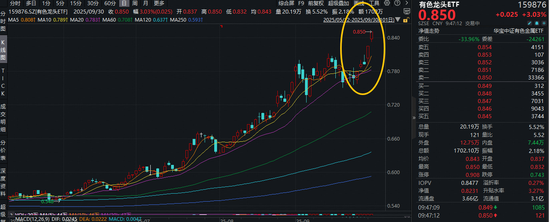
Group 1 - The non-ferrous metal sector is leading the market, with the non-ferrous metal ETF (159876) jumping over 3%, reaching a four-year high, and attracting a net subscription of 14.4 million units [1] - Key stocks such as Xiyegongsi and Huaxi Youse hit the daily limit, while Huayou Cobalt rose over 9%, and Jiangxi Copper and Baiyin Youse increased by more than 7% [1] - Major stocks like Zijin Mining and Luoyang Molybdenum rose over 4% [1] Group 2 - COMEX gold prices have surpassed $3,876 per ounce, setting a new historical high, with expectations of further upward movement due to the Federal Reserve's interest rate cut cycle [3] - Factors supporting precious metal prices include increased demand for safe-haven assets, central bank gold purchases, and inflation expectations [3][4] - The Federal Reserve's interest rate cut cycle is seen as a key "slow variable" benefiting the entire non-ferrous sector, with different metals responding at different paces [4] Group 3 - The macro drivers for gold include expectations of Federal Reserve rate cuts, geopolitical disturbances increasing safe-haven demand, and central bank accumulation [5] - Strategic metals like rare earths, tungsten, and tin are expected to benefit from global geopolitical dynamics [5] - The "anti-involution" policy in China is expected to enhance production efficiency and improve market expectations, positively impacting metal prices [4][5] Group 4 - The non-ferrous metal ETF (159876) and its connected funds track the CSI Non-Ferrous Metal Index, with weightings of copper (25.3%), aluminum (14.2%), rare earths (13.8%), gold (13.6%), and lithium (7.6%), providing a diversified investment approach [6] - The index has shown varied performance over the past five years, with significant fluctuations in returns, indicating the importance of diversification in investment strategies [8]
8月份欧元区通胀预期回升
Shang Wu Bu Wang Zhan· 2025-09-29 15:54
(原标题:8月份欧元区通胀预期回升) 欧洲央行最新调查显示,欧元区8月份消费者短期通胀预期回升,市场对央行将暂停降息的预期有 所上升。未来12个月通胀预期中值由7月份的2.6%升至2.8%,五年期预期升至2.2%。 ...
【环球财经】日本政府称经济温和复苏 汽车业受美国贸易政策影响
Xin Hua Cai Jing· 2025-09-29 13:56
新华财经北京9月29日电(王姝睿)日本政府周一表示,经济正在温和复苏,但美国贸易政策对汽车行 业的影响尤为明显。尽管上调了对民间支出和资本支出的看法,但日本政府提醒美国贸易政策可能给经 济前景带来下行风险。 数据显示,日本第二季度经济增长快于预期,连续第五个季度扩张。日本第二季度实际GDP年化季率上 修至2.2%,远高于初值的1%。第二季度GDP环比增速上修至0.5%,高于初值的0.3%。经合组织预计, 日本经济在2025年将增长1.1%,较此前预测上调0.4个百分点,主要受益于强劲的企业盈利和稳健的投 资。 日本政府认为,资本支出因数字投资和机械设备增长而"温和复苏",为2024年3月以来首次上调评估。 野口旭提醒称,日本央行需在审视物价、国内外经济发展的同时灵活调整货币政策。 (文章来源:新华财经) 同时,日本政府自2024年8月以来首次上调对消费者支出的评估。月度报告称,签订关税协议后消费者 信心改善,占经济过半的私人消费出现"回暖迹象"。 日本农林中金综合研究所经济学家南武志表示,日本经济持续增长得到确认,且企业具备转嫁涨价成本 的能力,这为年底前加息提供了支撑。尽管第二季度私人消费仅小幅增长,但如果 ...
北上活跃度回落,整体继续净卖出但幅度有所放缓
SINOLINK SECURITIES· 2025-09-29 12:36
Macro Liquidity - The US dollar index continued to rise, and the degree of "inversion" in the China-US interest rate spread deepened, with inflation expectations declining [1][12] - Offshore dollar liquidity tightened overall, while the domestic interbank funding situation remained balanced [1][17] Market Trading Activity - Overall market trading activity has decreased, with major indices' volatility also declining [2][31] - Trading heat in sectors such as electronics, automotive, consumer services, real estate, textiles, and communications remains above the 80th percentile [2][24] - The volatility of the communication sector remains above the 80th historical percentile [2][31] Institutional Research - Research activity is high in sectors such as electronics, pharmaceuticals, communications, non-ferrous metals, and food and beverages, with mechanical, transportation, banking, and consumer services sectors seeing a month-on-month increase in research heat [3][42] Analyst Forecasts - Analysts have adjusted net profit forecasts for the entire A-share market for 2025 and 2026, with increases in sectors such as non-ferrous metals, consumer services, chemicals, machinery, and automotive [4][49] - The proportion of stocks with upward revisions in net profit forecasts for 2025 and 2026 has increased [4][49] - The net profit forecasts for the Shanghai Stock Exchange 50 and CSI 300 indices for 2025 and 2026 have been raised, while the CSI 500 index has seen downward adjustments [4][49] Northbound Trading Activity - Northbound trading activity has decreased, continuing to show net selling but at a slower pace [5][31] - In the top 10 active stocks, the ratio of buy/sell totals in sectors like electronics, electric vehicles, and automotive has increased, while it has decreased in non-bank, pharmaceuticals, and non-ferrous sectors [5][31] Margin Financing Activity - Margin financing activity is approaching the highest point since July 2020, with a net purchase of 26.48 billion yuan last week [6][35] - The main net purchases in margin financing were in electronics, communications, and electric vehicle sectors, while net sales were seen in non-ferrous metals, pharmaceuticals, and non-bank sectors [6][35] Active Equity Fund Positions - Active equity funds have reduced their positions, primarily increasing allocations in media, computing, and machinery sectors while decreasing in communications, non-ferrous metals, and food and beverages [8][45] - The correlation between active equity funds and mid/small-cap growth and small-cap value has increased [8][45] - New fund establishment sizes have decreased, with active funds seeing a rebound while passive funds have declined [8][50]