
资产配置

Search documents
15句金句温故知新,陪你读完一整年的中泰资管天团
中泰证券资管· 2025-12-31 07:02
Core Insights - The article reflects on the tenth anniversary of the "Zhongtai Asset Management Team" and emphasizes the enduring relevance of its insights over time [3] - It highlights the importance of different investment philosophies, specifically "differentiation" and "integration," which can lead to varied investment decisions even with the same fundamental understanding [3] - The article discusses the challenges and opportunities in asset allocation, emphasizing the need for a scientific and objective analytical framework [4][5] Investment Philosophy - "Differentiation" relies on the power of elasticity, while "integration" requires the strength of time, each having its own path to profitability [3] - The article argues that value investment can indeed benefit from technological changes, as long as the investor understands the underlying value assessment [4] Asset Allocation - Effective asset allocation should avoid chasing trends and instead focus on a comprehensive analysis that incorporates new driving logic and macro factors [4] - The article suggests that asset allocation is an ongoing process that requires continuous research and adaptation [4] Fund Management - It is noted that investors should abandon the pursuit of "next star funds" and instead focus on understanding the principles and frameworks that drive fund performance [5] - The article emphasizes the importance of having a clear investment objective for fund managers to avoid conflicting priorities [5] Fixed Income Products - The article posits that "fixed income plus" products are a natural evolution in the fixed income sector, with diverse investment strategies still in their infancy [6] - It highlights the significance of maintaining a safety margin in dividend investing, especially in uncertain environments [6] Emotional Consumption - The article discusses the need for companies to build an emotional value chain that is difficult to replicate, focusing on consumer insights and experience delivery [10] - It emphasizes the importance of understanding the core business and its essential conflicts for effective investment research [11] Market Dynamics - The article suggests that having a clear direction and anchor can help manage expectations regarding return fluctuations, even amidst market volatility [12] - It also discusses the various dimensions that quant managers can consider when assessing stock value, including management capabilities and risk control [13] Bond Investment - The article asserts that bonds provide a stable cash flow over the long term, making them a valuable asset class for investment [14] - It highlights the importance of controlling drawdown levels in "fixed income plus" products to enhance investor satisfaction [9]


十年国债ETF(511260)近20日资金净流入超10亿元,政策对债市形成支撑
Mei Ri Jing Ji Xin Wen· 2025-12-31 06:28
Core Viewpoint - The article highlights the strong support for the bond market from policy measures, indicating a favorable environment for the ten-year government bond ETF (511260) due to increased liquidity and proactive fiscal policies [1]. Group 1: Policy Support - The policy environment is expected to improve in 2026 compared to 2025, with a focus on revitalizing existing policies and expanding domestic demand [1]. - The implementation of more proactive fiscal policies and moderately loose monetary policies is anticipated to enhance policy coordination, creating a neutral to bullish environment for the bond market [1]. Group 2: Fund Performance - The ten-year government bond ETF (511260) has seen a net inflow of over 1 billion yuan in the past 20 days, reflecting strong investor interest [1]. - Historical performance shows that since its inception, the ETF has consistently achieved positive returns, with a one-year return of 5.88%, a three-year return of 16.13%, a five-year return of 22.41%, and a cumulative return of 36.68% [1]. - The ETF has maintained positive annual returns for seven consecutive years from 2018 to 2024, positioning it as a potential asset allocation tool that can navigate through market cycles [1].
2025年你最大的收获是什么?
表舅是养基大户· 2025-12-31 06:01
Group 1 - The article highlights the successful performance of the investment portfolio managed by the company, with most participants currently in a profitable state according to data from Xueqiu [3] - The investment strategy emphasizes regional diversification, balanced allocation, and multi-asset investment, which helps mitigate significant losses while providing steady returns over time [6] - The company has established a knowledge-sharing community, attracting over 8,500 members, focusing on asset allocation and fundamental logic rather than short-term trading and gossip [8][10] Group 2 - The company believes in the importance of maintaining a rational and equal relationship with users, fostering trust without adopting a persona of being always correct [10][11] - The article mentions a health-related initiative, where the company is giving away smart body fat scales as part of a year-end event, reflecting a commitment to health and well-being [18] - The rules for the giveaway include predicting the closing point of the Hang Seng Tech Index, encouraging community engagement and interaction [22]

愿智慧如光,照亮财富之路
IPO日报· 2025-12-31 05:13
Group 1 - The article emphasizes the importance of understanding long-term trends and the intrinsic value of companies for sustainable wealth growth, rather than being swayed by short-term market fluctuations [2] - It highlights the necessity for investors to continuously expand their knowledge and remain open-minded to innovations and emerging industries [2] - The article encourages finding a balance between investment and life, suggesting that the ultimate goal of investing is to enhance the quality of life [2] Group 2 - The article mentions specific companies and their financial situations, such as Yaxing Chemical with a high debt ratio of 85% and its ambition to expand [4] - It notes that Haixue Network is preparing for an IPO, boasting 4.3 million paying students, with 60% of its revenue coming from the construction sector [4] - The article also discusses a company that is attempting to go public for the third time, which derives 90% of its revenue from a single product related to tetanus antitoxin [4]

突破6万亿!回看2025,再谈谈ETF
中国基金报· 2025-12-31 02:55
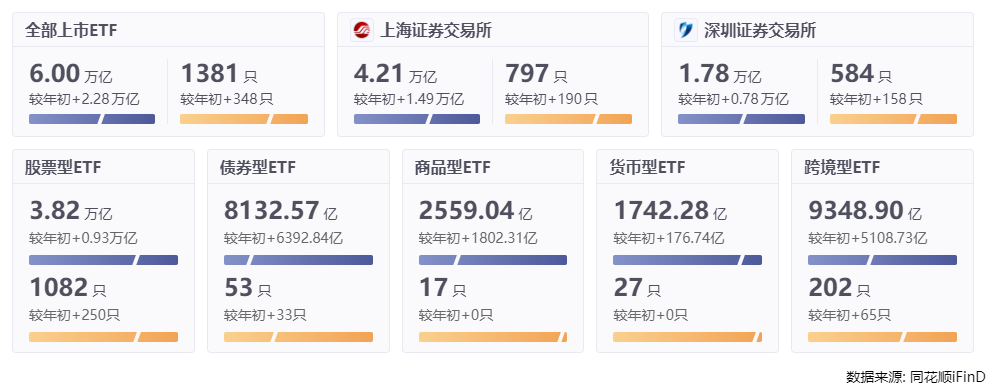
Core Insights - The year 2025 marks the beginning of high-quality development for index investment in China, driven by regulatory guidance, institutional efforts, and improved investor awareness, leading to significant changes in the ETF market [1][20] - The year 2026 is expected to see ETFs become a popular investment tool for a broader range of investors, supported by diverse investment strategies and structural opportunities in the capital market [1] Market Growth - As of October 30, 2025, the total net asset value of public fund management reached approximately 37 trillion yuan, a historical high, reflecting the continuous release of wealth management demand from residents [3] - By December 29, 2025, the total asset scale of ETFs in the market reached 6 trillion yuan, an increase of 2.28 trillion yuan from the beginning of the year, with stock ETFs accounting for 3.82 trillion yuan, up by 930 billion yuan [3][7] Product Development - The ETF market has seen a rich product system and optimized ecosystem, catering to diverse asset allocation needs, with significant growth in core broad-based ETFs like the CSI 300 and A500 ETFs [4][8] - A variety of phenomenon-level products have emerged, serving as important vehicles for capital to invest in high-quality assets in China [5] Investment Strategies - Investment strategies such as barbell strategy, buying on dips, and grid strategies are encouraged to enhance the effectiveness of ETF investments [9] - The ETF market is evolving from a tool selection to an asset allocation mindset, emphasizing the importance of strategic thinking in investment [9] Investor Experience - The investment experience has improved significantly, with a focus on investor interests and enhanced investment services, leading to a more favorable ETF investment environment [11][15] - The reform of ETF naming conventions has helped investors better distinguish products, reducing information filtering risks [12] Cost Efficiency - Fee reforms in public funds have significantly reduced the overall costs for investors, with many ETFs now offering management and custody fees as low as 20 basis points [17] - The performance of core broad-based and high-growth industry ETFs has resonated well with investors, with passive equity funds generating substantial profits [17] Dividend Trends - ETFs have entered a phase of normalized dividends, with notable examples like the CSI 300 ETF and A500 ETF leading in dividend ratios and amounts, providing tangible cash flow to investors [17][18]

突破6万亿!回看2025,再谈谈ETF
Zhong Guo Ji Jin Bao· 2025-12-31 02:45
Core Insights - 2025 marks a pivotal year for the high-quality development of index investment in China, driven by regulatory guidance, institutional efforts, and enhanced investor awareness [1][13] - The ETF market has seen significant growth, with total assets reaching 6 trillion yuan by the end of 2025, reflecting a 2.28 trillion yuan increase from the beginning of the year [1][12] - The shift towards passive investment strategies is evident, with the scale of passive investments surpassing that of active investments, leading to a rapid increase in both the scale and number of ETF products [1][5] Market Growth - The total net asset value of publicly offered funds has reached approximately 37 trillion yuan, a historical high, indicating a robust demand for wealth management among residents [1] - By December 29, 2025, the total market ETF asset scale reached 6 trillion yuan, with stock ETFs accounting for 3.82 trillion yuan, marking a growth of 930 billion yuan from the start of the year [1][12] Product Development - The ETF market has diversified with a range of "phenomenal products" that serve as key vehicles for capital allocation towards high-quality Chinese assets [3][5] - Core broad-based ETFs, such as the CSI 300 ETF and A500 ETF, have become essential choices for both institutional and individual investors due to their balanced attributes and deep investment value [5][11] Investment Strategies - Various investment strategies, including barbell strategies and grid strategies, are being explored as investors transition from single tool selection to comprehensive asset allocation thinking [6][10] - The rise of thematic ETFs, particularly in technology sectors driven by AI, has provided investors with significant opportunities during the structural bull market of 2025 [5][6] Investor Experience - The investment experience has been enhanced through collaborative efforts within the ETF ecosystem, focusing on providing effective solutions and multi-strategy services [7][10] - A fee reform has significantly reduced the overall costs for investors, with many ETFs now offering management and custody fees at the lowest tier of 20 basis points [11] Performance and Returns - The performance of core broad-based and high-growth thematic ETFs has resonated well with investors, with passive equity funds generating substantial profits [11][12] - Regular dividend distributions have become a norm for ETFs, enhancing the tangible returns for investors and contributing to a sense of satisfaction in their investments [11][12]
中辉有色观点-20251231
Zhong Hui Qi Huo· 2025-12-31 02:09
中辉有色观点 | | 11 | BEAT A ST 10 | 1 | | --- | --- | --- | --- | | I | | 10.65 1994 - 1 | 20 3 | 金银:会议纪要带来降息预期走高,反弹 | | | 资料来源:Wind,中辉期货 盘面表现:今年以来,贵金属抢眼,供需失衡、美联储降息以及交割月大逼仓致使资金涌入 共同催生了本轮的银铂钯"疯涨"行情。过热之后盘面尚在调整阶段。 ①美联储议息会议纪要公布。今日凌晨,美联储公布的12月会议纪要显示, FOMC在12月 会议上同意降息,但官员们分歧严重。一些与会者表示,根据他们的经济展望,在本次会议 下调利率区间后,可能需要在一段时间内保持目标利率区间不变。纪要同时显示,如果通胀 如预期般逐步下降,大多数官员认为进一步降息是合适的。委员们一致认为,准备金余额已 经下降到充足的水平,委员会将根据需要开始购买短期国债,以持续保持充足的准备金供应 。他们还同意取消对常备回购操作的总额限制。市场认为2026年或降息60个基点。 ②俄乌变数较多。据报道,当泽连斯基提议将15年期限延长至少一倍时,特朗普回应称"会 考虑一下"。泽连斯基表示,他认为 ...
中信期货晨报:国内商品期市收盘涨跌互现,贵金属跌幅居前-20251231
Zhong Xin Qi Huo· 2025-12-31 01:12
投资咨询业务资格:证监许可【2012】669号 国内商品期市收盘涨跌互现,贵金属跌幅居前 ——中信期货晨报20251231 中信期货研究所 王含章 从业资格号F03121254 投资咨询号Z0022985 重要提示:本报告非期货交易咨询业务项下服务,其中的观点和信息仅作参考之用,不构成对任何人的投资建议。 我司不会因为关注、收到或阅读本报告内容而视相关人员为客户;市场有风险,投资需谨慎。 金融市场涨跌幅 国内主要商品涨跌幅 | | | 热门行业涨跌幅 | | | | | | 硅铁 | 5750 | 1.30% | 1.38% | 6.68% -8.09% | 2.42% | | --- | --- | --- | --- | --- | --- | --- | --- | --- | --- | --- | --- | --- | --- | | 指数 | 行业 | 现价 日度涨跌幅 | 周度涨跌幅 | 月度涨跌幅 | 季度涨跌幅 | 今年涨跌幅 | | 锰硅 | 5942 | 1.36% | 1.75% | 5.80% -2.43% | 2.84% | | | 石油石化 | 3429 2.67% | 4.0 ...
黄金和外汇交易差别在哪?新手必看
Sou Hu Cai Jing· 2025-12-31 00:42
Core Viewpoint - The recent increase in gold market attention is driven by central bank actions, particularly China's continued accumulation of gold reserves, which reflects a long-term asset allocation strategy rather than a short-term response to market fluctuations [1][3]. Group 1: Central Bank Actions - The People's Bank of China increased its gold reserves by 30,000 ounces (approximately 0.93 tons) in November, marking the 13th consecutive month of expansion in gold holdings [1]. - Globally, central banks collectively net purchased 53 tons of gold in October, a 36% month-over-month increase, reaching a new high for monthly demand in 2023 [1]. Group 2: Market Dynamics - The price of gold has been on a significant upward trend, with over 50 instances of new historical highs this year and a year-to-date return exceeding 60%, outperforming other major asset classes [1][3]. - The ongoing net purchases by central banks indicate a focus on optimizing reserve structures and risk diversification, reinforcing gold's position in official reserve systems [3]. Group 3: Differences Between Gold and Forex - Gold is a single asset with intrinsic value, while forex represents the relative value between two currencies, reflecting the performance of different economies [5]. - The forex market is the largest financial market globally, with daily trading volumes reaching several trillion dollars, while the gold market is smaller and influenced by both physical and investment demand [7]. - Gold prices exhibit relatively moderate daily fluctuations but can experience rapid changes during financial crises or geopolitical tensions, whereas forex markets are more volatile and sensitive to economic data and policy changes [8]. Group 4: Influencing Factors - Gold prices are influenced by various factors, including physical demand (jewelry, industrial use), geopolitical risks, global economic conditions, and interest rates [10]. - Forex prices are shaped by interest rate differentials, economic fundamentals, political risks, international trade, and investor sentiment [12]. Group 5: Investment Considerations - Gold is more suitable for long-term asset allocation and risk hedging, while forex trading is better for capitalizing on macroeconomic changes [14]. - Investors should align their choices with their financial capacity, risk tolerance, and trading habits, considering the underlying logic of price movements rather than merely focusing on price changes [14].

渤海证券研究所晨会纪要(2025.12.31)-20251231
BOHAI SECURITIES· 2025-12-31 00:33
Macro and Strategy Research - The core support for A-share performance in 2026 is expected to come from price stability rather than volume growth, with PPI showing signs of recovery in October and November 2025, indicating a potential narrowing of year-on-year declines in 2026 [3][4] - The "anti-involution" policy is anticipated to provide significant price support in 2025, with ongoing efforts to regulate capacity in key industries, which may stabilize prices and reduce the risk of PPI turning negative [4][5] - External factors, including potential interest rate cuts by the Federal Reserve ahead of the 2026 midterm elections, could positively influence PPI recovery and global commodity prices [5] Fixed Income Research - The report discusses how bond ETFs' premiums and discounts affect the underlying securities' prices, particularly during market adjustments, where investor confidence impacts ETF net asset values [6][7] - The liquidity of underlying assets is significantly affected during deep discounts, leading to increased market pressure and potential price discovery issues [8] - The report emphasizes the importance of understanding the relationship between ETF pricing and underlying bond performance, particularly in the context of market fluctuations and liquidity constraints [9] Industry Research - In the steel sector, demand is expected to weaken seasonally, leading to increased inventory pressure, while macroeconomic conditions remain supportive for price stability [19][21] - The copper market is facing supply constraints due to incidents at major mines, which may support prices despite weak demand; the sector is expected to benefit from increased demand in electric vehicles and infrastructure [22] - The aluminum industry is projected to see stable profits due to strict production limits and potential demand growth from new energy sectors, with the "anti-involution" policy expected to improve the supply landscape [22] - Gold prices are influenced by geopolitical risks and U.S. economic data, with long-term trends favoring gold as a hedge against economic instability [22] - The rare earth sector is poised for growth due to strategic export controls and increasing demand from high-tech industries, suggesting a positive outlook for related companies [23]