
反内卷

Search documents
宏观深度:宏观角度如何理解2026年消费
Bank of China Securities· 2026-01-24 07:06
Economic Overview - In 2025, China's GDP grew by 5.0%, supported by net exports contributing 1.6 percentage points to the growth[10] - Domestic demand remains insufficient, with fixed asset investment declining by 3.8% year-on-year, significantly down from 2024[12] Consumer Behavior - The marginal propensity to consume (MPC) decreased to 0.61 by the end of 2025, down 0.08 from 2024[21] - Per capita consumer spending reached 29,000 yuan in 2025, a growth of 4.4% compared to 2024, marking the lowest growth rate since 2023[21] Employment and Income Trends - The average number of employees in industrial enterprises fell by 1.5% year-on-year as of November 2025, indicating a decline in employment absorption capacity[37] - The average disposable income per capita was 43,000 yuan in 2025, reflecting a 5.0% increase from 2024, but the growth rate is slowing[32] Policy Implications - The "惠民生" (benefit people's livelihood) policy is emphasized as a key strategy to boost consumption in 2026, focusing on income growth and consumer support[46] - The government plans to implement measures to enhance consumer capacity, including support for small and medium enterprises and expanding investment channels[46][47] Risks and Challenges - Geopolitical uncertainties and persistent inflation in the U.S. pose risks to economic stability and consumer confidence[52][53] - The slow recovery of market expectations among domestic entities may hinder the effectiveness of counter-cyclical policies in 2026[54]
严查地方违规补贴、整顿政府采购秩序,多部委发布会为2026年“反内卷”划重点
Xin Lang Cai Jing· 2026-01-24 04:11
Core Viewpoint - The Chinese government is enhancing its procurement policies to ensure equal treatment of domestic and foreign products, aiming to eliminate discrimination and promote a unified national market by 2026 [2][3]. Group 1: Government Procurement Policy - Starting January 1, 2026, the government procurement policy will officially implement equal treatment for all types of suppliers, prohibiting discrimination based on ownership, organization form, equity structure, investor nationality, or other unreasonable conditions [3]. - The Ministry of Finance has encouraged foreign entities to report any violations of these procurement regulations, emphasizing transparency and fairness in the procurement process [2]. Group 2: Economic Development and Market Competition - The Chinese government is focusing on building a unified national market and addressing "involution" in competition as key tasks for high-quality economic development [3][4]. - Recent data indicates a positive trend in economic indicators, with the core Consumer Price Index (CPI) rising by 1.2% year-on-year in December 2025, and manufacturing profits increasing by 5.0% from the previous year [4][5]. - The government acknowledges existing issues of weak demand and insufficient supply, emphasizing the need to expand domestic demand and optimize supply to achieve a dynamic balance in the economy [5]. Group 3: Regulatory Measures and Market Order - The government plans to implement targeted measures to enhance the effectiveness of the unified market, including refining market operation rules and addressing barriers in procurement and investment [7][8]. - A comprehensive approach will be taken to regulate local government economic promotion behaviors, particularly concerning illegal subsidies and incentives in attracting investments [8]. - The establishment of a clear framework for encouraging and prohibiting local government actions in investment will be prioritized to ensure compliance and fair competition [8].


GDP年报显经济韧性,预制菜将有国家标准丨一周热点回顾
Di Yi Cai Jing Zi Xun· 2026-01-24 03:00
Economic Growth - In 2025, China's GDP reached 1401879 billion yuan, growing by 5% year-on-year, maintaining the same growth rate as the previous year [1] - The GDP growth in the fourth quarter was 4.5%, a slowdown of 0.3 percentage points from the third quarter, but showed a quarter-on-quarter increase of 1.2% [1] - The urban unemployment rate averaged 5.2%, indicating overall employment stability, while foreign exchange reserves exceeded 3.3 trillion USD [1] Income Growth - In 2025, the per capita disposable income of residents reached 43377 yuan, with a nominal growth of 5% and an actual growth of 5% after adjusting for price factors [2] - Urban residents' per capita disposable income was 56502 yuan, growing by 4.3% nominally and 4.2% in real terms, while rural residents saw a 5.8% nominal increase and a 6% real increase [2] - Seven provinces had per capita disposable incomes exceeding 50,000 yuan, with Shanghai leading at 91987 yuan [2] Domestic Demand Strategy - The National Development and Reform Commission (NDRC) announced plans to develop a domestic demand expansion strategy for 2026-2030, focusing on consumption-driven economic growth [3] - The NDRC is also working on plans to enhance residents' income and optimize consumption supply [3] - The Ministry of Finance introduced six policies aimed at stimulating private investment and promoting consumer spending [3] Market Regulation - Multiple ministries have recently addressed "anti-involution" measures, focusing on regulating capacity in key industries and standardizing fiscal subsidies [4][5] - The NDRC emphasized the need to enhance market vitality and transition from price competition to value competition [5] - The Ministry of Finance is committed to correcting any irregular subsidy behaviors by local governments [5] Pre-prepared Food Standards - The State Council's Food Safety Office is drafting national standards for pre-prepared foods, aiming to protect consumer rights and promote high-quality industry development [7] - The upcoming standards will provide a unified basis for production, circulation, and regulation, helping the industry move towards compliance [7] TikTok's US Operations - TikTok announced the establishment of a joint venture for data security in the US, ensuring data protection and algorithm security for over 200 million American users [11] - The joint venture will be managed by a seven-member board, with ByteDance retaining a 19.9% stake as the largest single shareholder [11]
信息含金量拉满,嘉实基金2026投资策略峰会干货集锦!
Xin Lang Cai Jing· 2026-01-24 01:23
Core Insights - The 2026 investment strategy conference hosted by Harvest Fund focused on macro policy trends, equity market layout, ETF evolution, and structural opportunities in the context of "反内卷" (anti-involution) and "扩内需" (expanding domestic demand) [1][35] Market Outlook - The Chinese economy demonstrated significant policy resilience and development stability in 2025, with proactive fiscal and stable monetary policies creating a relatively loose macro environment [3][37] - The equity market in 2026 is expected to experience a rationally optimistic outlook, with potential significant shifts in market style and structure, influenced by domestic demand sectors [3][39] Investment Strategies - Investors are advised to focus on two main opportunities: the "AI+" downstream applications and upstream raw materials, as well as low-position domestic demand sectors benefiting from profit recovery and domestic demand expansion measures [5][39] - The ETF market is anticipated to see explosive growth in 2025, with a focus on dynamic asset allocation to navigate market volatility effectively [5][40] Fixed Income Insights - The fixed income sector remains a cornerstone for asset allocation, with approximately 50 trillion yuan in term deposits maturing in 2026, creating substantial demand for stable fixed income products [5][43] - The current economic environment is characterized by a "K-shaped recovery," necessitating adjustments in bond market analysis frameworks [5][43] Multi-Strategy Approach - A multi-strategy investment approach is essential to adapt to the accelerating market rotation, with a focus on "胜率思维" (probability thinking) to enhance certainty in investment outcomes [5][45] - Harvest Fund has developed a diverse product range to meet varying investor needs, emphasizing both standardized and personalized investment products [5][47] Technology and AI Investment - The "科技AI" (technology and AI) sector is highlighted as a key growth area, with ongoing advancements expected to reshape industry ecosystems [5][49] - Investment in AI is still in its early stages, with significant long-term potential despite current volatility [5][53] Policy-Driven Opportunities - The dual policies of "反内卷" and "扩内需" are seen as central to understanding current and future macroeconomic and industrial changes in China [5][59] - Investors are encouraged to identify structural investment opportunities that benefit from improved competitive environments and potential profit recovery [5][61]
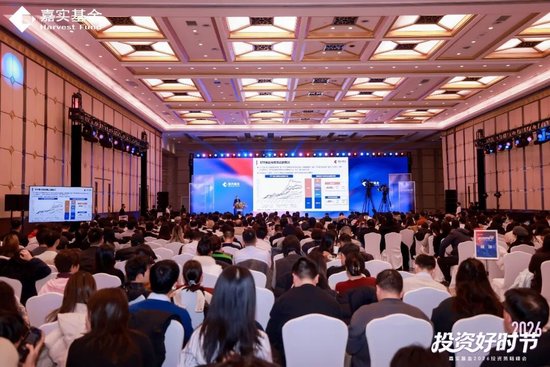
嘉实基金梁铭超:把握反内卷时代的价值机遇
Xin Lang Cai Jing· 2026-01-23 13:20
Core Viewpoint - The investment strategy summit held by Harvest Fund on January 23, 2026, highlighted opportunities arising from the "anti-involution" and "expanding domestic demand" policies, focusing on asset allocation and investment timing [1][6]. Group 1: Investment Opportunities - The "anti-involution" trend presents observable opportunities, primarily driven by production cuts and price increases, benefiting industries such as steel, photovoltaics, aquaculture, and chemicals over the past six months to a year [3][8]. - Three deep investment clues emerge from the "anti-involution" trend: 1. Transition from non-market to market competition, where companies will shift from price competition to technological competition, increasing R&D investments to enhance product quality [4][9]. 2. The national income doubling plan may favor companies that focus on value-added growth, particularly in labor-intensive sectors like food delivery and internet platforms, despite short-term pressures from labor cost inflation [4][9]. 3. The "anti-involution" will suppress ineffective investments, leading the market to prioritize company quality, cash flow generation, and dividend levels, which are suitable for long-term investment strategies [4][9]. Group 2: Market Dynamics and Strategies - In a market with ample liquidity, the correlation between January and February's rising stocks and the annual main trends is often inconsistent, making it challenging to derive fundamental logic from short-term price increases [5][9]. - Some stocks that have already risen may represent "pre-selection" for new main directions for the year, indicating sustainable new logic [5][9]. - Investors who missed the initial market surge should focus on tracking new rising stocks and identifying quality candidates for future accumulation, as exemplified by the chemical sector, which has not shown significant fundamental improvement yet [5][9].

嘉实基金肖觅:告别低质竞争,拥抱优质盈利
Xin Lang Cai Jing· 2026-01-23 13:09
专题:投资好时节 嘉实基金2026投资策略峰会 1月23日,嘉实基金2026年度投资策略峰会在上海举行。在主题为《"反内卷与扩内需"政策驱动下的行 业机遇》的圆桌对话中,嘉实基金大周期研究总监肖觅就周期投资的策略及投资机遇发表了深刻见解。 肖觅指出,"反内卷"的核心目标是"提质",其必要性在于应对部分行业因过度竞争导致的长期发展隐 患。他以新能源汽车行业为例,指出国内车企虽在产品力和价格上具备全球竞争力,但面临盈利薄弱的 问题。这导致某些企业在后续科技投入和战略探索上,长远发展的"后继乏力"。"反内卷"正是要通过治 理低质低价的无序竞争,为优质企业创造更合理的盈利环境,保障科技创新的可持续性。 肖觅进一步分析,政策的具体落实需考察不同行业的"动力"与"抓手"。当前部分企业可能存在面临"动 力"与"抓手"不匹配的现状。比如,部分企业"动力强而抓手弱",进行产业提质升级的动力非常充足, 但缺乏有效的切入点。。 肖觅强调,"反内卷"的定位已从侧重科技创新领域,提升至"建设全国统一大市场"的整体框架下,成为 重点工作之首。这预示着政策执行力度将强化,对行业的影响将更为深入。 从周期投资的角度,肖觅认为关键在于寻找那些 ...

黑色金属日报-20260123
Guo Tou Qi Huo· 2026-01-23 13:01
Report Industry Investment Ratings - Thread: ☆☆☆ [1] - Hot Rolled: ☆☆☆ [1] - Iron Ore: ☆☆☆ [1] - Coke: ★☆☆ [1] - Coking Coal: ★☆☆ [1] - Ferrosilicon: ☆☆☆ [1] - Silicomanganese: Not provided Core Views - The overall sentiment of commodities has warmed up, and the steel market has continued a slight rebound, but the sustainability remains to be observed [1] - Iron ore is expected to fluctuate in the short term due to its loose fundamentals [2] - Coke and coking coal prices are likely to fluctuate in a range, with market expectations for "anti - involution" policies [3][5] - For silicomanganese and ferrosilicon, it is recommended to short on rebounds [6][7] Summary by Related Catalogs Steel - The steel market continued to rebound today. Thread demand decreased slightly, production increased, and inventory accumulated again. Hot - rolled demand and production both declined slightly, and inventory continued to fall. Steel mill profits are poor, and the downstream's ability to absorb is insufficient. The recovery of blast furnaces has slowed down, and molten iron production has stabilized. Domestic demand is still weak, while steel exports remain high [1] Iron Ore - The global shipping volume of iron ore has seasonally declined, but it is still at a high level year - on - year. Domestic port inventory has increased significantly this week and continues to accumulate. The terminal demand is at a low level, and the molten iron production is difficult to increase significantly in the short term. Steel mills' imported ore inventory is relatively low, and there is still an expectation of winter storage replenishment demand [2] Coke - Coke prices continued to rebound during the day. The first round of price increases was shelved, coking profits are average, and daily production decreased slightly. Coke inventory increased slightly, and traders' purchasing willingness is average. The supply of carbon elements is abundant, and downstream molten iron production remains at a low level. The market has expectations for "anti - involution" policies, and the price is likely to fluctuate in a range [3] Coking Coal - Coking coal prices rebounded slightly during the day. Yesterday, the customs clearance volume of Mongolian coal was 1046 trucks. The production of coking coal mines increased slightly, and the spot auction volume remained at a high level. Terminal inventory increased significantly. The overall supply of carbon elements is abundant, and downstream molten iron production remains at a low level. The market has expectations for "anti - involution" policies, and the price is likely to fluctuate in a range [5] Silicomanganese - Silicomanganese prices rebounded slightly during the day. Driven by the rebound of the futures market, the spot price of manganese ore increased. There are structural problems in the port inventory of manganese ore. The demand for semi - carbonate ore may increase. The demand for silicomanganese has a seasonal decline, and its production and inventory both decreased slightly. It is recommended to short on rebounds [6] Ferrosilicon - Ferrosilicon prices rebounded slightly during the day. Affected by relevant policy documents, the price is relatively strong. There are expectations of a decline in power costs and semi - coke prices. The molten iron production has rebounded to a high - level range, and the export demand has declined. The production of magnesium metal has increased, and the overall demand remains resilient. The supply of ferrosilicon has decreased significantly, and the inventory has decreased slightly. It is recommended to short on rebounds [7]
悄悄上涨20%,这个板块大反转了?
Ge Long Hui A P P· 2026-01-23 12:45
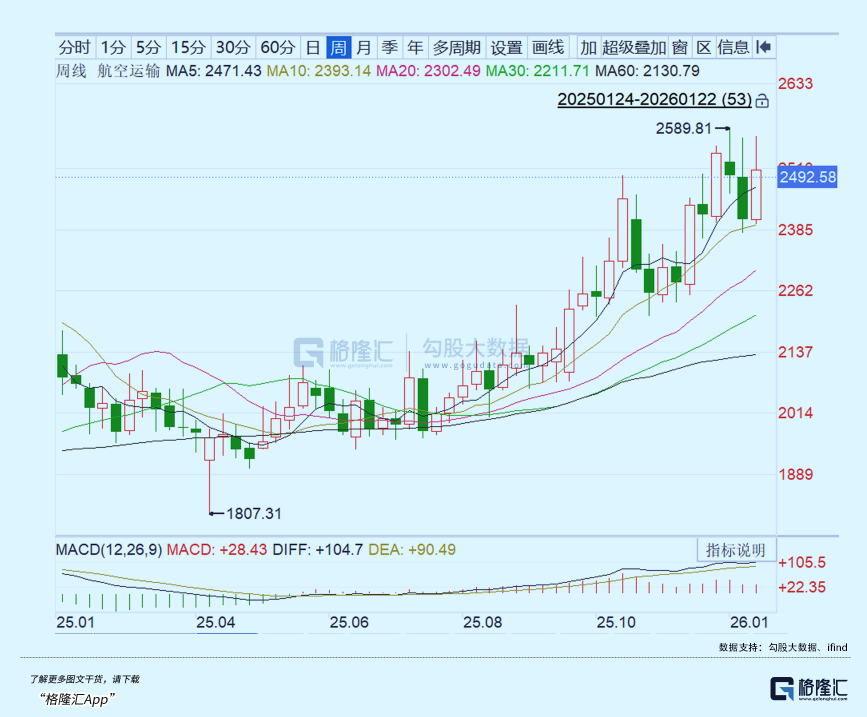
这次航空板块的行情,仍旧和政策上的积极情绪密不可分。 近日,消费领域政策利好齐发,而在此前落幕的2026年全国民航工作会议上,提出最重要的一条就是,深入整治"内卷式"竞 争,持续提升航班运行品质,不断提升旅客出行体验。 近一段时间,航空机场板块热度再次提升。 早在2025年的10月,《国庆价格暴涨!行情启动?》,航空板块行情已然启动。 同花顺数据显示,国庆之后,航空运输板块近三个月已然整体上涨超20%。而近一年内,板块整体涨幅已经接近40%。 近日,伴随着政策接连出台,消费板块热度提升,航空相关板块又站在了市场风口之上。 而这次,航空板块,或许已经站在了起飞的前夜。 01 民航局的2026年重点任务清单还首次将"反内卷"细化为四项举措—— 航线测算全成本并建立"成本红线";建立"运价监测预警联动机制";将恶性低价竞争纳入重大失信行为;协调OTA平台,禁止 发布低于政府指导价的机票产品。 可以说是从航司到OTA平台到行业整体的全方位,整治了此前困扰行业已久的"内卷式"低价战。 在这一政策的提出背后,民航业持续"以价换量"的政策,正在愈发侵蚀行业利润。 2025年,我国民航完成旅客运输7.7亿人次,同比增长5.5 ...
天合光能:目前公司所处光伏行业仍在底部区间运行
Zheng Quan Ri Bao Wang· 2026-01-23 12:44
Group 1 - The core viewpoint is that the photovoltaic industry is currently operating at a bottom range, with widespread losses among listed companies in the sector [1] - The company expresses confidence in achieving performance recovery ahead of the industry due to the development of its energy storage and distributed photovoltaic businesses [1] - The industry is experiencing a push for self-discipline and anti-involution measures, which are expected to contribute to the recovery [1]

玻璃纯碱上下反复未来趋势走向何方
Guo Tai Jun An Qi Huo· 2026-01-23 11:37
1. Report Industry Investment Rating No information provided in the report. 2. Core Viewpoints of the Report - In the long - term, the downward space of glass is limited around 950 - 1000 yuan/ton, and for soda ash, it is limited below 1050 - 1100 yuan/ton [13][18]. - In the first half of 2026, the market may be in a volatile state, with limited downward space at low levels and limited upward space at high levels [115]. - Against the backdrop of a stronger RMB exchange rate and a shrinking Sino - US interest rate spread, the pricing logic of domestic asset prices has changed. The trend of anti - deflation and anti - involution is not conducive to excessive short - selling of glass and soda ash [115]. - The glass industry may have clear anti - deflation and anti - involution measures in 2026, but the time is uncertain. The window period when leading stocks in the stock market stabilize and rebound may be the time for futures to trade anti - deflation and anti - involution factors [115]. 3. Summary by Related Catalogs Glass Glass Views - **Bearish Logic**: Terminal demand has not improved, with scattered orders and pressure on payment collection; the implementation of anti - deflation and anti - involution may be late, and the high premium of futures is incorrect; the continuous high premium of futures in the long - term leads to large intermediate inventory and warehouse receipt pressure [4]. - **Bullish Logic**: The risk - return ratio is appropriate as prices are at a near - decade low and the whole industry is in a loss state; anti - deflation and anti - involution are trends, and there will be a shift from petroleum coke to natural gas in Hubei; after four years of decline, the real estate market has limited room for further contraction [5]. Trading Routes - **Bearish Trading Route**: Enter when the futures premium reaches 20%, inventory increases year - on - year and month - on - month, and supply contraction is not obvious or in a policy vacuum period. The strategy is to buy spot and short futures, increase the ratio of futures/spot positions, and close the position when the valuation is between 950 - 1000 yuan/ton due to basis regression. The risk is the unexpected acceleration of anti - deflation and anti - involution policies [7][8]. - **Bullish Trading Route**: Driven by factors such as the narrowing of the Sino - US interest rate spread, the continuous appreciation of the RMB, and the pursuit of leading industrial assets. The valuation is based on the cost line and futures discount, and it involves multi - asset linkage of glass stocks and glass futures. The core drivers are policy - driven anti - deflation and anti - involution, and capital - driven factors including the Sino - US interest rate spread, RMB appreciation, and the appreciation of leading industrial stocks [10][11]. Supply - In 2025, the total daily melting volume of cold - repaired production lines was 21,330 tons/day, and the total daily melting volume of newly ignited production lines was 15,010 tons/day. The potential new ignition production lines have a total daily melting volume of 14,490 tons/day, and the potential old - line复产 production lines have a total daily melting volume of 9,370 tons. The potential cold - repair production lines have a total daily melting volume of 9,420 tons/day [37][38][39]. - The current in - production capacity is about 150,000 tons/day, and the peak capacity in 2021 was 178,000 tons/day. Usually, production cuts are likely to occur from the end of the fourth quarter to the first quarter [43]. Price and Profit - Most prices are stable with little change, but market transactions declined in the second half of this week. The price in Shahe is around 1000 - 1020 yuan/ton, in central China's Hubei around 1020 - 1060 yuan/ton, and in eastern China's Jiangsu and Zhejiang regions of some large manufacturers around 1110 - 1250 yuan/ton [56][60]. - The basis has strengthened due to the decline in futures prices. The profit of petroleum coke is about - 7 yuan/ton, and the profits of natural gas and coal - fired fuels are about - 186 and - 74 yuan/ton respectively [61][67]. Inventory and Downstream Start - up - After New Year's Day, transactions improved and inventory decreased, but transactions declined in the second half of this week. Current inventory is high, and most regions' inventory is at a relatively high level compared to the same period in history [70][72]. - Regional arbitrage shows that prices in various regions are basically synchronized with little change in price differences [75]. Soda Ash Soda Ash Views - **Bearish Logic**: High supply and high inventory, with the average weekly output of heavy soda remaining above 400,000 tons and the weekly rigid demand at 340,000 - 350,000 tons; the continuous high premium of futures will lead to the continuous flow of future spot supply surplus pressure to the futures market; new devices such as Yuanxing and Jinshan will be put into production in the next year, with a new production capacity increase of about 15%, while demand tends to shrink [14]. - **Bullish Logic**: Anti - deflation and anti - involution are trends, with low profits, low absolute prices, low risks, and high potential benefits; the inventory structure is concentrated, the export market has improved, and the prices of light and heavy soda are the same; the huge warehouse receipts of the SA2509 contract failed to completely suppress the market, and it is difficult to have such high warehouse receipts in 2026 [14]. Supply and Maintenance - Some soda ash devices have resumed production, and the operating rate has gradually increased. The current capacity utilization rate is 86.8%, up from 84.4% last week. The current weekly output of heavy soda has reached about 414,000 tons/week [94][95]. - The inventory is about 1.37 million tons. As of January 22, 2026, the total inventory of domestic soda ash manufacturers was 1.37 million tons, an increase of 28,000 tons from last Thursday, with a decline of 2%. Among them, the inventory of heavy soda was 557,000 tons, a decrease of 29,000 tons month - on - month [97][99]. Price and Profit - The low - end price in Shahe is 1140 yuan/ton, and the market price has declined slightly. The ex - factory prices of manufacturers are mostly stable. The basis has strengthened due to the decline in futures prices [106][107][109]. - The profit of the combined - soda process in East China (excluding Shandong) is - 40 yuan/ton, and the profit of the ammonia - soda process in North China is - 58 yuan/ton [113]. Photovoltaic Glass - **Price and Profit**: Recent market transactions have weakened, and this situation is expected to continue. The mainstream order price of 2.0mm coated panels is 10.5 - 11 yuan/square meter, and that of 3.2mm coated panels is 17.5 - 18.5 yuan/square meter, both unchanged from last week [81][83]. - **Capacity and Inventory**: Recent market transactions have weakened, and inventory is expected to increase seasonally. The number of in - production photovoltaic glass production lines in the country is 400, with a total daily melting volume of 87,620 tons/day, unchanged from last week. The sample inventory days are about 38.94 days, a decrease of 3.07% month - on - month [85][86][91].