
促消费

Search documents
胖东来半年狂揽117亿!对各地促消费有何启示
Sou Hu Cai Jing· 2025-07-03 08:33
Core Insights - Despite the prevailing narrative of declining consumer confidence, the company "胖东来" achieved a remarkable sales figure of 11.707 billion yuan in the first half of the year, nearing 70% of last year's total sales [1][2]. Group 1: Business Model and Strategies - "胖东来" differentiates itself from competitors not through aggressive discounting but by emphasizing transparency in pricing, such as displaying "purchase prices" on clothing items [4]. - The company offers extensive customer service policies, including a "no-reason return and exchange" policy and a half-price refund for unsatisfactory movie experiences, enhancing customer trust and satisfaction [4]. - Employee welfare is prioritized, with an average post-tax monthly salary of 9,000 yuan for over 8,000 employees and a commitment to a maximum 36-hour work week and at least 40 days of annual leave [4][6]. Group 2: Insights for Consumer Promotion - The impressive performance of "胖东来" suggests that effective consumer promotion should focus on creating a sustainable ecosystem where consumers feel secure and willing to spend, rather than merely stimulating short-term spending [8]. - The company’s success in selling tea, with sales reaching 50.862 million yuan, illustrates the importance of consumer confidence in purchasing decisions, as customers are willing to buy products without hesitation [10]. - Promoting consumer spending should also involve enhancing the income levels of service industry workers, as a robust service sector can drive internal consumption growth [10]. - A conducive environment for business, characterized by fairness, efficiency, and trust, is essential for fostering consumer confidence and spending [10][12].


广州楼市大消息!拟实施“商转公贷款”政策
券商中国· 2025-07-02 14:51
Core Viewpoint - The Guangzhou Housing Provident Fund Management Center has proposed a policy to allow the conversion of commercial housing loans to housing provident fund loans, aiming to reduce costs and promote consumption [1][3][12]. Group 1: Policy Implementation - The proposed policy allows for the conversion of commercial loans to housing provident fund loans when the personal housing loan rate is below 75% [1][4]. - Only pure commercial loans for self-occupied and sole housing can qualify for this conversion, and the original commercial loan must have been disbursed for over five years [2][5]. - The policy aims to alleviate the interest burden on contributors and stimulate social consumption [4][12]. Group 2: Application Conditions - Applicants must be contributors to the housing provident fund in Guangzhou and have not used housing provident fund loans elsewhere [4][10]. - The original commercial loan must be for a self-occupied property within the city, and the loan must be with a bank that handles housing provident fund loans [5][6]. - The property must have a real estate ownership certificate, and there should be no other mortgage registrations or legal restrictions on the property [7][8]. Group 3: Loan Details - The loan amount for the conversion will be determined based on the current housing provident fund loan policies and cannot exceed 60% of the total purchase price [10][11]. - If the converted loan amount is insufficient to cover the original commercial loan, the borrower must make up the difference [11]. - The loan term will be aligned with the original commercial loan's remaining term, not exceeding a total of 30 years [11]. Group 4: Market Implications - The policy reflects a shift in housing policy from traditional stimulus measures to promoting consumption and reducing costs, particularly benefiting young buyers and new residents [12][13]. - The recent national meeting emphasized the need for stronger measures to stabilize the real estate market, indicating a proactive approach to market recovery [12][13].
如何构建促消费长效机制:从补贴驱动到制度创新(申万宏观 · 赵伟团队)
赵伟宏观探索· 2025-07-02 12:29
Core Viewpoint - The article emphasizes the importance of "expanding domestic demand and promoting consumption" as a key macroeconomic policy in China, especially under the dual challenges of stabilizing growth and external pressures. It advocates for a combination of short-term stimulus measures and long-term structural reforms to enhance consumer capacity and confidence [1][2]. Summary by Sections Historical Consumption Promotion Toolbox - China's past consumption promotion policies can be categorized into direct fiscal subsidies and indirect support measures. Direct measures include subsidies for rural areas, "trade-in" subsidies, and consumption vouchers, while indirect measures involve tax reductions and fee exemptions [3]. - Significant past initiatives include the "home appliance and motorcycle to the countryside" policies from 2007 to 2012, and various tax incentives for automobile purchases from 2014 to 2017 [3][4]. Effectiveness of Consumption Promotion Policies - The first round of home appliance and motorcycle policies resulted in substantial sales growth, with a reported sales revenue of 6,597.6 billion yuan against a subsidy expenditure of 765 billion yuan, yielding a fiscal multiplier of 8.6 [6]. - The policies led to a notable increase in the ownership of home appliances in rural areas, with refrigerator and air conditioner ownership rising significantly during the implementation period [6][7]. Current Consumption Promotion Measures - The recent "trade-in" policy has shown significant results, with a 39% year-on-year increase in sales of home appliances in December 2024 following the policy's implementation [9]. - Service consumption recovery remains a challenge, with current levels still below pre-2019 trends. The article suggests expanding consumption promotion policies to include service sectors to stimulate recovery [10]. Long-term Mechanisms for Consumption Growth - To sustain consumption growth, it is essential to focus on reducing burdens and increasing income for residents. This includes improving pension levels and implementing targeted subsidies for key demographics such as the elderly and children [11][12]. - The article highlights the need for a policy framework that combines short-term effectiveness with long-term structural reforms, particularly in income distribution and social security systems, to transition from "policy-driven consumption" to "endogenous growth-driven consumption" [13].

国家治理成效预期上升推动风险偏好改善
Orient Securities· 2025-07-02 03:38
Group 1: Economic Outlook - The expectation of improved national governance effectiveness is driving an increase in risk appetite among investors[4] - Despite anticipated GDP growth pressure, the market has already priced in the "high-low" trend and inflation concerns, suggesting that macro policy efficiency and international comparisons are undervalued[4] - The "anti-involution" measures are expected to enhance the sense of gain for small and medium enterprises (SMEs) and workers, potentially leading to a decrease in risk assessments[5] Group 2: Policy Implications - Recent policies, such as the "Guarantee for Payment to SMEs" regulation, aim to shorten payment terms, which may improve profitability quality for SMEs[6] - The focus of policies is shifting towards more elastic service consumption, reflecting a change in consumer demand from essential goods to optional services as income rises[7] - Local governments are expanding service consumption capabilities, indicating a policy shift towards enhancing consumer protection and infrastructure development[7] Group 3: Global Context - Global geopolitical instability, including fluctuating U.S. tariff policies and the ongoing Russia-Ukraine conflict, is leading investors to recognize the stability of China's national governance[9] - The certainty of China's governance is becoming a driving force for foreign investment, as it contrasts with the uncertainties in Western economies[9] - The market has already factored in pressures on GDP growth and inflation, but the certainty of governance and efforts to improve economic structure remain undervalued, presenting a fundamental reason to invest in China[10]
(经济观察)中国货币政策加码促消费 5000亿元撬动真金白银
Zhong Guo Xin Wen Wang· 2025-07-01 13:59
Group 1 - The People's Bank of China has established a 500 billion yuan service consumption and elderly care relending facility to support financial institutions in boosting loans for key service consumption sectors and the elderly care industry [1][3] - Financial institutions across various regions are actively increasing support for service consumption and elderly care, with specific loan amounts reported, such as 6.66 million yuan for elderly infrastructure and 13.6 million yuan for a travel agency [1] - The new relending tool is aimed at enhancing the financial supply to sectors like accommodation, dining, entertainment, and education, which are crucial for meeting the rising demand for high-quality services [3] Group 2 - The inclusion of service consumption and elderly care relending in monetary policy tools reflects a proactive approach to counter external shocks and stimulate domestic consumption [2] - China's service consumption potential remains largely untapped, with a projected 18% of GDP in 2024, compared to over 40% in developed countries, indicating significant growth opportunities [2] - The recent policy measures focus on enhancing the quality of service consumption, aligning with China's transition to high-quality development and optimizing consumer spending patterns [2][3]
如何构建促消费长效机制:从补贴驱动到制度创新(申万宏观 · 赵伟团队)
申万宏源宏观· 2025-07-01 05:10
Core Viewpoint - The article emphasizes the importance of "expanding domestic demand and promoting consumption" as a key macroeconomic policy in China, especially under the dual challenges of stabilizing growth and external pressures. It advocates for a combination of short-term stimulus measures and long-term structural reforms to enhance consumer capacity and confidence [1][2]. Summary by Sections Historical Consumption Tools - China's past consumption promotion policies can be categorized into direct fiscal subsidies and indirect support measures. Direct subsidies include rural subsidies, trade-in subsidies, and consumption vouchers, while indirect measures involve tax reductions and fee exemptions [3]. - Significant past initiatives include the "home appliance and vehicle going to the countryside" policies from 2007 to 2012, and the promotion of electric vehicle consumption through tax exemptions since 2018 [3][4]. Effectiveness of Consumption Promotion - The first round of home appliance and vehicle policies yielded substantial results, with a total subsidy of 76.5 billion yuan leading to sales of 659.76 billion yuan, achieving a fiscal multiplier of 8.6. Sales of home appliances and vehicles saw significant year-on-year increases during this period [6][7]. - The current "trade-in" policy has shown remarkable effects, with sales of home appliances increasing by 39% year-on-year in December 2024, driven by enhanced fiscal support and expanded subsidy coverage [9]. Service Consumption Recovery - Service consumption still has considerable room for recovery compared to goods consumption, with a notable gap from pre-2019 levels. The article suggests that expanding consumption policies to include services could accelerate this recovery [10]. - Improving residents' leisure time through optimized holiday policies and encouraging paid leave can further stimulate service consumption [10]. Long-term Mechanisms for Consumption - To sustain consumption recovery, it is essential to focus on reducing burdens and increasing income for residents. Current measures include lowering mortgage rates and providing rental subsidies for new residents and young people [11]. - Structural reforms in income distribution and social security systems are crucial for long-term consumption growth. For instance, increasing pension levels and implementing child-rearing subsidies could significantly enhance consumer spending capacity [11][12]. Targeted Support for Key Demographics - The article highlights the need for targeted support for vulnerable groups, particularly the elderly and children, to stimulate consumption in essential categories such as food and healthcare [12]. - A comprehensive analysis of consumption policies indicates that effective consumption stimulation requires a combination of short-term effectiveness and long-term structural mechanisms, focusing on collaborative promotion of goods and services [13].

“数”说中国经济运行稳中向好韧性强 稳投资、促消费政策持续落地
Yang Shi Wang· 2025-06-30 06:41
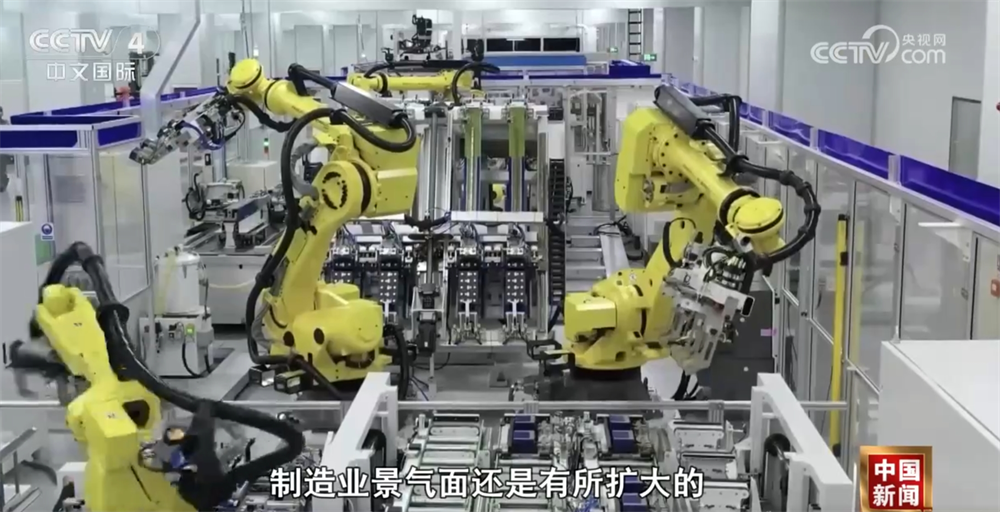
Group 1 - The manufacturing Purchasing Managers' Index (PMI) in China rose for two consecutive months, indicating a continuous improvement in manufacturing sentiment [2][4] - In June, the manufacturing PMI reached 49.7%, an increase of 0.2 percentage points from the previous month, signaling a stable expansion in production activities [2][4] - The new orders index returned to the expansion zone at 50.2%, reflecting a stable expansion in both supply and demand within the manufacturing sector [4][6] Group 2 - The non-manufacturing sector continued to expand, with the business activity index showing a slight increase while remaining in the expansion zone [8] - Key industries such as telecommunications, financial services, and insurance reported business activity indices above 60%, indicating robust growth in these sectors [8] - The construction industry, particularly civil engineering, maintained a high business activity index above 55% for three consecutive months, driven by increased investment activities [10] Group 3 - The resilience of the Chinese economy is highlighted by the strong internal momentum and stable production operations, with the PMI serving as a crucial leading indicator [12][14] - Despite short-term fluctuations due to external factors, the overall economic growth remains stable, supported by ongoing policies aimed at boosting investment and consumption [14]
银行业信贷资源投放不断改善
Jin Rong Shi Bao· 2025-06-30 01:47
Group 1: Credit Growth and Structure Improvement - In May, the loan scale maintained reasonable growth, with financial institutions directing more credit resources towards manufacturing and technological innovation sectors, while enhancing financial support for key service consumption industries such as accommodation, catering, and education [1] - The total retail sales of consumer goods reached 41,326 billion yuan in May, showing a year-on-year growth of 6.4%, which is the highest monthly level in 2024, with an acceleration of 1.3 percentage points compared to the previous month [2] - The Agricultural Bank of China’s Yunnan branch has issued personal housing loans of 5.3 billion yuan in tourist cities within the province, with a year-on-year increase of 2.3 billion yuan [2] Group 2: Consumer Spending and Economic Indicators - The cultural and entertainment consumption sector has shown rapid growth, with significant increases in tourism and dining services, where restaurant income grew by 5.0% year-on-year, accelerating by 0.2 percentage points compared to the first four months [3] - The banking sector has been actively promoting consumption through innovative financial services and expanding consumption scenarios, contributing to the enhancement of resident consumption quality [2][4] Group 3: Support for Equipment Upgrades - Macro policies have been effective in promoting demand expansion and production growth, with significant increases in the manufacturing value added of lithium-ion batteries (28.6%), shipbuilding (12.8%), and boiler and prime mover manufacturing (11.8%) in May [5] - The China Development Bank has increased its financial services to support the "Two New" policy, with a focus on technology innovation and equipment upgrades, including a 300 billion yuan increase in re-loan quotas for technological innovation and transformation [6][7] Group 4: Strengthening Foreign Trade Financial Support - In May, credit growth was stable, with a notable improvement month-on-month, supported by a series of financial policies including reserve requirement ratio cuts and interest rate reductions [8] - The Bank of Communications in Guangdong has launched a special action plan to support foreign trade, focusing on service improvement and innovation to help foreign trade enterprises cope with external challenges [8] - The Bank of China’s Shaanxi branch has introduced a dedicated service plan for the China-Europe Railway Express, providing financial support to logistics and freight forwarding companies along the route [9]
丰富活动矩阵,点燃夏日消费热潮
Sou Hu Cai Jing· 2025-06-29 17:32
Group 1: Summer Consumption Promotion Activities - Fujian Province's Commerce Department has launched a vibrant summer consumption season with over 1000 promotional activities focusing on eight key areas including trade-in programs, inbound consumption, foreign trade products, and new energy vehicle consumption [1][4][21] - The government and enterprises will collaborate to create diverse summer consumption scenarios to stimulate consumer spending [1] Group 2: Tax Refund and E-commerce Initiatives - The implementation of the "immediate purchase and refund" policy for outbound tax refunds is underway, with 114 tax refund stores established, including 40 that offer immediate refunds [7] - E-commerce platforms like Taobao and JD.com will host over 30 trade connection events, involving more than 430 foreign trade companies and over 50,000 products [10] Group 3: Culinary and Service Consumption Events - Various culinary events such as "One County One Table Dish" and "Eight Fujian Food Carnival" will be organized, along with the distribution of 40 million yuan in dining consumption vouchers [12] - A series of service consumption activities will focus on sectors like dining, accommodation, and tourism, promoting integrated development of commerce, tourism, and culture [14] Group 4: Consumer Guides and Night Economy - Regular consumer guides will be released, and local areas are encouraged to create "night consumption maps" to enhance the night economy [16] - Summer activities will include events like summer fun, cooling retreats, and beer festivals to attract consumers [16]

前5月海南省经济运行平稳向好
Hai Nan Ri Bao· 2025-06-29 01:53
Economic Overview - Hainan's economy showed stable and positive performance in the first five months of the year, with industrial added value above designated size increasing by 11.6% year-on-year [2][3] - The province's industrial enterprises reported a revenue increase of 6.9% and a profit growth of 23.5% [2] Industrial Growth - The equipment manufacturing sector experienced significant growth, with added value increasing by 73.2% [2] - Major industrial products such as methanol, primary plastic, synthetic fiber polymers, and optical fibers saw notable production increases [2] Consumer Market - Retail sales of consumer goods reached 1099.70 billion yuan, marking a 6.7% year-on-year increase, with a notable acceleration of 0.6 percentage points compared to the previous month [2] - The automotive retail sector experienced exceptional growth, with an increase of 76.1%, and new energy vehicle sales surged by 150% [2] Investment Trends - Infrastructure investment (excluding electricity, gas, and water supply) grew by 27%, contributing 5.6 percentage points to overall investment growth [3] - Public service investment rose by 25.1%, and several sectors, including information transmission and software services, saw substantial investment increases [3] Foreign Trade and Finance - Service imports and exports totaled 282.85 billion yuan, reflecting a 20.6% year-on-year growth, with exports increasing by 66.7% [3] - Financial institutions reported a year-on-year increase of 5.8% in loan balances and a 7.5% increase in deposit balances by the end of May [3] Consumer Prices and Environmental Quality - The consumer price index in Hainan decreased by 0.4% year-on-year [3] - The province maintained high environmental quality, with an air quality rate of 96.2% and water quality compliance rates of 100% for water sources and 95.2% for urban rivers and lakes, an improvement of 5.1 percentage points year-on-year [3]
