贸易摩擦

Search documents
中美同意互降关税90天;宁德时代港股拟募资超40亿美元;支付宝又试水社交了丨百亿美元公司动向
晚点LatePost· 2025-05-13 10:12
Group 1: US-China Trade Relations - The US and China agreed to mutually reduce tariffs for 90 days, with the US canceling 91% of tariffs on Chinese goods and suspending 24% of the 34% tariffs announced earlier [1] - Both countries will retain 10% of the tariffs, leading to a significant market rally in US and Hong Kong stocks, with indices approaching levels prior to the tariff announcements [1] Group 2: CATL IPO - CATL plans to list on the Hong Kong Stock Exchange on May 20, aiming to raise over $4 billion, with a share price not exceeding HKD 263 [2] - 90% of the funds raised will be allocated for the construction of a factory in Hungary, which will have an annual capacity to support 2 million electric vehicles [2] Group 3: Alipay's Social Features - Alipay has introduced a voice call feature, marking its renewed attempt at social networking after years of focusing on financial services [3] - As of March, Alipay had 910 million monthly active users, ranking just behind WeChat and Taobao [3] Group 4: OpenAI and Microsoft Negotiations - OpenAI and Microsoft are renegotiating terms of their multi-billion dollar partnership, with Microsoft willing to relinquish some equity for access to new technologies [4] - OpenAI is planning a restructuring to become a profit-driven organization, which is essential for attracting new investments [4] Group 5: SoftBank and OpenAI's Computing Center - SoftBank's $100 billion AI infrastructure investment plan has stalled due to economic risks from tariffs, affecting financing and collaboration discussions [5] - The ambitious "Stargate" project, initially projected to grow to $500 billion, has not progressed as expected [5] Group 6: US Government Scrutiny on Investments - The US government is reviewing Benchmark's investment in Manus to determine if it poses a national security threat, following a directive for funds investing in Chinese companies [6] - Benchmark recently led a funding round for Manus, which is valued at $500 million [6] Group 7: China's Automotive Industry - In the first four months of the year, China's automotive production and sales both exceeded 10 million units for the first time, with production at 10.175 million and sales at 10.06 million, marking year-on-year increases of 12.9% and 10.8% respectively [9] - New energy vehicles accounted for 42.7% of total new car sales, with production and sales growing by 48.3% and 46.2% respectively [9] Group 8: Automotive Export Trends - From January to April, China exported 1.937 million vehicles, a 6% increase year-on-year, with new energy vehicle exports rising by 52.6% [10] - Traditional fuel vehicle exports, however, saw a decline of 7.9% [10] Group 9: Vehicle Replacement Subsidies - As of May 11, applications for the vehicle replacement subsidy program exceeded 10 million, with 3.225 million applications submitted since the policy's implementation in 2024 [11] Group 10: Toyota and Nissan Financial Performance - Toyota reported a net profit of ¥2.374 trillion for the 2024 fiscal year, a 3.6% decline, despite a revenue increase of 6.5% to ¥48 trillion [12] - Nissan is facing a potential record net loss of up to ¥750 billion, leading to plans for an additional 10,000 job cuts [13]


锌期货日报-20250513
Jian Xin Qi Huo· 2025-05-13 06:36
行业 锌期货日报 日期 2025 年 5 月 13 日 021-60635740 期货从业资格号:F3075681 研究员:张平 021-60635734 zhangping@ccb.ccbfutures.com 期货从业资格号:F3015713 021-60635729 yufeifei@ccb.ccbfutures.com 期货从业资格号:F3025190 有色金属研究团队 研究员:彭婧霖 pengjinglin@ccb.ccbfutures.com 研究员:余菲菲 请阅读正文后的声明 #summary# 二、 行业要闻 请阅读正文后的声明- 2 - 每日报告 一、 行情回顾 | 表1:期货市场行情 | | | | | | | | | | | --- | --- | --- | --- | --- | --- | --- | --- | --- | --- | | 单位:元/吨 | | 开盘 | 收盘 | 最高 | 最低 | 涨跌 | 涨跌幅 | 持仓量 | 持仓量变化 | | 沪锌 | 2505 | 22685 | 22725 | 22780 | 22490 | 80 | 0.35 | 2290 | - ...
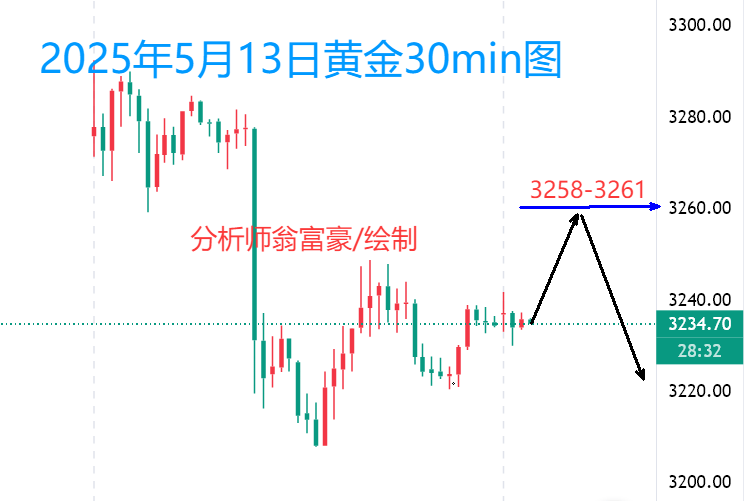
翁富豪:5.13黄金阴阳循环要来了?黄金今日操作策略
Sou Hu Cai Jing· 2025-05-13 04:22
由于中美关税下调引发市场抛售,避险需求骤降,黄金价格跌了超过3%。有人问830会不会成为历史高 点?我翁富豪的看法是:不会。这次贸易谈判的结果虽然部分婴幼儿用品等民生领域获得了关税豁免,其 他商品关税也从145%降到80%,但整体关税水平仍然远高于4月之前的水平,贸易冲突根本没有结束。而 且美国挑起贸易摩擦的核心目的不是为了缩小贸易逆差这点小利益,而是想逼制造业回流美国、缓解美债 危机——贸易战只是手段不是最终目标。所以别以为贸易摩擦或地缘风险消退就能终结黄金的牛市,真正 要命的是6月份美债到期这颗雷。 操作策略: 1.黄金建议反弹3258-3261附近空,止损在3266,短期看3240,目标3230-3220。 文章没有太多华丽的语言与鸡汤,一直如此,我相信每一位读者缺乏的不是鸡汤,而是实实在在的分析与 强大的理论,我是翁富豪老师,最后祝大家交易愉快。免责申明:以上纯属个人观点分享,不构成操作建 议,投资有风险,盈亏自负。 从当前走势看,黄金接下来大概率要进入来回震荡模式了,很可能走"涨一天跌一天"的阴阳交替行情。本 周要是收阴线,下周说不定就翻红;重点关注10日均线支撑位3180(上下20美金的波动区间都 ...
建信期货聚烯烃日报-20250513
Jian Xin Qi Huo· 2025-05-13 03:51
行业 聚烯烃日报 日期 2025 年 5 月 13 日 021-60635740 pengjinglin@ccb.ccbfutures.com 期货从业资格号:F3075681 021-60635738 lijie@ccb.ccbfutures.com 期货从业资格号:F3031215 021-60635737 renjunchi@ccb.ccbfutures.com 期货从业资格号:F3037892 028-8663 0631 penghaozhou@ccb.ccbfutures.com 期货从业资格号:F3065843 021-60635570 liuyouran@ccb.ccbfutures.com 期货从业资格号:F03094925 研究员:李金(甲醇) 021-60635730 lijin@ccb.ccbfutures.com 期货从业资格号:F3015157 021-60635727 fengzeren@ccb.ccbfutures.com 期货从业资格号:F03134307 能源化工研究团队 研究员:彭婧霖(聚烯烃) 研究员:李捷,CFA(原油燃料油) 研究员:任俊弛(PTA、MEG) 研究员: ...
中美联合声明超预期后如何交易?
HTSC· 2025-05-13 01:40
Group 1: Trade Negotiation Outcomes - The US will retain 10% of the 20% tariff on fentanyl and suspend 90% of the remaining 24% tariffs for 90 days, while canceling all tariffs imposed on April 8 and 9[1] - China will suspend the implementation of the 24% tariffs on US goods for the initial 90 days, retaining 10% on these products and canceling other subsequent tariffs[1] - The tariff reductions exceed previous investor expectations, potentially raising the volatility center of the domestic equity market[1] Group 2: Market Reactions and Predictions - A-shares opened higher and closed up, with significant gains in sectors like power equipment, machinery, and electronics, confirming the positive outlook[2] - The market's risk appetite is expected to increase further due to the positive signals from the US-China negotiations, with potential recovery in the export chain[2] - The current A-share risk premium is influenced by domestic credit cycles and the US dollar cycle, with a reasonable P/E ratio estimated at 21x compared to the current 19x[4] Group 3: Investment Strategies - Short-term recommendations include increasing allocations to technology and export sectors, while maintaining a cautious stance on industries with high US exposure[5] - Mid-term strategies should focus on sectors benefiting from internal certainty, such as public funds and industries with improved earnings forecasts[5] - The Hong Kong market is expected to show relative returns, with recommendations to increase allocations in technology and consumer sectors[6]

特朗普与库克通话 称苹果(AAPL.US)将在美投资建厂
Zhi Tong Cai Jing· 2025-05-12 15:16
不过,尽管周一的利好消息推动股价上涨,眼下该政策调整究竟能为苹果带来多少实质性好处仍不明 朗。今年4月,苹果的一些核心产品如智能手机和电脑,已获得了145%高额关税的豁免。然而,即使是 本周达成的新协议,仍保留了30%的中国进口产品关税。此外,苹果在印度、越南等次级生产地仍面临 10%的关税压力。 特朗普政府一直希望苹果能将包括iPhone在内的设备生产转移回美国,但多数专家认为这在现实中难以 实现,且成本极高。 周一,美国总统特朗普表示,在中美双方达成暂停多数关税90天的协议后,他与苹果(AAPL.US)首席执 行官库克进行了通话。这一消息不仅令华尔街振奋,也让苹果投资者欢欣鼓舞。截至发稿,苹果股价上 涨超5.5%,超过纳斯达克指数3.5%的涨幅。 特朗普对媒体表示:"我今天早上和库克通话了,我认为他会'提升他们的数字'。5000亿美元,他将在 美国为苹果建很多工厂,我们对此非常期待。" 实际上,早在今年2月,苹果公司就曾宣布将在美国投资约5000亿美元,用于扩张其在美的多项业务, 其中包括在休斯顿组装AI服务器。 作为全球最具价值的科技公司之一,苹果大部分设备的生产都在中国,同时中国也是苹果的第三大销售 ...

5月债市在波折中前行
Xinda Securities· 2025-05-12 12:41
Group 1: Report Industry Investment Rating - Not provided in the content Group 2: Core Viewpoints of the Report - The bond market in May is expected to move forward amidst fluctuations. The benchmark expectation is that the central bank will continue to guide the capital interest rate closer to the policy rate after the interest rate cut. The subsequent trend of monetary policy may depend on the fundamental state, and there is a possibility of further policy rate cuts if there are no fiscal incremental measures in the short term. The bond market environment is more favorable compared to the beginning of April [2][3] Group 3: Summary According to the Table of Contents 1. The capital interest rate center is expected to continue to move closer to the policy rate after the interest rate cut - The conditions for "opportunistically cutting the reserve requirement ratio and interest rate" have emerged, and the Politburo meeting in April mentioned "timely cutting the reserve requirement ratio and interest rate." The central bank announced a comprehensive reserve requirement ratio cut of 0.5% and a 10BP reduction in the policy rate to 1.4% on May 7, earlier than market expectations [6][7] - Market adjustments often occur after the implementation of reserve requirement ratio and interest rate cuts, mainly due to the increase in capital interest rates after the interest rate cut or the strengthening of fiscal policies. The actual state of the capital side after the implementation of this reserve requirement ratio and interest rate cut may be the key factor affecting the bond market performance in May [8] - Before the implementation of this reserve requirement ratio and interest rate cut, the capital interest rate had been above the policy rate since January. Although it began to gradually return to the policy rate in March, the average DR007 in April was still more than 20BP above the OMO rate. The central bank's interest rate cut may be to support the real economy and boost market confidence, and the capital interest rate is expected to follow the policy rate down [11][12] - After the interest rate cut, the capital interest rate has declined, but the increase in bank net financing is relatively moderate, and the capital gap index is at a neutral and low level. The central bank is expected to continue to guide the capital interest rate to the 1.5%-1.6% range, but further observation of the central bank's operations is needed [13] 2. The monetary policy implementation report is more of a summary of the Q1 state, and the overall trend of monetary policy is still in the process of easing - The Q1 monetary policy implementation report did not mention the May reserve requirement ratio and interest rate cut and had little mention of the impact of US tariffs on monetary policy. It is considered more of a summary of the previous quarter's monetary policy state [18][19] - Some information in the report may explain why the reserve requirement ratio and interest rate cuts did not occur in the first quarter, such as the need to strengthen bond market construction and macro - prudential management, and the fact that the relationship between money and prices is affected by multiple factors. The central bank's cautious attitude towards monetary easing and its expectation of fiscal expansion are not the core factors determining short - term monetary policy operations [20][22] - After the tightening of the capital side in Q1, the weighted average interest rates of new loans and personal housing loans increased slightly, which deviated from the goal of reducing the comprehensive financing cost of society. In the context of escalating trade frictions, the domestic economy faces greater uncertainty, which may be the main reason for the May reserve requirement ratio and interest rate cuts. The subsequent trend of monetary policy needs to observe the fundamental state [22][25] 3. The increased demand for Chinese intermediate goods due to other economies' rush to export to the US, and the fundamental environment is still favorable for the bond market - Although the impact of trade frictions on exports is not significant in April, with exports reaching 8.1% year - on - year, it is mainly due to the spill - over effect of other economies' rush to export to the US. The current situation is different from that in 2020 when US fiscal expansion drove up demand [26][28] - The US economic prosperity has declined, and after the short - term rush to import and inventory build - up, if consumption does not continue to rise, its commodity demand may face downward pressure. The export growth of Vietnam, China Taiwan and other economies may decline, which may reduce their driving effect on China's exports [28][34] - The recent Sino - US trade negotiation has made progress, but the tariff rate is still higher than before April, and there is a possibility of further increases. The domestic economy has shown signs of weakening since April, and the central bank's motivation to restrict the decline of long - term interest rates through liquidity tightening has weakened, which is more favorable for the bond market compared to the beginning of April [40][48] 4. The flattening of the interest rate curve reflects the change in the macro - model, and the bond market in May moves forward amidst fluctuations - Although the bond market environment is relatively favorable, the tariff agreement may cause emotional fluctuations. The current interest rate curve is relatively flat, and the market is worried about the fragility of the bond market. However, the continuous flattening of the interest rate curve since 2024 is essentially a change in the market's pricing method for the economy and policy model [50] - Historically, the change in the domestic yield curve was often dominated by short - term interest rates. After 2011, the domestic economy was mainly regulated by real estate and urban investment policies, and monetary policy was used to cooperate with these policies. In the upward real estate cycle, long - term interest rates were generally priced with a premium over short - term interest rates, and the narrowing of the spread usually occurred in the monetary tightening cycle [52][57] - Since 2021, the real estate policy has been continuously relaxed, but real estate sales have continued to decline, indicating a fundamental change in the economic model. The central bank has taken measures to lower the broad - spectrum interest rate since 2022, but the policy rate cut has been relatively lagging, which has increased the pressure on bank spreads. In the context of weak economic expectations, the domestic bond market has shown a state where the yield curve continues to flatten [58][64] - The domestic central bank has no clear guidance on future policy rates, so the domestic interest rate curve above 1 year is unlikely to invert, and the 1Y certificate of deposit rate and 10 - year treasury bond rate may be difficult to fall below the OMO rate. However, if the macro - expectation remains weak, the spreads between these interest rate combinations may continue to compress [64]
每周投资策略-20250512
citic securities· 2025-05-12 09:49
Group 1: China Market Focus - The report highlights the importance of policy packages in stabilizing market expectations amid trade tensions, with a focus on stocks like Sungrow Power and Heng Rui Pharmaceutical [9][15][22] - The report emphasizes the potential for growth in the energy storage system (ESS) sector, particularly for Sungrow Power, due to increasing demand for grid upgrades in Europe [23] - Heng Rui Pharmaceutical is noted for its strong innovation capabilities, with expectations for record revenue and profit in 2024, driven by a significant share of innovative drug sales [23] Group 2: Japan Market Focus - The report indicates that Japan's economic growth is being hampered by trade wars, with a focus on stable high-dividend stocks [30][32] - The anticipated performance of high-dividend stocks such as KDDI and MS&AD Insurance is highlighted, as they are expected to continue to perform well despite economic uncertainties [41] - The report mentions that if Japan cannot secure tariff reductions from the U.S., it may face significant political risks [41] Group 3: Australia Market Focus - The report discusses the Labor Party's significant election victory and its historical correlation with strong performance in the energy and materials sectors [46][50] - Northern Star and Lynas Rare Earths are identified as key stocks that may benefit from increased demand for resources, particularly in the context of global shifts away from reliance on Chinese supply [56] - The report notes that historically, the Australian stock market has seen an average increase of 7.5% in the year following a Labor victory, with energy and materials sectors performing particularly well [56]


再也没有比这更全的中企出海全流程解析了!
梧桐树下V· 2025-05-12 09:44
Core Viewpoint - The article discusses the challenges and strategies for Chinese companies going overseas amid rising tariffs and trade tensions, emphasizing the need for effective compliance, risk management, and tax planning to navigate the complexities of international expansion [1]. Group 1: Overseas Investment and Financing Approval - The approval process is crucial for the successful initiation of overseas projects, requiring companies to understand both domestic and international approval procedures in detail [2][3]. Group 2: Core Risk Management for Chinese Companies Going Abroad - Companies must prioritize awareness of political environments, legal differences, and data security risks, developing strategies to mitigate these risks for stable overseas operations [5][6]. Group 3: Compliance Management for Overseas Operations - Compliance is fundamental for establishing a presence abroad, with violations potentially leading to significant fines or market exclusion. Companies should stay updated on compliance requirements and build a robust compliance system [7][8]. Group 4: Tax Considerations for Overseas Expansion - Tax issues directly impact profitability, and effective tax planning can enhance competitiveness. Companies need to focus on tax treatment in areas such as equity structure, cross-border transactions, and profit distribution [12][14]. Group 5: Popular Destinations for Overseas Expansion - Selecting the right destination is critical, as different regions present unique opportunities and challenges. Companies should gather comprehensive information about target countries, including policies, markets, and cultures, to align with their strengths [15][16]. Group 6: Overview of Overseas Expansion - A holistic understanding of compliance, risk, and tax issues is essential for building an effective overseas strategy, enabling companies to integrate resources and identify their positioning in the global market [17][18]. Group 7: Strategic Advantages of Going Abroad - Companies can benefit from foreign government incentives, resource acquisition, technology cooperation, and diversified operations, which can help in restructuring supply chains and enhancing competitiveness [20]. Group 8: Key Elements and Main Models for Overseas Expansion - Key factors include funding sources, personnel allocation, and major pathways for expansion, such as project agreements and overseas mergers and acquisitions [20][22]. Group 9: Compliance Challenges and Guidelines - Companies face new compliance challenges and should adhere to national guidelines and international standards to ensure effective compliance management [25][26]. Group 10: Tax Planning and Risk Mitigation - Effective tax planning involves understanding the implications of equity structure, cross-border transactions, and the regulatory environment in target countries to safeguard investments and optimize tax liabilities [28][29]. Group 11: Course Offerings - The article promotes a comprehensive course on overseas expansion strategies, covering various aspects such as compliance, tax, and investment approval processes, aimed at equipping companies with the necessary tools for successful international operations [22][23].

游客锐减、港口停滞、企业收缩,特朗普关税如何反噬美国“经济命脉”?
Di Yi Cai Jing Zi Xun· 2025-05-12 09:32
美国特朗普政府的关税措施不仅损害货物贸易,也波及占美国经济70%以上的服务业。 据标普全球,贸易政策的不确定性限制了美国服务业需求增长,客户在支出方面表现出一定的犹豫,4 月来自国外的新业务出现了自2022年11月以来最大的下降。这对商业预期产生了负面影响,企业商业预 期降至两年半以来的最低水平,也是自2020年疫情高峰期以来最弱的水平。 尽管需求疲软,服务提供商仍在4月大幅提高销售价格,导致产出价格通胀升至三个月高点。企业表 示,关税导致的供应链成本上涨是主要推手。 威廉姆森称:"关税导致进口价格上涨,也在推高服务业企业的成本,并通过价格上涨传递到消费者导 向行业,如餐饮和酒店。服务业的最终结果是增长停滞和通货膨胀上升的风险增加,或是滞涨。" 不确定的商业前景也打击了招聘活动,就业人数增速远低于历史平均水平。同时,输入成本仍处于较高 水平。企业普遍报告称,关税推高了供应商价格,而工资上涨进一步加剧了运营成本压力。 根据经济分析公司标准普尔全球(S&P Global),由于贸易政策的不确定性,4月美国服务业商业活动 的增长速度已回落至近一年半以来最慢的水平。 "目前,服务出口正以2022年以来从未有过的速度下 ...