科技牛

Search documents
股市面面观|沪指再创十年新高 2026年“低波慢牛”成共识
Zhong Guo Jin Rong Xin Xi Wang· 2025-11-13 10:25
Market Overview - A-shares experienced a collective rise on November 13, with the Shanghai Composite Index closing at 4029.5 points, up 0.73%, and reaching a peak of 4030.4 points, marking a ten-year high [1][2]. Industry Performance - The lithium battery supply chain saw a significant surge, with the energy metals sector index rising by 7.89%. Key stocks in the upstream lithium sector, such as Tianhua New Energy, surged over 19%, while others like Rongjie Co., Shengxin Lithium Energy, and Shengtun Mining hit the daily limit [5][6]. - The midstream battery sector also performed well, with the leading company, CATL, increasing by over 8% and closing up 7.56%, with a trading volume exceeding 22.9 billion yuan [5]. Price Trends - The price of lithium hexafluorophosphate has reportedly doubled recently, with some market quotes reaching 150,000 yuan per ton. The mainstream transaction price has also significantly increased since mid-October [7]. - Prices for electrolyte solvents such as VC and FEC have risen sharply, with VC rebounding 77% from its low of 48,700 yuan per ton in June to 86,000 yuan per ton by November 12, and FEC increasing 64% from 33,000 yuan per ton to 54,000 yuan per ton in the same period [7]. Stock Contributions - Despite the lithium battery sector leading the market, the top contributors to the Shanghai Composite Index included stocks from various sectors, with Zijin Mining contributing the most at 1.78 points, followed by SMIC and others from sectors like semiconductor and insurance [8][9]. Market Sentiment - The market is currently characterized by a strong performance in the Shanghai Composite Index, while the Shenzhen Component and ChiNext indices have not seen similar gains, indicating a trend of strength in the Shanghai market compared to the others [9]. - The Shanghai Dividend Index has continued to rise, increasing nearly 4% in November and 8.92% since the beginning of the fourth quarter, suggesting a return of dividend-focused investment strategies [9].


科技牛结束了?
表舅是养基大户· 2025-11-12 13:35
Group 1 - The article suggests that instead of implementing large-scale consumption subsidies, promoting spring and autumn holidays could serve as a long-term mechanism to stimulate consumption [2][3][4] - The implementation of spring and autumn holidays can alleviate psychological pressure on students and create a more conducive environment for parents to take leave without the stigma associated with it [3][4] - By staggering holiday schedules across different regions, the tourism experience can be improved, leading to a more balanced flow of visitors throughout the year [3][4] Group 2 - Recent market trends indicate a divergence in performance among major stock indices, with the U.S. market showing mixed results while Asian markets exhibit varied responses [6][7][9] - There is a notable increase in southbound capital investing in Hong Kong bank stocks, particularly Agricultural Bank of China, which has reached a new market capitalization high [11][13] - The price-to-book ratio of Agricultural Bank of China has risen to 1.1, indicating a significant premium compared to other major banks, suggesting potential overvaluation [17][18] Group 3 - The article discusses the weakening correlation between stocks and bonds in the domestic market, reflecting a broader trend observed since the 2008 financial crisis [26][28] - It emphasizes the importance of multi-asset allocation strategies as investors mature, suggesting that this approach will become increasingly popular among individual investors [28]


4000点震荡拉锯:牛市格局未变
和讯· 2025-11-10 10:14
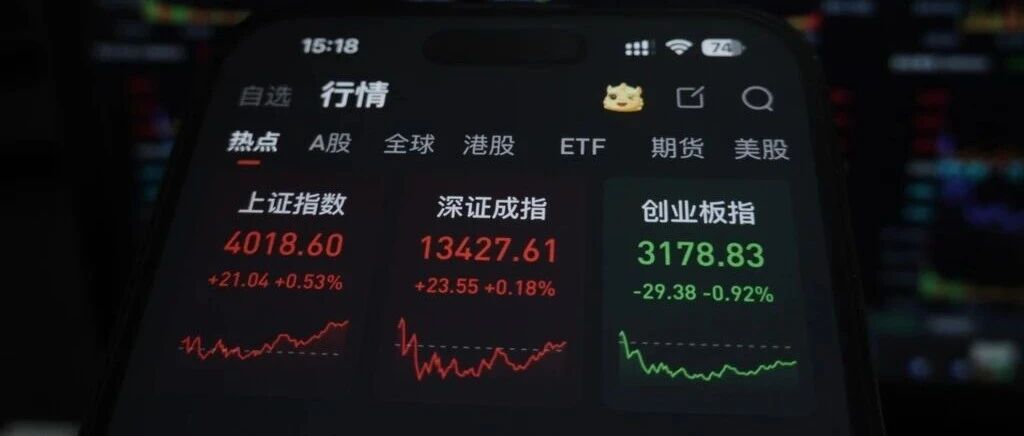
Market Overview - A-shares showed mixed performance with the Shanghai Composite Index rising by 0.53% and the Shenzhen Component Index increasing by 0.18%, while the ChiNext Index fell by 0.92% [2] - The trading volume in the Shanghai and Shenzhen markets reached 2.17 trillion, an increase of 175.4 billion compared to the previous trading day [2] Technology Sector Analysis - The technology sector has been performing well this year, with significant gains in humanoid robots, semiconductor chips, and algorithm computing [3] - Recent adjustments in technology stocks should not be interpreted as a trend reversal; rather, they reflect profit-taking behavior from investors [4] - The "15th Five-Year Plan" emphasizes technological innovation as a key policy direction, indicating strong future support for sectors like AI and semiconductor technology [4] Investment Outlook - The market is expected to experience structural opportunities in 2026, driven by potential policy benefits and improved capital conditions [2][8] - There is a belief that the bull market in A-shares and Hong Kong stocks will continue, with a shift of household savings into the capital market already underway [8] - Historical trends suggest that a complete bull market typically benefits a wide range of industries, not just a few sectors [8] Traditional Sector Opportunities - Traditional sectors may see phase-based rotation opportunities in the coming year, although their growth may not match that of technology stocks [8] - The current market environment shows lower overall valuations and leverage compared to previous peaks, suggesting that the recent rise above 4000 points may not indicate a bubble [7][8]
基金经理操作现分化!“科技牛”谁在乐观 谁在谨慎?
天天基金网· 2025-11-09 07:00
Core Viewpoint - The article discusses the divergent strategies among fund managers regarding the "technology bull market," highlighting who remains optimistic and who is cautious in their approach [1]. Group 1: Fund Manager Sentiment - Some fund managers express optimism about the technology sector, citing strong earnings and growth potential as key drivers for investment [1]. - Conversely, other fund managers adopt a more cautious stance, concerned about potential market corrections and macroeconomic factors that could impact technology stocks [1]. Group 2: Market Trends - The article notes that the technology sector has shown significant resilience, with many companies reporting robust quarterly earnings, which has fueled investor confidence [1]. - However, there are warnings about overvaluation in certain tech stocks, leading to a split in investment strategies among fund managers [1]. Group 3: Investment Strategies - Optimistic fund managers are focusing on high-growth technology companies, believing that innovation will continue to drive market performance [1]. - Cautious fund managers are reallocating their portfolios to include more defensive stocks, aiming to mitigate risks associated with potential volatility in the tech sector [1].

基金经理操作现分化,“科技牛”谁在乐观,谁在谨慎?
Zheng Quan Shi Bao· 2025-11-09 05:40
Core Insights - Public funds have shown an overall trend of increasing positions in equity assets during the third quarter, particularly in the TMT and power equipment sectors, amidst a rising technology stock bull market [1][3] - There is a notable divergence in the strategies of active equity funds, with some aggressively increasing their positions to capitalize on the bull market, while others have opted to reduce their holdings after achieving certain gains [1][3] Fund Positioning - As of the end of the third quarter, the average stock position of all public funds was 83.28%, an increase of 2.13 percentage points from the end of the second quarter. Mixed open-end funds had an average position of 82.15%, up 1.24 percentage points, while stock open-end funds averaged 90.14%, up 2.26 percentage points [3] - The concentration of holdings among public funds has increased, with stock open-end funds and mixed open-end funds seeing concentration levels rise by 0.94 percentage points and 2.1 percentage points to 56.81% and 57.72%, respectively [3] - By the end of the third quarter, 27 fund companies had products with an average stock position exceeding 90%, with Allianz Fund, Zhuque Fund, and Fidelity Fund having stock positions over 94% [3] Investment Style and Sector Allocation - According to a report by CICC, the market capitalization and growth style preferences of active equity funds have risen in tandem, while value style has seen a significant decline. The concentration of holdings has increased, indicating a more unified market perspective [4] - The TMT sector received an overall increase in allocation during the third quarter, with power equipment, new energy, and non-ferrous metals also seeing significant increases, while reductions were mainly in consumer, financial real estate, and manufacturing sectors [4] Notable Fund Performance - Several funds have significantly increased their positions, with some exceeding 99% stock allocation, including Huaxia Panyi One-Year Mixed Fund and CITIC Construction Investment North Exchange Selected Two-Year Mixed Fund [6] - Funds like Wanji New Opportunities Value-Driven Fund adjusted their holdings from consumer and financial stocks to defensive dividend stocks and domestic technology manufacturing companies, resulting in a stock position increase to 93% by the end of the third quarter [7] - Other funds, such as GF Industry Selection and Jin Xin Quality Growth, also made bold increases in their positions, achieving over 20% gains during the third quarter [8] Cautionary Strategies - Some active equity products have chosen to lock in profits by reducing their positions at high levels, with examples including Huashang Fund's products, which saw a stock position drop to 51% after a significant quarterly gain of approximately 48% [10] - Fund managers have expressed cautious views regarding high valuations in growth sectors, leading to a temporary reduction in positions to manage portfolio volatility, with plans to optimize once market styles shift [10]
杨德龙:美国政府“停摆”时间将破纪录加大美国经济陷入衰退的风险
Xin Lang Ji Jin· 2025-11-05 09:50
Group 1 - The U.S. stock market experienced a significant decline, with major indices falling sharply, particularly the Nasdaq, which dropped over 2% [1] - Notable investors, including Michael Burry, have taken large short positions against leading tech stocks, indicating a bearish sentiment in the market [1] - Concerns about high valuation levels in the U.S. stock market have been raised by several Wall Street leaders, predicting potential corrections of 10% to 20% in the next 12 to 24 months [1][2] Group 2 - The ongoing U.S. government shutdown, which is expected to exceed previous records, has heightened fears of an economic recession, impacting investor sentiment [2] - The Federal Reserve has lowered interest rates in response to recession risks, which has contributed to the decline in major stock indices and affected Chinese concept stocks [3] - The technology sector has been a strong performer this year, but profit-taking pressures are increasing as the market adjusts [3] Group 3 - The current market adjustment is viewed as a necessary correction within an ongoing upward trend, rather than an end to the bull market [5] - Investors are encouraged to maintain confidence and patience, focusing on sectors and companies that will benefit from economic transformation [6] - The upcoming closure of Hainan's free trade zone is anticipated to positively impact local economic growth and related listed companies, making it a hot sector in the market [4]
策略周末谈:做时间的朋友
Western Securities· 2025-11-02 12:42
Core Conclusions - The bull market is entering its second phase, transitioning from a "technology bull" to a "wealth bull" [1] - After the "super macro month" in October, the market is expected to favor cyclical stocks as a better allocation choice due to high valuations and potential adjustments if EPS does not improve [1][5] - Current market conditions present an optimal window for investing in cyclical stocks, supported by five key reasons [1] Reason 1: Cyclical Stocks as "Friends of Time" - Since Q3, the market has begun to trade based on changes in profitability (△ROE), indicating a return to investment in economic recovery [21] - Cyclical stocks have lagged behind in price compared to improvements in fundamentals, making them more favorable during market adjustments [21][24] Reason 2: Potential Requirements of the "14th Five-Year Plan" - The "14th Five-Year Plan" suggests that by 2035, per capita GDP should reach the level of moderately developed countries, requiring an annual growth rate of 4.1% plus inflation and currency appreciation [2][30] - Achieving this goal necessitates a combination of moderate inflation and currency appreciation to establish a growth baseline for cyclical industries [2][31] Reason 3: Cross-Border Capital Inflow, Repeating 2019-2021 - Recent reports emphasize that cross-border capital inflow will effectively support domestic demand, with signs of cyclical improvement already emerging [3][33] - The return of cross-border capital is expected to drive a revaluation of global commodities and domestic manufacturing, similar to the core asset bull market seen post-pandemic [3][36] Reason 4: New Regulations for Public Funds Guiding "Rebalancing" - The introduction of new regulations for public funds is expected to lead to a rebalancing of holdings between TMT and cyclical stocks [4][39] - As public funds have not significantly increased new issuances, the shift from cyclical to TMT stocks has resulted in a decrease in the pricing power of TMT stocks [4][40] Reason 5: Slowdown in Incremental Capital Inflows, Entering a Competitive Phase - Since September, there has been a noticeable slowdown in the inflow of various types of capital, indicating a shift in market dynamics [5][44] - The market is transitioning into a phase of competition, with cyclical stocks likely to benefit from this change [5][51] Investment Recommendations: Transitioning from "Technology Bull" to "Wealth Bull" - The report suggests continuing to invest in cyclical stocks, particularly in sectors such as non-ferrous metals, new consumption, and high-end manufacturing, as these areas are expected to benefit from the current economic conditions [5][54]
杨德龙:十月份行情收官 多重因素驱动大盘突破4000点 | 立方大家谈
Sou Hu Cai Jing· 2025-11-02 00:01
Group 1 - The A-share market experienced a strong rally in October, with the Shanghai Composite Index briefly surpassing the 4000-point mark, marking a significant milestone not seen in ten years. This level has led to increased divergence between bulls and bears, resulting in some pullback after reaching 4000 points [1] - The core drivers behind the index's rise include substantial progress in US-China trade negotiations, which have improved market confidence, and the implementation of supportive economic policies aimed at stabilizing growth. Key financial officials have signaled a commitment to a supportive monetary policy stance [1] - The 20th National Congress of the Communist Party has concluded, with the "14th Five-Year Plan" outlining specific economic development strategies for the next five years, focusing on emerging industries such as humanoid robots, semiconductor chips, and biomedicine, which are expected to lead the current technology bull market [2] Group 2 - Recent favorable policies have injected strong confidence into the market, with expectations of further policy tools being utilized to catalyze market growth. The Federal Reserve's recent interest rate cuts are expected to provide a foundation for China's central bank to implement further easing measures [3] - The market is anticipated to continue its bullish trend into the fourth quarter, with recommendations for investors to seize opportunities during pullbacks in technology stocks, which are expected to remain a key feature of the bull market [3] - Investors are advised to maintain a balanced portfolio across various sectors, including technology, new energy, and consumer stocks, to capitalize on potential sector rotations and enhance wealth growth opportunities [3]
4000美元的黄金与4000点的A股,选哪个?
吴晓波频道· 2025-10-31 00:29
Core Viewpoint - The article discusses the contrasting trends in gold prices and A-shares, highlighting the potential for A-shares to benefit from improvements in China's economic fundamentals while gold prices are influenced by global monetary policies and geopolitical factors [2][29]. Summary by Sections 1. Analysis of Gold Price Decline - Gold prices experienced a significant drop, with a decrease of approximately 5.3% on October 21, reaching around $4,123.85 per ounce, and subsequently falling below the psychological threshold of $4,000 on October 29 [4][6]. - The decline in gold prices is attributed to technical factors rather than macroeconomic or geopolitical issues, with a crowded long position leading to profit-taking [9][11]. - Despite the recent downturn, fundamental support for gold remains, including ongoing concerns about inflation, U.S. government debt exceeding $38 trillion, and the potential for economic slowdown [12][14]. 2. Outlook for A-shares - A-shares have recently surpassed the 4,000-point mark, breaking free from historical resistance levels, indicating a new market phase driven by index-led changes [7][19]. - The current bull market is characterized as a structural bull market rather than a broad-based rally, with a focus on individual stocks and sectors rather than the overall index [20][22]. - Key sectors to watch include technology, renewable energy, and consumer brands, which are expected to attract more investment as the market strengthens [22][32]. 3. Investment Choices Between Gold and A-shares - The article suggests that aggressive investors should continue seeking opportunities in A-shares, while conservative investors may prefer gold or related investments due to its relative certainty [28][29]. - Both A-shares and gold are seen as having medium to long-term investment value, with A-shares benefiting from China's economic recovery and gold responding to global monetary conditions [29][30]. - The article emphasizes a "barbell strategy" where investors allocate to both aggressive assets like A-shares and conservative assets like gold, highlighting the complementary nature of these investments [31].

李迅雷专栏 | 黄金暴涨、股市波动,普通人机会在哪?
中泰证券资管· 2025-10-29 11:33
Core Viewpoints - The current market dynamics and potential for a "slow bull" market are under discussion, with emphasis on the importance of understanding the underlying drivers of stock and gold prices [4][11][12]. Group 1: Market Dynamics - The stock market's volatility is influenced by investor psychology, particularly greed and fear, which are common pitfalls for many investors [6][5]. - The A-share market is characterized by high turnover rates, leading to elevated valuations and a tendency for prolonged bear markets compared to bull markets [9][10]. - The recent market rally is attributed to a combination of improved corporate fundamentals, declining interest rates, and supportive policies, although the sustainability of this rally remains uncertain [14][19][20]. Group 2: Investment Strategies - Investors are advised to focus on the fundamentals of listed companies and avoid chasing trends, emphasizing the importance of buying low and selling high [6][7]. - The concept of "slow bull" is still under evaluation, with a consensus that a sustained upward trend would require several years of consistent growth [13][14]. - The current valuation levels of A-shares are considered moderate, suggesting that while there is potential for growth, caution is warranted [16][24]. Group 3: Gold Market Insights - The recent surge in gold prices, which has increased by over 50% this year, raises concerns about potential corrections, indicating that current levels may not be the best entry point for new investments [41][43]. - Central banks globally are increasing their gold reserves to enhance monetary authority, reflecting a strategic shift away from reliance on the US dollar [47]. - Recommendations for gold investment allocation suggest a cautious approach, with a current optimal allocation of around 10% of an investment portfolio [48].