AI算力

Search documents
谷歌Q4云收入猛增48%,2026年资本支出指引:全力投入算力基建
Mei Ri Jing Ji Xin Wen· 2026-02-05 01:23
除了谷歌,此前公布的微软与Meta财报均显示,其在AI基础设施上的资本开支继续高增,彰显AI巨头 对于人工智能算力的重视。中信建投证券表示,Clawdbot等AI Agent现象级火爆,Tokes调用量也大幅 增长。2026年 AI算力需求旺盛,北美CSP资本开支依旧乐观。继续看好AI算力产业链,特别是业绩能 见度较高的光模块产业链。此外,光纤光缆行业已从复苏转向量价齐升阶段,继续推荐。 相关北美算力产业链ETF: 当地时间2月4日美股盘后,谷歌母公司Alphabet发布了截至2025年12月31日的2025年四季度财报。财报 显示,Alphabet四季度实现营收1138.28亿美元,同比增长18%,高于市场预期的1114.3亿美元;2025年 全年,公司营收首次突破4000亿美元,达4028.36亿美元,同比增长15%;净利润达到1321.70亿美元, EPS为10.81美元。 其中,谷歌云业务成为Alphabet四季度业绩最大的亮点,当季业务收入同比大增48%至177亿美元,较 分析师预期的162亿美元高逾9%。这一增长主要由企业AI基础设施、企业AI解决方案以及核心谷歌云平 台产品需求激增驱动。Alph ...

【招商电子】生益科技:25年业绩预告高增,AI高速业务长线结构性升级趋势仍明确
招商电子· 2026-02-04 15:10
Core Viewpoint - The company expects a significant increase in net profit for 2025, with a forecasted range of 3.25 to 3.45 billion yuan, representing a year-on-year growth of 87% to 98% [2]. Financial Performance - The Q4 performance showed a quarter-on-quarter decline due to a slowdown in demand from major customers in the PCB business and insufficient price transmission in mid-to-low-end CCL products. The median net profit for Q4 is projected at 910 million yuan, a year-on-year increase of 147.5% but a quarter-on-quarter decrease of 10.8% [2]. - The median net profit excluding non-recurring items for Q4 is estimated at 800 million yuan, reflecting a year-on-year increase of 121.0% but a quarter-on-quarter decline of 20.1% [2]. - The decline in Q4 performance was primarily attributed to a significant drop in the subsidiary Shengyi Electronics' performance and rising raw material costs, particularly in copper and glass fiber [2]. Growth Drivers - For the full year, growth was mainly driven by increased CCL sales and product structure optimization, which enhanced gross margins. The subsidiary Shengyi Electronics achieved breakthroughs in the AI PCB sector, significantly increasing its revenue and profit [2]. - Looking ahead to 2026, the company remains optimistic about growth in high-speed materials and AI PCB, with strong demand from major customers and potential new clients in computing power [3]. Market Outlook - The CCL industry is expected to maintain upward momentum, with the company poised to increase its market share among N clients and achieve breakthroughs with G and A clients. The company is likely to adopt a more aggressive market strategy to address rising raw material costs [3]. - The company is well-positioned in high-speed materials, with advantages in products like S8/S9/S10 and PTFE, and is expected to make significant progress in high-end products related to AI computing power and self-sufficiency [4]. Revenue Projections - The latest revenue forecasts for 2025-2027 are projected at **/**/** billion yuan, with net profits of **/**/** billion yuan, corresponding to PE ratios of **/**/** times and PB ratios of **/**/** times [4]. - The company is expected to benefit from the ongoing demand for high-speed boards, driving a new phase of high-quality growth, with mid-to-long-term performance likely to exceed expectations [4].



【招商电子】深南电路:Q4环降源于新产能爬坡、费用增加,静待H1业绩环比高增
招商电子· 2026-02-04 15:10
Core Viewpoint - The company expects a significant increase in annual performance for 2025, with net profit attributable to shareholders projected to be between 3.15 billion to 3.34 billion, representing a year-on-year growth of 68.0% to 78.0% [1] Group 1: Financial Performance - For Q4, the company anticipates a net profit of 920 million, reflecting a year-on-year increase of 136.2% but a quarter-on-quarter decline of 4.5% [1] - The full-year performance is driven by the company's ability to capitalize on three major growth opportunities: AI computing power upgrades, increased storage market demand, and the electrification and intelligence of automobiles [1] - The company has enhanced its operational management capabilities through digital transformation and smart manufacturing upgrades, contributing to revenue and profit growth [1] Group 2: Business Trends - The demand for overseas AI computing power is robust, and the new production capacity is expected to quickly reach breakeven, contributing to flexible profits [2] - Domestic computing power is projected to experience significant growth in 2026, with the company positioned as a key player in the domestic PCB supply chain [2] - The high demand for substrate boards is leading to continuous price increases, with full capacity utilization and significant profit improvements [2] - The company is well-positioned in the future AI PCB technology upgrade path, with strong technical capabilities and production experience [2] Group 3: Future Outlook - The company is expanding its AI computing capacity, with new production facilities in Nantong, Thailand, and Wuxi expected to gradually come online between 2026 and 2027, opening up long-term growth potential [3]

猎奇智能IPO背后藏着七大富豪!“80后”湖北大佬造光模块设备年入5亿
Sou Hu Cai Jing· 2026-02-04 12:42
Group 1 - The core business of the company is the production of intelligent manufacturing equipment for optical communication, semiconductors, and automotive automation, with significant applications in data centers, 5G base stations, and new energy vehicles [3][10] - The company has shown impressive revenue growth, with revenue increasing from 145 million to 543 million from 2022 to 2024, and net profit rising from 35 million to 181 million in the same period [3][10] - The company heavily relies on a single major client, Zhongji Xuchuang, which accounts for over 60% of its revenue, raising concerns about its bargaining power and market diversification [5][10] Group 2 - The company's accounts receivable have surged, with the balance reaching 479 million in the first half of 2025, representing 81.12% of revenue, indicating significant collection pressure compared to industry peers [7][10] - The company has experienced a negative cash flow of 24 million in the first half of 2025, attributed to changes in customer payment policies and increased inventory due to order fulfillment [10][11] - Despite the challenges, the company plans to raise 913 million through its IPO, with 800 million allocated for working capital, while also maintaining a high dividend payout [11][15] Group 3 - The company has implemented a stock incentive plan for key executives, allowing them to purchase shares at a significantly lower price compared to external investors, reflecting a strategy to align interests and reward performance [15][16] - The company is positioned in a high-growth market, benefiting from trends in optical modules and AI computing, which could enhance its growth potential if it successfully navigates the IPO process [18]
【IPO前哨】伊戈尔冲刺“A+H”,赛道机遇与盈利难题并存
Sou Hu Cai Jing· 2026-02-04 12:23
Core Viewpoint - The trend of "dual listing" in A-shares and H-shares continues, with more companies opting for "A+H" listings to establish dual capital platforms. Igor (002922.SZ), a leader in the power equipment sector, has submitted its listing application to the Hong Kong Stock Exchange, reflecting its transformation from a traditional power manufacturer to a highly sought-after stock in the capital market, with a cumulative stock price increase of approximately 150% since 2025 due to the dual demand from renewable energy and AI computing power [2][3]. Group 1: Business Evolution - Igor's business evolution from traditional lighting power to "renewable energy + AI" exemplifies the transition of Chinese power equipment companies into high-growth sectors. Initially focused on lighting power, the company began its global expansion in 2007 and entered the renewable energy market in 2013 with high-frequency magnetic devices [3]. - The acquisition of a 70% stake in Mu Magnetic Technology in 2018 enhanced Igor's R&D capabilities in high-frequency magnetic power devices, which are crucial for innovation in photovoltaic, energy storage, and electric vehicle sectors [3]. - By 2025, Igor's revenue from renewable energy products accounted for 58.6% of total revenue, marking it as the primary driver of growth, while the demand for efficient transformers in data centers surged due to AI computing [3]. Group 2: Global Expansion and Production Capacity - To support its global business strategy, Igor has accelerated the establishment of overseas production facilities, with nine factories built in countries including Malaysia, Thailand, the USA, and Mexico by September 2025. The factory in Fort Worth, USA, commenced production in October 2025, focusing on distribution transformers with an annual capacity of 21,000 units [5]. - The funds raised from the Hong Kong listing are intended for overseas expansion, building a global sales network, and investing in upstream and downstream industries as well as strategic acquisitions [5]. Group 3: Financial Performance - Despite revenue growth, Igor faces the challenge of "increasing revenue without increasing profit." In the first three quarters of 2025, the company reported a profit of 188 million RMB, a year-on-year decline of approximately 13.7% [6]. - Revenue figures for 2023 to the first three quarters of 2025 show continuous growth: 3.616 billion RMB in 2023, 4.603 billion RMB in 2024, and 3.769 billion RMB in 2025 [6][7]. - The overall gross margin has been under pressure, decreasing from 21.7% in 2023 to 17.8% in the first three quarters of 2025, primarily due to intensified competition in the photovoltaic and energy storage sectors and high initial costs associated with overseas factories [9][10]. Group 4: Market Challenges and Future Outlook - The decline in revenue from traditional lighting products, which fell by 6.96% year-on-year in the first three quarters of 2025, has significantly impacted profitability, with the gross margin for this segment dropping to 20% [8][9]. - The data center-related business has also seen a revenue decline of 6.25% year-on-year in the first three quarters of 2025, attributed to international clients slowing down equipment updates due to cost considerations [8]. - Looking ahead, there is potential for gross margin recovery in 2026 as overseas factory utilization improves and high-margin automotive inductors are gradually released. However, uncertainties remain regarding the continuation of price wars in the renewable sector and the pace of recovery in data center demand [10]. Group 5: Strategic Challenges Post-Listing - Igor's upcoming listing on the Hong Kong Stock Exchange will require the company to navigate stricter disclosure requirements and scrutiny from international investors. The company must effectively communicate the growth logic of its "renewable energy + AI" dual track and improve profit quality to support its valuation [11]. - The transition path of Igor is representative of the strategic opportunities for traditional power equipment companies amid global energy structure transformation and the AI computing revolution. Balancing growth with profitability and managing costs and risks in a globalized layout will be critical challenges for all participants in the industry [11].
马斯克又干逆天事?核电站级AI算力来了!
Xin Lang Cai Jing· 2026-02-04 12:22
Core Viewpoint - The development of the Colossus 2 supercomputer by Elon Musk represents a significant leap in AI capabilities, emphasizing the importance of energy supply and efficiency management in supporting large-scale AI models, which is now recognized as a critical factor in the AI industry [2][38]. Group 1: Colossus 2 Overview - Colossus 2 is the world's first AI training cluster with a capacity of 1 million kilowatts, serving as a cornerstone for Musk's "automobile + AI + energy" ecosystem [4][40]. - The supercomputer utilizes 555,000 NVIDIA GPUs, achieving a theoretical peak performance of 275-348 EFLOPS, which is more computational power than humanity has used in the past several decades [6][42]. - Colossus 2's construction was completed in just 10 months, showcasing Musk's exceptional engineering execution compared to traditional supercomputing centers that typically take years to build [13][49]. Group 2: Strategic Goals and Applications - The primary goal of Colossus 2 is to support the next-generation Grok 5 model, which aims to enhance AI's ability to understand dynamic video content, a crucial requirement for autonomous driving [4][40]. - The supercomputer is designed to create a closed loop of "data - computing power - model - application," allowing Tesla to optimize its computing resources and reduce costs [8][44]. - Musk's strategy includes leveraging existing NVIDIA GPUs while gradually developing proprietary chips to mitigate risks associated with supply chain dependencies [8][44]. Group 3: Energy Management and Environmental Concerns - Colossus 2 employs a dual power supply system of grid electricity and natural gas turbines to ensure stable energy supply, addressing the significant power demands of the supercomputer [19][55]. - The facility is under scrutiny for its environmental impact, with investigations into emissions from its natural gas turbines, highlighting the ongoing challenge of balancing high energy consumption with environmental compliance [19][57]. - The integration of Tesla's Megapack energy storage system allows for efficient energy management, reducing costs and providing backup power during outages [24][60]. Group 4: Industry Impact and Future Outlook - Colossus 2 is set to redefine the automotive AI landscape, shifting the focus from traditional hardware competition to AI computing power and model capabilities [33][69]. - The advancements made possible by Colossus 2 are expected to accelerate the adoption of full-scene autonomous driving and enhance in-car AI systems, leading to a more intelligent user experience [30][68]. - The competitive edge gained by Musk through Colossus 2 may create significant barriers for other companies in the automotive AI sector, potentially reshaping the industry's competitive dynamics [71][72].


薄膜铌酸锂:受益AR眼镜和光通信产业趋势
Huafu Securities· 2026-02-04 11:21
Investment Rating - The industry rating is "Outperform the Market" [8] Core Insights - The thin-film lithium niobate (TFLN/LNOI) is positioned as a foundational material platform for next-generation photonic chips, benefiting from advancements in AR glasses and optical communication [4][5] - The market for lithium niobate is expanding due to its superior piezoelectric, ferroelectric, and electro-optic properties, with China accounting for 42% of global production capacity [4][24] - The demand for TFLN is driven by the growth of AR glasses and the transition in optical communication towards high-speed data center interconnects [5][39] Summary by Sections 1. Introduction to Lithium Niobate and Thin-Film Lithium Niobate - Lithium niobate (LiNbO₃) is recognized for its multifunctional properties, making it a key material in integrated and guided optics [14] - Thin-film lithium niobate (TFLN) is produced as sub-micron films, enhancing device integration density and performance compared to traditional bulk lithium niobate [3][14] 2. Industry Trends & Competitive Landscape 2.1 Industry Trends - The rapid development in 5G/6G, AI, and data centers is driving the demand for lithium niobate, which is becoming a leading material in photonics [23] 2.2 Competitive Landscape - China is the largest producer of lithium niobate, with companies like TianTong and JiNan JingZheng leading in production capabilities [4][24] 3. Potential Growth Markets: AR Glasses and Optical Communication 3.1 AR Glasses - TFLN technology enables ultra-fast electro-optic response and significant improvements in color switching speed for AR glasses, with a projected global shipment of 1.06 million units by 2025 [5][35] 3.2 Optical Communication - The shift towards high-speed optical communication is creating a new growth cycle, with TFLN being crucial for supporting high data rates and low power consumption [5][39] 4. Material Characteristics of Thin-Film Lithium Niobate - TFLN offers advantages over silicon photonics and indium phosphide, including higher bandwidth and better linearity, making it suitable for high-density integration [45] 5. Key Industry Players - Key companies include: - **Sumitomo Metal Mining**: Leading in large-scale lithium niobate wafer production [49] - **TDK**: Innovating in the direct growth of lithium niobate films on standard semiconductor substrates [49] - **TianTong Co.**: Focused on the development of lithium niobate crystals for RF filters and optical devices [49] - **JiNan JingZheng**: A pioneer in the thin-film lithium niobate sector, breaking foreign monopolies [49] - **NanZhi Semiconductor**: Specializing in high-quality lithium niobate crystals for advanced applications [50]
【研选行业】SpaceX百万颗算力卫星计划曝光,催生100GW太空光伏年需求,设备商迎订单拐点,机构建议关注三条主线
第一财经· 2026-02-04 10:41
Group 1: Space-Based Photovoltaics and AI Computing - SpaceX's plan to deploy one million computing satellites is expected to create an annual demand of 100GW for space-based photovoltaics, marking a turning point for equipment suppliers [2] - The demand for space photovoltaics is anticipated to grow significantly, with early orders for equipment likely to materialize on a large scale [2] - Key companies to watch include photovoltaic equipment suppliers Maiwei (300751.SZ), Jiejia Weichuang (300724.SZ), and others, as well as high-efficiency heat exchanger suppliers and photovoltaic battery manufacturers [2] Group 2: Copper Industry and Strategic Reserves - Copper concentrate may be included in the national strategic reserve, enhancing the security of the supply chain [5] - The global decline in copper ore grades is expected to continue, which may elevate the importance of copper as a key metal [5] - Companies to focus on include Zijin Mining (601899.SH) for copper mining and Tongling Nonferrous Metals (000630.SZ) for copper smelting, as they are positioned to benefit from profit recovery [5] Group 3: Hydrogen Energy Development - Hydrogen energy is set to be a key focus during the 14th Five-Year Plan, with significant investments expected to drive the industry forward [7] - By the end of 2025, China's renewable energy hydrogen production capacity is projected to exceed 250,000 tons per year, doubling from the previous year [7] - Companies involved in hydrogen energy, such as Kewell and Huadian Technology, are expected to benefit from the growing emphasis on hydrogen as a critical component of the national energy system [10] Group 4: Agricultural Drones and Technology - The Chinese government is promoting agricultural modernization, emphasizing the integration of technology in agriculture, including the use of drones [12] - The agricultural drone market is experiencing rapid growth, with over 300,000 drones in operation and an annual operational area exceeding 46 million acres [12] - Key players in the agricultural drone sector, such as Haowei Group and Zhaoyi Innovation, are positioned to capitalize on this trend [14]

新易盛(300502)动态点评:Q4业绩增长重回快车道 1.6T光模块放量在即
Xin Lang Cai Jing· 2026-02-04 10:35
Core Viewpoint - The company is expected to achieve significant growth in net profit for the fiscal year 2025, driven by the increasing demand for high-speed optical modules due to the expansion of AI clusters and data centers [1][2]. Financial Performance - The company's net profit attributable to shareholders for 2025 is projected to be between 9.4 billion and 9.9 billion yuan, representing a year-on-year increase of 231.24% to 248.86% [1]. - The net profit for Q4 2025 is estimated to be between 3.073 billion and 3.573 billion yuan, with a quarter-on-quarter growth of 28.85% to 49.82% [1]. Business Growth Drivers - The demand for 800G and higher-speed optical modules is becoming a rigid requirement as cloud computing companies and large-scale data centers accelerate their AI investments [2]. - The company is expected to see continued growth in its 1.6T optical module business in 2026, indicating a sustained upward trend in performance [2]. Competitive Advantages - The company has established a high gross margin moat through long-term technological accumulation in high-speed circuit design and optical packaging, particularly in leading low-power technologies [2]. - The acquisition of Alpine has strengthened the company's capabilities in silicon photonics chip design, with products already in mass production [2]. Supply Chain and Production Capacity - The company has strategically established overseas production capacity to mitigate risks from geopolitical issues and tariff fluctuations, with its factories in Thailand now operational [3]. - The supply chain is functioning well, with long-term partnerships with suppliers and effective management of key raw materials based on market demand [3]. Investment Outlook - The company is positioned to benefit from the high demand in the AI computing and data communication markets, with expected revenue growth from 26.255 billion yuan in 2025 to 58.102 billion yuan in 2027 [4]. - Projected net profits are expected to rise from 9.667 billion yuan in 2025 to 21.674 billion yuan in 2027, with corresponding EPS increasing from 9.72 yuan to 21.80 yuan [4].

这个板块彻底火了!下一只有望大涨的公司浮现
Xin Lang Cai Jing· 2026-02-04 10:29
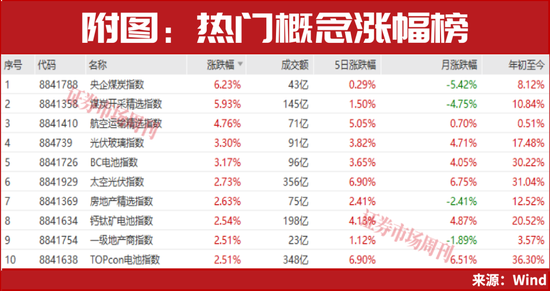
Core Viewpoint - The A-share market is experiencing fluctuations, with coal and space photovoltaic concepts showing significant activity. However, the rebound in coal stocks is primarily a result of overselling, while the space photovoltaic sector may have more sustainable growth due to ongoing positive developments and performance reversals [1][2][10]. Group 1: Coal Sector Analysis - The coal sector saw a notable increase, with indices such as the central enterprise coal index rising by 6.23% and the coal mining selection index by 5.93% [3][11]. - Despite the surge, 19 out of 27 companies in the coal industry have projected a decline in performance for 2025, indicating a lack of fundamental support for the rebound [2][11]. - The operational strategy for coal stocks should be closely monitored, particularly in relation to the performance forecasts for the first quarter of 2026 [2][11]. Group 2: Space Photovoltaic Sector Analysis - The space photovoltaic sector is showing stronger fundamentals, with nearly 50% of companies in the photovoltaic equipment industry expected to achieve performance growth by 2025, a significant increase compared to previous years [2][12]. - Notable stocks in the space photovoltaic sector include Zhonglai Co. and Zerun New Energy, which have reached "20CM" and "10CM" daily limits, respectively, indicating strong market interest [2][12]. - The space photovoltaic index has also shown a year-to-date increase of 31.04%, reflecting robust investor sentiment [3][12]. Group 3: Technological Developments in Space Photovoltaics - Space photovoltaic cells are categorized into three main types: gallium arsenide, crystalline silicon, and perovskite cells, each with distinct advantages and challenges [5][15]. - The efficiency of gallium arsenide cells is high but comes with a high cost, while perovskite cells offer flexibility and low theoretical costs but face stability issues [5][15]. - Crystalline silicon cells, although less efficient, are currently the most cost-effective option and are gradually replacing gallium arsenide in low-cost satellite applications [5][15]. Group 4: Company Developments and Performance Forecasts - Companies like Canadian Solar (阿特斯) are actively developing technologies related to space photovoltaics, including HJT technology and perovskite/HJT tandem cells, achieving significant advancements in efficiency [16][17]. - The company has reported a research and development efficiency exceeding 27.6% and a mass production efficiency of over 27.30%, positioning it at the forefront of the industry [16][17]. - Five companies are projected to see their performance double by 2025, with the fastest growth expected from Dingjide (鼎际得), forecasting a net profit increase of 171.15% to 206.73% [8][20].