供给侧改革

Search documents
杭氧股份20250718
2025-07-19 14:02
Summary of Hangyang Co., Ltd. Conference Call Industry Overview - The gas industry is closely related to the manufacturing sector, with China's manufacturing value added accounting for over 30% of the global total, while China's gas market share is only about 2%, indicating significant future growth potential [3][4] - The international industrial gas giants have market capitalizations far exceeding that of Chinese leaders, highlighting the vast potential of the Chinese industrial gas market and the growth space for domestic leaders like Hangyang [2][6] Company Insights - Hangyang's business structure includes equipment and gas segments, with gas business divided into pipeline gas and retail gas. Pipeline gas has a defensive attribute due to long-term contracts and guaranteed capacity utilization, while retail gas has an offensive attribute due to price fluctuations [2][7] - The current investment climate for Hangyang is favorable as the company is at a cyclical bottom, with a price-to-book (PB) ratio of approximately 2 and a price-to-earnings (PE) ratio of about 20, indicating a significant valuation gap compared to international leaders [2][8] - In 2024, Hangyang's revenue structure is expected to consist of approximately one-third from equipment and two-thirds from gas, with pipeline gas accounting for about 80% and retail gas for about 20% of the gas business [2][10] Financial Performance - Recent price increases in gases such as oxygen and nitrogen have positively impacted Hangyang's stock price, with a 15%-16% quarter-over-quarter increase in comprehensive gas prices in Q2 [4][11] - The company is projected to achieve a net profit of around 1 billion RMB this year, corresponding to a PE ratio of about 20 [4][13] - The company reported a 10% year-over-year growth in Q1, with expectations for continued steady growth in Q2 despite economic challenges [5][14] Market Dynamics - The recovery of gas prices is a positive signal for Hangyang's stock, with recent trends indicating a reversal from the cyclical bottom. If market demand improves or the competitive landscape optimizes, gas prices may further recover [4][11] - Supply-side reforms could lead to a rapid increase in the Producer Price Index (PPI), which would subsequently drive up the prices of upstream raw materials, including industrial gases [12] Valuation Perspective - Compared to international industrial gas leaders, which have PE ratios between 25 and 30, Hangyang's valuation has been relatively low at 15 to 20 times, primarily due to domestic macroeconomic factors [13] - If the economic outlook improves, Hangyang's valuation could see significant upward movement, with potential for market share to increase from 12%-13% to 23%-30% in the future [8][9] Conclusion - Hangyang Co., Ltd. is positioned for potential growth in a recovering gas market, with a favorable investment opportunity due to its current valuation and market dynamics. The company’s defensive and offensive business attributes, along with the anticipated recovery in gas prices, suggest a positive outlook for future performance [2][4][8]

深度专题 | “反内卷” :市场可能误解了什么?(申万宏观·赵伟团队)
赵伟宏观探索· 2025-07-19 03:23
Core Viewpoint - The article discusses the rising importance of "anti-involution" in the market, highlighting significant misunderstandings regarding the concept of "involution" and its implications for supply-side reforms and economic structure transformation [2][3]. Group 1: Misunderstanding of "Involution" - "Involution" is not equivalent to "overcapacity"; it arises from strong demand leading to proactive supply increases, contrasting with passive overcapacity due to demand decline [3][4]. - The price behavior differs: "overcapacity" leads to price drops due to demand decline, while "involution" results in chaotic price competition despite strong demand [3][4]. - Supply-side reforms previously addressed overcapacity in high-energy sectors, while current "anti-involution" focuses on the middle and lower reaches of the supply chain, particularly among private enterprises [4][5]. Group 2: Targeted Areas of "Anti-Involution" - The high-energy sector has undergone significant capacity upgrades, and traditional backward capacities are not as prominent as before [5][6]. - Policies may target specific industries with excessive production, such as coal and pork, to stabilize prices, but the focus is more on aligning supply with demand rather than drastically reducing supply [6][7]. Group 3: Policy Mechanisms - Effective "anti-involution" strategies should not solely rely on self-discipline talks but should include industry mergers, raising standards, and matching supportive policies [8][9]. - Encouraging the development of non-overcapacity sectors, such as services, is crucial to rebalancing demand structures and addressing the root causes of "involution" [8][9]. Group 4: Equipment Update and Debt Management - Addressing the issue of equipment updates is vital, as many industries retain old equipment while acquiring new, which can lead to inefficiencies [9][142]. - The current situation shows a significant increase in overdue accounts, particularly among private enterprises, indicating a need for stricter debt management policies [152][160].

筑牢经济运行向好向优基础
Jing Ji Ri Bao· 2025-07-18 21:59
国家统计局发布的数据显示,今年上半年,我国国内生产总值(GDP)同比增长5.3%,比去年同期和 全年均提升0.3个百分点。受访专家认为,中国经济在应对风险挑战中展现出强劲韧性,为实现全年目 标打下了较好基础。当前外部不稳定不确定因素较多,国内有效需求不足,经济回升向好基础仍需加力 巩固。 经济增长含金量高 5.3%的增长,含金量高在哪儿? 发展韧性更强—— 中国国际经济交流中心副理事长王一鸣表示,当前外部环境继续发生深刻变化,地缘政治动荡加剧,全 球经济增长动力减弱。我国经济处在新旧动能转换期,传统产业增势减弱,房地产市场深度调整,新兴 产业仍在成长。上半年经济实现5.3%的增长,表明中国经济韧性持续增强,也为实现全年经济增长目 标奠定了较好基础。 运行稳定性增强—— "上半年经济运行稳定性远超预期,实体经济和金融市场'双稳'态势明显。"国家发展改革委宏观经济研 究院副院长郭春丽认为,经济运行"稳"的态势不仅表现在GDP同比增长5.3%、比去年同期和全年均提升 0.3个百分点,就业、物价、工业、服务业、消费、投资、出口等主要指标总体保持稳定,还表现在经 济运行季度间波动明显减少。一、二季度GDP同比增长分别为 ...
中航期货橡胶周度报告-20250718
Zhong Hang Qi Huo· 2025-07-18 12:55
Report Summary - China's automobile production and sales in June reached 2.794 million and 2.904 million vehicles respectively, with year-on-year increases of 11.4% and 13.8%. New energy vehicle production and sales were 1.268 million and 1.329 million vehicles, up 26.4% and 26.7% year-on-year [5]. - The rainfall in the world's major natural rubber producing areas increased week-on-week. In the next two weeks, the overall rainfall in the Southeast Asian rubber-producing areas will increase compared to the previous period, affecting rubber tapping [5]. - Foreign institutions collectively raised their GDP growth forecasts for China in 2025. Morgan Stanley raised its forecast from 4.5% to 4.8%, Goldman Sachs from 4.6% to 4.7%, and UBS from 4% to 4.7% [5]. - From July 1 - 13, the retail sales of the national passenger car market were 571,000 vehicles, a year-on-year increase of 7% and a month-on-month decrease of 5%. The cumulative retail sales this year reached 11.473 million vehicles, a year-on-year increase of 11%. The retail sales of the new energy passenger car market were 332,000 vehicles, a year-on-year increase of 26% and a month-on-month decrease of 4%. The penetration rate of the new energy market was 58.1%, and the cumulative retail sales this year were 5.801 million vehicles, a year-on-year increase of 33% [5]. - The price of natural rubber raw materials is running strongly. The inventory in Qingdao area has increased slightly. The price of butadiene, the raw material for butadiene rubber, has risen slightly. The inventory of butadiene rubber factories has decreased slightly. The operating rate of tire enterprises has increased [5]. - This week, the rubber futures market showed a unilateral upward trend. The "anti - involution" theme led by "polysilicon" continued to strengthen, driving the bullish sentiment in the commodity market. The development of new energy vehicles is gradually replacing the market share of traditional fuel vehicles, and the demand for tires remains resilient. The price of glue at home and abroad has increased this week. Affected by rainy weather, rubber tapping is difficult, and the raw material price is strong, providing cost support for rubber. The inventory in Qingdao Bonded Area has changed from decreasing to increasing, and the general trade inventory continues to accumulate. The downstream tire market mainly consumes inventory, and the terminal demand is limited. The operating rate of semi - steel tire enterprises has increased but has not reached the level of the same period last year, and the room for improvement is limited. In general, in the short term, the rubber futures market mainly fluctuates with external macro - emotions, the internal fundamental contradictions are not obvious, and it operates strongly in a range [5]. Multi - empty Focus Bullish Factors - The capacity utilization rate of tire enterprises has rebounded [8]. - Weather disturbances have strengthened the cost support of natural rubber raw materials [8]. - The sentiment of "anti - involution" varieties continues [8]. Bearish Factors - The inventory is at a relatively high level [8]. Data Analysis - As of July 17, the price of fresh glue in Thailand was 54.5 Thai baht/kg, the cup lump price was 48.55 Thai baht/kg, the glue price in Yunnan, China was 13,600 yuan/ton, and the glue price in Hainan was 13,000 yuan/ton. Affected by rainy weather, rubber tapping is difficult, and the raw material price is strong, providing cost support for rubber [9]. - As of the week of July 11, the spot inventory in Qingdao Bonded Area was 78,978 tons, an increase of 201 tons; the general trade spot inventory was 557,405 tons, an increase of 3,805 tons. The inventory in Qingdao Bonded Area has changed from decreasing to increasing, and the general trade inventory continues to accumulate, with the overall inventory rising slightly [11]. - This week, the domestic butadiene market showed a strong shock, and the weekly average price increased slightly month - on - month. The downstream industry has good operating conditions, and the supply side has no obvious pressure. As of July 17, the delivery price in the central Shandong region was about 9,400 yuan/ton, and the ex - tank self - pick - up price in East China was 9,150 - 9,200 yuan/ton. As of the week of July 18, 2025, the theoretical production loss of butadiene rubber was 349.5714 yuan/ton, and the strong raw material price affected the profits of production enterprises [13]. - As of the week of July 18, the in - factory inventory of butadiene rubber was 15,650 tons, a decrease of 850 tons from last week, and the trader inventory was 6,600 tons, an increase of 330 tons from last week. Recently, the downstream inventory has been replenished, and the in - factory inventory has decreased [15]. - As of the week of July 18, 2025, the capacity utilization rate of all - steel tires was 61.98%, an increase of 0.87% from last week and an increase of 3.92% from the same period last year. The in - factory inventory available days of all - steel tires in Shandong were 40.85 days, an increase of 0.18 days from last week and a decrease of 5 days from the same period last year. The capacity utilization rate of semi - steel tires was 68.13%, an increase of 2.34% from last week and a decrease of 11.96% from the same period last year. The in - factory inventory available days of semi - steel tires in Shandong were 46.18 days, an increase of 0.42 days from last week and an increase of 11.33 days from the same period last year. The market mainly consumes inventory, and the terminal demand is limited. The operating rate of semi - steel tire enterprises has increased but has not reached the level of the same period last year, and the room for improvement is limited [17]. - As of July 17, the spread of the September "RU - NR" contract was strongly oscillating, and the spread of the September "NR - BR" contract was oscillating within a range [20]. Market Outlook - This week, the "anti - involution" theme led by "polysilicon" continued to strengthen, driving the bullish sentiment in the commodity market. - Fundamentally, the price of glue at home and abroad has increased this week. Affected by rainy weather, rubber tapping is difficult, and the raw material price is strong, providing cost support for rubber. The inventory in Qingdao Bonded Area has changed from decreasing to increasing, and the general trade inventory continues to accumulate. The downstream tire market mainly consumes inventory, and the terminal demand is limited. The operating rate of semi - steel tire enterprises has increased but has not reached the level of the same period last year, and the room for improvement is limited. - In general, in the short term, the rubber futures market mainly fluctuates with external macro - emotions, the internal fundamental contradictions are not obvious, and it operates strongly in a range [24].
焦煤焦炭周度报告-20250718
Zhong Hang Qi Huo· 2025-07-18 12:38
Group 1: Report Summary - As of July 15, the capital availability rate of sample construction sites was 58.89%, a week-on-week decrease of 0.09 percentage points. Non - housing project capital availability rate was 60.37%, down 0.09 percentage points week - on - week, and housing project capital availability rate was 51.68%, down 0.08 percentage points week - on - week [5] - This week, the double - coking futures continued the upward trend of last week, but the momentum slowed down. Coking coal inventory continued to decline, reducing inventory pressure and releasing price elasticity. The "anti - involution" theme led by "polysilicon" strengthened, driving the recovery of the commodity bullish atmosphere. The supply - side reform focus shifted to new energy industries, and the impact on the black series was expected to be limited. Coke enterprises replenished coking coal inventory, while steel mills were more cautious [6] Group 2: Market Focus - From July 14 - 15, the Central Urban Work Conference was held in Beijing, emphasizing the shift from "large - scale incremental expansion" to "stock quality improvement and efficiency enhancement" in urban development [7] - The China National Coal Association held a symposium on the coal economic operation in the first half of the year, emphasizing safety, scientific production, supply quality improvement, and market balance [7] - Coking coal production in China continued to resume, and the closure of Mongolian coal ports ended. Coking coal inventory decreased significantly, coke enterprises replenished raw materials and coke inventory continued to decline, steel mills' raw material replenishment was limited, coke production changed little, iron - water production rebounded, and a new round of coke price increase was implemented [7] Group 3: Bull - Bear Focus - Bullish factors include coke enterprises' concentrated replenishment, obvious decline in coking coal inventory, supply - side reform leading to supply contraction expectations, and the rebound of iron - water production [10] - Bearish factors include the seasonal off - season of steel, limited downstream demand, and the expected increase in Mongolian coal imports after the port closure ended [10] Group 4: Data Analysis - The operating rate of 523 sample mines was 86.07%, up 0.55% from last week, and the daily average clean coal output was 77.04 tons, an increase of 0.54 tons. The operating rate of 110 sample coal washing plants was 62.85%, up 0.53% from last week, and the daily output was 53.375 tons, an increase of 0.79 tons. The three major ports resumed customs clearance on July 16, but the customs clearance was expected to remain low until July 21 due to the Naadam Festival in Mongolia [13] - As of the week of July 18, the clean coal inventory of 523 sample mines was 339.07 tons, a decrease of 38.11 tons from last week; the clean coal inventory of 110 sample coal washing plants was 191.54 tons, a decrease of 5.53 tons; and the port inventory was 321.5 tons, a decrease of 0.14 tons [16] - As of July 18, the coking coal inventory of all - sample independent coking enterprises was 929.11 tons, an increase of 36.76 tons, and the inventory - available days were 10.88 days, an increase of 0.41 days. The coke inventory of independent coking enterprises was 87.55 tons, a decrease of 5.53 tons [19] - As of July 18, the coking coal inventory of 247 steel enterprises was 791.1 tons, an increase of 8.17 tons, and the inventory - available days were 12.63 days, an increase of 0.15 days. The coke inventory was 638.99 tons, an increase of 1.19 tons, and the available days were 11.46 days, a decrease of 0.18 days [23] - As of July 18, the capacity utilization rate of all - sample independent coking enterprises was 73.01%, an increase of 0.14% from the previous period, and the daily average output of metallurgical coke was 64.21 tons, an increase of 0.13 tons. The capacity utilization rate of 247 steel enterprises was 86.84%, a decrease of 0.18% from the previous period, and the daily coke output was 47.09 tons, a decrease of 0.1 tons [25] - As of the week of July 18, China's coke consumption was 109.1 tons, an increase of 1.19 tons. The daily average iron - water output of 247 steel enterprises was 242.44 tons, an increase of 2.63 tons, and the blast furnace operating rate was 83.46%, an increase of 0.31% from last week [27] - As of the week of July 18, the average loss per ton of coke for independent coking enterprises was 43 yuan/ton, which was improved compared with last week. On July 17, the mainstream steel mills in Hebei and Shandong raised the coke purchase price, with dry - quenched coke up 55 yuan/ton and wet - quenched coke up 50 yuan/ton [29] - The spot and futures prices of double - coking rose in resonance [31] Group 5: Market Outlook - Coking coal inventory continued to decline, reducing inventory pressure and releasing price elasticity. The "anti - involution" theme led by "polysilicon" strengthened, driving the recovery of the commodity bullish atmosphere. The impact of supply - side reform on the black series was expected to be limited. The driving force for price increase was expected to slow down as supply and demand re - balanced. In the short term, attention should be paid to the impact of Mongolian coal imports on prices after the port re - opened [34] - A new round of coke price increase was implemented. With the support of coking coal costs, the game between steel and coke enterprises intensified, and there was still an expectation of further price increases. The coke futures followed the coking coal futures [37]
商务部:“十五五”期间将继续减少服务消费领域限制性措施
Zhong Guo Xin Wen Wang· 2025-07-18 08:41
Core Viewpoint - The Chinese government aims to continue reducing restrictive measures in the service consumption sector during the "15th Five-Year Plan" period, building on the achievements of the "14th Five-Year Plan" [1][2] Group 1: Economic Growth and Consumer Market - China's retail sales of consumer goods increased from 39.2 trillion yuan in 2020 to 48.3 trillion yuan in 2022, with an average annual growth rate of 5.5% [1] - In absolute terms, China's retail sales in 2022 were approximately 80% of the United States; however, in terms of purchasing power, China's retail sales exceeded that of the U.S., being 1.6 times greater according to World Bank data [1] Group 2: Service Consumption Trends - During the "14th Five-Year Plan," service consumption in China entered a rapid growth phase, with annual growth in residents' service consumption expenditure projected at 9.6% from 2020 to 2024 [1] - The primary challenge during this phase is a supply-side shortage, particularly in high-quality service offerings [1] Group 3: Policy Initiatives - The Ministry of Commerce plans to address the shortage of high-quality services through both external and internal measures, including expanding pilot programs in sectors like healthcare and reducing restrictive measures in service consumption [1] - The government intends to convert effective and popular policies from the "14th Five-Year Plan" into long-term, sustainable policies while introducing targeted measures to stimulate commodity consumption and unleash service consumption potential [2]
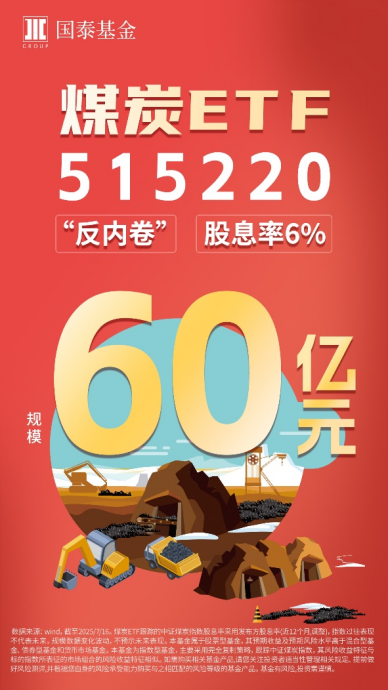
国泰海通|煤炭:“反内卷”务实煤价底部,当下就是拐点
国泰海通证券研究· 2025-07-18 08:09
Core Viewpoint - The current "anti-involution" movement differs significantly from the supply-side reforms of 2016, focusing on a "time-for-space" strategy rather than a one-size-fits-all approach, with a pragmatic impact on the coal industry, indicating a fundamental turning point [1][3]. Group 1: Anti-Involution Strategy - The "anti-involution" concept is central to the new round of supply-side reforms, aiming to regulate low-price disorderly competition and encourage companies to enhance product quality, rather than simply eliminating outdated production capacity [1][3]. - The essence of the "anti-involution" approach is to stabilize price bottoms by alleviating chaotic competition, contrasting with the more drastic measures of 2016 that had significant economic impacts [1][3]. Group 2: Coal Industry Insights - The coal industry is currently experiencing a significant downturn, with over 50% of coal enterprises reporting losses, particularly in coking coal, highlighting the need for more mines to reduce production under the "anti-involution" policy [3]. - Supply-side data indicates a noticeable decline in national production from April to May, driven by economic factors leading to spontaneous production cuts, alongside a contraction in imports, suggesting a stable yet decreasing total supply for the year [3]. - Demand-side observations show a recovery in electricity consumption growth rates, with residential electricity usage increasing by 7% and 9.6% in April and May, respectively, indicating a potential turning point for overall electricity demand growth [3].

“反内卷”催化建材筑底反弹,关注全市场最大的建材ETF(159745)
Sou Hu Cai Jing· 2025-07-18 07:36
Group 1 - The current "anti-involution" movement differs from the previous supply-side reform, as it encompasses a broader range of industries beyond traditional manufacturing [1] - Recent policies and initiatives from the Central Financial Committee have elevated market awareness of "anti-involution," impacting sectors like steel, building materials, coal, and photovoltaics [1] - The cement sector has been in a downward cycle, with companies attempting production limits to self-rescue, but price increases have not been very effective [1] Group 2 - The cement industry has shown a narrowing decline in demand compared to last year, with some marginal improvements due to infrastructure investment [2] - Despite expectations for a traditional peak season, the cement industry did not meet demand in the second quarter, leading to calls for better implementation of production capacity policies [2] - The cement industry's high concentration allows major companies to coordinate production limits, making the implementation of "anti-involution" policies relatively easier [2] Group 3 - Investment opportunities in the cement sector can be explored through the Building Materials ETF (159749), which tracks the construction materials index [3] - The ETF includes stocks related to cement and glass, both of which are involved in the "anti-involution" movement [3]
基金经理请回答 | 对话王路遥:反内卷提速,光伏困境反转来了吗?
中泰证券资管· 2025-07-18 07:00
Core Viewpoint - The photovoltaic sector is experiencing increased stock price volatility and ongoing production reduction expectations, leading to a shift in market sentiment [2] Group 1: Production Reduction Insights - The industry has been experiencing a decline in capacity utilization since Q2 of last year, with current utilization rates around 50% [4] - The reduction in production is not uniform across all segments; for instance, photovoltaic glass has a relatively stable supply due to its production constraints [4] - The overall low capacity utilization is partly due to self-regulation among companies facing supply surplus and slowing demand growth [4][5] Group 2: Financial Performance and Market Dynamics - Many photovoltaic companies are reporting poor financial performance, with some segments operating below cash cost levels [5] - The industry is facing widespread losses, with certain segments like silicon materials experiencing severe financial strain [5] - The uncertainty in demand for the second half of the year is compounded by government actions, including meetings with major photovoltaic companies [5] Group 3: Impact of Production Cuts on Profitability - Production cuts can alleviate competitive pressure and potentially improve profit margins, as evidenced by historical examples from other industries [6][7] - The low profit margins in the photovoltaic sector are primarily driven by pricing issues rather than cost problems, indicating a need for supply-demand balance [6] Group 4: Market Price Dynamics and Electricity Pricing - The recent marketization of electricity pricing has introduced uncertainty, impacting downstream photovoltaic power station costs and investment returns [11][12] - The rapid installation of photovoltaic systems has created pressure on the grid, necessitating a market-driven approach to electricity pricing [10][11] Group 5: Industry Consolidation and Future Outlook - There are discussions about potential consolidation in the industry, particularly in the silicon material segment, to address overcapacity [13][14] - The feasibility of such consolidation depends on the financial capabilities of leading companies and their willingness to invest in reducing production [14][16] - The ongoing transition towards market-driven pricing and production adjustments may lead to a healthier long-term industry outlook, but immediate uncertainties remain [21][22]

“反内卷”,风继续吹
Xin Lang Ji Jin· 2025-07-18 05:53
Group 1 - The "anti-involution" policy direction has become clear, focusing on boosting consumption and optimizing policies related to the consumption of goods [1] - The recent State Council meeting emphasized the need to regulate irrational competition in the new energy vehicle industry and to promote high-quality development [1] - The "anti-involution" theme has shown strong performance in sectors such as photovoltaic, steel, building materials, and coal since July [1] Group 2 - The Central Economic Work Conference highlighted the importance of preventing "involution-style" competition and ensuring the exit of inefficient production capacity [2] - The current macroeconomic conditions differ from last year, leading to a more pronounced "anti-involution" effect this year [3] - The supply-demand mismatch in upstream resource products has led to price declines, prompting manufacturers to engage in price competition [3][4] Group 3 - The current price levels of products like rebar and coking coal have stabilized, indicating a better alignment with supply-demand conditions compared to last year [4] - The focus of the current policies is on supply-side control rather than demand stimulation, which may lead to structural market movements [4] - Investors are advised to pay attention to ETFs that benefit directly from capacity reduction, such as steel and coal ETFs [4][5]