关税

Search documents
X @外汇交易员
外汇交易员· 2025-08-28 07:46
Economic Impact - The Bank of Korea anticipates a significant blow to the South Korean economy due to the 15% US tariff on Korean exports, affecting trade, financial markets, and business confidence [1] - The US tariff is projected to decrease South Korea's economic growth by 0.45 percentage points this year and 0.6 percentage points by 2026 [1] - The US tariff is also expected to reduce South Korea's CPI by 0.15 percentage points this year and 25 percentage points by 2026 [1] Industry Specific Concerns - The steel and automotive industries are particularly vulnerable to the US tariffs [1] - Increased investment in the US, driven by the tariffs, could potentially deplete South Korean industries [1] Long-Term Risks - South Korea faces the risk of supply chain disruptions, industrial hollowing-out, and shifts in the global trade landscape [1] - These risks could permanently reshape the South Korean economy, potentially leading to job losses and talent drain [1]
建信期货豆粕日报-20250828
Jian Xin Qi Huo· 2025-08-28 01:22
Report Overview - Industry: Soybean Meal [1] - Date: August 28, 2025 [2] - Research Team: Agricultural Products Research Team [4] 1. Report Industry Investment Rating - Not provided in the content 2. Report's Core View - In the short - term, the soybean meal has pulled back due to the expected Sino - US trade consultations and the better - than - expected good rate of US soybeans. In the medium - term, considering the 23% tariff on imported US soybeans, China may mainly import Brazilian soybeans and some Argentine soybeans in the fourth quarter, with a possible small import gap to be filled by state - reserve auctions. The cost of imported soybeans is likely to rise steadily in the fourth quarter, and the market should be treated as bullish after corrections [7] 3. Summary by Related Catalogs 3.1行情回顾与操作建议 (Market Review and Operation Suggestions) - **Market Review**: - For the futures contracts of soybean meal, the prices of contracts 2601, 2509, and 2511 all decreased. For example, the closing price of the 2601 contract was 3045, down 52 or 1.68% from the previous settlement price; the 2509 contract closed at 2992, down 54 or 1.77%; and the 2511 contract closed at 3010, down 59 or 1.92%. The trading volume and changes in open interest also varied among different contracts [6] - The US soybean futures contracts on the external market fluctuated, with the main contract at 1045 cents. The recent pull - back of soybean meal was mainly due to the expected Sino - US trade consultations and the better - than - expected good rate of US soybeans. The approaching US soybean harvest season has increased the pressure on US farmers, and China has not purchased new - season US soybeans yet. The USDA's latest reported good rate of US soybeans is 69%, the highest in the past five years [7] - **Operation Suggestions**: In the medium - term, with the 23% tariff on imported US soybeans remaining unchanged, the market should be treated as bullish after corrections [7] 3.2行业要闻 (Industry News) - Pro Farmer predicts that the average yield per acre of US corn will reach a record 182.7 bushels per acre, with a total output of 1.6204 billion bushels. For soybeans, the average yield per acre is also expected to set a new record at 53.0 bushels per acre, with a total output of 424.6 million bushels [10] - Pakistan is expected to sign an important procurement agreement with major US soybean exporters, planning to import about 1.1 million tons of soybeans with a total transaction value of about $500 million [10] - A Brazilian federal judge approved a ban, temporarily suspending a decision of the Brazilian antitrust regulatory agency CADE, which had required grain traders in the world's largest soybean exporter to stop the so - called "Amazon soybean ban" plan [11] 3.3数据概览 (Data Overview) - The content provides multiple data charts, including the ex - factory price of soybean meal, the basis of the 09 contract, the 1 - 5 spread, the 5 - 9 spread, the US dollar - RMB central parity rate, and the US dollar - Brazilian real exchange rate, but specific data analysis is not provided [13][16][19]
建信期货国债日报-20250828
Jian Xin Qi Huo· 2025-08-28 01:17
Report Information - Industry: Treasury Bonds [1] - Date: August 28, 2025 [2] - Research Team: Macro Financial Team [4] - Researchers: He Zhuoqiao, Huang Wenxin, Nie Jiayi [3] 1. Report Industry Investment Rating - Not provided in the given content 2. Core Viewpoints - Long - term, the bullish foundation of the bond market remains unchanged due to the "moderately loose" monetary policy orientation and high tariff uncertainties. Short - term, the stock - bond seesaw effect since late June has pressured the bond market. Although the July fundamental data shows short - term resilience, the bond market's short - term rebound is unlikely to form a trend. However, with the slowdown of the A - share rally and the central bank's support for the capital market, the bond market may continue its short - term rebound, and the subsequent adjustment of the A - share market should be monitored [11][12] 3. Summary by Directory 3.1 Market Review and Operation Suggestions - **Market Performance**: A - shares tumbled in the afternoon, boosting risk - aversion sentiment and leading to a full - line rebound in treasury bond futures. The yields of major inter - bank interest - rate bonds showed short - term decline and long - term increase with narrow fluctuations. The central bank's net capital withdrawal did not prevent the inter - bank capital market from loosening [8][9][10] - **Conclusion**: Long - term bullish factors remain, but short - term pressure from the stock - bond seesaw exists. The bond market may continue its short - term rebound, and the A - share adjustment should be watched [11][12] 3.2 Industry News - Fiscal policy has been more active this year, with the issuance and use of government bonds accelerating. As of August 26, the issuance of ultra - long - term special treasury bonds reached 996 billion yuan (76.6% of the total), and the issuance of local government special bonds exceeded last year's level. The government may introduce incremental policies and expand the use of local government special bonds [13] - The State Council issued an opinion on implementing the "Artificial Intelligence +" action to promote the integration of AI in various industries, aiming to address issues such as inconsistent understanding of AI and difficulties in application [14] - After Trump dismissed Fed Governor Lisa Cook, the market worried about the damage to the Fed's independence, leading to a sell - off of US dollar assets and a rise in gold [15] 3.3 Data Overview - **Treasury Bond Futures**: The trading data of various treasury bond futures contracts on August 27 are presented, including prices, trading volumes, and positions. Also, information on inter - period spreads, inter - variety spreads, and trends of major contracts is provided [6] - **Money Market**: Data on SHIBOR term structure changes, SHIBOR trends, and inter - bank repurchase rates are presented [31][35] - **Derivatives Market**: Information on Shibor3M and FR007 interest - rate swap fixed - rate curves is provided [37]
鲍威尔杰克逊霍尔会议后美联储必须做什么
Sou Hu Cai Jing· 2025-08-27 22:21
Group 1 - The core viewpoint is that Jerome Powell's acknowledgment of tariffs not exacerbating inflation opens the door for potential interest rate cuts in September [1][2][9] - Powell's realization reflects a historical misunderstanding of Trump's economic policies, which have previously led to strong economic growth and price stability [2][3] - The market reacted positively, with the Dow Jones index surpassing 45,000 points, indicating expectations of a rate cut [2] Group 2 - The current high interest rates in the U.S. are significantly out of sync with global rates, creating challenges for U.S. exporters and small businesses [3][4][6] - The average fixed mortgage rate remains between 6-7%, which is double pre-pandemic levels, hindering housing market recovery [4] - The U.S. faces a tightening monetary policy that is seen as excessive, with real interest rates at their highest in nearly two decades [7][9] Group 3 - Powell's defense of maintaining high rates to stabilize inflation expectations is viewed as an overreaction to concerns about tariff-driven inflation [8][9] - A more aggressive rate cut of up to 100 basis points is suggested to align U.S. rates with global standards and alleviate pressure on households and exporters [9]

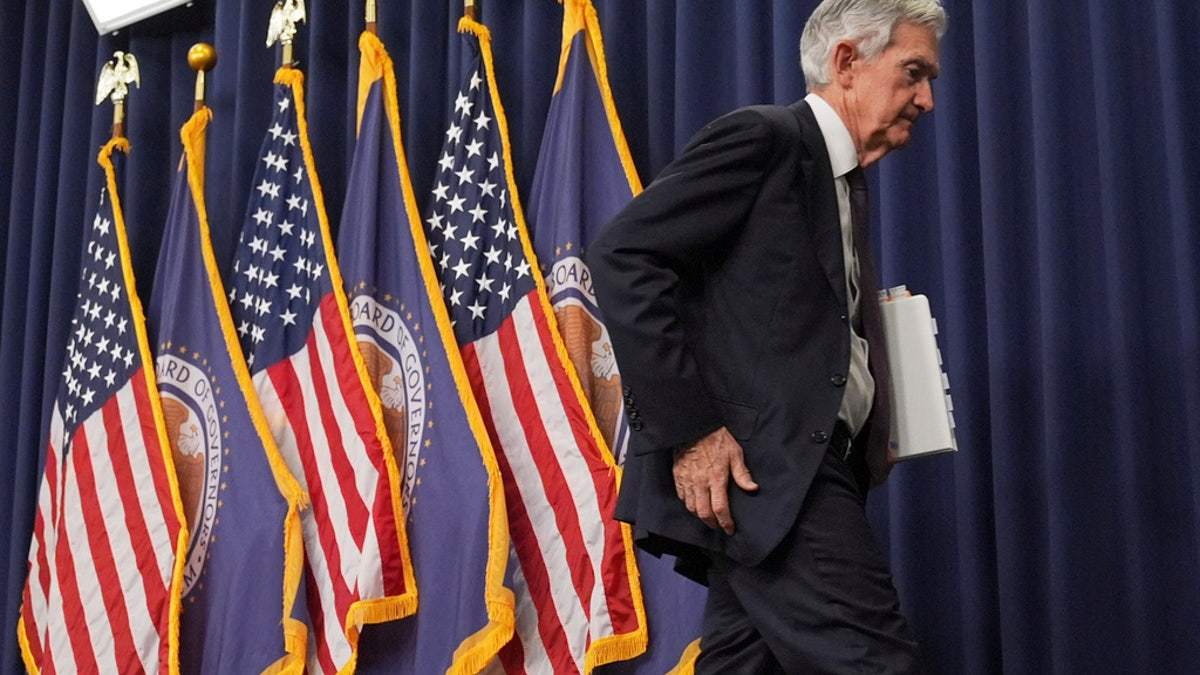
美国37万亿窟窿炸了!10万亿热钱疯狂涌入!中国股市成全球“救命稻草”
Sou Hu Cai Jing· 2025-08-27 21:42
Group 1 - The core point of the news is the significant shift in global financial markets triggered by Federal Reserve Chairman Jerome Powell's dovish signals at the Jackson Hole central bank meeting, leading to a decline in the US dollar and a surge in gold prices, as well as record highs in the US stock market [1] - Hedge funds are rapidly increasing their holdings in Chinese stocks at the fastest pace in seven weeks, with South Korean retail investors also aggressively buying A-shares, surpassing local investors' enthusiasm [1][4] - Major financial institutions, including Goldman Sachs, predict an influx of 5 trillion to 10 trillion yuan into the A-share market, providing a strong boost to Chinese equities [1] Group 2 - Powell's sudden shift in stance is attributed to the deep-rooted issues in the US economy, including a projected fiscal deficit of 1.8 trillion dollars by 2025 and interest payments on national debt exceeding 1 trillion dollars for the first time [3] - The US economy is showing signs of significant slowdown, with non-farm payrolls adding only 73,000 jobs in July and the unemployment rate rising to 4.25%, the highest in four years [3] - The market anticipates a 93% probability of a rate cut by the Federal Reserve in September, with some investors betting on a 50 to 100 basis point reduction [3] Group 3 - The continuous decline of the US dollar index has accelerated the shift of global capital, with a net inflow of 42.6 billion yuan into the Chinese market in August, marking a peak daily inflow of 6.8 billion yuan [4] - Foreign investors are attracted to the Chinese market due to the favorable price-to-earnings ratio, with the Shanghai Composite Index at 11 times compared to the S&P 500's 24 times, indicating a potential bubble risk in the US market [6] - Goldman Sachs analysts estimate that if the Federal Reserve cuts rates by 75 basis points this year, at least 500 billion dollars in foreign capital could flow into the A-share market [8] Group 4 - The Biden administration is feeling anxious about capital outflows, signaling a potential rate cut while simultaneously increasing tariffs on China, raising the average rate from 16% to 19% [9] - The new tariffs are expected to lower US GDP growth by 0.2 percentage points and increase core inflation to 3.4%, indicating a detrimental impact on the US economy [9] - The direction of foreign capital inflow into A-shares is clear, focusing on hard technology, high dividends, and low valuations, with semiconductor leaders and resource companies gaining significant market attention [9][10] Group 5 - The dynamic price-to-earnings ratio of A-shares has reached 18 times, nearing the danger zone of the 2015 "leverage bull market," raising concerns about potential volatility if hot money enters and exits quickly [10] - The A-share market faces institutional shortcomings, including an imperfect delisting mechanism and governance issues, which could lead to significant market disruptions if not addressed [10]

每日机构分析:8月27日
Xin Hua Cai Jing· 2025-08-27 14:57
Group 1: European Economic Outlook - Pantheon Macroeconomics suggests that September may be the last opportunity for the European Central Bank to lower interest rates in the Eurozone, with current expectations that rates will remain at 2.00% unless August's consumer price inflation falls below expectations [1] - Concerns over Eurozone debt may weaken the Euro, as highlighted by Deutsche Bank, especially with the potential for a government trust vote in France regarding budget deficit cuts [2] Group 2: Consumer Confidence in Germany - The GfK consumer confidence index in Germany fell from -21.7 to -23.6, marking a third consecutive decline due to rising fears of unemployment and inflation uncertainty [2] - Analysts indicate that income expectations have dropped significantly, reaching the lowest level since March, contributing to the overall decline in consumer sentiment [2] Group 3: Market Impact of Political Uncertainty - Swiss bank analysts note that while political uncertainty in France has increased, its impact on the market remains limited, with a widening spread between French and German government bonds [3] - Barclays highlights that India faces heightened economic risks due to high tariffs, with a total trade-weighted tax rate of 35.7%, particularly affecting its electrical machinery and jewelry sectors [3] Group 4: Manufacturing Sector Concerns - CGS International economists warn that Singapore's manufacturing outlook may be negatively impacted by U.S. tariffs, with the manufacturing PMI falling into contraction territory in July [3] - Ongoing uncertainties regarding trade policies and tariffs are expected to sustain downward risks for Singapore's manufacturing sector [3]
美联储官员威廉姆斯:核心PCE通胀率可能上升0.4%或0.5% 这可能是由于更高的关税所致
Xin Hua Cai Jing· 2025-08-27 14:55
Group 1 - The core PCE inflation rate may rise by 0.4% or 0.5%, potentially due to higher tariffs [1]
J. M. Smucker(SJM) - 2026 Q1 - Earnings Call Transcript
2025-08-27 14:00
Financial Data and Key Metrics Changes - The company increased its free cash flow outlook from $875 million to $975 million for the full fiscal year, driven by benefits from the One Big Beautiful Bill Act, which is expected to be an ongoing annual benefit [40][41] - The midpoint guidance for the full year remains at $9, with expectations for overall growth despite increased tariffs impacting costs [10][11] Business Line Data and Key Metrics Changes - The coffee segment's pricing outlook has improved to the mid-20s percentage range, with anticipated volume impacts in the low to mid-teens, leading to overall growth for the segment year over year [8][11] - Milk Bone is expected to return to growth in the second half of the fiscal year, supported by advertising and innovation, despite cautious consumer spending in discretionary categories [18][19] - The Sweet Baked Snacks segment is undergoing SKU rationalization, with expected savings of $30 million, which will begin to impact profitability in the fourth quarter [31][32] Market Data and Key Metrics Changes - The company is seeing ongoing momentum in its coffee portfolio, with strong performance expected in the fourth quarter, which is projected to have the highest margins [34][36] - The away-from-home business continues to show positive trends, contributing to overall growth [44] Company Strategy and Development Direction - The company is focused on strategic investments, consumer-led innovation, and shifting its portfolio towards growth, while managing controllable factors and reacting positively to external challenges [75] - The dedicated sales organization aims to enhance execution and focus on key areas to drive growth [22] Management's Comments on Operating Environment and Future Outlook - Management acknowledges the impact of increased tariffs on coffee but remains optimistic about the resilience of the coffee category and the strength of its brands [58][60] - The company is monitoring the impact of GLP-1 drugs on consumer behavior but has not seen a meaningful effect on its product categories thus far [50][62] Other Important Information - The company plans to achieve a three times leverage profile by the end of fiscal 2027 through ongoing debt paydown efforts [41] - The company is actively engaging with industry associations to advocate for favorable trade policies and tariff relief [49] Q&A Session Summary Question: Updated expectations on coffee pricing due to tariffs - The coffee segment's pricing outlook is now in the mid-20s, with additional pricing actions expected in early winter due to increased tariffs [8] Question: Changes in EPS guidance and quarterly performance - The overall profit outlook for coffee remains intact, with some profit shifting to the third and fourth quarters due to timing of costs [29] Question: Impact of SKU rationalization on volume - SKU rationalization did not impact volume in the first quarter, and the company expects to see improvements in profitability over time [25][32] Question: Future visibility and confidence in fiscal 2027 - The company has a positive outlook for fiscal 2027, driven by strong margins in the coffee portfolio and growth in key brands [34] Question: Impact of GLP-1 drugs on consumer behavior - Management has not observed a significant impact from GLP-1 drugs on its product categories, as consumer preferences remain stable [50][62]

特朗普对印度50%关税威胁生效,为美国对所有国家关税的最高水平!旨在惩罚印度进口俄罗斯石油并为俄罗斯提供资金
Ge Long Hui· 2025-08-27 09:49
Group 1 - The threat of increasing tariffs on Indian imports to 50% by the Trump administration has become a reality, potentially jeopardizing US-India relations and raising consumer prices [2] - The tariffs are part of a strategy to penalize India for importing Russian oil and funding Russia, amidst ongoing negotiations to resolve the conflict in Ukraine [3] - The US trade deficit with India has significantly widened over the past decade, with total imports from India reaching $87 billion last year, while exports were approximately $42 billion [6] Group 2 - Major imports from India include pharmaceuticals, smartphones, and clothing, with smartphones exempt from the new tariffs, while steel and aluminum products will face the full 50% tariff [6] - The sectors most vulnerable to retaliatory tariffs from India include oil and gas products, chemicals, and aerospace components, which are the top exports from the US to India [6] - India has accused the Trump administration of unfairly targeting it with tariffs, noting that other countries importing Russian oil do not face similar penalties [5]

瑞达期货贵金属产业日报-20250827
Rui Da Qi Huo· 2025-08-27 09:12
1. Report Industry Investment Rating - No information provided 2. Core View of the Report - Gold prices are supported by risk - aversion sentiment and remain resilient, but lack major macro - catalytic factors in the short term, mainly moving in a high - level range. If the subsequent PCE data cools down, it may further boost the expectation of interest rate cuts, but the market expects a slight rebound in this PCE. The non - farm payrolls report in early September will be the next key macro - catalyst. It is recommended to lightly position after a pullback. Technically, the daily RSI shows that gold oscillates in the 30 - 60 range, and the MACD indicates short - term upward momentum. The 790 yuan/gram level may form strong resistance. [2] 3. Summary by Directory 3.1 Futures Market - The closing price of the Shanghai gold main contract is 781.16 yuan/gram, up 0.04; the closing price of the Shanghai silver main contract is 9305 yuan/kg, down 49. The main contract positions of Shanghai gold and Shanghai silver are 166596 hands and 280655 hands respectively, down 7992 hands and 23167 hands. The net positions of the top 20 in the Shanghai gold and Shanghai silver main contracts are 159517 hands and 104337 hands respectively, down 1649 hands and 4866 hands. The warehouse receipt quantities of gold and silver are 37503 kg and 1165498 kg respectively, with gold unchanged and silver up 38165 kg. [2] 3.2 Spot Market - The spot price of gold on the Shanghai Non - ferrous Metals Network is 779 yuan/gram, up 2.14; the spot price of silver is 9294 yuan/kg, down 25. The basis of the Shanghai gold main contract is - 2.16 yuan/gram, up 2.1; the basis of the Shanghai silver main contract is - 11 yuan/kg, up 24. [2] 3.3 Supply - Demand Situation - Gold ETF holdings are 959.92 tons, up 1.43 tons; silver ETF holdings are 15274.69 tons, down 14.13 tons. The non - commercial net positions of gold and silver in CFTC are 212590 contracts and 46549 contracts respectively, with gold down 16895 contracts and silver up 2281 contracts. The total supply of gold in the quarter is 1313.01 tons, up 54.84 tons; the total supply of silver in the year is 987.8 million troy ounces, down 21.4 million troy ounces. The total demand for gold in the quarter is 1313.01 tons, up 54.83 tons; the global total demand for silver in the year is 1195 million ounces, down 47.4 million ounces. [2] 3.4 Option Market - The 20 - day historical volatility of gold is 8.57%, up 0.09%; the 40 - day historical volatility is 10.33%, down 0.26%. The implied volatility of at - the - money call and put options for gold is 16.14% and 16.15% respectively, down 0.15% and 0.14%. [2] 3.5 Industry News - US President Trump said that trade agreements with the EU, Japan, and South Korea have been completed and will impose "high" tariffs on imported furniture soon. Trump publicly accused Fed Governor Cook of "fraudulent and potentially criminal behavior", and Cook said Trump has no right to fire her. According to CME "FedWatch", the probability of the Fed keeping interest rates unchanged in September is 12.2%, and the probability of a 25 - basis - point cut is 87.8%. In October, the probability of keeping rates unchanged is 6.2%, the probability of a cumulative 25 - basis - point cut is 50.6%, and the probability of a cumulative 50 - basis - point cut is 43.2%. [2] 3.6 Technical Analysis and Trading Suggestions - Technically, the daily RSI shows that gold oscillates in the 30 - 60 range, and the MACD indicates short - term upward momentum. The 790 yuan/gram level may form strong resistance. The Shanghai gold 2510 contract is concerned about the range of 750 - 800 yuan/gram; the Shanghai silver 2510 contract is concerned about the range of 9300 - 9400 yuan/kg. For the outer market, the London gold price is concerned about the range of 3300 - 3400 US dollars/ounce, and the London silver price is concerned about the range of 38.5 - 39.5 US dollars/ounce. It is recommended to lightly position after a pullback. [2]