
内需主导

Search documents
使内需成为拉动经济增长的主动力和稳定锚
Xin Lang Cai Jing· 2025-12-23 20:11
转自:成都日报锦观 使内需成为拉动经济增长的主动力和稳定锚 □李正扬 毛中根 12月16日出版的《求是》杂志发表了习近平总书记的重要文章《扩大内需是战略之举》。文章指出,扩大内需既关系经济稳定,也关系经济安 全,不是权宜之计,而是战略之举。实施扩大内需战略,是保持我国经济长期持续健康发展的需要,也是满足人民日益增长的美好生活的需 要。《中共中央关于制定国民经济和社会发展第十五个五年规划的建议》(以下简称《建议》)将"建设强大国内市场,加快构建新发展格 局"列为重要部署。 进入"十五五"新发展阶段,建设强大国内市场是中国式现代化的战略依托,成为增强国内大循环内生动力和可靠性、确保国家经济安全的根本 之策。我们必须坚持内需主导这一核心逻辑,统筹扩大内需战略和深化供给侧结构性改革,促进消费和投资、供给和需求良性互动,持续释放 超大规模市场潜力,不断夯实强大国内市场根基,在更高水平上实现国民经济良性循环和动态平衡。 深刻认识内需主导的重大意义和内涵本质 全方位扩大内需,本质上是一场从外部依赖转向内生驱动的深刻变革。促进形成更多由内需主导、消费拉动、内生增长的经济发展模式,是中 国经济走向成熟的必然选择,也将是中国经济 ...


从中央经济工作会议看企业发展新机遇
Xin Lang Cai Jing· 2025-12-23 15:59
Group 1 - The central economic work conference proposed significant measures to enhance enterprise development, including reinforcing the innovation role of enterprises and expanding the supply of quality goods and services [1] - The conference emphasized the importance of "innovation-driven" strategies and the establishment of international technology innovation centers in key regions such as Beijing, Shanghai, and the Guangdong-Hong Kong-Macao Greater Bay Area [4][5] - Financial support for technology innovation has been strengthened, with technology loans accounting for 30.5% of new loans by the end of September, and loans to technology-based SMEs increasing by 22.3% year-on-year [5] Group 2 - The conference prioritized domestic demand as a key focus for economic work, highlighting the need to expand the domestic market and improve the quality of goods and services [6] - The integration of cultural tourism and industry has been explored by companies like Yiweng Group, which aims to create new consumption models that cater to domestic consumer needs [6] - Urban renewal projects are expected to stimulate effective investment and create new economic growth points, with a focus on improving public services and infrastructure [6] Group 3 - The conference's directives on promoting integrated development of domestic and international trade will provide companies with more opportunities to expand in both markets [7] - The emphasis on reducing "involution" competition is expected to lead to a more value-driven competitive landscape, allowing companies to focus on core technology advancements [8] - Measures to improve the business environment include clearing government debts to enterprises and enhancing the regulatory framework for key industries [8]
财经聚焦|从中央经济工作会议看企业发展新机遇
Xin Hua She· 2025-12-23 13:22
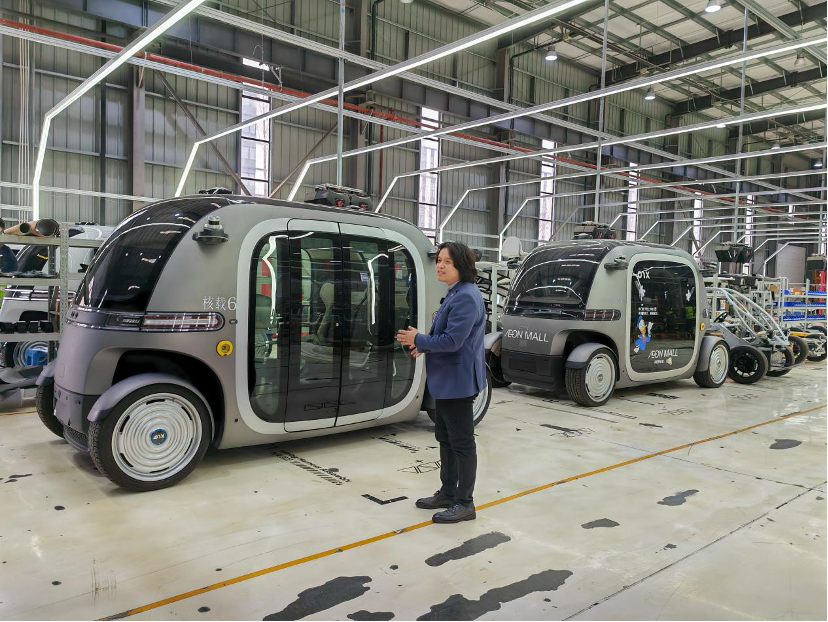
从事信息技术服务的四川乐政科技已在北京、上海成立分公司,在深圳建立工作站。 新华社北京12月23日电 题:从中央经济工作会议看企业发展新机遇 新华社记者 "强化企业创新主体地位""扩大优质商品和服务供给""制定全国统一大市场建设条例"……日前召开的中 央经济工作会议,提出一系列与企业发展息息相关的重大部署、重要举措,为企业发展释放红利、注入 动力。 向新向优,推动产业转型升级 冬日的贵阳,贵州翰凯斯智能技术有限公司内,技术人员正对刚下线的无人驾驶小巴进行测试。不久 后,这些产品将销往30多个国家和地区。 "人工智能已经融入我们设计、自动驾驶和云端调度等环节,成为提升产品迭代速度与制造效率的关 键。"公司创始人喻川格外关注中央经济工作会议提出的深化拓展"人工智能+"。他认为,这将加速推动 AI技术从概念走向产业、从单点突破走向系统赋能,为企业发展注入强劲动能。 围绕"坚持创新驱动,加紧培育壮大新动能",会议作出一系列部署。其中,"建设北京(京津冀)、上 海(长三角)、粤港澳大湾区国际科技创新中心"备受关注。 "城市更新不仅增进民生福祉,还能激活内需潜力。"公司董事长王守武说,会议明确"高质量推进城市 更新",无 ...
站在3个3000万辆新起点
Xin Lang Cai Jing· 2025-12-23 12:14
Group 1 - The Chinese automotive industry has achieved significant milestones, with major manufacturers like FAW-Volkswagen and Changan Automobile reaching their 30 millionth vehicle production mark, contributing to a total production and sales exceeding 31 million units, both up over 10% year-on-year [2][7] - Technological innovations are advancing rapidly, particularly in solid-state battery development and intelligent connected vehicles, with 64% of new passenger cars featuring combined driving assistance functions [2][7] - Despite growth, the industry faces challenges such as irrational competition leading to price wars and declining profit margins, alongside persistent issues of "involution" that threaten long-term brand value and sustainable development [2][7] Group 2 - The recent Central Economic Work Conference outlined eight key tasks, six of which are directly related to the automotive industry, emphasizing the need for a demand-driven approach, innovation, reform, and international openness [3][8] - Policies aimed at stimulating domestic demand have been effective, with over 11.2 million applications for vehicle trade-ins from January to November, and projections indicating that the trade-in market could exceed 180 billion yuan by 2025 [3][8] - The focus on addressing "involution" competition is set to intensify, with new guidelines for pricing behavior expected to shift competition from price to value, encouraging investment in technology and brand development [4][9] Group 3 - The establishment of the Hainan Free Trade Port is expected to enhance trade relations and provide opportunities for the automotive industry to explore cross-border data and vehicle modification [5][10] - By 2026, the automotive industry is anticipated to transition from growth based on scale to one focused on quality and efficiency, driven by domestic demand activation, competition regulation, and innovation [5][10]

国泰海通|固收:震荡巩固,蓄力反弹——转债事件点评
国泰海通证券研究· 2025-12-23 11:27
过去一周( 12 月 15 日 -12 月 19 日), A 股市场走出了一波"先抑后扬"的震荡行情。 周一、周二市场连续调整,沪指一度下探至 3815 点附近,周三 市场强势反弹,周四至周五则震荡上涨。全周来看,上证指数微涨 0.03% ,但其余股指多数下跌。分行业来看, 大消费板块(如零售、免税、海南自贸区概 念)在政策利好带动下强势崛起,而前期热门的科技成长赛道(如电子、电力设备)则出现回调。市场成交保持相对活跃,日均成交额约 1.76 万亿元。 可转债市场逆势上涨,估值继续修复。 中证转债指数全周累计上涨 0.48% ,转债等权指数小幅上涨 0.60% ,涨幅小于转债正股等权指数(上涨 1.39% )。转债市场各类指数呈现普涨,高价低溢价率转债和小盘转债表现相对占优,转债大盘指数表现相对落后。转债平价中位数上涨 1.08% 至 100.67 元,而 转债价格中位数上涨 0.75% 至 131.77 元,转股溢价率中位数拉升 0.63pct 至 33.34% 。 预计 12 月剩余时间,转债市场将维持震荡整固,为后续反弹蓄力,展望 2026 年 1 月,有望逐步转向跨年行情预热阶段。 从政策端来看,中央 ...

社评 || 站在3个3000万辆新起点
Zhong Guo Qi Che Bao Wang· 2025-12-23 09:07
Group 1 - In 2023, China's automotive industry achieved significant milestones, with major manufacturers like FAW-Volkswagen and Changan Automobile reaching their 30 millionth vehicle production mark, reflecting robust growth in both joint ventures and domestic brands [2] - The automotive sector saw a production and sales volume exceeding 31 million units, with a year-on-year growth of over 10% [2] - Technological advancements in solid-state batteries and intelligent connected vehicles are notable, with a penetration rate of 64% for new passenger cars equipped with driving assistance features [2] Group 2 - The Central Economic Work Conference outlined eight key tasks, six of which are directly related to the automotive industry, emphasizing the need for a demand-driven approach and innovation [3] - The implementation of policies to stimulate consumption, such as the vehicle trade-in program, has led to over 11.2 million applications, with expectations for the trade-in market to exceed 180 billion yuan by 2025 [3] - The upcoming changes in the tax policy for new energy vehicles are expected to stabilize market confidence and stimulate consumption in the automotive sector [3] Group 3 - The government is intensifying efforts to address "involution" competition in the automotive industry, with a shift from "comprehensive rectification" in 2024 to "in-depth rectification" in 2025, indicating a stronger regulatory approach [4] - The release of the "Automotive Industry Pricing Behavior Compliance Guidelines" aims to promote fair competition and shift focus from price to value, encouraging investment in innovation and brand building [4] - Specific measures to enhance international cooperation and promote the development of the automotive industry globally were discussed, including the construction of the Hainan Free Trade Port [4][5] Group 4 - The Hainan Free Trade Port's full closure is expected to facilitate smoother trade and enhance the automotive industry's ability to leverage zero tariffs and processing policies [5] - The automotive sector is encouraged to explore cross-border data and vehicle modification opportunities, as well as to expand into markets along the Belt and Road Initiative [5] - By 2026, the automotive industry is anticipated to transition from growth based on scale to one focused on quality and efficiency, driven by demand activation, competition regulation, and innovation [5]

内需这个“主引擎”究竟怎么转?
Sou Hu Cai Jing· 2025-12-23 02:16
中央经济工作会议将"内需主导"放在明年重点任务之首。河南省委经济工作会议在部署明年经济工作 时,也将内需摆在重要位置。 过去,我们总把"提振消费"当作一个刺激工具来用。如今,从"扩内需"到"坚持内需主导",一个明显信 号是,促消费对经济稳定增长的作用越发重要,对经济再上台阶越发关键。 要让内需这个"主引擎"转起来,说到底,就是得解答好"敢消费、能消费、愿消费"这三个问题。 敢消费,关键是让人心里有底。发放消费券,如今成了各地政府提振消费时最常用的工具。这个方法直 接、见效快——把钱撒下去,就像是往市场的灶里添了一把柴。 原标题: 内需这个"主引擎"究竟怎么转?(省委经济工作会议精神解读) 当今世界,外部环境不确定性上升,内需对经济发展的支撑作用持续增强。从中央到河南,内需被提到 了前所未有的高度。 前三季度,河南社会消费品零售总额同比增长6.2%;1—8月,全省文化体育和娱乐业营业收入同比增 长22.3%。从一轮轮的国家补贴,到持续发放的餐饮券、文旅券,真金白银进了老百姓的口袋,不仅点 旺了城市"烟火气",也为扩内需、稳增长提供了强劲的动力。 除了发放消费券,还要靠提高长期的收入预期增添消费底气。今年,中央经 ...
杨德龙:年底是布局2026年行情的时间窗口 | 立方大家谈
Sou Hu Cai Jing· 2025-12-22 12:39
杨德龙 | 立方大家谈专栏作者 2025年行情逐步接近尾声,整体来看,我国资本市场在2025年走出了一轮较为典型的慢牛、长牛走势, 主要指数一度突破4000点关口。然而,由于市场内部结构性分化较为明显,银行股与科技股表现相对突 出,集中配置上述方向的投资者获得了较好回报,而其他板块和部分投资者的获得感相对不足。这也导 致一个较为特殊的现象,即在指数已运行至4000点附近的背景下,仍有相当一部分市场参与者并不认为 这是一轮牛市。 进入年底阶段,部分资金选择兑现收益,市场出现一定幅度的调整。但从当前情况来看,这一调整已接 近尾声,部分着眼于2026年布局的资金开始逐步入场,市场整体呈现反复震荡、逐步企稳的特征。综合 判断,当前阶段正是为2026年行情、尤其是一季度春季行情进行布局的相对合适窗口。 展望2026年,宏观层面上,我国经济有望出现一定程度的复苏,稳增长相关政策预计将进一步加码。中 央经济工作会议对2026年的经济工作作出了明确部署,提出将采取更加积极有为的宏观政策以稳定经济 增速,并通过有效措施推动房地产市场止跌回稳。这有助于改善投资者预期,稳定消费增速。在提振内 需作为重要政策方向的背景下,通过内需修 ...
冰雪经济一线观察|冰雪文娱活动精彩纷呈
Xin Hua Wang· 2025-12-22 11:49
Group 1 - The central economic work conference emphasized the need to prioritize domestic demand and build a strong domestic market, highlighting the growing trend of the ice and snow economy across the country [1] - The conference stated that it is essential to fully tap into economic potential, with innovative ice and snow cultural and entertainment activities expanding potential space for the cultural tourism industry [2] Group 2 - The demand side is experiencing a surge, while the supply side is showcasing diverse offerings, indicating that the potential of the ice and snow economy is limitless [2]

建材行业报告(2025.12.15-2025.12.21):关注内需低位品种,有望迎来估值与业绩双重修复
China Post Securities· 2025-12-22 08:48
Industry Investment Rating - The investment rating for the construction materials industry is "Outperform the Market" and is maintained [1] Core Insights - The Central Economic Work Conference emphasized the importance of domestic demand and proposed actions to boost consumption, indicating a potential recovery in the construction materials sector in 2026 due to improved fundamentals and valuations [4] - Cement demand is currently under pressure, with a national decline in demand observed, particularly in the housing market, while infrastructure demand shows regional differentiation. The cement industry is expected to see a reduction in overproduction, leading to improved capacity utilization and profit elasticity [4][8] - The glass industry continues to face demand challenges, with high inventory levels among intermediaries and limited improvement in downstream demand. Price fluctuations are expected to remain low due to ongoing supply-demand pressures [5][13] - The fiberglass sector is experiencing stable demand in certain areas, such as wind power and electronics, with expectations for explosive growth driven by AI-related demand [5] - The consumer building materials sector has reached a profitability bottom, with strong pricing improvement requests from companies, indicating potential for profit recovery in the latter half of the year [5] Summary by Sections Cement - December marks the onset of the off-peak season in the northern regions, with national demand continuing to decline. The housing market remains weak, while infrastructure demand is driven by policy, showing significant regional differences. The civil market exhibits relatively rigid demand [4][8] - In November 2025, cement production was 154 million tons, reflecting a year-on-year decline [8] Glass - The glass industry is under pressure, with traditional peak season orders showing limited improvement and high inventory levels among intermediaries. Supply-side adjustments are expected with the cold repair of five production lines, but overall supply-demand pressures persist [5][13] Fiberglass - Demand in sectors like wind power and electronics remains stable, while traditional demand for coarse sand is slowing. The industry is expected to see growth driven by AI-related demand, with a clear upgrade in product structure [5] Consumer Building Materials - The sector's profitability has reached a low point, with no further downward price pressure expected. Companies are actively seeking price increases, indicating a strong desire for profit improvement [5]