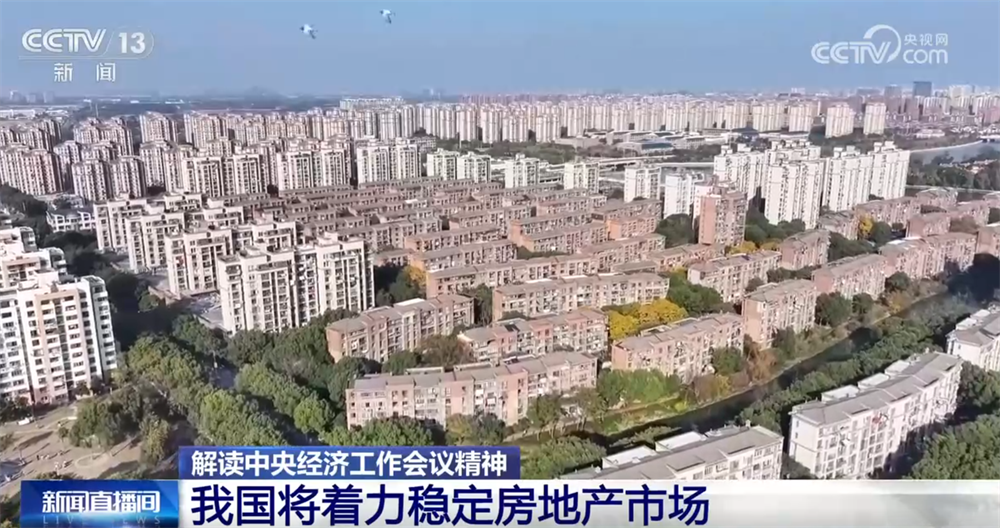
好房子建设

Search documents
政策组合拳发力!房地产板块异动,世联行封板,低估值赛道迎修复窗口!
Jin Rong Jie· 2025-12-16 08:31
Core Viewpoint - The A-share real estate sector has experienced a significant rally, reflecting market confidence in policy support and structural opportunities within the industry [1] Group 1: Policy and Market Dynamics - The Central Economic Work Conference emphasized stabilizing the real estate market, focusing on "controlling increments, reducing inventory, and optimizing supply" [1] - The conference also highlighted the importance of deepening housing provident fund reforms as a key measure to stabilize the market, with over 260 related policies introduced since 2025 [2] - The financing environment is showing signs of improvement, with a narrowing decline in domestic loans to 2.5%, despite a year-on-year drop of 11.9% in funds available to real estate developers [2] Group 2: Industry Trends and Transformations - The concept of "good housing" was introduced, focusing on safety, sustainability, and smart attributes to meet diverse needs, indicating a shift towards refined construction practices [3] - The demand for real estate services is expected to grow due to the activation of existing housing transactions and quality improvement needs, benefiting companies like World Union [4] - The construction and building materials sector is anticipated to see demand upgrades driven by the "good housing" initiative and urban renewal projects, positively impacting orders for related materials [4] Group 3: Benefiting Sectors - The real estate service sector is likely to benefit from the ongoing demand for housing brokerage and property management services, particularly as policies shift towards converting existing housing into affordable options [4] - The home appliance and furniture sectors are expected to experience growth due to the rising demand for improved living quality, with a notable increase in the share of smart and elderly-friendly products [4]

供给端政策频出,好房子建设需要好建材
Huafu Securities· 2025-12-15 11:38
Investment Rating - The industry rating is "Outperform the Market" [8][66] Core Viewpoints - The report emphasizes the need for stable real estate market policies, including controlling inventory and improving supply, as highlighted in the Central Economic Work Conference [3][13] - It notes that the easing of monetary and fiscal policies in China is expected to support the real estate market's recovery, with a focus on stabilizing transactions and prices [3][6] - The report anticipates a turning point in the building materials sector's capacity cycle due to supply-side reforms and a recovery in home-buying willingness driven by lower interest rates [6][13] Summary by Sections Investment Highlights - The report outlines several key policies aimed at stabilizing the real estate market, including the encouragement of purchasing existing homes for affordable housing and reforms to the housing provident fund system [3][13] - It mentions that the sales area of commercial housing has been declining since its peak in 2021, indicating the market is entering a bottoming phase [3][6] Recent High-Frequency Data - As of December 12, 2025, the average price of bulk P.O 42.5 cement is 341.1 CNY/ton, showing a 0.3% increase week-on-week but a 17.9% decrease year-on-year [4][14] - The average ex-factory price of glass (5.00mm) is 1091.4 CNY/ton, reflecting a 1.0% decrease week-on-week and a 19.5% decrease year-on-year [4][25] Sector Review - The report indicates that the Shanghai Composite Index fell by 0.34%, while the Shenzhen Composite Index rose by 0.18%. The building materials index decreased by 1.41% [5][52] - Among sub-sectors, fiberglass manufacturing increased by 1.11%, while cement manufacturing decreased by 1.21% [5][52] Investment Recommendations - The report suggests focusing on three main investment lines: high-quality companies benefiting from stock renovations, undervalued stocks with long-term alpha attributes, and leading cyclical building materials companies showing signs of bottoming [6][58]
中央经济工作会议点评:继续“稳地产”
GOLDEN SUN SECURITIES· 2025-12-14 12:28
Investment Rating - The report maintains an "Overweight" rating for the real estate industry [4][5]. Core Insights - The Central Economic Work Conference emphasizes the need to "stabilize real estate," indicating ongoing policy support and the necessity for further actions in 2026 [1][10]. - The report highlights the importance of internal demand, suggesting potential relaxation of housing purchase restrictions in core cities and reforms in the housing provident fund system [2][11]. - The real estate sector is viewed as an early-cycle indicator, with a focus on quality housing and the improvement of the competitive landscape favoring leading state-owned enterprises and select private firms [4][10]. Summary by Sections Central Economic Work Conference Review - The conference reiterates the commitment to stabilize the real estate market, emphasizing inventory reduction and the construction of quality housing [1][10]. - Policies will be tailored to individual cities, focusing on controlling new supply and encouraging the acquisition of existing properties for affordable housing [1][10]. Market Review - The weekly performance of the Shenwan Real Estate Index showed a decline of 2.6%, underperforming the CSI 300 Index by 2.54 percentage points, ranking 28th among 31 Shenwan primary industries [2][15]. - The report notes a significant drop in new home sales, with a 45.3% year-on-year decrease in 30 cities, and a 30% decline in second-hand home sales [3][33]. New and Second-Hand Housing Transactions - New home sales in 30 cities totaled 172.2 million square meters, down 2.5% month-on-month and 45.3% year-on-year [3][28]. - Second-hand home sales in 14 cities reached 195.9 million square meters, reflecting a 2.7% month-on-month increase but a 30% year-on-year decline [33]. Investment Recommendations - The report suggests focusing on real estate-related stocks, particularly in first-tier and select second-tier cities, as these areas are expected to benefit from policy changes and market recovery [4][10]. - Specific companies recommended for investment include Green Town China, China Overseas Development, and Poly Development among others [4].
行业周报:新房二手房成交面积同比下降,着力稳定房地产市场-20251214
KAIYUAN SECURITIES· 2025-12-14 11:42
房地产 2025 年 12 月 14 日 《新房二手房成交面积同环比下降, 扎实推进好房子建设—行业周报》 -2025.12.7 《新房成交面积环比增长,支持城市 存 量 设 施 更 新 改 造 — 行 业 周 报 》 -2025.11.30 《新房成交面积环比增长,以高水平 安全保障城市高质量发展—行业周 报》-2025.11.23 新房二手房成交面积同比下降,着力稳定房地产市场 ——行业周报 | 齐东(分析师) | 胡耀文(分析师) | 杜致远(联系人) | | --- | --- | --- | | qidong@kysec.cn | huyaowen@kysec.cn | duzhiyuan@kysec.cn | | 证书编号:S0790522010002 | 证书编号:S0790524070001 | 证书编号:S0790124070064 | 核心观点:新房二手房成交面积同比下降,扎实推进好房子建设 投资评级:看好(维持) 行业走势图 数据来源:聚源 -36% -24% -12% 0% 12% 24% 2024-12 2025-04 2025-08 房地产 沪深300 相关研究报告 本周我们跟踪的 ...
地产及物管行业周报:经济工作会议定调,着力稳定房地产、积极稳妥化解风险-20251214
Shenwan Hongyuan Securities· 2025-12-14 05:37
Investment Rating - The report maintains a "Positive" rating for the real estate and property management sectors [2][3]. Core Insights - The central economic work conference emphasized stabilizing the real estate market and managing risks effectively, with policies tailored to local conditions [30][31]. - The report identifies two major opportunities: the rise of "good housing" policies and the potential for value reassessment in quality commercial real estate during a monetary easing cycle [3][30]. Industry Data Summary New Housing Transactions - In the week of December 6-12, 2025, new housing transactions in 34 key cities totaled 2.423 million square meters, a decrease of 12.3% week-on-week [4][7]. - Year-on-year, December transactions in these cities are down 32%, with first and second-tier cities also experiencing a 32% decline [7][8]. Second-Hand Housing Transactions - In the same week, second-hand housing transactions in 13 cities totaled 1.114 million square meters, a slight decrease of 0.4% week-on-week, and a year-on-year decline of 36.4% for December [12][13]. Inventory and Supply - In the week of December 6-12, 2025, 15 cities launched 980,000 square meters of new housing, with a transaction-to-launch ratio of 0.84 [22][23]. - The total available residential area in these cities reached 90.05 million square meters, reflecting a 0.2% increase week-on-week [22]. Policy and News Tracking - The central economic work conference outlined strategies for stabilizing the real estate market, including controlling inventory and encouraging the acquisition of existing housing for affordable housing projects [30][31]. - New policies in various cities, such as Qingdao's "good housing" standards and Beijing's expedited property registration processes, aim to enhance housing supply and streamline administrative procedures [30][33]. Company Dynamics - Sales data for November showed significant declines for many real estate companies, with Poly Developments reporting a 24.9% decrease in sales [36][38]. - Financing activities included new bond issuances and loans, with companies like Yuexiu Property securing a 2 billion RMB loan and New City Holdings issuing bonds worth 1.75 billion RMB [36][38].





稳楼市的重要性更加凸显
2 1 Shi Ji Jing Ji Bao Dao· 2025-12-12 22:33
最后,有序推动"好房子"建设。"好房子"建设是今年出现的新生事物,它的积极意义在于推动了住房建设的品质提升,可以在一定程度上 起到稳定房地产投资规模的作用。同时,也需注意平衡兼顾推动"好房子"建设与存量房去库存,因此,对于推动"好房子"建设,还需强 调"有序"。 尹中立(国务院参事,中国社会科学院金融所研究员) 其次,房地产去库存的政策方向更加明确。关于房地产去库存,去年中央经济工作会议提出,合理控制新增房地产用地供应,盘活存量用 地和商办用房,推进处置存量商品房工作。对于如何处置存量商品房,今年中央经济工作会议十分明确:鼓励收购存量商品房重点用于保 障性住房等。 关于收购存量商品房,央行在2024年5月份出台了"保障性住房再贷款"政策工具,首批额度为3000亿元,利率为1.75%。未来,要进一步发 挥该项货币政策工具的作用,还需妥善解决好两方面的挑战。一是新房收储的定价问题,在土地价格下行背景下,目前已经建成的住房的 成本普遍高于市场价格。二是需要找到符合条件的操作平台。根据政策要求,由城市政府选定地方国有企业作为收购主体。该国有企业及 所属集团不得涉及地方政府隐性债务,不得是地方政府融资平台,同时应具备银 ...


稳市场去库存 定调2026年房地产发展方向
Zheng Quan Ri Bao· 2025-12-12 16:25
本报记者 张芗逸 对于明年经济工作重点任务,日前在京举行的中央经济工作会议明确提出,着力稳定房地产市场,因城施策控增量、去库 存、优供给,鼓励收购存量商品房重点用于保障性住房等。 上海易居房地产研究院副院长严跃进表示,会议提出了着力稳定房地产市场的两种方式,"因城施策控增量、去库存、优 供给",是从土地端及土地与商品房关系出发;"鼓励收购存量商品房重点用于保障性住房"则倾向于商品房去库存工作,两者 均聚焦库存去化。 会议要求"深化住房公积金制度改革,有序推动'好房子'建设"。近年来,住房公积金政策已成为各地支持房地产发展的重 点政策,中指研究院数据显示,2025年以来全国各地出台的公积金优化政策超260条。 严跃进表示,当前,住房公积金制度改革空间大,资金充裕,应积极用足用好公积金政策。关键在于要探索将其与房地产 市场去库存、惠民生等工作相结合,如让公积金在首付支持上进一步发力,尽量覆盖购房首付成本并做好配套工作。 张波预计,2026年将推进住房公积金贷款额度优化、异地办理流程简化等创新,降低刚需群体的购房资金门槛。另外,住 房公积金可突破仅在买房租房住房层面的使用限制,更好发挥住房公积金作用。 当前,房地产 ...
划重点:中央鼓励收房
Xin Lang Cai Jing· 2025-12-12 14:20
Core Viewpoint - The central economic work conference emphasizes the need to stabilize the real estate market, with a focus on "controlling increment, reducing inventory, and optimizing supply" as a targeted deployment based on the assessment of market trends [1][11]. Group 1: Market Conditions - As of the end of October, the total unsold commercial housing area in China has decreased for eight consecutive months, yet still stands at 75,606 million square meters, indicating that inventory reduction remains crucial for stabilizing the market [4][14]. - The current urban development landscape in China has shifted from building on a "blank slate" to updating the "existing map," marking 2025 as a critical phase for deep adjustment and structural reshaping in the real estate market [3][13]. Group 2: Inventory Management Strategies - Future inventory reduction strategies will focus on "optimizing existing stock and controlling new supply." Encouraging the acquisition of existing commercial housing for use as affordable housing is expected to be a key measure to activate inventory, improve supply-demand relationships, and address housing difficulties for certain groups [5][15]. - Local governments, such as Guangzhou, are actively promoting the acquisition of existing commercial housing for affordable housing purposes and are increasing their acquisition efforts [5][15]. Group 3: Policy and Structural Reforms - The conference highlights the need to deepen the reform of the housing provident fund system to enhance its role and release market potential. Since 2025, over 260 policies related to the provident fund have been introduced nationwide, with expectations for further deepening of measures in 2026 to inject more "vitality" into housing consumption [7][17]. - The approach to controlling new supply is not merely about reducing land supply but involves optimizing the structure under total control, closely aligning with the construction of "good houses" [8][18]. Group 4: Quality Housing Development - The conference calls for the orderly promotion of "good house" construction, which has emerged as a key focus for high-quality development in the real estate sector. This involves not only product upgrades but also a reshaping of the industry value chain [9][19]. - The standard for "good houses" is expected to shift real estate companies from scale expansion to quality cultivation, emphasizing green low-carbon, smart home, and age-friendly design, thereby accelerating transformation and upgrading [10][20]. - The transition in the real estate sector is clear: moving away from high turnover and high leverage models towards a new phase focused on inventory operations and quality-first approaches, which is essential for fostering healthy industry development [10][21].
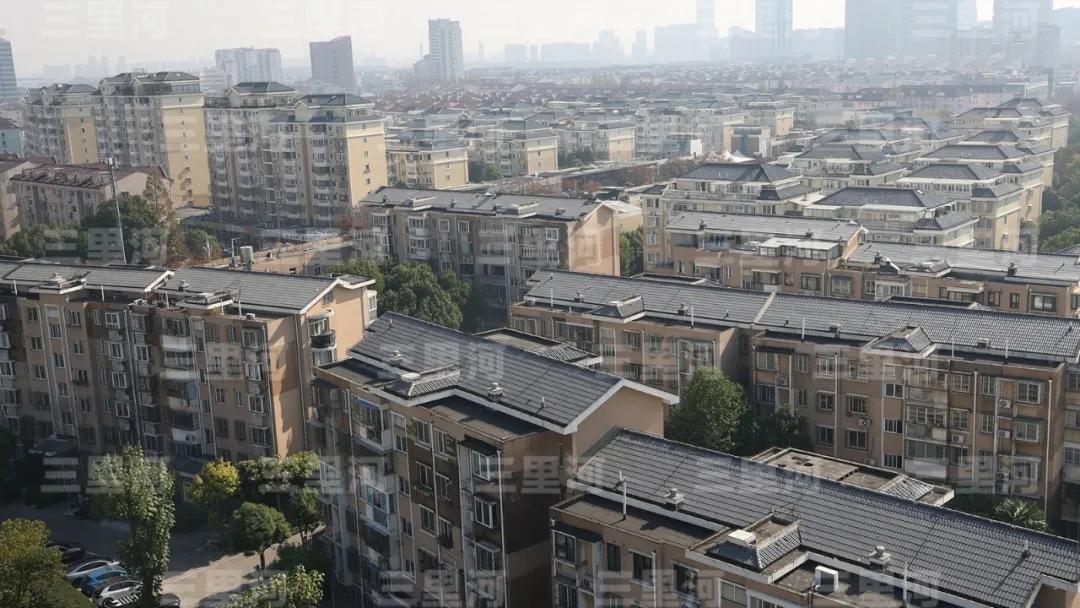
央视解读:2026年房地产政策有四个“新变化”
华尔街见闻· 2025-12-12 09:42
Core Viewpoint - The recent Central Economic Work Conference has outlined specific requirements for the real estate sector in the upcoming year, emphasizing the need for stability in the market and introducing new policy goals, directions, and tools [1][2]. Policy Changes Change 1: Policy Goals - The policy goal has shifted from "continuously promoting the stabilization of the real estate market" to "focusing on stabilizing the real estate market," indicating a stronger commitment to maintaining stability. This change reflects the current market conditions, where the housing market has entered a phase dominated by existing inventory, with second-hand housing transactions accounting for 45% of total transactions, and a narrowing decline in housing prices [3][4]. Change 2: Policy Direction - The focus has transitioned from "reasonably controlling new land supply" and "promoting the disposal of existing properties" to a new emphasis on "controlling increments, reducing inventory, and optimizing supply." The introduction of "optimizing supply" as a new term suggests a coordinated approach to policy implementation, where local governments must consider inventory levels while ensuring that supply meets public needs [5]. Change 3: Policy Tools - New policy tools have been introduced, including reforms to the housing provident fund and the promotion of "good housing" construction. The expansion of coverage for flexible employment individuals to access housing provident funds, even for rental purposes, and increased loan limits for home purchases aim to alleviate financial pressure on first-time buyers and those seeking improved housing [6][7]. Change 4: Emphasis on Urban Renewal - The term "urban renewal" has been prioritized in the policy framework, moving from a secondary position to a key focus area within the broader strategy to stimulate domestic demand. This shift highlights the importance of urban renewal initiatives in the upcoming economic agenda [8].

2026年房地产市场将迎来哪些变化?记者解读新表述背后的“稳”“优”“进”
Yang Shi Wang· 2025-12-12 08:02
Core Viewpoint - The Central Economic Work Conference has made clear deployments for the real estate work in the coming year, emphasizing the need to "stabilize the real estate market," indicating a shift in policy focus and approach compared to the previous year [1] Policy Objectives - The policy objective has shifted from "continuously promoting the stabilization of the real estate market" to "focusing on stabilizing the real estate market," highlighting a stronger commitment to maintaining stability [1] - In the first eleven months, while development investment has decreased, the housing market has entered a phase of stock, with the proportion of second-hand housing transactions reaching 45% of total transactions [1] - The decline in housing prices is narrowing, with some major cities experiencing year-on-year growth in transaction volumes for both new and second-hand homes [1] Policy Direction - The policy direction has changed from emphasizing "reasonable control of new land" and "promoting the disposal of existing properties" to clearly stating "controlling increments, reducing inventory, and optimizing supply" as core directions [3] - The term "optimizing supply" is introduced for the first time, indicating a coordinated approach to address inventory issues while considering "livelihood security" and optimizing the structure of land supply [3] Policy Tools - The reform of housing provident funds and the construction of "good houses" have been identified as new policy focuses for the coming year [5] - The coverage for flexible employment individuals to contribute to housing provident funds will be expanded, allowing for withdrawals for rental purposes even if they do not purchase a home [5] - The orderly advancement of "good house" construction signifies a shift from quantity-driven housing products to quality-driven ones [5] Urban Renewal - The term "urban renewal" has been prioritized, moving from a secondary position to a key focus area in the first part of the economic work, indicating an increased emphasis and intensity in promoting urban renewal efforts [7]