技术升级

Search documents
深蓝L06正式预售 媒体沟通会同期举行
Huan Qiu Wang· 2025-11-05 03:39
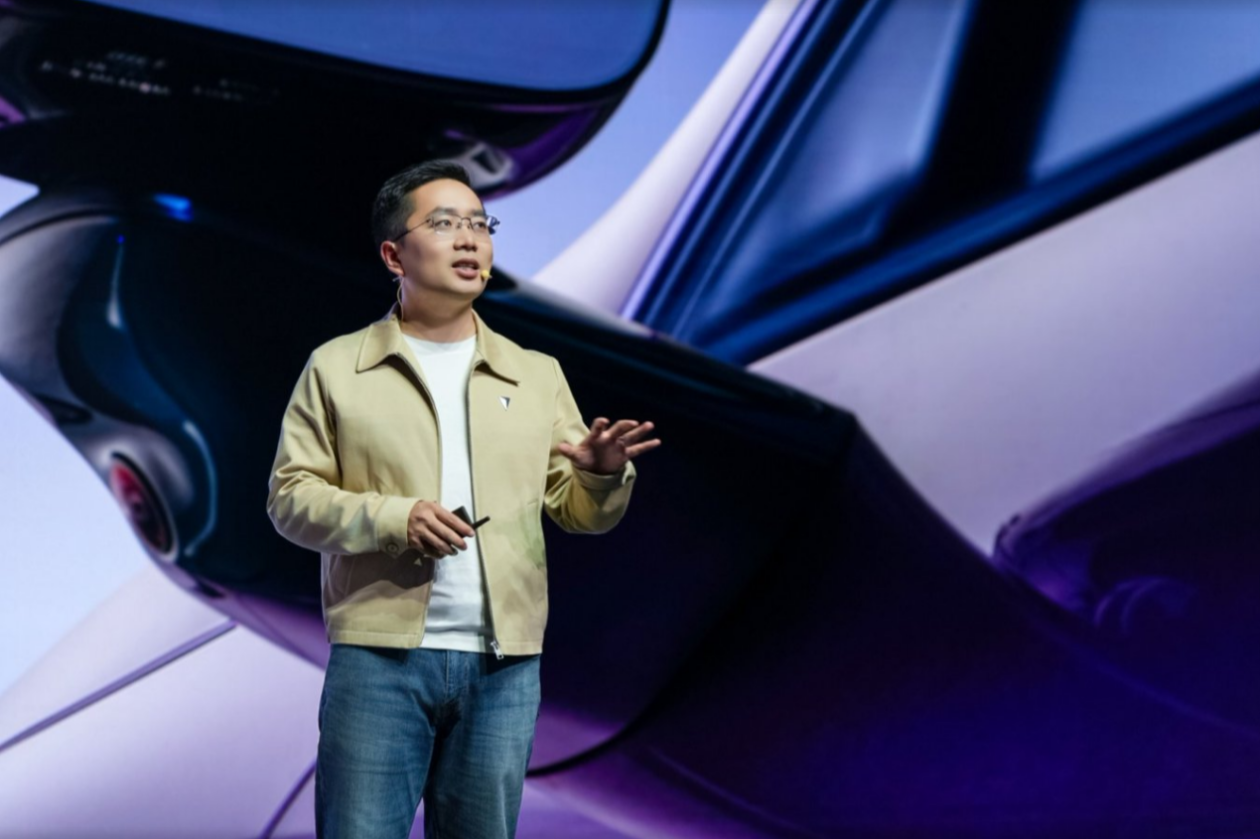
Core Insights - Deep Blue Automotive's chairman, Deng Chenghao, presented the strategic thinking and development path of the company during the media communication meeting following the pre-sale launch of the Deep Blue L06 [1] Technical Layout: Balancing Forward-Looking Investment and User Experience - The Deep Blue L06 features a magnetorheological suspension system, which offers faster response times compared to traditional CDC suspensions, enhancing driving experience and technical applicability [3] - The vehicle utilizes a 3nm process chip for its smart cockpit, reflecting the company's foresight regarding the increasing computational demands of intelligent cockpit functions and allowing for future feature iterations [3] Market Positioning: Differentiated Competition and User Demand Insights - Deep Blue's product positioning strategy focuses on the mainstream young user demographic, emphasizing technology and driving experience based on in-depth insights into user needs rather than targeting specific competitors [3] Diversified Strategy in Intelligent Driving - The company is developing its own DEEPAL AD system while also collaborating with partners like Huawei, allowing for flexible technology resource allocation based on product positioning and user groups [4] Globalization Strategy: Systematic Outbound and Scale Advantages - Deep Blue has established a presence in over 100 countries and regions, with localized production in Thailand, creating a comprehensive outbound model that integrates brand, product, manufacturing, and service [5] - The company aims for a balanced sales target of 50% domestic and 50% overseas by 2030, leveraging the supply chain and R&D resources of the Changan Group to maintain competitive cost control while ensuring product quality [5] - The platform-based and generalized development model, along with independent R&D capabilities, contribute to the company's cost advantages, allowing for more resources to be allocated to enhancing product performance and user experience [5] Systemic Capability: Outbound System and Scale Advantages - Deep Blue Automotive is committed to strengthening its systemic capabilities while balancing scale and efficiency, focusing on technological innovation and market expansion to provide value insights for the industry [6]

晶澳科技现金流连续四个季度向好 经营侧呈逐步改善态势
Zheng Quan Ri Bao Wang· 2025-10-31 04:45
Core Viewpoint - JA Solar Technology Co., Ltd. reported a net profit loss of 3.55 billion yuan for the first three quarters of 2025, indicating short-term pressure on profitability, but showing signs of gradual operational improvement with key indicators like gross margin and cash flow improving quarter-on-quarter [1][2] Financial Performance - The company achieved operating revenue of 36.809 billion yuan in the first three quarters of 2025, with a net profit attributable to shareholders of -3.553 billion yuan [1] - The gross margin for the third quarter was -0.88%, continuing the trend of improvement seen throughout the year [1] - Operating cash flow net inflow reached 4.695 billion yuan by the end of September 2025, marking the fourth consecutive quarter of improvement [2] Market Position and Strategy - JA Solar maintained a high shipment ratio of N-type TOPCon high-efficiency modules, securing a leading market share [1] - The company signed long-term supply agreements with several global energy giants, demonstrating effective global high-end market positioning [1] - The total shipment volume of battery modules reached 51.96 GW, with nearly 50% of shipments being overseas [1] Technological Innovation - The company is actively investing in cutting-edge technology, achieving a power conversion efficiency of 31.27% for its self-developed commercial large-size perovskite/silicon tandem solar cells [3] - New sodium battery commercial energy storage products have been developed, offering enhanced performance in extreme temperatures [3] - JA Solar is transforming patent achievements into diversified solutions, including the "Molang" module designed for harsh environments and the new flagship DeepBlue 5.0 module with a power output of 650W [3] Industry Context - Recent measures aimed at curbing excessive competition in the industry are expected to create a favorable environment for companies like JA Solar to improve profitability [4] - The industry is transitioning from a price-driven model to a value-driven approach, with expectations for high-quality development guided by technological upgrades and regulated competition [4]

透视网约车“切单”乱象
Zhong Guo Qi Che Bao Wang· 2025-10-30 09:36
Core Viewpoint - The article discusses the issue of "order cutting" in the ride-hailing industry, where platforms reassign orders to other drivers, often leading to lower earnings for the original drivers and raising concerns about fairness and transparency in the industry [2][3][4]. Group 1: Order Cutting Phenomenon - "Order cutting" refers to the practice where platforms reassign orders to nearby drivers, even if the original driver is close to picking up the passenger, under the guise of optimizing service efficiency [2][3]. - Drivers have reported that after being cut from an order, the platform often resells the order at a lower price to other platforms, increasing the platform's commission while not benefiting the drivers [3][4]. - The prevalence of "order cutting" has led to widespread dissatisfaction among drivers, who feel that their chances of receiving lucrative orders are diminished [3][4]. Group 2: Legal and Regulatory Implications - Legal experts suggest that platforms may be in breach of contract if they enforce "order cutting" through automated systems, and passengers have the right to seek explanations for order cancellations [6]. - Various regions are exploring regulatory measures to address "order cutting," including blockchain technology for order tracking and requiring platforms to disclose their order assignment logic [6][7]. - The success rate of lawsuits initiated by drivers against "order cutting" practices stands at 38%, indicating some legal support for drivers' rights, although the process can be resource-intensive [5][6]. Group 3: Market Dynamics and Industry Challenges - The ride-hailing industry in China is projected to reach a market size of approximately 317.6 billion yuan by the end of 2024, reflecting a year-on-year growth of 24.5% [7]. - Despite the growth in market size, the oversupply of drivers has led to decreased earnings, with average hourly income for drivers dropping by 12.9% in 2024 compared to 2023 [7][8]. - The competitive landscape has driven platforms to adopt low-price strategies, resulting in a cycle of low quality and low earnings, which further complicates the industry's economic viability [8][9]. Group 4: Future Directions and Recommendations - The future of the ride-hailing industry hinges on achieving a balance between market scale and industry value, with a focus on service quality rather than price competition [9]. - Platforms are encouraged to enhance operational efficiency through intelligent dispatching and to consider driver welfare in their business models [9]. - Regulatory bodies are urged to create long-term mechanisms that adapt to market changes, ensuring fair practices and protecting the rights of both drivers and passengers [9].

万联证券:9月挖掘机和装载机销量增长提速 行业正迈入发展新阶段
Zhi Tong Cai Jing· 2025-10-30 07:49
Core Insights - The excavator and loader sales in September showed remarkable performance, particularly in overseas markets, indicating that the industry is entering a new development phase [1][2] - Domestic demand is expected to accelerate recovery due to equipment upgrades and local government debt management policies [1] - Chinese construction machinery manufacturers have enhanced their competitiveness in overseas markets, supported by the cost-effectiveness of domestic products [1][2] Excavator Sales Summary - In September 2025, a total of 19,858 excavators were sold, marking a year-on-year increase of 25.4%, with domestic sales at 9,249 units (up 21.5%) and exports at 10,609 units (up 29%) [1] - From January to September 2025, 174,039 excavators were sold, reflecting an 18.1% year-on-year growth, with domestic sales of 89,877 units (up 21.5%) and exports of 84,162 units (up 14.6%) [1] - Electric excavator sales in September reached 31 units [1] Loader Sales Summary - In September 2025, a total of 10,530 loaders were sold, representing a year-on-year increase of 30.5%, with domestic sales at 5,051 units (up 25.6%) and exports at 5,479 units (up 35.3%) [2] - From January to September 2025, 93,739 loaders were sold, showing a 14.6% year-on-year growth, with domestic sales of 49,996 units (up 20.7%) and exports of 43,743 units (up 8.31%) [2] - Electric loader sales in September totaled 2,586 units [2] Market Dynamics - The construction machinery industry is experiencing a new phase of high-quality growth, with both domestic and foreign demand contributing significantly [2] - The strong growth in domestic sales of excavators and loaders indicates that equipment upgrade policies and infrastructure projects are gaining momentum, boosting market confidence [2] - The overseas market is showing even stronger sales growth, with excavator exports increasing by 29% and loader exports by 35.3%, highlighting the penetration and competitiveness of Chinese brands in the global market [2] Long-term Industry Outlook - The competition in the industry has shifted from traditional scale and price wars to a focus on global operational capabilities and forward-looking technological strategies [3] - Leading companies are leveraging their extensive overseas channels and service networks to convert global infrastructure demand into substantial market share [3]
爱尔眼科前三季度实现营收174.84亿元 业务结构持续优化
Zhong Zheng Wang· 2025-10-28 04:43
Core Insights - The company reported a revenue of 17.484 billion yuan for the first three quarters of 2025, representing a year-on-year growth of 7.25%, with a net profit of 3.119 billion yuan, up 0.2% [1] - In Q3, the company achieved a revenue of 5.977 billion yuan, marking a growth of 3.83% despite a high base from the previous year [1] - The successful operation of several large ophthalmology centers indicates significant progress in the company's "1+8+N" strategy, enhancing long-term competitiveness [1] Business Structure Optimization - The company has optimized its business structure, particularly in refractive surgery, by focusing on technological upgrades, leading to a significant increase in the application of new surgical techniques [1] - The average transaction price in refractive services has increased by over 5% due to the rising proportion of new surgical techniques [1] - The anticipated approval of the ICL V5 new type of lens by the end of the year is expected to further enhance the company's business structure [1] Cataract and Vision Services - The company is adapting to changes in the market driven by reforms in medical insurance payment methods, focusing on both "popularization" and "upgrading" of cataract surgeries [2] - The volume of cataract surgeries has continued to grow, benefiting more patients, while the company is also enhancing its offerings in functional lenses and advanced surgical techniques [2] - In vision services, the company is expanding its adult eyewear services and transitioning towards "visual health management," which has shown promising results in pilot hospitals [2] Multidisciplinary Approach - The company is leveraging its comprehensive ophthalmology advantages by establishing multidisciplinary diagnostic and treatment (MDT) groups to address complex eye conditions [3] - A proactive approach has been taken to manage presbyopia by setting up specialized clinics, targeting the growing elderly population [3] Future Outlook - The company is well-positioned to meet the long-term growth in ophthalmic treatment demand due to aging populations and increasing awareness of visual health [3] - The ongoing optimization of business structure and technological upgrades are expected to provide resilience against industry fluctuations [3]

需求持续增长企业加快布局 我国乳清蛋白行业未来可期
Zhong Guo Chan Ye Jing Ji Xin Xi Wang· 2025-10-28 00:27
Core Insights - The whey protein industry in China is experiencing rapid growth due to increased public health awareness and the expansion of the sports nutrition market [1][2] - The global whey market is projected to grow from $9.9 billion in 2023 to $17.82 billion by 2032, with a compound annual growth rate (CAGR) of 8.76% [2] - China's whey protein market has seen a rise from $34.6 million in 2021 to $51.8 million this year, with an average annual growth rate of approximately 11%, surpassing the global average [2] Market Demand - The demand for whey protein is driven by its applications in muscle gain, weight loss, and strength enhancement, alongside a growing health consciousness among consumers [2] - In the product segmentation, whey protein concentrate holds the largest market share, while functional foods are the primary application area for whey ingredients [2] - The protein powder category accounts for 7.4% of the health food market, with whey protein constituting about 70% of the protein powder market [2] Consumer Trends - The popularity of whey protein products is increasing, with a 18.2% year-on-year growth in sales during the first quarter of this year [3] - Consumers are increasingly incorporating whey protein into their daily health management, expanding the consumer base from professional athletes to the general public [3] - Whey protein's excellent amino acid profile and digestibility make it a key ingredient in yogurt and adult milk powder formulations [3] Supply Chain Dynamics - China has been heavily reliant on imported whey protein, with over 60% of global whey powder production concentrated in Europe and the U.S. [5] - In 2024, China's whey powder imports are expected to reach 661,000 tons, valued at $810 million, with the U.S. being a major supplier [5] - Domestic companies are diversifying their import sources and increasing procurement from South America and Eastern Europe [5][6] Industry Development - The industry is undergoing a transformation with a focus on raw material quality, precise composition, and refined processing techniques [8] - A white paper on whey protein has been published to provide a scientific reference framework for industry standardization [8] - Future industry growth is expected to focus on product diversification, technological innovation, and sustained market demand [9][10] Future Outlook - The whey protein product range is anticipated to diversify, including protein beverages, baked goods, and snacks to cater to various consumer needs [9] - Technological advancements will drive product upgrades, improving purity and quality while reducing production costs [9] - The increasing health consciousness and fitness trends among the population will continue to boost the demand for whey protein [10]
高端产能供不应求 锂电龙头忙扩产
起点锂电· 2025-10-22 10:28
Core Insights - The article highlights the rapid expansion of production capacity in the lithium battery industry, driven by increasing demand and technological advancements [3][8][10]. Group 1: Industry Events and Conferences - The 2025 Solid-State Battery Industry Annual Conference and the Golden Ding Award Ceremony will take place on November 8, 2025, in Guangzhou, focusing on new technologies and ecosystem building [2]. - The event will feature over 1000 participants and includes concurrent exhibitions for solid-state and sodium batteries [2]. Group 2: Company Performance and Expansion - CATL reported a revenue of 1041.86 billion yuan in Q3, a year-on-year increase of 12.9%, and a net profit of 185.49 billion yuan, up 41.21% [2]. - The company is accelerating global capacity construction, with new production lines in its Luoyang base expected to add 30 GWh annually [5]. - BYD and other leading companies are also expanding their production capabilities, with significant investments announced for new battery production lines [6][10]. Group 3: Market Demand and Capacity Utilization - The battery production capacity is currently tight, especially in the energy storage market, where leading manufacturers are operating at full capacity [3][4]. - The demand for batteries has surged, with major companies like CATL, BYD, and others initiating new capacity projects since Q2 of this year [3][6]. Group 4: Technological Advancements - The current round of capacity expansion is characterized by a focus on technology upgrades rather than just scale, with companies aiming to establish new competitive advantages [8][9]. - The introduction of larger capacity cells, such as the 314Ah and upcoming 500Ah+ cells, is driving a shift in market dynamics and necessitating the retirement of older production lines [9].






高端产能供不应求锂电龙头忙扩产
Shang Hai Zheng Quan Bao· 2025-10-21 18:18
Core Insights - The lithium battery industry is experiencing a significant demand surge, leading to a capacity expansion among leading companies like CATL, BYD, and others [1][3][5] - CATL reported a third-quarter revenue of 104.186 billion yuan, a year-on-year increase of 12.9%, and a net profit of 18.549 billion yuan, up 41.21% [1] - The storage market is particularly tight, with top battery manufacturers operating at full capacity and second-tier manufacturers exceeding 80% utilization [1][3] Company Expansion Initiatives - CATL is actively advancing global capacity construction, with new production lines launched in its Luoyang base, expected to add 30GWh upon full operation [2] - The company has also signed a project in Xiamen for an 80GWh intelligent battery production line and is investing 8 billion yuan in a 40GWh battery manufacturing base in Dongying [2] - BYD and Guoxuan High-Tech are also expanding their production capabilities, with significant investments in new battery production lines [3] Market Demand and Trends - The demand for lithium batteries is driven by the rapid growth of the new energy vehicle market, with sales reaching 11.243 million units in the first nine months of the year, a 35.2% increase [5] - The shipment of energy storage lithium batteries is projected to reach 165GWh by Q3 2025, reflecting a 65% year-on-year growth [5] - The market is witnessing a structural "chip shortage" in household storage batteries due to the rapid growth in demand and slow expansion of smaller manufacturers [5] Technological Advancements - The current round of capacity expansion is characterized by a shift from mere scale expansion to technological upgrades, with companies focusing on developing new products and enhancing their competitive edge [5][6] - Multi-Flor's new "Fluorine Core" cylindrical battery has achieved a monthly shipment of over 10 million units, indicating strong market demand [6] - The industry is transitioning to larger capacity cells, with 300+Ah cells gaining over 65% market share, while older 280Ah lines are being phased out [6]
当局防堵大陆车,岛内消费者“吃闷亏”
Huan Qiu Shi Bao· 2025-10-20 03:07
Core Viewpoint - The Democratic Progressive Party (DPP) authorities in Taiwan are blocking mainland Chinese cars under the guise of safety, leading to exorbitant car prices in Taiwan compared to mainland China, which is causing dissatisfaction among consumers [1][2]. Group 1: Price Discrepancy - The price of the new Tesla Model 3 in Taiwan is NT$1.69 million, while it is NT$1.05 million in mainland China, highlighting a significant price difference [1]. - The BMW Z4 is priced at NT$3.72 million in Taiwan compared to NT$2.12 million in mainland China, further illustrating the steep price disparity [1]. - The high costs are attributed to Taiwan's strict import barriers for complete vehicles, allowing only CKD (Completely Knocked Down) imports, which increases assembly costs [1]. Group 2: Market Dynamics - The Taiwan automotive market is relatively small, making it difficult to spread high initial investment costs, and local manufacturers are often joint ventures, lacking the scale and R&D capabilities needed for competitiveness [1]. - According to the Chung-Hua Institution for Economic Research, new car registrations in Taiwan are projected to be 458,000 in 2024, with local car sales expected to be around 200,000 [1]. Group 3: Political and Regulatory Environment - The DPP's actions against mainland car manufacturers are seen as politically motivated rather than based on technical management, with a significant portion of the Taiwanese public expressing support for the import of mainland electric vehicles like BYD [2][3]. - A recent online poll indicated that 44.4% of participants support BYD's entry into Taiwan, surpassing those opposed by 14 percentage points [3]. - The Taiwanese government has implemented strict regulations, including a requirement for local manufacturers to increase local supply ratios to 35% to qualify as "Taiwan-made" vehicles [2]. Group 4: Industry Challenges - Despite a rapid growth in the electric vehicle market, challenges such as insufficient charging infrastructure, reliance on imported core components, and outdated maintenance technology persist, leading to consumer anxiety regarding range and high maintenance costs [3]. - Mainland automotive brands have made significant advancements in technology and cost-effectiveness, presenting a competitive option for consumers in Taiwan [3]. - Opening the market to more mainland models could provide consumers with better prices and choices while promoting local industry upgrades and market competition [3].
老牌家电突围广交会:蹚过“三重门”,逆势谋增量
2 1 Shi Ji Jing Ji Bao Dao· 2025-10-19 14:09
Core Insights - The 138th Canton Fair has opened, showcasing a significant trend of high-quality enterprises and the rise of new industries such as AI and robotics, indicating a shift from product export to solution output for foreign trade companies [1][6] - Guangzhou Industrial Control Group, known as an "industrial aircraft carrier," has successfully secured over $3 million in orders on the first day of the fair, highlighting the appeal of "Guangzhou manufacturing" [1][4] - Despite challenges in the foreign trade environment, companies are actively pursuing technological innovation and exploring emerging markets to maintain overseas market stability [1][4] Company Overview - Wanbao, a well-established home appliance brand, has been participating in the Canton Fair for nearly 30 years and is focusing on differentiated strategies in technology upgrades, product development, and market expansion [4][6] - The company has achieved a 7.5% year-on-year increase in total sales and a 4% increase in exports as of September 2025, positioning itself among the top four in global sales [4][6] - Wanbao invests 3.5% of its revenue annually in R&D and has developed a regional technology database to ensure products are tailored to local market needs [5][6] Product Innovation - Wanbao's products showcased at the fair include environmentally friendly and efficient models, with the VSN140 deep-freezing compressor winning the 2024 Applan Core Award for its internationally leading technology [2][4] - The company has developed a new compressor with a speed range expanded by 36%, allowing for faster cooling at lower energy consumption, addressing new energy consumption standards [4][5] - A new ice ball machine that produces nearly perfect ice balls has attracted significant interest, showcasing Wanbao's commitment to innovation and market responsiveness [5][6] Market Strategy - Wanbao has received over 15 orders from "Belt and Road" procurement merchants on the first day of the fair, with revenue from Southeast Asia and Africa markets growing over 20% year-on-year [6][7] - The company aims to increase its revenue from non-North American markets to over 65% by 2026, targeting a growth rate of 25% in emerging markets [7][8] - Wanbao's international marketing strategy includes direct engagement with local businesses in new markets, leveraging technology for market entry [8]