智能驾驶

Search documents
吉利汽车年收入3452亿创新高 将与英伟达在AI三领域实现协同
Chang Jiang Shang Bao· 2026-03-18 23:45
Core Viewpoint - Geely Automobile has achieved record high performance in 2025, with total revenue reaching 345.23 billion yuan, a 25% year-on-year increase, and aims for a sales target of 3.45 million units in 2026 [1][3][8] Financial Performance - In 2025, Geely's total revenue was 345.23 billion yuan, marking a 25% increase year-on-year, and the core net profit reached 14.41 billion yuan, up 36% [3] - The gross profit increased to 57.3 billion yuan, a 25% rise compared to the previous year, supported by scale effects and optimized product structure [3] - By the end of 2025, the company's total cash level rose by 46% to 68.2 billion yuan, indicating strong cash reserves [3] Sales Performance - In 2023, Geely achieved sales of 1.6865 million units, an 18% increase, exceeding its annual sales target [3] - The sales target for 2024 was initially set at 1.9 million units but was later raised to 2 million units, which was surpassed with total sales of 2.1766 million units, a 32% increase [4][5] - In 2025, Geely's sales reached 3.0246 million units, a 39% increase, exceeding the adjusted target of 3 million units [7][8] Strategic Partnerships - Geely announced a deepened collaboration with NVIDIA in three key areas: physical AI, enterprise AI, and industrial AI, aimed at enhancing the company's capabilities in smart driving and intelligent cockpit technologies [1][10] - The partnership with NVIDIA is expected to facilitate advancements in smart driving capabilities, with a goal to reach Tesla's Full Self-Driving (FSD) level by 2026 [10] Product Development - Geely plans to launch multiple new products in 2026, covering various market segments from mainstream to luxury and from fuel to new energy vehicles [8] - The company is set to introduce a new auxiliary driving brand, G-ASD, which will encompass smart driving capabilities from L2 to L4 levels [10][11] - A significant breakthrough in "cockpit and driving integration" has been achieved, with the upcoming release of the super intelligent body, integrating smart cockpit and driving assistance technologies [11]

零跑汽车:单季利润创新高、全年扭亏,盈利拐点开启上行周期-20260318
海通国际· 2026-03-18 13:25
Investment Rating - The report maintains an "OUTPERFORM" rating for the company [2][6]. Core Insights - The company achieved a record high quarterly profit and turned profitable for the full year, indicating the start of an earnings upcycle [3][12]. - Revenue for Q4 2025 reached RMB 210.3 billion, a 56.2% year-over-year increase, with a gross margin improvement to 15% [3][12]. - Full-year revenue doubled to RMB 647.3 billion, with deliveries of 596,555 units, reflecting a 103.1% year-over-year growth [3][12]. - The company has a strong product pipeline for 2026, with multiple new models set to launch, enhancing market penetration [4][13]. - Strategic partnerships, particularly with FAW and Stellantis, are expected to contribute to revenue diversification and global industrial synergies [4][13]. - Cost pressures are manageable, with the company maintaining a net profit target of RMB 5 billion for FY2026, supported by improved cost discipline [14][16]. - The company is expanding its global footprint, with approximately 900 sales and service outlets established across 40 international markets [15][16]. Financial Summary - Revenue forecasts for 2026-2028 have been revised to RMB 102.1 billion, RMB 132.6 billion, and RMB 167.7 billion, respectively [16]. - The company maintains a strong product pipeline advantage compared to peers, supporting continued domestic market share gains and high growth overseas [16]. - The target price is set at HKD 61.44, based on a 0.75x 2026E P/S multiple [16].
零跑汽车(09863):单季利润创新高、全年扭亏,盈利拐点开启上行周期
Haitong Securities International· 2026-03-18 11:53
Investment Rating - The report maintains an "OUTPERFORM" rating for the company, with a target price of HK$61.44, reflecting a strong outlook for growth and profitability [2][16]. Core Insights - The company achieved a record high quarterly profit in Q4 2025, with revenue reaching RMB210.3 billion, a 56.2% year-over-year increase, and a full-year revenue of RMB647.3 billion, doubling from the previous year [3][12]. - Gross margin improved to 15.0%, and net profit for the year turned positive at RMB5.4 billion, indicating a successful turnaround from previous losses [3][12]. - The company is set to launch multiple new models in 2026, enhancing its product lineup and market penetration [4][13]. - Strategic partnerships, particularly with FAW and Stellantis, are expected to contribute to revenue diversification and operational synergies [4][13]. - Despite rising raw material costs, the company maintains a stable gross margin outlook and has set a net profit target of RMB5.0 billion for FY2026, reflecting confidence in operational efficiency [14][16]. - The company is expanding its global footprint with approximately 900 sales and service outlets across 40 international markets, positioning itself for robust sales growth [5][15]. Financial Summary - Revenue forecasts for 2026-2028 have been revised to RMB102.1 billion, RMB132.6 billion, and RMB167.7 billion, respectively, indicating continued growth [6][16]. - The company’s earnings per share (EPS) is projected to increase significantly, reaching RMB2.73 in 2026 and RMB4.25 in 2027 [10]. - The price-to-earnings (P/E) ratio is expected to decrease from 109 in 2025 to 14 in 2026, reflecting improved profitability [10].

乘用车行业月报:2月淡季销量同环比下滑,新车周期有望驱动市场回升
GUOTAI HAITONG SECURITIES· 2026-03-18 05:45
Investment Rating - The report assigns an "Overweight" rating for the automotive sector, indicating a positive outlook for the industry [6][31]. Core Insights - The report anticipates a rebound in automotive sales driven by seasonal demand recovery, the introduction of new products and technologies, and the upcoming Beijing International Auto Show in April [2][23]. - In February 2026, China's passenger car wholesale sales reached 1.518 million units, reflecting a year-on-year decline of 14% and a month-on-month decline of 23% [10][23]. - The wholesale sales of new energy passenger vehicles in February were 723,000 units, down 13% year-on-year and 17% month-on-month [10][23]. Summary by Sections 1. Overall Market Performance - In February 2026, the total wholesale sales of passenger cars in China were 1.518 million units, with a year-on-year decrease of 14% and a month-on-month decrease of 23% [10]. - New energy vehicle sales were 723,000 units, showing a year-on-year decline of 13% and a month-on-month decline of 17% [10]. 2. Key Automotive Companies BYD - In February, BYD delivered 190,000 vehicles, a year-on-year decrease of 41% and a month-on-month decrease of 9% [11]. - The company launched its second-generation blade battery and megawatt charging technology, which significantly enhances charging efficiency [11]. Geely - Geely delivered 206,000 vehicles in February, marking a year-on-year increase of 1% but a month-on-month decrease of 24% [12]. - The company achieved a remarkable 138% increase in new car exports, totaling 61,000 units [12][13]. Changan - Changan's February sales reached 152,000 vehicles, with a month-on-month increase of 13% despite a year-on-year decline of 6% [14]. - The company reported significant growth in its new energy vehicle sales, which reached 42,000 units [14]. Great Wall Motors - Great Wall Motors delivered 73,000 vehicles in February, reflecting a year-on-year decrease of 7% and a month-on-month decrease of 20% [17]. - The company is advancing its high-end product strategy with the introduction of new models [17]. Li Auto - Li Auto delivered 26,000 vehicles in February, showing a year-on-year increase of 1% but a month-on-month decrease of 5% [18]. Leap Motor - Leap Motor's sales reached 28,000 vehicles in February, a year-on-year increase of 11% [19]. Xpeng Motors - Xpeng delivered 15,000 vehicles in February, reflecting a year-on-year decrease of 50% and a month-on-month decrease of 24% [20]. NIO - NIO delivered 21,000 vehicles in February, a year-on-year increase of 58% [22]. 3. Market Outlook - The report suggests that the automotive market is expected to recover in March due to the release of new models and technological advancements [23].



乘用车行业月报:2月淡季销量同环比下滑,新车周期有望驱动市场回升-20260318
GUOTAI HAITONG SECURITIES· 2026-03-18 05:24
Investment Rating - The report assigns an "Overweight" rating for the automotive sector, indicating a positive outlook for the industry [6][25]. Core Insights - The report highlights that the wholesale sales of passenger vehicles in China for February 2026 were 1.518 million units, representing a year-on-year decline of 14% and a month-on-month decline of 23%. However, it anticipates a recovery in sales due to seasonal demand, the introduction of new products and technologies, and the upcoming Beijing International Auto Show in April [2][23]. - Recommended stocks include NIO, Geely Automobile, Leap Motor, BYD, Xpeng Motors, Great Wall Motors, and Changan Automobile [6][23]. Summary by Sections 1. Overall Market Performance - In February 2026, the wholesale sales of passenger vehicles in China were 1.518 million units, down 14% year-on-year and 23% month-on-month. The wholesale sales of new energy passenger vehicles were 723,000 units, also down 13% year-on-year and 17% month-on-month [10][23]. 2. Key Automotive Companies BYD - In February, BYD delivered 190,000 vehicles, a decrease of 41% year-on-year and 9% month-on-month. Overseas sales reached 101,000 units, up 50% year-on-year [11][12]. Geely Automobile - Geely delivered 206,000 vehicles in February, a slight increase of 1% year-on-year but down 24% month-on-month. Export sales reached 61,000 units, up 138% year-on-year [12][13]. Changan Automobile - Changan delivered 152,000 vehicles in February, down 6% year-on-year but up 13% month-on-month. New energy vehicle sales were 42,000 units, up 6% year-on-year [14][15]. Great Wall Motors - Great Wall delivered 73,000 vehicles in February, down 7% year-on-year and 20% month-on-month. New energy vehicle deliveries were 13,000 units [17]. Li Auto - Li Auto delivered 26,000 vehicles in February, a 1% increase year-on-year but a 5% decrease month-on-month. The new model, Li L9 Livis, is set to launch in Q2 2026 [18]. Leap Motor - Leap Motor delivered 28,000 vehicles in February, an 11% increase year-on-year but a 13% decrease month-on-month. The A10 model is set to begin pre-sales [19]. Xpeng Motors - Xpeng delivered 15,000 vehicles in February, a 50% decrease year-on-year and a 24% decrease month-on-month. The 2026 X9 electric version was officially launched [20][21]. NIO - NIO delivered 21,000 vehicles in February, a significant increase of 58% year-on-year but a 23% decrease month-on-month. The penetration rate of intelligent driving features improved [22]. 3. Market Outlook - The report suggests that the automotive market is expected to rebound in March due to the release of new models and technologies, alongside the seasonal demand recovery. Nearly 30 new models are set to be launched or announced in March [23].
吉利和英伟达将开展深度合作
新华网财经· 2026-03-18 04:33
Core Viewpoint - Geely and NVIDIA are set to collaborate on smart driving, smart cockpit, and smart manufacturing and research, focusing on three dimensions: physical AI, enterprise AI, and industrial AI [1] Group 1: Collaboration Focus - The collaboration will explore the continuous evolution of core capabilities in smart vehicles, leveraging NVIDIA's high-performance computing platform and Geely's deep expertise in vehicle-level scene understanding and multi-modal decision-making [1] - The partnership aims to advance physical AI technology architecture represented by the World Action Model (WAM), enhancing vehicles' environmental perception, behavior prediction, and collaborative execution capabilities [1]



吉利和英伟达将开展深度合作
第一财经· 2026-03-18 03:39
Core Viewpoint - Geely and NVIDIA are set to engage in deep collaboration across various fields including intelligent driving, smart cockpit, and intelligent manufacturing and research, focusing on three dimensions: physical AI, enterprise AI, and industrial AI [1] Group 1: Collaboration Areas - In the area of physical AI, Geely and NVIDIA will explore the continuous evolution of core capabilities in smart vehicles, leveraging NVIDIA's high-performance computing platform and Geely's deep expertise in vehicle-level scene understanding and multi-modal fusion decision-making [1] - The collaboration aims to advance the physical AI technology architecture represented by the World Action Model (WAM), enhancing vehicles' environmental perception, behavioral prediction, and collaborative execution capabilities [1]

智能驾驶:即将全面爆发
泽平宏观· 2026-03-17 16:06
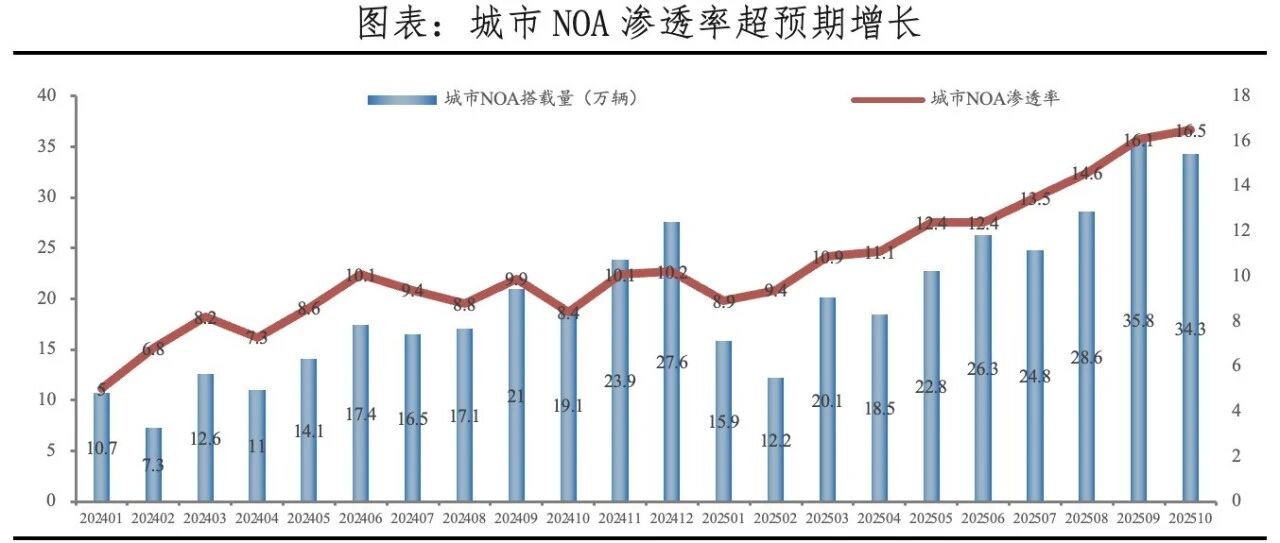
Core Viewpoint - The rapid commercialization of intelligent driving is surpassing expectations, with Tesla's production of directionless vehicles and the global operation of unmanned fleets marking a significant turning point in the industry [2][3]. Group 1: Intelligent Driving Explosion - The first directionless vehicle designed for Robotaxi by Tesla is set to begin mass production in April 2026, eliminating the steering wheel and pedals, fully controlled by AI [3][4]. - Tesla's Full Self-Driving (FSD) system is expected to receive full approval in China by 2026, which will significantly transform the domestic intelligent driving market [3][4]. - The scale of autonomous driving fleets in China is expanding, with companies like Baidu and Xiaopeng actively deploying unmanned vehicles in various cities and even internationally [4]. Group 2: Scientific Principles of Intelligent Driving - Autonomous driving hardware is surpassing human limits, with AI capable of perceiving distances over 200 meters and making decisions with a reaction time of 10-30 milliseconds, far exceeding human capabilities [5][7]. - The learning ability of autonomous driving systems allows for rapid sharing of experiences across vehicles, enabling exponential evolution in driving capabilities [7][8]. Group 3: Industry Trends - The industry is witnessing a rapid transition to L2+ level intelligent driving becoming a standard feature, with high-level driving assistance (NOA) becoming widely available [10][11]. - Many companies are bypassing L3 technology due to its ambiguous responsibility issues and are directly targeting L4 autonomous driving [13][14]. - The competition is intensifying as companies leverage large-scale data and advanced algorithms to establish competitive advantages in the intelligent driving space [15][18]. Group 4: Future Trends - The technological foundation of intelligent driving is being restructured with end-to-end models and world models, significantly reducing the complexity of programming [17]. - High-quality data loops are becoming critical, with companies that can process data faster gaining a competitive edge [18]. - The cost of hardware for intelligent driving is decreasing, leading to widespread adoption and making advanced driving features more accessible [19]. Group 5: Future Scenarios of Intelligent Driving - The business model will shift from selling cars to providing mobility as a service (MaaS), fundamentally changing consumer behavior and market dynamics [24][25]. - Urban planning will be transformed, reducing traffic congestion and parking needs as vehicles are algorithmically managed [26][27]. - Autonomous vehicles will become integral to energy management, acting as mobile energy sources that can charge during off-peak hours and supply energy back to the grid [28]. - The personal experience of commuting will be revolutionized, as vehicles become multifunctional spaces for entertainment and work [29][30].


汽车行业2026年3月投资策略:用车销量触底回升,新技术与新品周期有望提振板块
Guoxin Securities· 2026-03-17 05:50
Investment Rating - The report maintains an "Outperform" rating for the automotive industry [1][3][4] Core Viewpoints - The automotive sector is expected to see a recovery in passenger car sales, driven by new technologies and product cycles, with a potential upward trend starting in March 2026 [1][3] - The report highlights the importance of domestic brands and the rise of electric and intelligent vehicles, suggesting investment opportunities in companies focusing on these areas [3][27] Monthly Sales Data - In February 2026, retail sales of passenger vehicles reached 1.034 million units, a year-on-year decrease of 25.4% and a month-on-month decrease of 33.1% [1] - Cumulative retail sales for January and February 2026 totaled 2.578 million units, down 18.9% year-on-year [1] - The wholesale volume for passenger vehicles in February was 1.518 million units, a year-on-year decline of 14.3% [1] Market Performance - The CS automotive sector rose by 2.82% in February, outperforming the CSI 300 index by 2.73 percentage points [2] - The automotive sector has increased by 3.16% since the beginning of 2026, compared to a 1.74% rise in the CSI 300 index [2] Investment Recommendations - Recommended companies include Xpeng Motors, JAC Motors, and Geely for their strong product cycles [3][4] - In the intelligent vehicle sector, companies like Coboda, Huayang Group, and Junsheng Electronics are highlighted [3] - For robotics, Top Group and Sanhua Intelligent Control are recommended [3] Profit Forecasts and Valuations - Xpeng Motors is rated "Outperform" with an expected EPS of 0.52 in 2026 and a PE ratio of 152 [4] - Star Universe Co. is also rated "Outperform" with an expected EPS of 7.38 in 2026 and a PE ratio of 18 [4] - Fuyao Glass is rated "Outperform" with an expected EPS of 4.3 in 2026 and a PE ratio of 14 [4] Long-term Industry Trends - The automotive industry is transitioning from a growth phase to a mature phase, with a projected annual growth rate of low single digits [13][19] - The report anticipates that the total vehicle sales in China could reach 40-43 million units annually in the long term, reflecting a growth potential of 42%-53% from current levels [16][19] New Energy Vehicle Projections - New energy vehicle sales are expected to reach approximately 1.868 million units in 2026, representing a year-on-year growth of 14% [28][36] - BYD is projected to achieve sales of 501,000 new energy vehicles in 2026, continuing to expand its market advantage [28][36] Company-Specific Insights - Xpeng is expected to see a significant product launch in 2026, with projected sales of 600,000 units, a 40% increase [34] - Geely's new energy vehicle sales are forecasted to reach 190,000 units in 2026, reflecting a growth of approximately 13% [33] - NIO is anticipated to achieve sales of 420,000 units in 2026, with a growth rate exceeding 28% [35]



零跑汽车:维持2026年100万销量指引
数说新能源· 2026-03-17 02:31
Core Viewpoint - The article highlights the significant growth and strategic direction of the company in the new energy vehicle sector, emphasizing sales performance, product development, and international expansion. Financial Performance - In 2025, the company achieved a revenue of RMB 647.3 billion, a 101.3% increase from RMB 321.6 billion in 2024 [10] - The net profit for 2025 reached RMB 5.4 billion, marking the company as the second Chinese new energy vehicle manufacturer to achieve annual profitability [9] - The gross margin for 2025 was 14.5%, up from 8.4% in 2024, with Q4 gross margin reaching 15.0% [10][9] Sales and Market Position - The company sold 596,555 vehicles in 2025, becoming the top new energy vehicle brand in China, with a 103.1% increase from 293,724 units in 2024 [11] - The cumulative delivery exceeded 1.2 million vehicles by the end of 2025 [11] - The company ranked first in exports among Chinese new energy vehicle brands, with 67,052 units exported in 2025 [9][26] Product Development - The company launched three new models under the B platform in 2025 and revamped three existing SUV models under the C platform [12] - The A10 model is set to launch on March 26, 2026, with additional models D19, A05, and D99 expected to follow in mid-2026 [3][15][41] Strategic Partnerships - The company has established a strategic partnership with FAW Group, with the first model expected to be produced in Q3 2026 [7][53] - Collaborations with Stellantis are ongoing, focusing on joint development and component cooperation [27][25] International Expansion - The company aims to increase its overseas sales, particularly in South America and Asia-Pacific, with a focus on Brazil, Chile, Argentina, and Ecuador [7][40] - By the end of 2025, the company had established approximately 900 sales and service outlets across 40 international markets [26] Research and Development - The company plans to increase R&D expenses in 2026 compared to 2025, focusing on new technologies and model development [47] - The LEAP3.5 technology architecture was launched in 2025, enhancing the integration of various vehicle technologies [16] Inventory Management - The company maintained an inventory level of approximately 1.5 to 2 months as of early 2026, with efforts to reduce it further [8][50] - The target for terminal inventory is around one month or less, indicating a proactive approach to inventory management [50][51] Marketing and Sales Strategy - The total marketing investment for 2026 is expected to exceed that of 2025, although the sales cost per vehicle is projected to decrease [3][37] - The company has implemented a refined retail strategy, achieving a 103.1% increase in delivery volume in 2025 [22]