汇率波动

Search documents
德昌股份:2025年净利润同比预减51%到61%
Zheng Quan Shi Bao Wang· 2026-01-11 08:07
Core Viewpoint - Dechang Co., Ltd. (605555) forecasts a significant decline in net profit for the fiscal year 2025, projecting a range of 160 million to 200 million yuan, which represents a year-on-year decrease of 51% to 61% [1] Group 1: Financial Performance - The expected net profit for 2025 is estimated to be between 160 million and 200 million yuan, indicating a substantial decline compared to the previous year [1] - The company anticipates a decrease in net profit due to various factors affecting its business segments [1] Group 2: Business Segments - The automotive parts business is expected to continue its rapid growth trajectory in 2025 [1] - The home appliance segment is facing challenges due to international trade policies, increased competition, and the introduction of new production capacity, which is still in the ramp-up phase [1] - The home appliance business is experiencing a decline in gross margin due to increased amortization costs and price reductions [1] Group 3: Currency Impact - The company reported a foreign exchange loss of approximately 18 million yuan for the period, a decrease of about 60 million yuan compared to the same period last year [1]

2025年12月末我国外汇储备规模创10年来新高 连续5个月超3.3万亿美元
Ren Min Ri Bao· 2026-01-09 22:11
Group 1 - As of December 2025, China's foreign exchange reserves reached $335.79 billion, the highest level since December 2015 [1] - The reserves increased by $11.5 billion from the previous month, reflecting a growth rate of 0.34% [1] - The reserves have remained above $3.3 trillion for five consecutive months, indicating a stable upward trend [1] Group 2 - The increase in foreign exchange reserves is attributed to the positive valuation effects from currency exchange rates and asset price changes influenced by monetary policies and macroeconomic data [1] - In 2025, China's exports played a significant role in supporting the international balance of payments, contributing to the stability of foreign exchange reserves [1] - The performance of China's capital markets and the confidence of international institutions in the Chinese economy and RMB assets have led to sustained high levels of foreign capital inflow [1][2]
TMGM外汇平台:日本经济数据表现分化,日元周五承压
Sou Hu Cai Jing· 2026-01-09 09:10
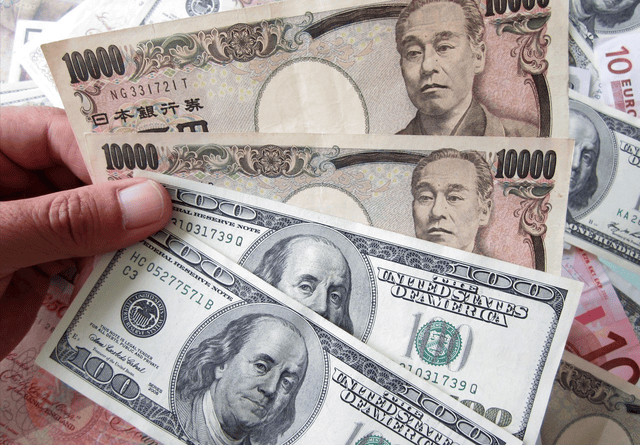
Core Viewpoint - The Japanese yen is weakening against major currencies, reaching a near three-week low against the US dollar, driven by uncertainties regarding the Bank of Japan's policy path and mixed economic data [1][4]. Currency Performance - The yen is trading at 183.38 against the euro, up from 182.91; 211.39 against the pound, up from 210.83; and 196.89 against the Swiss franc, up from 196.35. It has also declined against the Australian and New Zealand dollars, trading at 105.40 and 90.39 respectively [3]. - The yen fell from 156.88 to 157.44 against the US dollar and from 113.16 to 113.53 against the Canadian dollar. Potential technical support levels are observed at 184.00 for euro/yen, 212.00 for pound/yen, 199.00 for Swiss franc/yen, 106.00 for Australian dollar/yen, 91.00 for New Zealand dollar/yen, 158.00 for dollar/yen, and 115.00 for Canadian dollar/yen [3]. Economic Data Insights - November household average spending in Japan increased by 2.9% year-on-year to 314,242 yen, significantly exceeding the market expectation of a 1.0% decline, with a month-on-month increase of 6.2% against a forecast of 2.7% [3]. - Conversely, the average monthly income decreased by 2.2% year-on-year to 519,304 yen, raising concerns about the sustainability of consumer spending amid rising expenditures [3]. - The Cabinet Office reported that the leading economic index rose to 110.5 in November, the highest since May 2024, indicating potential future economic activity improvement. However, the coincident index slightly declined from 115.9 to 115.2, suggesting short-term economic momentum remains unstable [3][4]. Market Sentiment - Asian stock markets are mostly rising as investors await the US employment report to assess the Federal Reserve's policy direction. There is a prevailing expectation that the Fed may cut interest rates at least twice by 2026, which supports the US dollar and puts pressure on the yen [4]. - The $200 billion mortgage bond purchase program initiated by the US is influencing market liquidity and interest rate expectations, indirectly affecting currency markets [4]. - The core driver of the yen's movement remains the Bank of Japan's policy decisions, with significant market uncertainty regarding potential interest rate adjustments and ongoing concerns about Japan's fiscal health [4].

韩国称韩元汇率仍高度波动 将密切关注市况
Xin Lang Cai Jing· 2026-01-08 00:35
Core Insights - The South Korean Ministry of Finance held a financial market assessment meeting, indicating a shift in expectations regarding the weakening of the Korean won since the end of 2025, although the foreign exchange market remains highly volatile [1][2] - The consensus among participants, including the Finance Minister and the Bank of Korea Governor, is that policymakers must maintain a consistent policy stance while recognizing that the current exchange rate does not align with economic fundamentals [1][2] - The assessment concluded that the overall financial market is stable, with signs of recovery in the stock market and stable bond yields [1][2] - South Korea will continue to closely monitor external conditions and maintain a 24-hour monitoring system [1][2]
人民币升值VS贬值:一场没有硝烟的战争,谁在受益,谁在受损?
Sou Hu Cai Jing· 2026-01-07 02:13
Core Viewpoint - The recent appreciation of the offshore RMB against the USD, surpassing the 7.0 mark, has sparked mixed reactions regarding its impact on the economy, highlighting that both appreciation and depreciation have structural implications for different industries [1][2]. Group 1: Benefits of RMB Appreciation - Lowering import costs and aiding industrial upgrades: Industries reliant on imported raw materials and high-end equipment, such as paper manufacturing and high-tech sectors, benefit from reduced production costs due to RMB appreciation [4]. - Alleviating imported inflation and stabilizing domestic prices: The appreciation of the RMB can lower the import prices of commodities priced in USD, helping to stabilize domestic prices and benefiting consumers [5]. - Enhancing the international status of the RMB and attracting foreign investment: A stronger RMB increases its international credibility, making RMB-denominated assets more attractive to foreign investors, which can improve market liquidity and support the internationalization of the RMB [6]. Group 2: Challenges of RMB Appreciation - Direct impact on export industries: RMB appreciation makes Chinese goods more expensive in international markets, reducing price competitiveness, particularly affecting labor-intensive sectors like textiles and electronics [7]. - Risk of attracting speculative capital: A perception of unilateral RMB appreciation may lead to an influx of speculative capital, potentially inflating asset prices and complicating financial management [8]. Group 3: Benefits of RMB Depreciation - Stimulating exports: Depreciation makes Chinese goods cheaper for foreign buyers, increasing orders and profits for export companies [9]. - Promoting domestic employment: Increased orders for export companies can lead to expanded production and job creation, particularly in labor-intensive industries [10]. - Attracting foreign tourism and consumption: A weaker RMB allows foreign tourists to exchange more currency for RMB, reducing their costs in China and boosting the tourism sector [11]. Group 4: Challenges of RMB Depreciation - Rising import costs and inflation: Industries dependent on imported raw materials face increased costs, which may be passed on to consumers, leading to higher domestic prices [12]. - Increased external debt pressure: Sectors with significant USD-denominated debt may face heightened repayment burdens due to depreciation, impacting their financial stability [12]. Group 5: Overall Perspective - There is no absolute "good" or "bad" regarding RMB appreciation or depreciation; the ideal scenario is maintaining a stable exchange rate that aligns with current economic needs, avoiding extreme fluctuations [13].
中金 • 联合研究 | 消费和地产回暖——香港经济金融季报
中金点睛· 2026-01-05 23:50
Economic Overview - Hong Kong's GDP grew by 3.8% year-on-year in Q3 2025, an increase of 0.7 percentage points from Q2, with a quarter-on-quarter growth of 0.7% [3][6] - Private consumption expenditure rose by 2.1% year-on-year in Q3 2025, up 0.2 percentage points from Q2 [3][8] - Local fixed capital formation increased by 4.3% year-on-year in Q3 2025, a rise of 2.4 percentage points from Q2, indicating a recovery in real estate-related investments [3][9] External Demand - Goods exports accelerated, with a year-on-year growth of 12.1% in Q3 2025, up 0.6 percentage points from Q2 [10] - Service exports grew by 6.3% year-on-year, but this was a decrease of 2.3 percentage points from Q2, primarily due to a slowdown in transportation and tourism services [11] Employment and Inflation - The unemployment rate rose to 3.9% in Q3 2025, an increase of 0.4 percentage points from Q2, with notable rises in the consumption, real estate, and manufacturing sectors [13] - The overall Consumer Price Index (CPI) increased by 1.1% year-on-year in Q3 2025, a decline of 0.7 percentage points from Q2, indicating moderate inflation [14] Financial Market - The Hong Kong dollar experienced fluctuations, initially weakening before strengthening due to interest rate differentials and capital inflows [16] - The benchmark interest rate was lowered in Q3 2025, while the Hong Kong Interbank Offered Rate (HIBOR) rebounded significantly [18] - The Hang Seng Index rose by 11.6% in Q3 2025, continuing its upward trend, with average daily trading volume increasing by 20% compared to Q2 [21][25] Real Estate Market - The total transaction volume in Hong Kong's real estate market grew significantly, with new and second-hand home transactions increasing by 125% and 43% year-on-year, respectively [4][26] - Rental prices continued to rise, with a year-on-year increase of 3.3% in Q3 2025 [27] - The number of new housing starts and land auctions improved, signaling potential increases in housing supply [31][32] Banking Sector - The net interest margin for Hong Kong banks remained stable or slightly increased, outperforming expectations, with credit structure adjustments continuing [5][37] - Customer deposits grew at a rate of 2.4% in Q3 2025, although the growth rate for Hong Kong dollar deposits declined [38] - Asset quality remained stable, with non-performing loan ratios holding steady, while the commercial real estate sector showed signs of stabilization [45][47]

日本央行紧缩节奏打压日元
Jin Tou Wang· 2026-01-04 03:21
Group 1 - The USD/JPY exchange rate has continued to rise, reaching around 157.00, marking a fourth consecutive day of gains, with a closing increase of 0.15% to 156.8700 [1] - The weakening of the yen is primarily due to the gap between the Bank of Japan's policy stance and market expectations, which continues to favor the dollar due to interest rate differentials [1] - The Bank of Japan raised the benchmark interest rate from 0.50% to 0.75% in December, marking the second rate hike of the year aimed at curbing inflation pressures, but the cautious tone in the policy statement has led to doubts about the sustainability of tightening [1] Group 2 - The Japanese government is increasingly vigilant about exchange rate fluctuations, with the Finance Minister stating that the government is closely monitoring the foreign exchange market and is prepared to take "appropriate action" in the event of excessive unilateral volatility [1] - The daily chart indicates a clear upward trend for the USD/JPY exchange rate, with prices consistently above major moving averages, and short to medium-term moving averages in a bullish arrangement providing support [1] - The RSI momentum indicator is at a relatively high level but has not yet entered the extreme overbought territory, indicating that upward momentum remains, although short-term volatility risks have increased [2]
人民币站上7.0,央行工具箱亮了!存款、股市、工作迎三大新变化
Sou Hu Cai Jing· 2026-01-01 10:38
Core Viewpoint - The recent appreciation of the offshore RMB against the USD has raised concerns about potential economic impacts, drawing parallels to Japan's past experiences with currency appreciation and its consequences [1][4]. Group 1: Currency Appreciation Effects - The RMB has recently crossed the 7.0 mark against the USD, leading to discussions about its implications for the economy [1]. - The appreciation of the RMB has made imports cheaper, benefiting industries such as steel and oil, and providing cost relief to consumers [10][12]. - Companies involved in overseas mergers and technology imports are finding it more cost-effective due to the stronger RMB, with significant savings reported [12]. Group 2: Impact on Savings and Investments - Individuals holding USD deposits are experiencing reduced real returns due to both the appreciation of the RMB and falling interest rates in the US [15]. - Export-oriented businesses are converting their USD holdings to RMB to reduce debt burdens, as the cost of borrowing in RMB becomes more favorable [17]. - Foreign capital is increasingly entering the Chinese market, with significant net inflows into A-shares, particularly in consumer and technology sectors [17]. Group 3: Economic Outlook and Investment Strategy - Fund managers indicate that foreign investors are optimistic about the recovery of the Chinese economy and are positioning themselves accordingly [19]. - It is advised that investors focus on sectors with policy support and capital inflows, such as consumption recovery and technology growth, rather than speculative currency trading [19][21]. - The overall sentiment suggests that as the economic fundamentals improve, asset values in real estate and stock markets will stabilize and potentially rise [23].

美元兑日元涨0.25%,报156.45日元
Mei Ri Jing Ji Xin Wen· 2025-12-30 22:18
Group 1 - The US dollar against the Japanese yen increased by 0.25%, reaching 156.45 yen, with a trading range of 155.75 to 156.57 yen during the day [1] - The euro against the Japanese yen rose by 0.05%, while the British pound against the Japanese yen decreased by 0.08% [1]
破7!人民币对美元年内升值超4%,美元存款收益被抹平
Sou Hu Cai Jing· 2025-12-30 10:58
Core Viewpoint - The continuous appreciation of the RMB against the USD has diminished the attractiveness of USD deposits, leading to a situation where investors face challenges in balancing interest rate fluctuations and exchange rate changes [1][8]. Group 1: Interest Rate Trends - The Federal Reserve has lowered the federal funds rate target range by 25 basis points to between 3.5% and 3.75%, marking the third rate cut of the year and a total reduction of 75 basis points [2]. - Most major state-owned and joint-stock banks have seen USD deposit rates drop below 3%, entering the "2" range, with rates generally between 0.2% and 0.8% for terms from one month to two years [6]. - Some banks, like Bank of Communications, offer slightly higher rates, with one-month USD deposits at 0.2% and rates for three months to two years ranging from 2.3% to 2.8% [6]. Group 2: Exchange Rate Impact - The RMB has appreciated over 4% against the USD since the beginning of the year, with a significant rise of 1.7% in the last 60 days, compressing the yield on USD deposits [8]. - The strong appreciation of the RMB means that investors may face substantial exchange losses when converting back to RMB, potentially offsetting the interest earned on USD deposits [8]. - Experts warn that the rapid appreciation of the RMB could prompt the central bank to take measures, and they advise against speculative behavior regarding exchange rate trends [8][9]. Group 3: Investment Strategy Considerations - Investors are advised to prioritize actual USD usage needs and avoid blindly pursuing high nominal interest rates [9]. - Careful selection of financial products is recommended, balancing safety and yield, while maintaining a risk-neutral approach to manage exchange rate risks [9].