经济周期

Search documents
周周芝道 - 中国股债的位置
2025-09-22 01:00
Summary of Key Points from the Conference Call Industry or Company Involved - The discussion primarily revolves around the **Chinese economy** and its financial markets, including stock and bond markets, as well as the impact of **U.S. monetary policy** on global markets. Core Points and Arguments 1. **Contradictory Economic Signals in China**: August economic data shows mixed signals with manufacturing PMI slightly improving but still below the threshold, while export growth has declined from 7.1% in July to 4.4% in August. Social financing growth has also decreased from 9% to 8.8%, while M1 growth increased from 5.6% to 6% [3][4][5]. 2. **Current Market Conditions**: The Chinese stock market is performing well, while the bond market is weaker. The overall economic fundamentals remain stable, but fiscal conditions are cooling, leading to weaker consumption [5][10]. 3. **U.S. Federal Reserve's Monetary Policy**: The Fed is expected to implement two more rate cuts this year and continue easing in 2026, indicating a small cyclical recession in the U.S. and a clear path for monetary easing [2][7][23]. 4. **Divergence in Financial and Price Indicators**: There is a notable divergence between financial indicators, such as declining social financing growth and rising M1 growth, alongside improvements in PPI and core CPI. This reflects different levels of economic activity [8][17]. 5. **Fiscal Policy Outlook**: The likelihood of increased fiscal policy measures is low due to better-than-expected export data. The government is expected to focus on long-term planning rather than immediate fiscal stimulus [9][12][15]. 6. **Internal vs. External Demand**: Internal demand in China is still in a testing phase, while external demand is performing better than expected. This indicates that despite some weak economic data, the overall macro trend has not changed significantly [6][20]. 7. **PMI and Export Performance**: The PMI data reflects a mixed performance among different-sized enterprises, with large and medium enterprises showing better conditions compared to small enterprises. This has led to a strong overall export performance despite the weak PMI [11][19]. 8. **Impact of External Environment on Bond Market**: The strong performance of exports has prevented a hard landing for the Chinese economy, which has implications for bond yields, keeping the 10-year government bond yield above 1.5% [25]. 9. **Long-term Fiscal Strategy**: The shift in fiscal policy reflects a focus on long-term goals rather than short-term stimulus, with a significant amount of fiscal resources used in the first half of the year and a more cautious approach in the second half [26]. Other Important but Possibly Overlooked Content 1. **Complex Economic Cycle**: The current economic cycle is complex, necessitating a reevaluation of stock and bond positions [4]. 2. **Global Economic Context**: The discussion emphasizes the importance of global economic conditions, particularly the U.S. monetary policy, in shaping the outlook for the Chinese economy and its financial markets [21][24]. 3. **Need for Caution in Policy Decisions**: The potential for increased volatility in capital markets due to aggressive monetary easing in China is highlighted, suggesting a need for careful consideration of policy measures [22].
大转折来临!要想在A股精准预测,必须学会这三招!
Sou Hu Cai Jing· 2025-09-20 01:56
Core Viewpoint - The article discusses the importance of predicting economic cycles and market trends, challenging the Efficient Market Hypothesis by presenting evidence that markets are not always perfectly efficient and can be influenced by psychological and liquidity factors [1][2][3]. Group 1: Efficient Market Hypothesis - The Efficient Market Hypothesis (EMH) suggests that all available information is reflected in asset prices, making it impossible to achieve excess returns through prediction [1][2]. - Despite the EMH's popularity, real-world actions by institutions like the Federal Reserve indicate a belief in the ability to predict economic downturns, as they monitor key indicators to adjust monetary policy [2]. Group 2: Market Behavior and Predictions - Evidence shows that stock markets are not perfectly efficient; for instance, significant price movements and trading volumes can signal impending market reversals [3]. - The Shanghai Composite Index often reflects economic changes ahead of time, typically leading by 3-6 months, indicating its role as a leading economic indicator [3][4]. Group 3: Economic Indicators and Cycles - Predicting the U.S. economy involves using leading, coincident, and lagging indicators, with a focus on leading indicators to assess recession risks [4]. - The Chinese economy presents greater prediction challenges due to its stabilized macroeconomic indicators since 2010, with the stock market serving as a crucial leading indicator influenced by monetary policy [4]. Group 4: Market Cycles - Economic cycles can be categorized into various lengths, with short cycles of approximately 3-3.5 years observed in both the U.S. and China, which can combine to form longer cycles [4][5]. - The 850-day moving average serves as a significant trend indicator in the market, providing support or resistance levels that can help assess the sustainability of current trends [5]. Group 5: Practical Implications - The book discussed provides a framework for understanding market predictions, integrating macroeconomic analysis, market cycle theory, and behavioral finance insights, tailored to the differences between U.S. and Chinese markets [5].
如何从日常事物中看懂货币流动与经济周期?|青少年政经课
Sou Hu Cai Jing· 2025-09-18 12:38
Group 1 - The economic cycle is defined as the fluctuating movement of the national economy, alternating between periods of growth and decline, typically categorized into four phases: expansion, peak, contraction, and recession [2] - During the expansion phase, businesses receive more orders and hire more employees, leading to rising incomes, while the peak phase represents the highest economic activity before a gradual cooling [2] - In the contraction phase, businesses may reduce production or lay off employees, making job searching more difficult, and the economy reaches its lowest point during the recession phase before starting to recover [2] Group 2 - Key drivers of the economic cycle include consumption and investment, where increased consumer spending leads to economic expansion, while reduced spending can cause economic cooling [3] - "Monetary flow" is identified as a significant driver of economic cycles, referring to the speed at which money circulates among individuals, businesses, and banks [3] - When monetary flow accelerates, it typically signals a move towards the expansion phase, as increased liquidity boosts market demand and facilitates business investments [3] Group 3 - The relationship between monetary flow and economic development is characterized as a symbiotic balance, where adequate monetary flow is necessary for economic growth, and the pace of monetary flow can influence the rhythm of economic cycles [4] - Excessive monetary flow can lead to economic bubbles, causing rapid price increases and potential downturns, while insufficient flow can result in stagnation and declining prices [4] - Observations of daily life, such as the number of new businesses or changes in consumer prices, can provide insights into the state of the economy and monetary flow [4]
“宏观猎手”看A股:谁将接过时代的权杖?
券商中国· 2025-09-17 07:52
Core Viewpoint - The article emphasizes the importance of macroeconomic policies and industry trends in investment strategies, highlighting the ability to identify investment opportunities through careful analysis of policy changes and market dynamics [1][3][17]. Group 1: Investment Philosophy - The investment philosophy of the company is characterized by a balance between aggressive and defensive strategies, adapting to market conditions through a dynamic asset allocation approach [6][11]. - The company focuses on capturing economic cycles and industry rotations, selecting 3 to 5 high-prospect industries for investment each year [6][7]. - The investment strategy includes a mix of long-term holdings and opportunistic trades, with a keen eye on emerging trends and sectors [15][17]. Group 2: Historical Context and Experience - The company’s investment manager, Yin Tao, has a rich background in macroeconomic research and media, which has shaped his investment acumen over 27 years [3][4]. - Yin Tao transitioned from journalism to investment management in 2008, where he developed skills in asset allocation and risk management during the global financial crisis [4][5]. - The company has successfully navigated multiple market cycles, demonstrating resilience and adaptability in its investment approach [5][12]. Group 3: Performance Metrics - The company’s managed funds have shown significant performance, with a net value growth rate of 19.18% over the past six months and 18.70% over the past year [5]. - According to data from Galaxy Securities, the company’s products ranked in the top 5% of their category over the past two years, indicating strong competitive performance [5]. Group 4: Sector Focus - The company identifies key sectors for investment, including AI, innovative pharmaceuticals, and new consumption, which are seen as the main drivers of future growth [17]. - Yin Tao has successfully invested in leading stocks within these sectors, capitalizing on trends such as the rise of electric vehicles and innovative consumer products [14][15]. Group 5: Research and Analysis - The company employs a rigorous research methodology, including in-depth analysis of financial statements and market conditions, to identify high-quality growth stocks [10][9]. - Yin Tao emphasizes the importance of patience and thorough investigation in investment decisions, often revisiting companies to validate investment theses [9][10]. Group 6: Market Adaptation - The company adapts its strategies based on market conditions, employing a flexible approach to portfolio management that allows for quick adjustments in response to market volatility [12][13]. - Yin Tao’s strategy includes a focus on maintaining a balanced portfolio, with adjustments made to stock allocations based on performance and market signals [12][13].


股指专题研究:不同经济周期下,上中下游股指走势详解
Nan Hua Qi Huo· 2025-09-15 06:38
Report Summary 1. Investment Rating No investment rating for the industry is provided in the report. 2. Core Viewpoint The report analyzes the performance of upstream, midstream, and downstream industries in different economic cycles and their historical trends from 2005 to 2024. It also explores the relationship between the ratio of upstream and downstream indices and the A - share market, finding that the correlation reversed around 2015 due to economic structure transformation, policy regulation, and changes in the industry competition pattern. The current weak economic recovery may drive the upstream to take the lead, which helps in stock index style selection and may create medium - to - long - term arbitrage opportunities [1][18][22]. 3. Summary by Directory 3.1 Different Economic States and Industry Performance - **Upstream Industry**: The upstream industry includes raw materials, energy, and mining. It performs best in the economic recovery stage, with the order of performance being economic recovery > economic expansion > economic stagflation > economic recession. In the recovery stage, it rebounds first due to increased demand for raw materials and energy, rising commodity prices, and positive market expectations. In the expansion stage, demand grows, but high raw material prices may lead to policy regulation. In the stagflation stage, demand growth slows, and profits fluctuate. In the recession stage, demand and profits decline [3]. - **Midstream Industry**: Comprising manufacturing and related sectors, it performs strongest in the economic expansion stage, with the order of performance being economic expansion > economic recovery > economic stagflation > economic recession. In the expansion stage, it benefits from increased manufacturing orders and high capacity utilization. In the stagflation stage, demand growth slows, and costs rise. In the recession stage, demand and profits decline significantly [5]. - **Downstream Industry**: Including consumer goods and services, it performs best in the economic expansion stage, with the order of performance being economic expansion > economic stagflation > economic recession > economic recovery. In the expansion stage, consumer demand is strong, and optional consumer goods perform better. In the stagflation stage, inflation affects consumption, but essential consumer goods are relatively stable. In the recession stage, demand and profits decline [6]. 3.2 Historical Review of Upstream, Midstream, and Downstream Trends - **2005 - 2007 (Upstream Explosion)**: The stock market rose overall, with the style being upstream > midstream > downstream. The economic fundamentals first expanded and then contracted. Upstream industries, represented by coal and non - ferrous metals, rose more than five times due to factors such as global commodity bull markets and China's industrialization. Midstream industries, like machinery, benefited from the real - estate market. Downstream industries were relatively weak due to lagging resident income growth [10]. - **2008 - 2009 (Full - Industry Chain Collapse and Policy Rescue)**: The stock market was weak, with the style being downstream (defensive) > midstream > upstream. Affected by the financial crisis, the upstream industry declined sharply, the midstream was supported by falling raw material prices and government investment, and the downstream rebounded first due to policy support [14]. - **2010 - 2015 (Midstream Upgrade and Downstream Consumption Rise)**: The stock market had a "V" - shaped trend, with the style being downstream > midstream > upstream. The economy was in a transformation stage. The upstream was affected by over - capacity, the midstream benefited from falling raw material prices and the development of high - end manufacturing, and the downstream reached its peak due to industry upgrades, policy support, and a loose financial environment [15]. - **2016 - 2020 (Supply - Side Reform and Consumption Differentiation)**: The stock market fluctuated and generally rose, with the style being upstream (2016 - 2017) > downstream > midstream. Supply - side reform led to a significant increase in upstream profits from 2016 - 2017. The midstream was affected by trade frictions and supply - side reform, and the downstream benefited from global liquidity and the "drinking and medicine - taking" market during the epidemic [15][16]. - **2021 - 2024 (Carbon Neutrality and Global Supply Chain Reconfiguration)**: The stock market declined, with the style being upstream (2021) > midstream (2022 - 2023) > downstream. The upstream was boosted by new energy demand in 2021. The midstream was affected by geopolitical conflicts and the epidemic but was supported by the development of photovoltaic and energy - storage industries. The downstream was affected by the epidemic and the real - estate downturn [17]. - **Summary**: Midstream performance is usually in the middle, and the upstream and downstream show obvious differentiation. Upstream indices rise first in the economic recovery, followed by the midstream, and finally the downstream. In the economic decline, the downstream has some defensive properties. Upstream is sensitive to supply - side policies, downstream to demand - side policies, and midstream is passively affected by events and policies [17]. 3.3 Industry Comparison and A - Share Market Review - The ratio of the upstream index to the downstream index is expected to be positively correlated with the A - share market. However, the correlation reversed around 2015. Before 2015, the upstream was more elastic, and the ratio was positively correlated with the A - share market. After 2015, the downstream became more elastic due to economic transformation, policy regulation, and other factors. Despite the change, the upward trend of the ratio still has indicative significance, and the current weak economic recovery may drive the upstream to take the lead [18][20][22].
就业已停滞,通胀在路上、美联储FOMC会议前瞻、AI的火烧到了甲骨文
2025-09-15 01:49
Summary of Key Points from Conference Call Records Industry Overview - The records primarily discuss the **U.S. economy**, focusing on **employment**, **inflation**, and the **AI industry**. [1][2][5][16][17] Core Insights and Arguments 1. **Employment Market Challenges**: - The average monthly job creation has dropped from **147,000** to **71,000**, indicating a significant slowdown in the job market. Consumer confidence in reemployment opportunities has reached its lowest since **2013**, with a **39.1%** probability of rising unemployment in the next year. [1][2][4][11] 2. **Inflation Trends**: - The Consumer Price Index (CPI) year-on-year growth has rebounded to **2.9%**, with food prices rising significantly. Core inflation is stable at **3.1%**, but the month-on-month growth is close to **0.4%**, indicating persistent inflationary pressures. [1][2][3][11] 3. **Federal Reserve's Monetary Policy**: - The upcoming Federal Reserve meeting is crucial, as the Fed may prioritize employment issues over inflation control, potentially leading to interest rate cuts. Market expectations are leaning towards **two to three rate cuts** this year. [4][10][13] 4. **Market Reactions**: - Despite unfavorable inflation data, the stock market has reached new highs, driven by expectations of rate cuts and declining bond yields. This reflects a market sentiment that prioritizes employment concerns over inflation. [6][7][8] 5. **Gold Prices and Inflation Risks**: - Gold prices have recently surged, indicating market concerns over potential inflation risks associated with rate cuts. Investors are using gold as a hedge against stagflation risks. [9][14] 6. **Oracle's Performance and AI Orders**: - Oracle's recent quarterly performance was below expectations, but future unfulfilled orders have surged to **$450 billion**, primarily driven by AI-related cloud business. This has led to a **30%** increase in Oracle's stock price. [16][17] 7. **AI Industry Growth**: - The AI sector is experiencing significant capital expenditure growth, with U.S. computer equipment imports rising by **72%** year-on-year, driven by demand for AI computing power and data center construction. [17][18] 8. **Economic Cycle Risks**: - While the AI industry is booming, there are concerns about potential over-investment and the impact of economic cycles. A reversal in market sentiment could lead to rapid declines in capital efficiency and expectations. [18] Other Important Insights - The records highlight a notable **downward revision** of non-farm payroll data by **911,000**, the largest since the **2009 financial crisis**. [2] - The **Michigan Consumer Sentiment Index** has also shown a decline, reflecting growing pessimism among consumers regarding the job market. [2] - The potential for a **50 basis point rate cut** is discussed, influenced by political factors and the upcoming Federal Reserve meeting. [12][15]
银行市值王座,在周期里竞逐
华尔街见闻· 2025-09-12 11:38
Core Viewpoint - The competition between Agricultural Bank of China (ABC) and Industrial and Commercial Bank of China (ICBC) for market capitalization has become a significant event in the banking industry, with ABC briefly surpassing ICBC to become the largest bank by market value [2][3][6]. Market Capitalization Dynamics - On September 4, 2023, ABC's total market capitalization (A+H) exceeded 2.55 trillion yuan, surpassing ICBC [3]. - As of September 11, 2023, ICBC regained its position as the market leader, increasing its lead to 18 billion yuan [4]. - By mid-2025, ICBC is projected to maintain its position as the largest bank by total assets at 52.32 trillion yuan, while ABC ranks second [5]. Historical Context - A decade ago, ABC's market capitalization was less than 70% of ICBC's, highlighting the significant growth of ABC in recent years [6]. - From 2015 to 2017, the rapid expansion of ICBC's market capitalization was driven by favorable policies and economic conditions, while ABC's growth lagged behind [11]. - The period from 2018 to 2019 saw fluctuations in the market capitalizations of the four major banks due to regulatory changes and economic uncertainties [12]. Recent Performance - In 2023, the banking sector began to recover, with ABC's market capitalization increasing by 25%, significantly outpacing ICBC and other peers [14]. - As of September 8, 2025, ABC's year-to-date growth approached 35% [15]. Financial Metrics Comparison - Between 2022 and mid-2025, ABC's asset scale grew by nearly 40%, the highest among the four major banks, while its net interest margin decreased by 0.58 percentage points [20][21]. - ABC's non-performing loan ratio improved by 0.09 percentage points, marking the best optimization among its peers [21]. Strategic Focus - ABC's focus on rural finance has provided a buffer against economic downturns, with nearly 49.1% of its revenue coming from county-level operations by 2024 [26]. - The bank's extensive network of 23,000 county-level branches positions it uniquely to capture growth in rural markets [26]. Economic Environment Impact - The resilience of county markets during economic downturns has benefited ABC, as local residents prioritize savings and exhibit strong repayment willingness [27]. - The emphasis on rural revitalization in national policy has further supported ABC's strategic positioning [29]. Competitive Landscape - While both ABC and ICBC target similar regions for credit deployment, their funding and profit sources differ significantly, with ABC focusing more on rural and less urbanized areas [31][32]. - ICBC's core operations are more concentrated in economically developed regions, which may expose it to greater risks during economic slowdowns [38]. Future Outlook - The narrowing gap in market capitalization between ABC and ICBC does not indicate a decline in ICBC's core business performance, as it continues to excel in key sectors [38]. - The potential for recovery in urban economies could provide ICBC with opportunities for performance and valuation rebound [41].



周预测:还会冲新高
Sou Hu Cai Jing· 2025-09-06 22:48
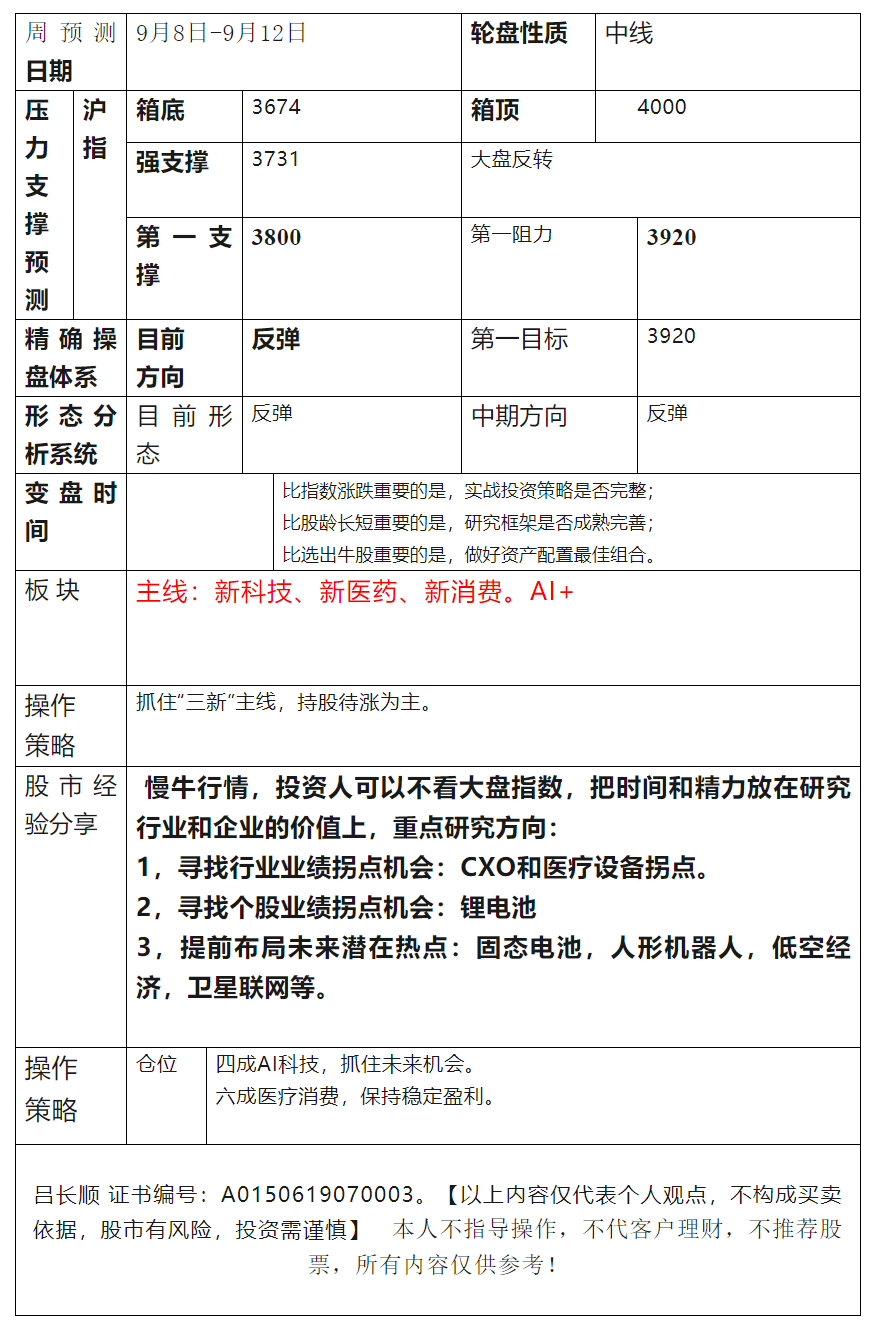
Group 1 - The market is expected to rebound next week, with the potential for the ChiNext index to reach new highs [1] - The current bull market is supported by a new economic cycle, with historical bull markets occurring approximately every 10 years in A-shares [1] - The Federal Reserve is likely to initiate a new round of interest rate cuts in mid-September, influenced by rising unemployment and disappointing non-farm payroll data [1] Group 2 - The rebound target for the Shanghai Composite Index is set at 3920 points, which is a significant resistance level derived from previous market highs [2] - Investors should focus on sector rotation during market fluctuations, with potential for recovery in underperforming sectors such as food and beverage, lithium batteries, consumer electronics, CXO, and liquor [2] Group 3 - Opportunities for industry performance inflection points are identified in CXO and medical devices [3] - Individual stock performance inflection points are anticipated in lithium batteries [3] - Future potential hotspots include solid-state batteries, humanoid robots, low-altitude economy, and satellite networking [3]
洪灏:中国、日本、美国经济和房地产周期观察 25博鳌房地产论坛
Sou Hu Cai Jing· 2025-09-01 14:01
Economic Cycles and Debt Levels - The comparison of non-financial sector debt levels in China, Japan, and the US highlights the long-term real estate cycles and their impact on economic conditions [2][3] - Japan's non-financial sector debt peaked in 1992 and took approximately 65 years to cycle back to a low point, illustrating a long-term economic cycle [3] - The US experienced a violent deleveraging process post-2008, with significant bankruptcies leading to a recovery around 2012, aligning with Japan's policy responses [3][4] China's Real Estate Market - China's household debt trajectory mirrors Japan's, with both countries experiencing a 20-30 year expansion before peaking in 2021, but China's deleveraging process has not yet begun in earnest [4][5] - The Chinese government has initiated a debt reduction plan, but it primarily represents a deferral of existing debt rather than a true reduction [4][5] - The overall debt levels in China, including public and household debt, have been rising, with significant increases noted since 2014-2015 [5] Housing Prices and Market Dynamics - Comparisons of housing prices show that China's real estate market peaked in 2021 and has begun to decline, with a trajectory similar to Japan's post-bubble experience [7][8] - In contrast, first-tier cities in China, such as Beijing, Shanghai, Guangzhou, and Shenzhen, have shown resilience in housing prices, indicating a divergence in market dynamics between first-tier and lower-tier cities [8] - Consumer confidence in China remains at historical lows, which may affect future housing market recovery [8] Short-term Economic Recovery - A quantitative model indicates that China's economy is currently in a recovery phase, with macroeconomic indicators showing an upward trend since late 2022 [9][10] - The stock markets, including A-shares and Hong Kong stocks, are also reflecting this recovery, with A-shares surpassing 3600 points and the Hang Seng Index above 25000 points [10] - Challenges remain in effectively managing deleveraging in the non-financial sector and ensuring stable economic growth amid declining housing prices [10]

中金研究 | 本周精选:宏观、策略
中金点睛· 2025-08-30 01:06
Strategy - The recent underperformance of Hong Kong stocks is attributed to liquidity issues (rising Hibor), downward revisions in earnings, and low AH premium. The market has not formed an effective breakthrough despite previous upward movements, with a baseline target of 24,000 and an optimistic target of 25,000-26,000 remaining unchanged due to insufficient support from overall and structural analysis [5][7]. Macroeconomy - The stock market is showing improvement despite ongoing economic downward pressure. The report suggests that understanding the financial cycle can provide better insights into the stock market's positive performance amid economic challenges. Key differences between stock market rebounds following financial versus economic cycle adjustments are highlighted, including the need for fiscal stimulus to enhance ROE during financial cycle adjustments [9][11]. Macroeconomy - Powell's recent speech at the Jackson Hole meeting is interpreted as a "dovish" signal, but it does not provide strong guidance on the sustainability or extent of interest rate cuts. The speech emphasizes the Fed's response function, indicating that if employment risks outweigh inflation, rate cuts may occur. However, if inflation risks surpass employment concerns, the Fed may halt rate cuts, suggesting challenges for monetary policy amid conflicting employment and inflation targets [9][11]. Macroeconomy - The A-share market has shown a significant turnaround since 2025, with the Shanghai Composite Index reaching a nearly 10-year high. However, the underlying economic fundamentals have not improved significantly, leading to a divergence between economic stability and market enthusiasm. The report analyzes the root causes of the current bull market, emphasizing that capital inflows are not the sole driver of market performance [11][13]. Strategy - The recent increase in market activity and inflow of new capital is partly due to the initial signs of residents moving their deposits, driven by the attractiveness of A-shares amid an "asset shortage" environment. This trend is expected to continue, with the potential for increased trading volume and short-term volatility, but it is not anticipated to affect the medium-term market trajectory [13].