
消费升级

Search documents
在这里,我看见向上的中国
Ren Min Ri Bao Hai Wai Ban· 2025-12-15 23:04
Core Insights - Multinational companies are increasingly choosing to invest in China, with 53,782 new foreign-invested enterprises established from January to October this year, representing a 14.7% year-on-year increase [12] - The investment strategies of these companies include opening new stores, building factories, and establishing R&D centers, reflecting their expanding footprint in the Chinese market [12] Group 1: L'Oréal - L'Oréal's China R&D and Innovation Center recently celebrated its 20th anniversary, highlighting the foresight of establishing beauty research in China [13] - The rapid changes in the Chinese market are driven by increasingly sophisticated consumers and a vibrant tech innovation ecosystem, which challenges and motivates L'Oréal to develop better products [13][14] - L'Oréal creates approximately 300 new formulas annually in China, aiming to leverage local consumer insights for global product innovation [14] Group 2: Blue Star Adisseo - Blue Star Adisseo's internationalization is evident in its management team, which now includes more Chinese members compared to when it was entirely French [15] - The company views China as a core market for growth in the animal nutrition sector, benefiting from a strong demand for animal protein [15][16] - Adisseo collaborates with local universities and businesses to develop customized solutions for the Chinese market, showcasing a successful integration of local expertise [16] Group 3: Ningbo Weinan - Ningbo Weinan specializes in the development and export of electrical products, with a focus on innovative socket designs led by Spanish expert Martínez [17] - The company has established a strong R&D presence in China, resulting in over 40 patents and a significant contribution to product innovation [17][18] - The Chinese market provides a wealth of inspiration for product development, with increasing consumer demand for environmentally friendly solutions [18] Group 4: Bosch Home Appliances - Bosch's market observations indicate a rising demand for "upgrading" home appliances, with consumers shifting from standalone products to integrated home solutions [19][20] - The company plans to upgrade its China R&D center to a global hub, reflecting China's central role in the home appliance industry and its capacity for innovation [20] - Bosch aims to respond to consumer demands for aesthetically pleasing and health-oriented home solutions, with a focus on smart technology [20] Group 5: Kärcher - Kärcher's new experience store in Shanghai exemplifies its commitment to engaging with the Chinese market, emphasizing the importance of product experience [21] - The company recognizes the dynamic nature of Chinese consumers, who prioritize product functionality and are open to new technologies [21][22] - Kärcher has invested in a global R&D center in Suzhou, focusing on cutting-edge technologies, which underscores its confidence in China's long-term growth potential [22]



11月经济新动能表现强劲,高技术制造业持续领跑
Di Yi Cai Jing· 2025-12-15 14:10
Economic Overview - China's macroeconomic indicators showed a continued slowdown in November, but high-tech manufacturing production and investment growth remained strong, indicating new momentum for the economy [1][2] - The industrial added value for November increased by 4.8% year-on-year, slightly down from October, marking the lowest growth since September 2024 [1][2] - The retail sales of consumer goods grew by 1.3% year-on-year, a significant drop of 1.6 percentage points from October, continuing a six-month trend of slowdown [1][4] High-Tech Manufacturing - In November, the added value of high-tech manufacturing rose by 8.4%, outperforming the overall industrial growth by 3.6 percentage points [2] - From January to November, the cumulative growth of high-tech manufacturing was 9.2%, with smart consumer equipment manufacturing increasing by 7.6% [2] - The development of green and low-carbon industries is advancing, with renewable energy generation increasing by 8.8% year-on-year [2] Consumer Spending - The growth of retail sales of consumer goods has been attributed to a high base from the previous year, but the cumulative growth for the year is better than last year [4][5] - Service consumption is growing rapidly, with service retail sales increasing by 5.4% year-on-year, outpacing goods retail sales [5] - The expansion of consumer spending is linked to rising per capita GDP, ongoing consumption policies, and the emergence of new consumption growth points [5] Investment Trends - Fixed asset investment (excluding rural households) decreased by 2.6% year-on-year in the first eleven months, with a notable decline in real estate investment [7] - Infrastructure investment fell by 1.1%, while manufacturing investment saw a modest increase of 1.9% [7][9] - Despite the overall decline in investment, certain sectors, such as general equipment manufacturing, showed positive growth, with an 8.9% increase [9] Policy and Future Outlook - The Central Economic Work Conference outlined key tasks for the upcoming year, emphasizing the importance of domestic demand and consumption [6] - A series of consumption-boosting policies have been introduced, aiming to enhance the supply of quality goods and services [6] - The government is focusing on stabilizing investment through various measures, including increasing central budget investments and optimizing local government bond usage [10]
延续稳中有进发展态势 11月份国民经济运行总体平稳
Bei Jing Shang Bao· 2025-12-15 11:54
Economic Overview - In November, the industrial added value above designated size in China increased by 4.8% year-on-year, with manufacturing investment continuing to grow, particularly in high-tech manufacturing [1] - The spokesperson from the National Bureau of Statistics indicated that despite challenges, China's economy shows strong resilience, supported by macro policies, and is on track to meet annual targets [1] High-tech Manufacturing Growth - High-tech manufacturing continues to grow rapidly, with the added value in November increasing by 8.4%, outpacing the overall industrial added value growth by 3.6 percentage points [3] - Key sectors such as integrated circuit manufacturing and smart product production saw significant increases, with added values growing by 32.4% and 30% respectively [3] - The production of 3D printing equipment and industrial robots surged by 100.5% and 20.6% year-on-year [3] Digital Product Manufacturing - The digital product manufacturing sector, a crucial part of high-tech manufacturing, recorded a 7.6% year-on-year increase in added value in November, accelerating from the previous month [4] - Notable growth was observed in smart consumer devices, with smart wristbands and 5G smartphones increasing production by 27.6% and 11.5% respectively [4] Consumer Market Expansion - In November, the total retail sales of consumer goods reached 43.898 billion yuan, marking a 1.3% year-on-year increase [5] - Urban retail sales amounted to 37.684 billion yuan, growing by 1%, while rural retail sales increased by 2.8% to 6.214 billion yuan [5] - Sales of basic living goods and certain upgraded products saw significant growth, with retail sales of grain and oil, communication equipment, and cultural office supplies increasing by 6.1%, 20.6%, and 11.7% respectively [5][6] Consumption Trends - The consumption upgrade trend is evident, with prices for cultural and sports goods rising, and cosmetics and jewelry sales increasing by 6.1% and 8.5% year-on-year [6] - The implementation of consumption promotion policies has effectively stimulated consumer demand, leading to an expansion in consumption scale and structural upgrades [7]

超半数装修建材股实现增长 松霖科技股价涨幅6.98%
Bei Jing Shang Bao· 2025-12-15 09:27
Core Viewpoint - The renovation and building materials sector experienced a slight increase, closing at 16,115.56 points with a growth rate of 0.64% [1] Group 1: Stock Performance - Several stocks in the renovation and building materials sector saw price increases, with Songlin Technology leading at 35.70 CNY per share, up 6.98% [1] - Gu Di Technology closed at 4.02 CNY per share, marking a 5.24% increase, ranking second in the sector [1] - Meike Home closed at 3.06 CNY per share, with a growth of 4.79%, ranking third [1] - Conversely, Zhongyuan Home led the decline with a closing price of 22.07 CNY per share, down 7.42% [1] - *ST Yazhen closed at 33.28 CNY per share, down 5.00%, ranking second in losses [1] - Qisheng Technology closed at 19.96 CNY per share, down 4.91%, ranking third in losses [1] Group 2: Market Outlook - China Galaxy's research report indicates that both consumption and investment are working together to expand domestic demand, with consumption upgrades driving the high-quality transformation of building materials [1] - The Central Economic Work Conference mentioned the implementation of special actions to boost consumption by 2026, which aligns with the 14th Five-Year Plan's suggestion to eliminate unreasonable restrictions in consumption [1] - It is anticipated that housing purchase restrictions will gradually ease by 2026, enhancing expectations for a recovery in the home decoration market and boosting demand for building materials [1]

国家统计局新闻发言人就2025年11月份国民经济运行情况答记者问
Guo Jia Tong Ji Ju· 2025-12-15 08:42
Economic Performance Overview - In November, China's economy showed a steady growth trend with industrial production increasing by 4.8% year-on-year, maintaining the same growth rate as the previous month [5][40] - The manufacturing sector, particularly the equipment manufacturing industry, experienced significant growth, with an increase of 7.7% in added value, contributing 59.4% to the overall industrial growth [5][41] - The service sector also demonstrated stability, with a production index growth of 4.2%, particularly in information technology and business services, which grew by 12.9% and 8.4% respectively [5][41] Market Sales and Consumption - Retail sales of consumer goods rose by 1.3% year-on-year in November, with notable growth in upgraded products such as cosmetics and jewelry, which increased by 6.1% and 8.5% respectively [6][21] - Service retail sales showed a robust growth of 5.4% from January to November, indicating a shift towards service consumption [6][20] - The overall consumption market remains stable, with a continuous expansion in service consumption and a trend towards quality upgrades in consumer goods [20][22] Foreign Trade - China's foreign trade maintained stability with a total import and export growth of 4.1% year-on-year in November, marking a 4 percentage point increase from the previous month [6][9] - Exports specifically grew by 5.7%, reversing the previous month's decline, supported by diversified trade partnerships, particularly with Belt and Road Initiative countries, which saw a 6% increase in trade volume [6][9] Employment and Prices - The urban unemployment rate remained stable at 5.1%, with specific demographics such as agricultural workers and those aged 30-59 showing lower unemployment rates [7][9] - Consumer prices rose by 0.7% year-on-year in November, with core CPI (excluding food and energy) remaining stable at 1.2%, indicating a gradual recovery in price levels [8][16] Investment Trends - Investment in fixed assets (excluding rural households) saw a decline of 2.6% year-on-year, but project investments excluding real estate increased by 0.8% [29][30] - Significant growth was observed in emerging sectors, with equipment manufacturing investment rising by 8.9% and renewable energy investments increasing by 7.4% [29][30] New Quality Productivity - The growth of new quality productivity is evident, with high-tech manufacturing value added increasing by 9.2% year-on-year, and significant growth in sectors like integrated circuits and electronic materials [24][25] - Traditional industries are undergoing transformation, with notable increases in investment and production in sectors such as biomass fuel processing and chemical fiber manufacturing [25][26] Future Outlook - The economic outlook remains positive, with expectations for continued growth driven by domestic demand expansion and policy support [35][38] - The focus on innovation and high-quality development is expected to bolster economic resilience and adaptability in the face of external challenges [35][38]
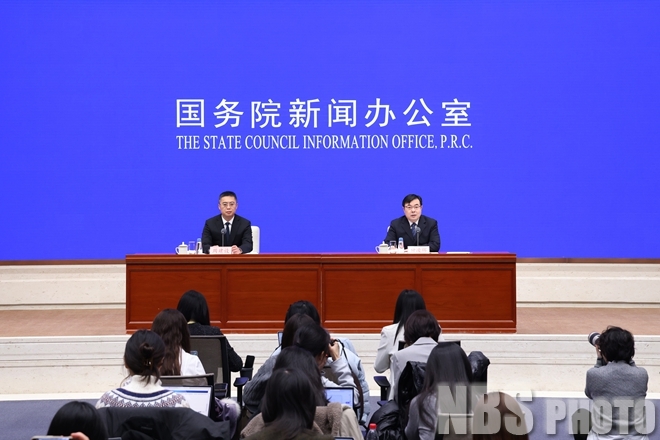
11月中国经济“成绩单”出炉!支持价格合理回升的积极因素继续累积
Qi Huo Ri Bao· 2025-12-15 06:40
Economic Overview - In November, the national economy continued to show a stable and progressive development trend, with a focus on implementing proactive macro policies and promoting high-quality development [2][6] - The total grain production for the year is expected to exceed 1.4 trillion jin, with a year-on-year increase of 1.2% [2] Industrial Production - The industrial added value above designated size increased by 4.8% year-on-year in November, with a month-on-month increase of 0.44% [3] - The equipment manufacturing industry and high-tech manufacturing industry saw significant growth, with increases of 7.7% and 8.4% respectively [3] - The production of 3D printing equipment, industrial robots, and new energy vehicles grew by 100.5%, 20.6%, and 17.0% year-on-year respectively [3] Retail Sales - The total retail sales of consumer goods reached 43,898 billion yuan in November, a year-on-year increase of 1.3% [4] - Online retail sales amounted to 144,582 billion yuan, with a year-on-year growth of 9.1%, and physical goods online retail sales accounted for 25.9% of total retail sales [4] - Service retail sales grew by 5.4% year-on-year, with significant growth in cultural, sports, and travel services [4] Fixed Asset Investment - Fixed asset investment (excluding rural households) decreased by 2.6% year-on-year from January to November, while manufacturing investment increased by 1.9% [5] - Infrastructure investment fell by 1.1%, and real estate development investment dropped by 15.9% [5] - Investment in high-tech industries, such as information services and aerospace manufacturing, saw significant increases of 29.6% and 19.7% respectively [5] Policy Impact - A series of proactive macro policies have effectively supported stable economic operations, leading to expanded consumer demand and increased key investments [7][8] - The implementation of consumption upgrade policies has resulted in significant sales growth in home appliances and communication equipment [8] - The industrial production growth was supported by policies promoting market demand and industrial upgrades [8] Price Trends - The Consumer Price Index (CPI) rose by 0.7% year-on-year in November, marking a continuous recovery trend [9] - The Producer Price Index (PPI) showed a month-on-month increase of 0.1%, indicating a narrowing decline trend since August [10][11] Long-term Economic Outlook - The resilience of the economy remains strong, with macro policies providing robust support and new growth drivers emerging [12][13] - The expansion of market demand and the continuous growth of new economic drivers are expected to positively impact economic development [12][14] - The upcoming economic policies aim to enhance domestic demand and optimize supply, ensuring a solid foundation for future growth [14]
千亿金龙鱼从巅峰到困境的跌宕之路
Xin Lang Cai Jing· 2025-12-15 05:59
Core Viewpoint - The company Jinlongyu, once valued at nearly 800 billion yuan, is currently facing significant challenges including declining performance, a trust crisis, and difficulties in strategic transformation [1][8]. Financial Performance - As of December 2025, Jinlongyu's stock price has plummeted by 78.08% from its peak, resulting in a market value loss exceeding 600 billion yuan [1][8]. - In 2024, the company's net profit attributable to shareholders fell by 12.14% to 2.502 billion yuan, while the net profit excluding non-recurring items dropped by 26.42% to 972 million yuan [1][8]. - The company's operating revenue for 2024 was 238.866 billion yuan, a decrease of 5.03%, marking two consecutive years of decline [1][8]. - Financial derivatives contributed significantly to profits, with 1.787 billion yuan from derivative operations accounting for 71.42% of net profit [1][8]. Market Dynamics - In the second quarter of 2025, Jinlongyu reported an operating revenue of 56.603 billion yuan, a quarter-on-quarter decrease of 4.19%, and a net profit of 0.774 billion yuan, down 21.11% [2][9]. - The company's raw material costs constitute 89.30% of operating costs, heavily influenced by international market prices, which are subject to geopolitical and exchange rate fluctuations [2][9]. Operational Efficiency - The company's production capacity utilization rates are low, with oilseed crushing at 47.35%, oil refining at 45.19%, and oil filling at 31.78% [3][10]. - Six out of ten fundraising projects have been delayed, including significant projects in Qingdao and Kunming, pushing completion dates to 2027 [3][10]. Trust Issues - Jinlongyu's public image has been damaged by legal issues, including a court ruling against its subsidiary for contract fraud, resulting in a compensation of 1.881 billion yuan, which is nearly 80% of its 2024 net profit [4][11]. - Consumer trust has declined, with 465 distributors exiting and online negative ratings rising to 7.3% [4][11]. Strategic Transformation - The company is attempting to diversify its product offerings, with its sesame oil achieving a market share of 29.1%, but this segment alone cannot offset overall revenue declines [5][12]. - Jinlongyu is exploring new business areas such as plant-based meat and central kitchens, but market feedback has been cautious due to low consumer awareness and acceptance [5][12]. Future Outlook - The challenges faced by Jinlongyu reflect structural changes in the consumer industry, where demand for staple goods remains stable but growth potential is limited [7][13]. - To overcome these challenges, the company needs to enhance supply chain resilience, innovate products, and rebuild consumer trust, particularly in food safety [7][13].
今年前11月我国社会消费品零售总额增速快于上年同期
Xin Hua Cai Jing· 2025-12-15 05:51
新华财经北京12月15日电(记者安娜)消费不仅关系着经济发展,也和民生改善紧密相关。记者15日从 国家统计局获悉,1至11月份,我国社会消费品零售总额同比增长4%,增速不仅快于上年同期,也快于 上年全年。 "今年以来,提振消费专项行动深入实施,消费品以旧换新政策发力显效,促进了消费规模扩大,消费 结构升级、消费动能焕新,带动了消费潜能释放。"国家统计局新闻发言人付凌晖当日在国新办发布会 上说。 二是商品消费持续扩大,品质消费带动增强。促消费政策效果继续显现,11月份限额以上单位文化办公 用品类、通讯器材类商品零售额同比分别增长11.7%和20.6%,继续保持较快增长。消费品质要求逐步 提升,食品等基本生活消费较快增长。11月份限额以上单位粮油食品类零售额同比增长6.1%。在消费 升级带动下,美容化妆、金银饰品等相关商品销售增势较好。11月份限额以上单位化妆品类、金银珠宝 类商品零售额同比分别增长6.1%、8.5%。 三是新型消费稳步成长,引领作用日益显现。即时零售、直播电商等消费新模式快速成长,线上消费、 新兴消费发展向好。1至11月份,实物商品网上零售额同比增长5.7%,增速快于社会消费品零售总额1.7 个 ...
广发信用卡加码金融支持,以“政策+金融”模式助力消费升级与产业促进
Sou Hu Cai Jing· 2025-12-15 05:28
Group 1 - The core viewpoint of the article highlights the growth in the home appliance and digital product categories during the year-end consumption peak, supported by the government's "trade-in" subsidy policy [1] - The company, Guangfa Credit Card, is enhancing financial support to lower the threshold for large purchases, offering installment plans with interest rates as low as 1.9% and promotional activities such as redeeming points for cash discounts [1] - In the automotive sector, Guangfa has partnered with Hongmeng Zhixing to provide car purchase installment discounts, including a coupon package worth up to 1,288 yuan and additional cash subsidies of up to 500 yuan for customers using the Guangfa Huawei Card [1] Group 2 - The initiatives by Guangfa aim to promote consumption upgrades and stimulate industry growth through a combination of policy and financial support [1]
PPI环比“两连涨”,统计局:支持价格合理回升的积极因素继续累积
Xin Lang Cai Jing· 2025-12-15 04:54
Core Viewpoint - The Producer Price Index (PPI) in November continued to rise month-on-month for the second consecutive month, with the year-on-year decline stabilizing compared to the previous month, indicating a trend of narrowing year-on-year declines since August [1][3]. Group 1: Factors Influencing PPI - Consumption upgrade is driving price increases, with notable price rises in sports and cultural goods. In November, the price of arts and crafts and ceremonial goods manufacturing rose by 20.6% year-on-year, an increase of 2.2 percentage points from the previous month. The price of sports balls manufacturing increased by 4.3%, up by 1 percentage point from the previous month [1][3]. - The development of emerging industries is positive, with accelerated industrial transformation towards intelligence and sustainability. In November, the price of non-ferrous metal smelting and rolling increased by 7.8% year-on-year, up by 1 percentage point from the previous month. Prices for graphite and carbon products rose by 3.8%, and integrated circuit manufacturing prices increased by 1.7% [1][3]. Group 2: Market Competition and Policy Implications - The effects of regulating market competition are becoming evident, with the year-on-year price declines for photovoltaic equipment and components, lithium-ion batteries, and new energy vehicles narrowing by 2.0, 0.7, and 0.6 percentage points, respectively [2][4]. - The current PPI is still declining year-on-year, and further efforts are needed to solidify the foundation for a reasonable price recovery. Future strategies include expanding domestic demand, strengthening the domestic circulation, and improving supply-demand relationships to promote reasonable price recovery and enhance business operations [5].