去美元化

Search documents
突发!金价,跳水;白银,暴跌
Mei Ri Jing Ji Xin Wen· 2026-02-02 06:23
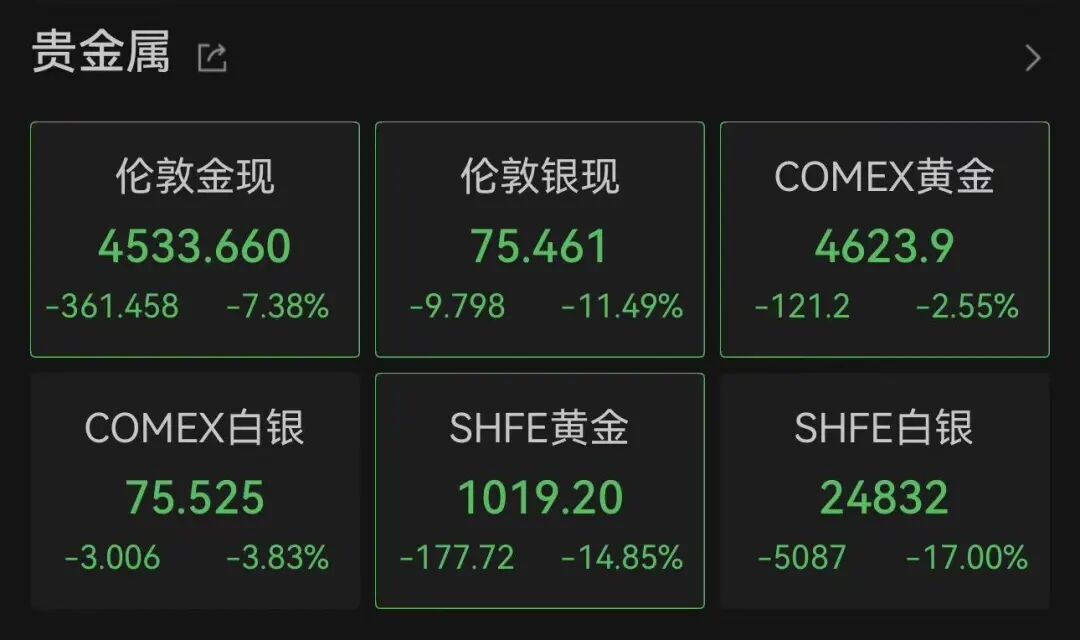
Group 1 - The core viewpoint of the articles indicates a significant decline in precious metal prices, with gold falling below $4500 per ounce for the first time since January 9, and silver experiencing a drop of over 14% [1][2]. - As of the latest updates, spot gold is reported at $4533.66 per ounce, down 7.38%, while spot silver is at $75.46 per ounce, down 11.49% [1][2]. - In the domestic futures market, the main contract for gold futures on the Shanghai Futures Exchange (SHFE) saw a drop of over 15%, reaching 1016 yuan per gram, and the main silver contract hit the limit down [2]. Group 2 - According to a recent report from China International Capital Corporation (CICC), gold prices have surpassed traditional fundamental influences, with conventional models like real interest rates becoming ineffective [4]. - The report from New Lake Futures indicates that despite the recent surge in gold prices exceeding last October's highs, the non-commercial long positions in COMEX gold have not reached previous peaks, suggesting limited institutional enthusiasm for chasing prices [4]. - Tao Dong, Chief Economist at Waterfall Capital (Hong Kong), believes that while short-term trends in gold remain uncertain, the overall outlook for gold is positive, driven by a shift towards de-dollarization and increased interest from sovereign, institutional, and retail funds in this alternative investment [4].

黄金跌破4500美元,白银重挫14%,机构称黄金抛售或难以持续
2 1 Shi Ji Jing Ji Bao Dao· 2026-02-02 06:17
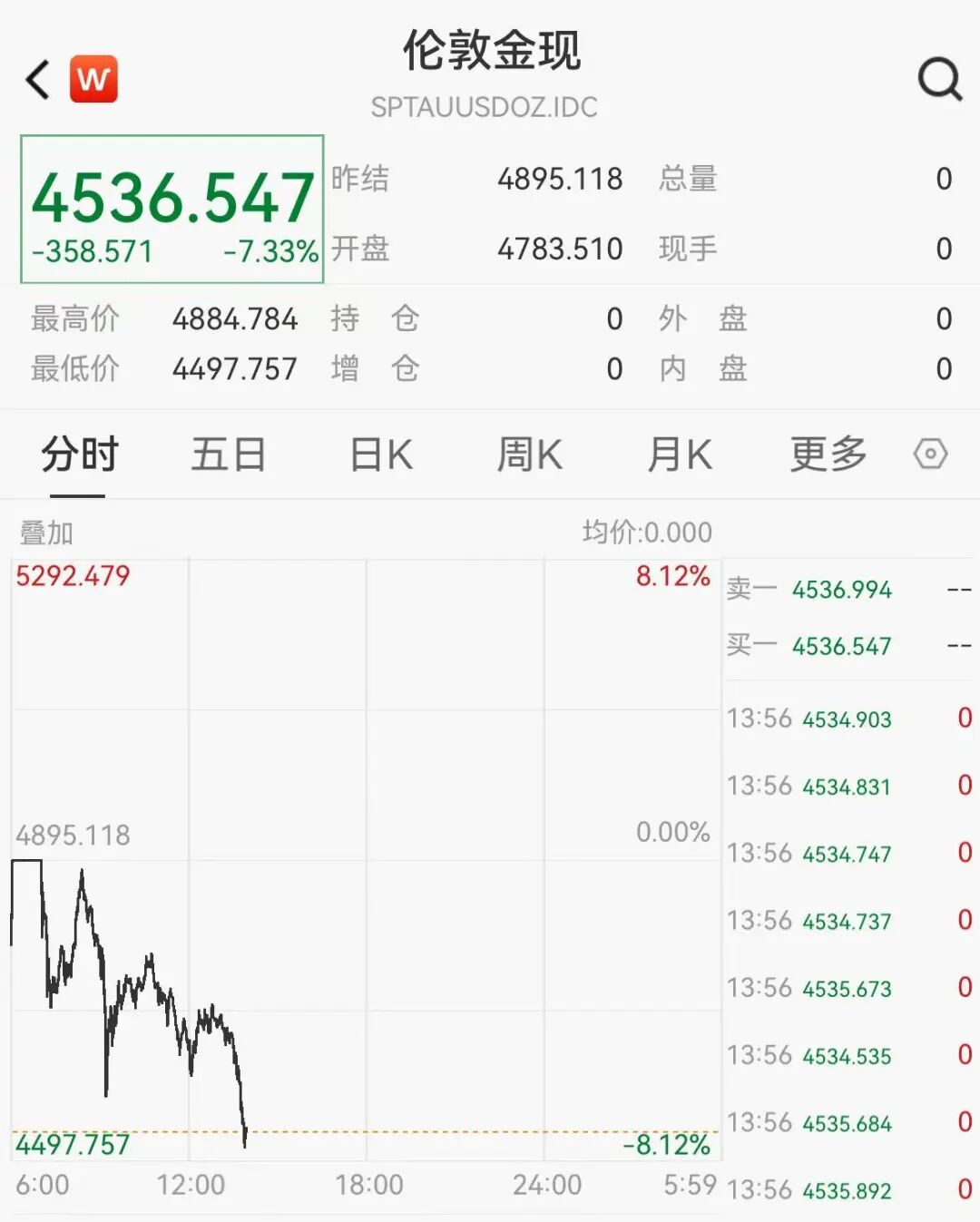
贵金属极端行情仍在延续。 消息面上,受获利回吐和短期期货交易者多头平仓等因素影响,国际黄金和白银价格1月30日继续大幅下跌,均创下数十年来最大单日跌幅。 方正证券援引多家机构分析指出,经历近一个月来金银价格暴涨,此次市场抛售在所难免。总部位于伦敦的布里坦尼亚全球市场公司资产经纪公司分析师 表示,考虑到1月份贵金属上涨的速度和幅度,此次回调并不出乎意料。英国研究机构金属聚焦公司分析师认为,近来贵金属上涨行情呈现非理性,但鉴 于投资者面临持续的地缘政治风险和经济不确定性,市场抛售或难以持续。 截至13时56分,现货黄金报4536美元/盎司,现货白银报75美元/盎司。 受此影响,国内期货市场上,黄金期货主力合约沪金2604一度跌超15%,触及1016元/克;此外,沪银主力合约跌停。 截至2月2日午后,A股黄金股大面积跌停。 | 名标 | 现价 | 涨跌 | 涨跌幅 - | | --- | --- | --- | --- | | 菜绅通灵 | 8.34 | -0.93 | -10.03% | | 恒邦股份 | 18.59 | -2.07 | -10.02% | | 招金黄金 | 23.10 | -2.57 | -10 ...
现货黄金暴跌超7%逼近4500美元,现货白银跌幅扩大至13%,沪铜主力合约触及跌停,铝合金主力合约触及跌停
Sou Hu Cai Jing· 2026-02-02 06:14
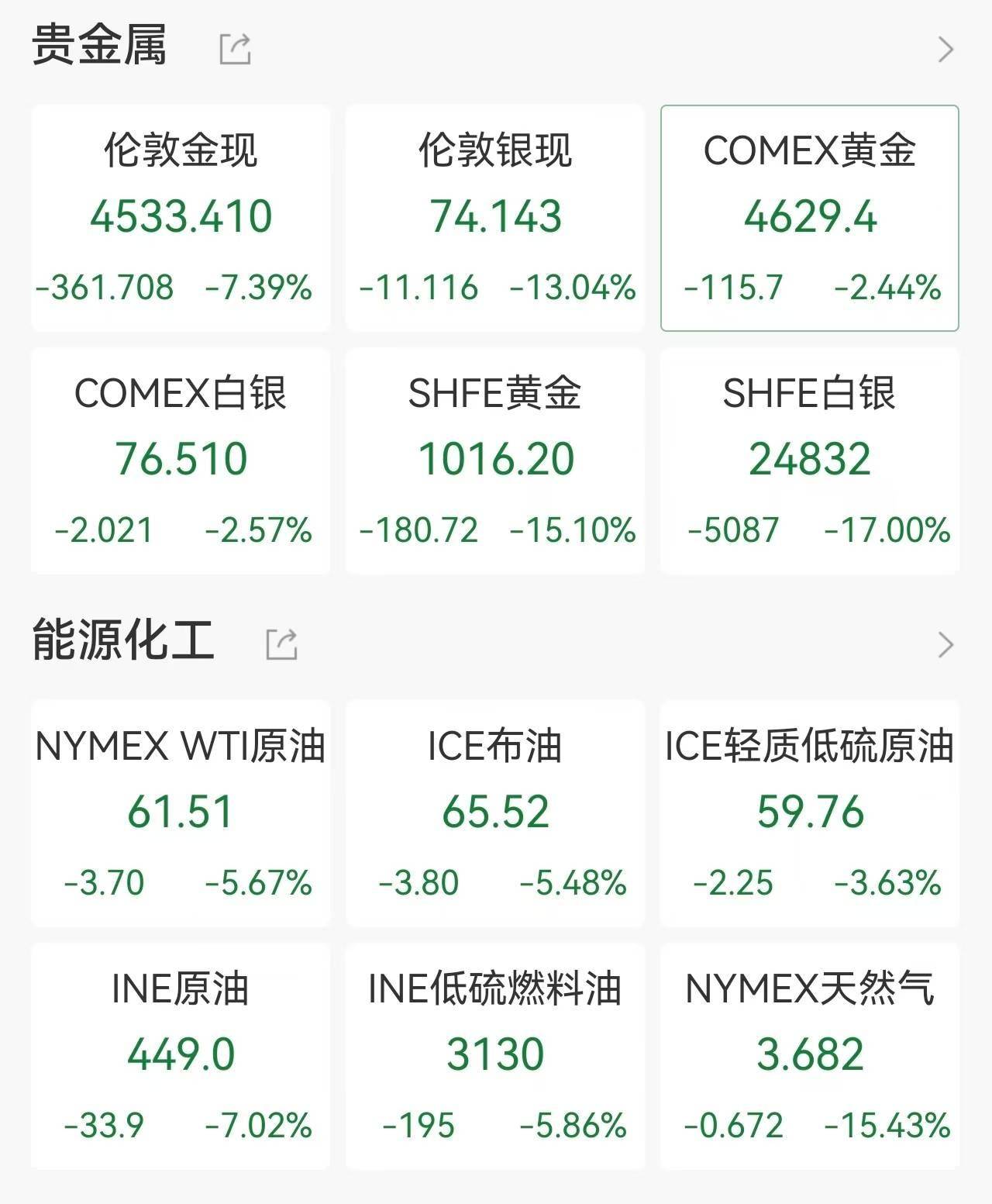
Group 1: Market Reactions - Spot gold has seen a significant decline, with a drop of 7% to $4533.41 per ounce, while spot silver has decreased by 13% to $73.143 per ounce [1] - The market reacted sharply to the nomination of Kevin Walsh as the next Federal Reserve Chairman, leading to a historic drop in gold prices, which fell by 9.25%, marking the largest single-day decline in 40 years [5][6] - The dollar index rebounded significantly following the announcement, indicating a shift in market sentiment towards a tightening monetary policy [5] Group 2: Commodity Price Movements - The main copper futures contract hit the limit down, falling by 9.01% to 98,580 yuan per ton, while international copper futures also dropped by 9% to 87,250 yuan per ton [4] - Aluminum futures also experienced a limit down, decreasing by 7% to 21,840 yuan per ton, and SC crude oil futures fell by 7.02% to 449 yuan per barrel [4] - The WTI crude oil price dropped by 5.67% to $61.51, while ICE Brent crude fell by 5.48% to $65.52, reflecting a broader trend of declining commodity prices [3][7] Group 3: Economic Implications - The market's sensitivity to Walsh's nomination is attributed to his criticism of excessive quantitative easing and support for balance sheet reduction, which may curb narratives around dollar devaluation [6] - Analysts suggest that the recent volatility in precious metals is more indicative of a deleveraging and liquidity tightening environment rather than a clear macroeconomic revaluation [6] - The strengthening dollar has made oil more expensive for non-U.S. buyers, contributing to the recent declines in oil prices [7]
黄金跌破4500美元,白银重挫14%,机构称黄金抛售或难以持续
21世纪经济报道· 2026-02-02 06:14
Core Viewpoint - The extreme fluctuations in precious metals continue, with significant declines in gold and silver prices observed recently, indicating a potential market correction after a period of rapid price increases [1][7]. Price Movements - On February 2, spot gold fell below $4500 per ounce for the first time since January 9, experiencing a daily drop of 7.9%, before recovering slightly to above $4530 per ounce. Spot silver also saw a significant decline, dropping 14% to briefly fall below $73 per ounce [1]. - Domestic gold jewelry prices have also decreased, with brands like Chow Sang Sang and Luk Fook reporting prices of 1484 CNY per gram, down 224 CNY from January 29, when international gold prices peaked [1]. Market Reactions - By February 2 afternoon, A-share gold stocks experienced widespread declines, with many stocks hitting the daily limit down of 10% [5][6]. - The futures market reflected this trend, with the main gold futures contract on the Shanghai Futures Exchange dropping over 15% to 1016 CNY per gram, and the main silver contract hitting the limit down [4]. Market Analysis - Analysts from various institutions, including Britannia Global Markets and Metal Focus, noted that the recent sell-off was expected after a month of rapid price increases in gold and silver. They indicated that the market's irrational behavior was likely influenced by ongoing geopolitical risks and economic uncertainties [7]. - New Lake Futures highlighted that despite the recent downturn, there remains medium to long-term support for gold prices due to ongoing central bank purchases, particularly from emerging markets, and the potential for increased demand from European institutional investors [7]. Trading Strategies - Longcheng Futures suggested that after the recent high volatility, the upper pressure zone for the main gold futures contract is between 1115 CNY and 1165 CNY per gram, while the lower support zone is between 950 CNY and 1000 CNY per gram. They recommended that long position holders consider a wait-and-see approach [8].
陶冬:黄金没有涨完
第一财经· 2026-02-02 05:39
Group 1 - The article discusses the dramatic fluctuations in financial markets, including the surge in the yen, the volatility of gold and silver prices, and the implications of geopolitical tensions, particularly regarding Iran and U.S. monetary policy [2][3]. - Gold experienced a significant price increase, reaching nearly $5,600 per ounce before a sharp decline of $800 over three days, indicating a market correction after being overbought [2]. - The article highlights the increasing importance of gold as a hedge against central bank policies and geopolitical risks, suggesting that it is no longer viewed as an alternative investment but rather a necessary asset in the current monetary and geopolitical environment [3]. Group 2 - The nomination of Jerome Powell's potential successor, John Taylor, is discussed, emphasizing the political dynamics surrounding the Federal Reserve's leadership and the implications for monetary policy [4][5]. - The article notes that the U.S. dollar experienced a sharp decline, influenced by Japan's fiscal policies and the subsequent intervention by the U.S. and Japan to stabilize the currency [6]. - Concerns are raised about the long-term credibility of the U.S. dollar due to recent actions by the Trump administration, which may undermine the established global monetary order and affect the perception of U.S. assets [7]. Group 3 - The upcoming focus on U.S. non-farm payroll data and the peak reporting season for major corporations is highlighted, indicating potential market-moving events in the near term [8].
贵金属:欲戴王冠,必承其重
Fang Zheng Zhong Qi Qi Huo· 2026-02-02 05:18
Group 1: Report Industry Investment Rating - Not provided in the content Group 2: Core Viewpoints of the Report - The underlying logic of the current precious metals bull market is global de - dollarization, which remains intact. Central bank gold purchases continue [81]. - Despite Trump's nomination of Warsh as the new Fed chair, the Fed is expected to continue cutting interest rates, leading to a decline in real US Treasury yields and benefiting gold and silver. Fed balance - sheet reduction is difficult to implement [81]. - The impairment of the US dollar's credit is due to multiple factors and is likely to enter a medium - to - long - term decline. 2026 is a big year for US Treasury issuance, with the total scale expected to exceed $40 trillion [81]. - Gold and silver are being redefined as anti - inflation assets and important components of global asset allocation. Silver's supply - demand contradiction remains unresolved, and it may have better price elasticity and return in 2026 [81]. - In the short term, there is a need for a technical correction, but the medium - to - long - term upward trend remains unchanged [81]. Group 3: Summary by Directory I. Market Review 1. Gold - In January 2026, the global gold market had a spectacular performance. London gold broke through the $5000 mark and reached nearly $5600, then had a significant drop. However, both London gold and Shanghai gold had cumulative gains of over 10%. Factors influencing the market included increased geopolitical uncertainty, accelerated de - dollarization, the Fed's inaction, the end of a series of negative factors, and Trump's appointment of a new Fed chair [14]. 2. Silver - In January 2026, the silver market also had an epic performance, with a more violent fluctuation. It had a cumulative gain of over 30%. The driving factors were similar to those of gold, and the potential risk of overseas delivery was also priced in. It also had a significant correction at the end of the month [17]. II. Macro Logic 1. Change in the Pricing Logic of Precious Metals - The traditional relationship between US Treasury real yields and gold has changed since 2023. The US debt, deficit, and the impairment of the US dollar's credit are becoming the new pricing anchors for gold. The pricing logic has shifted from the financial to the monetary attribute [21]. 2. De - dollarization Trend - The US dollar index has been declining since 2025, indicating a long - term decline in the US dollar premium. The "Triffin Dilemma" and the "Sea Lake Manor Agreement" are related to the US's economic strategy, which may lead to a reduction in the US dollar's status as a reserve currency. Global central banks have been de - dollarizing and increasing their gold holdings [24]. 3. Weakening of the Safe - haven Attributes of the US Dollar and US Treasuries - The US dollar and US Treasuries have started to show risk - asset characteristics, with the US stock, bond, and currency markets experiencing multiple sell - offs. Gold and silver's safe - haven attributes have been highlighted [28]. 4. Expansion of US Treasury Debt - The US Treasury debt has been expanding rapidly, with the total expected to exceed $40 trillion in 2026. This has led to a diversion of global safe - haven funds to gold, silver, and other assets [30]. 5. Gold as a Hedge against Credit Risk - Gold and silver have become the ultimate choice to hedge against the risks of the global credit currency system due to high global debt and the weakening of the US dollar's credibility [32]. 6. US Dollar Cycle - The US dollar has an approximately 17 - year cycle, and currently, it is at the start of a downward cycle. A decline in the US dollar index is expected to boost gold prices [34]. 7. US Economic and Policy Situation - The US GDP showed certain growth in 2025, consumer confidence improved in January 2026, the labor market cooled down, and inflation remained above the Fed's target. The Fed's independence has been challenged, and the market has different expectations for its policy [37][39][40]. 8. Redefinition of Gold - Gold has both "safe - haven" and "risk - asset" attributes. It can resist inflation and is an important part of global asset allocation [43]. III. Fundamental Logic 1. Central Bank Gold Purchases - In 2025, global central bank gold purchases reached a high level, though the pace slowed down. Some central banks increased their holdings, while others sold gold. De - dollarization is expected to continue in 2026, and central bank gold purchases will remain a fundamental demand for gold [49]. 2. Gold Investment Demand - In 2025, global gold total demand reached a record high, mainly driven by investment demand. Gold ETFs and physical gold investment demand increased, while gold jewelry demand declined in quantity but increased in value. Gold supply also increased [52]. 3. Silver Supply - The silver supply side has strong constraints, with limited growth in mineral and recycled silver. In 2025 and 2026, the total supply is expected to increase slightly [55]. 4. Silver Demand - Industrial demand accounts for nearly 60% of total silver demand. In 2025, total silver demand is expected to decline slightly, and industrial demand has different trends in different fields. AI is expected to be an important source of future demand growth [58]. 5. Silver Supply - Demand Gap - The silver market has been in short supply for five consecutive years, and the gap is expected to continue in 2026. The available inventory is extremely limited, and the price elasticity is high [62]. 6. Gold - Silver Ratio - The gold - silver ratio reflects the premium of gold over silver in terms of safe - haven demand. It is affected by economic cycles, inflation, and other factors. Currently, the ratio has dropped to a relatively low level, and there is room for further adjustment [63][64]. 7. Asset Management and ETF Holdings - For gold, the non - commercial net long position in the COMEX market has decreased, while the holdings of the largest gold ETF have increased. For silver, both the non - commercial net long position in the COMEX market and the holdings of the largest silver ETF have decreased [68][71]. 8. Technical Analysis - The monthly chart of London gold shows an upward trend, and the weekly chart of London silver shows a correction within the upward channel [76][77]. IV. Summary and Outlook - In February, the price ranges of London gold, Shanghai gold, London silver, and Shanghai silver are predicted. After the adjustment, there may be medium - to - long - term investment opportunities, and it is recommended to buy on dips [80].
西南期货早间评论-20260202
Xi Nan Qi Huo· 2026-02-02 04:58
2026 年 2 月 2 日星期一 重庆市江北区金沙门路 32 号 23 层; 023-67071029 上海市浦东新区世纪大道 210 号 10 楼 1001; 021-61101854 地址: 电话: 1 市场有风险 投资需谨慎 | 目录 | | --- | | 纸浆: 15 | | 碳酸锂: 16 | | --- | | 铜: 16 | | 铝: 17 | | 锌: 17 | | 铅: 18 | | 锡: 18 | | 镍: 19 | | 豆油、豆粕: 19 | | 棕榈油: 20 | | 菜粕、菜油: 20 | | 棉花: 21 | | 白糖: 22 | | 苹果: 23 | | 生猪: 24 | | 鸡蛋: 24 | | 玉米&淀粉: 25 | | 原木: 26 | | 免责声明 27 | 国债: 上一交易日,国债期货收盘多数上涨,30 年期主力合约跌 0.23%报 111.920 元, 10 年期主力合约涨 0.06%报 108.310 元,5 年期主力合约涨 0.01%报 105.890 元,2 年 期主力合约持平于 102.394 元。 公开市场方面,央行公告称,1 月 30 日以固定利率、数 ...
玖亓周评 | 一日暴跌创下40多年纪录,黄金风险启示录
Sou Hu Cai Jing· 2026-02-02 04:06
Group 1 - The recent volatility in gold prices has been characterized by a dramatic drop, with spot gold prices plummeting over 9% in a single day, marking the largest decline in over 40 years [2] - The surge in gold prices earlier in January 2026, where it rose by 30% from around $4,300 to nearly $5,600, was followed by a sharp correction, indicating a potential bubble driven by irrational exuberance [2] - The appointment of Warren as the next Federal Reserve Chair by Trump has created confusion in the market regarding future dollar policies, contributing to the sell-off in gold as investors reacted to the shift in monetary policy expectations [2][3] Group 2 - The current gold bull market is primarily driven by currency devaluation and global economic weakness, with central banks engaging in quantitative easing to stimulate growth [3] - A weak dollar has been a central theme, as Trump's administration has favored a weaker dollar to boost domestic manufacturing and reduce trade deficits, which inversely supports rising gold prices [3] - The potential shift back to a strong dollar policy could hinder the ongoing gold bull market, as the dollar's strength and gold prices are inversely correlated [3] Group 3 - The unpredictability of Trump's policies adds a layer of uncertainty to the gold market, making it difficult to forecast whether the dollar will strengthen or remain weak [4] - Central bank gold purchases are a critical indicator of the gold market's health; a slowdown in these purchases could signal significant changes in international politics and market trends [4] - Investors are advised against chasing gold prices due to its volatile nature, emphasizing a strategy of gradual investment and risk management to navigate market cycles [4][5] Group 4 - Gold serves as a defensive asset with both protective and investment characteristics, similar to insurance products, but with a more globalized investment appeal [5] - The recent fluctuations in gold prices highlight the importance of treating gold as a long-term investment rather than a short-term trading opportunity, as its historical annual return is close to 10% [5] - Both gold and insurance are viewed as long-term products, where frequent trading can lead to negative returns, reinforcing the need for a long-term investment mindset [5]

期货市场交易指引2026年02月02日-20260202
Chang Jiang Qi Huo· 2026-02-02 04:05
Report Summary 1. Report's Investment Ratings for Different Industries - Macro - finance: Index futures are promising in the medium - to - long - term, recommended to buy on dips; Treasury bonds are expected to move in a range [1][5]. - Black building materials: Coking coal for short - term trading; rebar for range trading; glass recommended to buy on dips [1][8]. - Non - ferrous metals: Copper, aluminum, and nickel for observation; tin, gold, and silver for range trading; lithium carbonate for range - bound fluctuations [1][10][12][14]. - Energy and chemicals: PVC for range trading; caustic soda for temporary observation; soda ash for temporary observation; styrene for range trading; rubber for range trading; urea for range trading; methanol for range trading; polyolefins for weak - range fluctuations [1][17][19][20]. - Cotton textile industry chain: Cotton and cotton yarn for shock adjustment; apples and jujubes for shock operation [1][26]. - Agricultural and livestock: Pigs for rebound - based short - selling opportunities; eggs for hedging post - festival contracts on rallies; corn for cautious chasing of highs and hedging on rebounds; soybean meal for shorting on rallies; oils for strong - range fluctuations [1][29][30][31][32][33][34][35]. 2. Core Views - The overall market is affected by a variety of factors such as geopolitical situations, policy changes, and supply - demand relationships. Different industries and products show different trends and characteristics. For some products, there are potential investment opportunities, while for others, risks need to be carefully considered. For example, in the non - ferrous metals sector, the prices of copper and aluminum are affected by geopolitical and supply - demand factors, and investors are advised to observe; in the energy and chemicals sector, PVC may have long - term low - buying opportunities, while caustic soda is under pressure in the short - term [10][12][17][19]. 3. Summary by Industry Macro - finance - Index futures: Affected by factors such as Trump's nomination of the Fed chairman and China's PMI data, they are expected to move in a range in the short - term and are promising in the medium - to - long - term, recommended to buy on dips [5]. - Treasury bonds: With no obvious major negative factors in the bond market, they are expected to move in a range, but the downward space of bond yields is limited [5]. Black building materials - Coking coal: The coal market shows short - term fluctuations. Although the price has increased slightly, the sustainability of the price increase is insufficient, recommended for short - term trading [8]. - Rebar: The futures price is slightly higher than the valley - electricity cost of the electric furnace and lower than the flat - electricity cost. With low inventory and small supply - demand contradictions, it is expected to move in a range [8]. - Glass: Although there are negative factors such as inventory, demand, and holidays, the futures price is at a relatively low level, recommended to buy on dips, and pay attention to the opportunity of going long on glass and short on soda ash [9]. Non - ferrous metals - Copper: Affected by geopolitical and Fed chairman nomination factors, the price has fluctuated sharply. With tight supply and weakening demand, it is expected to move in a wide range, and investors are advised to control positions and pay attention to inventory changes [10]. - Aluminum: With the pressure on bauxite prices and the increase in alumina and electrolytic aluminum production capacity, and the approaching of the demand off - season, it is expected to adjust at a high level, and investors are advised to strengthen observation [12]. - Nickel: Affected by the reduction of Indonesian nickel ore quotas, the price has risen, but the fundamentals are weak. It is recommended to observe [14]. - Tin: With the supply of tin concentrate being tight and the downstream consumption maintaining rigid demand, it is expected to continue to fluctuate, recommended for range trading [15]. - Gold and silver: Affected by the nomination of the Fed chairman, the prices have corrected, but the medium - term price centers are expected to move up, and they are expected to continue to adjust in a range [16]. - Lithium carbonate: Affected by factors such as supply and demand and mine risks, it is expected to continue to fluctuate in a range [17]. Energy and chemicals - PVC: With weak domestic demand and high inventory, but low valuation, it is possible that the bottom has been reached. It is recommended to have a long - term low - buying idea, pay attention to policies such as export tax rebates and cost fluctuations [17]. - Caustic soda: With weak demand and high supply, there is short - term delivery pressure, and it is recommended to observe temporarily [19]. - Styrene: Although it has rebounded due to factors such as export increase and device maintenance, the valuation is high, recommended to be cautious about chasing highs, and pay attention to cost and supply - demand changes [20]. - Rubber: Affected by seasonal supply reduction and weak demand support, the price is expected to continue to fluctuate, and there is a possibility of further decline [21]. - Urea: With sufficient supply and increasing demand for compound fertilizers, the price is expected to move in a range, and attention should be paid to factors such as compound fertilizer start - up and urea device maintenance [22]. - Methanol: With the reduction of domestic supply and weak downstream demand, the price in the inland market is relatively weak, while the price in some regions is relatively strong due to geopolitical and port arrival factors [23]. - Polyolefins: With increasing supply, decreasing demand in the off - season, and inventory accumulation pressure before the Spring Festival, the price is expected to fluctuate weakly, and it is recommended to short on rallies [24]. - Soda ash: With supply over - capacity and rising production costs, the price may have limited downward space, and it is recommended to observe temporarily [25]. Cotton textile industry chain - Cotton and cotton yarn: Affected by the global cotton supply - demand forecast report, the price has adjusted after a high - level shock, and it is recommended to be cautious in the short - term and optimistic in the long - term [26]. - Apples and jujubes: The market is generally stable with weak trends, and the price is expected to move in a shock [26][29]. Agricultural and livestock - Pigs: In the short - term, the price is restricted by supply - demand game, recommended to short on rebounds for off - season contracts; in the medium - to - long - term, the price is cautiously bullish, and the industry can hedge on rallies before effective capacity reduction [29][30]. - Eggs: With low basis and high valuation, it is recommended to hedge post - festival contracts on rallies, especially the 05 and 06 contracts considering the supply pressure shift [31]. - Corn: In the short - term, the price is supported by supply - demand balance; in the medium - to - long - term, the supply - demand pattern is relatively loose, and it is recommended to be cautious about chasing highs and hedge on rebounds [32][33][34]. - Soybean meal: In the short - term, the M2603 contract is expected to move in a range; the 05 contract is under pressure, and attention should be paid to support and resistance levels [34]. - Oils: In the short - term, the three major oils are expected to correct but with limited amplitude, recommended to take rolling profit on previous long positions and wait to go long on dips [35][40][41].
金价暴跌原因找到了,但黄金的故事远未结束
Xin Lang Cai Jing· 2026-02-02 04:02
Core Viewpoint - Gold prices have experienced significant fluctuations, with a notable drop of 8.35% in Comex gold futures, marking the largest single-day decline in nearly 40 years. Analysts suggest that while short-term pressures from profit-taking and the "Wosh trade" may lead to a period of volatility, the long-term narrative supporting gold prices remains intact, indicating potential for a new upward trend after the current adjustments [2][9]. Group 1: Recent Market Movements - Gold prices reached historical highs earlier in the week, with London gold spot prices peaking at $5,598.75 and Comex futures at $5,626.80 on January 29, before experiencing a sharp decline [2][9]. - The recent drop in gold prices is attributed to multiple factors, including profit-taking, the announcement of a new Federal Reserve chair, and increased margin requirements leading to forced liquidations [10][11]. Group 2: Impact of "Wosh Trade" - The "Wosh trade," linked to the nomination of Kevin Wosh as the next Federal Reserve chair, is seen as a key trigger for the recent gold price drop. Wosh's proposals include significant reductions in the Fed's balance sheet and a halt to actively lowering interest rates, which could strengthen the dollar but negatively impact precious metals [10][11]. - Analysts believe that Wosh's nomination is merely a catalyst for the decline, with the primary cause being substantial profit-taking and adjustments in trading positions [10][11]. Group 3: Long-term Outlook - Despite short-term volatility, analysts maintain that the structural factors supporting the current gold bull market remain unchanged, including de-dollarization, the potential for renewed Fed easing, geopolitical risks, and central bank gold purchases [12]. - Historical patterns indicate that gold price increases often coincide with rising volatility, suggesting that the recent downturn may be a necessary correction to release overheated market conditions, paving the way for future gains [11][12]. Group 4: Central Bank Activity - Central banks globally have been increasing their gold reserves, with purchases reaching 1,136 tons in 2022, the highest since 1967. Projections indicate that central bank gold purchases will remain high, with an expected 863 tons in 2025 [12][6]. - The ongoing concerns regarding the sustainability of U.S. debt and the dollar's status are driving central banks to bolster their gold holdings, which is expected to provide fundamental support for gold prices [12][6].